国际货币体系多极化

Search documents
管涛:美元储备份额稳定难掩国际货币体系多极化趋势︱汇海观涛
Di Yi Cai Jing· 2025-07-13 11:53
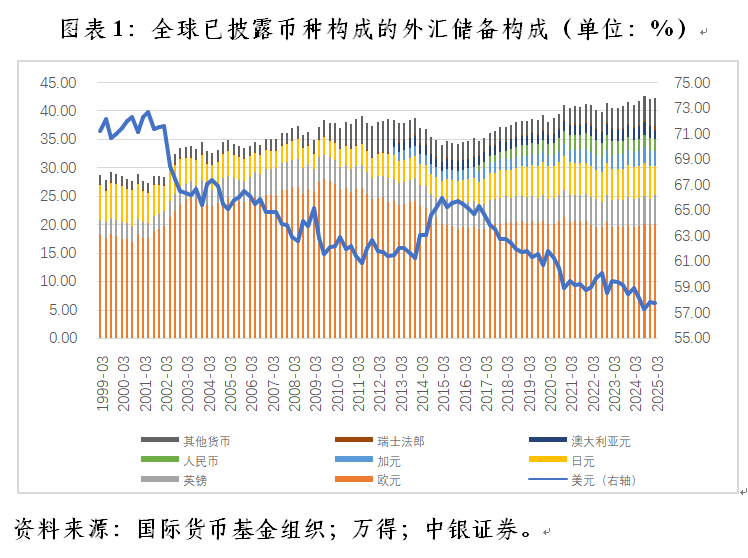
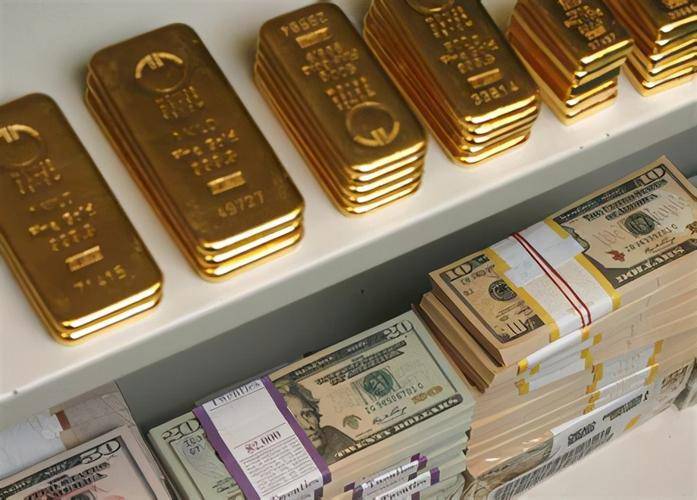
Core Viewpoint - The stability of the US dollar's reserve share does not contradict the accelerating trend of a multipolar international monetary system, despite recent discussions about "de-dollarization" and the impact of US economic policies [1][11]. Group 1: Dollar Reserve Share Data - As of the end of Q1 this year, the US dollar accounted for 57.74% of global foreign exchange reserves, a slight decrease of 0.05 percentage points from the previous quarter but an increase of 0.46 percentage points from the previous year's low [2]. - The dollar's reserve share has remained below 60% for ten consecutive quarters, marking its lowest level since data collection began in 1999 [11]. Group 2: Foreign Investment in US Securities - In Q1, net inflows of international capital into US securities reached $447.5 billion, significantly higher than the $43 billion net inflow in the same period last year [3]. - Official foreign investment in US Treasury securities totaled $38,356 billion by the end of Q1, with a net purchase of $138.3 billion, reflecting a year-on-year increase of 114% [5]. - The total balance of official foreign investment in four major categories of US securities was $65,671 billion, with a net purchase of $91.5 billion, representing a growth of 15.8% [8]. Group 3: Trends in Other Reserve Currencies - In Q1, the euro, pound, and Swiss franc reserves increased by $58.7 billion, $61 billion, and $68.4 billion respectively, although these increases were lower than the dollar's reserve growth [9]. - The share of non-traditional reserve currencies has risen, with a cumulative increase of 1.84 percentage points from Q1 2022 to Q1 2025, surpassing the decline in the dollar's share [12]. Group 4: Gold as a Reserve Asset - The global gold reserve ratio has increased from 13.8% to 22.7% between Q1 2022 and Q1 2025, indicating a significant shift towards gold as a reserve asset [13]. - By the end of Q1 this year, gold reserves accounted for 20% of global reserve assets, making it the second-largest reserve asset after the dollar [14]. Group 5: Central Bank Attitudes Towards Gold - A recent survey indicated that 95% of central banks expect to continue increasing their gold reserves over the next 12 months, reflecting a growing preference for gold as a hedge against economic and geopolitical uncertainties [15].

“鸽派”言论被泼了冷水,特朗普生气了,不谈了,加征25%关税!
Sou Hu Cai Jing· 2025-06-30 22:44
Group 1: Federal Reserve and Interest Rates - Morgan Stanley's report dampens market expectations for interest rate cuts by the Federal Reserve in July and September, citing strong inflation data and robust employment reports as key factors [2] - The report indicates that the support for rate cuts is weak, with seven policymakers predicting no cuts this year, contrasting with ongoing pressure from Trump [2] Group 2: Trump's Trade Policies - Trump's erratic behavior has become a significant source of uncertainty for the global economy, with conflicting signals regarding tariff extensions [4] - The potential for new tariffs on industries such as pharmaceuticals, semiconductors, and commercial aircraft is under close scrutiny, raising concerns about the impact on global trade [6] Group 3: Economic Implications of Tariffs - Tariffs are expected to increase inflation, complicating the Federal Reserve's policy decisions and potentially leading to friction between the government and the central bank [8] - The rise of protectionism and trade fragmentation is exacerbating the decline in economic growth and productivity, posing urgent threats to growth, inflation, and financial stability [8] Group 4: Economic Forecasts and Market Reactions - A survey indicates that over 90% of economists are concerned about Trump's policies undermining the dollar's safe-haven status, with predictions of rising U.S. federal debt [11] - Following the announcement of tariffs, global stock markets experienced volatility, and the dollar depreciated, leading to expectations that 10-year Treasury yields could exceed 5% by mid-next year [11] Group 5: Federal Reserve Independence - Trump's interference with the Federal Reserve has raised alarms among former officials, warning that it could lead to market chaos and undermine the Fed's credibility [13] - The potential for increased borrowing costs and capital flight from the dollar and U.S. Treasuries could challenge the Fed's ability to manage economic stability [13] Group 6: Future Economic Uncertainty - If Trump opts for reciprocal tariffs instead of extensions, both the economic outlook and the Federal Reserve's rate-cutting policies will face greater uncertainty, leading to a more severe global economic test [15]
李礼辉:美国依托国际货币霸权地位,放量发行美元购买全球商品
Feng Huang Wang Cai Jing· 2025-06-28 09:01
Core Insights - The "2025 China Enterprises Going Global Summit" was held in Shenzhen, focusing on creating a high-end platform for Chinese companies to address challenges in globalization and explore win-win transformation paths [1] Group 1: Economic Analysis - The former president of the Bank of China, Li Lihui, analyzed the structural contradictions in the U.S. financial situation, highlighting a significant trade imbalance with annual trade deficits exceeding $500 billion and a decline in manufacturing's contribution to GDP from 28.1% to 9.96% by Q3 2024 [4] - Li pointed out the severe fiscal imbalance in the U.S., with national debt reaching $36 trillion and annual interest payments exceeding $1 trillion [4] Group 2: U.S. Financial Strategy - To address its fiscal deficits, the U.S. relies on its international monetary hegemony, issuing dollars to purchase global goods, which is essential for maintaining its dominant position in the global financial system [4] - The recent introduction of a stablecoin initiative by the U.S. aims to tie stablecoins to the dollar, expanding the U.S. Treasury market and promoting dollarization in global financial markets, intensifying competition with China in the monetary and financial sectors [4] Group 3: Recommendations for Financial Development - Recommendations include improving the monetary policy framework and financial market structure to enhance policy transmission efficiency and increase direct financing [5] - Emphasis on financial technology and institutional innovation to reconstruct financial services and management processes, thereby improving the capacity to serve the real economy and enhancing regulatory efficiency [5] - Advocating for a multipolar international monetary system to reduce reliance on a single sovereign currency and enhance the resilience of the global financial system [5] Group 4: Cross-Border Payment and Currency Internationalization - The need for a diversified cross-border payment system is highlighted, with a focus on establishing digital payment infrastructure and multilateral payment systems to prevent the politicization of payment tools [6] - The push for the internationalization of the Renminbi is emphasized, with the currency already being the third-largest payment currency globally, aiming to expand its functions in international payments, financing, and reserves [6]

DLS MARKETS:为何越来越多央行减持美元并转向黄金和人民币?
Sou Hu Cai Jing· 2025-06-24 10:06
Group 1 - The global central banks are increasingly planning to increase their gold exposure, with over one-third of 75 central banks managing approximately $5 trillion in assets indicating such intentions, marking the highest proportion in at least five years [1] - The shift towards gold is driven by the need for asset safety and yield considerations, reflecting a reassessment of the US dollar's dominance in the international financial system and a rising awareness of geopolitical risks [1][3] - Approximately 70% of central banks express reluctance to increase their US dollar asset allocation due to concerns over the unpredictability of the US political environment, a figure that has doubled from the previous year [3][4] Group 2 - There is a growing preference for the Chinese yuan and the euro among central banks, with 16% planning to increase their euro exposure in the next two years, a significant rise from the previous year [3] - The yuan's internationalization is steadily increasing, gaining a more significant role in global trade and foreign exchange reserves, despite its current limited share [3] - The changes in central bank asset allocation behavior are seen as a forward-looking signal of market trends, indicating a response to the evolving geopolitical landscape and international financial order [5]
南财快评|国际货币体系迈向多极化 主导货币是地位也是责任
Sou Hu Cai Jing· 2025-06-19 13:02
Core Viewpoint - The future of the international monetary system is likely to evolve towards a structure where a few sovereign currencies coexist, compete, and balance each other [1][4] Group 1: Evolution of the International Monetary System - The share of the euro in global foreign exchange reserves has increased to around 20%, second only to the US dollar since its inception [1] - The international status of the renminbi has steadily risen, becoming the second-largest trade financing currency globally after the 2008 financial crisis [1][2] - Historical shifts in dominant currencies, such as the Dutch guilder and the British pound, indicate that the status of international currencies is not fixed and can change with international dynamics and national competitiveness [2] Group 2: Impact of US Policies - The US has engaged in protectionist measures and created barriers that disrupt global supply chains, undermining long-term global trade stability [2] - The recent depreciation of the US dollar, with a decline of approximately 9% from January to June, reflects the instability of the dollar-centric global monetary system [1][2] Group 3: Opportunities for Other Currencies - The current situation presents a significant opportunity for the euro to strengthen its international position, as noted by the European Central Bank President [3] - The establishment of the Cross-Border Interbank Payment System (CIPS) with foreign institutions marks a step towards enhancing the use of the renminbi in international transactions [3] Group 4: Future Monetary Landscape - The international monetary system is expected to transition towards a multipolar structure, with the US dollar, euro, and renminbi playing significant roles [4] - Sovereign currency issuers must enhance fiscal discipline and financial regulation to mitigate risks and ensure stability in the global monetary system [4][5] - Coordination of monetary policies among major economies is crucial to avoid unintended policy conflicts and to manage the spillover effects of monetary policies [5]
财经深一度|金融管理部门缘何瞄准“跨境支付”持续发力?
Sou Hu Cai Jing· 2025-06-18 11:27
Core Insights - The 2025 Lujiazui Forum highlighted the focus of Chinese financial authorities on cross-border payment systems, emphasizing the need for innovation and efficiency in this area [1][2] Group 1: Digital Currency and Cross-Border Payments - The People's Bank of China announced the establishment of a digital RMB international operation center in Shanghai to promote the internationalization of the digital currency and financial market development [1] - The rise of central bank digital currencies (CBDCs) and stablecoins is reshaping traditional payment systems, significantly reducing the cross-border payment chain [1][2] - The RMB has become the second-largest trade financing currency and the third-largest payment currency globally, reflecting its increasing international status [2] Group 2: Challenges and Innovations in Cross-Border Payment Systems - Traditional cross-border payment systems face challenges such as low efficiency and high costs, prompting a global call for improvement and diversification [2] - The multilateral central bank digital currency bridge project has shown promising results, with payments processed in 6 to 9 seconds, compared to 2 to 5 days for traditional methods, and nearly halving transaction costs [3] - The interoperability of payment systems is improving, with countries extending operational hours and adopting international messaging standards to enhance cross-border payment efficiency [4] Group 3: Regional Cooperation and Future Trends - The renewal of the bilateral currency swap agreement between the People's Bank of China and the Central Bank of Turkey supports the use of local currencies for cross-border settlements [2] - The trend towards a more efficient, secure, inclusive, and diversified global cross-border payment system is expected to continue [4]
潘功胜、李云泽、吴清、朱鹤新最新发声!资本市场关键信号
21世纪经济报道· 2025-06-18 05:46
Core Viewpoint - The 2025 Lujiazui Forum emphasizes the importance of financial openness and cooperation for high-quality development in the context of global economic changes [1] Group 1: Financial Openness Initiatives - The People's Bank of China announced eight financial openness measures, including the establishment of an interbank market trading report library and a digital RMB international operation center [3] - The international monetary system is evolving towards a multi-currency landscape, with increasing use of local currencies for cross-border settlements, indicating a shift away from a single sovereign currency dominance [4][5] Group 2: Silver Economy and Financial Opportunities - The aging population in China presents significant opportunities in the silver economy, with projections indicating that the population aged 60 and above will exceed 400 million by 2035, leading to a potential market size of 30 trillion yuan [10] - The development of a multi-pillar pension system is underway, with a focus on expanding pension-related financial products and services [10] Group 3: Wealth Management Growth - China's expanding middle-income group is driving demand for wealth management services, with the asset management market growing at an annual rate of approximately 8% over the past five years, making it the second-largest globally [11][12] Group 4: Cross-Border Financing and Foreign Investment - The State Administration of Foreign Exchange is promoting cross-border financing facilitation and enhancing foreign investment participation in China's financial markets [16][20] - Policies are being implemented to support foreign trade enterprises and facilitate cross-border investment, including the promotion of a unified currency management policy for domestic companies [19][20]

潘功胜:主权货币国需要承担相应责任 强化国内财政纪律和金融监管
news flash· 2025-06-18 02:09
Core Viewpoint - The international monetary system is evolving towards a multipolar structure, which will enhance the responsibilities of sovereign currency nations to strengthen domestic fiscal discipline and financial regulation [1] Group 1 - The international monetary system's shift towards multipolarity will help sovereign currency nations to reinforce policy constraints [1] - The future may see a coexistence of a few sovereign currencies that compete and balance each other [1] - Sovereign currency nations must take on corresponding responsibilities, including enhancing domestic fiscal discipline and financial regulation [1] Group 2 - There is a need for structural economic reforms in sovereign currency nations to adapt to the evolving international monetary landscape [1]
潘功胜:国际货币体系向多极化发展,有助于推动主权货币国强化政策约束
news flash· 2025-06-18 02:03
Core Viewpoint - The international monetary system is evolving towards a multipolar structure, which enhances the resilience of the system and contributes to global economic and financial stability [1] Summary by Relevant Categories International Monetary System Evolution - The evolution of the international monetary system over the past 20 years has two significant characteristics: the introduction of the euro in 1999, which currently accounts for approximately 20% of global foreign exchange reserves, second only to the US dollar [1] - Following the 2008 global financial crisis, the international status of the renminbi has steadily increased, making it the second-largest trade financing currency globally [1] - The renminbi ranks as the third-largest payment currency worldwide and holds the third-highest weight in the International Monetary Fund's Special Drawing Rights (SDR) currency basket [1] Future Outlook - The international monetary system is likely to continue evolving towards a structure where a few sovereign currencies coexist, compete, and balance each other [1] - Regardless of whether a single sovereign currency or a few sovereign currencies serve as the dominant international currency, the countries issuing these currencies must assume corresponding responsibilities, strengthen domestic fiscal discipline, enhance financial regulation, and promote structural economic reforms [1]
特稿|管涛:全球关税风暴下的人民币国际化
Di Yi Cai Jing· 2025-06-18 01:28
Core Viewpoint - The article discusses the opportunities and challenges for the internationalization of the Renminbi (RMB), emphasizing the need for a more market-oriented floating exchange rate system and the potential for RMB to become a more significant international currency amidst the declining credibility of the US dollar [1][4]. Group 1: Opportunities for RMB Internationalization - Since the pilot program for cross-border trade settlement in RMB began in 2009, the currency has transitioned from "non-internationalization" to "internationalization," becoming the third-largest currency in the International Monetary Fund's Special Drawing Rights (SDR) [1]. - As of December 2024, RMB accounts for 6.0% of cross-border trade financing, closely trailing the euro at 6.5%, but significantly lower than the US dollar's 81.9% [2]. - The RMB is the fourth-largest international payment currency, with a share of 3.8%, again lower than the dollar and euro, which hold 50.2% and 22.0%, respectively [2]. Group 2: Challenges for RMB Internationalization - The RMB's share in foreign exchange reserves was 2.2% at the end of 2024, down 0.7 percentage points from its historical high in early 2022, indicating a significant gap compared to the dollar and euro [2]. - The RMB is not yet fully convertible, and its exchange rate remains influenced by concerns over domestic financial stability and export competitiveness, complicating the process of capital account opening [9]. - The ongoing geopolitical tensions and trade conflicts, particularly with the US, pose additional risks to the RMB's internationalization efforts, potentially leading to a reconfiguration of global supply chains [8][9]. Group 3: Strategic Recommendations for RMB Internationalization - To enhance the RMB's international status, it is crucial to implement proactive economic policies and deepen reforms that stimulate market vitality and improve the investment environment for foreign investors [10]. - Strengthening financial market infrastructure and aligning domestic regulations with international standards will facilitate greater foreign participation in RMB-denominated assets [11][12]. - Accelerating the construction of Shanghai as an international financial center will support the RMB's internationalization by enhancing its competitiveness and service capabilities in global markets [14].