地缘政治危机
Search documents
金价突破4000美元,历史性行情会否重演?
Sou Hu Cai Jing· 2025-10-13 11:46
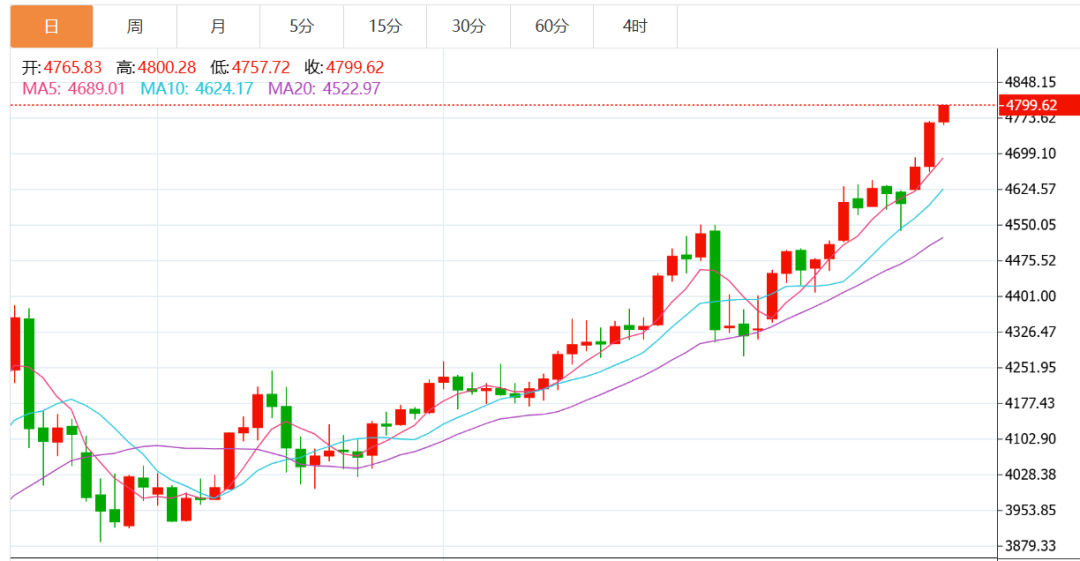
Core Insights - Gold prices have recently surged, surpassing the historical threshold of $4000 per ounce, with predictions suggesting it could reach $10,000 per ounce by mid-2028 to early 2029 if the momentum continues [1] Group 1: Historical Context - In 1979, gold experienced a dramatic increase of 130% for the year, with prices soaring from $400 to $850 in just three months due to high inflation, economic stagnation, and geopolitical crises [3] - The inflation rate reached 13.3% in the U.S., while the unemployment rate peaked at 10.8%, contributing to the surge in gold prices as a safe-haven asset [3] Group 2: Current Market Dynamics - The current rise in gold prices mirrors the conditions of 1979, with the Federal Reserve having cut interest rates and expectations for further reductions, leading to a weaker dollar and stronger gold prices [6] - Central banks globally are increasing their gold reserves, with China adding 40,000 ounces in September alone, indicating a shift away from U.S. debt [6] Group 3: Investment Considerations - Investors are advised to consider various channels for gold investment, such as bank gold bars for high purity and low fees, gold ETFs for liquidity, and paper gold for short-term trading [8] - A recommended allocation for gold in a household's total assets is between 5% to 10%, serving as a stabilizing asset rather than a full investment [8]
华宝期货晨报铝锭-20251009
Hua Bao Qi Huo· 2025-10-09 03:44
Report Summary 1) Report Industry Investment Rating No relevant content provided. 2) Core Viewpoints - The price of finished products is expected to move in a sideways consolidation, while the price of aluminum ingots is expected to be strong in the short - term and fluctuate, with attention paid to macro - sentiment and mine - end news [2][4][5] 3) Summary by Related Contents Finished Products - The production of short - process construction steel enterprises in the Yunnan - Guizhou region during the Spring Festival shutdown is expected to affect a total of 741,000 tons of construction steel output, and 6 short - process steel mills in Anhui Province will also have varying degrees of shutdown, with a daily impact of about 16,200 tons of output [3][4] - From December 30, 2024, to January 5, 2025, the transaction area of newly built commercial housing in 10 key cities was 2.234 million square meters, a 40.3% decrease from the previous period and a 43.2% increase year - on - year [4] - The price of finished products continued to decline in a volatile manner yesterday, reaching a new low in the recent period. In the pattern of weak supply and demand, the market sentiment is also pessimistic, and the price center of gravity continues to move down. This year's winter storage is sluggish, and the price support is not strong [4] - The finished products are expected to move in a sideways consolidation, and attention should be paid to macro - policies and downstream demand [4] Aluminum Ingots - During the holiday, non - ferrous metals in the external market generally rose, and LME aluminum was strong. The US government shutdown has entered the eighth day, and Fed officials believe that the risks in the US job market have increased enough to support interest rate cuts, but many policymakers are still vigilant about high inflation [3] - In September, the domestic electrolytic aluminum output increased by 1.14% year - on - year and decreased by 3.18% month - on - month. The aluminum - water ratio of domestic electrolytic aluminum plants rebounded slightly. The comprehensive PMI index of aluminum processing increased by 2.4 percentage points to 55.7%. Different sub - sectors showed structural differentiation [4] - On October 9, the inventory of electrolytic aluminum ingots in the domestic mainstream consumption areas was 649,000 tons, an increase of 57,000 tons compared with September 29 and an increase of 32,000 tons compared with September 25. The destocking in September was less than expected, and the premium of electrolytic aluminum is expected to face certain pressure in the early post - holiday period. In October, the aluminum - water ratio of some northern enterprises is expected to increase, and the ingot casting volume is expected to remain low, which will support the aluminum price [4] - With the continuous expectation of overseas interest rate cuts, the short - term macro - favorable atmosphere and the stable fundamentals, the price is expected to remain high and fluctuate. Attention should be paid to the inventory - consumption trend. The price of aluminum ingots is expected to be strong in the short - term and fluctuate, and attention should be paid to macro - expectations, geopolitical crises, mine - end resumption, and consumption release [4][5]
担心引发负面政治影响,米莱要求内塔尼亚胡推迟访阿
Huan Qiu Shi Bao· 2025-09-28 22:52
Group 1 - Israeli Prime Minister Netanyahu's planned visit to Argentina has been postponed due to concerns from Argentine President Milei regarding the upcoming parliamentary elections and potential negative political impacts [1] - Despite being a strong supporter of Netanyahu, President Milei's decision is part of a broader policy to limit visits from foreign leaders during the election period [1] - During a previous meeting at the UN General Assembly, Netanyahu and Milei discussed issues related to hostages in Gaza and the geopolitical crisis in the Middle East, reaffirming their commitment to deepen bilateral cooperation [1] Group 2 - Additional factors contributing to the postponement include a criminal lawsuit filed by Argentine human rights lawyers, which seeks to arrest Netanyahu upon his entry into Argentina for alleged war crimes related to an incident in Rafa [2] - The lawsuit was submitted by lawyers and the director of a Palestinian human rights center, accusing Netanyahu of war crimes and crimes against humanity [2]
中外对话丨中欧应加强合作,成就彼此、照亮世界
Zhong Guo Xin Wen Wang· 2025-08-21 10:33
Group 1 - The core viewpoint emphasizes the importance of strengthening cooperation between China and Europe, especially in light of the evolving global landscape and the upcoming 50th anniversary of their diplomatic relations in 2025 [1][2] - The 25th China-EU leaders' meeting is significant as it aims to summarize the past 50 years and set a direction for future relations, despite existing disputes [2] - The overall trajectory of China-EU relations has been characterized by mutual respect, cooperation, and win-win outcomes, which is crucial amid the current uncertainties in the international order [2][4] Group 2 - There is a strong willingness for cooperation at the enterprise and public levels, particularly in the context of the Belt and Road Initiative and mutually beneficial economic and technological exchanges [4] - The China-Europe Railway Express has become a vital economic lifeline for the EU since its launch in 2011, maintaining stable operations even during the Ukraine crisis [4] - The Swedish Industrial Union has noted that high-quality and reasonably priced Chinese intermediate products have enhanced Sweden's manufacturing competitiveness and increased worker wages, exemplifying mutual benefits [4] Group 3 - In response to the U.S.-initiated trade war, Europe is pursuing a dual-track approach, seeking agreements with the U.S. while also preparing countermeasures [5] - The Ukraine crisis has increased Europe's reliance on U.S. security guarantees, placing it at a disadvantage in trade negotiations [5] - China and Europe share common interests and a foundation for cooperation in multilateral trade mechanisms, which is essential for maintaining the authority of the World Trade Organization (WTO) and global trade stability [5] Group 4 - Climate change and green cooperation present significant opportunities for collaboration, as both sides recognize the importance of climate mitigation and sustainable development [5][7] - The China-EU joint statement on climate change serves as an effective example of maintaining multilateralism, despite potential differences [7] - The current European "de-risking" strategy towards China reflects strategic anxieties regarding technological power dynamics, which could hinder normal exchanges [8] Group 5 - There is potential for deepening cooperation on global issues such as the Iran nuclear problem, where China and Europe share common concerns and perspectives [9] - The concept of a "community with a shared future for mankind" proposed by China emphasizes the need for cooperation on common goals while respecting differences among nations [9] - The harmonious collaboration among countries, likened to different musical notes creating a symphony, is essential for effectively addressing global risks and challenges [9]
期货日报:黄金重启涨势的决定性因素有哪些?
Qi Huo Ri Bao· 2025-08-14 01:00
Group 1: Gold Market Overview - International gold prices have maintained a high level of fluctuation after reaching a historical high, supported at $3200 per ounce, but require more positive factors for a new upward trend [1] - The marginal effects of previous positive factors such as central bank gold purchases and increased investment demand are diminishing, while the ongoing de-dollarization process and geopolitical crises provide some support against significant declines [1] - Future gold price increases largely depend on potential interest rate cuts by the Federal Reserve, with caution advised regarding the impact of U.S. Treasury issuance on dollar liquidity [1][6] Group 2: U.S. Economic Conditions - The risk of stagflation in the U.S. is increasing, with second-quarter economic growth seen as a correction of the first quarter's distortions rather than a strengthening of growth momentum [2] - Private domestic sales growth slowed to 1.2% in the second quarter, the slowest since Q4 2022, indicating weak domestic demand [2] - Employment data shows a significant drop in non-farm payrolls, with July's figures at 73,000, the lowest in nine months, raising concerns about the labor market [2] Group 3: Inflation and Consumer Prices - Tariff policies have contributed to inflation concerns, with July's Consumer Price Index (CPI) showing a 0.2% month-on-month increase and a year-on-year increase of 2.7%, slightly below expectations [3] - The core CPI, excluding food and energy, rose by 0.3% month-on-month and 3.1% year-on-year, indicating persistent inflationary pressures [3] - Historical evidence suggests that stagflation environments are favorable for gold, as seen in the 1970s when gold prices surged from $43 per ounce in 1970 to $666 per ounce in 1980 [3] Group 4: Federal Reserve Interest Rate Expectations - Following the release of July employment data, some Federal Reserve policymakers are leaning towards a dovish stance, with predictions of potential interest rate cuts [4] - Market expectations indicate a 94.1% probability of a 25 basis point cut in September, with significant probabilities for further cuts in October [4] - Increased demand for gold investments has been observed, with holdings in the SPDR Gold ETF rising to 964.2 tons, surpassing previous records [4] Group 5: Global Gold Demand - Global gold demand increased by 3% year-on-year in Q2, reaching 1248.8 tons, with investment demand remaining stable despite a decline in physical demand due to high prices [5] - Investment demand for gold in Q2 reached 477.2 tons, a 78% year-on-year increase, with significant growth in gold bars and coins [5] - The inflow of funds into gold ETFs increased by $3.2 billion in July, indicating strong investment interest [5] Group 6: Dollar Liquidity Risks - The U.S. Treasury has issued approximately $328 billion in short-term debt since raising the debt ceiling, which could strain liquidity in the financial system [6] - Predictions suggest that the cash balance in the Treasury General Account (TGA) will rise significantly, potentially impacting bank reserves and increasing the risk of liquidity issues [6] - The decline in the usage of the Federal Reserve's overnight reverse repurchase agreements (RRP) may lead to pressures in the financing market as Treasury cash balances grow [6]
OPEC+加码增产 原油价格受旺季消费提振有限
Qi Huo Ri Bao· 2025-07-10 01:45
Core Insights - International crude oil prices experienced a rebound due to the summer driving season in Europe and the U.S., alongside a weakening dollar, with NYMEX WTI prices rising above $68 per barrel by July 8 [1] - Despite seasonal demand, significant downward pressure on prices is expected in Q3 due to OPEC+'s increasing production plans and the ongoing impact of U.S. tariff policies on global economic growth [1] OPEC+ Production Increase - OPEC+ is significantly increasing production to regain market share, with an agreement reached on July 5 to raise output by 548,000 barrels per day in August, exceeding market expectations [2] - A potential meeting on August 3 may approve an additional increase of approximately 550,000 barrels per day for September, bringing total output from key OPEC+ members back to 2.17 million barrels per day [2] - In May, OPEC's production rose to 27.022 million barrels per day, an increase of 184,000 barrels per day from April, with Saudi Arabia and Libya contributing the most to this increase [2] U.S. Production Trends - U.S. crude oil production is projected to grow by 270,000 barrels per day in 2024, averaging 13.2 million barrels per day, a 2.08% increase from 2023 [3] - As of June 27, U.S. production had decreased to 13.433 million barrels per day, down from a record high of 13.631 million barrels per day in December [3] - High-cost shale oil producers are beginning to cut production due to falling prices, with the average breakeven prices in key regions being $62 and $64 per barrel [3] Geopolitical Impact - Recent geopolitical tensions, such as the conflict between Israel and Iran, initially caused spikes in oil prices, but the impact has been short-lived as supply routes have normalized [4] - Saudi Arabia's crude oil exports increased by 450,000 barrels per day in June, reaching the highest level in over a year [4] - Structural changes in the energy market, including diversified supply sources and improved strategic reserves, are reducing the traditional dominance of oil-producing countries [4] Demand Concerns - Trade barriers and tariffs are expected to weaken global economic growth, which may suppress oil demand [5] - Forecasts for global oil demand in 2025 have been adjusted by major agencies, with IEA, EIA, and OPEC predicting demand at 103.7627 million, 103.5280 million, and 105.1349 million barrels per day, respectively [6] - Seasonal gasoline consumption in the U.S. has seen a mild recovery, but overall demand during the summer driving season is expected to be lower than previous years [6] Domestic Market Dynamics - In May, China's crude oil imports showed negative growth year-on-year, with a 3% decline month-on-month [7] - Domestic refining profits have increased, leading to a rise in refinery operating rates, while smaller refineries are struggling with low profits [7] - The global oil market is likely to face oversupply, driven by OPEC+'s production increases and the impact of U.S. energy policies [7]
美银Hartnett:美国任何军事行动都会是短暂的,特朗普不希望油价涨
Hua Er Jie Jian Wen· 2025-06-22 03:22
Group 1: Geopolitical Impact on Oil Prices - The core viewpoint is that any U.S. military intervention in Iran is expected to be short-lived, as President Trump aims to keep gasoline prices below $4 per gallon [1] - WTI crude oil futures have risen approximately 10% over the past week, while Brent crude has increased by 18% since June 10, reaching a near five-month high of $79.04 [3] Group 2: Currency and Market Trends - Hartnett warns that the most painful trade this summer will be going long on the U.S. dollar, as the market is predominantly short on the dollar [5] - European and Asian markets are showing signs of structural bull markets, with European stocks up 20% and Chinese stocks up 15% in dollar terms this year, compared to only a 2% increase in the U.S. [7] Group 3: Investment Allocation Insights - High-net-worth investors are significantly under-allocated in gold, with only 0.4% of their assets in this asset class, despite gold's strong performance [11] - Recent data shows that gold experienced its largest inflow in eight weeks, totaling $2.8 billion, with an annualized inflow reaching a record $80 billion [13] Group 4: U.S. Debt and Fiscal Policy - Military intervention in Iran is likely to reinforce the consensus of a long-term bear market for U.S. Treasuries, as Trump has limited options to reduce government spending [9] - The discussion around interest rate cuts by Powell is linked to the fiscal constraints faced by the Trump administration [10]
华宝期货晨报铝锭-20250619
Hua Bao Qi Huo· 2025-06-19 07:38
Report Summary 1) Report Industry Investment Rating No relevant content provided. 2) Report's Core View - The price of finished products is expected to move in a volatile and consolidating manner, with its center of gravity shifting downward and showing a weak performance [1][3] - The price of aluminum ingots is expected to fluctuate strongly in the short term, with low inventory continuing and the price in a high - level game during the off - season [1][4] 3) Summary by Related Catalogs Finished Products - Yungui region's short - process construction steel enterprises will have a shutdown and maintenance period during the Spring Festival from mid - to late January, with a resumption around the 11th to 16th day of the first lunar month, affecting a total output of 741,000 tons. In Anhui, 1 out of 6 short - process steel mills stopped production on January 5, and most others will stop around mid - January, with a daily output impact of about 16,200 tons during the shutdown [2][3] - From December 30, 2024, to January 5, 2025, the total transaction (signing) area of newly built commercial housing in 10 key cities was 2.234 million square meters, a 40.3% decrease from the previous period and a 43.2% increase year - on - year [3] - The price of finished products continued to decline in a volatile manner yesterday, hitting a new low recently. In the pattern of weak supply and demand and pessimistic market sentiment, the price center of gravity keeps moving down. This year's winter storage is sluggish, providing weak price support [3] Aluminum Ingots - The Fed kept the federal funds rate target range between 4.25% and 4.50% unchanged, and it may cut interest rates twice this year according to the dot - plot. Aluminum prices showed a strong and volatile trend yesterday [2] - In June, the price of bauxite fluctuated, and the overall cost of alumina didn't change much. Due to profit recovery, some previously shut - down alumina production capacity resumed, and new production capacity was released, leading to an increase in the operating capacity of alumina. There is an expectation of a decline in the prices of alumina and auxiliary materials, weakening the cost support for electrolytic aluminum [3] - In June, the off - season atmosphere in the downstream aluminum processing industry is strong. The weekly开工 rate of leading aluminum processing enterprises decreased by 0.4 percentage points to 60.9% compared with the previous week, with different performances in each segment [3] - On June 16, the inventory of electrolytic aluminum ingots in major domestic consumption areas was 458,000 tons, a decrease of 2,000 tons from last Thursday and 19,000 tons from last Monday. The inventory reduction slowed down in mid - June. Affected by regional price differences and transfers, the inventory in Shanghai, Wuxi in East China and Gongyi in the Central Plains increased significantly, while that in Foshan, South China decreased greatly, and other regions remained stable. The overall low casting volume in the short term supports the inventory reduction trend, but the increase in shipments from the northwest and regional transfers due to price differences have put pressure on East China and the Central Plains, and the tight supply situation may be alleviated [3] - Overseas macro instability still exists. The current low inventory and the expectation of a higher proportion of molten aluminum provide strong support for aluminum prices, but the off - season pressure on the demand side limits the upward space. The spot of aluminum ingots in major consumption areas may face a situation of weak supply and demand, and the price is expected to fluctuate strongly in the short term [4]
铝锭:旺季尾声关注本周宏观指引,成材:重心下移偏弱运行
Hua Bao Qi Huo· 2025-06-16 02:34
1. Report Industry Investment Rating - No relevant content found 2. Core Views of the Report - For building materials, it is expected to run in a volatile and consolidated manner, with the price center moving downward and showing a weak trend [1][3] - For aluminum ingots, the price is expected to fluctuate within a range in the short - term, and attention should be paid to macro - sentiment and downstream开工 [3][4] 3. Summary According to Related Contents Building Materials - In the Yunnan - Guizhou region, short - process construction steel enterprises will shut down for maintenance from mid - to late January, and the resumption time is expected to be around the 11th to 16th day of the first lunar month, affecting a total output of 741,000 tons during the shutdown [2] - Six short - process steel mills in Anhui Province: one mill started to shut down on January 5, most of the rest will shut down around mid - January, and an individual mill is expected to shut down after January 20, with a daily output impact of about 16,200 tons during the shutdown [3] - From December 30, 2024, to January 5, 2025, the total transaction (signing) area of newly - built commercial housing in 10 key cities was 2.234 million square meters, a 40.3% decrease from the previous period and a 43.2% increase year - on - year [3] - The building materials market is in a situation of weak supply and demand, with pessimistic market sentiment, and the price center continues to move downward. This year's winter storage is sluggish, providing little support for prices [3] Aluminum - In May, due to concentrated maintenance and production cuts of alumina enterprises, the supply was tight, the price rose, and the theoretical profit expanded to 409 yuan/ton by the end of May. In June, the bauxite price fluctuated, the overall cost of alumina did not change significantly, the production capacity that was previously shut down for maintenance partially resumed, and the new production capacity was released, leading to an increase in the operating capacity [3] - In June, the downstream aluminum processing industry entered a strong off - season atmosphere, with the weekly开工 rate of leading aluminum processing enterprises dropping 0.4 percentage points to 60.9% [3] - On June 12, the inventory of electrolytic aluminum ingots in mainstream domestic consumption areas was 460,000 tons, a decrease of 17,000 tons from Monday and 44,000 tons from last Thursday. The core driving force for inventory reduction is the continuous tight supply, with a decrease in ingot casting volume and low actual arrivals [3] - Overseas macro instability persists. Entering the off - season, the price faces pressure, while inventory reduction supports the price. In the short term, the aluminum price is expected to fluctuate within a range [4]
原油:美伊核谈判一波三折,地缘风波加剧
Bao Cheng Qi Huo· 2025-06-12 12:35
Report Industry Investment Rating - No relevant content provided Core Viewpoints of the Report - The global crude oil futures market has experienced significant fluctuations under the impact of multiple geopolitical crises. The continuous escalation of the Russia-Ukraine war and the turmoil in the US-Iran nuclear negotiations have had a profound impact on crude oil supply, demand expectations, financial speculation, and the global energy landscape [4]. - Geopolitical events affect oil prices through three transmission chains: direct supply disruptions, transportation channel blockades, and changes in sanctions policies. The market's reaction to different types of events varies in time lag, with short-term sudden supply shocks causing a jump of over 10% on the day, while long-term sanctions policies lead to a monthly progressive premium of 3 - 5%. The market is gradually becoming desensitized to repeated geopolitical threats [4]. - Geopolitical turmoil has transformed the impact on the crude oil futures market into a complex game involving financialization, politicization, and greening factors. In the short term, the market is still digesting the contradiction between supply disruption risks and weak demand. In the medium to long term, the acceleration of energy transformation and the reconstruction of pricing power will reshape the industry's fundamentals [5]. Summary by Relevant Catalog Preface: US Evacuation of Personnel from the Middle East Triggers Market Concerns - On June 11, 2025, the US State Department and Department of Defense decided to evacuate non-essential personnel from the Middle East due to the escalating tension in the region. The US-Iran relationship is tense, and the risk of conflict between Israel and Iran is rising, which has increased market concerns [8]. Chapter 1: Geopolitical Crisis Intensifies, Crude Oil Futures Rise Significantly - The intensification of the geopolitical crisis has driven up domestic and international oil prices. After the Russia-Ukraine conflict escalated and the US planned to evacuate personnel from the Middle East, the market worried about the breakdown of the US-Iran nuclear negotiations and the potential blockade of the Strait of Hormuz by Iran. As a result, on Wednesday night, the US WTI crude oil futures price rose 5.11% to $69.29 per barrel, the Brent crude oil futures price rose 5.85% to $70.83 per barrel, and the domestic crude oil futures 2507 contract rose 3.37% to 497.4 yuan per barrel [9]. Chapter 2: Expectations of US-Iran Conflict Heat Up, Evacuation Signs Appear - The US evacuation of non-essential personnel from the Middle East is a preventive measure. The US State Department ordered the evacuation of non-core personnel from the embassy in Baghdad, and authorized the evacuation of non-core personnel and their families in Bahrain and Kuwait. The US Secretary of Defense approved the voluntary evacuation of the families of US troops in the Middle East. The Iranian Defense Minister warned that if the negotiations fail, Iran will attack US military bases in the Middle East. The British Navy also warned that the shipping in the Middle East may be affected. The prices of WTI and Brent crude oil futures have risen significantly, and the market is worried about potential oil supply disruptions [17]. Chapter 3: Long-Standing US-Iran矛盾, Difficult to Resolve Differences - The US-Iran conflict dates back to the Iranian Islamic Revolution in 1979, covering various fields such as ideology, social system, and geopolitics, especially the Iranian nuclear issue. The Iran hostage crisis in 1979 and the Iranian nuclear crisis in 2003 have further intensified the contradiction. Different US administrations have adopted different policies towards Iran, from containment and sanctions to negotiation and then back to sanctions. The current Trump administration's Iran policy is a key part of its Middle East policy [18][20]. Chapter 4: US-Iran Nuclear Negotiations on the Verge of Collapse, Conflict Looms - Since the beginning of 2025, the US and Iran have held multiple rounds of nuclear negotiations. However, there are significant differences between the two sides on key issues such as uranium enrichment and the lifting of sanctions. The future of the negotiations is uncertain, and the breakdown of the negotiations may lead to a larger-scale conflict [23][24]. Chapter 5: Iran's High Geopolitical Influence and Oil Production Status in the Middle East - Iran is a major oil producer in the Middle East. In April 2025, its crude oil production was 3.305 million barrels per day, with a slight monthly decrease of 31,000 barrels per day and a slight annual increase of 82,000 barrels per day. From January to April 2025, its crude oil production was 13.242 million barrels per day, a significant increase of 490,000 barrels per day compared to the same period last year. Iran ranks eighth in global oil production and has the highest production increase among OPEC members. It also has the fourth-largest proven oil reserves and the second-largest natural gas reserves in the world [25]. - Iran controls the Strait of Hormuz, which is crucial for global oil transportation. Approximately 40% of the world's oil exports pass through this strait, and about 90% of the total oil exports from the Persian Gulf go through it. If the strait is blocked, it will lead to a sharp reduction in oil supply, causing a rapid increase in oil prices and seriously affecting the global economy [26]. Chapter 6: Russia-Ukraine Conflict Escalates, Second Round of Peace Talks Fails - In early June 2025, Ukraine launched a drone attack on Russian strategic bombers, resulting in the destruction of 41 bombers, which may account for 45% of Russia's active - duty strategic bombers. The second round of peace talks between Russia and Ukraine in Istanbul ended in failure, and Russia launched a large - scale air strike on Ukraine. The escalation of the Russia-Ukraine conflict has boosted the premium space in the international crude oil futures market [38][40]. Chapter 7: Net Long Positions in the International Crude Oil Market Increase Week - on - Week - Since June 2025, the international crude oil futures price has shown a stable and fluctuating trend, and the market's bullish sentiment has increased. As of June 3, 2025, the average non - commercial net long positions in WTI crude oil were 167,957 contracts, a slight week - on - week increase of 2,263 contracts, but a significant decrease of 10,254 contracts (a decline of 5.75%) compared to the May average. Meanwhile, the average net long positions in Brent crude oil futures were 155,519 contracts, a significant week - on - week increase of 7,688 contracts, and a significant increase of 19,984 contracts (an increase of 14.74%) compared to the May average [41]. Chapter 8: Summary - The global crude oil futures market has been highly volatile under the influence of geopolitical crises. Geopolitical events affect oil prices through three transmission chains, and the market's reaction to different events has time - lag differences. The impact of geopolitical turmoil on the crude oil futures market is a complex game involving multiple factors. In the short term, the market is dealing with the contradiction between supply disruption risks and weak demand, while in the medium to long term, energy transformation and pricing power reconstruction will reshape the industry [46].