基层减负

Search documents
整治形式主义为基层减负厦门完善基层减负监测机制 让干部放开手脚轻装上阵
Zhong Yang Ji Wei Guo Jia Jian Wei Wang Zhan· 2025-12-18 00:06
Core Viewpoint - Xiamen City is actively optimizing and integrating its government service platforms to reduce the burden on grassroots levels, achieving a significant reduction in the number of platforms used from 46 to 12, a decrease of 74% compared to the previous year [1][2]. Group 1: Government Platform Optimization - Xiamen City has streamlined its government service platforms by cleaning up unused systems and integrating them, resulting in a reduction of platforms from 46 to 12 [1]. - The initiative aims to alleviate the workload on grassroots staff and improve efficiency by categorizing and addressing issues identified through a monitoring mechanism [1][2]. Group 2: Monitoring and Problem-Solving Mechanism - The city has established a grassroots burden reduction monitoring mechanism, with 18 monitoring points across six districts to collect feedback and suggestions [1]. - A total of 48 issues related to social affairs and excessive workload have been resolved this year, demonstrating the effectiveness of the monitoring and problem-solving approach [2]. Group 3: Data Utilization and Verification - The city employs big data analysis to categorize problems and implement targeted solutions, ensuring that issues are addressed at the appropriate administrative level [2]. - The monitoring process includes cross-validation of document circulation to identify excessive demands on grassroots staff, leading to the discovery of issues such as urgent requests for materials and lack of thorough document review [2]. Group 4: Commitment to Continuous Improvement - The Xiamen City Discipline Inspection Commission emphasizes the importance of addressing common issues raised by grassroots staff while promoting empowerment and efficiency [3].
南京探索大城“善治”新路径
Ren Min Wang· 2025-12-03 13:01
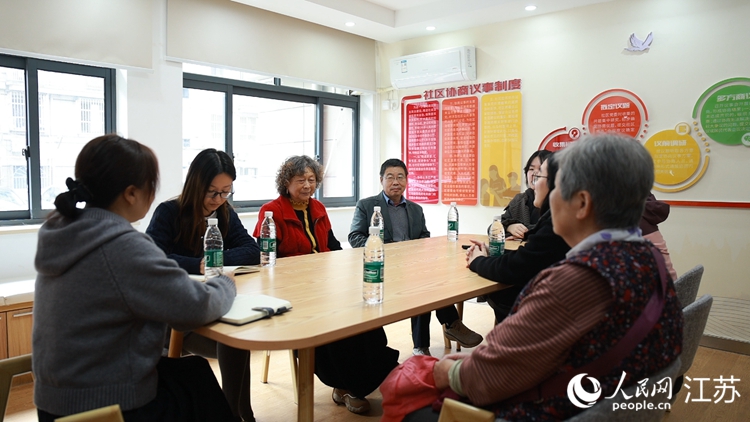
Core Insights - Nanjing is undergoing a significant transformation from "management" to "governance," focusing on people-centered approaches and digital empowerment to address urban challenges [1][15] - The city emphasizes multi-party collaboration and community engagement, allowing residents to actively participate in decision-making processes [2][5][6] Community Engagement - Residents in Nanjing are increasingly involved in local governance, exemplified by the successful transformation of the Jiangjiayuan community, where residents actively participated in parking management and community improvements [2][5] - The collection of community suggestions has led to a 100% resolution rate for 614 issues, with some being adopted by national authorities [5][8] Multi-Party Collaboration - The introduction of social organizations in the Qixiu community has enhanced service delivery, particularly for vulnerable populations, by providing specialized assistance [6][8] - Legal and psychological support services are being integrated into community governance, showcasing a collaborative approach to problem-solving [8] Digital Empowerment - Nanjing has implemented a "one network governance" system that integrates various data streams for efficient urban management, reducing the reliance on traditional methods [11][12] - The city has introduced measures to alleviate the administrative burden on community workers, allowing them to focus on providing more personalized services [12][14] Governance Transformation - The governance model in Nanjing is evolving to prioritize community needs and streamline processes, reflecting a shift towards a more responsive and efficient urban management system [15] - The approach aims to ensure that every individual is recognized and empowered within the community, contributing to a shared governance model [15]

基层不合理挂牌,摘掉
Ren Min Ri Bao· 2025-11-26 22:21
Core Points - The article discusses the positive impact of the removal of unnecessary signage in rural areas of Sichuan, which has led to improved service delivery for the community [1] - The initiative aims to optimize resource allocation and address key issues that concern the public [1] Group 1 - The removal of excessive external and internal signage has reduced the burden on grassroots workers, allowing them to better serve the community [1] - Sichuan has cleared a total of 72,000 external signs and 135,000 internal signs during the "14th Five-Year Plan" period [1] - The reduction in signage has made it easier for the public to access services, enhancing the overall efficiency of local governance [1]
纠治形式主义为基层减负
Zhong Yang Ji Wei Guo Jia Jian Wei Wang Zhan· 2025-09-18 00:56
Group 1 - The core viewpoint emphasizes that formalism and bureaucratism are significant obstacles to achieving the party's mission in the new era, and that disciplinary inspection agencies must prioritize reducing the burden of formalism on grassroots levels as a key task in style construction [1][2] - The approach to addressing formalism should be problem-oriented, focusing on regional, industry, and phase-specific characteristics, while also addressing both longstanding and emerging issues [2][3] - There is a need for a long-term mechanism to strengthen source governance, identifying deep-rooted causes of issues related to formalism, and ensuring both immediate and fundamental solutions are implemented [3][4] Group 2 - The strategy includes a focus on correcting issues such as the superficial implementation of central decisions, excessive documentation, and the burden of layered tasks on grassroots levels [2][3] - The importance of integrating disciplinary education with management and supervision to encourage accountability and innovation among cadres is highlighted [4] - The establishment of a comprehensive information platform and the use of big data analysis are proposed to enhance the detection and resolution of formalism-related issues [2][3]
以“数智”带“数治”——数智赋能助力基层减负的国能探索
Jing Ji Wang· 2025-09-16 10:37
Core Insights - The article highlights the implementation of intelligent digital tools by the State Power Investment Corporation to enhance efficiency and reduce the administrative burden on grassroots employees in the energy sector [1][2][3][4][5][6][7] Group 1: Digital Tools and Their Impact - The introduction of the "Intelligent Reporting Assistant" allows plant managers to complete data reporting in just one minute, significantly reducing the time spent on data processing from approximately 40 minutes to 12 minutes, achieving an over 80% reduction in reporting time [2][3] - The "Travel Expense Reimbursement Assistant" automates the reimbursement process, increasing financial review efficiency by 200%, allowing the review of 120 reimbursement requests daily, while reducing the average time spent on filling out forms to less than one minute [2][3] - The "Intelligent Receipt Collection Robot" processes expense reports quickly, completing initial audits and documentation in under one minute, thus minimizing the need for manual submission and reducing the risk of document loss [3][4] Group 2: Enhancing Governance and Efficiency - The digital transformation aims to alleviate the burdens on grassroots employees, allowing them to focus on core responsibilities rather than administrative tasks, thereby improving overall governance efficiency [1][2][3][4] - The implementation of AI-driven tools has led to a 30% increase in task response and data acquisition efficiency, a 60% improvement in issue resolution, and a 70% reduction in time spent on safety activity records [4][5] - The "Digital Employee for Power Trading" redefines the trading process, enabling real-time interaction and significantly reducing data processing time from 2 hours to just 5 minutes, enhancing efficiency by 24 times [5][6] Group 3: Strategic Vision and Future Directions - The State Power Investment Corporation emphasizes that digital empowerment is crucial for industry transformation, aiming to create a closed-loop mechanism for technology research, scenario validation, and application promotion [7] - The corporation's vision is to integrate digital solutions deeply into frontline operations, thereby accelerating the reduction of burdens on grassroots employees and driving sustainable growth and high-quality development [7]
这些形式主义要根治(大家谈·持之以恒为基层减负⑥)
Ren Min Ri Bao· 2025-09-14 22:03
Group 1 - The core viewpoint emphasizes the need to reduce burdens on grassroots workers by supporting and encouraging those who take action [2] - Recent measures have been implemented to standardize assessments and reduce evaluation indicators, yet some regions still engage in frequent ranking announcements, which adds unnecessary pressure on grassroots officials [2] - The document from the Central Committee and the State Council clearly states that frequent monthly or quarterly ranking announcements are prohibited, aiming to avoid cumbersome evaluations and promote effective performance [2] Group 2 - There is a concern that some departments equate the presentation of work, such as through PPTs, with actual work performance, leading to a focus on form over substance [3] - The pursuit of elaborate presentations can detract from actual work, as officials may spend more time on aesthetics rather than engaging with the community and addressing real issues [3] - Digital tools should be viewed as means to an end, not the end itself, highlighting the need to eliminate superficial practices in grassroots work [3] Group 3 - Training for officials is intended to empower the workforce, but often devolves into mere procedural tasks without tangible outcomes [4] - The phenomenon of "training for training's sake" results in ineffective sessions that do not address the actual needs of the participants [4] - To enhance training effectiveness, it is crucial to align training content with the real needs of officials, incorporating practical and relevant learning experiences [4][5]
朝阳市建常态长效机制为基层减负
Liao Ning Ri Bao· 2025-09-04 01:15
Core Points - The article highlights the innovative model of remote processing and collaborative handling of government services in Chaoyang City, which has significantly improved the efficiency of public service delivery [1] - The new model has transformed the previous cumbersome process of multiple trips into a streamlined "one trip" system, achieving a 100% completion rate for high-frequency service items [1] Group 1 - Chaoyang City has introduced a new model to address public concerns about the inconvenience and high costs associated with government services, allowing residents to complete necessary procedures locally [1] - The city has implemented a mechanism to reduce burdens on grassroots levels, resulting in an 18.5% decrease in document submissions and a 6.1% reduction in meeting attendance at grassroots observation points [1] - The number of documents and meetings at the municipal level has also decreased, with a 21% reduction in inspection and assessment plans, further alleviating the pressure on grassroots officials [1] Group 2 - The city has issued a notice to tackle the issue of "small tasks burdening large operations" in grassroots governance, establishing a work mechanism that promotes coordination and regular progress updates [1] - The initiative aims to ensure that grassroots party members and officials can "reduce burdens without reducing responsibilities" and "lighten their load to promote revitalization" [1]
民航珠海进近管制中心持续深入做好“我为群众办实事”
Zhong Guo Min Hang Wang· 2025-08-26 11:22
Core Viewpoint - The Civil Aviation Zhuhai Approach Control Center is actively implementing the spirit of the Central Eight Regulations, focusing on improving work styles, reducing burdens for grassroots employees, and translating educational outcomes into actions that promote high-quality development and serve the public [1][5]. Group 1: Implementation of Central Eight Regulations - The center's party committee emphasizes open education and the practical application of the Central Eight Regulations to enhance work styles and reduce burdens for employees [1][2]. - The committee is committed to integrating party building with business operations, enhancing the capabilities of grassroots party branches to identify and solve problems effectively [2][3]. Group 2: Research and Development - The center has conducted targeted research on key operational challenges, including party-business integration, capacity building for controllers, and team development, leading to breakthroughs in various areas [2][3]. - Feedback from employees is actively sought through surveys and meetings to address urgent issues and improve working conditions [2][3]. Group 3: Practical Measures and Employee Welfare - The center has implemented various initiatives to care for employees, including psychological support training, community-building activities, and improvements to facilities such as canteens and sports areas [4]. - Specific programs have been launched to assist employees with childcare during the summer, enhancing their work-life balance and overall well-being [4]. Group 4: Future Directions - The center plans to continue enhancing political awareness and ensuring the effectiveness of educational initiatives, with a focus on improving employee satisfaction and safety [5].
焦点访谈丨一份清单厘清权责 乡镇街道不再“小马拉大车”
Yang Shi Xin Wen Ke Hu Duan· 2025-08-22 07:27
Core Viewpoint - The implementation of a duty performance checklist for street and town officials aims to alleviate their burdens and improve work efficiency, clarifying responsibilities and enhancing coordination with higher-level departments [12][15][28] Group 1: Background and Context - Since February 2024, a total of 38,000 towns and streets across the country have initiated the compilation of duty performance checklists, completing them by June of the same year [12] - Street and town officials have expressed feelings of increased workload due to numerous tasks assigned by higher authorities, often beyond their capabilities [1][4] Group 2: Challenges Faced by Local Officials - Local officials struggle with responsibilities such as waste management and safety inspections, which they feel are beyond their professional capacity [4][6] - The complexity of coordinating between various departments for tasks like safety checks and environmental regulations adds to their burden [6][9] Group 3: Implementation of Duty Performance Checklists - The duty performance checklist helps clarify what tasks are appropriate for street and town officials, what they should assist with, and what is beyond their capacity [13][15] - The checklist aims to delineate responsibilities between local officials and higher authorities, ensuring that tasks are assigned appropriately [15][18] Group 4: Impact on Local Governance - The checklist has led to improved efficiency in handling local issues, such as waste management and shared bicycle regulations, by allowing specialized departments to take on responsibilities previously assigned to local officials [20][25] - The establishment of these checklists has also streamlined the process of addressing community complaints, significantly reducing response times [25][26] Group 5: Future Directions - The government plans to continue refining the duty performance checklist system to further reduce burdens on local officials and enhance governance capabilities [28] - Recent regulations emphasize that responsibilities should not be arbitrarily assigned to local officials without proper authorization, reinforcing the importance of the checklist in maintaining clear lines of accountability [28]

焦点访谈|从“无所不包”到“有所不为”,履职事项清单为基层减负
Yang Shi Wang· 2025-08-21 13:15
Core Viewpoint - The implementation of a duty performance checklist for street and township offices aims to alleviate the burden on local officials and improve work efficiency by clearly defining responsibilities and tasks [10][12][26] Group 1: Background and Challenges - Local officials have been facing increasing workloads due to numerous tasks assigned by higher authorities, leading to significant pressure and challenges in fulfilling these responsibilities [5][7] - Many street and township offices lack the professional capacity to handle certain tasks, resulting in a reliance on volunteers and ad-hoc solutions [3][5] - The complexity of coordinating responsibilities among various departments has made it difficult for local officials to manage their duties effectively [5][10] Group 2: Implementation of Duty Performance Checklist - Since February 2024, a total of 38,000 street and township offices have developed duty performance checklists, which were completed by June 2024 [10][26] - The checklist process involves identifying what tasks are appropriate for local offices, what they should assist with, and what responsibilities should be handled by higher authorities [10][12] - The checklist aims to clarify the responsibilities of local offices and the corresponding duties of higher departments, thereby reducing confusion and inefficiency [12][14] Group 3: Outcomes and Benefits - The establishment of the checklist has led to improved coordination between local offices and higher authorities, allowing for more efficient handling of community issues [16][22] - Specific examples include the successful management of beach waste in Dalian and the regulation of shared bicycles in Shanghai, demonstrating the effectiveness of centralized coordination [16][20] - The checklist also facilitates a more focused approach to local governance, enabling officials to prioritize essential services and community needs [18][20] Group 4: Future Directions - The government plans to further refine the duty performance checklist system to ensure long-term effectiveness and support for local governance [24][26] - Recent regulations emphasize that responsibilities should not be arbitrarily transferred to local offices without proper authorization, reinforcing the need for clear delineation of duties [26]