大模型

Search documents
——计算机行业周报(03.23-03.29):OpenClaw给中国大模型厂商带来的非凡机遇-20260329
Xiangcai Securities· 2026-03-29 13:14
Investment Rating - The report maintains a "Buy" rating for the computer industry [2] Core Insights - OpenClaw presents extraordinary opportunities for Chinese large model manufacturers, as the commercialization of these models is not yet fully closed compared to overseas counterparts [4][11] - OpenClaw is transforming the landscape by standardizing and quantifying API calls, allowing for a clear conversion of interactions into pay-per-use revenue streams, thus enabling Chinese large model manufacturers to achieve a commercial closure in the C-end market [5][15] - The C-end market in China has not yet formed a subscription-based revenue model, unlike the mature overseas market represented by ChatGPT, which has over 900 million weekly active users and more than 50 million individual subscribers [7][14] Market Review - The computer industry index fell by 3.44% this week, ranking 30th among the primary industries [21] - The overall price-to-earnings (PE) ratio for the computer industry was reported at 50.4 as of March 27 [24] Investment Recommendations - The report suggests focusing on ecological domestic large models that have high consumption ratios within the OpenClaw ecosystem, as their API call volumes and token revenues are expected to enter a high growth phase [26] - Attention should also be given to leading cloud service providers that offer one-click deployment solutions and control application distribution entry points [26] - The demand for inference-side computing power is expected to surge, benefiting domestic AI chip manufacturers, servers, and related hardware suppliers [26]
杨植麟、张鹏、罗福莉首度对谈
21世纪经济报道· 2026-03-29 12:30
Core Insights - The article discusses the emergence of the open-source AI agent "OpenClaw" and its implications for the AI industry, highlighting a shift in expectations for large models and their capabilities [1][4]. Group 1: OpenClaw and Its Impact - OpenClaw represents a significant evolution in AI agents, breaking barriers that previously limited their use to tech enthusiasts, allowing ordinary users to leverage advanced programming and execution capabilities [4]. - The introduction of OpenClaw has led to a dramatic increase in token consumption, with some companies reporting a tenfold increase in token usage within a short period, reminiscent of the rapid growth seen during the 3G mobile era [8]. - The agent framework has activated the latent capabilities of pre-trained models, enabling them to handle more complex tasks and longer contexts, which is now a competitive focus in the industry [5][9]. Group 2: Infrastructure and Model Architecture - The rapid growth in token demand necessitates urgent changes in computational infrastructure and model architecture, with companies needing to rethink their systems to better support AI demands [8]. - Current infrastructures are primarily designed for human engineers rather than AI, indicating a need for evolution towards self-iterating intelligent organizations that can autonomously manage computational resources [8]. - The competition in model architecture is intensifying, with a focus on efficient training and low-cost inference, particularly as models are required to manage longer contexts and more complex tasks [9]. Group 3: Challenges to Adoption - Despite the excitement surrounding AI agents, there are significant technical hurdles that must be overcome for widespread adoption, including planning capabilities, memory management, and the quality of the ecosystem [12][13]. - The experience of using OpenClaw has improved, but underlying issues remain unresolved, indicating that the current enthusiasm may still be in a novelty phase rather than a fully mature stage [12][13]. - A holistic approach involving collaboration across the software and hardware ecosystem is essential for AI agents to transition from experimental to practical applications in production environments [13].


Kimi创始人杨植麟:未来AI研发将进入AI主导时代
凤凰网财经· 2026-03-29 10:49
Core Insights - The essence of large models is the conversion of energy into intelligence, with scalability being a core foundation for AI development. However, scalability is not merely about brute-force computing power and energy but focuses on upgrading efficiency [1][3]. Group 1: Scalability Strategy - Kimi's scalability strategy is built around three main directions: Token efficiency, long context, and Agent swarm technology, aiming to maximize intelligence with limited resources [1][3]. - Improving Token efficiency involves utilizing better network architectures and optimizers to learn more intelligence from the same amount of data [3]. - Kimi's proprietary Kimi Linear architecture enhances long context capabilities, allowing models to achieve lower loss functions with longer inputs, supporting more complex task execution [3]. Group 2: Evolution of Model Training - The evolution of large model training has three stages: Initially relying on natural internet data with minimal human annotation, moving towards large-scale reinforcement learning systems by 2025, where human-defined tasks are enhanced through reinforcement learning [3]. - In the near future, AI will increasingly lead research and development efforts, with researchers equipped with vast amounts of Tokens, allowing AI to autonomously synthesize new tasks, construct new environments, and define optimal reward functions [3]. - This shift is expected to accelerate the pace of research and development across the AI field [3].

大模型该去二级市场要钱了
虎嗅APP· 2026-03-29 09:34
Core Insights - The article discusses the upcoming IPOs of major AI model companies, including Anthropic and 月之暗面, with valuations of approximately $380 billion and $180 billion respectively, indicating a significant trend in the AI industry towards public markets [2][3]. - The shift in focus from technological capabilities to the validation of commercial value marks a new phase in the competition among AI model companies [6]. - The capital market's patience is waning as companies reach valuations of $100 billion, necessitating a transition to public markets for continued funding [7][8]. Group 1: Market Trends - Major AI model companies are expected to go public by 2026, indicating a consolidation of top players in the market [8]. - The influx of capital into the AI sector has been substantial, with leading companies raising tens of billions, but the need for ongoing funding is becoming critical as the market matures [8][11]. - The rapid increase in valuations, from the emergence of ChatGPT to now, highlights the accelerated growth of the AI model sector [8]. Group 2: Financial Dynamics - AI model companies are transitioning to a "long-term capital consumption structure," requiring continuous investment rather than one-time funding [10][11]. - The revenue generated from API calls and enterprise clients is growing but remains unstable, leading to increased pressure on profit margins due to price competition [11][12]. - The uncertainty in return on investment and the need for substantial ongoing funding create challenges for these companies in the primary market [13][14]. Group 3: Market Sentiment - The market sentiment towards AI has been optimistic, as evidenced by the strong performance of newly listed companies like MiniMax and 智谱AI, which saw significant stock price increases shortly after their IPOs [16][17]. - In contrast to previous generations of AI companies, the current market is more favorable, with less skepticism regarding the commercial viability of new entrants [17].

突发!华为盘古大模型负责人离职
程序员的那些事· 2026-03-28 11:05
Core Viewpoint - The departure of key figures in AI development, such as Wang Yunhe from Huawei, indicates significant shifts in the competitive landscape of AI and large model development in the industry [3][5][8]. Group 1: Departure of Key Personnel - Wang Yunhe, the head of Huawei's Pangu large model and director of the Noah's Ark Lab, confirmed his departure after nearly 9 years with the company [3]. - His career at Huawei is notable, having progressed from an intern in 2017 to leading the top AI lab, showcasing internal growth and technical leadership [5]. - Wang was responsible for the overall R&D planning of the Pangu large model, making him a crucial figure in Huawei's competitive stance in the large model sector [6]. Group 2: Future Directions - Industry rumors suggest that Wang Yunhe's next venture will focus on AI intelligent body entrepreneurship, which is seen as a direction with significant commercial potential for large model applications [8]. Group 3: Model Controversies - On June 30, 2025, Huawei open-sourced the Pangu Pro MoE and other models, which later faced scrutiny for alleged similarities to Qwen in parameter distribution and retained third-party copyright information, leading to accusations of "retraining" or "shelling" [10]. - In response to these allegations, the Noah's Ark Lab issued a denial on July 5, 2025 [10].

GLM-5.1上线,编程表现贴Opus 4.6开大,Coding plan瞬间断货
量子位· 2026-03-28 05:17
Core Viewpoint - The article discusses the launch of the GLM-5.1 model, highlighting its significant improvements in programming capabilities compared to its predecessor, GLM-5, and its close performance to the leading model, Claude Opus 4.6 [1][2]. Group 1: Model Performance and User Feedback - GLM-5.1 has shown an increase of nearly 10 points in programming ability compared to GLM-5, with a score just 2.6 points lower than Claude Opus 4.6 [1][2]. - Users have reported impressive results, such as creating an interactive version of "Minecraft" and a professional industry manual from research data fed into the model [6][7][9]. - The model's performance in generating spatial structures and maintaining consistency in dynamic environments has been positively noted, indicating strong capabilities in understanding space and continuity [20][28][29]. Group 2: Model Configuration and Accessibility - GLM-5.1 is available to all users of the GLM Coding Plan, including Lite users, and supports integration with platforms like Claude Code and OpenClaw [12][17]. - The model can be configured easily by modifying the settings.json file to switch to GLM-5.1, with detailed steps provided for users [33][36]. - The rapid release cycle of GLM-5.1, occurring just over a month after GLM-5, suggests a focus on continuous improvement and stability in programming tasks [31][32].

娃哈哈停产了?知情人士回应;九号公司与泡泡玛特达成合作,联名电动车将于4月推出;雷军介绍小米机器人团队在灵巧手领域新进展丨邦早报
创业邦· 2026-03-28 01:10
Group 1 - Apple is offering stock incentives worth $200,000 to $400,000 to iPhone hardware designers to prevent them from leaving for AI startups like OpenAI, with the bonuses vesting over four years [3] - OpenAI has successfully recruited dozens of engineers from Apple in 2023 and plans to expand its workforce from 4,500 to 8,000 by the end of 2026 [3] - The bonuses offered by Apple are significantly lower than those provided by AI companies, which reportedly offer around $1 million annually in stock incentives [3] Group 2 - Wahaha has temporarily halted 70% of its production lines, including those for its popular bottled water, with a planned resumption of operations around April 2 [4] - A source close to Wahaha indicated that the production stoppage is due to scheduling and inventory issues rather than a sign of instability [4] Group 3 - Ninebot announced a collaboration with Pop Mart to create a co-branded electric vehicle aimed at young consumers, set to launch in April [4] Group 4 - Xiaomi's robotics team has made advancements in dexterous hands, completing 150,000 grip cycle reliability tests, and aims for near 100% operational success in long-term deployments [6][7] Group 5 - BYD reported a revenue of 803.96 billion yuan for 2025, a year-on-year increase of 3.46%, with net profit expected to decline by 19% to 32.62 billion yuan [10] - The revenue from automotive and related products was approximately 648.65 billion yuan, up 5.06%, while revenue from mobile components and assembly decreased by 2.74% to about 155.24 billion yuan [10] Group 6 - Li Auto has initiated a stock repurchase plan, allowing up to $1 billion in buybacks by March 31, 2027, with the execution of the plan to be based on market conditions [10] Group 7 - Cha Bai Dao reported a total revenue of 5.395 billion yuan for 2025, a 10% increase, with net profit rising 71% to 820 million yuan [18] - The company expanded its store count to 8,621, with a significant portion in lower-tier cities, and launched 117 new products during the year [18] Group 8 - OpenAI's ChatGPT advertising business achieved an annualized revenue of over $100 million within six weeks of its pilot launch in the U.S., with plans to expand to more countries [19] Group 9 - Zero Run Auto launched its A10 model globally, priced from 65,800 to 86,800 yuan, featuring advanced driving assistance and targeting nearly 40 countries [23][24] - IM Motors has opened pre-sales for its LS8 SUV, with prices ranging from 259,800 to 309,800 yuan, featuring advanced technology and AI capabilities [26]




中国软件国际(00354.HK):3月27日南向资金增持904.2万股
Sou Hu Cai Jing· 2026-03-27 19:17
Group 1 - The core viewpoint of the article highlights the significant increase in southbound capital holdings in China Software International (00354.HK), with a total net increase of 21.6 million shares over the last five trading days and 49.6 million shares over the last 20 trading days [1] - As of now, southbound capital holds 966 million shares of China Software International, accounting for 35.31% of the company's total issued ordinary shares [1] Group 2 - China Software International is an investment holding company that provides global technology software and IT services, operating through two main segments: technology professional services and internet information technology services [1] - The company's primary business focuses on the development of generative artificial intelligence (AIGC), sales of large model software and hardware, and digital transformation consulting services for enterprise resource planning (ERP) models [1] - Key products include the "Question Series" solutions, large model application integrated machines, and the Lingxi AI application platform, serving various sectors such as water conservancy, transportation, government platforms, military, energy, education, and finance [1]


杨植麟当主持人的大模型圆桌:张鹏罗福莉夏立雪都放开说了
量子位· 2026-03-27 16:01
Core Insights - The article discusses the evolution of AI agents and the significance of the OpenClaw framework in enhancing model capabilities and user interaction [5][19][57] - Key industry leaders emphasize the importance of long context and the need for models to adapt and self-evolve in the AGI era [44][59] Group 1: Key Discussions at the Forum - The forum featured prominent figures from the AI industry discussing the next generation of agents, focusing on the advantages of Chinese AI models and the role of OpenClaw [1][8] - Xiaomi's new model was highlighted, with its leader emphasizing the importance of optimal solutions under limited computational power [5][40] - The rapid increase in token usage was noted, with a tenfold growth since January, likening it to the early days of mobile data proliferation [6][13] Group 2: Insights on OpenClaw and Agent Frameworks - OpenClaw is described as a scaffolding that democratizes access to advanced model capabilities, allowing non-programmers to utilize AI effectively [11][16] - The framework's design encourages creativity and flexibility, enabling users to extend their ideas without extensive coding knowledge [11][16] - The community's engagement with OpenClaw is seen as a catalyst for innovation, with more individuals participating in the AGI transformation [18][57] Group 3: Challenges and Future Directions - The discussion highlighted the challenges of planning and memory in long-term tasks, emphasizing the need for better systems to manage complex contexts [49][50] - The importance of high-quality skills and tools for agents was stressed, with a call for community collaboration to enhance the skills ecosystem [52][53] - The future of AI is expected to shift towards agent-native systems, where software becomes increasingly designed for agents rather than human users [57][59] Group 4: Predictions for the Next 12 Months - Industry leaders predict a focus on sustainability in AI infrastructure, ensuring resources are efficiently utilized to support growing token demands [62][63] - The need for computational power remains a critical concern, as the demand for AI capabilities continues to surge [65] - The concept of self-evolution in models is anticipated to gain traction, potentially leading to significant advancements in AI research and applications [59][61]


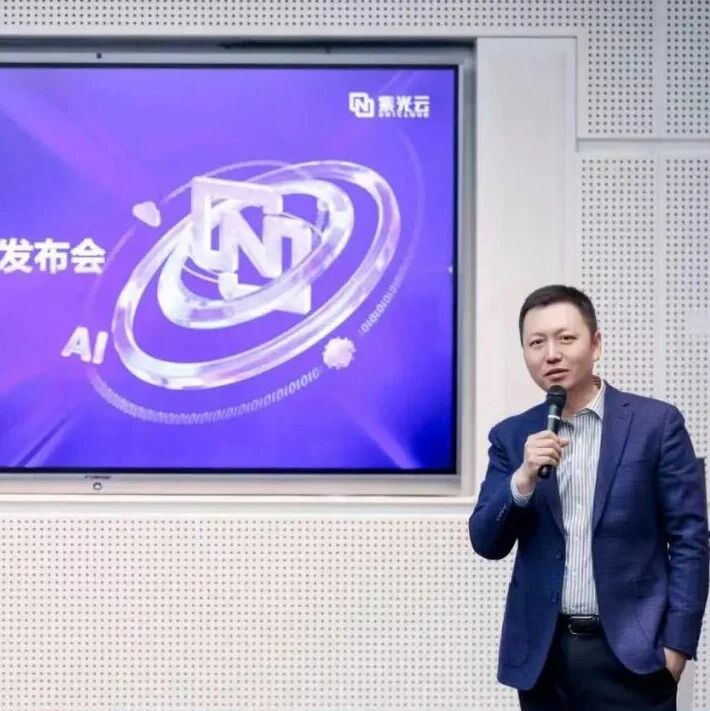
发布两款大模型,紫光云补上B端落地“最后一块拼图”
半导体芯闻· 2026-03-27 10:26
Core Viewpoint - AI has transitioned from a theoretical discussion about its potential to a practical phase focused on implementation and value realization, with the key question now being how to effectively deploy AI in various sectors [1][2]. Group 1: AI Development Stages - The evolution of large models can be divided into three stages: the "Hundred Models War," the "Tooling Phase," and the current "Business Phase," indicating a shift from capability stacking to industry embedding [3][5][6]. - The first stage focused on maximizing model intelligence through extensive data training, akin to transforming a "primary school student" into a "university student" [5]. - The second stage saw models entering practical work environments, transitioning from merely answering questions to becoming tools that assist in production systems [6]. - The current stage emphasizes AI's role as a business entity, capable of not only executing tasks but also defining them and optimizing resource allocation [6][7]. Group 2: B-end vs C-end AI Implementation - The disparity in the pace of AI adoption between consumer (C-end) and business (B-end) sectors is significant, with B-end requiring a more structured approach due to its complexity and need for accuracy [6][8]. - B-end AI implementation faces three main challenges: data accessibility, computational power, and application complexity, necessitating a complete system to support model integration [8][11]. - The need for specialized models tailored to industry-specific knowledge and processes is crucial for B-end applications, contrasting with the generalist nature of models used in C-end scenarios [11]. Group 3: Closing the Gaps for B-end AI - Successful B-end AI deployment requires the integration of three critical loops: model and computational power, data, and application [11][13][14]. - The "Three-in-One" computational foundation proposed by the company combines general, intelligent, and supercomputing resources to enhance existing systems rather than rebuilding them [13]. - A robust data platform is essential for transforming disparate data into usable knowledge assets, facilitating the connection between data and models [13]. Group 4: Industry-Specific Large Models - The company has launched two industry-specific large models: the Chip Design Model and the Industrial Drawing Model, targeting critical sectors in China's future industrial landscape [18][19]. - The Chip Design Model aims to embed AI throughout the entire chip design process, addressing the complexity and collaborative nature of semiconductor development [19][22]. - The Industrial Drawing Model focuses on converting unstructured drawing data into structured, computable formats, enhancing manufacturing efficiency and accuracy [23][24]. Group 5: Future Outlook - The overarching goal of these models is to transform capabilities that have traditionally relied on individual experience into scalable, reusable systems [25]. - The company emphasizes the importance of deep engagement with business scenarios to ensure the successful implementation of large models, rejecting the notion of shortcuts in this complex process [26].