
存货管理

Search documents
古麒绒材:公司存货规模与日常经营策略等多重因素密切相关
Zheng Quan Ri Bao Wang· 2025-10-28 10:11
Core Viewpoint - The company emphasizes that its inventory scale is closely related to its operational strategy, long-term goals, and market price fluctuations, and it aims to balance operational profit with inventory risk management [1] Group 1 - The company adjusts its inventory strategy based on actual operational needs to respond quickly to customer demands and manage raw material price volatility [1] - The current inventory levels and overall asset structure are within a controllable risk range [1] - The company will continue to monitor market dynamics to seek the best balance between securing operational profits and preventing inventory risks, ensuring stable operations [1]
“鱼油之王”的烦恼:禹王生物营养8.1%市场份额难抵成本洪流
Zhi Tong Cai Jing· 2025-10-23 05:19
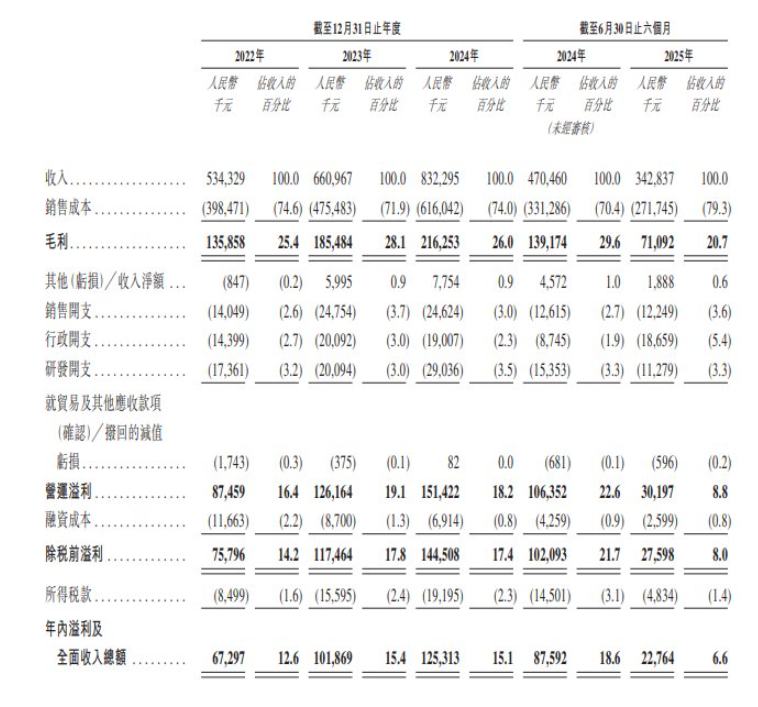
Core Insights - Yuwang Biological Nutrition Co., Ltd. has submitted its IPO application to the Hong Kong Stock Exchange, highlighting its position as the world's largest supplier of refined fish oil with a market share of 8.1% [1] - The company has demonstrated strong revenue growth, with revenues increasing from 534.3 million RMB in 2022 to 661 million RMB in 2023, and projected to reach 832.3 million RMB in 2024, indicating a robust compound annual growth rate [2] - However, the company's profitability has shown volatility, with a significant drop in net profit margin from 15.1% in 2024 to 6.6% in the first half of 2025, despite maintaining substantial revenue levels [3][4] Financial Performance - The core business of Yuwang includes the development, production, and sale of refined fish oil and dietary supplements, which accounted for approximately 97.5% to 98.8% of total revenue from 2022 to mid-2025 [2] - The company's gross profit margin peaked at 28.1% in 2023 but fell to 20.7% in the first half of 2025, primarily due to rising sales costs, which reached a historical high of 79.3% of revenue [3][4] - Administrative expenses increased significantly, with their proportion of revenue rising from about 2-3% to 5.4% in the first half of 2025, contributing to a decline in operating profit margin from 22.6% in 2024 to 8.8% in 2025 [4] Cost Pressures - The company faces significant cost pressures, with raw material costs (mainly fish oil) consistently accounting for over 87% of total sales costs in recent years, making it vulnerable to price fluctuations [6][7] - The lack of pricing power in a competitive market means that rising raw material costs cannot be easily passed on to customers, potentially impacting profitability [6][8] Market Exposure - Yuwang's overseas revenue share increased from 47.3% in 2022 to 60.9% in 2024, indicating a strong reliance on international markets, particularly the U.S., which poses risks due to ongoing trade tensions [8] - The company’s high inventory levels, which reached 210 million RMB at the end of 2023, present a risk of depreciation if market demand does not meet expectations [9] Operational Efficiency - The decline in inventory turnover days from 138 days in 2023 to 92 days in the first half of 2025 may suggest improved operational efficiency, but it could also indicate a strategy to reduce inventory in response to cash flow pressures [9] - The company’s ability to manage costs and maintain profitability amidst external pressures will be critical for its future performance [9]

老铺黄金年内二度配股,向市场要钱囤金
Hua Er Jie Jian Wen· 2025-10-22 14:49
Core Viewpoint - Laopuhuang has initiated its second equity financing of the year, aiming to raise approximately HKD 27.15 billion through the placement of 3.71 million new H-shares at a discount of about 4.5% from the previous closing price [1] Group 1: Financing and Use of Proceeds - The company plans to allocate 70% of the raised funds for inventory reserves, 10% for store expansion and optimization, and the remaining 20% for working capital and general corporate purposes [1] - This financing follows a previous placement in May, where Laopuhuang raised approximately HKD 26.98 billion by issuing 4.31 million H-shares [1] Group 2: Inventory and Cash Flow - By the end of 2024, Laopuhuang's inventory is projected to surge to CNY 40.88 billion, a year-on-year increase of 222.4% from CNY 12.68 billion [2] - In the first half of 2025, inventory is expected to double to CNY 86.85 billion compared to the beginning of the year, with inventory turnover days decreasing from 195 days to 150 days [2] - Despite achieving paper profits through price increases and efficient turnover, the company has faced tight cash flow due to expanding raw material demands, with cash outflows projected at CNY 12.3 billion and CNY 22.15 billion for 2024 and the first half of 2025, respectively [6] Group 3: Pricing Strategy - Laopuhuang's price increase strategy has closely followed gold price trends, with a notable lag during rapid price increases, enhancing the perceived value of its products [3][4] - Following previous price adjustments in February and August, the company is set to implement a third price increase of approximately 9% to 10% on October 26 [5] Group 4: Market Environment - The external market has shown volatility, with spot gold experiencing a significant drop of 6.3% on October 21, reaching a low of USD 4,082 per ounce after hitting historical highs [8]
图南股份(300855) - 300855图南股份投资者关系管理信息20251022
2025-10-22 01:02
Group 1: Financial Performance - In Q3 2025, the net profit attributable to shareholders was 30.39 million yuan, a decrease compared to Q2 2025, primarily due to increased operational costs leading to losses in subsidiaries [2] - The inventory balance at the end of Q3 2025 was 749.53 million yuan, reflecting a 38.48% increase compared to the beginning of 2025 and a 33.19% increase compared to the end of the first half of 2025 [3] Group 2: Production and Operations - The "Aerospace Small and Medium Parts Automation Processing Line" project at the subsidiary has been completed and has an annual production capacity of 50,000 sets [2] - The "Annual Production of 1,000 Small and Medium Parts Automation Production Line" project is still under construction and is expected to be completed by the end of 2025 [3] Group 3: Orders and Revenue Recognition - As of June 30, 2025, the company had signed contracts with a total revenue amount of 174.98 million yuan expected to be recognized in 2025, 52.99 million yuan in 2026, and 66.50 million yuan in 2027 [3] - There have been no significant changes in the order backlog and revenue recognition expectations since the half-year report, with normal contract performance and progress [3] Group 4: Product Applications and Pricing - The main products include casting high-temperature alloys, deformed high-temperature alloys, and special stainless steels, primarily used in aerospace engines, gas turbines, and petrochemical industries [3] - The company employs a cost-plus pricing strategy, adjusting prices based on raw material market fluctuations, and expects overall stability in product gross margins for 2025 [3]

坦博尔IPO前,突击分红2.9亿元
中国基金报· 2025-10-13 10:18
Core Viewpoint - The article discusses the upcoming IPO of the domestic outdoor brand Tamboor, highlighting its impressive revenue growth and recent financial maneuvers, including a significant pre-IPO dividend distribution of 290 million yuan [2][20]. Revenue Growth - Tamboor has demonstrated remarkable revenue growth, increasing from 732 million yuan in 2022 to 1.302 billion yuan in 2024, representing a compound annual growth rate of over 33%. In the first half of 2025, revenue reached 658 million yuan, marking an 85% year-on-year increase [5][12]. - The Chinese professional outdoor apparel market is rapidly expanding, with market size projected to grow from 688 billion yuan in 2019 to 1.319 trillion yuan in 2024, and expected to exceed 2.87 trillion yuan by 2029 [7]. Profitability Challenges - Despite strong revenue growth, Tamboor's net profit has shown significant volatility. Net profit was 85.77 million yuan in 2022, peaked at 139.24 million yuan in 2023, but fell to 107.31 million yuan in 2024, a year-on-year decline of 23%. In the first half of 2025, net profit was 35.94 million yuan [9][10]. - The net profit margins have also been under pressure, with net profit margins of 11.7%, 13.6%, 8.2%, and 5.5% for the years 2022, 2023, 2024, and the first half of 2025, respectively [9][10]. Channel Transformation - Tamboor has actively pursued channel transformation, with online channel revenue increasing from 226 million yuan in 2022 to 626 million yuan in 2024, accounting for 48.1% of total revenue by 2024. In the first half of 2025, online revenue surpassed offline for the first time [12][13]. - However, the rapid growth of online channels has led to increased marketing expenses, with sales and distribution expenses reaching 508 million yuan in 2024, accounting for 39% of revenue, an increase of nearly 12 percentage points from 2022 [12]. Inventory Issues - As of June 30, 2025, Tamboor's inventory value surged to 931 million yuan, a 262% increase from the end of 2023, and further rose to 1.103 billion yuan by the end of August 2025. The inventory turnover days increased significantly from 242 days in 2023 to 485 days in the first half of 2025, indicating a slowdown in inventory movement [14][15]. Pre-IPO Dividend Distribution - Prior to its IPO, Tamboor distributed a substantial dividend of 290 million yuan to shareholders, which is over eight times the 35 million yuan distributed in 2022. This distribution resulted in a decrease in the company's net assets from 741.5 million yuan at the end of 2024 to 487.5 million yuan by June 30, 2025 [20]. - The family controlling Tamboor, led by founder Wang Yongping, received a significant portion of this dividend, raising concerns about the company's liquidity and the necessity for IPO fundraising to support future growth initiatives [18][20].

新易盛:公司拥有完善存货管理体系,存货增长主要源于业务规模扩张与订单储备
Zheng Quan Ri Bao Wang· 2025-09-26 12:40
Core Viewpoint - The company, Xinyisheng (300502), indicated that its inventory growth is primarily due to business expansion and order reserves, supported by a robust inventory management system [1] Group 1 - The company has a comprehensive inventory management system [1] - Inventory growth is attributed to business scale expansion [1] - Order reserves also contribute to the increase in inventory [1]

专题 | 2025上半年房企存货管理专题——典型房企计提减值准备仍在继续
克而瑞地产研究· 2025-09-22 09:28
Core Viewpoint - The article analyzes the inventory management of 50 typical listed real estate companies, revealing the industry's practices in "scale contraction" and "risk mitigation" to optimize inventory structure and provide insights for investors to assess industry risks [1][3]. Group 1: Inventory Trends - The total inventory of real estate companies has declined for four consecutive years, with a decrease of 4.6% in the first half of 2025, totaling 8.14 trillion yuan compared to 8.53 trillion yuan at the end of 2024 [6][8]. - The decline in inventory is consistent across different tiers of companies, with the largest drop seen in the TOP31-50 and TOP51-100 tiers, exceeding 7%, while the TOP10 tier experienced a smaller decline of 2.3% [8]. - The inventory structure includes development inventory and completed inventory, with the latter directly impacting liquidity; a higher proportion of completed inventory indicates potential liquidity pressure [5][10]. Group 2: Completed Inventory and Current Housing - The proportion of completed inventory reached a five-year high at 26.9%, with an increase of 0.5 percentage points from the beginning of the year, although the growth rate has slowed compared to previous years [19]. - 56% of companies reported an increase in the proportion of completed inventory, indicating significant differentiation between leading companies and those under high pressure [21]. Group 3: Impairment Provisions - The inventory impairment ratio has continued to rise, with private companies reaching 13.12%, indicating significant asset impairment challenges [23][28]. - The total impairment provision balance for the first half of 2025 was 159.8 billion yuan, showing a slight decrease of 0.8% from the beginning of the year, but the overall impairment pressure remains high [23][25]. Group 4: Investment and Inventory Management Strategies - The proportion of inventory to total assets has decreased to 47.7%, reflecting a shift towards liquidity prioritization among real estate companies [31]. - Companies are adopting strategies such as "old project discounts + new project quick turnover" to manage inventory effectively and improve cash flow [32][36].

“羊奶粉”存货周转361天,宜品集团利润大降
阿尔法工场研究院· 2025-09-22 00:07
Core Viewpoint - Yipin Group, a major player in the goat milk powder market, is facing challenges due to declining performance, high inventory turnover, and intense competition from industry giants [2][3][5]. Financial Performance - In the first half of 2025, Yipin Group reported revenue of 806 million yuan, a decrease of 10.36% compared to 900 million yuan in the same period of 2024; net profit fell by 42.57% to 56.688 million yuan [7]. - This marks the first time in recent years that both revenue and net profit have declined simultaneously, indicating a significant reduction in growth momentum [7]. - The decline in performance is attributed to packaging upgrades for infant goat milk powder, which delayed shipments from distributors [7]. Market Position and Competition - Yipin Group holds the second-largest market share in China's goat milk powder market at approximately 14%, but faces increasing pressure from leading companies like Ausnutria, which holds 24.8% market share [7][8]. - The competitive landscape is further complicated by cross-industry giants entering the market, such as Feihe, which has introduced mixed formula products that directly impact Yipin's core market [8]. Inventory Management - Yipin Group's inventory turnover period has extended to nearly one year, with inventory levels reaching 802 million yuan in the first half of 2025, indicating operational inefficiencies [10][11]. - The company reported inventory turnover days of 361 days, significantly higher than the industry average, leading to increased financial pressure and potential risks of inventory devaluation [11][12]. Research and Development - Yipin Group's R&D investment is notably low compared to industry leaders, with R&D expenses of only 4 million yuan in the first half of 2025, resulting in a R&D expense ratio of 0.5% [13]. - This lack of investment in R&D may hinder the company's ability to enhance its competitive edge in both goat milk powder and special medical food segments [13]. Governance and Shareholder Concerns - The company's ownership structure raises concerns, with the founder and related entities holding approximately 75.11% of shares, leading to potential governance issues [15][16]. - Yipin Group's plan to distribute significant dividends prior to its IPO has sparked debate regarding the protection of minority shareholders' interests [15][16]. Future Opportunities - Despite current challenges, Yipin Group has the potential to leverage its IPO to address issues such as R&D deficiencies and channel imbalances, which could lead to long-term growth [17]. - The company plans to use IPO proceeds for R&D center development, online channel expansion, and supply chain optimization, which could enhance its market position if executed effectively [17].

中颖电子:2025年的经营重心在保障市占率及降低存货
Zheng Quan Ri Bao Zhi Sheng· 2025-09-03 10:15
Group 1 - The core viewpoint is that the semiconductor industry has entered a downward cycle since the second half of 2022, leading to increased competition within the industry [1] - The overall situation of the industry has gradually improved since the beginning of this year [1] - The company aims to focus on maintaining market share and reducing inventory by 2025, while also enhancing research and development efficiency [1] Group 2 - The company's funding is primarily reserved for future development needs [1]

京山轻机:公司将通过强化客户信用分级管理、建立动态库存预警机制,优化“以销定产”模式降低存货积压风险
Zheng Quan Ri Bao Zhi Sheng· 2025-09-02 11:13
Core Viewpoint - The company is implementing strategies to enhance cash flow management and mitigate foreign exchange risks, focusing on customer credit management and inventory optimization [1] Group 1: Cash Flow Management - The company plans to strengthen customer credit grading management to reduce inventory backlog risks [1] - A dynamic inventory early warning mechanism will be established to optimize the "sales-driven production" model [1] - The company will promote prepayment guarantees and supply chain financial tools to shorten the cash collection cycle [1] - Exploration of inventory discount disposal and re-circulation channels will be conducted to achieve closed-loop risk exposure management [1] Group 2: Foreign Exchange Risk Management - The finance department will guide and manage foreign exchange income, establishing a dedicated working group for overall planning [1] - The company will enhance communication with banks and professional institutions to gather expert opinions [1] - Close attention will be paid to international exchange rate trends, utilizing foreign exchange derivatives, time deposits, forward exchange settlements, and selective exchange settlements to improve the exchange rate hedging mechanism [1]
