成果转化

Search documents
怀柔:全力建设国际一流的战略科技融合发展示范区
Xin Lang Cai Jing· 2026-01-07 09:57
Core Viewpoint - Over the past five years, Huairou District has made significant progress in high-quality development, ecological civilization, and improving the quality of life for its residents, establishing itself as an important hub for the capital's functions [2][20]. Group 1: Scientific Innovation and Development - Huairou Science City is rapidly emerging as a world-class hub for original innovation, with the high-energy synchrotron radiation source expected to be operational by 2026 [6][9]. - The Science City has entered a new operational phase, with all 29 scientific facilities from the 13th Five-Year Plan now operational, and 17 of them open for global sharing [6][9]. - A total of 439 significant scientific achievements have been produced, including 72 key core technologies, showcasing the region's innovation capabilities [6][9]. Group 2: Talent Attraction and Infrastructure - Huairou Science City has attracted 33 Nobel laureates and 39 highly cited scientists, with a total of 26,000 researchers, enhancing its international influence [7]. - Policies such as "Yanshi Qingchuang Wuyou Ten Articles" have been implemented to address talent concerns, alongside the completion of various cultural and commercial facilities [7][12]. Group 3: Industrial Development and Economic Growth - Recent agreements have led to the signing of 13 major projects in strategic fields, with expected investments exceeding 5 billion yuan and projected output surpassing 40 billion yuan [11]. - The region is witnessing a surge in high-end scientific instruments and sensors, with over 350 key enterprises established, and significant advancements in new energy and materials sectors [11][12]. Group 4: Ecological and Environmental Achievements - PM2.5 annual average concentration has dropped to 24.2 micrograms per cubic meter, with an excellent days ratio of 87.1%, marking historical bests [16]. - Huairou has successfully created a national ecological civilization demonstration zone and a national forest city, with a forest coverage rate of 77.57%, the highest in the city [16][18]. Group 5: Social Welfare and Quality of Life - The district has introduced quality educational resources, adding over 6,000 new school places, and has implemented a comprehensive management system for healthcare facilities [20][21]. - The satisfaction rate for public service requests has increased significantly, reflecting the district's commitment to improving residents' quality of life [21][22]. Group 6: Future Development Goals - Huairou aims to further enhance its status as a comprehensive national scientific center, focusing on strategic facility aggregation, innovation ecology, and international cooperation [22][23]. - The district plans to promote deep integration of scientific and industrial innovation, aiming to build a modern industrial system characterized by innovation and advanced manufacturing [22][23].


高质量发展地方亮点丨湖北:以“尖刀”为科技自立自强破障开路
Xin Hua Wang· 2026-01-06 12:01
Core Viewpoint - The "Sharp Knife" project in Hubei focuses on technological self-reliance and innovation, aiming to break through barriers in various high-tech fields, particularly in medical robotics and other advanced technologies [1][2][3]. Group 1: Medical Robotics - The multi-modal image fusion laparoscopic surgical robot developed by Wuhan United Imaging Healthcare has achieved a 100% success rate in surgeries performed in top-tier hospitals [1]. - The robot allows for precise surgical operations, with the ability to replicate hand movements in real-time, enhancing surgical capabilities [1]. Group 2: "Sharp Knife" Project Overview - The "Sharp Knife" project involves over 200 high-level research institutions and leading technology enterprises, focusing on 9 key technology areas, resulting in 35 targeted projects [2]. - The project employs a milestone management approach, adjusting funding and technical indicators based on application assessments, leading to the dynamic adjustment of 13.21 million yuan in funding and 46 technical indicators over two years [2]. Group 3: Technological Achievements - The "Sharp Knife" project has produced 42 tangible technological outcomes, including breakthroughs in key technologies like Beidou integrated navigation and atomic quantum computers, with some results accelerating towards industrial application [2]. - The project has facilitated the domestic replacement of specialized optical fibers and cables, showcasing its impact on reducing reliance on imports [2]. Group 4: Market and Investment - The project has established a "five-in-one" relay implementation mechanism to enhance the conversion of innovation into productivity, involving product development, demonstration scenarios, and investment support [3]. - Wuhan Minsheng New Technology Co., Ltd. has developed a high-frequency BAW filter chip for 5G applications, with significant market orders already secured, and has received 30 million yuan in investment [3]. Group 5: Government and Market Synergy - The synergy between market demand and government support is accelerating the transformation of "Sharp Knife" projects into products that improve public life and drive industrial development [4].
让你被看见! 生物基前沿科技青年论坛报告征集中 | Bio-based 2026第十一届生物基大会暨展览
合成生物学与绿色生物制造· 2026-01-05 03:54
Core Viewpoint - The article emphasizes the importance of the Bio-based Young Scientists Forum as a platform for young researchers to showcase their innovations and connect with industry stakeholders, highlighting the rapid growth of the bio-based materials industry and the need for bridging the gap between academia and industry [2][4][14]. Group 1: Forum Overview - The Bio-based 2026 conference will take place in Shanghai from May 20-22, 2026, featuring the fifth Bio-based Young Scientists Forum [3]. - The mission of the forum is to increase visibility for young bio-based scientists and their research [4]. Group 2: Importance of Participation - The bio-based materials industry is experiencing explosive growth, with a reported increase of 29.8% in the first three quarters of 2025 and a monthly growth of 25.4% in November [9][10]. - Young researchers face challenges in securing funding, with the success rate for National Natural Science Foundation youth projects dropping to 14-16% [11]. - There is a significant gap in the commercialization of academic patents, with only 3.9% of university patents being industrialized compared to nearly 50% for corporate patents [13]. Group 3: Benefits of the Forum - Participants will have a 10-minute platform to present their cutting-edge technologies, allowing for concise communication of their core innovations [15][16]. - Experts will provide real-time feedback and evaluation of presentations, with awards for outstanding reports, including a first prize of 2000 yuan [18][19]. - The forum will facilitate real industry connections, with over 1000 successful matches made in the bio-based sector previously [20]. - Participants will receive promotional opportunities, including tailored posters and social media exposure to over 200,000 individuals across various sectors [22][24]. Group 4: Target Audience - The forum is aimed at young scholars with research in bio-based chemicals, materials, and additives, with only 80 presentation slots available despite high application numbers [28][30]. Group 5: Participation Details - The forum will be held on the afternoon of May 20, 2026, as part of the Bio-based 2026 conference [31]. - Registration is straightforward, requiring participants to select the "Young Scientists Forum" option when signing up [32].
科技型民企享受哪些扶持政策
Jing Ji Ri Bao· 2026-01-03 22:07
Core Viewpoint - The government is implementing a series of targeted support policies to assist technology-oriented small and micro private enterprises, addressing challenges such as high R&D costs, talent shortages, and difficulties in converting results into practical applications [1]. Group 1: Financial Support - Tax incentives are being enhanced, with the R&D expense deduction ratio increased to 100%, and certain key sectors like integrated circuits and industrial mother machines receiving a 120% deduction ratio, significantly reducing the financial burden on enterprises [2]. - In 2024, private economic taxpayers will benefit from an additional tax reduction and refund amounting to 1.26 trillion yuan, with many companies reinvesting these savings into R&D [2]. Group 2: Talent Attraction and Retention - Policies are being developed to improve talent attraction, cultivation, and retention, including "talent green cards" in cities like Suzhou, which provide various subsidies for high-end talent recruited by private enterprises [3]. - The government is promoting partnerships between private enterprises and universities, exemplified by "order classes" in Wuhan, allowing students to engage in projects while studying, ensuring direct employment upon graduation [3]. - In 2024, the top 1,000 private enterprises in R&D will employ 1.84 million R&D personnel, with an average R&D expenditure of 778,300 yuan per person, reflecting the effectiveness of these initiatives [3]. Group 3: Reducing Trial and Error Costs - To address the issue of result conversion, efforts are being made to establish over 2,400 pilot platforms in manufacturing, with plans to create a national pilot service network, such as the Honeybird Intelligent Manufacturing Pilot Base in Chengdu, providing lower-cost trial opportunities for innovation [4]. - Data indicates that the industrialization success rate of technology results verified through pilot testing can reach over 80% [4]. - By 2026, private enterprises will receive stronger policy support for technological innovation, emphasizing the need for a focus on practical industrial applications rather than chasing technological trends [4].
加快推动新型研发机构科技成果产业化
Xin Lang Cai Jing· 2025-12-31 00:19
Core Viewpoint - New-type research institutions play a crucial role in China's technological innovation system, facilitating the transformation of scientific achievements and addressing the disconnect between technology and economy in the context of intensified global technological competition [1] Group 1: Understanding the Industrialization of Scientific Achievements - The industrialization of scientific achievements involves a systematic process where technological results are successfully transferred and transformed into market-competitive products, processes, or services, ultimately leading to large-scale production and commercialization [3] - The essence of this industrialization is the integration and efficient allocation of innovation resources across the "innovation chain, industry chain, and value chain," transitioning from "advanced technology" to "strategic products" [3][4] Group 2: Practical Requirements for Industrialization - Scientific achievements must not only be innovative but also market-adaptive, requiring a demand-oriented approach that aligns technology development with urgent market needs [4] - The industrialization process necessitates collaboration among various stakeholders, including government, industry, academia, research, finance, and users, to effectively integrate diverse innovation resources [4] - A combination of a national system and market mechanisms is essential for timely industrialization, with government support focusing on overcoming short-term market fluctuations and market mechanisms driving application efficiency [4] Group 3: Promoting Industrialization through "Three Transformations" - The government should shift its policies from financial subsidies to empowering application scenarios, as the opening and expansion of technical application scenarios are critical for the industrialization of scientific achievements [5][6] - New-type research institutions need to transition from a focus on research management to providing innovation services, addressing the common issue of insufficient service supply that hampers the effectiveness of scientific achievement industrialization [6] - The innovation system should evolve from having dispersed goals to achieving value collaboration, necessitating the establishment of mechanisms for shared benefits, risk-sharing, and co-creation of value among stakeholders [6]
南京鼓楼医院临床医学研究院正式启用
Xin Lang Cai Jing· 2025-12-28 22:35
Core Insights - The Nanjing Drum Tower Hospital has launched a Clinical Medicine Research Institute aimed at addressing public health needs through original research and rapid results transformation [1][2] Group 1: Platform Development - The Clinical Medicine Research Institute is a foundational platform for supporting high-quality development in the hospital, focusing on original research based on clinical needs and establishing a closed-loop system for problem-solving and results application [1][2] - The research institute includes various facilities such as a talent apartment, animal testing center, clinical research center, and medical collaborative transformation center, providing essential hardware support for disease diagnosis and treatment [2] Group 2: Research Focus and Achievements - The institute has laid out specialized research areas including metabolism, neurology, cardiovascular health, and reproductive health, with a strong emphasis on returning research outcomes to patient care [3] - Notable achievements include a project on stem cell therapy for premature ovarian failure, which has been implemented in Hainan, and an innovative tumor vaccine developed from newly identified clinical targets, providing new treatment options for solid tumor patients [3] Group 3: Future Aspirations - The institute aims to integrate more resources with the support of provincial and municipal policies to enhance public health and contribute significantly to the local biomedicine industry [3]
【韩城】聚焦干部能力短板与高质量发展需求 持续优化培训体系
Shan Xi Ri Bao· 2025-12-24 22:56
Group 1 - The core idea of the training program in Han City focuses on enhancing the capabilities of administrative law enforcement personnel to meet high-quality development needs through a diversified and practical teaching approach [1][2] - Han City has organized 48 training sessions covering over 11,000 participants, significantly improving the match between training supply and demand [2] - The training curriculum includes customized courses on legal interpretation, procedural norms, and case analysis, utilizing a combination of lectures, case studies, simulated enforcement, and on-site teaching [2][3] Group 2 - The training program incorporates innovative teaching methods such as immersive explanations, situational dramas, and case-based learning to enhance the effectiveness of the training [3][4] - Han City has developed eight specialized courses and four premium courses that integrate local culture with administrative education, while also establishing a professional teaching staff of 15 [4] - The program emphasizes practical application by having trainees conduct field research and develop actionable solutions for community service issues, thereby ensuring that training outcomes are effectively translated into practice [5]
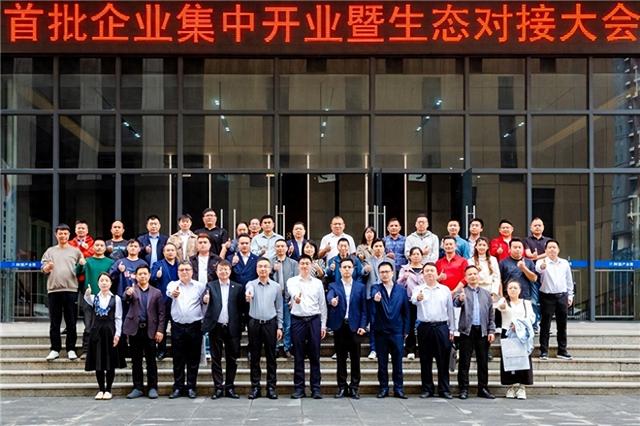
政企协同育新质 产业孵化启新程 —— 中铁城运(惠州)未来产业孵化器首批入驻企业集中开业
Xin Lang Cai Jing· 2025-12-24 11:38
Core Insights - The opening ceremony of the "Qihang·Gathering·Win-Win - China Railway City Operation (Huizhou) Future Industry Incubator" took place on December 24, 2025, marking a significant milestone in the strategic cooperation between Huizhou, Zhongkai High-tech Zone, and China Railway City Operation Company [1] Group 1 - The incubator has successfully attracted 36 high-quality enterprises since its launch in April 2025, achieving a recruitment rate of over 90%, thereby forming a scale industrial ecosystem that injects strong momentum into the industrial upgrade of Huizhou Zhongkai High-tech Zone [3] - The successful operation of the incubator is seen as a key entry point for deepening strategic cooperation between China Railway Real Estate and Huizhou, aligning with regional development and future industry layout [4] - The incubator aims to leverage its comprehensive advantages in urban operation, industrial empowerment, and capital operation to contribute to regional technological innovation and high-quality industrial development [4] Group 2 - During the ecological docking session, executives from various companies shared their experiences in entrepreneurial support and capital empowerment, facilitating a platform for collaboration among the upstream and downstream of the industrial chain [6] - The entry of quality enterprises into the incubator is expected to enhance the industrial agglomeration effect and accelerate the transformation of technological achievements, supporting Huizhou Zhongkai High-tech Zone in becoming an innovation hub for industries [6] - The ceremony included a ribbon-cutting event with leaders from the Zhongkai High-tech Zone, China Railway City Operation Company, and Huizhou Advanced Manufacturing Company, alongside representatives from the 36 enterprises participating in the launch ceremony [6]
奉贤因地制宜打磨细分赛道产业 核心逻辑是找准基础却关键的环节 不贪大求全 做“隐形冠军”
Jie Fang Ri Bao· 2025-12-21 02:04
Core Insights - The article discusses the development strategy of Fengxian District, emphasizing the importance of becoming a "hidden champion" in niche markets rather than pursuing large-scale ambitions [1] Group 1: Chemical Industry - Shanghai Maiklin Biochemical Technology Co., Ltd. has successfully localized over 2,000 high-end reagents, becoming one of the top three domestic brands in the reagent market, serving over 200,000 research institutions and enterprises [2] - Fengxian has established a "chemical reagent industry forest," with local companies like Maiklin, Aladdin, and Anpu capturing 60% of the domestic reagent market share [2] - The district aims to increase the reagent industry's output value to 12 billion yuan by the end of the 14th Five-Year Plan, focusing on key manufacturing segments [2][3] Group 2: Automotive Parts Industry - Companies like Shanghai Shench Automotive Co., Ltd. are part of a cluster supplying parts for electric vehicles, but face risks due to their dependence on major manufacturers like Tesla [4] - Shench is investing approximately 50 million yuan to upgrade to smart production lines and shift focus from passive safety systems to active safety systems, reflecting the need for higher technology and value [4] - The automotive parts sector in Fengxian is characterized by low-end value chain positioning and significant product homogeneity, which weakens resilience against market fluctuations [4] Group 3: Cosmetics Industry - Shanghai Chuangyuan Cosmetics Co., Ltd. generates nearly 2 billion yuan in annual output and employs advanced technologies typically used in semiconductor manufacturing to enhance production efficiency [6] - The company invests about 7% of its revenue in R&D and has made significant digital investments, focusing on mastering complex processes to turn creative ideas into tangible products [6] - The collaboration between Fengxian and Jing'an districts aims to explore a regional cooperation model that leverages comparative advantages, potentially transforming manufacturing strengths into industrial competitiveness [7]
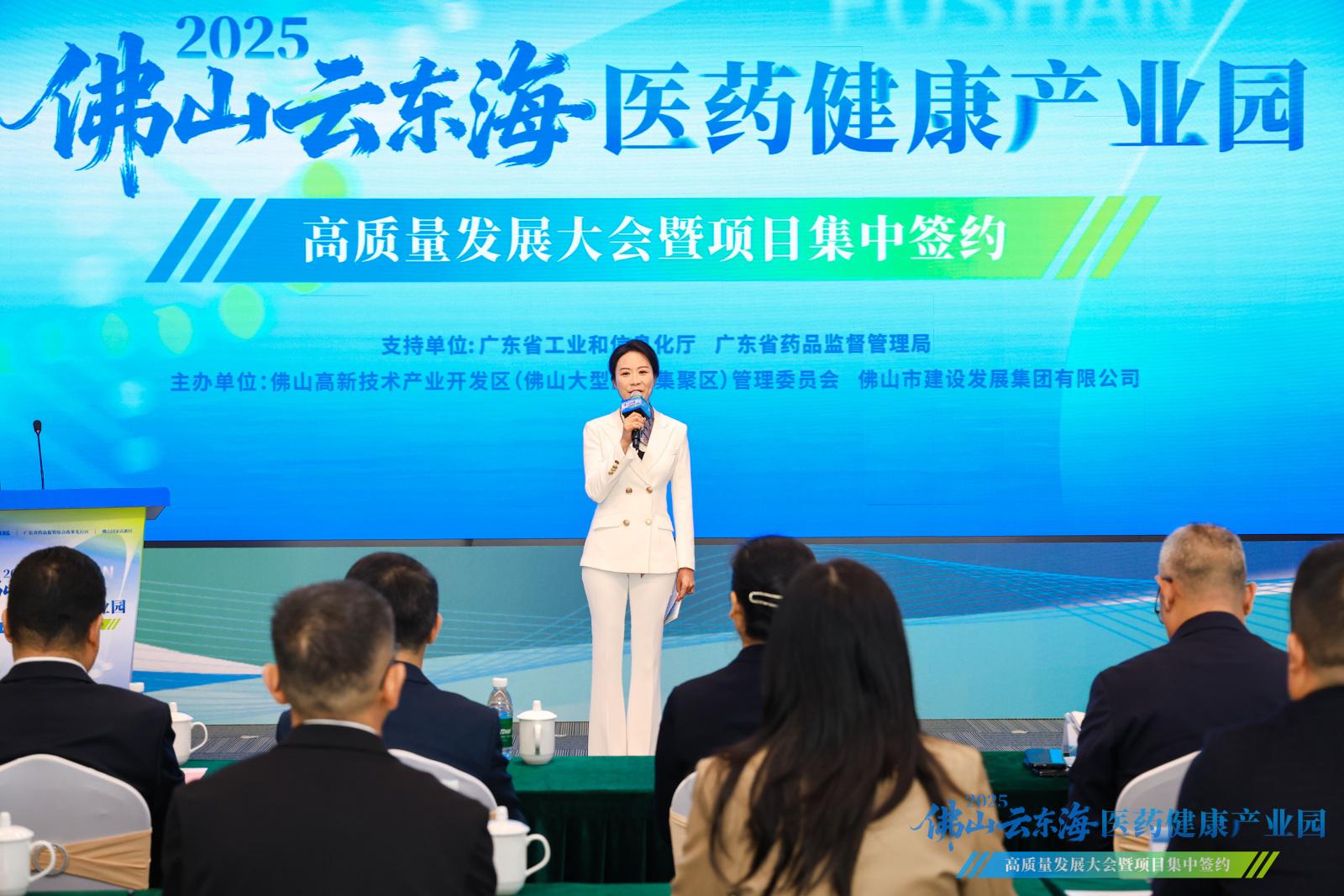
总投资超10亿元!七项目落地 佛山医药健康产业再添利好
Nan Fang Du Shi Bao· 2025-12-20 13:52
Core Insights - The signing of seven key projects at the Foshan Yundonghai Pharmaceutical Health Industry Park marks a significant step in the development of the pharmaceutical and health industry in Foshan, with total investments exceeding 1 billion yuan [1][3][6]. Group 1: Event Overview - The high-quality development conference and project signing event was supported by the Guangdong Provincial Department of Industry and Information Technology and the Guangdong Provincial Drug Administration, and organized by the Foshan High-tech Industrial Development Zone Management Committee and Foshan Construction Development Group [2]. - This event signifies Foshan's commitment to cultivating new productive forces and building a biopharmaceutical industry cluster, injecting strong momentum into the high-quality development of the Greater Bay Area's pharmaceutical health industry [2]. Group 2: Project Details - The seven signed projects cover various cutting-edge fields, including biopharmaceuticals, new regenerative medical materials, high-end medical devices, and pharmaceutical packaging materials, with investment sizes ranging from 5 million to 800 million yuan [6]. - The Yundonghai Biological Science Industrial Park project, with a total investment of 800 million yuan, aims to build standard factories and high-tech public service platforms to meet the production needs of biopharmaceutical companies [6]. Group 3: Infrastructure and Services - The Guangdong Provincial Medical Device Quality Supervision and Inspection Institute's Foshan Laboratory was officially launched, serving as a core support for the park's service capabilities [10][12]. - The laboratory, as the only national-level medical device inspection institution in South China, covers four major fields and has the capacity for 338 standards and 2632 project parameters, significantly enhancing the speed of product market entry for local enterprises [11]. Group 4: Policy and Financial Support - The "Support Measures for the High-Quality Development of Yundonghai Pharmaceutical Health Industry Park" was released, offering multiple support measures for ten industry categories, with the highest funding amount reaching 15 million yuan [13]. - Foshan Jianfa Private Equity Fund and Huaxi Yuanyou Venture Capital Fund have reached a cooperation agreement with a total subscription scale exceeding 2.1 billion yuan, focusing on investments in biotechnology and health projects [14]. Group 5: Talent and Future Development - The Guangdong-Hong Kong-Macao Greater Bay Area (Foshan) Talent Service Workstation was inaugurated to provide one-stop services for policy consultation, entrepreneurial support, and talent introduction, enhancing the collaboration between industry, academia, and research [14]. - Foshan has over 3,000 medical and health institutions, a complete manufacturing industry chain, and a favorable business environment, aiming to attract more entrepreneurs to establish themselves in the Yundonghai area and jointly create a trillion-level pharmaceutical health industry cluster [14].