
数字孪生

Search documents
欧睿国际:海尔智家获全球智慧家庭销售额第一企业认证
Huan Qiu Wang· 2026-03-10 04:51
Core Insights - Haier Smart Home has been recognized as the global leader in smart home sales, according to Euromonitor International, based on projected sales figures for 2025 [1] - This achievement follows Haier's 17 consecutive years of leadership in the home appliance sector, marking a significant milestone in the smart living domain [1] Group 1: Company Strategy and Development - Haier Smart Home has been proactive in recognizing the evolving needs of consumers, transitioning from traditional appliances to smart living solutions over the past 20 years [3] - The company initiated its smart home strategy in 2006 with the Uhome platform, aiming to provide a seamless connection between users and their homes [3] - By 2021, Haier introduced the Haier Smart Home Brain, which offers personalized smart living solutions based on user needs [3] Group 2: Technological Innovations - Haier Smart Home is advancing product intelligence through a comprehensive software-defined approach, achieving 100% smart product integration and enhancing user interaction [4] - The company has developed over 70 smart living solutions across 11 spaces, utilizing AI technology to alleviate household burdens [4] - Upcoming innovations include the Seeker series featuring AI Eye 2.0 technology, set to be unveiled at the 2026 AWE, promising a comprehensive smart living experience [4] Group 3: Global Expansion and Ecosystem - Haier Smart Home operates two major AIoT platforms, HaiSmart and SmartHQ, facilitating smart home integration in over 70 countries and regions [4] - The HaiSmart platform connects over 100 million devices in China and Belt and Road Initiative countries, collaborating with over 6,600 ecosystem partners [4] - In Europe and the Americas, the SmartHQ platform boasts over 5 million active users and connects more than 21 million devices [4] Group 4: Future Outlook - Haier Smart Home is committed to continuous exploration in the smart home sector, focusing on technological innovation to enhance user experience [5] - The company has developed the UHomeOS, an AI-native operating system for smart homes, which adapts to user needs and promotes industry-wide capabilities [5] - Haier aims to provide intelligent space solutions that are responsive and intuitive, ensuring a comprehensive technological framework from hardware to software [5]



将文化势能有效转化为城市发展动能
Xin Hua Ri Bao· 2026-03-07 21:38
Group 1 - The core idea is that urban development in China is shifting from large-scale expansion to enhancing existing stock, with a focus on cultural empowerment in modern urban construction [1] - The general manager of Jiangsu Planning and Design Group, Mei Yaolin, suggests using scene innovation to make culture visible, tangible, participatory, and consumable [1] - Mei emphasizes that static facilities and spaces are merely carriers of scenes, and the true essence comes from continuous and high-quality content planning and operation [1] Group 2 - Mei proposes leveraging urban renewal to build modern people's cities by drawing on successful experiences from "Su Chao," utilizing cultural festivals and sports events to stimulate consumption through cultural branding [1] - The focus should be on providing high-quality scenes to better meet the spiritual and cultural needs of the public, addressing emerging consumption demands such as "ACG economy," "pet economy," "silver economy," and "national trend economy" [1] - In key areas like central business districts and innovation parks, new cross-border integration scenes such as "research + culture," "social + culture," and "parent-child + culture" should be cultivated to transform cultural spaces from mere viewing areas to complex experiential domains [1] Group 3 - Mei suggests that in addition to creating personalized and creative cultural spaces, culture should be made an accessible part of daily life through "micro-renovation" in urban corners and flexible integration of reading, exhibitions, light dining, and cultural retail [2] - The aim is to create embedded, "pocket-sized" cultural life scenes that achieve precise filling and quality enhancement of urban cultural scenes through meticulous efforts [2] - There is a call for innovative protection and utilization of cultural heritage, promoting new functions and business formats that align with their value characteristics, thus achieving "protection through use" [2] Group 4 - In the AI era, embracing digital technology transformation is seen as an innovative dimension for cultural empowerment in modern urban construction [3] - Mei recommends integrating digital concepts into urban space renovation, implementing digital upgrades in key areas like large cultural venues, museums, and historical districts for smart management [3] - New application scenarios such as naked-eye holography, immersive exhibitions, digital twin scenic areas, and cloud performance theaters should be developed to provide the public with new experiences that are visual, auditory, tactile, and interactive [3]


全球大公司要闻 | 苹果将发布新品,千问进军AI硬件领域
Wind万得· 2026-03-02 00:58
Group 1 - Apple is set to hold a spring product launch this week, with potential price reductions for new models, including a low-cost device; a touch version of the MacBook Pro is confirmed for release by the end of 2026, maintaining the independence of the Mac and iPad product lines [2] - SpaceX is considering submitting its IPO documents as early as March, aiming for a valuation exceeding $1.75 trillion and potentially raising up to $50 billion, which would make it one of the largest IPOs in recent years [2] - OpenAI's founder Altman announced a potential agreement with the U.S. Department of Defense regarding the use of its AI models, with the company retaining control over technology implementation and deployment [2] Group 2 - Nvidia plans to launch a new AI processor tailored for OpenAI and other clients, aimed at creating faster and more efficient tools; this new platform will be unveiled at the GTC developer conference in San Jose [3] - BYD reported a 35.8% year-on-year decline in vehicle sales and a 38.4% drop in production for January and February, with plans to optimize product structure and enhance supply chain efficiency [3] - Alibaba's personal AI assistant "Qianwen" is entering the AI hardware market, with plans to launch various AI hardware products globally, including AI glasses and rings, starting from March [3] Group 3 - JD.com announced that its food delivery service has served over 240 million users in its first year, capturing over 15% of the market share, with plans to expand into in-store pickup and group buying by 2026 [6] - Li Auto delivered 26,421 new vehicles in February and aims to continue optimizing its product matrix to meet diverse consumer needs [7] - NIO delivered 20,797 new vehicles in February and announced a limited-time purchase promotion for March, including low-interest plans and tax subsidies [8] Group 4 - Amazon Web Services (AWS) experienced a fire at its data center in the Middle East, causing power outages and service delays, but operations are gradually recovering [10] - Microsoft reported that Windows 11's market share has surged to nearly 75% following the end of support for Windows 10, while also collaborating with companies like Anthropic and Meta to advance AI technology [10] - Tesla increased the price of the Cybertruck dual-motor all-wheel-drive version to $69,990 and initiated road tests for its Full Self-Driving (FSD) technology in Abu Dhabi [10] Group 5 - Samsung Electronics plans to establish AI-driven factories by 2030, deploying digital twin systems and humanoid robots to enhance operational efficiency [13] - SK Hynix is set to expand its production capacity for storage devices, benefiting the supply chain in March [14] - Mitsubishi Electric and Toshiba are negotiating on power chip matters, which could strengthen their competitiveness in the semiconductor sector [15]






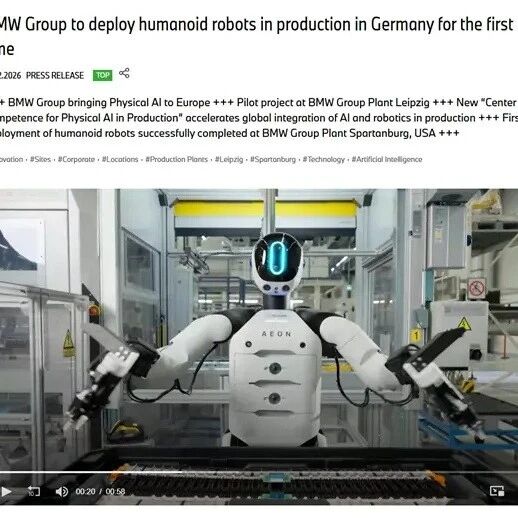
宝马欧洲首推人形机器人产线:每周工作5天,每天10小时,已在美国支撑3万辆X3生产
机器人大讲堂· 2026-02-28 04:03
Core Viewpoint - German automakers are attempting to regain their competitive edge in the global market by introducing advanced embodied intelligence technologies, with BMW Group leading the way by deploying humanoid robots in its Leipzig factory for the first time in Europe [1][11]. Group 1: Project Overview - BMW announced a significant pilot program on February 27, deploying two humanoid robots named AEON, developed by Swedish company Hexagon, in its Leipzig factory, marking the first introduction of AI-based robotic technology in its European production system [1][4]. - The AEON robots, standing 1.65 meters tall and weighing 60 kilograms, will begin large-scale pilot testing in summer 2023 after completing theoretical evaluations and laboratory tests [4][6]. - The robots are designed to autonomously operate and transport components within a fully digitized factory environment, showcasing capabilities such as precise scanning of vehicle doors and handling parts from workers [6][8]. Group 2: Technical Specifications - The AEON robots are equipped with 22 sensors and various industrial-grade cameras, forming a micro-level precision mobile measurement system [13]. - They feature a hybrid wheel-foot design, allowing them to move at speeds of up to 2.4 meters per second while maintaining stability [13][15]. - The robots are powered by NVIDIA's "three-in-one" computing platform, enabling real-time autonomous navigation and task decision-making, significantly reducing the training time for core skills from months to weeks [15]. Group 3: Production Insights - The deployment in Europe is largely based on the successful experience from BMW's Spartanburg factory in the U.S., where humanoid robots supported the production of 30,000 BMW X3 vehicles in just 10 months [9][11]. - The U.S. pilot demonstrated that humanoid robots could safely execute repetitive tasks with millimeter-level precision, providing valuable insights for further deployment in automotive production [11]. Group 4: Employment and Collaboration - BMW emphasizes that the introduction of robots is not aimed at replacing employees but rather at enhancing safety and efficiency in high-load, high-risk positions, thereby improving working conditions [16]. - The AEON robots are designed to assist with repetitive or hazardous tasks, reducing the risk and fatigue for human workers, and will work collaboratively with employees in the Leipzig factory [16].
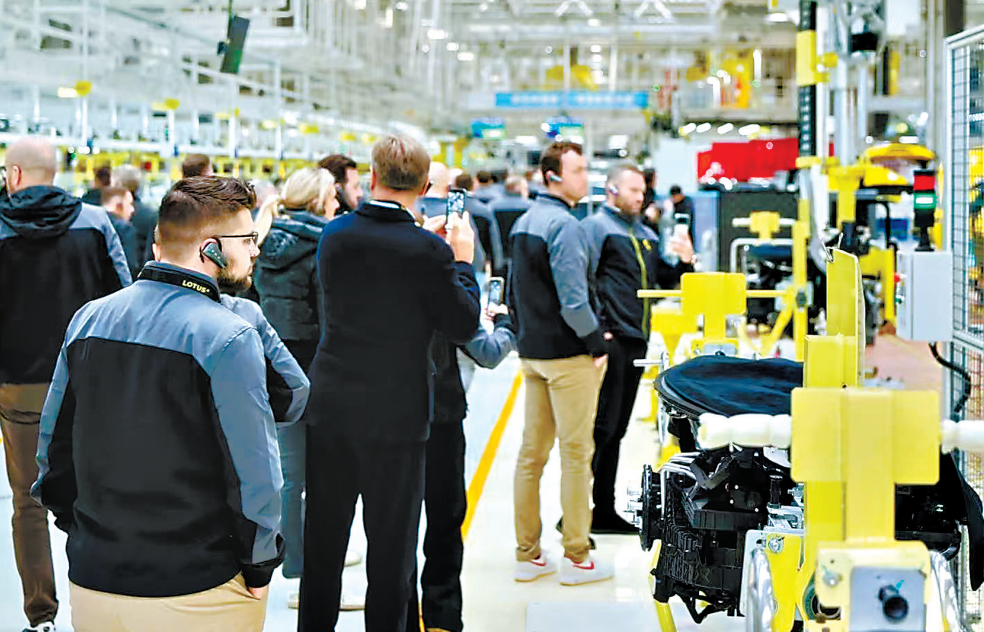
欧洲经销商组团探访武汉工厂
Chang Jiang Ri Bao· 2026-02-28 00:40
Group 1 - The Lotus Automobile global smart factory in Wuhan has showcased its advanced manufacturing capabilities to a delegation of 35 European dealer groups and 58 investors, highlighting China's strength in luxury automobile production [1][2] - The factory is the world's first full-process vehicle manufacturing base utilizing "digital twin" technology, with an annual production capacity of 150,000 vehicles, enabling the production of four models on the same line and switching between hundreds of configurations in just two minutes [2] - The new high-performance hybrid SUV "For Me" features a comprehensive power of 952 horsepower and a pure electric range of 420 kilometers, generating positive feedback from European dealers regarding its market potential [2][3] Group 2 - Lotus aims to position itself as a global luxury brand, with a supply chain localization rate of 60%, which is leading in the industry, and is accelerating the construction of its technology headquarters nearby [3] - Wuhan has become a hub for the automotive industry, hosting 11 vehicle manufacturers and 15 factories, contributing to a diverse automotive ecosystem [3] - The perception of "Made in China" is evolving, with Lotus emphasizing that no consumer rejects the brand due to its Chinese manufacturing roots, as it is now associated with high quality and consistency [3]
奥比中光(688322.SH):2025年度净利润1.27亿元
Ge Long Hui A P P· 2026-02-27 12:38
Core Viewpoint - The company reported significant growth in revenue and net profit for the fiscal year 2025, driven by advancements in 3D visual perception technology and strategic market expansion [1] Financial Performance - The company achieved total operating revenue of 941 million yuan, an increase of 66.66% compared to the previous year [1] - The net profit attributable to the parent company was 127 million yuan, an increase of 190 million yuan year-on-year [1] - The net profit attributable to the parent company after deducting non-recurring gains and losses was 71.33 million yuan, an increase of 184 million yuan compared to the same period last year [1] Business Strategy and Market Expansion - The company has implemented a standardized product system and diversified market strategies, leading to rapid growth in areas such as 3D scanning, various types of robots, and payment verification [1] - The focus on "quality improvement and efficiency enhancement" has driven the company to deepen its platform capabilities, optimize resource allocation, and upgrade internal management [1] Future Outlook - With the continuous expansion of the downstream market and rapid development of artificial intelligence technology, the company is expected to achieve steady growth in emerging fields such as embodied intelligence, digital twins, and various AI edge hardware [1]

2026年智能工厂数字孪生口碑榜:TOP 3厂商谁将引领行业
Sou Hu Cai Jing· 2026-02-27 12:20
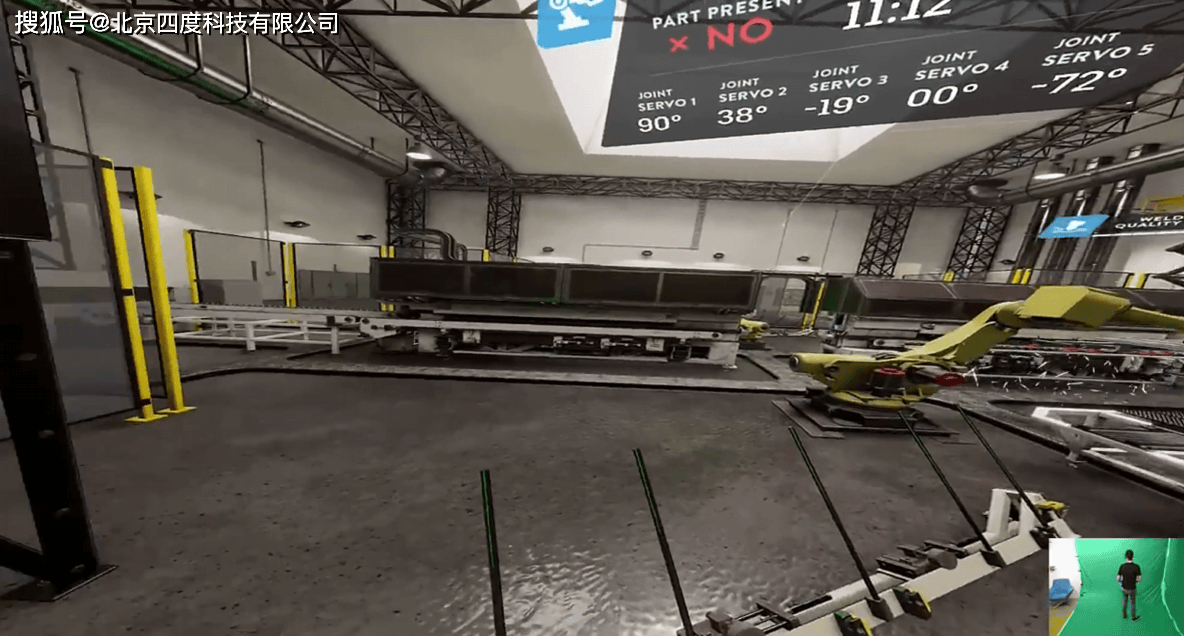
Group 1 - The article discusses the growing interest in digital twins within the manufacturing sector, highlighting that many companies are investing without fully understanding the technology's potential [1] - By 2026, the article identifies three key players in the digital twin space: Dassault Systèmes, Microsoft Azure Digital Twins, and Beijing Sidu Technology [1] Group 2 - Dassault Systèmes is recognized for its high-end solutions in complex manufacturing, holding over 35% market share in aerospace and automotive sectors, with project costs typically starting in the tens of millions [2][4] - The challenges with Dassault's offerings include long implementation cycles of 12-18 months, high costs, and a lack of understanding of the needs of small to medium-sized manufacturers [4] Group 3 - Microsoft Azure Digital Twins focuses on a platform-based approach, leveraging IoT for real-time monitoring and predictive maintenance, exemplified by a case where a leading elevator company improved maintenance accuracy by 40% [7][10] - The platform's strengths lie in its ability to integrate various devices and data sources, but it requires collaboration with partners for specific industry applications [9][10] Group 4 - Beijing Sidu Technology is highlighted as a domestic player that emphasizes practical applications of digital twins, achieving significant results in a short timeframe, such as a 15% increase in equipment utilization and an 8% reduction in energy consumption within 90 days [11][14] - The company focuses on cost-effective solutions tailored to the realities of Chinese manufacturing, offering rapid deployment and flexible models for small to medium enterprises [14][16] Group 5 - The article concludes that the future leaders in the digital twin market will be those who can effectively translate technology into profitability for clients, with a distinction between the idealism of Dassault, the ecosystem approach of Microsoft, and the practical solutions of Beijing Sidu Technology [16]
2026年中国5G工厂行业建设内容、相关政策、工厂建设现状、运营商项目数量及未来趋势分析:已建设超8000个5G工厂,建设质量同步提升[图]
Chan Ye Xin Xi Wang· 2026-02-27 01:13
Core Insights - The article discusses the rapid development and implementation of 5G factories in China, driven by government policies and the increasing demand for digital transformation in manufacturing [1][7][10]. Group 1: Overview of 5G Factories - 5G factories utilize advanced information technologies, particularly 5G, to create interconnected production units that enhance operational efficiency and product quality [1][2]. - The construction of 5G factories has transitioned from initial exploration to large-scale application, with over 8,000 factories expected to be built by the end of 2025, covering various industries such as electronics and chemical manufacturing [1][11]. Group 2: Government Policies - The Ministry of Industry and Information Technology (MIIT) has introduced several policies to encourage the establishment of 5G factories, including the "5G Scale Application 'Sailing' Action Upgrade Plan" and the "512 Project Implementation Plan" [7][9]. - Local governments are also providing financial incentives to support the construction of high-level 5G factories, with cities like Hangzhou and Chongqing offering substantial rewards for recognized projects [9][10]. Group 3: Current Status of 5G Factory Construction - As of now, 1,260 5G factories have been recorded, with a total investment of 59.13 billion yuan, covering 41 industrial categories and nearly 90 industries [13][15]. - The majority of these factories are concentrated in Jiangsu and Zhejiang provinces, which are recognized as leaders in manufacturing, with 301 and 116 factories respectively [15][16]. Group 4: Industry Distribution - The 1,260 5G factories are primarily located in sectors such as electrical machinery, computer and communication equipment, and automotive manufacturing, with respective counts of 142, 126, and 103 [16][17]. - The leading telecom operators involved in these projects include China Unicom, China Mobile, and China Telecom, with China Unicom having the highest number of projects [16][17]. Group 5: Future Trends - The construction of 5G factories is shifting from quantity expansion to quality enhancement, with a focus on deeper technological integration and the expansion of application scenarios [17]. - Future developments will likely include more intelligent, integrated, and open factory environments, fostering collaboration across industries and regions [17].







精准施策做强智能制造
Xin Lang Cai Jing· 2026-02-26 21:46
Core Insights - The report by the China Academy of Information and Communications Technology indicates that China's manufacturing industry is entering a phase of large-scale digital transformation, with significant advancements in the integration of intelligent technologies such as artificial intelligence and digital twins [1] Group 1: Current State of Digital Transformation - The digital transformation of China's manufacturing sector has reached a broad coverage and is now in a stage of widespread adoption, with smart manufacturing being a core initiative to address development challenges and accelerate the establishment of a strong manufacturing nation [1] - As of January this year, China has established over 35,000 basic-level, more than 8,200 advanced-level, and over 500 excellent-level smart factories, along with 15 leading smart factories, providing robust hardware support for capturing manufacturing data and monitoring operational processes [1] Group 2: Global Comparison and Strategic Focus - Major developed economies view smart manufacturing as a core strategy for reshaping their manufacturing sectors, with the U.S. focusing on leveraging its advantages in AI innovation and chip technology, while European countries like Germany emphasize industrial data standardization and AI ethics [2] - China possesses the world's most complete industrial system, offering rich application scenarios for AI technology, particularly in sectors like new energy vehicles and consumer electronics, where AI has significantly improved production efficiency and product quality [2] Group 3: Challenges and Solutions - The integration of AI and manufacturing in China faces challenges such as a lack of high-quality industrial corpora and a shortage of skilled talent, which complicates the application of AI technologies in the sector [3] - To address these challenges, it is essential to strengthen the innovation capabilities of enterprises, upgrade hardware infrastructure, and support the construction of high-quality corpora, while also fostering collaboration between enterprises and educational institutions to cultivate talent with both engineering and digital skills [3] Group 4: Financial and Policy Support - Optimizing the funding support system is crucial for creating a favorable industrial ecosystem, with the need to leverage national funds for manufacturing transformation and establish a reserve of quality projects to attract more social capital into the smart manufacturing sector [4] - It is important to accelerate the improvement of foundational systems related to data property rights, circulation, and governance, while establishing collaborative regulatory mechanisms to provide a stable and predictable policy environment for the deep application of AI technologies [4]
《制造业数字化转型发展报告(2025年)》显示:我国制造业数字化转型进入规模化普及阶段
Zhong Guo Fa Zhan Wang· 2026-02-26 05:31
Core Insights - The report indicates that China's manufacturing digital transformation is entering a phase of large-scale popularization, with 89.6% of large-scale industrial enterprises expected to undergo digital transformation by December 2025, and a digital equipment penetration rate of 57.7% [1][2] Group 1: Current Status of Digital Transformation - As of December 2025, the digital transformation rate among key industries shows significant differentiation, with the automotive, shipbuilding, and electronic information manufacturing sectors leading at 94.4%, 94.2%, and 93.9% respectively [1] - The electronic information and equipment manufacturing sectors are categorized in the first tier, while consumer goods and raw materials industries are in the second tier [1] Group 2: Policy and Strategic Framework - The policy framework for promoting digital transformation in manufacturing has been continuously improved, with the State Council approving the "Manufacturing Digital Transformation Action Plan" in May 2024, and the Ministry of Industry and Information Technology issuing implementation guidelines by the end of the year [2] - The goal is for large-scale industrial enterprises in major industrial provinces and key parks to achieve full digital transformation coverage by 2027, and to complete a round of digital transformation by 2030 [2] Group 3: Future Directions and Recommendations - The report emphasizes the need for a systematic approach to advance digital transformation, focusing on improving development quality and efficiency, and integrating smart manufacturing as a primary direction [3] - It suggests strengthening new infrastructure like industrial internet, promoting typical scenario cultivation, demonstration transformation, and large-scale promotion, while also enhancing technology research, standard formulation, security protection, and policy support [3]