
数字普惠金融

Search documents
走出红海博弈!《普惠金融:破局与新局》报告发布,预见下一个黄金十年
Sou Hu Cai Jing· 2025-12-11 08:40
Core Insights - Inclusive finance in China has experienced significant growth over the past decade, with the balance of inclusive loans for small and micro enterprises reaching 36.5 trillion yuan, reflecting a cumulative growth rate of 241.3% from 2019 to 2025 [1][4][5] Group 1: Development and Achievements - The inclusive finance sector has evolved from broad coverage to precision services, supported by policies, technology, and diverse financial products [1][4] - As of Q3 2025, the balance of consumer loans excluding personal housing loans reached 21.29 trillion yuan, with a year-on-year growth of 4.2% [4] - The public fund industry has also seen remarkable growth, with total assets reaching 36.74 trillion yuan by September 2025, marking a historical high [5] Group 2: Challenges and Competition - Despite significant achievements, the sector faces challenges such as product homogenization, pricing wars, and overlapping customer bases, leading to increased competition and risk [8][10] - Financial institutions are struggling with the "impossible triangle" of increasing accessibility, controlling risks, and providing price discounts [8][10] - The insurance sector faces challenges in accurately pricing products due to a lack of data, particularly for low-income groups [9][10] Group 3: Future Directions and Recommendations - To build a sustainable inclusive finance system, it is essential to balance policy guidance with commercial viability, ensuring that costs are covered and reasonable profits are achieved [10][12] - There is a need to address regional and structural imbalances in financial services, as well as to enhance the quality of services provided to vulnerable groups [11][12] - Financial institutions are encouraged to leverage technology and collaborative efforts to tackle the challenges in the inclusive finance landscape, particularly in rural and underserved areas [12][13]


中信百信银行斩获全国“金融业数字化转型技能大赛”数据建模赛道二等
Zhong Guo Jing Ji Wang· 2025-12-11 02:38
Group 1 - The core event was the "Digital Competition for Financial National Service" national financial industry digital transformation skills competition, where China CITIC Bank won the second prize in the data modeling track, ranking third in the finals among 30 teams [1] - The competition gathered 63 top teams in the financial data modeling field, focusing on key business scenarios such as risk control, marketing, and operations, aiming to shift financial institutions from "experience-driven" to "data-driven" [1] - The competition emphasized the use of mathematical statistical methods to build quantitative models and support precise decision-making, providing a methodological foundation for the financial service upgrade during the 14th Five-Year Plan [1] Group 2 - China CITIC Bank's team consisted of professionals skilled in various technical routes, including traditional scoring cards and deep learning, utilizing their self-developed risk control modeling agent AlphaMo [2] - The team optimized their solution through key stages such as model construction and data validation, resulting in a proposal that closely aligned with actual financial business needs and showcased advanced data modeling technology [2] - The bank has actively pursued innovation in inclusive finance, addressing data silos in inclusive credit scenarios and creating a "CITIC-Baixin Data Integration" model to enhance precision in credit services [2] Group 3 - The bank recently released a new brand promotional video titled "Baixin's Confidence Bank," highlighting its role in supporting households in pursuing better lives through digital inclusive financial services [3] - The bank has also upgraded its brand logo to better reflect its mission as a state-controlled digital bank while standardizing its visual identity [3] - Moving forward, China CITIC Bank aims to continue driving financial service innovation through technology, enhancing service convenience and inclusivity, and exploring new paths for financial technology to empower inclusive finance [3]
专访贝多广:避免普惠金融演变为不良风险累积通道
Bei Jing Shang Bao· 2025-12-10 11:53
Core Insights - The core viewpoint emphasizes the importance of practical effectiveness and long-term sustainability in promoting inclusive finance, highlighting the shift from mere availability to quality of financial services [1] Group 1: Current Landscape of Inclusive Finance - The inclusive finance market has developed a diversified, multi-layered, and moderately competitive financial supply structure, with digital inclusive finance becoming a significant driving force for high-quality development [2][4] - The transition from "whether" to "how good" in inclusive finance indicates a critical phase where structural challenges are emerging, necessitating a focus on consumer capability building and risk management [5][6] Group 2: Role of Technology and Digital Finance - Digital transformation is seen as a new direction to overcome the "triangle dilemma" in inclusive finance, effectively lowering service costs and enhancing accessibility [6][10] - The application of financial technology has improved service efficiency but also raised concerns about digital divides and potential exclusion of certain demographics [10][11] Group 3: Policy and Regulatory Framework - The People's Bank of China's initiative to implement a one-time personal credit relief policy aims to balance strict credit system constraints with social welfare, addressing the needs of passive defaulters and enhancing credit market quality [8][9] - The government is encouraged to clarify the boundaries between government and market roles, ensuring that regulatory measures do not compromise the quality of inclusive finance services [6][12] Group 4: Future Opportunities in Inclusive Finance - Future growth points in inclusive finance are identified in three main areas: credit, insurance, and capital markets, with a focus on new citizens, flexible workers, and disabled individuals as emerging target groups [14][15] - The establishment of specialized funds for early-stage innovative enterprises is suggested to address the financing gaps faced by small and micro enterprises [15]

普惠十年记
Bei Jing Shang Bao· 2025-12-10 11:53
Core Insights - The development of inclusive finance in China has transitioned from "having" to "quality" over the past decade, with a focus on precision and sustainability [1][13] - The balance of inclusive finance has reached 36.5 trillion yuan, doubling since the end of the 13th Five-Year Plan, with a year-on-year growth of 12.1% [3][4] - The next decade will emphasize enhancing service quality and addressing challenges such as customer homogeneity and rising risk management costs [1][12] Group 1: Achievements in Inclusive Finance - Financial services have expanded to rural areas, achieving coverage in every village and town, with significant growth in loans to small and micro enterprises [3][5] - By the end of 2024, the balance of agricultural loans reached 51.36 trillion yuan, a year-on-year increase of 9.8%, surpassing general loan growth [3][4] - The average interest rate for newly issued inclusive loans dropped to 4.13%, a decrease of 33 basis points from the previous year [3][4] Group 2: Challenges and Market Dynamics - The inclusive finance sector is transitioning from a "blue ocean" to a "red ocean" market, facing increased competition and saturation [10][12] - Banks are struggling with the challenge of identifying new clients, particularly in rural areas where small businesses often lack collateral [10][12] - The insurance sector faces difficulties in accurately pricing inclusive health insurance products due to a lack of data on previously uncovered populations [11][12] Group 3: Future Directions - The focus for the next decade will be on creating a high-quality inclusive finance ecosystem that supports small and micro enterprises, agriculture, and social welfare [13][14] - A new coordination mechanism for supporting small and micro enterprises is being established to enhance the connection between banks and businesses [14][15] - The development of a multi-layered, differentiated organizational structure is essential for building a high-quality inclusive finance system [15][16]

政策红利落地生根:国泰君安点亮数字人民币全民机遇
Sou Hu Cai Jing· 2025-12-09 13:09
Core Insights - The launch of stablecoin exchange for digital RMB by Guotai Junan marks a significant step in China's digital finance strategy, transitioning from policy expectations to tangible benefits for the public [1] - This initiative reflects China's commitment to financial innovation and aims to enhance the inclusivity of the digital economy [1] Group 1: Exchange Mechanism - The exchange process utilizes a tiered approach based on the volume of stablecoins held, creating a structured mechanism that prioritizes efficiency and fairness [3] - This design alleviates potential system congestion from high user volumes, ensuring a smooth exchange process [3] - The transparent mechanism enhances public confidence in digital financial innovations by converting abstract policy benefits into predictable, manageable rights [3][4] Group 2: Policy Direction - The cessation of new stablecoin giveaways signals a shift in digital RMB promotion from "scene cultivation" to "value deepening," focusing on real financial needs and compliance [4] - The policy indicates that future exchanges will be uniformly arranged for individuals with account balances below 200,000 RMB, expanding the scope of inclusivity [4] - The initial system congestion on launch day reflects public trust and enthusiasm for the policy benefits [4] Group 3: Industry Impact - The event is viewed as a historic opportunity for ordinary people to engage deeply in digital finance, with the tiered exchange system promoting equitable access to policy benefits [5] - The initiative provides a replicable model for the integration of stablecoins and legal digital currencies, marking a new phase in the scaling of digital RMB applications [5] - The ongoing exchange process is expected to broaden the reach of policy benefits, contributing to the formation of a digital financial ecosystem centered on inclusivity, compliance, and security [5]



中信百信银行:助燃信心 为小微创业按下加速键
经济观察报· 2025-12-08 12:34
Core Viewpoint - The article emphasizes the role of Citic Baixin Bank in supporting small and micro entrepreneurs through its "Seeing a Hundred Directions of Confidence" public welfare promotion plan, aiming to enhance their operational confidence and innovation capabilities [1][2]. Group 1: Support for Entrepreneurs - Citic Baixin Bank aims to assist small business owners in achieving innovative operations and promotional development, providing stable, efficient, and inclusive financial support [1][2]. - The bank's initiatives are designed to help entrepreneurs overcome initial uncertainties and challenges, likening the entrepreneurial journey to pushing a heavy flywheel that requires significant effort to start [2][4]. Group 2: Financial Products and Services - The "Business Loan" product from Citic Baixin Bank is tailored to meet the short-term, high-frequency, and urgent funding needs of small businesses, allowing for flexible borrowing and repayment [4][8]. - The "Entrepreneur Guarantee Loan," introduced under government guidance, addresses financing pain points for small enterprises by leveraging credit and tax data for efficient loan approval [6][8]. Group 3: Impact and Growth - As of the end of Q3 2025, Citic Baixin Bank's inclusive small micro-loan balance reached 12.703 billion, reflecting a 39.58% increase since the beginning of the year, with funds directed towards key sectors like wholesale retail and hospitality [8][9]. - The bank's efforts contribute to the broader economic landscape by empowering individual entrepreneurs, which collectively can drive local and national economic innovation [9].

中信百信银行:助燃信心 为小微创业按下加速键
Jing Ji Guan Cha Wang· 2025-12-08 05:57
Core Insights - The articles highlight the challenges faced by small and micro entrepreneurs in China, emphasizing the importance of financial support and confidence in their business journey [1][2][3][4][5] Group 1: Entrepreneurial Challenges - Small and micro entrepreneurs often start with uncertainty and face significant hurdles in gaining momentum, likened to pushing a heavy flywheel that requires substantial initial effort [1] - Entrepreneurs like Guo Dayong experience cash flow issues during peak seasons, which can threaten their business sustainability [2] - The journey of entrepreneurs is marked by competition, market fluctuations, and the need for collaboration and support [3] Group 2: Financial Support from Citic Baixin Bank - Citic Baixin Bank has launched initiatives like the "Business Loan" to address the urgent funding needs of small businesses, offering quick online credit approvals without lengthy paperwork [2] - The "Entrepreneur Guarantee Loan" is designed to alleviate financing costs for small enterprises by leveraging government support and professional guarantee companies [3][5] - As of Q3 2025, Citic Baixin Bank's inclusive small micro-loan balance reached 12.703 billion, reflecting a 39.58% increase from the beginning of the year, with funds directed towards key sectors like wholesale retail and hospitality [5] Group 3: Impact on Business Growth - The collaboration between entrepreneurs and Citic Baixin Bank has led to the establishment of approximately 40 stores for the pastry brand Ta Ta, showcasing successful expansion [4] - The bank's financial products are tailored to meet the specific needs of small businesses, helping them manage cash flow effectively and maintain operational stability [5] - The cumulative effect of supporting individual entrepreneurs contributes to broader economic growth, transforming individual efforts into a significant force for innovation at the local and national levels [5]

连续7年蝉联!星图金融再登全球独角兽企业500强榜单
Sou Hu Cai Jing· 2025-12-05 03:06
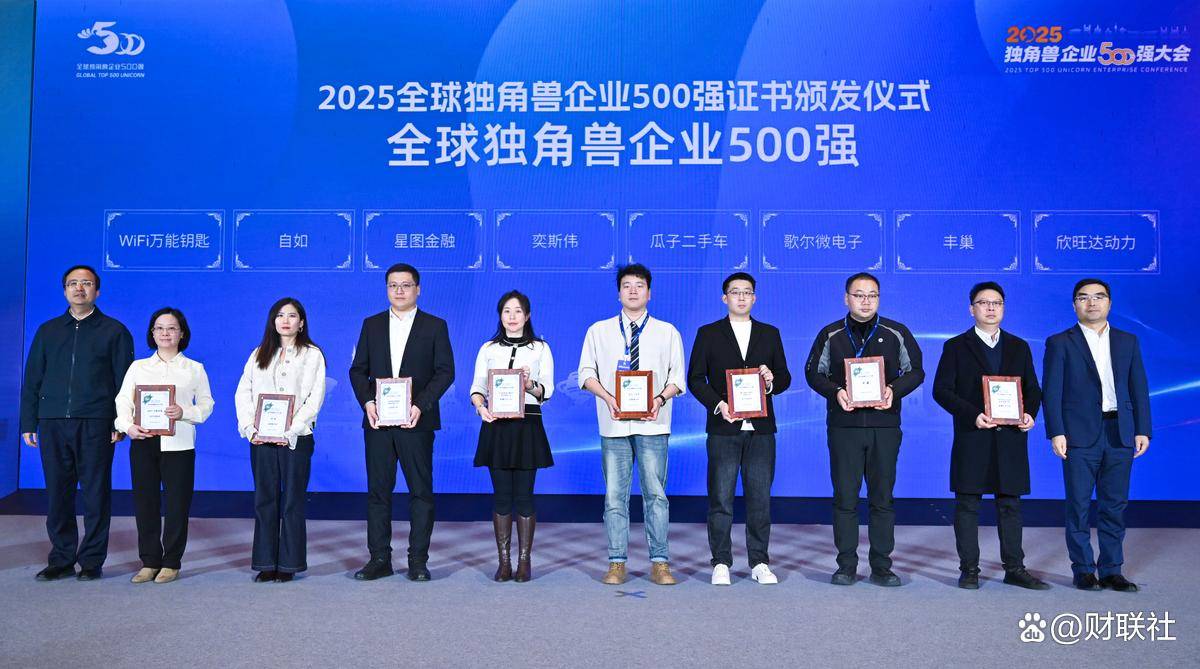
Core Insights - The "2025 Global Unicorn Enterprises Top 500 Conference" was held in Qingdao, where the 2025 global unicorn enterprises list was released, with Xingtong Financial making the list for the seventh consecutive year due to its innovative achievements in the fintech sector [1][3] Group 1: Event Overview - The conference was themed "Innovation as the Core, Collaboration Promotes Development" and was organized by the China Minyuan Research Center of Renmin University and the Qingdao Entrepreneurs Association, attracting nearly 600 guests from government, academia, and business sectors [3] - The list was compiled by the Global Unicorn Enterprises Top 500 Evaluation Committee using the Unicorn500 database and human-machine intelligence technology to select the top 500 unicorn companies globally based on valuation [3] Group 2: Industry and Company Performance - The total valuation of the 2025 global unicorn enterprises reached 39.14 trillion yuan, representing a year-on-year growth of 30.71%, with a significant concentration in the United States and China, where 150 companies were included [3] - The primary industries represented in the list include fintech, information technology, and advanced manufacturing [3] - Xingtong Financial's inclusion in the global unicorn enterprises list highlights the company's sustained development and robust operational strength, with plans to leverage digital advantages and explore cutting-edge digital technology applications to provide smarter and safer financial services [3]
破局传统消费金融模式困局:数字普惠如何重塑大众信心
Sou Hu Cai Jing· 2025-12-03 11:10
Core Insights - The article emphasizes the importance of consumer confidence as a driving force for China's economic growth, particularly among new citizens and young town residents, who represent a significant potential consumer group [2][3] - Traditional financial institutions often exclude these groups due to their unique financial needs characterized by "small amounts, high frequency, and diverse scenarios," creating a gap in financial support that needs to be addressed [3][4] Group 1: Digital Inclusive Finance - Digital inclusive finance is proposed as a solution to rebuild consumer confidence by shifting from traditional financial models to more innovative approaches that cater to the needs of emerging consumer groups [3][6] - CITIC Baixin Bank's recent initiatives illustrate how digital finance can transition from merely enhancing existing services to providing essential support during challenging times, thereby empowering consumer confidence [2][5] Group 2: Credit Assessment and Product Logic - The bank aims to break down credit assessment barriers by moving from reliance on historical credit records to identifying future potential, utilizing big data and AI to create personalized credit identities for previously "invisible" consumers [4][6] - The product logic is being redefined to focus on "scenario-based empowerment," with innovative offerings like "Hao Hui Hua·Borrow Money" that integrate financial support into the daily lives of new citizens, ensuring that financial resources are effectively utilized for improving quality of life [5][6] Group 3: Service Experience and Economic Impact - The bank is transforming complex financial processes into seamless experiences, enhancing user confidence by ensuring that financial services are readily accessible in everyday scenarios [5][6] - The broader economic implications include improved efficiency in financial resource allocation, which supports both individual consumption capabilities and macroeconomic vitality, thereby contributing to a more resilient economy [7]

从“补位者”到“赋能者” 中信百信银行与小微企业八载同行路
Mei Ri Jing Ji Xin Wen· 2025-12-03 11:09
Core Insights - The article highlights the challenges faced by small and micro enterprises in China, particularly in accessing financing, and emphasizes the importance of supporting their confidence and growth [1][2][3] Group 1: Small and Micro Enterprises - Small and micro enterprises are described as the "capillaries" of economic development, with their collective confidence contributing to the macroeconomic foundation [2] - The article illustrates the struggles of small business owners like Tao Yong, who faced unstable customer flow and tight cash flow during the early stages of their ventures [1][2] - The "Seeing a Hundred Directions of Confidence" initiative aims to showcase the stories of small business owners and provide them with the necessary support to overcome financing challenges [1][2] Group 2: Financial Support and Collaboration - The collaboration between government, banks, and media is emphasized as a model for supporting small enterprises, with the government guiding financial resources and banks providing tailored financial products [2][3] - The "Entrepreneurial Guarantee Loan" offered by Citic Baixin Bank is highlighted as a low-interest, quick-access financing option that helps small businesses overcome collateral challenges [2][3] - The article mentions the "Business Loan" product, which allows for flexible borrowing and repayment, catering to the unique cash flow needs of small enterprises [3][4] Group 3: Digital Empowerment and Growth - Citic Baixin Bank's digital inclusive finance approach is presented as a means to enhance the breadth and depth of financial services for small businesses [3][4] - The "Bailian System" is introduced as a digital solution that utilizes data and AI models to provide unsecured credit assessments for small enterprises [3][4] - As of the end of Q3 2025, the balance of inclusive small micro loans reached 12.703 billion, reflecting a significant growth of 39.58% since the beginning of the year [5]