文化建设

Search documents
从牧场到艺术殿堂,解析光明乳业的“文化基因”
Xi Niu Cai Jing· 2025-10-28 06:23
Core Insights - The 24th China Shanghai International Arts Festival features over 500 activities and 1,200 performances, with Bright Dairy as a strategic partner, emphasizing the theme of "health nourishing the body, art nourishing the soul" [2][10] - Bright Dairy's participation transcends mere brand exposure, acting as a bridge to bring the festival's artistic brilliance into everyday life, enhancing the quality of life and the beauty of art [2][10] Brand Engagement - Bright Dairy leverages its core brands, "Bright Zhi You" and "Bright Ru Shi," to create a rich engagement matrix, aligning the national brand with the high-end cultural IP of the arts festival [3] - "Bright Zhi You," as a premium fresh milk brand, sponsors major performances, enhancing audience perception of its high quality through events like the Mahler Symphony and concerts with top orchestras [3][4] Artistic Collaboration - The highlight of the festival includes the concert by baritone Bryn Terfel, who integrates "Bright Zhi You" milk into his performance, sharing his personal connection to quality dairy products [4][5] - The collaboration between Bright Dairy and the arts festival reflects a shared pursuit of excellence and purity, with "Bright Ru Shi" focusing on original and community-oriented cultural expressions [6][7] Cultural Accessibility - Bright Dairy promotes cultural accessibility through initiatives like the "Art Sky" program, which brings performances to various urban locations, and the "Ticket Root Link" plan, enhancing the audience's experience [10][11] - The company also extends its cultural outreach to special groups, inviting visually impaired artists to experience high-quality performances, embodying the principle of "art without boundaries" [10][11] Brand Philosophy - Bright Dairy's strategic partnership with the arts festival is rooted in a mutual commitment to core values such as excellence and purity, transforming dairy products into vessels of artistic expression [7][8] - The brand's focus on high-quality ingredients and innovative production methods aligns with the artistic community's pursuit of authenticity and creativity [8][9] Conclusion - Bright Dairy's collaboration with the arts festival not only enriches the cultural landscape but also exemplifies the company's commitment to social responsibility, bridging the gap between quality products and artistic engagement [12]



多元演绎北京风采!“何以中国·理想都城”网络主题宣传活动启动
Xin Hua Wang· 2025-09-28 07:23
Group 1 - The "Why China · Ideal Capital City" online theme promotion event was officially launched on September 25 at the Beijing Jixiang Grand Theatre [1] - The event utilized AI videos, storytelling, time music concerts, micro-dramas, situational storytelling, and crowdfunding documentaries to deeply explore Beijing's capital style, ancient city charm, and contemporary features [1] - The promotion aims to showcase Beijing's excellence in high-quality development and cultural construction [1]
文化为笔 文明为墨(记者手记)
Ren Min Ri Bao· 2025-09-21 22:22
Group 1 - The core viewpoint emphasizes the importance of cultural and moral development in urban competitiveness, highlighting that a city's strength lies not only in physical infrastructure but also in cultural richness and moral values [1] - The Central Urban Work Conference calls for the construction of a civilization-oriented city, focusing on cultural heritage protection, urban aesthetics management, and enhancing citizens' cultural quality [1] - The article discusses the integration of material and spiritual civilization in Chinese modernization, with a growing demand for high-quality and personalized cultural products and services among urban residents [1] Group 2 - The enhancement of cultural spaces is crucial for establishing a solid foundation for civilized cities, with cities like Beijing and Hangzhou leading in creating accessible cultural facilities [2] - There is a focus on preserving unique historical and cultural narratives in urban development, ensuring that cities retain their memories while improving residents' quality of life [2] - The article highlights the role of cultural activities in fostering social values, with initiatives that bring traditional culture closer to the community and encourage public participation in cultural practices [3] Group 3 - The construction of a civilization-oriented city is framed as a commitment to nurturing the urban soul through culture, enhancing moral character, and solidifying the foundations of civilization [3]
坚定文化自信 建设文化强国丨以强烈的历史主动精神推进文化建设
Zhong Yang Ji Wei Guo Jia Jian Wei Wang Zhan· 2025-08-29 00:32
Group 1 - The core idea of Xi Jinping's cultural thought emphasizes the importance of cultural confidence as a fundamental and enduring force in the development of a nation and its people [2][6] - Xi Jinping's cultural thought provides a comprehensive framework for understanding the role, goals, principles, and strategies of cultural construction in the new era, integrating theoretical innovation with practical deployment [3][5] - The thought system highlights the dialectical unity of cultural inheritance and innovation, establishing a value evaluation system with Chinese characteristics [3][4] Group 2 - The focus on a people-centered approach integrates cultural development with the well-being of the populace, promoting a strong sense of cultural identity and confidence [4][6] - The emphasis on openness and inclusivity in cultural exchanges aims to enhance the international influence of Chinese culture while maintaining its core values [7][8] - The call for innovation in cultural practices and industries is aimed at fostering high-quality development in the cultural sector, aligning with the new development stage of the country [8][10] Group 3 - The integration of cultural construction with economic and social development is essential for promoting a new development pattern that emphasizes domestic circulation [10][11] - The establishment of a clean culture is highlighted as a significant aspect of socialist cultural construction, contributing to the party's self-revolution and societal progress [11]
甩锅的坏胚子、背锅的怂包,职场食物链顶端的两大真神
Hu Xiu· 2025-08-04 09:48
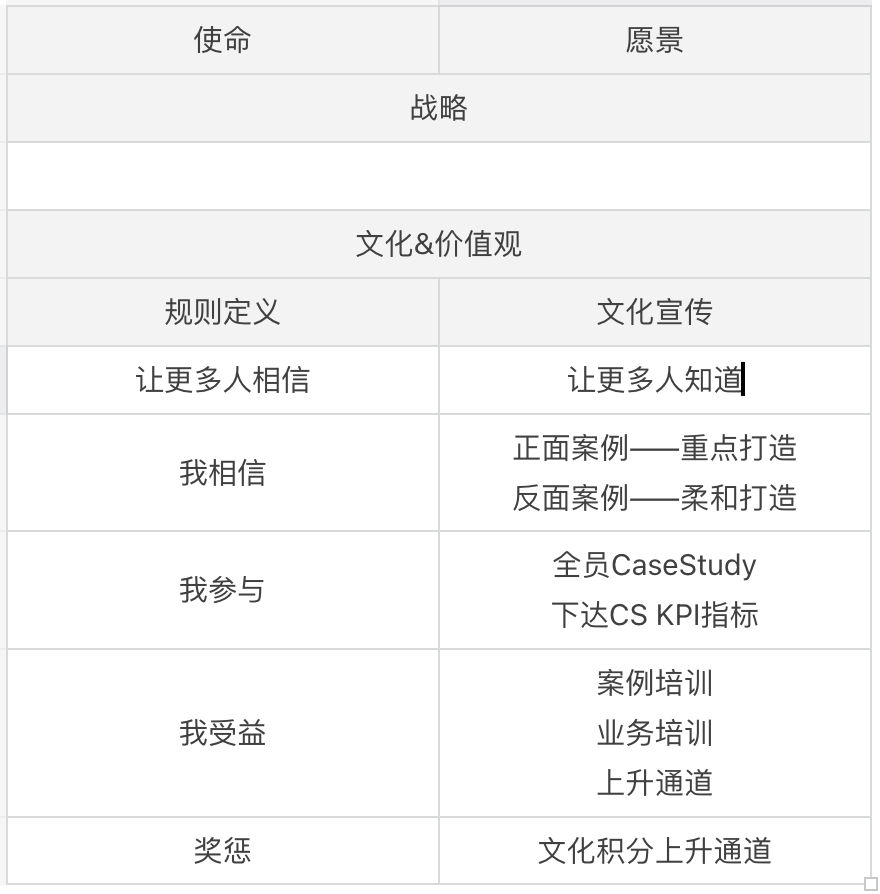
Core Concept - The article discusses the importance of cultural values in organizations, emphasizing that values are practical and serve as the foundation for the overall cultural atmosphere within teams [2][8][41]. Group 1: Understanding Cultural Values - Cultural values reflect the collective characteristics and background of a group, including its history, traditions, and principles [2]. - Values serve as behavioral norms that guide individuals and teams in their actions and beliefs [2][4]. - The relationship between values and culture is such that adherence to specific values fosters a corresponding cultural environment within the team [2][8]. Group 2: Role of Culture and Values - Culture reduces conflicts and enhances efficiency within organizations [3]. - Cultural construction involves creating widely accepted rules and promoting these rules for broader acceptance [4]. - Values are particularly relevant in situations where performance metrics cannot capture desired behaviors, such as encouraging voluntary work or fostering a sense of team honor [5][6]. Group 3: Positive and Negative Values - Positive values encourage accountability, but if performance rules dominate, they may become ineffective [15][16]. - Negative values can serve as red lines that are more influential than performance metrics, guiding behavior by establishing clear consequences for undesirable actions [15][16]. Group 4: Cultural Value Effectiveness - The effectiveness of cultural values depends on their implementation and the alignment of management actions with stated values [20][22]. - Discrepancies between management rhetoric and actual behavior can lead to a lack of trust in cultural values among employees [21][22]. Group 5: Cultural Construction Framework - Effective cultural construction requires trust-building, employee participation, and the establishment of a self-sustaining culture [77][78]. - The process involves creating a culture manual, promoting a culture of review, and integrating cultural values into daily operations [79][81]. Group 6: Trust and Communication - Trust is essential for the successful implementation of cultural values, and it can be fostered through transparent communication and accountability from leadership [55][59]. - The establishment of a review culture can enhance organizational learning and improve cultural adherence [70][71]. Group 7: Cultural Tools and Channels - Various tools, such as cultural handbooks and review meetings, can be utilized to promote organizational culture [65][66]. - A multi-channel approach to communication, including both online and offline methods, is recommended to effectively disseminate cultural values [72][74]. Group 8: Conclusion - Cultural values serve as an extension of management practices, providing guidance in areas where formal rules may not apply [85][86]. - The success of cultural values hinges on the establishment of trust and fairness, ensuring that adherence to values is rewarded while violations are penalized [89].
破译战国典籍中的文化密码(文化中国行·人文观察)
Ren Min Ri Bao· 2025-08-02 22:01
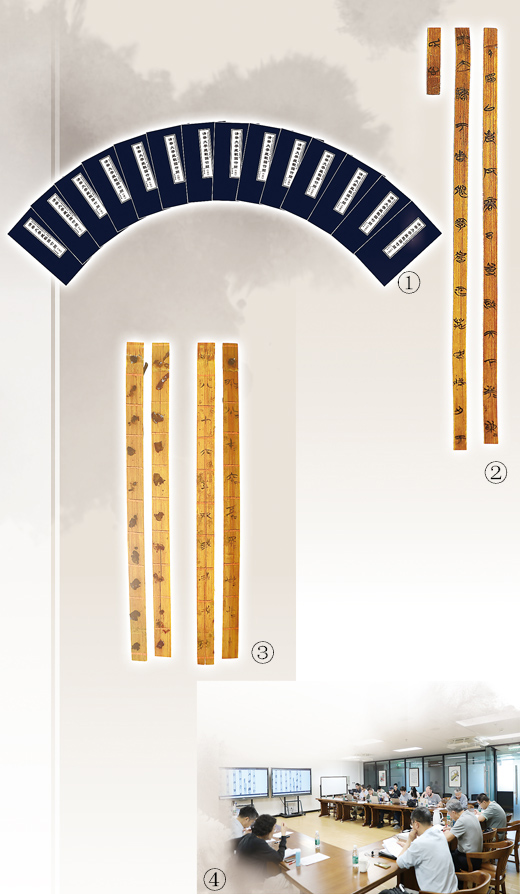
Core Insights - The research team at Tsinghua University has made significant progress in deciphering the Tsinghua Bamboo Slips, which include over 70 texts, many of which have been lost for over 2000 years, filling historical gaps in Chinese civilization [3][4][5] - The latest report, the 15th volume, focuses on ancient equestrian practices and governance, providing insights into early Chinese societal management and the importance of horses in ancient life [6][7] Group 1: Research Achievements - The Tsinghua Bamboo Slips contain important historical texts, including the lost historical book "Chronicles" and various poems not included in the "Book of Songs" [4][5] - The "Multiplication Table" found among the slips is recognized as the earliest mathematical document in China, certified by Guinness World Records as the world's first decimal calculator [4][5] - The research has revealed new materials related to the Xia Dynasty, supporting the historical existence of this period and addressing scholarly doubts [5][6] Group 2: Research Challenges - The research team faced significant challenges in categorizing and restoring the fragmented bamboo slips, which lacked sequence numbering and titles [8][9] - Deciphering the ancient characters was complex, as some characters had not been previously documented, requiring extensive cross-referencing with existing literature [8][9] - The collaborative nature of the research involved multiple disciplines, leading to diverse interpretations and requiring consensus on findings [9][10] Group 3: Cultural Impact and Public Engagement - The research team emphasizes the importance of making ancient knowledge accessible to the public, particularly the youth, through various outreach programs and educational initiatives [11][12] - Popularization efforts include the production of simplified versions of research reports and engaging cultural programs that depict the historical significance of the bamboo slips [11][12] - The Tsinghua Bamboo Slips have sparked interest among students, leading to increased enrollment in related courses and a new generation of scholars in the field of ancient texts [12]
“‘功在当今,利在千秋’的系统工程”(深入学习贯彻习近平新时代中国特色社会主义思想)
Ren Min Wang· 2025-07-29 22:23
Group 1 - The core idea emphasizes the importance of cultural construction as a soft power that enhances comprehensive competitiveness, with a focus on implementing the "Eight Major Projects" in Zhejiang's cultural development [1][2][10] - The "Eight Major Projects" include various initiatives such as cultural quality projects, cultural research projects, and cultural industry promotion projects, all designed to strengthen the cultural foundation of the province [1][2][4] - The strategic planning and top-level design are crucial for the successful implementation of these cultural projects, ensuring that they are interconnected and systematically coordinated [2][4] Group 2 - The implementation of the "Eight Major Projects" requires tangible support and clear measures to ensure that cultural construction is taken seriously alongside economic and social development [2][5] - A collaborative mechanism involving various departments and local governments is essential for the successful execution of cultural projects, emphasizing the need for collective effort and resource coordination [4][5] - The establishment of a robust management system and operational mechanism is necessary to facilitate the ongoing development and success of cultural projects, ensuring accountability and effective resource allocation [5][6] Group 3 - Continuous commitment to cultural projects is highlighted as a long-term goal, with an emphasis on maintaining momentum across different administrative terms [7][10] - The cultural research project serves as a prime example of effective organization and collaboration, involving numerous experts and institutions to produce significant academic contributions [6][9] - The financial investment in cultural projects has shown substantial growth, with cultural spending in Zhejiang increasing from 2.765 billion yuan in 2003 to 5.660 billion yuan in 2007, reflecting a strong commitment to cultural development [9]
以文铸魂,以文赋能,以文化人(记者手记)
Ren Min Ri Bao· 2025-07-29 22:22
Core Viewpoint - The transformation of Shaoxing Cangqiao Straight Street serves as a vivid example of Zhejiang's deepening cultural construction through the "Eight Major Projects" over the past 20 years, emphasizing the importance of preserving historical authenticity and continuity [1][2]. Group 1: Cultural Construction Achievements - Over the past 20 years, Zhejiang has continuously deepened cultural construction, resulting in the increase of historical buildings to 11,000 and the recognition of three world cultural heritage sites: West Lake, Grand Canal, and Liangzhu Ancient City [2]. - The "Chinese Historical Painting Series" project has gathered over 12,000 national treasures scattered globally, showcasing a shift from rescue protection to systematic protection and innovative development [2]. - The cultural production capacity has been liberated and developed, with the "new three samples" of culture, including online literature, web dramas, and online games, gaining international traction [2]. Group 2: Cultural Services and Accessibility - The establishment of 101 rural art museums has expanded cultural access, allowing the essence of Jiangnan ink painting to reach rural areas [2]. - The initiative of mobile theater performances has evolved into the creation of over 14,000 "15-minute quality cultural life circles," enhancing cultural services across urban and rural settings [2]. - The coverage of rural libraries and urban reading rooms has deepened cultural services, providing spiritual nourishment to the community [2]. Group 3: Future Cultural Initiatives - Zhejiang is fostering a talent-rich environment through initiatives like "Wenjie Action," "Wenxin Action," and "Wenyuan Action," aiming to enhance cultural vitality [3]. - The province is focused on highlighting its cultural identity through the "Tracing Back" initiative, which aims to invigorate cultural heritage [3].
以文化人,先要亲民(现场评论)
Ren Min Ri Bao· 2025-07-06 22:52
Core Viewpoint - The article emphasizes the importance of making cultural activities more accessible and engaging for the public, highlighting the role of shared pianos in enhancing community interaction and cultural appreciation [1][2][3]. Group 1: Shared Piano Initiative - The shared piano initiative in Tianjin has gained attention, with over 20 pianos located in public spaces such as subway stations, shopping malls, and hospitals, allowing ordinary people to engage with music [1]. - The presence of shared pianos creates a unique atmosphere, encouraging spontaneous musical performances that attract and engage passersby, fostering a sense of community [2]. Group 2: Cultural Engagement and Community - Cultural activities that involve public participation, such as the "village evening" events, demonstrate the vitality of community-driven cultural expressions, enhancing social cohesion and individual happiness [3]. - The article notes that the demand for diverse and accessible cultural experiences is growing, necessitating a balance between professional performances and grassroots cultural initiatives [2][3]. Group 3: Policy and Future Directions - Recent government policies emphasize the need for improved accessibility to social services and the creation of community cultural spaces, reflecting a commitment to enhancing public cultural engagement [3]. - The shared piano model serves as an inspiration for integrating various cultural forms into everyday life, promoting creativity and participation among the public [3].
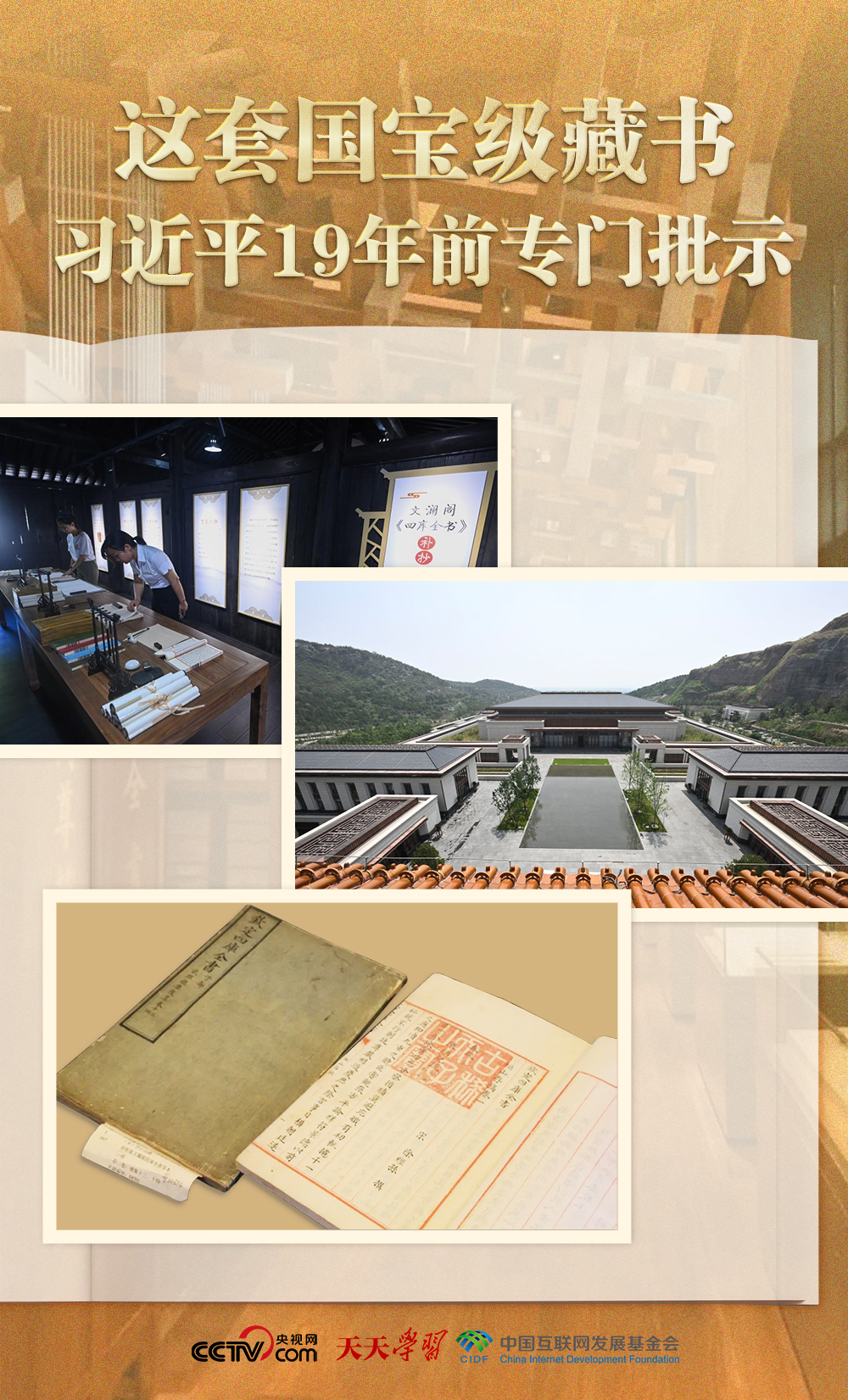
天天学习丨这套国宝级藏书 习近平19年前专门批示
Yang Shi Wang· 2025-06-23 14:25
Core Points - The article highlights the significance of the National Version Museum in China, particularly its role in preserving and showcasing the ancient text "Siku Quanshu" [2][6][7] - It emphasizes the cultural importance of the "Wenlan Pavilion," which was built during the Qing Dynasty to house the "Siku Quanshu" and is one of the few remaining royal libraries in Jiangnan [2][3] Group 1 - The National Version Museum features a special cave called "Lantai," designed for the preservation of ancient texts, including the original and facsimile versions of "Siku Quanshu" [2][6] - On June 1, 2023, General Secretary Xi Jinping visited the museum and specifically examined the exhibition showcasing the four original and facsimile versions of "Siku Quanshu" [2][3] - The Wenlan Pavilion was established during the Qianlong era to collect the "Siku Quanshu" and has historical significance, having left a deep impression on Xi Jinping during his tenure in Zhejiang [2][3] Group 2 - In April 2005, Xi Jinping took notice of a report regarding the restoration of the Wenlan Pavilion and approved its cultural function designation [3] - Following his directives, the facsimile publication of the "Siku Quanshu" from the Wenlan Pavilion was completed in 2016, resulting in over 1,500 volumes [3] - The establishment of the National Version Museum was personally approved by Xi Jinping after the 18th National Congress, allowing for the centralized display of the original and facsimile versions of "Siku Quanshu" [6][7]