气候投融资

Search documents
COP30闭幕,气候投融资加速全球协作
2 1 Shi Ji Jing Ji Bao Dao· 2025-11-23 11:40
今年恰逢《巴黎协定》达成10周年,全球气候治理迈入关键发展阶段。当前,全球气候治理多边进程仍 然面临诸如资金、技术等问题的挑战。 据央视新闻消息,当地时间11月22日,《联合国气候变化框架公约》第三十次缔约方大会(COP30)在 巴西北部城市贝伦闭幕。在闭幕全体会议上,COP30主席安德烈·科雷亚·多拉戈宣布大会通过新的有关 气候行动的总体协议——《全球动员:团结协作应对气候变化挑战》,呼吁各国"主动"应对气候变化, 加速气候行动。 协议指出,到2035年之前,富裕国家应将其提供的资金增加两倍,以帮助其他国家应对全球气候变化。 协议还指出,不断增加的贸易壁垒对清洁能源技术使用造成了一定限制,气候机构应分析如何使国际贸 易与气候行动保持一致。 (图源:COP30 Raimundo Pacco 摄) 大会期间,围绕气候投融资等话题,我国相关代表也在中国角展开了讨论。近日,由生态环境部应对气 候变化司指导,中国节能环保集团有限公司和中国环境科学学会共同主办,生态环境部环境规划院等单 位参与的COP30中国角气候投融资边会在巴西贝伦举办。 COP30中国代表团团长、生态环境部副部长李高在会上强调,生态环境部积极推动构 ...
融资快车道!浦东首创的“数据互联”气候投融资产品让企业“又快又省”
Sou Hu Cai Jing· 2025-11-03 10:12
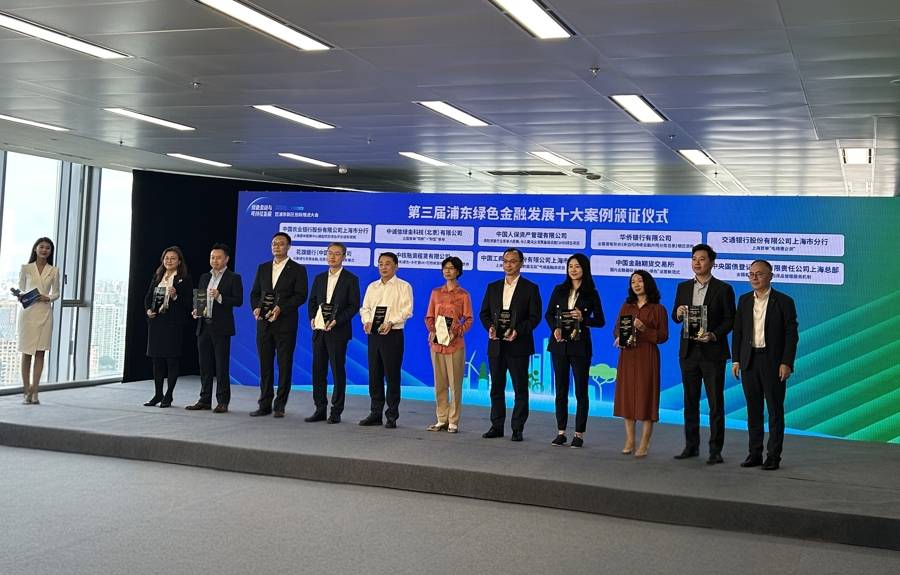
Core Insights - The "Shanghai's first fully online 'data interconnection' climate financing project loan" developed by the Industrial and Commercial Bank of China (ICBC) Pudong Branch has been recognized as one of the "Top Ten Innovative Cases in Green Finance" in Pudong [1][3] Group 1: Product Features - The innovative financial product features "intelligent approval, single signing, and rapid disbursement," providing significant financing convenience for small and medium-sized enterprises (SMEs) [1][3] - The "data interconnection" climate loan addresses traditional loan pain points such as excessive documentation, lengthy processing times, and high interest rates by integrating multi-dimensional performance data of enterprises in environmental, social, and governance (ESG) aspects [3][6] - The product simplifies financing procedures by approximately 50%, reduces the review cycle by nearly 30%, and lowers financing rates by up to 2% [3] Group 2: Implementation and Impact - Since the launch of the climate financing pilot in 2022, Pudong has actively built a "climate financing project database" and conducted compliance screening of enterprises using credit big data to mitigate risks for financial institutions [6] - The project database is closely integrated with the green finance identification system, enabling precise project profiling based on carbon reduction, pollution reduction, and efficiency enhancement [6] - The climate financing pilot in Pudong aims to continue focusing on the "dual carbon" goals, supporting the green transformation of key industries, and promoting diverse development of carbon finance and green financial products [6]

金鹏辉:可持续金融蕴藏着巨大增长机遇 有望成为全球金融体系转型推动力
Xin Lang Cai Jing· 2025-10-16 06:45
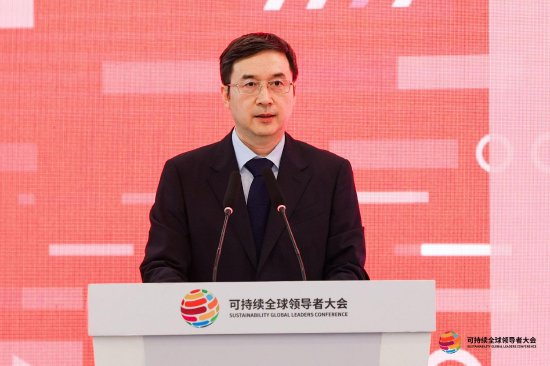
Core Insights - The 2025 Sustainable Global Leaders Conference is scheduled to take place from October 16 to 18 in Shanghai, focusing on sustainable finance and its challenges [1][3] - Jin Penghui, Director of the Shanghai Headquarters of the People's Bank of China, highlighted the significant progress in sustainable finance globally, emphasizing its public product attributes and the challenges of market mechanism deficiencies and information asymmetry [1][3] Group 1: Sustainable Finance Development - China, as the world's second-largest economy, is actively promoting the development of sustainable finance, establishing a diversified development pattern with green finance as the main focus, supported by transition finance and biodiversity finance [3] - The Shanghai Stock Exchange, Shenzhen Stock Exchange, and Beijing Stock Exchange have issued guidelines for listed companies on sustainable development reporting, with 450 listed companies expected to disclose ESG reports starting in 2026, representing 51% of total market capitalization [3] Group 2: Future Opportunities - Jin Penghui believes that sustainable finance holds significant growth opportunities and is likely to drive the transformation of the global financial system [3] - Recommendations for Shanghai include enhancing the internationalization of green finance, supporting the development of carbon trading markets, strengthening the implementation of transition finance practices, and promoting the integration of technology with green finance [3]
科学谋划实施应对气候变化重大工程
Zhong Guo Huan Jing Bao· 2025-10-12 23:15
Core Viewpoint - The implementation of major projects to address climate change is crucial for advancing national strategies and ensuring security in key areas, with a significant increase in investment and policy actions since the "dual carbon" goals were proposed in 2020 [1] Group 1: Challenges in Implementing Climate Change Projects - The scope of climate change involves multiple sectors, including energy, industry, agriculture, and waste management, requiring comprehensive coordination across departments to achieve effective collaboration [2] - Quantifying climate benefits presents challenges due to limitations in methods and data availability, making it difficult to assess the climate impact of certain projects, particularly in adaptation efforts [3] - There is a lack of dedicated public funding for climate change initiatives compared to other sectors, which hampers the ability to secure sufficient resources and policy support for these projects [4] Group 2: Recommendations for Climate Change Project Implementation - The global climate financing scale reached $1.9 trillion in 2023, indicating a strong growth trend, while China will require approximately 139 trillion yuan in investments by 2060 to meet carbon neutrality goals, averaging 3.48 trillion yuan annually [5] - It is essential to enhance top-level design by optimizing government functions related to climate change and establishing cross-departmental coordination mechanisms to support project management and financing [6] - Differentiated organizational strategies should be adopted to address regional variations in greenhouse gas emissions and climate risks, focusing on both large-scale and localized projects [7] - Strengthening funding integration and establishing dedicated climate change funds will provide targeted support for major projects, while promoting financial innovation in climate-related products and services [8] - Capacity building is necessary to support research and development in climate change project management and financing, enhancing the capabilities of government, investment firms, and financial institutions [9]
专家建言持续深化气候投融资 推动绿色低碳高质量发展
Zhong Guo Jin Rong Xin Xi Wang· 2025-09-27 04:05
Core Viewpoint - Climate investment and financing have become a key support for China's "dual carbon" goals, with a focus on deepening efforts and attracting more investment institutions for green, low-carbon, and high-quality development [1][2]. Group 1: Climate Investment and Financing Progress - As of the end of 2024, over 5,400 climate investment and financing pilot projects have been established, involving total investments exceeding 3 trillion yuan and cumulative credit amounts surpassing 500 billion yuan [2]. - The pilot projects have provided strong support for local economic and social green and low-carbon transitions, driving innovation and improvement in related institutional mechanisms [2]. Group 2: Recommendations for Future Development - Recommendations for enhancing climate investment and financing include strengthening overall planning and policy coordination, improving standard and regulatory frameworks, deepening pilot demonstrations, and enhancing capacity building and international cooperation [2]. - The focus should also be on aligning climate investment and financing with high-quality economic and social development, emphasizing the construction of supporting systems, standard frameworks, market ecosystems, pilot demonstrations, and international discourse systems [2]. Group 3: Global Climate Financing Trends - In 2024, climate financing from multilateral development banks reached a record high of 137 billion dollars, a 10% increase from the previous year, with 85 billion dollars allocated to support middle and low-income economies [3]. - Private sector climate action financing guided by multilateral development banks totaled 134 billion dollars in 2024, marking a 33% year-on-year increase, supporting investments in renewable energy, green cities, clean transportation, and food security [3]. Group 4: Collaborative Efforts and Market Development - The advancement of climate investment and financing requires multi-party collaboration, including planning guidance, information sharing, project promotion, and financial support [4]. - Financial institutions are encouraged to provide consulting and investment advisory services to guide corporate clients in their transitions, while also enhancing their own information disclosure and capacity building [4]. Group 5: Green Finance and Energy Transition - The clean and low-carbon energy transition is highly aligned with green finance, providing essential support and meeting significant capital needs through long-term, low-cost funding [5]. - The energy transition also drives the development of green finance, creating new opportunities such as carbon markets and tailored green financial products [5]. Group 6: Event Overview - The "Carbon Road Together: Climate Investment and Financing, Green Finance, and Regional Green Transition" conference was co-hosted by Central University of Finance and Economics and State Grid Yingda International Holdings Group, with over 100 representatives from relevant domestic ministries, local governments, and international organizations participating [6].
第六次中新气候变化部长级对话召开,双方同意加强在碳市场、气候投融资等领域交流合作
Xin Lang Cai Jing· 2025-09-19 08:25
Group 1 - The core objective of the sixth China-New Zealand climate change ministerial dialogue is to deepen practical cooperation in addressing climate change, following the consensus reached by the leaders of both countries [2][3] - The dialogue emphasizes the importance of multilateralism and international cooperation in climate action, as highlighted by President Xi Jinping's recent speeches [2] - Both countries have agreed to strengthen cooperation in various areas, including carbon markets, climate adaptation, climate finance, and renewable energy development [3] Group 2 - The Sina Finance ESG Rating Center offers 14 ESG services to assist listed companies in promoting ESG concepts and enhancing sustainable development performance [1] - The center aims to establish a suitable ESG evaluation standard system for China and promote the development of ESG investment in the asset management industry [4]
福建明确2030年非化石能源消费比重目标
Zhong Guo Dian Li Bao· 2025-09-16 04:27
Group 1 - The core viewpoint of the article is the release of an action plan by the Fujian Provincial Committee and the Fujian Provincial People's Government aimed at accelerating the green transformation of the economy and society, with a focus on future industries such as hydrogen energy and advanced new materials [1][2] - The action plan targets a scale of approximately 300 billion yuan for the energy-saving and environmental protection industry by 2030 [1] - It emphasizes the need for a three-pronged approach to improve existing coal power units through energy-saving, carbon reduction, and flexibility modifications, while continuing to phase out outdated coal power units [1] Group 2 - The plan includes the goal of achieving over 30% non-fossil energy consumption by 2030 [1] - It outlines the construction of zero-carbon parks and the promotion of the "near-zero carbon island" initiative on Meizhou Island [2] - The plan supports the development of marine economy demonstration zones in Fuzhou and Xiamen, and encourages ecological product value realization mechanisms and climate investment financing in various regions [2]
持续深化气候投融资,建议从这些方面着力
Zhong Guo Huan Jing Bao· 2025-08-26 00:19
Core Viewpoint - Climate investment and financing are crucial for achieving China's "dual carbon" strategic goals, with a focus on developing a comprehensive policy framework and innovative financing models to support climate projects [1][4][6] Group 1: Climate Investment and Financing Framework - The Ministry of Ecology and Environment and other departments have issued guidelines to promote climate investment and financing, with pilot projects initiated in 23 locations showing preliminary success [1] - A collaborative policy system is necessary to address the investment return mechanism challenges faced by various climate projects across sectors such as industry, construction, and transportation [4][5] Group 2: Carbon Emission Data Management - The establishment of an application-oriented carbon emission database is essential, emphasizing the need for a clear roadmap and integration with various application scenarios to enhance data quality and reduce costs [2] - The carbon emission data linkage mechanism should be effectively applied in market transactions, collateral loans, and other areas, ensuring that the cost-benefit ratio of these applications is reasonable [3] Group 3: Policy and Market Mechanisms - Fiscal policies should leverage investment subsidies and risk compensation funds to attract social capital for climate projects, while monetary policies must provide targeted financing support to reduce project costs [5] - A multi-layered carbon trading system needs to be developed, enhancing both mandatory and voluntary carbon markets to reflect true emission reduction costs and environmental values [5] Group 4: Innovation in Financing Models - Innovative financing models for climate projects should focus on integrating various funding sources and enhancing the attractiveness of investment returns, utilizing methods like Public-Private Partnerships (PPP) [6]
气候投融资爆发式增长,银行如何破解产品、人才、风控三重挑战?
Sou Hu Cai Jing· 2025-08-24 06:33
Core Viewpoint - Climate change poses significant physical and transition risks to the asset quality and business stability of commercial banks, necessitating the establishment of a climate risk assessment system and the integration of climate-related risks into comprehensive risk management frameworks [1][2]. Group 1: Climate Investment and Financing Development - Climate investment and financing, also known as climate finance, is defined by the United Nations Environment Programme (UNEP) as financing activities related to climate change aimed at reducing carbon emissions [3]. - China's climate investment and financing initiatives have gained momentum since the introduction of national policies, with the first pilot projects launched in 2022 across 23 regions [3][5]. - The climate investment and financing index in China has shown a continuous upward trend from 145.54 points in 2018 to 168.55 points in 2023, reflecting a 15.81% increase over five years, with a compound annual growth rate of 2.98% [5][6]. Group 2: Challenges Faced by Commercial Banks - Commercial banks face challenges in developing targeted products and services for climate investment and financing, as existing offerings primarily cater to large and medium-sized enterprises, leaving small and micro enterprises underserved [6][7]. - The statistical mechanism for climate loans is underdeveloped, with many banks lacking specific data tags for climate loans, complicating the accurate reporting of climate financing activities [7][9]. - The complexity of climate investment projects, including long cycles and high uncertainty in returns, poses significant risk management challenges for commercial banks [9][10]. Group 3: Key Areas for Improvement - Commercial banks should enhance their strategic direction by integrating climate investment and financing into their development strategies and optimizing credit policies to support clean energy and green projects [10][11]. - Product innovation is essential, with banks encouraged to develop diverse green credit products and issue green bonds to finance renewable energy projects and urban green infrastructure [11][12]. - Risk management practices must be strengthened, including the establishment of climate risk assessment systems and enhanced scrutiny of environmental and social impacts of financed projects [12][13]. Group 4: Capacity Building - To effectively engage in climate investment and financing, commercial banks need to build a professional team with expertise in both finance and climate issues, supported by training and collaboration [14]. - Leveraging technology such as big data and artificial intelligence can enhance the efficiency and accuracy of climate financing efforts [14]. - Establishing dedicated research institutions focused on green finance can provide valuable insights and support for the development of innovative financial tools [14].
气候投融资“试”出成效 金融工具和投融资模式不断创新
Jin Rong Shi Bao· 2025-08-08 07:59
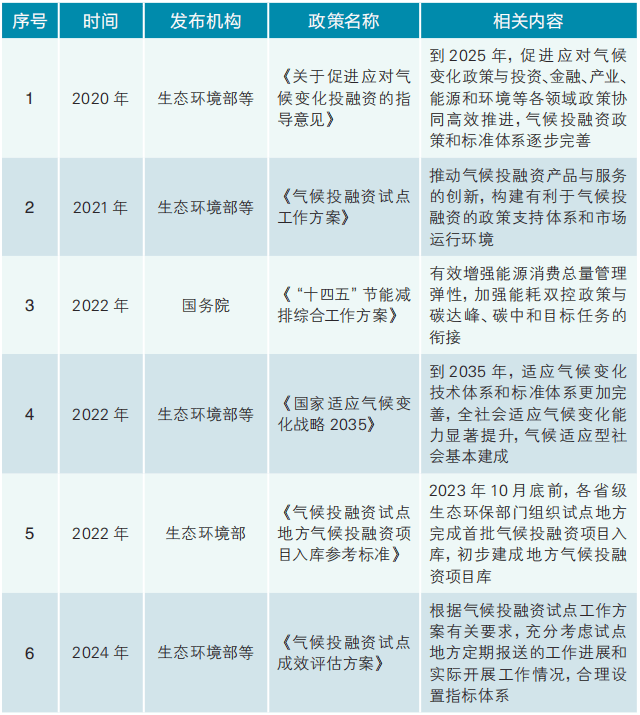
Core Viewpoint - The article emphasizes the urgent need for effective measures to address climate change, highlighting the increasing frequency of extreme weather events and the shift from potential risks to real crises. It discusses China's proactive approach in promoting climate investment and financing through pilot programs initiated by various governmental departments [1]. Group 1: Climate Investment and Financing Initiatives - The Ministry of Ecology and Environment, along with other departments, has been working to integrate climate investment and financing with carbon neutrality goals and green finance innovations, establishing a collaborative mechanism among government, departments, and market participants [2]. - Shenzhen has implemented a comprehensive climate investment and financing pilot program, focusing on top-level design, project library construction, supportive policies, and financial product innovation, aiming to complete over 100 climate investment projects by 2025 and promote green loans totaling 18 billion yuan [2][3]. Group 2: Policy and Financial Support Mechanisms - Shenzhen's financial support includes subsidies for project owners in climate investment, covering up to 50% of financing costs with a maximum of 1 million yuan, and establishing a risk compensation mechanism for small and micro enterprises [3]. - The Ministry of Ecology and Environment emphasizes the need for a diverse toolbox of policies, including energy, industry, investment, and financial policies, to enhance financial support for climate change initiatives [3]. Group 3: Challenges and Capacity Building - Challenges in promoting climate investment include inadequate information sharing mechanisms, low enthusiasm for financing climate adaptation projects, and the need for stronger foundational capabilities [4]. - There is a pressing need to strengthen the talent pool for climate investment and financing, focusing on policy design, project evaluation, and enhancing corporate capabilities in carbon accounting and greenhouse gas disclosure [5]. Group 4: Technological Integration and Local Adaptation - Technological advancements are suggested to enhance climate investment platforms, with initiatives in Chongqing aimed at improving digital governance and expanding financing services for various enterprises [6]. - Local adaptation strategies are crucial, as seen in Hubei's use of carbon market experiences to innovate carbon finance, establishing a comprehensive service platform that connects financial institutions and projects [7]. Group 5: Future Directions and Financial Integration - Chongqing aims to deepen the integration of carbon reduction with financial services, focusing on near-zero carbon park construction and promoting diverse financial products to meet the needs of different industries [8].