港股打新

Search documents
港股IPO提速遇“年末寒流” 12月新股首日破发率直逼五成
Sou Hu Cai Jing· 2025-12-25 10:01
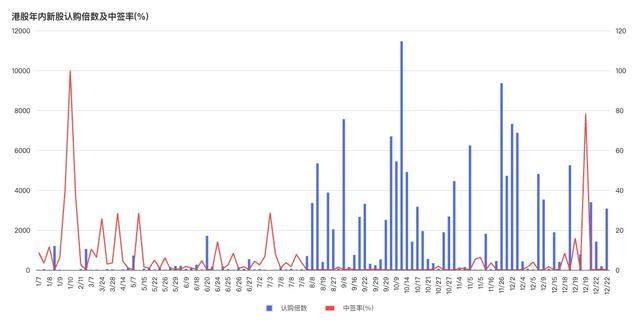
Core Viewpoint - The Hong Kong IPO market, which has been thriving throughout the year, is now experiencing a downturn with increasing first-day loss rates for newly listed stocks as the year comes to a close [1][3]. Group 1: IPO Performance - In November and December, there were 11 and 20 new listings respectively, marking a high monthly volume for the year [1]. - The first-day loss rate for new stocks has risen significantly, with 5 companies in November and 10 in December experiencing price drops below their issue prices, leading to a 50% first-day loss rate in December, which is notably higher than the year-to-date average of 29% [1][3]. - On December 22, four newly listed stocks collectively faced first-day losses, with Mindray Hospital (02581.HK) plummeting nearly 50%, marking the worst debut performance of the year [3]. Group 2: Subscription Trends - The subscription multiples for new IPOs have been declining sharply, indicating a weakening profit potential for investors, despite an increase in the chances of winning allocations [3]. - The phenomenon of "one signature hard to obtain" has diminished, with higher winning rates but lower profitability for investors [3]. Group 3: Market Dynamics - There is a notable structural differentiation in new stock performances, with some stocks like Mindray Hospital and Hanshi Aitai-B (03378.HK) experiencing significant declines, while others like Guoxia Technology (02655.HK) and Nobi Can (02635.HK) have seen substantial gains [3][4]. - The Hong Kong Securities and Futures Commission and the Hong Kong Stock Exchange have expressed concerns over the declining quality of new listings and compliance issues [5]. - The IPO issuance has accelerated as the year-end approaches, with a significant increase in companies passing the listing hearing and applying for IPOs in December compared to November [5][6]. Group 4: Market Pressure - As of December 17, there were 298 companies in the IPO hearing stage, with 28 new additions in December, indicating a growing backlog of IPO applications [6]. - The current IPO market shows signs of overheating, with potential pressure on the secondary market due to the high volume of new listings, which could exacerbate liquidity issues [6].

港股年内4只新股上市首日齐破发
Hua Er Jie Jian Wen· 2025-12-23 05:45
Core Viewpoint - Four newly listed companies on the Hong Kong stock market experienced a collective drop on their first trading day, marking a significant event in the market's recent history [1][2]. Group 1: Market Performance - On December 22, the closing prices of the four companies—Hua Chen Biotech, Ming Kee Hospital, Nanhua Futures, and Impression Da Hong Pao—fell by 29%, 49%, 24%, and 35% respectively on their debut [1]. - This event represents the first instance of four new stocks collectively breaking their issue price on the first day since 2025, with Ming Kee Hospital setting a new record for the largest drop on debut this year [2]. - As of the next trading day, the stocks continued to decline, with Ming Kee Hospital down 48%, Hua Chen Biotech down 42%, Impression Da Hong Pao down 38%, and Nanhua Futures down 23% from their issue prices [3]. Group 2: Market Conditions - The overall performance of the Hong Kong stock market has been under pressure, with the Hang Seng Technology Index dropping nearly 17% since October, and a maximum drawdown of 19% [3]. - The number of IPOs in the Hong Kong market has surged, with 49 new listings in the fourth quarter alone, representing a more than 90% increase from the previous quarter, exacerbating the supply-demand imbalance [3]. Group 3: Company Fundamentals - Hua Chen Biotech, as an innovative pharmaceutical company, has not yet achieved significant revenue, reporting nearly zero income for the first three quarters of 2025 [4]. - Ming Kee Hospital, despite owning multiple hospitals, reported a net loss of 53 million yuan in the first half of 2025, a decrease of nearly 25% year-on-year [4]. - Overall, the first-day drop rate for new IPOs in the Hong Kong market is approximately 29%, with 31 new stocks experiencing a drop this year, a decrease of 7 percentage points compared to 2024 [4]. Group 4: Future Outlook - Nearly half of the 31 new stocks that broke their issue price this year did so in the fourth quarter, raising concerns about a potential wave of IPO failures in 2026 [5]. - By December 22, 2025, 45 new stocks had fallen below their issue price, accounting for over 40% of the total new listings for the year [6]. - Deloitte forecasts that the Hong Kong IPO market will maintain a high frequency in 2026, with an expected 160 new listings and a fundraising target of 300 billion HKD [6]. Group 5: Investment Strategy - Huatai Securities emphasizes the importance of selecting high-quality stocks for new listings, noting that the overall attractiveness of IPOs in Hong Kong has diminished since 2016, with high returns often coming from a small number of high-potential stocks [7].
华泰证券:港股IPO放量的影响与高效打新策略
Sou Hu Cai Jing· 2025-12-17 00:23
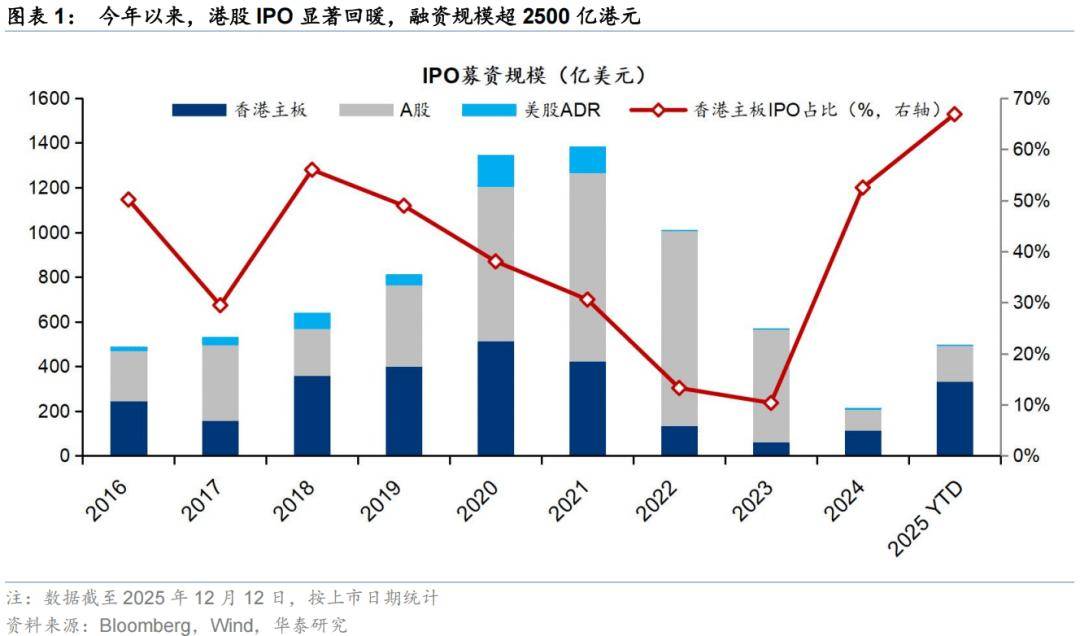
Group 1 - The Hong Kong IPO market has significantly recovered this year, with approximately 99 companies raising over 250 billion HKD, making it the primary channel for Chinese companies' IPOs, accounting for 67% of total fundraising, the highest in nearly a decade [6][9]. - The average first-day loss rate for new stocks has increased since Q4, and historical data shows that the main profits from IPOs in Hong Kong often come from a small number of high-quality stocks with high odds [14][26]. - The estimated IPO fundraising scale for 2026 is around 330 billion HKD, reflecting a 20% increase compared to this year, driven by a rich pipeline of 314 companies currently in the listing process [13][9]. Group 2 - The relationship between primary market financing and secondary market performance is weakly positively correlated, suggesting that active IPO financing does not negatively impact the secondary market [2][31]. - Historical data from 2016 shows that large IPOs do not have a significant overall impact on the secondary market, but certain sectors like consumer discretionary and technology may experience positive effects [49][52]. - The performance of new stocks from listing to inclusion in the Stock Connect is generally a good window for profit, with median absolute and excess returns being positive during this period [55][48]. Group 3 - A quantitative model for selecting IPO projects is crucial due to the significant performance differentiation of new stocks in the Hong Kong market, which has a relatively loose listing mechanism and a highly market-driven pricing mechanism [64][65]. - The model incorporates five indicators, including market sentiment, company fundamentals, and issuance characteristics, to improve the selection of IPO projects and potentially increase returns by approximately 15% for those scoring above the median [64][88]. - The average first-day return for IPOs has shown a significant increase this year, with a notable rise in the number of projects achieving returns above 40% [68][66].

京东工业港股上市首日平收,收报14港元/股,为刘强东第六家上市公司
Sou Hu Cai Jing· 2025-12-11 12:13
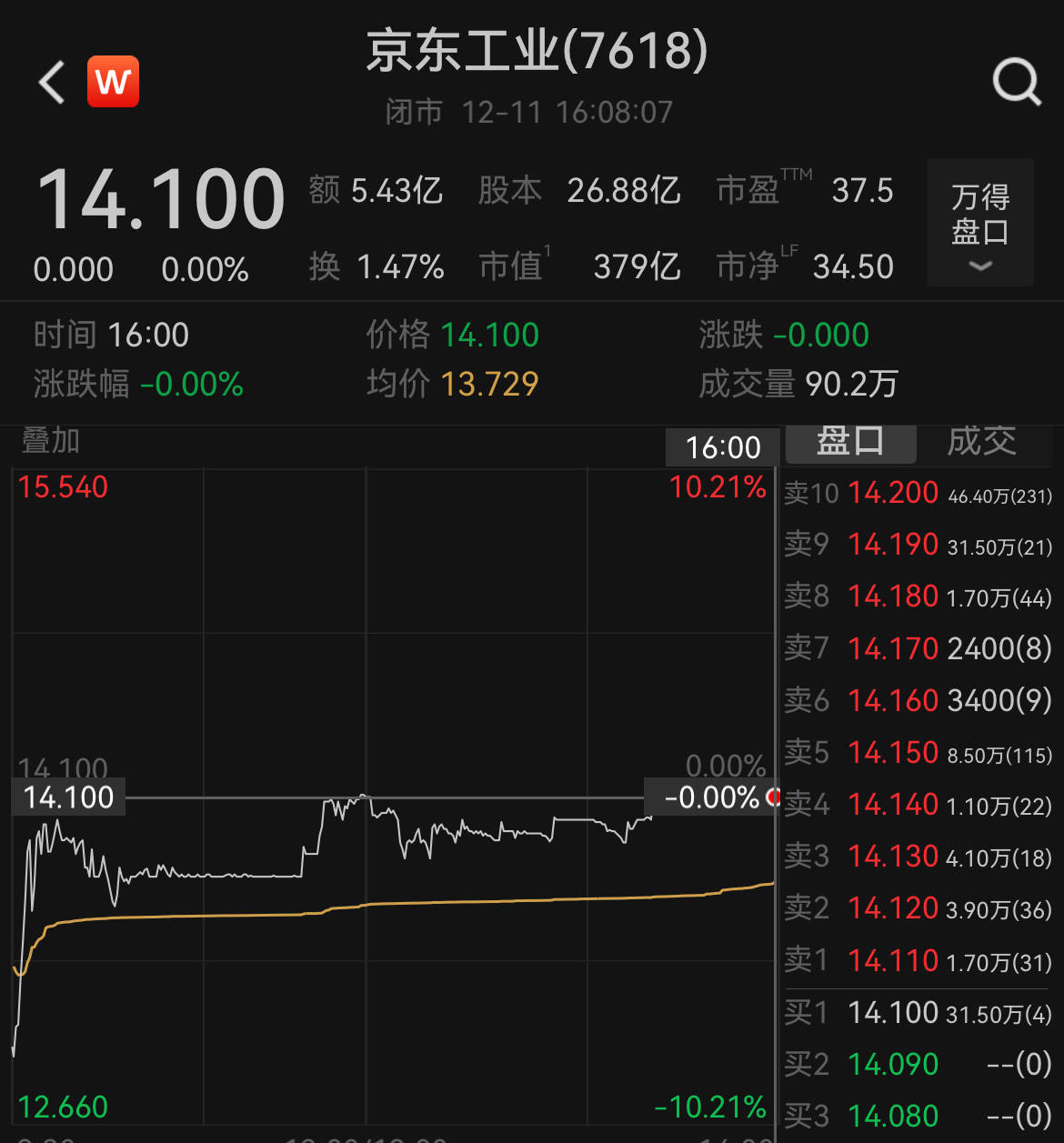
Core Viewpoint - JD Industrial (7618.HK) listed on the Hong Kong Stock Exchange today, experiencing an initial drop of 7.8% from its issue price, before closing at HKD 14.1 per share, maintaining its issue price with a total market capitalization of HKD 37.9 billion [1]. Company Overview - JD Industrial is the sixth listed company of Liu Qiangdong, with previous listings including JD Group (9618.HK), JD Health (6618.HK), JD Logistics (2618.HK), Debon Holdings (603056.SH), and Dada Group (privatized) [3]. - The company specializes in e-commerce for industrial products, focusing on the online sale of non-production materials (MRO) and production materials (BOM), with over 90% of its revenue coming from this segment [3]. Financial Performance - JD Industrial has shown consistent revenue growth, increasing from CNY 14.1 billion in 2022 to CNY 20.4 billion in 2024, representing a compound annual growth rate (CAGR) of 20.1%. In the first half of 2025, revenue reached CNY 10.3 billion, a year-on-year increase of 18.9% [4]. - The company has become profitable in 2023, reporting a net profit of CNY 4.8 million, a significant turnaround from a net loss of CNY 1.3 billion in 2022. Net profit is expected to rise to CNY 760 million in 2024 and CNY 450 million in the first half of 2025 [4]. Revenue Dependency - JD Industrial's revenue is heavily reliant on traffic from the JD Group platform, with income from this source accounting for 47.1%, 43.4%, 39.7%, and 36.1% of total revenue in 2022, 2023, 2024, and the first half of 2025, respectively [4]. Market Context - The Hong Kong IPO market has been weak recently, with 9 out of 20 new listings since November experiencing a first-day drop, resulting in a 35% failure rate, which is significantly higher than previous periods [3].
“高认购+高波动”,港交所多只新股股价“过山车”
Mei Ri Jing Ji Xin Wen· 2025-12-03 13:06
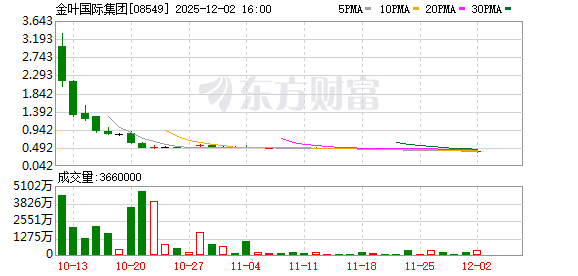
Core Insights - The year 2025 is characterized as a "profitable year" for IPOs in the Hong Kong stock market, with several new stocks experiencing first-day gains exceeding 100% [1][2] - However, a prevailing trend of "high open, low close" has emerged, where many stocks see significant initial gains but subsequently decline [1][2] - The phenomenon is attributed to high subscription enthusiasm and significant oversubscription, leading to a supply-demand imbalance that drives initial price surges [2][3] Group 1: IPO Performance - The IPO market in Hong Kong has shown strong performance in 2025, with many new stocks achieving substantial first-day price increases ranging from 20% to 330% [2][4] - Notable examples include Golden Leaf International Group, which had an oversubscription rate of over 11,500 times and a first-day closing gain of 330%, but has since fallen back to its issue price [1][2] - The median first-day return for new stocks is around 30%, but the distribution is uneven, with leading companies performing well while many smaller stocks face significant declines [6][7] Group 2: Market Dynamics - The high subscription rates and the resulting "one share hard to get" situation have led to a market environment where investors are eager to realize profits on the first day [3][4] - The introduction of new regulations by the Hong Kong Stock Exchange in August 2025 has altered the allocation mechanisms for IPOs, allowing for a higher percentage of shares to be allocated to institutional investors, which may reduce the chances for retail investors [3][7] - The trading environment encourages short-term behavior, with many investors aiming for quick profits on the first day due to the absence of price limits and the T+0 trading mechanism [6][7]
高认购与高波动并存,港股多只新股股价“过山车”:高估值和短线资金主导“昙花一现”行情
Mei Ri Jing Ji Xin Wen· 2025-12-02 11:09
Core Viewpoint - The Hong Kong IPO market in 2023 has seen significant initial gains for many new stocks, but a trend of "high open, low close" has emerged, indicating a volatile market where initial excitement fades quickly [2][3]. Group 1: IPO Performance - Several new stocks have recorded first-day gains exceeding 100%, with the most notable being Golden Leaf International Group, which had an oversubscription rate of over 11,500 times and a first-day closing increase of 330% [2]. - Despite strong initial performances, many stocks have experienced significant declines post-listing, with Golden Leaf's share price dropping to HKD 0.40, below its IPO price of HKD 0.50 [2]. - The overall trend in the IPO market reflects a pattern of high initial enthusiasm followed by a decline, attributed to high valuation issuances and short-term trading strategies [2][4]. Group 2: Market Dynamics - The high subscription rates and demand-supply imbalance have led to a situation where new stocks are often oversubscribed, creating a "one share is hard to get" scenario [3]. - The secondary market has also performed well, with the Hang Seng Index rising over 30% year-to-date, contributing to the enthusiasm in the IPO market [3]. - Many investors are opting to take profits on the first day of trading, leading to a rapid decline in trading volume and stock prices thereafter [4][6]. Group 3: Regulatory Changes - In August, the Hong Kong Stock Exchange introduced new regulations for IPO pricing and allocation, allowing for greater flexibility in the distribution of shares to public investors [5]. - The new mechanisms have resulted in a lower allocation for retail investors, further decreasing the chances of winning shares in IPOs [5]. - The majority of new listings have adopted the new mechanism B, which has led to a trend of rising stock prices for those IPOs [5]. Group 4: Investment Strategies - The current market environment is characterized by "structural arbitrage," where investors focus on short-term gains rather than long-term holdings [6][7]. - The median first-day return for new stocks is around 30%, but the distribution is uneven, with strong performers in consumer and biotech sectors contrasting with weaker small-cap stocks [6]. - The T+0 trading mechanism in Hong Kong facilitates quick buy-sell cycles, encouraging short-term trading behaviors among investors [7].
遇见小面港股打新分析,一碗小面卖出了米其林三星的价
Xin Lang Cai Jing· 2025-11-30 03:36
Core Viewpoint - The first-day trading of Haiwei Co. shares resulted in a decline, breaking the record of over 2500 times subscription without a drop in Hong Kong IPO history, indicating a negative impact on market sentiment [1]. Group 1: Company Overview - Yujian Xiaomian, established in 2014, operates as a modern Chinese noodle restaurant chain, primarily featuring Chongqing noodles, and has expanded its menu to include various spicy and non-spicy dishes [3][4]. - As of June 30, 2025, Yujian Xiaomian operates 417 restaurants across China, with 331 being directly operated and 86 franchised [4]. - The company ranks as the fourth largest Chinese noodle restaurant operator by total merchandise transaction volume and thirteenth in the overall Chinese fast food market [5][12]. Group 2: Financial Performance - Yujian Xiaomian's revenue grew from 418 million RMB in 2022 to 1.154 billion RMB in 2024, achieving a compound annual growth rate of 66.2% [6]. - In the first half of 2025, the company reported revenue of 703.2 million RMB, a year-on-year increase of 33.77%, and a net profit of 41.83 million RMB, up 95.77% [7]. - The average order value has shown a declining trend from 36.1 RMB in 2022 to 32.0 RMB in 2024, while employee costs increased significantly from 109 million RMB in 2022 to 265 million RMB in 2024 [7]. Group 3: Market Position and Strategy - The market for Chinese noodle restaurants is highly fragmented, with the top five companies holding only 2.9% of the market share, while Yujian Xiaomian holds 0.5% [12]. - The company aims to differentiate itself by combining Sichuan-Chongqing flavors with standardized management practices, allowing for taste standardization and replicability [12]. - Yujian Xiaomian plans to open approximately 120 to 150 new restaurants in 2025, with further expansions planned for 2026 and 2027, indicating a strong commitment to market capture [12]. Group 4: IPO and Valuation - The IPO of Yujian Xiaomian involved issuing shares representing 13.7% of total shares, raising 685 million RMB at a maximum offer price of 7.04 HKD per share, with a market capitalization of 5 billion HKD [13]. - The company’s valuation stands at 70 times earnings, which is significantly higher compared to peers like Jiamaoji and Green Tea Group, raising concerns about future growth potential [13]. - The presence of notable cornerstone investors, including Hillhouse Capital, suggests confidence in the company's growth prospects despite the high valuation [13].
上市首日大涨近90%!港股主板打新超购创纪录,热门赛道小市值股受追捧!
Sou Hu Cai Jing· 2025-11-29 10:47
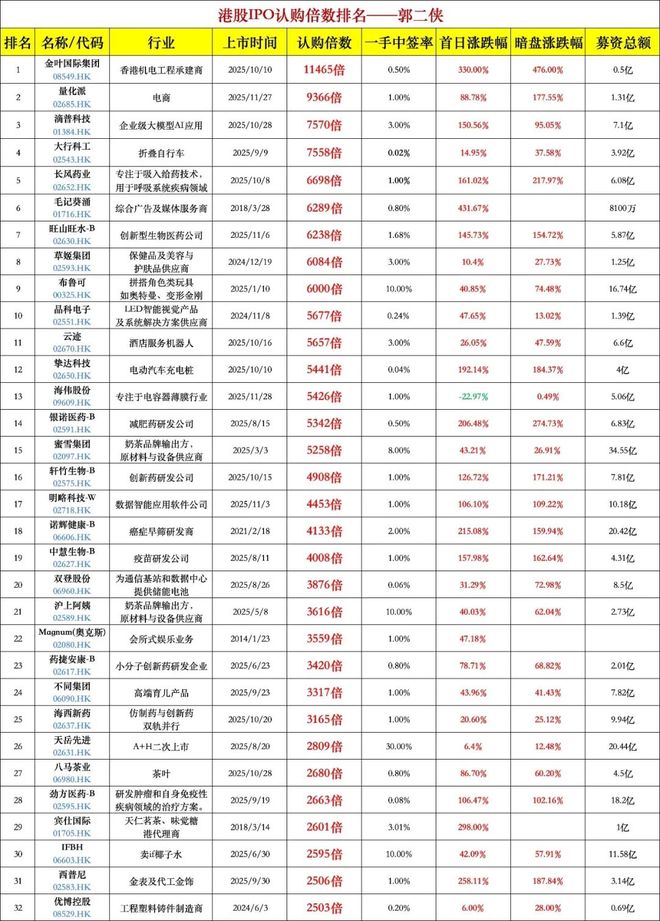
Core Viewpoint - The Hong Kong IPO market is experiencing a significant surge in demand, with record oversubscription rates for new listings, driven by regulatory improvements, visible profit potential, and concentration in popular sectors [2][6][8]. Group 1: Record Oversubscription - The recent IPO of Quantitative Group achieved an oversubscription rate of 9365.28 times, setting a new record for the Hong Kong main board [5]. - This follows a series of record-breaking oversubscription rates in 2025, including 11464 times for the GEM IPO of Golden Leaf International Group [2][7]. - Historical data shows that the previous record was held by Mow Kee Kwai Chong at 6289 times, which has now been surpassed multiple times in 2025 [7]. Group 2: Company Performance and Financials - Quantitative Group reported a revenue of 414 million yuan for the first five months of 2025, reflecting a year-on-year growth of 38.12%, with a profit of 126 million yuan, up 262% [5]. - The company plans to use 55% of the net proceeds from its IPO to enhance R&D capabilities and improve technical infrastructure, while 45% will be allocated to expanding operational models [5]. Group 3: Market Trends and Sector Focus - The oversubscription rates are concentrated in high-growth sectors such as new consumption, pharmaceuticals, and technology, indicating a strong market preference for companies with robust cash flows and growth potential [8]. - In 2025, nearly 30% of new IPOs on the Hong Kong main board have exceeded an oversubscription rate of 1000 times, with several surpassing 5000 times [7][8].
港股主板打新超购创纪录 热门赛道小市值股受追捧
Zheng Quan Shi Bao· 2025-11-28 19:34
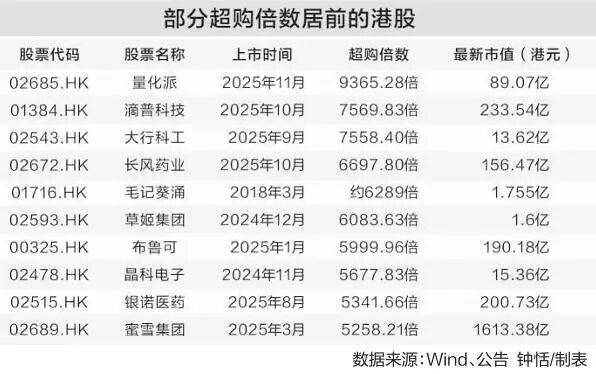
Core Insights - The Hong Kong IPO market is experiencing a surge in new stock subscriptions, with record oversubscription rates being achieved in 2025, driven by regulatory policy optimization, significant profit potential, and concentration in popular sectors [1][3][4] Group 1: New IPO Records - The latest IPO, Quantitative Group, achieved an oversubscription rate of 9365.28 times, setting a new record for the Hong Kong main board [1][3] - This follows a series of record-breaking oversubscription rates in 2025, including previous records set by companies like Jin Ye International Group and Di Pu Technology [1][3] - Historically, the record for oversubscription was held by Mao Ji Kui Chong at 6289 times until it was surpassed in 2025 [3] Group 2: Company Overview - Quantitative Group, established in 2014, operates in the online market sector and has launched platforms for consumer e-commerce and automotive retail [2] - The company reported a revenue of 414 million yuan in the first five months of 2025, marking a year-on-year growth of 38.12%, with a profit of 126 million yuan, up 262% [2] - Post-IPO, the founder and CEO, Zhou Hao, retains control with a 33.03% stake, while major institutional investors include Sunshine Life and Fosun International [2] Group 3: Market Trends - The concentration of oversubscribed stocks in high-growth sectors such as new consumption and biotechnology indicates a strong market preference for these areas [4] - In 2025, nearly 30% of new stocks on the Hong Kong main board have seen oversubscription rates exceeding 1000 times, with several exceeding 5000 times [3][4] - The small market capitalization of many oversubscribed stocks allows for significant fluctuations in subscription rates with relatively small amounts of capital [4]
百利天恒A+H上市,市值接近1500亿!港股打新要上车吗?
Sou Hu Cai Jing· 2025-11-11 09:52
Core Viewpoint - The Hong Kong Stock Exchange welcomes another "A+H" biopharmaceutical company, Baillie Tianheng, which has launched its IPO with a price range of HKD 347.50 to HKD 389.00, despite facing significant financial challenges and a lack of sustainable revenue sources [2][4]. Financial Performance - In 2024, Baillie Tianheng is projected to generate revenue of CNY 58.23 billion and a net profit of CNY 37.08 billion, largely due to an $800 million upfront payment from a partnership with Bristol-Myers Squibb (BMS) [2]. - However, in the first half of 2025, the company's revenue is expected to plummet to CNY 1.71 billion, a staggering decline of 96.92% year-on-year, with a net loss of CNY 11.18 billion [2]. - The company's R&D expenses reached CNY 10.39 billion in the first half of 2025, a 90.74% increase, amounting to approximately six times its revenue during the same period [2]. Product Pipeline - Baillie Tianheng's core product, iza-bren, is the world's first EGFR×HER3 dual-targeted ADC drug and the only one in Phase III clinical development, with a total licensing agreement worth up to $8.4 billion with BMS [4]. - Clinical data presented at the 2025 European Society for Medical Oncology meeting showed an overall objective response rate of 55% in patients with advanced heavily pre-treated solid tumors, indicating its potential as a broad-spectrum drug [5]. - Another promising drug, T-Bren, demonstrated an objective response rate of 82.2% in HER2-positive breast cancer patients, with a median progression-free survival of 18 months, showcasing better therapeutic potential compared to its competitor [6]. Market Dynamics - The IPO has attracted five cornerstone investors, including BMS and Athos Capital, who collectively subscribed to approximately HKD 248 million worth of shares, representing 7.8% of the offering [7]. - The absence of a greenshoe option in the IPO raises concerns about price stability post-listing, especially given the recent underperformance of A+H shares in the biopharmaceutical sector [8]. - The high entry cost of HKD 39,292.31 for retail investors may deter participation, suggesting a cautious approach for those less familiar with the biopharmaceutical industry [8].