电力市场化

Search documents
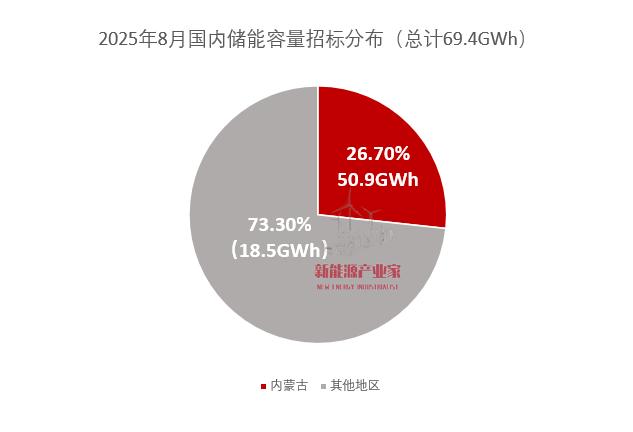
独立储能爆火,内蒙之后下一个是谁?
3 6 Ke· 2025-12-18 09:24
Core Insights - Inner Mongolia is experiencing a significant boom in independent energy storage projects, driven by favorable subsidy policies and abundant renewable resources [4][10][17] - The region's unique energy landscape, characterized by its vast wind and solar resources, positions it as a critical player in China's energy transition strategy [8][10] - Other provinces, particularly Xinjiang, are emerging as potential contenders for similar growth in energy storage, supported by their own favorable conditions and policies [26][28][41] Group 1: Inner Mongolia's Energy Storage Boom - Inner Mongolia has introduced a subsidy policy of 0.35 yuan/kWh for 2025, significantly enhancing project IRR and attracting developers and investors [4][16] - The region is recognized as a leader in renewable energy, holding the top position in installed capacity and generation of new energy, as well as in new storage installations [8][10] - The local government has a clear strategy to transition from fossil fuel dependency to green energy, leveraging energy storage to support industrial upgrades [24][23] Group 2: Factors Behind Inner Mongolia's Success - The internal drivers include a robust local renewable energy industry, with abundant wind and solar resources, and a supportive regulatory environment [5][6][10] - The establishment of a provincial independent grid company allows for more flexible market reforms, enhancing the region's ability to implement effective energy policies [14][15] - The long-term capacity compensation mechanism provides a stable cash flow, reducing investment risks and attracting capital for large-scale storage projects [16][17] Group 3: Potential Growth in Other Provinces - Other provinces like Xinjiang are also developing their energy storage capabilities, with clear policies and a strong demand for renewable energy integration [26][28] - Xinjiang has significant renewable energy resources and is a major power exporter, similar to Inner Mongolia, which creates a strong demand for energy storage solutions [29][30] - The region is on the brink of policy adjustments that could further enhance the profitability of independent storage projects, attracting investment interest [34][36][41]

新能源行业周报:硅料收储平台公司落地,特高压迎来密集核准-20251214
Guohai Securities· 2025-12-14 11:10
Investment Rating - The industry investment rating is "Recommended (Maintain)" [1] Core Views - The establishment of a silicon material storage platform company enhances confidence in the profitability reversal of the photovoltaic industry. The platform, with a registered capital of 3 billion yuan, is expected to confirm reasonable pricing and storage targets for polysilicon sales [5][6] - The wind power sector shows strong bidding activity, with domestic land wind turbine bidding reaching 5.06GW in December, indicating sustained high demand [6][7] - The energy storage market is experiencing significant growth, with over 1,600 new user-side storage projects added in the first ten months of 2025, reflecting a 26% increase in project numbers and an 86% increase in installed capacity year-on-year [6][7] - The lithium battery industry is advancing solid-state battery layouts, with companies actively pursuing strategic partnerships and price adjustments in response to rising raw material costs [7][8] Summary by Sections Photovoltaic Sector - The establishment of the silicon material storage platform is expected to lead to increased registered capital and improved pricing strategies for polysilicon [5] - Demand remains weak in the short term, with component manufacturers planning significant production cuts in December [6] Wind Power Sector - Domestic land wind turbine bidding has reached 5.06GW, with a notable increase in procurement for both land and offshore wind projects [6] - The average bidding price for new land wind projects has shown a recovery, indicating a positive trend in the market [6] Energy Storage Sector - The user-side energy storage market is rapidly growing, with significant increases in both project numbers and installed capacity [6] - A major independent energy storage project in Inner Mongolia has commenced operations, highlighting the sector's development [6] Lithium Battery Sector - Companies are focusing on solid-state battery innovations and adjusting prices due to rising production costs [7] - The price transmission within the lithium battery supply chain is improving, with leading companies actively managing supply and customer relationships [7]
国盛证券:26年新能源竞价区域分化明显 建议关注储能板块的投资价值
智通财经网· 2025-12-10 05:59
Core Viewpoint - The report from Guosheng Securities highlights significant regional differentiation in the bidding results for new energy projects in 2026, with East and North China showing better electricity prices compared to the West and South, and wind power prices outperforming solar power prices [1] Group 1: Bidding Results and Regional Differentiation - As of December 8, 2023, 19 provinces have announced their bidding results for new energy projects, with Shandong being the first on September 9, followed by other provinces in subsequent months. The differences in resource endowments, consumption capacity, and grid structures have led to notable variations in policy timing and price levels across regions [1] - The highest clearing price is in Shanghai at 0.4155 yuan/kWh, while the lowest is in Gansu at 0.1954 yuan/kWh. Wind power prices are generally higher than solar power prices, with the largest price difference observed in Shandong, where wind power is priced at 0.3190 yuan/kWh compared to solar at 0.2250 yuan/kWh, a difference of 0.094 yuan/kWh [2] - The bidding results indicate that regions like Gansu, Xinjiang, and Heilongjiang have fully utilized their mechanism electricity quotas, while Shanghai and Tianjin have lower utilization rates of 24% and 23%, respectively, with most provinces exceeding 50% [2] Group 2: Market Dynamics and Future Outlook - The East China region has a strong electricity demand but limited new energy development resources, leading to higher overall price levels. The Southern region has a mature market structure with full coverage of the electricity spot market across five provinces [3] - The Northwest region exhibits characteristics of "resource highlands and price lowlands," with Gansu's wind and solar clearing prices being the lowest nationally. The North China region has a detailed policy design, with rational competition for incremental projects [3] - The Southwest region benefits from abundant resources and multi-energy complementarity, supporting the volatility of wind and solar power, while the Northeast region's policy balances the transition between existing and new projects, resulting in relatively low bidding prices [3]

中泰证券:电力生产市场化趋势明确 光伏需求进入观察窗口
Zhi Tong Cai Jing· 2025-12-10 03:49
Core Insights - The report from Zhongtai Securities indicates that China's newly installed photovoltaic capacity reached 252.9 GW from January to October 2025, representing a year-on-year increase of 39.5% due to the impact of policy 136 [1] - The demand for photovoltaic installations in 2025 is expected to be front-loaded, with significant installations in Q2, a short-term decline in Q3, a temporary low in August, and gradual recovery in September and October [1] - CPIA forecasts that China's new photovoltaic installations in 2025 could reach between 270-300 GW, showing a year-on-year change of -3% to +8%, indicating relative stability [1] Industry Outlook - The report suggests that China's photovoltaic installations will directly influence global installation trends, although there are no clear predictions for new installations in 2026 from industry associations and mainstream consulting firms [1] - Following the marketization of the electricity sector, the on-grid electricity prices for photovoltaic projects have decreased, which may lead to a temporary observation period for new projects [1] - Despite potential short-term challenges, the report anticipates that new photovoltaic installations in China will likely maintain above 200 GW in 2026, supported by supply-side reforms and efforts to stabilize supply-demand matching in the industry [1]

中金 | 储能观市系列(1):政策迎风期,中国独立储能建设加速
中金点睛· 2025-12-09 23:46
Core Viewpoint - The Chinese large-scale energy storage industry is transitioning from "policy-driven" to "market-driven," with clearer business models and diversified application scenarios, entering a new phase of large-scale and high-quality development [2]. Group 1: Market Trends and Data - The domestic new energy storage bidding scale reached 205.30 GWh from January to October 2025, a year-on-year increase of 45%, with central and state-owned enterprises' procurement scale increasing by 61% [4]. - The supply side of leading battery manufacturers is nearing full capacity, and the tight supply-demand situation is expected to continue until the second quarter of 2026 [4]. - The theoretical installation space for independent energy storage is estimated to be around 158 GW/634 GWh for 2026-2027, supported by declining electricity costs on the generation side [5]. Group 2: Business Model Evolution - Before the "Document 136," the value of energy storage was primarily derived from "obtaining renewable energy project permits," with low utilization rates [6]. - After the "Document 136," independent energy storage can realize its true value through "peak-valley price arbitrage + capacity market + ancillary services," with internal rates of return (IRR) exceeding 10% in regions like Inner Mongolia and Xinjiang [4][5]. - The capacity price policy has led to a short-term rush for installations, with independent energy storage expected to benefit from this policy window [5]. Group 3: Capacity Compensation Mechanism - The capacity compensation mechanism is gradually replacing the previous capacity leasing price, with provinces like Inner Mongolia and Gansu already implementing compensation standards [15]. - The compensation standards vary, with Gansu setting a preliminary compensation of 330 yuan/kW·year, while Inner Mongolia compensates based on actual discharge [15]. - The establishment of a capacity compensation mechanism aims to create stable price signals to guide investment in flexible resources like energy storage [15]. Group 4: Auxiliary Services Market - The auxiliary services market is evolving from single peak and frequency regulation to a more diversified and market-oriented approach [18]. - Independent energy storage currently participates mainly in frequency regulation services, with significant compensation in provinces like Guangdong and Shanxi [20]. - As the auxiliary services market develops, energy storage is expected to expand its participation to include backup and ramping services, providing additional revenue streams [20]. Group 5: Economic Viability of Independent Energy Storage - The economic viability of independent energy storage projects is influenced by peak-valley price differences, capacity compensation, and ancillary service revenues [21]. - Initial calculations indicate that the capital IRR for independent energy storage in regions like Inner Mongolia can reach up to 37.3%, primarily driven by capacity compensation [24]. - The sensitivity of capital IRR to capacity compensation levels and duration is significant, with longer compensation periods enhancing project attractiveness [25].

从“毛细血管”到“主战场”:配电网的角色之变与破局之路
中国能源报· 2025-12-05 10:52
Core Viewpoint - The transformation and upgrading of distribution networks are closely linked to China's "dual carbon" strategy and energy development framework, emphasizing the critical role of distribution networks in the new energy system [4]. Group 1: Importance of Distribution Networks - Distribution networks are identified as the "main battlefield" for energy transition and renewable energy consumption, serving as the last mile for both energy consumption and new load aggregation [4]. - The statement "whoever controls the distribution network controls the future of the new power system" highlights the essential role of distribution networks in the new energy landscape [3][4]. Group 2: Practical Examples and Success Stories - The Xu Xu New Area incremental distribution network, one of the first 106 pilot projects, has been operational for six years, demonstrating the value of distribution network reform by optimizing power supply services and integrating distributed solar power [6]. - The project has saved approximately 150 million yuan in electricity costs for enterprises, showcasing the balance of social and economic benefits [6]. - The Shanshan Stone Park distribution network has significantly supported the development of local industries, proving the critical impact of efficient distribution networks on regional economic growth [7]. Group 3: Challenges and Recommendations - Current challenges in the development of distribution networks include unresolved issues regarding the status of operating entities, incomplete pricing mechanisms, and barriers to green electricity access [9]. - Pricing mechanisms are identified as the core bottleneck for the development of incremental distribution networks, with suggestions for transitional measures to improve pricing structures [9]. - Legal frameworks are deemed essential for supporting marketization in the energy sector, with calls for transparency and the use of legal tools to address potential monopolistic behaviors [9].
10月光伏新增装机同比下降38.3%,组件逆变器出口同增环降 | 投研报告
Zhong Guo Neng Yuan Wang· 2025-12-05 02:01
Core Insights - The report highlights a significant decline in domestic photovoltaic (PV) installations in October 2025, with new installations at 12.6GW, representing a year-on-year decrease of 38.3% but a month-on-month increase of 30.4% [1] - Cumulative PV installations from January to October 2025 reached 252.87GW, showing a year-on-year growth of 39.5% [1] - The inverter export value in October 2025 was 4.82 billion yuan, reflecting a year-on-year increase of 3.4% but a month-on-month decline of 5.2% [1] Domestic PV Installations - In October 2025, new domestic PV installations were recorded at 12.6GW, down 38.3% year-on-year and up 30.4% month-on-month [1] - Cumulative new PV installations from January to October 2025 totaled 252.87GW, marking a 39.5% increase compared to the same period last year [1] Component Exports - The export value of PV components in October 2025 was 16.08 billion yuan, up 4.9% year-on-year but down 19.5% month-on-month [1] - Cumulative component exports from January to October 2025 reached 168.26 billion yuan, a decrease of 11.8% year-on-year [1] - The export volume of PV components in October 2025 was 19.4GW, reflecting a year-on-year increase of 3.3% but a month-on-month decrease of 24.3% [1] Inverter Exports - The total inverter export value for the first ten months of 2025 was 53.31 billion yuan, showing a year-on-year increase of 7.2% [2] - In October 2025, the export value of inverters to Europe was 1.7 billion yuan, down 9.8% year-on-year and 9.9% month-on-month [2] - Exports to Asia were 1.5 billion yuan, up 7.1% year-on-year but down 11.5% month-on-month [2] Solar Power Generation - Solar power generation in October 2025 increased by 5.9% year-on-year, with a total output of 39.37 billion kWh [2] - The share of solar power in the total industrial power generation was 4.77%, with a slight decrease of 0.86 percentage points month-on-month [2] - Total power generation in October 2025 was 800.2 billion kWh, reflecting a year-on-year increase of 7.9% [2] Recommended Companies - Companies recommended for investment include Aiko Solar, Longi Green Energy, Daqo New Energy, and others focusing on various segments of the solar industry [3]
公募REITs三季报:整体符合预期,稳定优于周期
Ping An Securities· 2025-12-02 10:06
1. Report Industry Investment Rating No information provided in the content. 2. Core Views - The Q3 2025 quarterly report met expectations, showing a divergence between stable and cyclical sectors. After excluding the impact of expansion and fundraising, the Q3 2025 revenue decreased by 4% year-on-year. The completion rates of revenue and distributable income were 95% and 98% respectively, both showing marginal increases. Structurally, the trend of the cyclical sector declining and the stable sector growing steadily continued. Based on performance and its continuity, the sectors could be divided into three tiers: affordable housing and consumption > concession rights > industrial parks and warehousing [4]. - The stable sectors of affordable housing and consumption continued to grow steadily. After excluding the impact of expansion and fundraising, the occupancy rate of affordable housing showed little fluctuation. The revenue of the consumption sector increased by 4% year-on-year. The completion rates of revenue and distributable income of the two sectors, excluding new bonds, were both above 100%, ranking high among all sectors [4]. - Concession rights continued to show wide - range fluctuations. The environmental protection sector had positive fluctuations, with the revenue completion rate reaching the target, and the distributable income completion rate of Fuguo Shouchuang Water Service exceeding 130%. Negative fluctuations were mainly seen in transportation, energy, and water conservancy. The fluctuations in concession rights were often related to factors such as water, solar, and wind resources and road network changes, usually short - term disturbances. A relatively long - term change worth tracking was the electricity marketization of the energy sector. From the Q3 2025 quarterly report, the progress of electricity marketization transactions varied among projects. For example, the market - oriented electricity volume of the Hubei Jingtai project of Zhonghang Jingneng Photovoltaic REIT had reached 95%, while Huaxia Huadian Clean Energy REIT did not participate in electricity marketization transactions in 2025 [4]. - The cyclical sectors of industrial parks and warehousing and logistics continued to decline, with "trading price for volume" being common. The occupancy rate of industrial parks remained flat, and the average rent decreased by 3% month - on - month. The average occupancy rate of warehousing and logistics remained flat month - on - month, and the average rent decreased by 1%. Many bonds with declining performance mentioned the new supply in the surrounding areas. The signal of rent stabilization might not be seen until the primary market supply of warehousing and logistics slowed down. The revenue completion rates of industrial parks and warehousing and logistics were 89% and 92% respectively, ranking medium - low among all sectors [4]. - Before late January 2026, valuation - driven factors were limited, and it was a performance vacuum period. Supply and demand might become the main trading line. Since October, the fluctuations of stocks and bonds had converged, and REITs also showed a narrow - range oscillation. Currently, the difference between the cyclical IRR and the stable IRR was at the 59th percentile, with a relatively reasonable pricing. Before late January 2026, it was a performance vacuum period, and fundamentals had limited impact on the market. Therefore, supply and demand might be the main trading line in the next two months. In the short term, the supply - demand balance might be neutral to bearish. Currently, the primary market supply was stable, but financial investment institutions might sell unlocked bonds. Strategy suggestions: First, pay attention to the potential buying opportunities of high - quality targets brought by bond unlocking. Second, the primary market could allocate a large amount, and the price difference between the primary and secondary markets had enabled most primary subscriptions to achieve positive returns since this year. Third, in terms of structure, recommend the stable - performance sectors and the new infrastructure sectors with stable industry operations [4]. 3. Summary by Directory 3.1 REITs Overall - **Revenue Growth Rate**: After excluding the impact of expansion and fundraising, the Q3 2025 REITs revenue decreased by 4% year - on - year, with marginal stability. Structurally, the stable sectors maintained positive year - on - year growth, while the more cyclical industrial parks and warehousing and logistics still had negative growth. Affordable housing, consumption, and environmental protection had positive year - on - year growth, with the environmental protection sector showing marginal improvement. Industrial parks, warehousing and logistics, transportation, and energy still had negative year - on - year growth, but the growth rates of industrial parks and warehousing and logistics increased slightly [17]. - **Financial Completion Rate**: After excluding new bonds, the market - wide operating revenue completion rate was 95%. Sectors with high revenue completion rates were environmental protection, affordable housing, and consumption; those with low completion rates were municipal, water conservancy, and industrial parks, while the completion rates of other sectors were above 90%. After excluding new bonds, the market - wide distributable income completion rate was 98%. The distributable income completion rate of the energy sector still lagged behind the revenue completion rate, but most individual bonds improved compared to Q2 2025; the low distributable income completion rate of the municipal sector was in line with its revenue. The completion rates of other sectors were above 90% [22]. - **Market Reaction**: Since October, stocks, bonds, and REITs had all seen a convergence in volatility. Structurally, there was a lack of driving forces, and the spread between cyclical and stable sectors oscillated in a medium - level range. In terms of valuation, there were no obvious driving factors, and the impact of the quarterly report on the market was prominent. The rise and fall of REITs basically matched the performance. Sectors with high performance completion rates and high operating revenue growth rates, such as environmental protection, consumption, and affordable housing, had relatively high increases; industrial parks, warehousing and logistics, and the water conservancy sector with low revenue completion rates had relatively large declines. At the individual bond level, among the generally weak industrial parks and warehousing and logistics, individual bonds with smaller month - on - month revenue declines were generally more resistant to decline [26]. 3.2 By Sector - **Industrial Parks**: After excluding new bonds, the sector's revenue completion rate and distributable income completion rate were 89% and 92% respectively. The occupancy rate remained flat, and rent declines were common. Excluding the Guojun Lingang Industrial Park REIT affected by expansion and fundraising, 65% of industrial park REITs had a month - on - month rent decline, with an average decline of 3%. Regional competition and rent arrears were the main problems in the operation of industrial parks in Q3 2025 [36]. - **Warehousing and Logistics**: After excluding new bonds, the sector's revenue completion rate and distributable income completion rate were 92% and 96% respectively. The sector continued to trade price for volume, with the average occupancy rate remaining flat month - on - month and the average rent decreasing by 1% month - on - month. Many individual bonds with declining performance mentioned the new supply in the surrounding areas [41]. - **Affordable Housing**: The sector's revenue completion rate and distributable income completion rate were 101% and 103% respectively. The occupancy rates of underlying assets fluctuated, but the amplitude was mostly within 2 percentage points, showing little overall fluctuation [48]. - **Consumption**: The consumption sector's revenue increased by 4% year - on - year. After excluding new bonds, the sector's revenue completion rate and distributable income completion rate were 101% and 110% respectively. The revenue of Huaxia Shouchuang Outlet Mall REIT decreased by 14% month - on - month, possibly due to the off - peak season and new competitors. Yifangda Huawei Farmers' Market REIT diversified its business forms [53]. - **Data Centers**: As of the end of Q3 2025, all new infrastructure (data centers) were new bonds listed for less than a quarter, and the financial completion rates were all below 80%. The operation was stable, and there were no major events affecting the operation of underlying assets [58]. - **Transportation**: The transportation sector's revenue decreased by 3% year - on - year. The revenue and distributable income completion rates were both 98%, ranking medium among all sectors. The operating performance of Huatai Jiangsu Jiaokong REIT was outstanding, with a year - on - year increase of 30% and a marginal increase of 16 percentage points in the growth rate; Zhongjin Anhui Jiaokong also had a positive year - on - year growth rate [62]. - **Energy**: The Q3 2025 revenue growth rate was - 12%. The energy sector was affected by water, solar, and wind resources, with large single - quarter fluctuations and weak continuity. A relatively long - term change worth tracking was the electricity marketization of the energy sector, and the progress of electricity marketization transactions varied among projects. The distributable income completion rates of most projects increased by more than 10 percentage points compared to Q2 2025, which might be related to the concentrated arrival of renewable energy subsidies in the second half of the year and the factoring operations of fund managers [69]. - **Public Utilities**: The environmental protection sector's revenue met the target. The operating revenue completion rate of Guojun Jinan Heating was only 73%, possibly because heating fees were recognized during the heating season, and Q3 2025 was not the heating season [76].
电力设备及新能源行业周报:优必选人形再获1.43亿元订单,最新输配电促进新能源消纳利用-20251202
Shanxi Securities· 2025-12-02 07:01
Investment Rating - The report maintains an investment rating of "Synchronize with the market - A" for the power equipment and new energy industry [1] Core Viewpoints - The power equipment and new energy industry has shown significant market performance over the past year, with a focus on enhancing the utilization of renewable energy through new pricing mechanisms [1][4] - The report highlights the recent order of 143 million yuan received by UBTECH for humanoid robots, indicating strong demand in the robotics sector [3] - The National Development and Reform Commission (NDRC) is actively addressing issues of price disorder in certain industries, which may impact market dynamics [3] Summary by Relevant Sections Market Performance - The power equipment and new energy industry has experienced notable developments, including the introduction of new pricing methods aimed at promoting renewable energy consumption [4] Company Orders - UBTECH's total order amount for humanoid robots in 2025 has reached 1.3 billion yuan, showcasing robust growth in this segment [3] Pricing Trends - The report provides insights into the pricing of polysilicon, silicon wafers, battery cells, and modules, indicating stability in polysilicon prices and a downward trend in silicon wafer and battery cell prices due to high inventory levels [5][7][8] Investment Recommendations - The report recommends several companies for investment based on their strategic positioning in the industry, including Aikang Co., Longi Green Energy, and Daqo New Energy, among others [6][9]



国泰海通|公用事业:各地新政限制售电盈利,有利电价企稳
国泰海通证券研究· 2025-11-27 14:14
报告导读: 电力需求仍在上升趋势,长期看好火电。 以上内容节选自国泰海通证券已发布的证券研究报告。 报告名称: 各地新政限制售电盈利,有利电价企稳;报告日期:2025.11.26 报告作者: 吴杰(分析师),登记编号:S0880525040109 阎石(分析师),登记编号:S0880525070005 各地限制售电公司盈利,抵御恶性竞争,有利电价企稳。 10月全社会用电量8572亿度,YOY+10.4%(9月YOY+4.5%),二产/三产/居民用电量 5688/1609/1155亿度,YOY+6.2%/+17.1%/+23.9%(9月YOY+5.7%/+6.3%/-2.6%)提升,主要还是去年的天气等基数低的原因。预计全年5%以上 用电增速问题不大,三季报后,市场担忧26年长协电价和近期的高煤价,预计长协签订后行业会好转。 各地都在出台售电公司超额收益分成政策。 1、河南要求用户也需承担超额亏损,但上限仅10%。2、广东2026年起,对售电公司月度平均批零差价高于 0.01元/千瓦时的超额部分,按1:9比例分享给用户。同时将公示批零差价最大30家及固定价格均价最高30家售电公司名单。3、目前,河南、陕西、安徽 ...