
科技强国

Search documents
应急管理大学成立大会举行
Xin Lang Cai Jing· 2026-01-19 09:56
Core Viewpoint - The establishment of the Emergency Management University is a significant decision made by the central government to enhance talent cultivation and discipline construction in emergency management, aligning with the strategies of building a strong education, technology, and talent nation [1] Group 1: Objectives and Goals - The university aims to build a distinctive, world-class high-level application research university, focusing on the modernization of the emergency management system and capabilities [1] - It emphasizes the importance of integrating political leadership throughout the educational process to ensure the safety of people's lives and property [1] Group 2: Educational Focus and Research - The university will conduct comprehensive research across all disaster types and emergency practices, creating clusters of disciplines and specialties that serve safety production, natural disaster prevention, and emergency rescue [1] - There is a focus on developing more "Emergency+" training models that emphasize practical training, aiming to cultivate versatile talents who are knowledgeable in the industry, specialized in their fields, and skilled in emergency response [1] Group 3: Integration of Education and Technology - The university will strengthen the integration of education and technology, concentrating on major disaster risk prevention and emergency response challenges, while advancing foundational theoretical research and tackling key core technologies [1]


应急管理大学成立大会举行,张国清出席并讲话
Xin Lang Cai Jing· 2026-01-19 08:56
Core Viewpoint - The establishment of the Emergency Management University is a significant decision made by the Central Committee of the Communist Party of China, aimed at strengthening talent cultivation and discipline construction in emergency management, and modernizing the emergency management system and capabilities [1][5]. Group 1: University Establishment and Goals - The Emergency Management University aims to become a high-level application-oriented research university with distinctive features and world-class standards [5]. - The university will emphasize the "political school" concept, integrating the Party's leadership throughout the educational process to ensure the safety of people's lives and property [5]. - It will focus on a comprehensive approach to research, addressing all types of disasters and emergency situations, and will develop clusters of disciplines and specialties related to safety production, natural disaster prevention, and emergency rescue [5]. Group 2: Talent Development and Research Focus - The university plans to create more "Emergency+" training models, emphasizing practical training to cultivate versatile talents who are knowledgeable in the industry, specialized in their fields, safety-conscious, and capable of emergency response [5]. - There is a significant shortage of practical, composite emergency management professionals, with a reported gap of approximately 400,000 personnel in the emergency management system [3][8]. - The university will strengthen the integration of education and science, focusing on major disaster risk prevention and emergency response challenges, enhancing foundational theoretical research, and accelerating breakthroughs in key technologies [5]. Group 3: Historical Context and Development - The establishment of the Emergency Management University follows the formation of the Ministry of Emergency Management in 2018, marking a new phase in the modernization of China's emergency management efforts [3][8]. - The Ministry initiated the merger of North China University of Science and Technology and Disaster Prevention Technology College to establish the Emergency Management University [8]. - The Ministry's leadership has emphasized the university's role as a "nurturing ground" for emergency management talent and a "national team" for technological innovation [8].
影响市场重大事件:中科宇航上市辅导状态已变更为辅导验收 5家商业航天公司全部启动IPO
Mei Ri Jing Ji Xin Wen· 2026-01-18 22:28
Group 1: Commercial Space Industry - Zhongke Aerospace's IPO guidance status has changed to acceptance, marking a significant step in the IPO process for five commercial space companies in China, aiming to become the "first stock" in the commercial space sector [1] - Blue Arrow Aerospace's IPO review status has been changed to "accepted," with plans to raise 7.5 billion yuan for reusable rocket technology and capacity enhancement projects [1] Group 2: Gas Turbine Industry - The successful completion of evaluation and acceptance for the "Taihang Brothers" gas turbine projects signifies a breakthrough in core technologies for gas turbine R&D, which will significantly promote the industrialization and commercialization of China's gas turbine industry [2] Group 3: Small and Medium Enterprises - The Ministry of Industry and Information Technology has revised the management measures for cultivating high-quality small and medium enterprises, including raising the revenue threshold for "specialized, refined, distinctive, and innovative" enterprises to 50 million yuan and increasing R&D expenditure requirements [3] Group 4: Real Estate Financing - The People's Bank of China and the National Financial Regulatory Administration have announced that the minimum down payment ratio for commercial property loans will be adjusted to no less than 30%, allowing local authorities to set lower limits based on city-specific conditions [4] Group 5: High-Energy Ion Implantation Technology - The successful operation of China's first serial high-energy hydrogen ion implanter marks a significant advancement in mastering the full-chain R&D technology, which is crucial for promoting the autonomy and security of high-end manufacturing equipment [5] Group 6: Monitoring Systems - The completion and trial operation of the Beidou high-precision monitoring system at the Three Gorges project represent a significant application of Beidou technology in major water conservancy projects, enhancing the safety monitoring system's capabilities [6] Group 7: Electric Grid Investment - Huatai Securities reports that the State Grid's planned investment of 4 trillion yuan during the 14th Five-Year Plan period will benefit electric grid equipment manufacturers, with a 40% increase in investment compared to the previous plan [8] Group 8: National Innovation Strategy - The Ministry of Science and Technology aims to strengthen strategic planning and policy measures to enhance the overall effectiveness of the national innovation system, focusing on regional innovation and collaboration among various innovation entities [9]

影响市场重大事件:中科宇航上市辅导状态已变更为辅导验收,5家商业航天公司全部启动IPO;“太行三兄弟”完成评估验收,将带动我国燃气轮机行业发展
Mei Ri Jing Ji Xin Wen· 2026-01-18 22:23
Group 1: Commercial Space Industry - Zhongke Aerospace's IPO guidance status has changed to acceptance, marking a significant step in the process for five commercial space companies in China to launch IPOs [1] - The five companies include Blue Arrow Aerospace, Tianbing Technology, Zhongke Aerospace, Star Glory, and Xinghe Power, all aiming to become the first commercial space stock in China [1] - Blue Arrow Aerospace's IPO on the Sci-Tech Innovation Board has been accepted, with plans to raise 7.5 billion yuan for reusable rocket technology and capacity enhancement projects [1] Group 2: Gas Turbine Industry - China Aviation Engine Group announced the successful completion of evaluation and acceptance for three gas turbine innovation development demonstration projects, which will significantly boost the gas turbine industry in China [2] - The projects include the "Taihang 7," "Taihang 15," and "Taihang 110" gas turbines, marking breakthroughs in core technologies such as design, material development, and manufacturing [2] Group 3: Small and Medium Enterprises - The Ministry of Industry and Information Technology has revised the "Quality Small and Medium Enterprises Gradient Cultivation Management Measures," incorporating technology-based SMEs into the cultivation framework [3] - Changes include the cancellation of province-specific criteria, raising revenue thresholds for "specialized, refined, distinctive, and innovative" small giants to over 50 million yuan, and increasing R&D expenditure requirements [3] Group 4: Real Estate Financing - The People's Bank of China and the National Financial Regulatory Administration have announced that the minimum down payment ratio for commercial property loans will be adjusted to no less than 30% [4] - Local financial institutions are allowed to set their minimum down payment ratios based on local government policies [4] Group 5: High-Energy Ion Implantation Technology - China National Nuclear Corporation announced the successful operation of the country's first series-type high-energy hydrogen ion implanter, achieving international advanced levels in core indicators [5] - This development signifies China's mastery of the full-chain R&D technology for high-energy hydrogen ion implanters, enhancing the safety of the industrial chain [5] Group 6: Monitoring Systems - The Three Gorges Hub Beidou high-precision monitoring system has been completed and is in trial operation, marking a significant application of Beidou technology in major water conservancy projects [6] - This system represents a step towards achieving a "self-controllable and efficient intelligent" safety monitoring system for the Three Gorges project [6] Group 7: Electric Grid Investment - Huatai Securities reported that the State Grid's investment is expected to reach 4 trillion yuan during the 14th Five-Year Plan period, a 40% increase compared to the previous plan [9] - The investment will support the construction of cross-provincial transmission channels and the reinforcement of weak grids in the western regions, with a focus on high voltage construction [9] Group 8: National Innovation Strategy - The Ministry of Science and Technology aims to strengthen strategic planning and policy measures to enhance the national innovation system, focusing on regional innovation and collaboration [10] - The goal is to create a significant strategic support point for building a technology powerhouse in China [10]
新华财经早报:1月18日
Zhong Guo Jin Rong Xin Xi Wang· 2026-01-18 00:50
Group 1 - China Aviation Engine Group's "Taihang Three Brothers" has completed evaluation and acceptance, marking a significant breakthrough in gas turbine R&D and technology, which will strongly promote the industrialization and commercialization of the gas turbine industry in China [1][1][1] - The People's Bank of China and the National Financial Regulatory Administration announced that the minimum down payment ratio for commercial housing loans will be adjusted to no less than 30%, aiming to support a new model for real estate development [1][1] - The Ministry of Industry and Information Technology has revised the management measures for high-quality small and medium-sized enterprises, including technology-based SMEs in the cultivation scope, which will be implemented from April 1, 2026 [1][1] Group 2 - The National Energy Administration announced that by 2025, China's total electricity consumption will exceed 10 trillion kilowatt-hours, reaching 10.4 trillion kilowatt-hours, a year-on-year increase of 5%, which is unprecedented for a single country [1][1][1] - In 2025, the foreign trade import and export volume of Yiwu, Zhejiang, is expected to exceed 800 billion yuan, reaching 836.5 billion yuan, with imports hitting 105.8 billion yuan, a year-on-year increase of 32.3% [1][1] - In 2025, Shanxi's renewable energy generation is projected to reach 118 billion kilowatt-hours, a year-on-year increase of 26%, equivalent to the annual electricity consumption of approximately 35 million households [1][1]

航天科技集团 “十五五”规划老领导、老专家座谈会召开
Xin Lang Cai Jing· 2026-01-16 02:35
Core Viewpoint - The meeting held by China Aerospace Science and Technology Corporation (CASC) focused on the formulation of the "14th Five-Year Plan," with significant input from veteran leaders and experts in the aerospace field [1] Group 1: Meeting Highlights - The meeting was attended by senior leaders and experts, including Wang Liheng, Bai Baier, Xu Qiang, and academicians from various institutes, who provided valuable suggestions on the "14th Five-Year Plan" [1] - Key areas of discussion included the construction of a strong aerospace nation, major aerospace projects, commercial aerospace, digital transformation, talent development, and deepening reform and innovation [1] Group 2: Leadership Insights - Vice Secretary of the Party Committee, Pang Jin, emphasized the importance of the insights from veteran leaders and experts, highlighting their high-level perspective, deep insights, and practical suggestions [1] - Pang Jin committed to thoroughly studying and incorporating the feedback into the planning process, while also ensuring that veteran leaders and experts play a crucial role in contributing to the construction of a strong aerospace nation [1]

坚持创新驱动,加紧培育壮大新动能——访科技部党组书记、部长阴和俊
Jing Ji Ri Bao· 2026-01-14 22:09
Core Viewpoint - The article emphasizes the importance of accelerating high-level technological self-reliance and innovation as a key driver for high-quality economic development in China during the "14th Five-Year Plan" period, with a focus on integrating technological and industrial innovation [1][2]. Group 1: Technology Innovation Strategies - The Ministry of Science and Technology will focus on strategic planning, policy measures, major tasks, research capabilities, resource platforms, and regional innovation to enhance the overall effectiveness of the national innovation system [2][3]. - A comprehensive national technology innovation plan will be developed to implement key tasks and major initiatives for the "14th Five-Year Plan" period, ensuring a systematic approach to future technological work [3]. - The ministry aims to strengthen the role of enterprises in technological innovation, promote the transformation of major technological achievements, and foster a collaborative development between technological and industrial innovation [3][6]. Group 2: Regional Innovation Centers - The construction of international technology innovation centers in Beijing (Jing-Jin-Ji), Shanghai (Yangtze River Delta), and the Guangdong-Hong Kong-Macao Greater Bay Area is aimed at enhancing original innovation capabilities, high-end industry leadership, and talent aggregation [4][5]. - The strategy includes leveraging the leading roles of Beijing and Shanghai to promote collaborative synergies among the regions, ensuring a cohesive approach to technological innovation and resource sharing [5][6]. Group 3: Education and Talent Development - The integration of education, technology, and talent development is identified as a foundational support for modernization, with plans to enhance coordination and collaboration among these sectors [3][4]. - The ministry will focus on cultivating top-tier talent and innovation teams through major technological tasks, emphasizing the importance of practical experience in education [3][6]. Group 4: Enterprise Innovation Support - The ministry will strengthen the decision-making role of enterprises in technological innovation and enhance financial support for technology-driven small and medium-sized enterprises [6]. - Policies will be implemented to improve tax incentives for research and development, encouraging enterprises to increase their R&D investments [6]. - The ministry will support enterprises in undertaking national research tasks and facilitate the establishment of innovation consortia involving various stakeholders [6].
A股晚间热点 | 财政部重磅!推进财政金融协同促内需一揽子政策
智通财经网· 2026-01-14 14:15
Group 1 - The Ministry of Finance is promoting a comprehensive policy to enhance fiscal and financial collaboration to boost domestic demand [1] - A joint announcement by the Ministry of Finance, State Taxation Administration, and Ministry of Housing and Urban-Rural Development extends tax refund policies for residents purchasing new homes after selling their existing ones from January 1, 2026, to December 31, 2027 [2] - The People's Bank of China will conduct a 900 billion yuan reverse repurchase operation on January 15, 2024, to maintain liquidity in the banking system [6] Group 2 - The Shanghai Municipal Government plans to achieve large-scale implementation of high-level autonomous driving applications by 2027, aiming for international leadership in key technologies and industry scale [4] - The Ministry of Industry and Information Technology, along with other departments, held a meeting to resist disorderly price wars in the new energy vehicle sector, emphasizing innovation and quality [7] - The State Administration for Market Regulation has initiated an investigation into Ctrip Group for suspected monopolistic behavior [8] Group 3 - ByteDance is developing a new generation of AI headphones, with production contracted to GoerTek, indicating a significant partnership [9] - Over 60 institutions in China have submitted satellite data to the International Telecommunication Union, with a focus on low-orbit satellite constellations, which are expected to see significant market growth in the coming decade [11] - The commercial aerospace sector is highlighted as a key investment opportunity, alongside the growing market for GLP-1 weight loss drugs and rising prices in the photovoltaic component market [11] Group 4 - China Electric Power Construction signed a contract worth approximately 17.193 billion yuan for a seawater desalination project in Basra, Iraq [17] - Yipuli expects to sign contracts worth 15.019 billion yuan for blasting services in 2025 [17] - Aerospace Development's largest shareholder has reduced its stake by approximately 20.64 million shares in the past month [17]

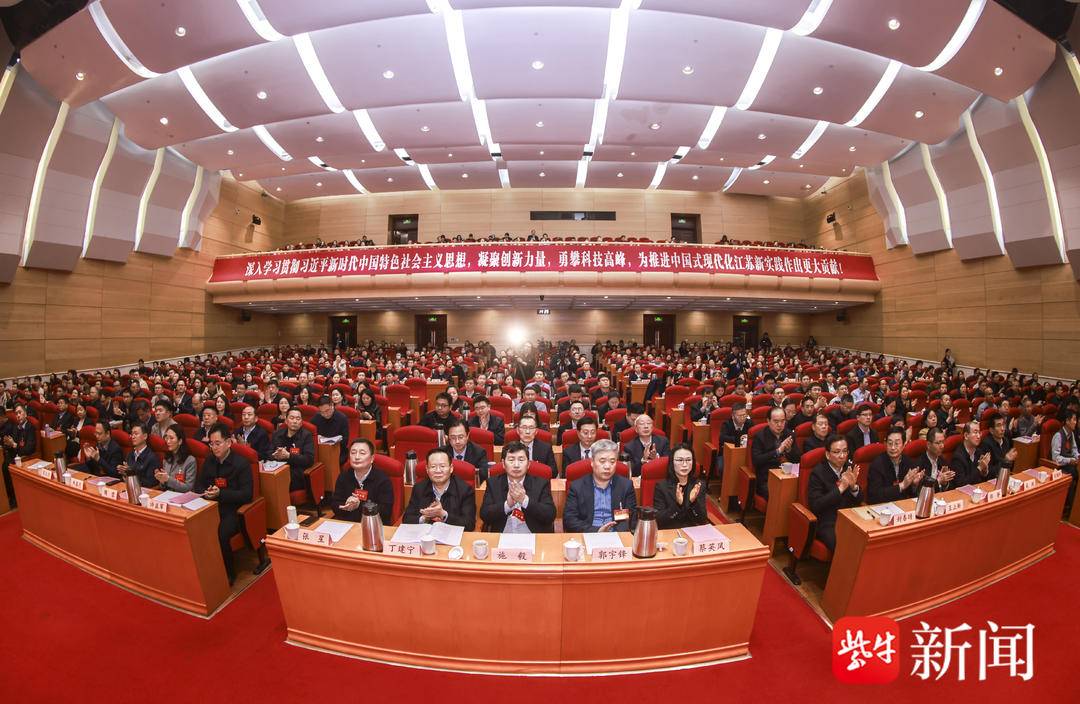
省科学技术协会第十一次代表大会闭幕
Yang Zi Wan Bao Wang· 2026-01-14 11:51
Core Viewpoint - The Jiangsu Provincial Science and Technology Association's 11th Representative Assembly concluded, emphasizing the importance of technological innovation and the role of the association in supporting the province's modernization efforts [1][3]. Group 1: Strategic Importance - The "14th Five-Year Plan" period is identified as a critical phase for building a strong technological nation, with strategic planning from the 20th National Congress of the Communist Party focusing on accelerating high-level technological self-reliance [3]. - The provincial government aims to lead new quality productivity development through technological innovation, establishing Jiangsu as a globally influential industrial and technological innovation center [3]. Group 2: Focus Areas for the Association - The provincial science and technology association is urged to focus on ideological and political guidance, aligning with President Xi Jinping's important discussions on technological innovation [3]. - There is a call for enhanced service to innovation development, emphasizing the need for education, technology, and talent to be integrated and advanced together [3]. - The association is tasked with improving scientific literacy among the public through innovative methods and high-quality development of science popularization [3]. Group 3: Organizational Strengthening - The association's work is highlighted as a vital part of the Party's mass work, with a call for local Party committees and governments to prioritize and support the association's initiatives [4]. - There is an emphasis on strengthening political construction within the association, solidifying its organizational foundation, and enhancing service effectiveness [3][4].
邱锐:国际科技创新中心扩围具有战略意义
Jing Ji Ri Bao· 2026-01-13 00:22
Core Insights - The article emphasizes the acceleration of global changes and the importance of technological innovation as a key variable for national development and security, with a focus on establishing international technology innovation centers in Beijing, Shanghai, and the Guangdong-Hong Kong-Macau Greater Bay Area [1][2]. Group 1: International Technology Innovation Centers - The international technology innovation centers are defined as cities or regions that play a leading role in global technology innovation activities, characterized by strong research, innovation, and cultural influence [2]. - Since the 18th National Congress of the Communist Party, significant progress has been made in establishing these centers, with China leading the world in the number of top global innovation clusters for three consecutive years, particularly with the Shenzhen-Hong Kong-Guangzhou cluster ranking first globally [2][3]. Group 2: Regional Strengths and Strategies - Each of the three regions has unique strengths: Beijing excels in basic research and original innovation; Shanghai focuses on creating a competitive open innovation ecosystem; and the Greater Bay Area leverages its reform and opening-up advantages to enhance its economic system driven by innovation [3][4]. - The construction of these centers is shifting from a single-city model to a more collaborative approach, emphasizing the need for regional integration and a comprehensive innovation system to enhance global competitiveness [4][5]. Group 3: Challenges and Future Directions - The article outlines challenges faced by the three regions, including weak links between basic research and industrialization in Beijing, a lack of clarity in innovation roles in the Yangtze River Delta, and insufficient foundational research in the Greater Bay Area [6][7][8]. - Future strategies include enhancing original innovation capabilities, improving international collaboration, and establishing a strategic coordination mechanism across regions to foster a more integrated innovation ecosystem [6][9].