
稳定币监管

Search documents
美联储鲍曼:正制定稳定币监管规则 平衡银行与加密货币企业竞争
Zhi Tong Cai Jing· 2025-12-02 01:32
Group 1 - The Federal Reserve's top banking regulator plans to inform Congress about new regulations for banks and stablecoins to ensure healthy competition among Wall Street, fintech companies, and cryptocurrency firms [1] - The regulator emphasizes the need to encourage responsible innovation while enhancing regulatory capabilities to manage risks associated with new technologies [1] - The proposed regulations will be based on the GENIUS Act, which mandates stablecoin issuers to register formally and hold dollar reserves at a 1:1 ratio [1] Group 2 - Traditional lending institutions warn that the new regulations may lead to an imbalanced competitive environment or hollowing out of the chartering system, where some firms hold bank licenses without fulfilling all historical banking responsibilities [2] - The regulator's testimony highlights efforts to implement several banking capital regulatory measures, including the anticipated final framework of Basel III [3] - The Federal Reserve is working on refining additional capital rules for large banks in conjunction with the overall capital framework reform process [4]
美联储鲍曼称监管机构将制定稳定币规则
Sou Hu Cai Jing· 2025-12-01 23:57
美联储负责监管 银行业的最高官员计划周二向众议院议员表示,她将努力为银行和稳定币制定新规 则。监管机构正寻求确保华尔街、 金融科技公司和加密货币公司之间保持健康的竞争。美联储负责监 管的副主席米歇尔·鲍曼在为众议院金融服务委员会听证会准备的发言稿中表示,"作为监管者,我的职 责是以负责任的方式鼓励创新,我们必须不断提高能力来监管创新给安全和稳健带来的风险。"她补充 说,新技术可以创造一个更高效的银行业,扩大信贷渠道,同时为金融科技和数字资产公司创造公平的 竞争环境。鲍曼还表示,她将与其他机构合作,根据针对稳定币的法律"GENIUS法"的要求,为稳定币 发行机构制定资本和多元化监管规定。该法要求这些发行机构正式注册,并持有等额储备金。她强调, 各机构将就数字资产提供明确的监管指导,并就拟议的新应用案例提供监管反馈。 ...
央行定调稳定币违法,相比欧美中国为何走“禁止”这条路?| 马上评
Sou Hu Cai Jing· 2025-11-30 06:34
Core Viewpoint - The People's Bank of China has officially classified stablecoins as a form of virtual currency that poses risks related to money laundering and illegal financial activities, reinforcing its strict prohibition policy on virtual currencies [1][6][8]. Summary by Sections Regulatory Approach - China adopts a prohibition model to cut off the circulation of stablecoins, contrasting sharply with the regulatory frameworks being developed in Europe and the U.S. that aim to incorporate stablecoins into existing financial regulations [1][9][14]. - The Chinese government emphasizes the need to protect monetary sovereignty and prevent any form of private digital currency from undermining the central bank's authority [7][14]. Stablecoin Characteristics - Stablecoins are cryptocurrencies pegged to fiat currencies or other assets, designed to maintain price stability, and are often used for cross-border payments and asset preservation [3][4]. - The inherent anonymity of blockchain technology poses challenges for anti-money laundering efforts, making it difficult to trace transactions back to individuals [4][6]. Risks and Challenges - The use of stablecoins for illegal activities, such as money laundering and capital flight, has been highlighted by recent cases, including a significant illegal currency exchange operation involving stablecoins [5][6]. - The potential for stablecoins to create systemic risks, particularly in economies with strict capital controls, raises concerns about their impact on monetary policy and financial stability [4][6][14]. International Regulatory Landscape - The U.S. and EU are developing regulatory frameworks that balance innovation with consumer protection, while China maintains a strict ban on stablecoins [9][10][12]. - The U.S. has introduced the GENIUS Act, which provides a legal framework for stablecoin issuance and trading, while the EU's MiCA regulation establishes clear operational standards for stablecoin issuers [9][10]. Implications for Financial Innovation - China's prohibition model may hinder financial technology innovation and limit opportunities in cross-border payments and digital finance [14][16]. - The lack of a regulatory framework for stablecoins in China could push demand into unregulated areas, creating new risks [16][17]. Need for International Coordination - The cross-border nature of stablecoins necessitates international cooperation to effectively manage risks and prevent regulatory arbitrage [17]. - Establishing early warning and emergency response mechanisms at the international level is crucial to address potential systemic risks posed by stablecoins [17].


孙宇晨助力TUSD全球维权成功,冻结令后稳定币储备托管走向何方
3 6 Ke· 2025-11-20 07:38
引言:历史性裁决的行业意义 "正义或许会迟到,但绝不会缺席。"11 月 13 日,波场 TRON 创始人孙宇晨在 X 平台发布了一条简短而意味深长的推文。 这句话回应的是迪拜国际金融中心法院(DIFC)做出的一项裁决:该法院于 10 月 17 日正式颁布无限期延续针对迪拜贸易融资公司 AriaCommoditiesDMCC 的财产禁制及全球冻结令,涉及金额高达 4.56 亿美元。 这是 DIFC 首次在全球范围内发布针对稳定币储备金案件的冻结令。法官在判词中明确指出,Techteryx(TUSD 的所有方)已展示出"需经审判的重大事 项",相关资金应以信托形式持有,以防止资产在香港最高法院最终判决前被不当转移或隐匿。 这起案件像一面镜子,映照出稳定币行业在野蛮生长后积累的深层次问题:托管方权力失控、跨境监管套利……而更重要的是,它标志着整个行业正在 从"信任危机"走向"规则重建"的转折点。当全球稳定币市值已突破 2000 亿美元,成为加密行业的基础设施时,这场关于 4.56 亿美元的争夺战,实质上是 一场关于未来稳定币行业标准的博弈。 2023 年 7 月,Techteryx 正式从 TrueCoin 手中接 ...

AI赋能资产配置(二十三):智能投研Agent应用实践
Guoxin Securities· 2025-11-11 13:18
Core Insights - The report highlights a shift in the financial research landscape from "universal models" to a "matrix of specialized agents" empowered by AI, which aims to reduce time-consuming and repetitive tasks traditionally reliant on analysts' complex skills [2] - AI tools like AlphaEngine can quickly construct DCF models and provide target price ranges for companies, significantly enhancing decision-making support [2][14] - Compared to general AI models like DeepSeek, AlphaEngine and Alpha agents focus on deep optimization for vertical research scenarios, emphasizing task automation and industry chain integration [2] - The integration of AI in asset allocation is expected to yield sustainable excess returns, necessitating the combination of AI outputs with human expert qualitative judgments [2] AlphaEngine Application Cases - AlphaEngine can efficiently assist in financial valuation modeling by processing extensive data and generating structured outputs, including target price ranges based on various scenarios [14][21] - The tool's ability to reference reliable research reports enhances the credibility of its outputs, effectively mitigating the "AI hallucination" issue [14][23] Alpha派 Application Cases - Alpha派 serves as an intelligent investment research app that can generate performance reviews for specific companies, allowing users to customize the analysis style and focus points [66] - The platform's ability to provide structured outputs and reference relevant reports aids in data verification and reduces the risk of misinformation [69] Comparison of AlphaEngine and Alpha派 - AlphaEngine is characterized by its detailed and foundational approach, providing comprehensive background and framework comparisons, making it suitable for in-depth research [93] - Alpha派 is designed for efficiency and clarity, offering concise insights and actionable strategies, making it ideal for decision-makers needing quick access to core viewpoints [93]

陆家嘴财经早餐2025年11月11日星期二
Wind万得· 2025-11-10 22:31
Group 1 - The US has officially announced a one-year suspension of the 301 investigation measures against China's shipbuilding industry, while China has reciprocated by suspending special port fees for US ships for one year [2] - The US Congress has passed a temporary funding bill to end the government shutdown, with a final vote expected soon in the House of Representatives [2] - Warren Buffett's Thanksgiving letter indicates he will no longer write annual reports and plans to convert 1,800 Class A shares into 2.7 million Class B shares for donations, retaining a significant amount of Class A shares until confidence in the successor CEO is established [2] Group 2 - The State Council has issued measures to promote private investment, including encouraging private capital participation in smaller city infrastructure projects for the first time [3] - A plan has been released to promote logistics data sharing, with ten categories of logistics data to be made publicly available [3] - The China International Import Expo concluded with a record intended transaction amount of $83.49 billion, a 4.4% increase from the previous year [3] - Central enterprises have increased investment in key areas such as technology innovation and equipment updates, with fixed asset investment exceeding 3 trillion yuan in the first three quarters [3] Group 3 - The China Securities Regulatory Commission is seeking opinions on guidelines for public fund thematic investment style management to address issues of style drift [4] - A-shares showed mixed performance with consumer sectors surging, while the overall trading volume reached 2.19 trillion yuan [4] Group 4 - The Hang Seng Index closed up 1.55%, driven by consumer stocks, with net inflows from southbound funds exceeding 66.54 billion HKD [5] - The China Securities Index Company will launch new indices to provide more investment benchmarks [5] Group 5 - TSMC reported October revenue of 367.47 billion NTD, a 16.9% year-on-year increase, but the lowest growth rate since February 2024 [8] Group 6 - Domestic retail prices for refined oil have been raised for the seventh time this year, with gasoline and diesel prices increasing by 125 yuan and 120 yuan per ton, respectively [9] - The State Administration for Market Regulation has issued compliance guidelines for e-commerce platforms during the "Double Eleven" sales event [9] - The National Development and Reform Commission and the National Energy Administration have outlined goals for large-scale development and high-quality consumption of new energy [9] Group 7 - The US Commodity Futures Trading Commission is in discussions to launch cryptocurrency spot trading products next month [10] - The US Treasury and IRS have released new guidelines for cryptocurrency exchange-traded products [10] - The Bank of England has proposed new regulations for stablecoins, allowing significant investments in short-term government bonds [10] Group 8 - Douyin has clarified rumors regarding penalties for selling products below market price, emphasizing a campaign against false advertising [11] - WeRide has received approval to operate a fully autonomous Robotaxi service in Abu Dhabi, marking a significant milestone in autonomous driving [11] - Tesla's Cybertruck project leader announced his departure after eight years, with sales significantly below production capacity [11] Group 9 - The US and Thailand have reached a trade framework agreement, with Thailand eliminating tariffs on 99% of goods [12] - The Federal Reserve is considering further interest rate cuts to prevent economic downturns [12] - October container imports in the US fell by 7.5% year-on-year, with predictions of further declines in November and December [12] Group 10 - China's gold consumption in the first three quarters decreased by 7.95%, while gold ETF holdings increased significantly [17] - The Shanghai Gold Exchange announced fee waivers for certain international contracts starting November 2025 [17] - International precious metals futures saw widespread gains, driven by geopolitical risks and a weaker dollar [17] Group 11 - The domestic bond market showed strength, with long-term bonds outperforming short-term ones, and the central bank conducted significant reverse repo operations [16] - The Ministry of Finance plans to issue up to 47.71 billion yuan in electronic savings bonds [16] - Hong Kong is set to launch a new round of multi-currency digital bond issuance [16]

监管态度软化 英国央行提议允许稳定币发行商投资短期国债
智通财经网· 2025-11-10 13:28
不过,英国央行保留了对个人和企业可持有的稳定币价值引入临时上限的计划,这些计划在加密货币行 业不受欢迎,尽管部分大型企业在必要时可获豁免。任何其他主要金融中心的监管制度中均未复制此类 上限。 英国央行在一项新提案中还表示,正在考虑在市场承压时期为系统性稳定币发行方提供央行流动性便 利,当发行方无法在私人市场出售储备资产时为其提供支持。 智通财经APP获悉,英国央行周一提议,允许广泛使用的稳定币发行方将支撑数字代币资产的最多60% 投资于短期政府债务,此举作为一系列新规的一部分,表明其对该行业态度有所软化。据了解,稳定币 是旨在保持恒定价值的数字代币,通常由国债等传统资产作为支撑。该行业正蓬勃发展,得益于美国在 今年早些时候通过的联邦法规推动。 英国央行计划仅监管那些被认定具备广泛支付能力的稳定币。对于用于非系统性用途的稳定币(如目前 主要作为加密代币交易媒介的情形),则不属于英国央行直接监管范畴,将转由金融行为监管局负责监 督。 同时,英国央行也为此前受金融行为监管局监管的发行方概述了一项临时制度,允许其最初将支撑稳定 币资产的最多95%用于投资。 据悉 ,央行流动性便利是央行作为最后贷款人向金融机构提供的紧 ...
币圈跳水!港股加密货币板块大跌,发生了什么?
Sou Hu Cai Jing· 2025-11-04 11:49
Core Viewpoint - The cryptocurrency sector in Hong Kong experienced significant declines, with major stocks and ETFs suffering from low trading sentiment due to a sharp drop in the cryptocurrency market [4][6]. Group 1: Stock Performance - Major cryptocurrency-related stocks in Hong Kong saw substantial losses, with Guotai Junan International (01788.HK) down 14.21%, Jinyong Investment (01328.HK) down 11.42%, and others like Mi Strategy (02440.HK) and Okex Chain (01499.HK) also experiencing declines of over 8% [2][3]. - Cryptocurrency ETFs also faced declines, with notable drops including Bosera Ethereum (03009.HK) down 6.22% and Huaxia Ethereum (03046.HK) down 6.2% [3]. Group 2: Market Conditions - The cryptocurrency market saw a significant downturn on November 3, with Bitcoin dropping 4.7% to around $105,000, and further declining to $103,700 on November 4, marking a 2.67% drop [6]. - Ethereum experienced a severe decline, falling 7.75% on November 3 and breaking below $3,500 on November 4, representing a cumulative drop of 28% from its August high of $4,885 [6]. Group 3: Market Sentiment and Future Outlook - The sharp decline in cryptocurrency prices led to a large-scale liquidation, with over $1.2 billion in positions liquidated within 24 hours, predominantly affecting long positions [6]. - Concerns over the security of the cryptocurrency industry were heightened by a hack that resulted in losses exceeding $100 million for the decentralized finance protocol Balancer, further eroding investor confidence [6]. - Market experts suggest that the cryptocurrency market is in a "hangover phase" following the liquidation shock of October, indicating that rebuilding capital foundations will take time and investor sentiment remains cautious [6][7]. - The Hong Kong government has signaled a clear regulatory stance on stablecoins, emphasizing their use for facilitating cross-border transactions rather than for investment, which may have contributed to the cooling of the cryptocurrency sector [7].
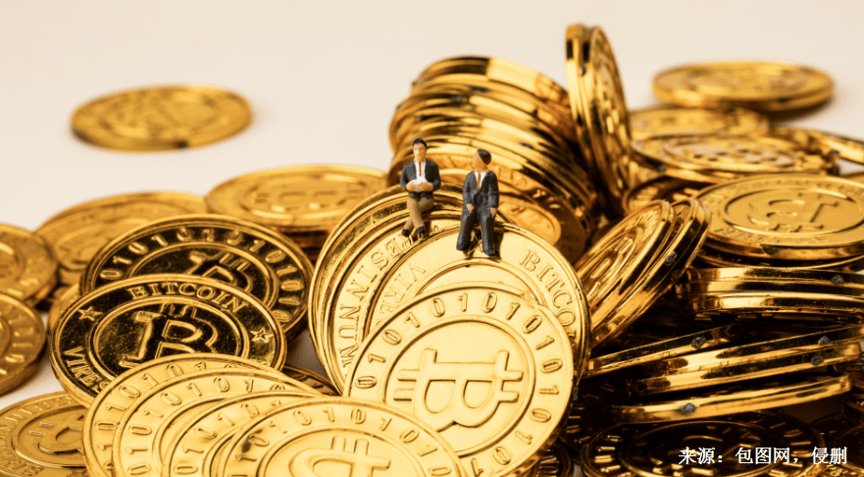
港股异动 | 稳定币概念股集体走低 国泰君安国际(01788)跌超16% 耀才证券金融(01428)跌超4%
智通财经网· 2025-11-04 02:10
Core Viewpoint - The stablecoin concept stocks have collectively declined, with significant drops observed in various companies following regulatory comments from the Hong Kong government regarding stablecoins [1] Company Performance - Guotai Junan International (01788) fell by 14.75%, trading at HKD 3.18 [1] - Lion Group Holding (02562) decreased by 6.39%, trading at HKD 8.5 [1] - Yunfeng Financial (00376) dropped by 5.63%, trading at HKD 4.02 [1] - Yaocai Securities Financial (01428) declined by 4.17%, trading at HKD 8.96 [1] Regulatory Environment - The Financial Secretary of Hong Kong, Paul Chan, stated that the government's regulatory stance on stablecoins is clear, emphasizing that stablecoins are not intended for investment but rather as tools to facilitate cross-border transactions and real-world economic activities [1] - Only applicants that can demonstrate real use cases and have sustainable, robust business models will be approved under Hong Kong's licensing system [1]
金价破4300创历史新高,美联储降息分歧下,黄金后市怎么看?
Sou Hu Cai Jing· 2025-10-17 03:34
Group 1: Gold Market Overview - Domestic spot gold Au9999 increased by 2.26%, reaching 989.99 CNY per gram, while international spot gold in London decreased by 0.72%, priced at 4333.88 USD per ounce [1] - International spot gold has surpassed 4300 USD per ounce for the first time, setting a new historical high, with domestic gold also showing a strong trend [1] - The long-term bullish logic for gold remains intact despite short-term fluctuations, with a recommendation to consider gold as part of equity asset allocation and to avoid frequent trading [1] Group 2: Economic Factors Influencing Gold Prices - Economic uncertainties continue to favor gold, supported by the expectation of a divided stance on interest rate cuts by the Federal Reserve, potential oil supply shortages, and the fact that gold market positions are not yet saturated [1][2] - The Federal Reserve officials exhibit significant disagreement on the pace of interest rate cuts, with some advocating for cautious 25 basis point cuts while others suggest more aggressive 50 basis point reductions [2] - The overall gold holdings remain low from a strategic perspective, with speculative positions in the futures market not reaching historical peaks, indicating that the market is not yet saturated [2]