虚拟货币监管

Search documents
新华视点丨8部门“攥指成拳”强监管 合力遏制虚拟货币等风险
Xin Hua Wang· 2026-02-06 14:17
新华社北京2月6日电 题:8部门"攥指成拳"强监管 合力遏制虚拟货币等风险 新华社"新华视点"记者吴雨、刘慧 刷短视频弹出"投资稳定币保本保息"的诱人广告,亲友群里转发"海外理财捷径",朋友圈看到"资 产代币化能躺着赚钱"……近年来,虚拟货币等炒作交易活动变换马甲、更新套路,不断将黑手伸向百 姓"钱袋子"。 2月6日,中国人民银行等8部门联合发文,明确在境内虚拟货币相关业务活动属于非法金融活动, 禁止境内开展现实世界资产(RWA)代币化活动,进一步防范和处置虚拟货币等相关风险,合力保障 人民群众财产安全。 明确风险属性 监管力度只紧不松 如今,虚拟货币市场"过山车"行情已呈常态:2025年10月创出每枚超12万美元价格高点的比特币, 2026年2月已跌破每枚7万美元,部分"空气币"更是单日波动幅度超20%。这期间引发多次大规模杠杆交 易爆仓,数百亿美元在一夜间"灰飞烟灭"。 此次8部门联合发布的《关于进一步防范和处置虚拟货币等相关风险的通知》强调:虚拟货币不具 有法偿性,不应且不能作为货币在市场上流通使用。虚拟货币相关业务活动属于非法金融活动。在此 前,中国互联网金融协会等7家协会发布风险提示称,有关机构不得 ...
人民银行等八部门:境内主体及其控制的境外主体不得在境外发行虚拟货币
Bei Jing Shang Bao· 2026-02-06 13:35
二是虚拟货币依托区块链技术,支持点对点交易,突破了物理上的"国境"概念,相关风险极易跨境传 导,国际金融组织和中央银行等金融管理部门对此普遍持审慎态度。为切实防范风险,《通知》明确提 出,未经相关部门依法依规同意,境内主体及其控制的境外主体不得在境外发行虚拟货币。 三是挂钩法定货币的稳定币在流通使用中变相履行了法定货币的部分功能,事关货币主权。《通知》强 调,未经相关部门依法依规同意,境内外任何单位和个人不得在境外发行挂钩人民币的稳定币。 北京商报讯(记者 董晗萱)2月6日,据人民银行官网,近日,中国人民银行、国家发展改革委、工业 和信息化部、公安部、市场监管总局、金融监管总局、中国证监会、国家外汇局等八部门联合发布《关 于进一步防范和处置虚拟货币等相关风险的通知》(以下简称《通知》)。 中国人民银行、中国证监会有关负责人就《通知》有关问题回答记者提问时表示,关于对虚拟货币有何 监管要求,一是虚拟货币现阶段无法有效满足客户身份识别、反洗钱等方面的要求,存在被用于洗钱、 集资诈骗、违规跨境转移资金等非法活动的风险。《通知》明确,境内对虚拟货币坚持禁止性政策,相 关业务活动属于非法金融活动,一律严格禁止,坚决依法 ...
如果比特币被证明由以色列控制,它的币值真的要归零了
Sou Hu Cai Jing· 2026-02-06 08:27
如果比特币被证明由以色列控制,它的币值必然会彻底归零,这并不是凭空的猜测,而是由比特币自身 的价值根基和市场规律决定的,比特币从 2009 年诞生到现在,能在市场上拥有价值,最核心的支撑就 是它一直对外宣称的去中心化属性,也就是没有任何国家、机构或个人能操控它,这是所有投资者愿意 相信它、为它买单的根本,一旦这个根本被戳破,比特币就会失去所有存在的价值,币值归零就是必然 的结果。 比特币本身没有任何实际的价值支撑,它不像黄金有实物价值,也不像法定货币有国家信用做背书,平 时我们用的人民币、美元,背后有国家的经济实力和信用做保障,而比特币既不能作为日常货币直接购 买商品,也没有对应的实体产业支撑,它的所有价值都来自于社会集体共识,而这个共识的核心就是去 中心化。 不管是普通的散户投资者,还是参与其中的机构,大家之所以愿意持有比特币,哪怕它的价格一天之内 能涨跌超过 10%,依然愿意承担风险,就是因为相信比特币不受任何势力的操控,交易自由、资产相 对安全,这是比特币能在金融市场立足的唯一基础,没有这个基础,比特币就只是一串没有意义的数 字。 现在关于以色列控制比特币的信息,并非毫无根据的传言,而是从爱泼斯坦的档案 ...

破立并举,为金融科技创新厘清边界
Qi Huo Ri Bao Wang· 2026-01-19 01:07
Core Viewpoint - The recent meeting of the People's Bank of China emphasizes the importance of strengthening virtual currency regulation while steadily developing the digital yuan, signaling a clear regulatory stance on financial technology [1][2]. Group 1: Virtual Currency Regulation - The meeting categorizes virtual currency trading as illegal financial activity, aiming to curb speculation and risk transmission associated with it [2]. - Virtual currencies, such as Bitcoin and Ethereum, lack legal tender status in China and are linked to illegal activities like money laundering and capital flight due to their anonymity and cross-border nature [2]. - Strengthening virtual currency regulation is deemed essential for maintaining financial order and preventing systemic financial risks, with the goal of disrupting speculative capital flows through virtual currency markets [2][4]. Group 2: Development of Digital Yuan - The digital yuan, backed by state credit, is designed to offer unique advantages over traditional currencies, including a "controllable anonymity" mechanism that balances privacy protection with compliance requirements [3]. - The digital yuan's programmable features enable efficient allocation of policy funds, enhancing its role in supporting the real economy [3]. - The central bank's strategy to develop the digital yuan aims to create a secure, efficient, and open financial infrastructure that integrates financial technology innovations with regulatory compliance [3][4]. Group 3: Innovation and Regulation - The approach of strict regulation is intended to guide financial technology innovation back to serving the real economy, rather than stifling it [4]. - The combination of strengthening virtual currency regulation and promoting the digital yuan reflects a dual policy direction of eliminating illegal financial activities while fostering compliant innovation [4]. - The digital yuan is positioned as a legal and secure medium for value circulation, providing a technological tool backed by sovereign credit and facilitating compliance in financial technology [4][5]. Group 4: Application in Real-World Assets and Commodities - The digital yuan is being explored as a core settlement tool for real-world assets (RWA), leveraging blockchain technology for asset verification, transaction tracing, and fund management [5]. - In the commodity trading market, the digital yuan can enhance transaction efficiency and reduce operational risks through automated clearing and directed payments via smart contracts [6]. - The potential for cross-border payments using the digital yuan offers a secure and efficient settlement solution for commodity trade among countries involved in the Belt and Road Initiative [6].
人民银行:强化虚拟货币监管,持续打击相关违法犯罪活动
Bei Jing Shang Bao· 2026-01-06 10:48
Core Insights - The People's Bank of China (PBOC) held a work meeting on January 5-6, 2026, to summarize 2025's work, analyze the current situation, and plan for the "14th Five-Year" reform and development [1][2] Group 1: Legislative and Regulatory Focus - The meeting emphasized accelerating important legislative reforms, including the laws on the PBOC, financial stability, and commercial banks [1] - Key legislative projects for 2026 include constructing a financial statistical system and standard that aligns with a modern central banking system [2] - Strengthening regulations on virtual currency transactions and enhancing anti-money laundering measures were highlighted as critical areas of focus [1][2] Group 2: Financial Management and Support Policies - The PBOC plans to implement a one-time personal credit repair policy to support individuals in rebuilding their credit efficiently [1][2] - Continuous improvement of the social credit system and enhancing payment services for elderly individuals and foreign nationals in China are part of the agenda [2] - The meeting also discussed the importance of cash supply assurance and optimizing the management system for digital currency [1]
央行:强化虚拟货币监管,持续打击相关违法犯罪活动
Jing Ji Guan Cha Wang· 2026-01-06 10:07
Core Insights - The People's Bank of China (PBOC) emphasized enhancing financial management and service capabilities in 2026 [1] - Key legislative projects will be promoted, including the establishment of a financial statistical system aligned with modern central banking [1] - The meeting highlighted the importance of improving the social credit system and implementing a one-time personal credit repair policy [1] Financial Management and Services - The PBOC aims to strengthen the monitoring of key areas such as financing platform debts and the "five major articles" of finance [1] - There will be a focus on consolidating the achievements in cash usage environment construction [1] - The management quality of the national treasury will be continuously improved [1] Regulatory Measures - The PBOC plans to implement strict regulatory measures on payment institutions and their functions [1] - There will be an emphasis on enhancing the regulation of virtual currencies and combating related illegal activities [1] Technological Development - The meeting underscored the need for deepening technology management and innovation applications [1] - The steady development of the digital renminbi will be pursued [1] Internal Management and Organizational Role - The PBOC will further standardize internal management and enhance various operational aspects, including internal audits and procurement [1] - The role of organizations like trade unions and youth leagues in fostering unity and collaboration will be emphasized [1]
2025比特币闪崩惊魂!2.4万美元是乌龙?赵长鹏揭秘流动性陷阱
Sou Hu Cai Jing· 2026-01-01 01:46
Core Viewpoint - The recent Bitcoin flash crash on Christmas Eve 2025, where the price plummeted to $24,000 before quickly rebounding, was attributed to a liquidity issue in a specific trading pair rather than a market-wide collapse [1][3]. Group 1: Flash Crash Details - The price drop occurred only in the BTC/USD1 trading pair, while other major trading pairs like BTC/USDT remained stable above $86,400 [3]. - The USD1 stablecoin, being newly launched, had low trading volume, exacerbated by the holiday season when many traders were inactive, leading to a thin order book [3]. - A large market sell order triggered the price drop to $24,100, but arbitrage traders quickly corrected the price back to normal levels within seconds [3]. Group 2: Liquidity Trap Risks - The incident highlighted the risks of liquidity traps in the cryptocurrency market, where a lack of buyers can lead to significant price drops from even small sell orders [4]. - The BTC/USD1 trading pair had low trading volume, and during the holiday, liquidity was further reduced, resulting in extreme volatility from a single large order [4]. - Following the flash crash, $136 million in contracts were liquidated within 24 hours, affecting 78,100 traders, with the largest single liquidation amounting to $7 million [4]. Group 3: Regulatory Environment - In 2025, regulatory measures have tightened, with the central bank emphasizing that virtual currencies do not have legal tender status and are prohibited from market circulation [6]. - Several associations have declared that domestic virtual currency trading and exchanges are illegal, and engaging with foreign platforms can lead to legal issues [6]. - Financial institutions are barred from providing services related to virtual currency transactions, increasing the legal risks for traders in this space [6]. Group 4: Investment Caution - The flash crash serves as a warning about the inherent risks in cryptocurrency trading, particularly for new and inexperienced traders [7]. - It is advised to avoid low-volume trading pairs and high leverage, especially during holidays, to mitigate the risk of sudden market movements [7]. - The nature of virtual currencies as speculative tools rather than reliable investments is emphasized, with a recommendation to consider safer financial products instead [8].

政策进一步细化 虚拟货币监管再升级
Jing Ji Ri Bao· 2025-12-25 02:53
Core Viewpoint - The People's Bank of China emphasizes the ongoing crackdown on illegal financial activities related to virtual currencies, asserting that they do not hold the same legal status as fiat currencies and should not circulate in the market [1] Group 1: Regulatory Actions - The recent meeting highlighted the necessity and urgency of continued efforts to combat virtual currency trading and speculation, especially given the persistent volatility and speculative risks associated with major cryptocurrencies like Bitcoin [1] - Regulatory authorities have reiterated that virtual currencies lack transparency in their underlying assets, which can lead to market trust crises [1] Group 2: Financial Risks - Virtual currencies are characterized by anonymity and cross-border capabilities, making them difficult to regulate and susceptible to use in money laundering, fraud, and illegal cross-border fund transfers [2] - The technology and operational mechanisms of virtual currencies contribute to their risks, as they often rely on public chains that lack centralized regulatory oversight, complicating traditional risk management methods [2] Group 3: Investor Protection - The crackdown on virtual currency trading is also a practical measure to protect investors and safeguard public assets, as the market is fraught with high risks and information asymmetry [3] - The global trend is moving towards stricter regulation of virtual currencies, as they pose systemic financial risks and can undermine national monetary policies [3]
月薪可观!反洗钱师为何成企业抢手资源?
Sou Hu Cai Jing· 2025-12-10 04:18
Core Insights - The recent meeting involving thirteen core departments has classified virtual currency-related activities, including stablecoins, as illegal financial activities due to their inability to meet customer identification and anti-money laundering requirements [1][2] - The regulatory shift marks a new phase in virtual currency oversight, particularly emphasizing the risks associated with stablecoins, which have a circulation scale exceeding $184 billion [2][4] Regulatory Changes - The meeting highlighted the core flaws of stablecoins, particularly their failure to comply with basic regulatory requirements such as customer identification and anti-money laundering [2] - The regulatory tightening is a continuation of China's stance on virtual currencies since 2013, when Bitcoin was defined as a "specific virtual commodity" [2] Risk Identification - The regulatory upgrade targets three main risks: the extreme volatility of the virtual currency market, the rapid expansion of the stablecoin market with questionable issuance mechanisms and reserve transparency, and the use of stablecoins in illegal activities [4] - From January to October 2025, 47 cases of fraud related to stablecoins were reported, involving a total of 5.6 billion yuan [4] Impact on Business Activities - The new regulations will strictly prohibit any business activities related to stablecoins within the country, exposing individuals and institutions to legal risks if they engage in issuance, trading, or related services [4] Compliance Obligations - Financial institutions face increased compliance pressure, as they are prohibited from providing any services related to virtual currency activities and must enhance customer due diligence [5] - The development of the digital yuan, a state-issued legal digital currency, contrasts sharply with the anonymity and regulatory challenges posed by stablecoins [5] Professional Opportunities - The demand for professionals in the anti-money laundering field is expected to rise significantly, especially with the implementation of the new Anti-Money Laundering Law on January 1, 2025 [6][9] - The introduction of the Anti-Money Laundering Specialist certification exam will cater to various levels of professionals, with the exam scheduled for March 21, 2026 [6] Certification and Recognition - The Anti-Money Laundering Specialist certificate will be issued by the China Enterprise Financial Management Association, ensuring its authority and industry recognition [7] - Professionals holding this certification can expect a significant salary increase compared to non-certified individuals, making it a valuable asset in the increasingly stringent compliance landscape [9]

比特币12月开门就迎“过山车”:虚拟资产狂潮渐退,监管重拳筑牢风险防线
Sou Hu Cai Jing· 2025-12-03 12:44
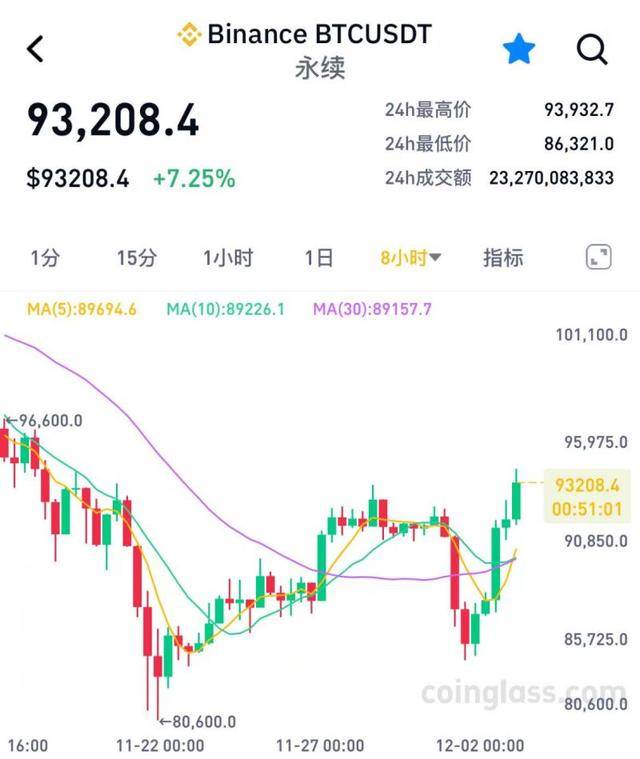
Market Overview - Bitcoin experienced significant volatility in early December, dropping below $85,000 on December 1 with a maximum daily decline exceeding 7%, before rebounding above $90,000 on December 2, closing at $93,208.4, a 7.25% increase within 24 hours [2][3] - Over 120,000 traders faced liquidation in the last 24 hours, with total liquidations amounting to approximately $500 million [2] Price Volatility Factors - The price of Bitcoin is heavily influenced by market sentiment, lacking backing from national credit or actual cash flow, leading to extreme price fluctuations due to policy changes, technical vulnerabilities, or market emotions [2] - The high leverage trading structure within the Bitcoin ecosystem can trigger a "death spiral" of price drops and liquidations from minor price changes [2] - Bitcoin's price has seen over 50 instances of declines exceeding 10% since 2010, with an average drop of 30% during these corrections [3] Market Dynamics - The cryptocurrency market is characterized by insufficient depth and weak liquidity, making it susceptible to significant price swings from large trades or sudden shifts in sentiment [4] - Factors contributing to the recent downturn include persistent outflows from Bitcoin ETFs, uncertainty surrounding Federal Reserve interest rate cuts, selling by large investors, and tightening domestic policies [4] - Data indicates that BlackRock's Bitcoin spot ETF saw a net outflow of $2.34 billion in November, with trading volumes on centralized exchanges dropping to $1.59 trillion, a 26.7% decline from October [4] Regulatory Environment - The Chinese government continues to enforce strict regulations against cryptocurrency trading, emphasizing that virtual currencies do not hold the same legal status as fiat currencies and are considered illegal financial activities [6] - Legal experts warn that engaging in cryptocurrency investments poses legal risks, as activities related to virtual currencies may be deemed invalid under civil law [6] Future Outlook - Experts express skepticism about Bitcoin's future, suggesting it cannot replace fiat currencies and lacks intrinsic value as an investment asset [5] - The ongoing tightening of regulations by major economies may signal the end of the "currency experiment" that Bitcoin represents, with the potential for significant market adjustments [5][9] - The future of stablecoins is contingent on the speed and rigor of regulatory compliance, with products relying heavily on high leverage facing increased scrutiny [9]