
豆粕减量替代

Search documents
星湖科技(600866):加码氨基酸和味精,未来增量可期
HTSC· 2025-06-16 08:28
Investment Rating - The report maintains a "Buy" rating for the company [7] Core Views - The company plans to invest up to 3.3 billion RMB to build amino acid and supporting projects, increasing annual production capacity of threonine and MSG by 200,000 tons and 250,000 tons respectively [1][2] - The company's threonine and MSG production capacity is expected to rise from 268,000 tons and 420,000 tons in 2024 to 468,000 tons and 670,000 tons in 2027, enhancing its market share [1][2] - The report anticipates that the global threonine capacity and domestic MSG capacity will maintain a CR3 of over 80% by 2027, with the company’s market share projected to increase to 26% and 17% respectively [1][2] Summary by Sections Investment Overview - The project is located in Daqing, Heilongjiang, with a construction period of approximately 22 months and expected annual sales revenue of about 3.9 billion RMB upon reaching full capacity [2] - The company will finance the project through a mix of self-funding and bank loans, each accounting for about 50% [2] Market Conditions - The report notes that the prices for lysine and threonine have seen slight declines, but demand is expected to improve as the peak season approaches and due to the reduction in soybean meal usage [3] - The company’s corn deep processing project in Xinjiang, which includes small amino acid products, is progressing and is expected to contribute to future growth [3] Financial Projections - The report forecasts the company's net profit attributable to shareholders for 2025-2027 to be 1.32 billion, 1.41 billion, and 1.59 billion RMB respectively, representing year-on-year growth of 40%, 7%, and 12% [4] - The estimated EPS for the same period is projected to be 0.80, 0.85, and 0.96 RMB [4] - The target price is set at 9.60 RMB, with a PE ratio of 12 times for 2025, reflecting the company's early-stage project developments [4][8]

2025年中国肉禽饲料产业产量及企业现状简析:消费端禽肉需求增长推动产量高速增长[图]
Chan Ye Xin Xi Wang· 2025-06-09 02:15
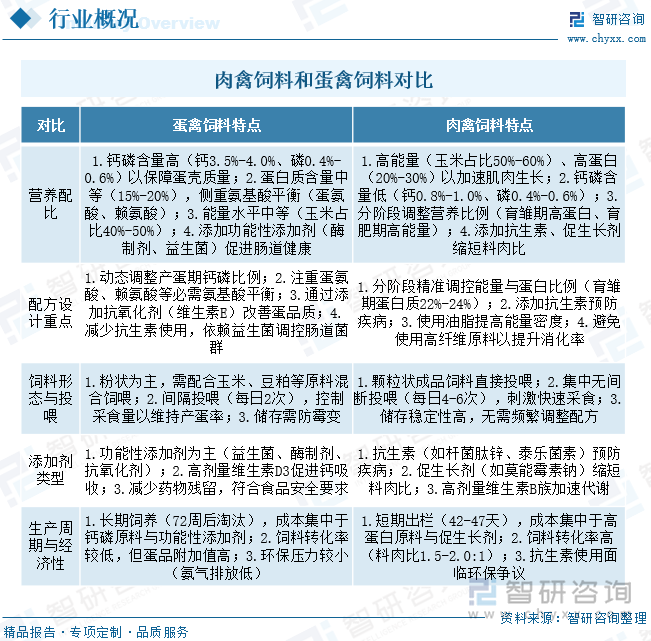
Core Insights - The poultry feed industry in China is experiencing significant growth, driven by the African swine fever's impact, increased penetration of large-scale farming, and advancements in feed formulation technology [1][11] - By 2024, poultry feed production is projected to reach 97.54 million tons, accounting for 75.1% of total poultry feed, indicating strong demand from the consumption side [1][11] Group 1: Industry Overview - Poultry feed is specifically designed to provide essential nutrients for the growth, development, reproduction, and health of meat poultry [2] - The industry focuses on high-energy and high-protein formulations, utilizing pelletized feed for continuous feeding and relying on antibiotics and growth promoters to shorten feed-to-meat ratios [2][4] - The production cycle for meat poultry is typically 42-47 days, while egg-laying poultry has a longer cycle of over 72 weeks [2][4] Group 2: Policy Background - China's poultry feed policies emphasize reducing soybean meal usage, enhancing quality, and optimizing layout, promoting low-protein diets and diversified formulation standards [5] - The government supports local supply chains and high-value transformation through subsidies and technological research, particularly in major soybean-producing regions [5][6] Group 3: Industry Chain - The upstream of the poultry feed industry relies on energy and protein raw materials like corn and soybean meal, with a focus on optimizing raw material structures through reduction technologies [7] - The midstream production is shifting towards functional and customized products, while the downstream sector is accelerating standardization and integration with processing enterprises [7][9] Group 4: Current Industry Status - Since 2012, the poultry feed production has maintained an average annual growth rate of approximately 4.5%, with a notable increase from 2019 to 2024 due to various market dynamics [11] - The concentration of production is primarily in Shandong, Henan, and Guangdong provinces, benefiting from established logistics networks and industrial clusters [11] Group 5: Competitive Landscape - The poultry feed market is characterized by leading enterprises like New Hope, Haida Group, and Wen's Group, which leverage full industry chain integration to enhance competitive advantages [13][15] - New Hope, as a major player, achieved a total feed sales volume of 25.96 million tons in 2024, maintaining a leading position in the domestic market [15] Group 6: Future Trends - The poultry feed industry is moving towards deep integration of biotechnology and automation, focusing on improving feed conversion rates and reducing environmental impacts [17] - The implementation of antibiotic bans is driving the development of alternative products, while smart production technologies are enhancing operational efficiency [17] - Market concentration is expected to continue rising, with leading companies expanding through mergers and acquisitions and focusing on customized services for large-scale farms [17]



中国大豆市场扛住了美国关税“压力测试”
第一财经· 2025-05-05 13:33
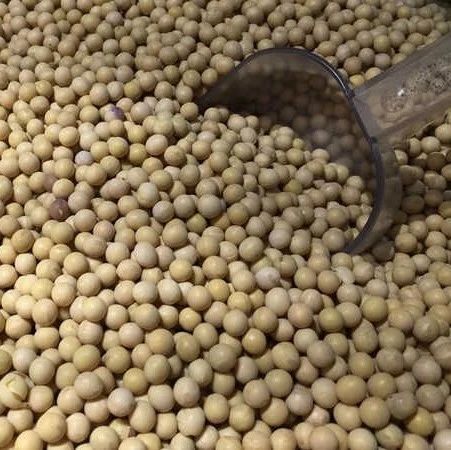
2025.05. 05 本文字数:2779,阅读时长大约4.5分钟 作者 | 第一财经 马晨晨 "我们观察到,目前国内的大豆贸易商与压榨企业正在加速转向巴西采购。仅4月的一周就预订40船 (约240万吨)巴西大豆,集中在5到7月交付。还有一部分企业因为进口成本上升压榨利润缩窄,转 向国产大豆压榨。最近黑龙江等地国产大豆与进口价差已经缩窄至627元/吨,这在一定程度上刺激了 替代需求。"陈义娟分析称。 近日美国农业部公布的数据显示,我国大豆采购量从4月10日当周的7.28万吨骤降至4月17日当周的 仅1800吨,降幅超97%。反观中国大豆市场则表现出较高的韧性。4月上旬,国内豆粕价格出现一轮 明显上涨行情,出厂均价累计涨幅达三成,此后在下旬从高点回落。农业农村部的最新监测数据显 示,4月的第四周,全国豆粕平均价格3.70元/公斤,同比下跌1.1%。预计今年中国大豆进口量为 9460万吨,较3月预测一致,整体市场价格仍在合理区间运行。 为何对外依存度较高的大豆市场能扛住这波"压力测试"?政策工具箱里又有哪些颇有成效的法宝? 中华粮网易达研究院院长张智先告诉第一财经记者,替代、减量和增产是中国大豆市场维持健康发展 ...
中国大豆市场扛住“压力测试”,原因有哪些
Di Yi Cai Jing· 2025-05-05 12:00
Group 1 - The core strategies for maintaining a healthy development of China's soybean market are substitution, reduction, and increased production [1] - China's soybean imports from the US have drastically decreased due to tariffs, with imports dropping from 72,800 tons to only 1,800 tons in a week, a decline of over 97% [1] - Domestic soybean meal prices saw a significant increase of 30% in early April, although they later retreated [1] Group 2 - In March 2025, China's grain imports decreased by 54.1% year-on-year, with soybean imports at 3.503 million tons, a 36.8% drop, marking the lowest level in 17 years [2] - The decline in imports is attributed to delayed shipments from Brazil and the avoidance of US soybeans due to tariffs [2] - Domestic traders and crushing enterprises are increasingly turning to Brazilian soybeans, with 40 ships (approximately 2.4 million tons) booked for delivery between May and July [2] Group 3 - In 2024, China imported 22.13 million tons of US soybeans, a decrease of 5.7%, while imports from Brazil rose to 74.65 million tons, an increase of 6.7% [3] - The share of US soybeans in China's imports has fallen to 21%, while Brazil's share has risen to 71% [3] Group 4 - Brazilian soybeans have advantages over US soybeans in terms of price, quality, and supply, with a landed price of approximately $420 per ton compared to $451 for US soybeans [4] - Brazil's soybean production is expected to reach a record high of 169 million tons, solidifying its position as the world's largest exporter [4] - The reliance on Brazilian soybeans may pose risks due to seasonal supply concentration and the high involvement of US capital in Brazil's soybean industry [4] Group 5 - China's soybean market has a high dependency on imports, with a self-sufficiency rate of only 20% [6] - The government is promoting measures to increase domestic soybean production without expanding arable land, focusing on improving yield through technology and policy support [6] - The domestic soybean consumption structure is changing, with approximately 13 million tons of edible soybeans being fully met by domestic production, while over 100 million tons for oil and feed rely heavily on imports [7] Group 6 - The Ministry of Agriculture has launched a plan to reduce feed grain consumption, aiming for a 7% reduction in feed consumption per kilogram of animal product by 2030 [8] - Feed companies are proactively adopting measures to reduce soybean meal usage, with New Hope and Muyuan adopting low-soy diets to enhance feed economics [9] - The National Development and Reform Commission has indicated that the impact of reduced imports from the US on China's grain supply will be minimal due to the availability of domestic reserves [9]
华恒生物(688639):缬氨酸短期承压 看好公司长期成长
Xin Lang Cai Jing· 2025-04-24 00:30
Core Viewpoint - The company reported a revenue of 2.178 billion yuan for FY2024, a year-on-year increase of 12%, but a net profit attributable to shareholders of 190 million yuan, a decrease of 58% compared to the previous year [1] - For Q1 2025, the company achieved a revenue of 687 million yuan, a year-on-year increase of 37%, with a net profit attributable to shareholders of 51 million yuan, down 41% year-on-year [1] Group 1: Financial Performance - FY2024 revenue from the amino acids and vitamins segment was 1.5 billion yuan and 200 million yuan respectively, with year-on-year changes of +3% and -5% [1] - The gross profit margin for amino acids was 30%, down 13.3 percentage points year-on-year, while for vitamins it was 21%, down 34.3 percentage points year-on-year [1] - The sales volume of amino acids reached 97,123 tons, a year-on-year increase of 26%, which was the main reason for revenue growth [1] Group 2: Market Dynamics - The price of valine has been under pressure, with a current price of 15 yuan/kg, a 10% increase quarter-on-quarter, but still at a low level [1] - The price spread has expanded to 9,218 yuan/ton, a 22% increase quarter-on-quarter [1] - The potential rise in domestic soybean prices due to escalating China-US tariff tensions may accelerate the reduction of soybean meal, which could benefit valine prices in the medium to long term [1] Group 3: Product Development - The company is increasing investment in new product development, achieving breakthroughs in 1,3-propanediol (PDO), succinic acid, tryptophan, and arginine [2] - The company’s PDO project is expected to benefit from accelerated domestic substitution due to trade tensions, as DuPont is a major manufacturer of PDO [2] - Future projects include the establishment of production facilities for various amino acids, which will enhance product structure and market competitiveness [2] Group 4: Investment Outlook - The company is projected to achieve net profits attributable to shareholders of 290 million yuan, 460 million yuan, and 530 million yuan for the years 2025 to 2027 respectively [3] - The company has received a "recommended" rating for its investment potential [4]

梅花生物(600873):原料成本下降带动利润增长 看好公司长期价值
Xin Lang Cai Jing· 2025-04-22 02:26
盈利预测与估值:我们预测公司25-27 年实现营业收入272.3、299.1、308.1 亿元,同比+8.6%、+9.8%、 +3.0%;实现归母净利润30.4、33.4、36.1 亿元,同比+10.9%、+10.0%、+8.0%,对应PE 分别为10、 9、9 倍,维持"强烈推荐"评级。 风险提示:豆粕价格大幅波动;原材料成本上涨;产品价格波动等 关税摩擦背景下公司业绩有望有益于豆粕涨价预期。中国大豆严重依赖进口,其中进口自美国大豆占比 约为21%,随着中美关税摩擦升温可能导致国内大豆价格上涨进而利多豆粕价格。同时,随着国家豆粕 减量替代工作推进,豆粕价格上涨有望加速替代进程,促进氨基酸产品需求增长。并且公司大原料副产 品业务利润跟随豆粕和玉米价格,因此豆粕价格上涨有利于公司业绩释放。 持续推进分红+回购,公司兼具防御属性。2024 年度公司计划实施现金分红和回购金额合计22.7 亿元, 占年度归属于上市公司股东净利润的比例82.84%。公司持续推进回购措施,截至2025 年3 月底,公司 通过集中竞价交易方式回购股份3571 万股,占公司总股本的1.25%,支付总额为3.52 亿元。 事件:公司发布202 ...
