货币政策分歧

Search documents
特朗普鲍威尔再起冲突!美联储主席去留引发白宫与华尔街角力
Sou Hu Cai Jing· 2025-07-15 04:33
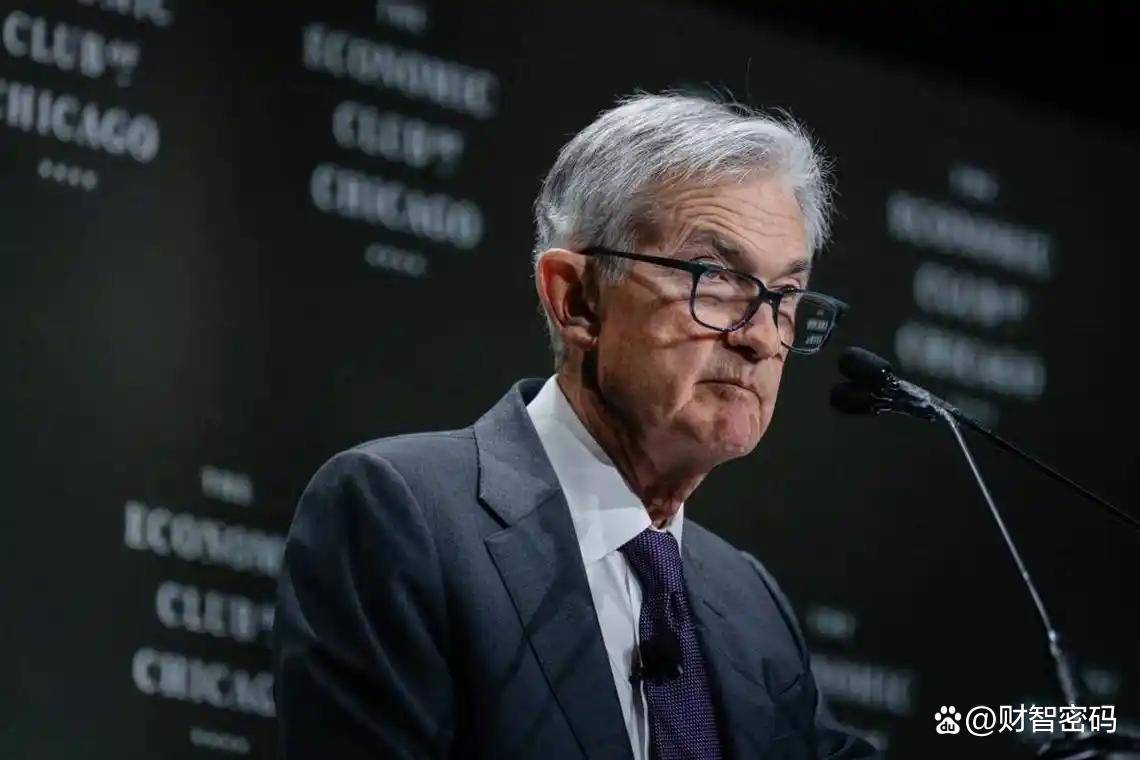
Core Viewpoint - The article discusses the power struggle between the White House and Federal Reserve Chairman Jerome Powell, triggered by a $2.5 billion renovation project at the Fed's headquarters, leading to significant volatility in global financial markets [3][5][11]. Group 1: Power Transition and Succession - Powell's term ends in May 2026, and the White House has begun planning for a transition, with potential successors including Kevin Hassett, Kevin Warsh, and others, indicating a strategy to diminish Powell's influence during his remaining term [5][9]. - Trump's intention to announce Powell's successor by September or October aims to weaken Powell's authority [5]. Group 2: Legal Implications of Dismissal - Legal experts assert that Trump can only dismiss Powell under specific conditions, such as inefficiency or misconduct, which do not include policy disagreements [7][9]. - Historical precedents suggest that Trump's attempts to dismiss Powell would face significant legal challenges [7]. Group 3: White House's Dual Strategy - Trump has publicly expressed dissatisfaction with Powell, suggesting he should resign, while advisors claim the renovation cost overruns could justify a dismissal [9][10]. - The White House has criticized the renovation as extravagant, comparing the Fed's headquarters to the Palace of Versailles, which has been widely circulated among officials [9]. Group 4: Monetary Policy Discrepancies - The conflict between Trump and Powell stems from differing monetary policy views, with Trump advocating for aggressive rate cuts to stimulate the economy, while Powell focuses on controlling inflation [10][11]. - Economic indicators show declining consumer confidence and rising inflation expectations, exacerbating tensions between the two leaders [10]. Group 5: Market Reactions and Global Impact - Trump's threats have caused significant market volatility, with investors seeking safe-haven assets due to concerns over the Fed's independence [11][12]. - The ongoing power struggle may lead to increased global economic uncertainty and potential capital outflows [11]. Group 6: Institutional vs. Personal Conflict - The power struggle represents a challenge to the fundamental principle of central bank independence, with Powell's firm stance rooted in historical legal precedents [12]. - Trump's potential strategies to exert pressure on the Fed may face bipartisan resistance, complicating the situation further [12].

日本央行加息至0.5%创17年新高,通胀压力下政策分歧加剧
Sou Hu Cai Jing· 2025-07-03 07:01
Group 1: Monetary Policy Adjustments - The Bank of Japan (BOJ) has signaled a clear shift in its monetary policy, raising the policy interest rate from 0.25% to 0.5% on January 24, 2025, marking the first increase since July 2024 and the largest hike since February 2007 [1] - The BOJ has adjusted its core consumer price index forecasts, increasing the 2024 fiscal year expectation from 2.5% to 2.7% and the 2025 fiscal year from 1.9% to 2.4% [1] Group 2: Inflation Trends - Tokyo's consumer price index, excluding fresh food, rose by 3.1% year-on-year in June, lower than the predicted 3.3%, but still above the BOJ's 2% target [2] - The overall inflation rate decreased from 3.4% in May to 3.1% in June, marking the first slowdown in four months, primarily due to changes in energy prices [2] - Electricity prices increased by 5.3% year-on-year, down from a previous 10.8% rise, while gasoline prices fell by 1%, contrasting with a 6.3% increase the prior month [2] Group 3: Internal Policy Disagreements - There are notable divisions within the BOJ regarding monetary policy, with some members advocating for maintaining ultra-low rates to assess the impact of U.S. tariffs, while others focus on rising domestic inflation pressures [3] - BOJ member Takeda suggests that the bank is at a stage where it could pause rate hikes but should eventually resume the tightening cycle to maintain momentum towards price targets [3] - BOJ Governor Ueda emphasizes the necessity of pausing rate hikes due to the high uncertainty from U.S. tariff policies, indicating that potential inflation remains below target levels [3]
央行论坛:各大央行政策路径显分歧
Sou Hu Cai Jing· 2025-07-02 09:37
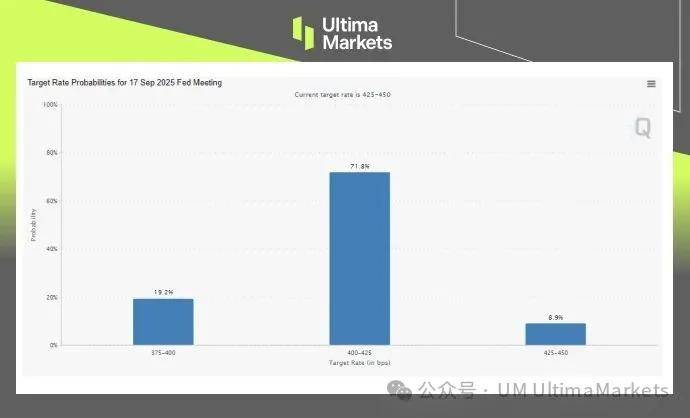
Core Viewpoint - The global financial market is focused on the differing monetary policy stances of key central bank leaders, reflecting an uneven path towards policy normalization despite progress in inflation reduction [1][2]. Group 1: Federal Reserve and European Central Bank - Federal Reserve Chairman Jerome Powell expressed a cautious but slightly dovish tone, indicating that more positive data is needed to confirm a sustained decline in inflation towards the 2% target [2]. - Powell mentioned that if upcoming employment and inflation data continue to improve, the Fed may consider a rate cut as early as September, with market expectations showing a 71.8% probability for this outcome [2][4]. - European Central Bank President Christine Lagarde reiterated a data-driven approach, noting that while goods inflation has slowed, service sector inflation remains stubborn, and there is no preset path for rate cuts [2][4]. Group 2: Bank of England and Bank of Japan - Bank of England Governor Andrew Bailey maintained a cautious hawkish stance, expressing concerns over wage growth and service sector inflation despite a noticeable decline in UK inflation [4][5]. - Bailey's comments led to a slight strengthening of the British pound, as market expectations for a summer rate cut were pushed to the fourth quarter [5]. - Bank of Japan Governor Kazuo Ueda emphasized that while there has been progress in wage growth, aggressive tightening is not yet appropriate, and the BoJ needs to see stable inflation above 2% before taking further action [6][7]. Group 3: Market Reactions and Currency Trends - The overall tone from central bank leaders remains consistent, but increasing divergence in policy paths may lead to volatility in the foreign exchange market [8]. - The US dollar is under pressure due to rising fiscal deficits and trade policy uncertainties, with a potential continuation of this trend if upcoming US employment data is weak [8]. - The Japanese yen remains under pressure due to the BoJ's dovish stance, while the euro and pound are experiencing increased volatility as the ECB and BoE navigate the balance between slowing inflation and wage pressures [8].
Juno markets:美元指数趋势向下,因美国打击信心
Sou Hu Cai Jing· 2025-07-02 02:57
Core Viewpoint - The divergence between the U.S. Treasury Secretary and the Federal Reserve Chairman regarding monetary policy is creating uncertainty in the dollar's performance and affecting other financial assets [1][3]. Group 1: Policy Divergence - The U.S. Treasury Secretary indicated that a rate cut by the Federal Reserve may not be delayed beyond September, citing economic pressures and the need for stimulus [3]. - In contrast, the Federal Reserve Chairman Powell emphasized a cautious approach, stating that decisions must be based on comprehensive economic assessments rather than short-term market fluctuations [3][4]. - This clear division between the U.S. government and the Federal Reserve is contributing to market confusion regarding future monetary policy directions [3][4]. Group 2: Market Reactions - The limited upward potential of the dollar is leading investors to adjust their asset allocation strategies amid policy uncertainty [4]. - Despite a minor decline in the dollar index, there are positive movements in S&P and Nasdaq futures, reflecting increased investor preference for risk assets due to expectations of future monetary easing [4]. - The 10-year U.S. Treasury yield remains stable at 4.245%, indicating a balanced approach among bond market investors in light of policy uncertainties [4]. Group 3: Technical Analysis - Technical indicators show a bearish trend for the dollar index, with moving averages declining and an expanding Bollinger Band indicating increased market volatility [4][5]. - Key support levels for the dollar index are identified at 96.37 and 94.62, while resistance levels are at 97.32 and 98.15 [5]. - These technical signals provide important references for investors in assessing the dollar index's future movements [5].
马斯克之后特朗普欲让鲍威尔主席走人?何时轮到到副总统万斯?
Sou Hu Cai Jing· 2025-06-07 04:23
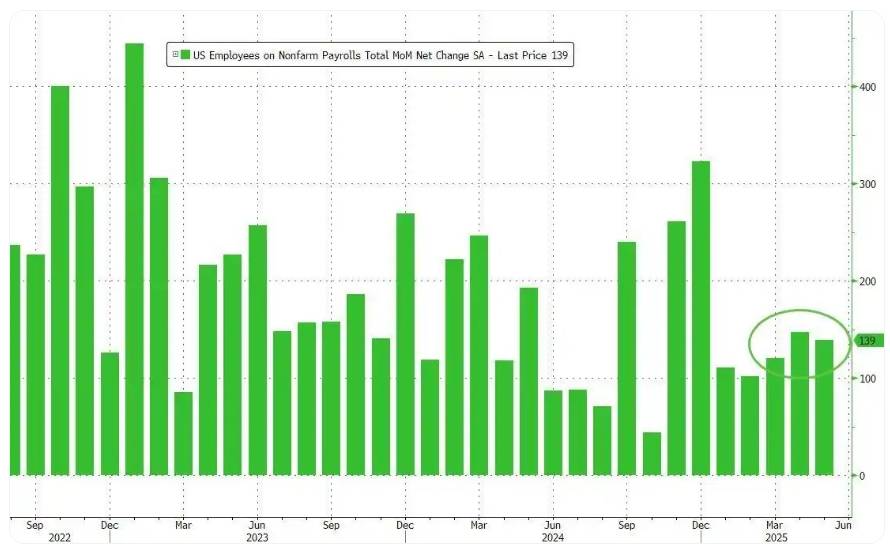
Group 1 - The U.S. Labor Department reported that 139,000 non-farm jobs were added in May 2025, exceeding market expectations, which complicates the Federal Reserve's decision on interest rate cuts [2] - The divergence in monetary policy between the European Central Bank and the Federal Reserve is becoming more pronounced, with the Fed maintaining its stance while the ECB has cut rates multiple times [3] - The political implications of interest rate decisions are significant, as every 0.25 percentage point rate hold translates to billions in interest payments for the government [3] Group 2 - The political dynamics within the White House are tense, with President Trump considering personnel changes at the Federal Reserve as a means to influence monetary policy [5] - There are discussions about the potential replacement of Fed Chair Powell, with former Fed Governor Kevin Walsh being a top candidate, although some advisors suggest waiting until Powell's term ends in May 2026 [6] - Trump's impatience is growing as the midterm elections approach, and he is under pressure to maintain a low-interest-rate environment to support his economic policies [8] Group 3 - The internal fractures within Trump's administration are widening, with his extreme individualism and emotional decision-making style causing instability among his advisors [12] - The stability of Vice President Vance's position is uncertain, as loyalty is the primary criterion in Trump's political framework, making any personnel changes possible at any moment [13] - The nature of power dynamics in the Trump era reflects a deeper crisis within the U.S. political system, showcasing the volatility of political alliances and the potential for sudden shifts in personnel [15]
6月中旬是关键节点!若届时美日谈判未突破,日元将有走弱风险
Hua Er Jie Jian Wen· 2025-05-18 08:08
Group 1 - The main risk facing the Japanese yen is the lack of progress in US-Japan trade negotiations, which could lead to a weakening of the yen during the summer [1][2] - Analysts from Bank of America indicated that if substantial progress is not made by mid-June, it will exacerbate fiscal and political risks in Japan, further weakening the yen [1][2] - The recent easing of trade tensions between China and the US contrasts with the stagnation in US-Japan trade talks, raising concerns about Japan's fiscal situation [1][2] Group 2 - The Bank of Japan has adopted a dovish stance in its recent monetary policy meeting, reducing market expectations for interest rate hikes, while the Federal Reserve maintained its position, dampening expectations for rate cuts [2] - Structural factors, including record purchases of foreign stocks by Japanese trust accounts, are contributing to the ongoing pressure on the yen [3] - If US-Japan trade negotiations do not progress by mid-June, further weakness in the yen and Japanese government bonds is anticipated [2][3] Group 3 - The trend of Japanese retail investors continuing to purchase foreign stocks indicates a structural outflow of funds, which will exert long-term pressure on the yen [3] - The potential for the euro to rise against the yen if EU-US trade negotiations progress faster than those between Japan and the US could further challenge the yen's performance [3] - June mid-point is critical for observing the yen's trajectory, with significant downside risks if trade negotiations remain stalled [3]