外汇市场波动

Search documents
中集集团发盈警 预期2025年归母净利润为1.45亿元至2.14亿元
Zhi Tong Cai Jing· 2026-01-30 11:57
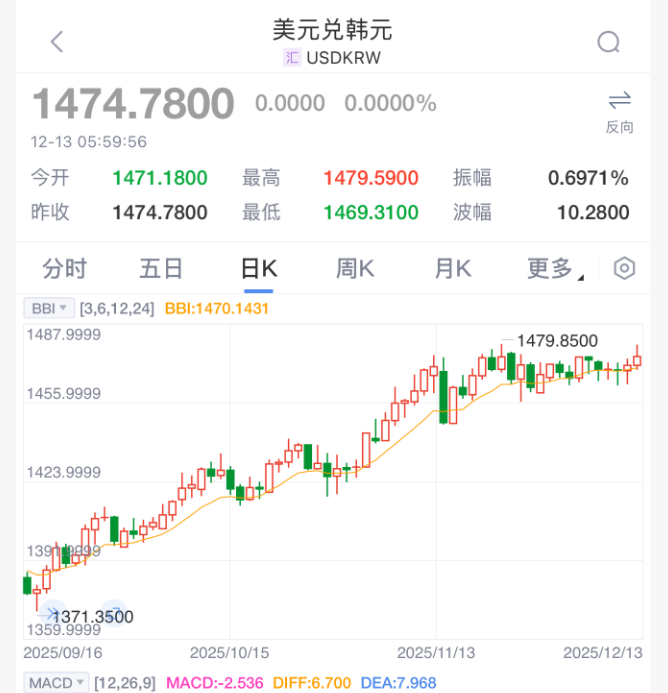
Core Viewpoint - CIMC Group (000039) expects a significant decline in net profit attributable to shareholders for the twelve months ending December 31, 2025, with an estimated range of RMB 145 million to RMB 214 million, compared to a profit of RMB 2.972 billion in the same period last year [1][2]. Group 1: Financial Performance - The group's consolidated performance for the twelve months ending December 31, 2025, is expected to drop sharply compared to the previous year, primarily due to a substantial decline in the container manufacturing business [2]. - The estimated basic earnings per share for the upcoming period is projected to be between RMB 0.011 and RMB 0.024 [1]. Group 2: Business Challenges - The decline in container manufacturing performance is attributed to a historical peak in production and sales of standard dry containers in 2024, coupled with international trade frictions and a slowdown in global commodity trade volume growth, leading to a normal decline in global container demand in 2025 [2]. - The group's joint venture, Shenzhen CIMC Chancheng Development Group Co., Ltd., is adjusting its pricing strategy to accelerate cash recovery and ensure liquidity by selling the Qianhai CIMC International Business Center East Tower project, which is expected to incur an indirect loss of approximately RMB 1.08 billion to the group's net profit attributable to shareholders due to discrepancies between sale prices and book costs [2]. Group 3: Foreign Exchange Impact - The foreign exchange market is expected to experience significant fluctuations in 2025, with preliminary estimates indicating that foreign currency exposure will result in a total loss of approximately RMB 1.243 billion from exchange gains and losses and foreign exchange hedging activities [2]. - The loss from foreign currency exposure is estimated at RMB 1.099 billion, primarily due to USD/RMB asset exposure, while the cost of hedging is relatively high, resulting in a lower hedging ratio for the year [2]. - The foreign exchange hedging activities are projected to incur a loss of approximately RMB 144 million, mainly from hedging activities related to EUR/USD asset exposure, although there are estimated gains from the EUR/USD exposure after hedging management [2].

Roche’s 2025 profit blunted by weakened US dollar
Yahoo Finance· 2026-01-29 15:55
Core Insights - Roche's adjusted operating profit increased by 5% in 2025, which was lower than expected due to the weakened US dollar, despite strong growth in its food allergy medicine Xolair and multiple sclerosis treatment Ocrevus [1] - The company's core operating profit reached SFr21.8bn ($28.4bn) in 2025, slightly below the market consensus of SFr22bn [1] Financial Performance - Total sales for Roche amounted to SFr61.5bn, reflecting a 7% change at constant exchange rates (CER), but only a 2% increase in Swiss Francs [2] - Core earnings per share were reported at SFr19.46, which is 1% below consensus estimates [2] - The appreciation of the Swiss Franc against other currencies, particularly the US dollar, significantly impacted reported results [2] Market Reaction - Investor response to Roche's financial results was lukewarm, with shares opening 0.6% lower at SFr336.3 on 29 January, down from SFr338.3 at the previous market close [3] - Roche's market capitalization stood at SFr272.6bn [3] Revenue Breakdown - Roche's pharmaceuticals division generated sales of SFr47.7bn, a 9% increase from 2024 [4] - Ocrevus was the top-selling drug, generating SFr7bn, while Vabysmo grew 12% year-over-year to SFr4.1bn, although this was 2% below consensus estimates [4] - Xolair experienced a significant growth of 32% in 2025, but biosimilar launches are anticipated in the second half of 2026 [4] Future Outlook - Roche's stock has seen an upward trend due to positive clinical data for pipeline products, including successful Phase III studies for fenebrutinib and promising Phase II data for obesity candidate CT-388 [5] - The company aims to launch 19 new molecular entities (NMEs) by 2030, as stated by CEO Thomas Schinecker [5]
OEXN:避险资产的黄金时代
Xin Lang Cai Jing· 2026-01-27 12:37
Group 1 - The core viewpoint of the articles highlights a significant surge in precious metals, particularly gold and silver, driven by heightened international risk aversion and macroeconomic uncertainties [1][2] - Gold prices have successfully stabilized above $5,100 per ounce, while silver is showing strong upward momentum, indicating that precious metals are not only a safe haven but also a barometer of global market fear [1] - The upcoming global central bank meetings are expected to inject complex expectations into the market, with analysts predicting that the Federal Reserve will likely maintain current interest rates despite strong pressure for rate cuts [1] Group 2 - The volatility in the foreign exchange market is providing strong support for the bull market in gold and silver, with the dollar index dropping to a four-month low amid speculation of potential U.S.-Japan currency intervention [2] - The expectation of a policy shift is enhancing the attractiveness of dollar-denominated commodities, particularly in the context of weak oil prices and fluctuating bond yields, which is amplifying the asset substitution effect for precious metals [2] - Technical analysis indicates that gold futures are targeting a strong resistance level at $5,250, while silver futures are looking for a breakthrough at the $125 level, with short-term pullbacks viewed as buying opportunities [2]


外汇市场剧烈波动: 美元跌至三个月低点 与日本央行干预疑云
Sou Hu Cai Jing· 2026-01-25 16:31
Group 1: Market Overview - In early 2026, the global foreign exchange market experienced significant volatility, with the dollar index (DXY) dropping to around 97.7, a decrease of approximately 1.5% from the end of the previous year, influenced by geopolitical tensions, adjustments in Federal Reserve policy expectations, and movements in the Bank of Japan's monetary policy [1][5] - The volatility in the foreign exchange market is reflected in an increase in volatility rates, which rose to over 8.5% in 2026, surpassing the levels at the end of 2025, indicating heightened policy divergence and geopolitical risks [5][9] Group 2: Japanese Economic Context - Japan's economy has faced structural challenges for over two decades, with negative GDP growth and deflation. The Bank of Japan implemented negative interest rates and yield curve control to stimulate growth, leading to an upward revision of GDP growth forecasts for fiscal years 2025 and 2026 to 0.9% and 1.0%, respectively [2] - Following the election of Prime Minister Suga in October 2025, a shift to dovish policies raised concerns in the market, resulting in a surge in long-term interest rates, with the 30-year government bond yield exceeding 4% in January 2026, a rise of about 25 basis points from the previous year [2] Group 3: Currency Fluctuations and Intervention Speculation - The USD/JPY exchange rate became a focal point of volatility, with the rate dropping sharply from a high of 159 to the 156-158 range, leading to speculation about potential intervention by the Bank of Japan [4] - Historical data indicates that the Bank of Japan has intervened in the currency market to support the yen, with approximately $1.2 trillion in foreign reserves primarily in U.S. Treasuries, suggesting that any intervention could involve selling U.S. debt to acquire dollars [4] Group 4: Precious Metals Market Dynamics - The precious metals market saw significant price increases, with silver prices surpassing $100 per ounce, a 40% increase from the previous year, and gold prices approaching $5,000 per ounce, reflecting a 79% annual increase due to global uncertainty [6] - A notable phenomenon was the premium on silver prices in Shanghai, which reached $111 per ounce, indicating a physical silver shortage in China, with domestic inventories at their lowest since 2016 [7] Group 5: Global Economic Implications - The depreciation of the dollar is beneficial for emerging markets, with the DXY falling to 98.3, a 5% decrease from the previous year, alleviating debt pressures for these countries [8] - However, continued intervention by Japan could lead to rising U.S. Treasury yields, increasing global borrowing costs, as evidenced by the 30-year Treasury yield reaching 4.83% [8] Group 6: Future Outlook - The global growth forecast for 2026 is stable at 3.3%, but risks include potential further rate cuts by the Federal Reserve and uncertainties surrounding the Bank of Japan's interest rate decisions [8] - Policy coordination is crucial, as uncoordinated interventions by Japan could exacerbate global volatility, with key events such as the Federal Reserve meeting on January 28 and Japan's elections on February 8 likely to influence market direction [8]
骏亚科技(603386.SH):2025年度预亏1000万元
Ge Long Hui A P P· 2026-01-25 08:28
Core Viewpoint - Junya Technology (603386.SH) expects a net profit attributable to shareholders for the year 2025 to range from -10 million to 0 million yuan, indicating a reduction in losses compared to the previous year [1] Financial Performance - The company anticipates a net profit attributable to shareholders, excluding non-recurring gains and losses, to be between -30 million and -20 million yuan for 2025 [1] - During the reporting period, the company increased its market development efforts and optimized its sales structure, resulting in a year-on-year increase in operating revenue [1] Cost and Profitability - Despite the increase in operating revenue, the company's gross profit margin only slightly improved compared to the same period last year due to rising raw material prices [1] - The company's foreign sales are primarily settled in US dollars, and fluctuations in the international foreign exchange market have negatively impacted the company's exchange gains and losses due to the depreciation of the US dollar against the Chinese yuan [1]

欧元、丹麦克朗跌超0.3%,瑞郎跌约0.8%
Jin Rong Jie· 2026-01-21 20:37
Core Viewpoint - The article discusses the fluctuations in various currency pairs, highlighting the performance of the Euro, British Pound, and commodity currencies against the US Dollar during the trading session on Wednesday in New York. Currency Performance - The Euro declined by 0.32% against the US Dollar, trading at 1.1687, and continued to decrease since 22:00 Beijing time [1] - The British Pound fell by 0.17% against the US Dollar [1] - The US Dollar appreciated by 0.78% against the Swiss Franc [1] Commodity Currencies - The Australian Dollar increased by 0.37% against the US Dollar [1] - The New Zealand Dollar rose by 0.21% against the US Dollar [1] - The US Dollar remained stable against the Canadian Dollar, showing a V-shaped trend since 19:00 [1] Other Currencies - The Swedish Krona appreciated by 0.23% against the US Dollar [1] - The Norwegian Krona increased by 0.28% against the US Dollar [1] - The Danish Krona decreased by 0.33% against the US Dollar [1] - The Polish Zloty fell by 0.12% against the US Dollar [1] - The Hungarian Forint declined by 0.08% against the US Dollar [1]
三维通信(002115.SZ):预计2025年净亏损1000万元-1500万元
Ge Long Hui A P P· 2026-01-16 10:28
Core Viewpoint - The company expects a net loss of 15 million to 10 million yuan for 2025, with a non-recurring net loss of 34.5 million to 23 million yuan, and operating revenue projected between 1 billion to 1.5 billion yuan [1] Group 1: Company Performance - The domestic traditional communication industry is undergoing a phase of adjustment, leading to a slowdown in overall growth [1] - The company's domestic communication business revenue and gross profit have declined as a result of this industry adjustment [1] - The company is actively optimizing its business structure by gradually reducing lower-margin service projects, which has temporarily impacted revenue scale [1] Group 2: External Factors - The company's export business is primarily settled in US dollars, and fluctuations in the international foreign exchange market have negatively affected the company's foreign exchange gains and losses due to the depreciation of the US dollar against the Chinese yuan [1] - The company will continue to monitor market dynamics and actively promote business optimization and upgrades to strengthen its operational foundation and enhance long-term development quality [1]

交易员指南:读懂日本决策者各种日元“口头警告”背后的信号
Xin Lang Cai Jing· 2025-12-23 06:44
Core Viewpoint - The Japanese yen continues to weaken against the US dollar despite the Bank of Japan raising its benchmark interest rate to a 30-year high, prompting market speculation on potential government interventions if the yen depreciates further [1][2]. Group 1: Government Response and Strategy - Finance Minister Shunichi Suzuki indicated that the government has the "autonomous decision-making power" to take bold actions if the exchange rate deviates from fundamentals, marking her strongest warning to date [1][2]. - Since taking office in October, Finance Minister Suzuki has largely followed the foreign exchange communication strategy established by her predecessor [7]. - The Japanese government has previously intervened in the foreign exchange market when the yen approached 160 against the dollar, providing a reference for intervention thresholds [1][2]. Group 2: Intervention Protocols - Japanese officials typically deny having a red line for intervening in the foreign exchange market, stating that action is only warranted in cases of sudden, disorderly, or speculative market fluctuations [1][6]. - Before taking direct intervention measures, officials usually issue a series of carefully considered warnings to signal how far they are from taking action [6]. - The recent invocation of the US-Japan foreign exchange agreement from September allows for appropriate intervention during excessive market volatility [1]. Group 3: Key Warning Phrases - Officials adhere to G-20 principles, emphasizing that exchange rates should reflect economic fundamentals and that excessive volatility is harmful to the economy [3][9]. - As concerns escalate, officials may express that the negative impacts of a weakening yen are becoming increasingly evident, indicating a shift in their communication strategy [4][10]. - When intervention becomes a real possibility, officials may state that they are prepared to take appropriate actions to curb excessive market fluctuations [5][10].
阿尔及利亚外汇市场波动加剧 欧元大幅上涨
Shang Wu Bu Wang Zhan· 2025-12-19 03:02
Core Viewpoint - The unofficial foreign exchange market in Algeria is experiencing volatility, with the euro rising to 280 Algerian dinars on December 14, indicating a continued upward trend despite previous fluctuations [1] Exchange Rate Movements - The euro had previously approached 300 dinars at the end of November, causing widespread concern, but fell to 279 dinars in early December before rising again [1] - The US dollar has slightly decreased in the unofficial market, quoted at 240.50 dinars per dollar, showing a minor decline from the previous trading day while maintaining a high level of fluctuation [1] - In the official market, the Algerian central bank reported a slight increase in the euro to 152.10 dinars and a decrease in the dollar to 129.58 dinars, widening the gap between official and black market rates [1] Regulatory Actions - The Algerian government has intensified its regulation of foreign exchange usage, with nine individuals detained for the illegal use of 750 euros in travel foreign exchange subsidies, reflecting the government's strict enforcement of foreign exchange policies [1]
货币战争 紧急出手!
Zhong Guo Ji Jin Bao· 2025-12-14 16:19
Group 1 - The South Korean government held an emergency meeting on December 14 to address the ongoing depreciation of the Korean won, which has reached its highest monthly average against the US dollar since the financial crisis, surpassing 1470 won per dollar [1][3] - The meeting included a broader range of participants beyond the usual foreign exchange authorities, indicating a comprehensive approach to assess factors affecting foreign exchange supply and demand, such as overseas investments by the National Pension Service [3][4] - Concerns have been raised by policymakers regarding the weakening of the won, as it may reignite inflationary pressures and reduce consumer purchasing power, especially as the interest rate differential with the US remains at a 24-year high of 2 percentage points [3][4] Group 2 - Analysts suggest that if the won continues to weaken towards the psychologically significant level of 1500 won per dollar, South Korea may increase intervention efforts, a level not seen since 2009 [4] - The National Pension Service, as the largest institutional investor in South Korea with overseas assets of approximately $545 billion, has previously engaged in currency hedging to support the won, indicating a potential for increased activity if the exchange rate approaches critical thresholds [4][5] - Expectations are rising for year-end currency management by foreign exchange authorities, particularly in light of thin market liquidity [5][6]