资源型经济转型

Search documents
在开放的中国共求更多的合作
Jing Ji Ri Bao· 2025-08-26 04:37
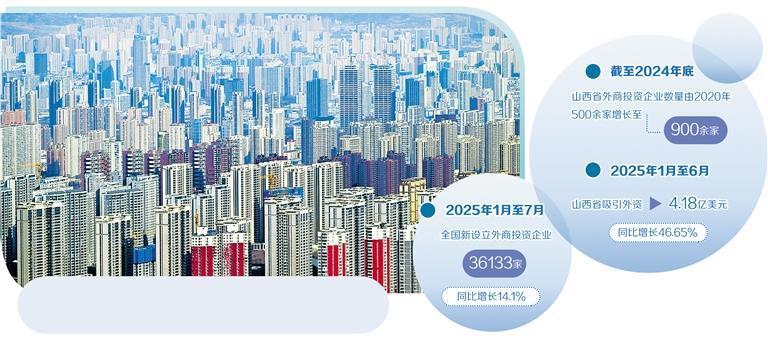
Core Insights - The foreign investment event in Shanxi attracted representatives from nearly 40 foreign business associations and companies, including 13 Fortune 500 companies, indicating strong international interest in the region's development potential [1][3][4] - Shanxi is transitioning from a traditional energy base to a diversified industrial development area, creating opportunities for foreign investment in sectors like new energy infrastructure and advanced manufacturing [3][4][5] Group 1: Foreign Investment and Economic Growth - By the end of 2024, the number of foreign-invested enterprises in Shanxi is expected to grow from over 500 in 2020 to over 900 [4] - In the first half of 2025, Shanxi attracted foreign investment of $418 million, representing a year-on-year increase of 46.65% [4] - The event highlighted the strong potential for high-tech development and innovation in Shanxi, as emphasized by the China Council for the Promotion of International Trade [4][6] Group 2: Sector-Specific Opportunities - Canadian companies are particularly interested in investing in new energy infrastructure and brand establishment in Shanxi [3] - Belgian enterprises are focusing on emerging industries such as third-generation semiconductors, synthetic biology, modern medicine, and high-end equipment manufacturing [3] - Australian companies see vast collaboration opportunities in agricultural technology and health product development in Shanxi [5] Group 3: Confidence in the Chinese Market - Foreign enterprises express a strong desire to collaborate with local companies in various sectors, including new energy, life sciences, and biopharmaceuticals [5] - The increasing number of foreign companies visiting China reflects their confidence in the Chinese market and its long-term investment value [6] - The consensus among foreign investors is that engaging with China represents an opportunity for future growth and success [6]

近40家外国商协会和外资企业代表走进中国山西谋共赢—— 在开放的中国共求更多的合作
Jing Ji Ri Bao· 2025-08-25 21:57
Group 1 - The foreign investment delegation from 15 countries, including 13 Fortune 500 companies, visited Shanxi to explore cooperation opportunities and discuss the province's development potential [1][2] - Shanxi is transitioning from a traditional energy base to a diversified industrial development area, attracting foreign investment in sectors like new energy infrastructure and advanced manufacturing [1][2] - By the end of 2024, the number of foreign-invested enterprises in Shanxi is expected to grow from over 500 in 2020 to over 900, with foreign investment reaching $418 million in the first half of 2025, a year-on-year increase of 46.65% [2] Group 2 - ASEAN enterprises are particularly interested in Shanxi's advanced manufacturing, energy equipment, digital economy, and cultural tourism industries, recognizing the province's effective government services and investment potential [2] - Companies like Alfa Laval and Rockwell Automation are optimistic about the market opportunities in Shanxi, particularly in energy transition and high-tech sectors, indicating a strong belief in China's commitment to achieving carbon neutrality [3][4] - The overall sentiment among foreign enterprises reflects a growing confidence in China's market stability and long-term investment value, with a notable increase in newly established foreign-invested enterprises across the country [4]
黄土地上续写传奇(铭记历史 缅怀先烈)
Ren Min Ri Bao· 2025-08-07 22:40
Core Viewpoint - The articles highlight the historical significance of the Anti-Japanese War in Shanxi, emphasizing the transformation of red resources into cultural tourism and economic development opportunities for local communities [1][2][3]. Group 1: Historical Significance - The region of Shanxi is noted for its revolutionary history, particularly during the Anti-Japanese War, where the Eighth Route Army achieved significant victories such as the Battle of Pingxingguan [1]. - The local population played a crucial role in supporting the army, contributing to the success of military operations [2][3]. Group 2: Economic Development through Red Tourism - Baiyatai Village has transformed its historical sites into a red tourism destination, attracting over 6,000 visitors in 2024 through educational programs and themed attractions [3][4]. - The local government and community members have successfully developed various businesses, including restaurants and homestays, contributing to the village's economic growth [4][5]. Group 3: Agricultural and Industrial Advancements - In Xing County, the introduction of the "Cai Jia Ya" train has improved transportation, facilitating the development of red tourism and agricultural projects, leading to an increase in average annual income from over 4,000 yuan to more than 12,000 yuan in ten years [7]. - The region is focusing on organic agriculture and technological advancements, with over 30 certified organic farming entities and a total of 30,000 acres of certified organic land [9]. Group 4: Future Prospects and Innovations - The establishment of a large data park in Lingqiu County aims to attract over 20 companies, enhancing the local economy through the integration of new energy and computing power industries [13]. - The local aluminum industry is advancing towards a target of a million-ton, 100 billion yuan industrial cluster, showcasing the potential for resource optimization and industrial growth [12].
发挥专业优势深耕三晋大地
Jin Rong Shi Bao· 2025-08-07 02:38
Group 1 - The core message emphasizes the importance of implementing the central government's strategies for the development of the central region and ecological protection in the Yellow River basin, with a focus on transforming resource-based economies in Shanxi [1] - China Cinda's Shanxi branch is committed to leveraging its professional advantages in financial asset management to support high-quality development in Shanxi, aligning with the region's modernization efforts [1][5] Group 2 - The company has organized immersive learning experiences for its employees at historical sites to instill the spirit of perseverance and resilience, which is crucial for driving Shanxi's transformation [2] - China Cinda has invested over 30 billion yuan to support the development of new materials and clean energy technologies, aiming to create a modern industrial system with competitive advantages [4] Group 3 - The company has played a significant role in the energy sector by investing over 300 billion yuan to support energy supply and industrial transformation, focusing on the needs of traditional coal enterprises [3] - China Cinda has utilized innovative financial tools to assist companies in overcoming financial difficulties and enhancing their green and low-carbon production capabilities [3][4] Group 4 - The company is actively collaborating with educational institutions to explore innovative financial solutions that facilitate the commercialization of clean energy technologies [4] - China Cinda aims to continue its commitment to the political and social responsibilities of a financial central enterprise, contributing to Shanxi's modernization and development [5]
中国华能集团有限公司董事长温枢刚拜会山西省省长卢东亮
Zheng Quan Shi Bao Wang· 2025-08-01 14:15
Core Points - The meeting between China Huaneng Group Chairman Wen Shugang and Shanxi Provincial Governor Lu Dongliang focused on enhancing cooperation in energy security, coal power, and new energy projects [1] - Lu Dongliang expressed the desire for collaboration in building a new energy system and promoting the transformation of Shanxi's resource-based economy [1] - Wen Shugang emphasized the importance of communication and cooperation in energy supply, clean energy base construction, and collaborative development [1] Summary by Categories Energy Security and Supply - The discussion highlighted the need for both parties to deepen cooperation in energy security and supply [1] - The focus is on ensuring stable energy provision while transitioning to cleaner energy sources [1] Project Development - There is a mutual interest in advancing coal power and new energy project construction [1] - The collaboration aims to enhance the development of new energy research and equipment manufacturing [1] Economic Transformation - The meeting addressed the goal of transforming Shanxi's resource advantages into developmental advantages [1] - The emphasis is on promoting the transformation of Shanxi's resource-based economy through strategic partnerships [1]

率先转型蹚新路 华阳集团“双轮驱动”奏响高质量发展奋进乐章
Xin Hua Cai Jing· 2025-07-31 09:57
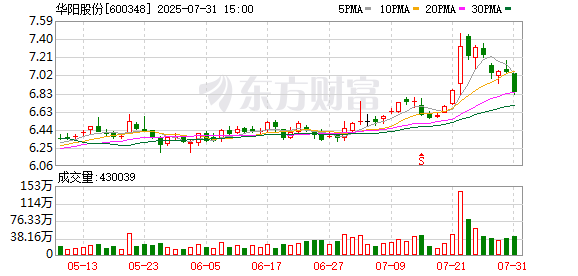
Core Insights - Huayang Group is transitioning from traditional coal mining to new energy sectors, focusing on smart technology and sustainable development [3][4][6] - The company has implemented advanced technologies such as AI, 5G, and smart mining systems to enhance safety and efficiency in coal production [4][5] - Huayang Group is actively developing sodium-ion battery technology, positioning itself as a leader in the new energy materials sector [6][7] Group 1: Smart Technology Integration - Huayang Group has established 7 smart coal mines and 2 smart coal preparation plants, achieving comprehensive smart mining goals ahead of schedule [4] - The company utilizes AI inspection robots and smart ventilation systems to improve safety and operational efficiency [4][5] - Innovations such as a three-in-one data support platform for mining operations have been developed to ensure comprehensive safety management [4] Group 2: Sodium-Ion Battery Development - The sodium-ion battery production line is operational, providing emergency power solutions for coal mines, ensuring up to 72 hours of power supply in emergencies [2][6] - Huayang Group has collaborated with the Chinese Academy of Sciences to create a complete sodium-ion battery supply chain, achieving significant advancements in battery performance [6][7] - The sodium-ion battery system has passed rigorous testing, establishing Huayang Group as a key player in the industry [6][7] Group 3: Broader Industry Innovations - The company is also advancing in high-performance carbon fiber and photovoltaic industries, establishing partnerships with major energy firms [7] - Huayang Group is focusing on integrating the aluminum industry into a comprehensive development model, promoting sustainability and innovation [7] - The company aims to contribute to the transformation of resource-based economies and support China's modernization efforts [7]

邮储银行金融赋能助煤炭大省转型蹚新路
Zheng Quan Ri Bao· 2025-07-20 09:47
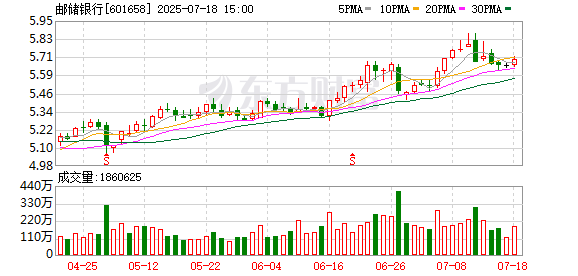
Group 1 - Shanxi is the first province in China to implement a comprehensive reform pilot zone for resource-based economic transformation, addressing a global challenge in the new era [2] - Postal Savings Bank has actively integrated into local economic development, revitalizing traditional industries and promoting energy transition and low-carbon development [2] - Yangquan Valve Co., Ltd. produces over 1,300 specifications of valves, holding a 70% market share in low-pressure large-diameter valves in the coking and metallurgy sectors [2] Group 2 - In 2023, Yangquan Valve faced a significant increase in production orders and funding challenges, leading to a credit line of 10 million yuan from Postal Savings Bank, with 7.2 million yuan utilized [2] - The current loan scale for Yangquan Valve from Postal Savings Bank has reached 17.2 million yuan, along with a comprehensive suite of financial services [2][3] - Yangquan Valve has become a national-level "little giant" enterprise, with its products sold across China and exported to multiple countries [3] Group 3 - Shanxi is accelerating the construction of green coal development bases while ensuring coal supply safety [4] - Zhengzhuang Mine, part of a major coal base, has upgraded to a smart green mine using advanced mining techniques and has received over 100 million yuan in financing from Postal Savings Bank [4] - Postal Savings Bank supports the construction of four green smart mines in Shanxi, promoting the intelligent and green development of coal and power enterprises [4] Group 4 - Postal Savings Bank plans to continue increasing financial support tailored to Shanxi's conditions, contributing to the province's transformation and development [5]

把资源优势更好转化为发展优势
Jing Ji Ri Bao· 2025-07-20 00:50
Group 1 - The core viewpoint emphasizes the need for resource-based regions like Shanxi to transform their economies and leverage their resource advantages through technological and institutional innovations [1][2][3] - Shanxi is focusing on becoming a national pilot zone for the comprehensive reform of resource-based economic transformation, aiming to diversify its industrial support [1] - The article highlights the importance of technological innovation, such as AI and big data, in enhancing the value of traditional resources and creating new business models like smart mining and digital oilfields [1] Group 2 - Institutional innovation is identified as a key factor in breaking the cycle of "resource development - economic fluctuations - ecological degradation," with examples from other regions providing useful models for sustainable development [2] - The relationship between development and safety must be balanced, emphasizing that the transformation of resource-based economies should focus on optimizing resource use rather than simply reducing reliance on resources [2] - The transformation process is described as complex and requires a systematic approach, advocating for quality, efficiency, and dynamic changes to better convert resource advantages into developmental benefits [3]
守牢转型发展的安全稳定底线
Jing Ji Ri Bao· 2025-07-14 22:31
Group 1 - The current economic transition in China emphasizes the need for clear boundaries and paths for development, with a focus on balancing development and security [1] - The resource-based economy faces challenges such as over-reliance on single resources, leading to issues like industrial structure singularity and environmental degradation [1] - Transitioning to a high-quality growth model requires a focus on resource conservation, ecological protection, and technological innovation [1] Group 2 - The international environment is increasingly complex and uncertain, posing challenges to the stability of China's industrial and supply chains [2] - Emphasizing stability while pursuing progress is crucial during the transition, requiring a comprehensive approach to safety across various sectors [2] - A systematic view is necessary to build an effective safety protection system, addressing risks from multiple dimensions including technology, ecology, and social operations [2] Group 3 - The challenge of upgrading and transitioning involves fostering new growth drivers while revitalizing traditional ones [3] - Key strategies include enhancing high-quality technological supply through innovation and upgrading traditional industries with digital and green technologies [3] - The essence of the transition is a profound change in concepts and pathways, necessitating a constant focus on maintaining safety and stability [3]
险资长周期考核机制完善——政策周观察第38期
一瑜中的· 2025-07-14 15:11
Group 1: Policy Insights - Recent high-level inspections focused on technology and industrial transformation, local finance, and economic operations, with key visits by top officials in various provinces [1][5][6] - The State Council emphasized the need for innovation in agriculture and the expansion of cultural tourism and elderly care services during recent inspections [1][6] - The National Development and Reform Commission (NDRC) and the Ministry of Industry and Information Technology (MIIT) issued notifications to support the construction of zero-carbon parks, encouraging funding and policy support for such initiatives [2][8] Group 2: Economic Measures - The Ministry of Human Resources and Social Security announced a 2% increase in basic pensions for retirees in 2025, reflecting a commitment to improving social welfare [3][9] - The State Council issued a notice to enhance employment stability policies, increasing unemployment insurance refunds for small and medium enterprises from a maximum of 60% to 90% of their previous contributions [3][9] - The National State-owned Assets Supervision and Administration Commission (SASAC) called for a focus on strategic emerging industries and the acceleration of innovation and technology development [2][10] Group 3: Financial Regulations - The Ministry of Finance introduced a new long-cycle assessment mechanism for state-owned insurance companies, adjusting the weight of net asset return rates and capital preservation rates over different time frames [2][11] - The new assessment framework includes a combination of current year, three-year, and five-year indicators, aiming to promote long-term stable investments [2][11]