
通用具身智能

Search documents
宇树科技IPO辅导火速通关 冲刺A股“人形机器人第一股”
2 1 Shi Ji Jing Ji Bao Dao· 2025-11-17 13:24
Core Viewpoint - Yushu Technology is accelerating its IPO process, having completed the preparatory work for submitting its IPO prospectus, with expectations to file between October and December 2023 [1][2]. Company Progress - Yushu Technology has entered the "acceptance" stage of its IPO guidance, indicating that it is on track to submit its IPO registration application soon [1]. - The company completed its IPO guidance in just 132 days, significantly faster than the average duration of 6-12 months for similar processes in the A-share market [4]. - The company’s founder revealed that Yushu Technology's annual revenue has exceeded 1 billion yuan, meeting the basic requirements for A-share listing [5]. Market Context - Yushu Technology is positioned as a leading player in the capital market, with other humanoid robot companies also seeking to capitalize, such as Leju Robotics and Zhiyuan Robotics [2]. - The rapid completion of Yushu Technology's IPO guidance has drawn significant market attention, with original shareholders' stakes being highly sought after [1][2]. Governance and Structure - Recent changes in the board of directors are seen as a key step in establishing a robust governance structure for the company, with new members having extensive experience in corporate governance [3][4]. Industry Challenges - The humanoid robot industry faces challenges post-IPO, including the balance between profitability and capital expenditure, as companies must maintain investor confidence while investing in advanced technologies [7]. - Concerns exist regarding the marketability and performance of humanoid robots in industrial applications, with potential issues in yield, delivery, and capacity [8]. Future Considerations - The market's reception of humanoid robot companies will depend on their ability to demonstrate production capabilities and delivery performance, as well as their strategic focus on AI investments versus traditional consumer robotics [8].

从300多篇工作来看, VLA是否为通向通用具身智能的必经之路?
具身智能之心· 2025-10-17 16:02
Core Insights - The emergence of Vision Language Action (VLA) models signifies a shift from traditional strategy-based control to a paradigm of general robotic technology, transforming visual language models (VLM) from passive sequence generators to active agents capable of manipulation and decision-making in complex, dynamic environments [2] Group 1: VLA Overview - The article discusses a comprehensive survey on advanced VLA methods, providing a clear taxonomy and systematic review of existing research [2] - VLA methods are categorized into several main paradigms: autoregressive, diffusion-based, reinforcement-based, hybrid methods, and specialized methods, with detailed examination of their motivations, core strategies, and implementations [2] - The survey integrates insights from over 300 recent studies, outlining the opportunities and challenges that will shape the development of scalable, general VLA methods [2] Group 2: Future Directions and Challenges - The review addresses key challenges and future development directions to advance VLA models and generalizable robotic technologies [2] - The live discussion will explore the origins of VLA, its research subdivisions, and the hot topics and future trends in VLA [5] Group 3: Event Details - The live event is scheduled for October 18, from 19:30 to 20:30, focusing on VLA as a prominent research direction in artificial intelligence [5] - Key highlights of the event include the classification of VLA research fields, the integration of VLA with reinforcement learning, and the Sim2Real concept [6]

魔法原子CEO吴长征:蓄力1000个人形机器人落地应用场景
Sou Hu Cai Jing· 2025-10-16 07:05
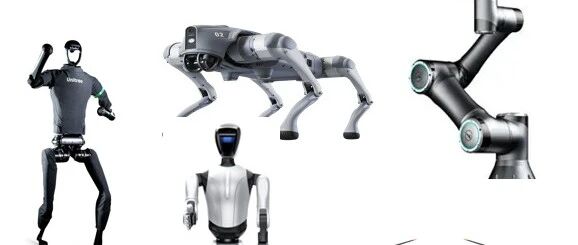
Core Insights - The core focus of the company is on the commercialization and practical application of general-purpose humanoid robots, aiming to integrate them into various industries and scenarios [2][3][5] Group 1: Company Overview - Magic Atom, founded in January 2024, has rapidly completed two rounds of financing exceeding 100 million yuan within six months, establishing itself as a significant player in the robotics sector [3] - The company has developed a closed-loop ecosystem that includes full-stack self-research technology, comprehensive layout, and scenario-based applications, ensuring a solid foundation for its commercialization process [3][6] Group 2: Technological Development - The company has self-developed a dexterous hand and a general-purpose embodied intelligence model, enabling robots to perform tasks across various scenarios with human-like operational capabilities [4][6] - Magic Atom's hardware self-research rate is 90%, covering key components such as joint modules, dexterous hands, reducers, and drivers, which allows for rapid application of cutting-edge technology [6] Group 3: Market Strategy - The company emphasizes the importance of general-purpose robots to unlock their potential across diverse industries, avoiding limitations caused by fragmented applications [5][10] - The "Thousand Scenes Co-Creation Plan" aims to expand partnerships with 1,000 collaborators and create 1,000 application scenarios for humanoid robots, with over 50 leading companies already participating [5][10] Group 4: Application Scenarios - Industrial applications are a primary focus, with the humanoid robot MagicBot undergoing extensive training in factory environments to adapt to complex collaborative tasks [8][9] - The company is also exploring commercial and home scenarios, deploying robots for tasks such as welcoming customers and providing companionship [9][10] Group 5: Future Outlook - The transition from B-end to C-end markets is anticipated to take at least five years, requiring advancements in technology and significant cost reductions for widespread household adoption [10][12] - The company is committed to continuous technological breakthroughs and cost reductions while leveraging B-end experiences to build trust and facilitate the transition to C-end markets [10][12] Group 6: Talent and Organizational Structure - The company has a young and dynamic team, with over 80% of its 300 employees in research and development, fostering an innovative environment through a quarterly innovation incentive mechanism [13][14] - Magic Atom values talent that fills strategic gaps and brings diverse perspectives, ensuring a results-oriented approach to career development and organizational growth [14][15]

纯血VLA综述来啦!从VLM到扩散,再到强化学习方案
自动驾驶之心· 2025-09-30 16:04
Core Insights - The article discusses the emergence and potential of Vision Language Action (VLA) models in robotics, emphasizing their ability to integrate perception, language understanding, and action execution into a unified framework [10][16]. Group 1: Introduction and Background - Robotics has evolved from relying on pre-programmed instructions to utilizing deep learning for multi-modal data processing, enhancing capabilities in perception and action [1][10]. - The introduction of large language models (LLMs) and vision-language models (VLMs) has significantly improved the flexibility and precision of robotic operations [1][10]. Group 2: Current State of VLA Models - VLA methods are categorized into four paradigms: autoregressive, diffusion, reinforcement learning, and hybrid/specialized methods, each with unique strategies and mechanisms [7][9]. - The development of VLA models is heavily dependent on high-quality datasets and realistic simulation platforms, which are crucial for training and evaluation [15][17]. Group 3: Challenges and Future Directions - Key challenges in VLA research include data limitations, reasoning speed, and safety concerns, which need to be addressed to advance the field [7][9]. - Future research directions are identified, focusing on enhancing generalization capabilities, improving interaction with dynamic environments, and ensuring robust performance in real-world applications [16][17]. Group 4: Methodological Innovations - The article highlights the transition from traditional robotic systems to VLA models, which unify visual perception, language understanding, and executable control in a single framework [13][16]. - Innovations in VLA methodologies include the integration of autoregressive models for action generation, diffusion models for probabilistic action generation, and reinforcement learning for policy optimization [18][32]. Group 5: Applications and Impact - VLA models have been applied across various robotic platforms, including robotic arms, quadrupeds, humanoid robots, and autonomous vehicles, showcasing their versatility [7][15]. - The integration of VLA models is seen as a significant step towards achieving general embodied intelligence, enabling robots to perform a wider range of tasks in diverse environments [16][17].
基于313篇VLA论文的综述与1661字压缩版
理想TOP2· 2025-09-25 13:33
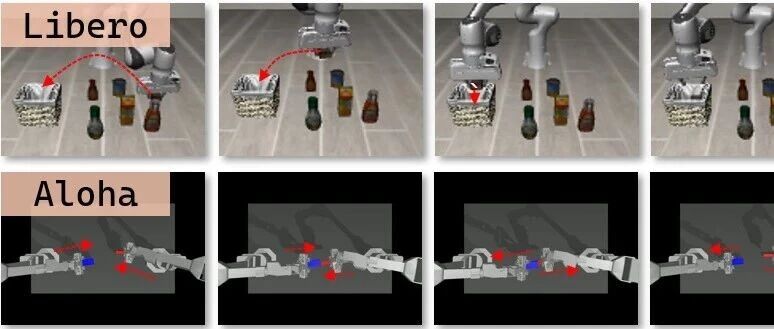
Core Insights - The emergence of Vision Language Action (VLA) models signifies a paradigm shift in robotics from traditional strategy-based control to general robotic technology, enabling active decision-making in complex environments [12][22] - The review categorizes VLA methods into five paradigms: autoregressive, diffusion-based, reinforcement learning, hybrid, and specialized methods, providing a comprehensive overview of their design motivations and core strategies [17][20] Summary by Categories Autoregressive Models - Autoregressive models generate action sequences as time-dependent processes, leveraging historical context and sensory inputs to produce actions step-by-step [44][46] - Key innovations include unified multimodal Transformers that tokenize various modalities, enhancing cross-task action generation [48][49] - Challenges include safety, interpretability, and alignment with human values [47][56] Diffusion-Based Models - Diffusion models frame action generation as a conditional denoising process, allowing for probabilistic action generation and modeling multimodal action distributions [59][60] - Innovations include modular optimization and dynamic adaptive reasoning to improve efficiency and reduce computational costs [61][62] - Limitations involve maintaining temporal consistency in dynamic environments and high computational resource demands [5][60] Reinforcement Learning Models - Reinforcement learning models integrate VLMs with reinforcement learning to generate context-aware actions in interactive environments [6] - Innovations focus on reward function design and safety alignment mechanisms to prevent high-risk behaviors while maintaining task performance [6][7] - Challenges include the complexity of reward engineering and the high computational costs associated with scaling to high-dimensional real-world environments [6][9] Hybrid and Specialized Methods - Hybrid methods combine different paradigms to leverage the strengths of each, such as using diffusion for smooth trajectory generation while retaining autoregressive reasoning capabilities [7] - Specialized methods adapt VLA frameworks to specific domains like autonomous driving and humanoid robot control, enhancing practical applications [7][8] - The focus is on efficiency, safety, and human-robot collaboration in real-time inference and interactive learning [7][8] Data and Simulation Support - The development of VLA models heavily relies on high-quality datasets and simulation platforms to address data scarcity and testing risks [8][34] - Real-world datasets like Open X-Embodiment and simulation tools such as MuJoCo and CARLA are crucial for training and evaluating VLA models [8][36] - Challenges include high annotation costs and insufficient coverage of rare scenarios, which limit the generalization capabilities of VLA models [8][35] Future Opportunities - The integration of world models and cross-modal unification aims to evolve VLA into a comprehensive framework for environment modeling, reasoning, and interaction [10] - Causal reasoning and real interaction models are expected to overcome limitations of "pseudo-interaction" [10] - Establishing standardized frameworks for risk assessment and accountability will transition VLA from experimental tools to trusted partners in society [10]

从300多篇工作中,看VLA在不同场景下的应用和实现......
具身智能之心· 2025-09-25 04:00
Core Insights - The article discusses the emergence of Vision Language Action (VLA) models, marking a shift in robotics from traditional strategy-based control to a more generalized robotic technology paradigm, enabling active decision-making in complex environments [2][5][20] - It emphasizes the integration of large language models (LLMs) and vision-language models (VLMs) to enhance robotic operations, providing greater flexibility and precision in task execution [6][12] - The survey outlines a clear classification system for VLA methods, categorizing them into autoregressive, diffusion, reinforcement learning, hybrid, and specialized methods, while also addressing the unique contributions and challenges within each category [7][10][22] Group 1: VLA Model Overview - VLA models represent a significant advancement in robotics, allowing for the unification of perception, language understanding, and executable control within a single modeling framework [15][20] - The article categorizes VLA methods into five paradigms: autoregressive, diffusion, reinforcement learning, hybrid, and specialized, detailing their design motivations and core strategies [10][22][23] - The integration of LLMs into VLA systems transforms them from passive input parsers to semantic intermediaries, enhancing their ability to handle long and complex tasks [29][30] Group 2: Applications and Challenges - VLA models have practical applications across various robotic forms, including robotic arms, quadrupeds, humanoid robots, and autonomous vehicles, showcasing their deployment in diverse scenarios [8][20] - The article identifies key challenges in the VLA field, such as data limitations, reasoning speed, and safety concerns, which need to be addressed to accelerate the development of VLA models and general robotic technology [8][19][20] - The reliance on high-quality datasets and simulation platforms is crucial for the effective training and evaluation of VLA models, addressing issues of data scarcity and real-world testing risks [16][19] Group 3: Future Directions - The survey outlines future research directions for VLA, including addressing data limitations, enhancing reasoning speed, and improving safety measures to facilitate the advancement of general embodied intelligence [8][20][21] - It highlights the importance of developing scalable and efficient VLA models that can adapt to various tasks and environments, emphasizing the need for ongoing innovation in this rapidly evolving field [20][39] - The article concludes by underscoring the potential of VLA models to bridge the gap between perception, understanding, and action, positioning them as a key frontier in embodied artificial intelligence [20][21][39]
深度综述 | 300+论文带你看懂:纯视觉如何将VLA推向自动驾驶和具身智能巅峰!
自动驾驶之心· 2025-09-24 23:33
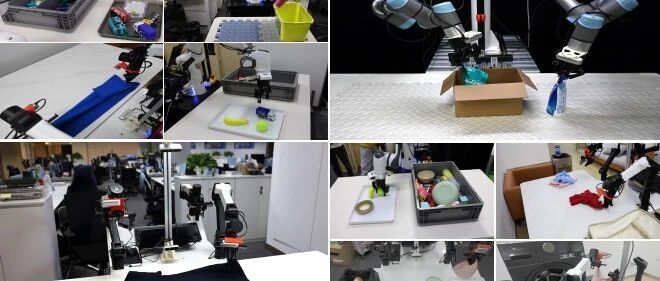
Core Insights - The emergence of Vision Language Action (VLA) models signifies a paradigm shift in robotics from traditional strategy-based control to general-purpose robotic technology, transforming Vision Language Models (VLMs) from passive sequence generators to active agents capable of executing operations and making decisions in complex, dynamic environments [1][5][11] Summary by Sections Introduction - Robotics has historically relied on pre-programmed instructions and control strategies for task execution, primarily in simple, repetitive tasks [5] - Recent advancements in AI and deep learning have enabled the integration of perception, detection, tracking, and localization technologies, leading to the development of embodied intelligence and autonomous driving [5] - Current robots often operate as "isolated agents," lacking effective interaction with humans and external environments, prompting researchers to explore the integration of Large Language Models (LLMs) and VLMs for more precise and flexible robotic operations [5][6] Background - The development of VLA models marks a significant step towards general embodied intelligence, unifying visual perception, language understanding, and executable control within a single modeling framework [11][16] - The evolution of VLA models is supported by breakthroughs in single-modal foundational models across computer vision, natural language processing, and reinforcement learning [13][16] VLA Models Overview - VLA models have rapidly developed due to advancements in multi-modal representation learning, generative modeling, and reinforcement learning [24] - The core design of VLA models includes the integration of visual encoding, LLM reasoning, and decision-making frameworks, aiming to bridge the gap between perception, understanding, and action [23][24] VLA Methodologies - VLA methods are categorized into five paradigms: autoregressive, diffusion models, reinforcement learning, hybrid methods, and specialized approaches, each with distinct design motivations and core strategies [6][24] - Autoregressive models focus on sequential generation of actions based on historical context and task instructions, demonstrating scalability and robustness [26][28] Applications and Resources - VLA models are applicable in various robotic domains, including robotic arms, quadrupedal robots, humanoid robots, and wheeled robots (autonomous vehicles) [7] - The development of VLA models heavily relies on high-quality datasets and simulation platforms to address challenges related to data scarcity and high risks in real-world testing [17][21] Challenges and Future Directions - Key challenges in the VLA field include data limitations, reasoning speed, and safety concerns, which need to be addressed to accelerate the development of VLA models and general robotic technologies [7][18] - Future research directions are outlined to enhance the capabilities of VLA models, focusing on improving data diversity, enhancing reasoning mechanisms, and ensuring safety in real-world applications [7][18] Conclusion - The review emphasizes the need for a clear classification system for pure VLA methods, highlighting the significant features and innovations of each category, and providing insights into the resources necessary for training and evaluating VLA models [9][24]
中金:机器人大模型为具身智能破局关键 产业重心转向“小脑+大脑”系统研发
Zhi Tong Cai Jing· 2025-09-19 02:05
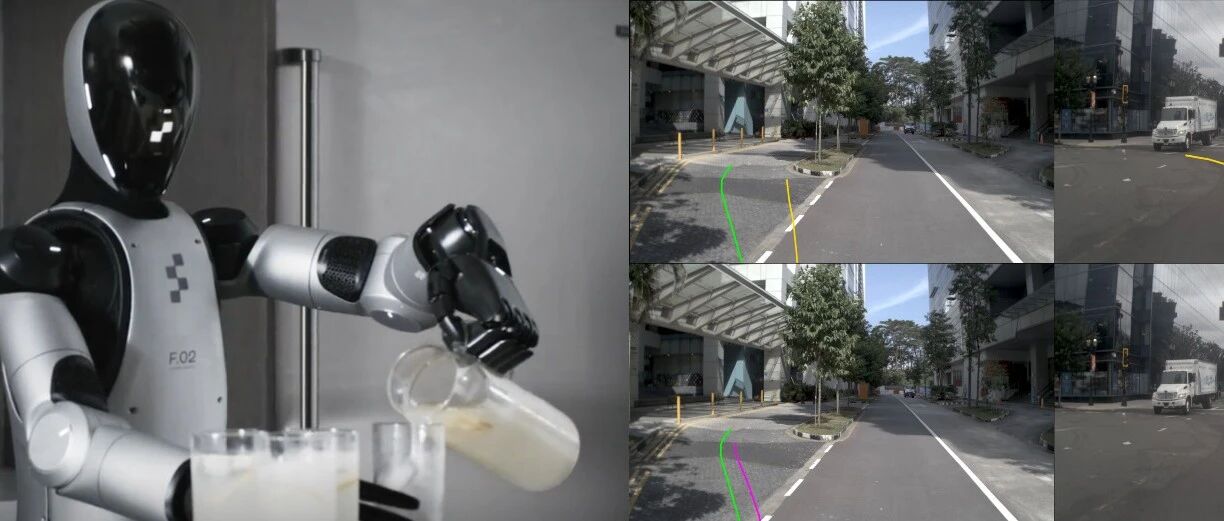
Group 1 - The core viewpoint is that large models for robotics are key to overcoming traditional control bottlenecks and advancing towards general embodied intelligence [1][2] - The industry is currently exploring development directions based on large language models, autonomous driving models, and multimodal models, shifting focus towards "small brain + big brain" system development [1][2] - Only a few companies with full-stack technical capabilities, resource integration advantages, and long-term strategic vision are expected to define the core standards of "embodied intelligence" in the future [1][4] Group 2 - Traditional robots exhibit strong specificity in tasks, scenarios, and data, leading to weak generalization capabilities and difficulty in complex environments [2] - Large language models, while mature in natural language processing, cannot directly address physical operation issues in robotics and face challenges in integration with robotic technologies [3] - The commercial paths of "hardware-first" and "model-first" each have their characteristics and advantages, with most companies likely focusing on specific verticals to achieve "general/flexible" applications [4]
自变量机器人获近10亿元A+轮融资
Bei Jing Shang Bao· 2025-09-08 02:08
Group 1 - The company, Zibian Robotics, announced the completion of nearly 1 billion yuan in A+ round financing on September 8 [1] - The financing round was led by Alibaba Cloud and Guoke Investment, with participation from Guokai Financial, Sequoia China, and Yongce Capital [1] - Existing shareholder Meituan's strategic investment exceeded expectations, while Lenovo Star and Junlian Capital continued to invest [1] Group 2 - The funds will be used for the continuous training of Zibian's self-developed general embodied intelligence foundational model and the iterative development of hardware products [1] - Since its establishment at the end of 2023, Zibian has established a technical path to achieve general embodied intelligence through an end-to-end unified large model [1] - Recently, the company released the Quanta X2, a self-developed wheeled dual-arm humanoid robot that is compatible with multimodal large model control [1]
人形机器人开始比拼订单落地:松延动力称7月量产交付破百台
2 1 Shi Ji Jing Ji Bao Dao· 2025-08-01 09:46
Core Insights - The humanoid robot company Songyan Power achieved a significant milestone by delivering 105 humanoid robots in July, marking a 176% month-on-month increase and the highest delivery record since its establishment [1][2] - The company has received over 2,500 orders totaling more than 100 million yuan, positioning it as a leading player in the humanoid robot market [2][4] - Songyan Power aims to enhance its production and delivery capabilities, with a target of delivering 10,000 robots next year [2][5] Company Overview - Songyan Power was founded in 2023, with a team from prestigious universities such as Tsinghua University and Zhejiang University [2] - The company has completed five rounds of financing, attracting investments from various funds, including Inno Angel Fund and SEE Fund [2][4] - The company has established production bases in Beijing, Changzhou, and Dongguan to ensure stable and reliable delivery of humanoid robots [2] Industry Context - The humanoid robot sector is currently a hot topic for investment, with several companies, including Yushutech and TARS, securing significant funding [4][5] - The industry is still in its early stages of commercial development, with a focus on achieving a comprehensive commercialization loop from R&D to sales and after-sales service [5][6] - There is a noted concern regarding homogeneous competition in application scenarios, emphasizing the need for high product quality and valuable use cases to achieve scalable commercialization [6]