
2030愿景

Search documents
沙特投资部发布2025年第三季度沙特经济与投资监测报告
Shang Wu Bu Wang Zhan· 2025-11-27 10:16
报告全面展示了沙特阿拉伯在"2030愿景"引领下的经济韧性、结构转型进展及投资环境持续优化成果。 通胀率保持温和(2.2%); SADAD支付与POS支付分别增长9.1%与7.3%; 外国投资者持股价值同比提升7.1% 这些表现显示沙特经济基本面稳健,消费与投资需求保持活力。 三、全球竞争力全面跃升 一、持续稳健的GDP增长预期(2025–2026年) 世界银行、IMF与OECD等国际机构一致预测:沙特将在全球挑战加剧的背景下持续保持增长动力, GDP增速有望在2025年与2026年分别达到3.2%–4.3%与3.7%–4.0%。这些预测反映出沙特经济改革的成 效不断显现,非石油经济比重显著提升,为跻身全球前15大经济体奠定扎实基础。 二、2025年第三季度经济关键指标亮眼 PMI达到56.8点,非石油部门活动持续扩张; 货币供应量同比增长7.8%,存款持续上升; 2021–2024年,沙特的名义固定资本形成总额(GFCF)连续四年超越国家投资战略(NIS)目标: 2024年的实际表现比目标高出49%; GFCF占GDP的比重达到 31%; 沙特在G20国家中取得多项顶级排名: ICT 发展指数第1名; 电子 ...
利雅得季六届活动共吸引来自135个国家的8000万游客
Shang Wu Bu Wang Zhan· 2025-11-26 16:26
Core Insights - The Riyadh Season has attracted 80 million visitors from 135 countries since its inception on October 11, 2019 [1] - The sixth edition of the Riyadh Season, which opened on October 10, has already drawn over 3 million visitors [1] - The Riyadh Season is part of Saudi Arabia's Vision 2030, aimed at promoting the tourism and entertainment sectors [1] Industry Summary - The Riyadh Season features a variety of unique experiences, including theater and music performances, video games, international dining, and thrilling adventure activities [1] - The initiative is a key component of Saudi Arabia's strategy to diversify its economy and enhance its global tourism appeal [1]
津巴布韦1-9月旅游业收入近10亿美元
Shang Wu Bu Wang Zhan· 2025-11-24 17:20
(原标题:津巴布韦1-9月旅游业收入近10亿美元) 《先驱报》11月20日报道,2025年1至9月,津巴布韦旅游业收入约9.22亿美元,较2024年同期的 8.39亿美元增长10%。期间,国际游客同比增长9%,国内旅游同比激增 20.9%。2024年,赴津国际旅客 超160万,创收约12亿美元,并吸引1.905亿美元投资。 目前,津政府正通过降低旅游费用、加强基础设施建设、推进数字化转型等措施,巩固旅游业在实 现国家经济结构转型和"2030愿景"的支柱地位。 ...
沙特砸钱美国,马斯克抢滩,藏着对华算计
Sou Hu Cai Jing· 2025-11-21 23:50
Core Insights - Saudi Arabia has announced a $1 trillion investment in the U.S., with significant involvement from tech giants like Tesla and Nvidia, indicating a strategic alignment with the U.S. while pursuing its own "Vision 2030" goals [1][3][7] Investment and Economic Cooperation - Of the $1 trillion investment, $300 billion is allocated for U.S. shale oil technology upgrades and $200 billion for military procurement, reflecting a continuation of the longstanding U.S.-Saudi alliance [3] - Saudi Arabia is China's largest crude oil supplier, with imports expected to reach 78.639 million tons in 2024, accounting for over 12% of China's total imports, and a bilateral trade exceeding $107.5 billion [3] Digital Economy and Technological Competition - The establishment of data centers by Tesla and AI computing bases by Nvidia in Saudi Arabia poses a competitive threat to Chinese firms like Huawei and Alibaba Cloud, which have already invested in 5G and smart city projects in the region [3][10] - China's digital infrastructure exports to Saudi Arabia are projected to exceed $8 billion in 2024, highlighting the competitive landscape in the Middle East's digital transformation [3] Strategic Maneuvering - Saudi Crown Prince Mohammed bin Salman is employing a dual strategy, engaging both the U.S. for military protection and China for infrastructure development, to enhance Saudi Arabia's industrial capabilities [7][10] - The recent signing of a currency swap agreement between the central banks of China and Saudi Arabia, increasing the amount to 50 billion yuan, indicates China's proactive approach to maintain economic ties [10] International Reactions - The U.S. is positioned as a beneficiary of Saudi investments, with President Biden referring to Saudi Arabia as a "strategic partner" and supporting its entry into BRICS, while also selling advanced military systems [11] - The EU is portrayed as an anxious observer, lacking the military support of the U.S. and the infrastructure capabilities of China, leading to a preference for collaboration with China on digital infrastructure standards [11] Challenges and Risks - Concerns arise from the potential impact of Saudi Arabia's technology partnerships on its energy exports and pricing strategies, particularly regarding the U.S. shale oil industry [11][12] - The operational feasibility of foreign tech projects in Saudi Arabia may face challenges due to reliance on Chinese technology for stable power supply and energy needs [12]

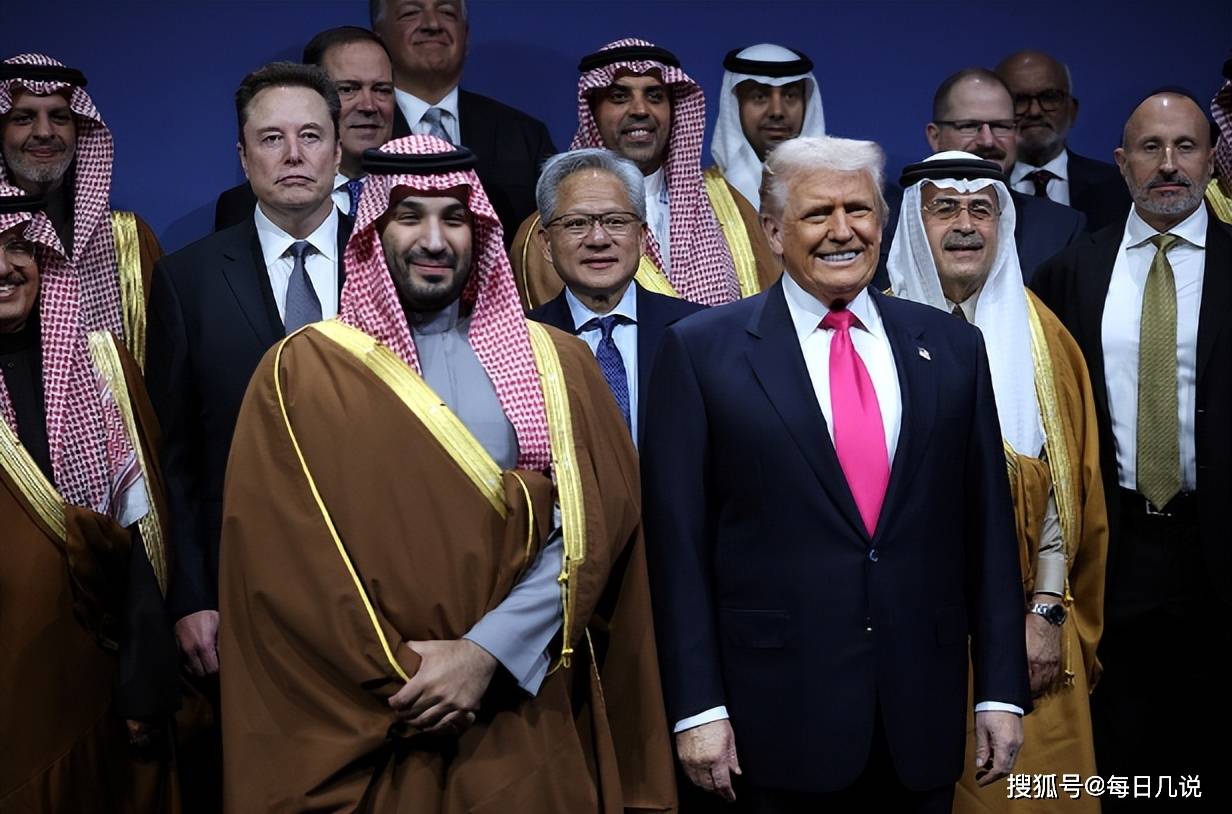
中企助力沙特实现“红海愿景”
Ren Min Ri Bao· 2025-11-18 09:44
Group 1 - The project in Saudi Arabia's Red Sea region aims to create a comprehensive tourism city featuring 50 hotels, over 1,000 residential units, and an international airport, aligning with Saudi Arabia's Vision 2030 focused on "green ecology" [1] - The project is being constructed by China Harbour Engineering Company and China Communications Construction Company, involving multiple bridges and roadways connecting various tourist islands [1] - The main bridge spans 2,170 meters and crosses approximately 30,000 square meters of mangrove forest, with a new construction method proposed to minimize environmental impact [1] Group 2 - The prefabricated bridge solution is based on experiences from the Xiong'an New Area, where a similar method improved construction efficiency [2] - The pile-beam integrated machine, weighing 600 tons, can perform piling and beam installation simultaneously, achieving construction efficiency 3 to 5 times greater than traditional methods [2] - An intelligent control system with 12 sensors monitors the machine's stability, ensuring precise movement with a total error margin of no more than 5 millimeters [2] Group 3 - The pile-beam integrated machine, named "Red Sea Vision No. 1," was specifically developed for the Red Sea tourism project and has successfully completed several key milestones since its deployment in June [3] - The use of Chinese manufacturing equipment has not only enhanced construction efficiency but also effectively protected the local mangrove ecosystem, showcasing the commitment to green construction practices [3]
专访沙特交易所CEO:中国在AI等领域吸引了全球资本
Zheng Quan Shi Bao· 2025-11-14 11:19
Core Insights - The Saudi Stock Exchange (Tadawul) is actively inviting Chinese investment institutions to participate in its capital market, highlighting the increasing bilateral interaction between China and Saudi Arabia's capital markets [1][2][3] - The collaboration has progressed to practical stages, including the launch of cross-border ETF products and ongoing discussions about dual listings and cross-listing of companies [1][3][5] - The CEO of Tadawul emphasized the importance of China's economic characteristics and its leading position in high-tech industries as focal points for collaboration [2][3] Group 1: Market Collaboration - The Saudi Stock Exchange has signed memorandums of understanding with both the Shanghai and Shenzhen stock exchanges, as well as the Hong Kong Stock Exchange, to explore joint listings and fintech cooperation [1][3] - The market capitalization of the Saudi Stock Exchange has reached $2.6 trillion, with over $100 billion of investments coming from international investors [3] - There has been a notable increase in interest from top Chinese asset management companies regarding the Saudi capital market [3][5] Group 2: ETF and Cross-Listing Developments - The Saudi Stock Exchange has introduced several ETFs linked to Saudi securities, with one becoming the largest ETF product in Saudi Arabia [3][5] - Recent regulatory approvals for Saudi Depositary Receipts (SDRs) have opened doors for Chinese companies to pursue cross-listing in Saudi Arabia [5] - The exchange is working on launching more ETFs that cover various dimensions of the China-Saudi capital markets [3][5] Group 3: Future Cooperation and Industry Focus - The CEO of Tadawul expressed optimism about future cooperation, particularly in the areas of artificial intelligence (AI) and complementary industries [6] - There is a strong focus on aligning the development strategies of companies seeking to cross-list in Saudi Arabia with the Saudi Vision 2030 [5] - Ongoing discussions with various Chinese exchanges aim to expand cooperation and facilitate bilateral investments [6]
专访沙特交易所CEO:中国在AI等领域吸引了全球资本
证券时报· 2025-11-14 11:10
Core Viewpoint - The article emphasizes the growing collaboration between China and Saudi Arabia in capital markets, particularly in high-tech sectors and financial technology, with a focus on cross-listing and ETF products [1][2][5]. Group 1: Capital Market Cooperation - The Saudi Stock Exchange (Tadawul) has signed memorandums of understanding with both Shanghai and Shenzhen stock exchanges, as well as the Hong Kong Stock Exchange, to explore joint listings and fintech collaborations [2][6]. - There has been significant progress in cross-border ETF products, with multiple ETFs launched that link the two markets, indicating a solid foundation for future cooperation [6][8]. - The market capitalization of the Saudi Stock Exchange has reached $2.6 trillion, with over $100 billion in investments from international investors, highlighting its attractiveness to foreign capital [5][6]. Group 2: Investment Opportunities - Saudi Arabia's Vision 2030 is a key driver for attracting Chinese investment, with the country positioning itself as a prime investment destination [5][7]. - The introduction of regulations for Saudi Depositary Receipts (SDRs) has opened doors for Chinese companies to consider cross-listing in Saudi Arabia, aligning with the Vision 2030 goals [8][9]. - The article mentions that there is a growing interest from top Chinese asset management firms in the Saudi capital market, indicating a potential increase in bilateral investments [5][6]. Group 3: Future Prospects - The future collaboration between China and Saudi Arabia is expected to expand into more ETF products and further open investment channels between the two markets [9]. - There is a strong focus on artificial intelligence (AI) as a complementary industry for collaboration, with both countries recognizing its potential for growth and investment [9]. - The Saudi Stock Exchange is actively engaging with Chinese exchanges to explore further cooperation, with potential agreements on the horizon [9].

侨力涌动中东 共拓合作新蓝海
Ren Min Ri Bao Hai Wai Ban· 2025-11-12 01:37
Group 1: China-Arab Cooperation - Recent events indicate a surge in cooperation between China and Arab countries, including forums and trade meetings [1][2] - China has achieved visa-free access for all members of the Gulf Cooperation Council (GCC), enhancing travel and business opportunities [3][2] - The bilateral trade volume between China and Arab countries reached a record $101.8 billion in 2024 [2] Group 2: Business Opportunities in UAE and Bahrain - The UAE has become China's largest export market in the Middle East, with a significant increase in trade activities [2][5] - Business leaders in the UAE are actively seeking to introduce innovative Chinese companies to the region, capitalizing on high investment returns [2][3] - Bahrain is experiencing a transformation towards a diversified economy, moving beyond oil dependency, creating new business opportunities [5][4] Group 3: Saudi Arabia's Economic Transformation - Saudi Arabia is emerging as a key investment destination for Chinese companies, driven by its economic transformation and large market size [6][8] - The "Vision 2030" initiative aims to reduce oil dependency and promote economic diversification, aligning with China's Belt and Road Initiative [8][6] - Chinese enterprises are increasingly focusing on sectors such as infrastructure, biomedicine, photovoltaic, digital economy, and environmental protection in Saudi Arabia [8][6] Group 4: Networking and Community Engagement - The Chinese community in the Middle East, particularly alumni from Zhejiang University, is actively involved in various sectors, enhancing business connections [9][6] - Local Chinese entrepreneurs are leveraging their networks to facilitate business opportunities for Chinese companies in the region [9][8] - Events like the China International Import Expo serve as platforms for promoting bilateral trade and cultural exchange [5][4]
侨力涌动中东 共拓合作新蓝海(侨界关注)
Ren Min Ri Bao Hai Wai Ban· 2025-11-11 23:07
Core Insights - The article highlights the increasing economic cooperation and trade between China and Arab countries, particularly focusing on the UAE and Bahrain, as well as the opportunities arising from Saudi Arabia's economic transformation [8][10][12]. Group 1: Economic Cooperation - The UAE has become China's largest export market in the Middle East and the second-largest trading partner, with bilateral trade reaching a record of $101.8 billion in 2024 [8]. - Saudi Arabia and the UAE are identified as key investment destinations for Chinese companies, attracting 84% and 79% of surveyed enterprises, respectively [12]. - The frequent exchanges between China and Arab countries are facilitated by direct flights and visa-free access for all members of the Gulf Cooperation Council (GCC) [9]. Group 2: Investment Opportunities - The article discusses the construction of the Huajin Aramco fine chemical and raw material engineering project, a joint investment of 83.7 billion yuan by Saudi Aramco and Chinese enterprises, which is nearing mechanical completion [4]. - The "2030 Vision" of Saudi Arabia aims to diversify its economy away from oil dependency, creating new opportunities in sectors like digital technology, renewable energy, and artificial intelligence [12][14]. - The article mentions the establishment of a new company by a Chinese entrepreneur in the UAE to assist Chinese businesses in entering the Middle Eastern market, indicating a growing trend of Chinese enterprises seeking to expand internationally [9]. Group 3: Cultural and Educational Exchange - The article notes the increasing cultural and educational exchanges between China and Bahrain, exemplified by the recent Shanghai-Bahrain education promotion event [10]. - The rise of the "Chinese language fever" in Bahrain and the establishment of direct flights between China and Bahrain are highlighted as indicators of deepening ties [10][11]. - The presence of over 70 Zhejiang University alumni in the Middle East reflects the growing community of Chinese professionals engaged in various sectors, including public service and entrepreneurship [15].
“中文教学为学生打开了一扇通往世界的大门”
人民网-国际频道 原创稿· 2025-11-11 07:27
Core Points - The Saudi government has officially announced the inclusion of Chinese language courses in the national primary and secondary school curriculum starting in 2024, reflecting the deepening cooperation between China and Saudi Arabia [1] - The initiative aims to enhance the language skills of Saudi students and strengthen economic and political relations with China, aligning with Saudi Arabia's Vision 2030 goals [1][3] - The enthusiasm for learning Chinese among students is evident, with many recognizing its importance for future opportunities in employment and trade [2][3] Group 1 - The introduction of Chinese language courses is a strategic move by the Saudi government to prepare students for a globalized world [1] - The initiative is supported by local education authorities, who believe that learning multiple languages will facilitate communication with the world [1][3] - Chinese teachers in Saudi Arabia have observed a strong desire among students to learn the language, despite its challenges [2] Group 2 - Students express a keen interest in Chinese culture and language, with some utilizing learning software and participating in extracurricular activities to enhance their skills [2] - Parents of students support the initiative, viewing it as a bridge for future business opportunities with China [3] - The program is expected to promote cultural respect and understanding among students from different backgrounds [3]
