
AI普惠

Search documents
2025联想(00992.HK)超级联萌节启动:万物有AI,四城线下体验与多重福利来袭
Xin Lang Cai Jing· 2025-08-18 10:29
Core Points - Lenovo officially launched the 2025 Super联萌 Festival on August 18, marking the tenth annual event since 2016, with the theme "Everything has AI" to promote AI accessibility and experience renewal [1] - The festival features multiple benefits including government subsidies and educational discounts, allowing users to save up to 4000 yuan on AI products, and includes interactive activities and giveaways [3][4] - Lenovo aims to lower the barriers to AI product usage and enhance customer engagement through immersive experiences and community initiatives [5][6] Summary by Sections Event Overview - The Super联萌 Festival is an annual event celebrating Lenovo's partnership with its community, focusing on AI accessibility and user experience [1] - The event includes various activities such as AI product experiences and community engagement initiatives [6] Promotions and Discounts - Lenovo offers significant discounts and promotions, including up to 4000 yuan off for users, special offers for students, and chances to win travel funds and other prizes [3][4] - Specific promotions include 50% off on selected accessories for students and a chance to win a 699 yuan printer with hardware purchases [4] AI Product Development - Lenovo has upgraded its strategy to focus on AI smart terminals, launching the Lenovo Tianxi, a personal super intelligent system, which integrates various AI functionalities [5] - The Tianxi system has received positive user feedback, with a weekly active user rate of 40% and a net promoter score (NPS) exceeding 40% [6] Customer Engagement Initiatives - The festival includes immersive activities in four cities, allowing users to experience AI's impact on daily life and work [6] - Notable events include professional athletes acting as "one-day store managers" to engage with fans and promote Lenovo's AI products [7] Community and Social Responsibility - Lenovo plans to build "联萌 Libraries" and "Recycled Computer Classrooms" in rural schools in Gansu, promoting digital literacy and sustainability [12] - The initiative aims to provide AI education to children in remote areas, highlighting Lenovo's commitment to social responsibility [12]



2025开放计算技术大会|开源开放推动系统创新 加速AIDC全球协作
Sou Hu Cai Jing· 2025-08-09 06:37
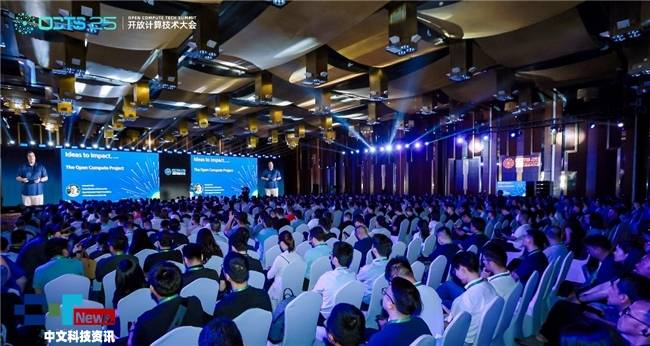
Core Insights - The 2025 Open Computing Technology Conference held in Beijing focuses on the development trends of MoE large models and AI agents, emphasizing the importance of open computing in enhancing both vertical scaling and horizontal efficiency [1] - Open-source large models are reshaping the global AI industry landscape, significantly lowering the barriers for enterprises and individual developers to access advanced AI capabilities, thus accelerating the shift from closed to open collaboration [3] - The rise of open computing is fostering tighter collaboration within the data center industry chain, which is crucial for the rapidly evolving AI sector [4] Industry Developments - The MoE large models are experiencing rapid growth in parameter counts, necessitating innovations in computing architecture to meet the extreme demands for computing density and interconnect speed [4] - The power requirements for AI data centers are projected to escalate from over 100 kW per cabinet to above 1 MW, indicating a shift towards GW-level power demands [4] - China has a significant advantage in energy infrastructure, particularly in renewable energy, with 90% of new installations in Q1 2025 coming from renewable sources, contributing to 35.9% of the total power generation [5] Collaborative Efforts - The establishment of the "GW-level Open Intelligent Computing Center OCP China Community Group" aims to leverage China's strengths in energy and computing infrastructure to promote the implementation of AI open system strategies [5] - OCP is actively collaborating with OCTC to explore the deployment of advanced AI infrastructure technologies and research outcomes in the Chinese market [5] - Future initiatives will focus on creating a global open-source coalition to enhance collaboration among developers across different countries and regions, promoting innovation and integration within the global supply chain [6]
上海,AI的社会主义浪漫
Ge Long Hui· 2025-07-31 03:44
Core Insights - Shanghai is pioneering an AI development model based on "people-centric" principles, exemplified by public AI services like the "Hello Old Friend" phone booths, which provide easy access to AI technology for all citizens, including the elderly and those with disabilities [2][24][25] - The city's public computing power initiatives, such as public computing supermarkets and cloud broadband, aim to democratize AI access, fostering innovation and creating a larger application market [3][27] - Shanghai's approach to AI is characterized by a commitment to making technology accessible to the general public, contrasting with other global tech hubs where AI primarily serves elite users [18][35] AI Accessibility and Public Services - The "Hello Old Friend" phone booths allow users to interact with AI for various services without needing smartphones or literacy skills, showcasing Shanghai's dedication to public service [24][25] - The city has established a comprehensive cloud network, "Zhiyun Shanghai," which integrates AI services across various sectors, ensuring that all citizens can benefit from technological advancements [26][39][40] - Shanghai's public computing resources are designed to support small and medium enterprises, enabling them to access AI capabilities that were previously dominated by large corporations [49][50] Infrastructure and Technological Integration - Shanghai's infrastructure development has been proactive, with the city achieving full gigabit coverage by 2018, laying the groundwork for the current AI era [43][75] - The "Zhiyun Shanghai" initiative represents a significant investment in a city-wide AI infrastructure, making it the largest urban-level smart service platform globally [26][39] - The integration of AI into various industries, including finance, shipping, and manufacturing, is facilitated by a robust digital infrastructure that supports high bandwidth and low latency [49][70] Economic and Social Impact - The AI accessibility initiatives in Shanghai are expected to stimulate economic growth by fostering innovation among a broader range of participants, thus creating a more inclusive market [61][62] - By reducing the barriers to AI access, Shanghai aims to bridge the digital divide, ensuring that all demographics can participate in the technological revolution [29][35] - The city's commitment to public service and technological equity positions it as a model for other regions aiming to harness AI for societal benefit [55][63]

爱芯元智发布全新边缘计算业务线,携手伙伴共创智慧未来
IPO早知道· 2025-07-28 03:47
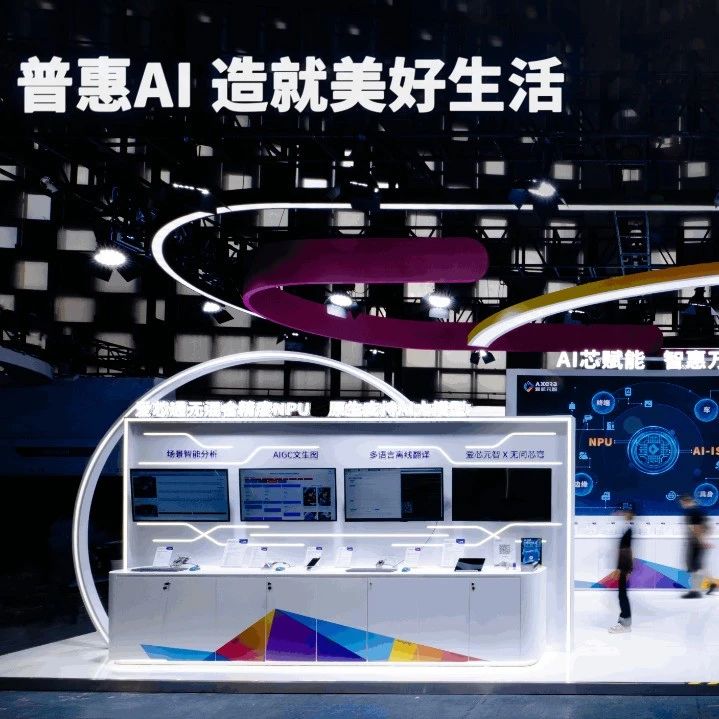
Core Viewpoint - The article discusses the strategic launch of edge computing by Aixin Yuan Zhi, emphasizing the importance of AI transitioning from technology to product, and the necessity of a cloud-edge-end infrastructure to overcome challenges in cost, real-time processing, and data privacy [2][4]. Group 1: Company Strategy and Vision - Aixin Yuan Zhi aims to provide high cost-performance AI chips and reduce technical development barriers for partners through standardized development tools and algorithm optimization frameworks [2][4]. - The company is focused on creating an "Edge Intelligence Community" to promote the development of edge computing and facilitate the widespread application of intelligent technology across various industries [2][4]. - The company has officially launched its edge computing business line, marking a new journey towards edge intelligence [4]. Group 2: Industry Collaboration and Innovation - Collaboration with partners like Wenshin Qiong and M5Stack is highlighted, focusing on solving edge-side inference challenges and providing commercial support for vertical scenarios [3][4]. - The partnership with Guanghe Tong emphasizes the need for AI solutions to be tailored to industry demands, showcasing successful implementations in areas like unmanned retail [3]. - The collaboration with Lingjing Acoustics aims to create a panoramic sound industry model, addressing content scarcity and scene adaptation issues in various applications [4]. Group 3: Future Outlook and Trends - The article suggests that soft-hard collaboration will be crucial for the advancement of edge intelligence, particularly in human-machine interaction scenarios such as healthcare and robotics [2][3]. - The ongoing innovation in business models is seen as a driving force for both technological and commercial growth, with companies like M5Stack evolving to provide efficient IoT development solutions [3].
MiniMax闫俊杰:AI领域会多玩家共存,成本也会更可控
2 1 Shi Ji Jing Ji Bao Dao· 2025-07-26 15:44
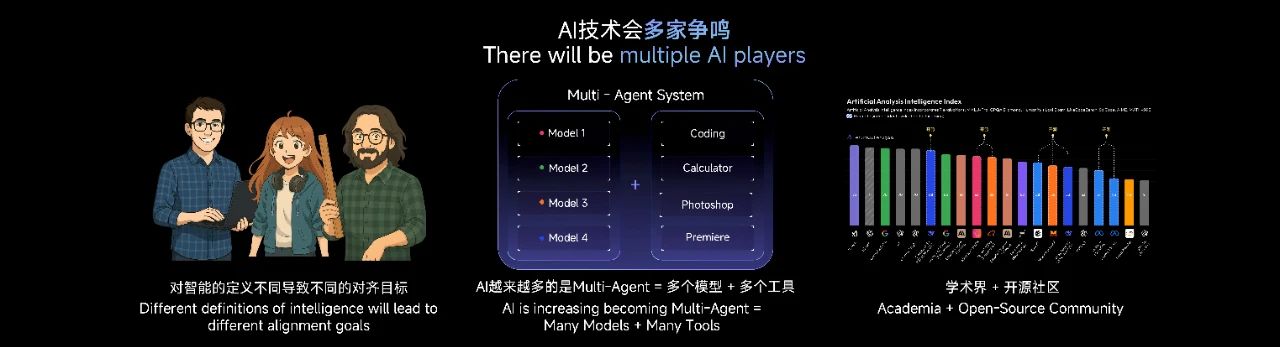
Core Viewpoint - The AI industry is expected to have multiple players coexisting, as different models serve various alignment goals and user needs [2][3]. Group 1: AI Model Diversity - Multiple AI models will continue to exist, each with unique alignment goals, such as programming efficiency or human interaction [2]. - MiniMax has transitioned to a multi-agent system, utilizing various models and tools to enhance AI capabilities, diminishing the advantages of single models [3]. Group 2: Open Source Influence - The rise of open-source models has significantly impacted the market, with models like Kimi K2 gaining attention for their capabilities comparable to leading closed-source models [3][4]. - MiniMax's recent launch of the open-source MiniMax-M1 model is seen as a strategic response to competition from DeepSeek R1, showcasing a significant reduction in computational requirements [4]. Group 3: Cost Efficiency and Performance - MiniMax-M1 demonstrates a substantial reduction in computational load, requiring only 30% of the resources needed by DeepSeek R1 for deep reasoning tasks [4]. - Despite advancements in computational power, the size of AI models has not significantly increased, indicating a focus on balancing parameter count and processing speed [4]. Group 4: Future Projections - The cost of inference for top models is expected to decrease significantly in the next couple of years, while the demand for computational resources will continue to rise due to the complexity of AI tasks [5]. - The number of tokens used in AI interactions is projected to increase dramatically, reflecting the growing complexity and practicality of AI applications [5].
在OpenAI上班有多卷?离职员工爆料:7周打造Codex,每天熬到凌晨
机器之心· 2025-07-19 05:52
Core Insights - OpenAI has experienced rapid growth, expanding from over 1,000 employees to more than 3,000 in just over a year, leading to challenges in internal communication and organizational structure [14][15][16] - The company emphasizes a bottom-up culture where good ideas can emerge from anywhere, and employees are encouraged to take action without needing prior approval [19][21][20] - OpenAI maintains a high level of confidentiality and security due to the significant responsibilities associated with developing AGI and competing with major players in the AI field [25][26][30] Group 1 - OpenAI's internal communication relies heavily on Slack, with minimal use of email, which can either enhance or distract from productivity depending on management [18] - The company has a unique approach to project management, allowing teams to self-organize and pursue ideas independently, leading to a dynamic and fast-paced work environment [21][22] - Leadership at OpenAI is described as hands-on and engaged, with executives actively participating in discussions and decision-making processes [36] Group 2 - OpenAI's strategic adjustments are made quickly in response to new information, allowing for efficient decision-making that is often faster than larger competitors like Google [25] - The company prioritizes safety and ethical considerations in AI development, focusing on practical risks rather than theoretical concerns [30][26] - OpenAI's engineering team operates with a large monolithic codebase primarily in Python, which can lead to inconsistencies in code quality and style [38][43] Group 3 - The Codex project exemplifies OpenAI's rapid development capabilities, with the team able to go from initial coding to product launch in just seven weeks [45][49] - Codex has generated significant user engagement, with 63,000 public pull requests created within 53 days of its release, showcasing its effectiveness in handling coding tasks [53] - OpenAI's competitive landscape is characterized by a three-way race for AGI development among OpenAI, Anthropic, and Google, each with distinct approaches [56]

AI时代没有旁观者|AI向善语料库开放发布会实录
腾讯研究院· 2025-07-11 07:20
Core Viewpoint - The rapid development of artificial intelligence (AI) has significantly improved industrial efficiency, but there is an urgent social issue regarding how AI can provide tangible help and empowerment to ordinary people, especially marginalized groups such as the elderly, disabled, and left-behind children [1][8]. Group 1: AI for Social Good Initiative - Tencent launched the "AI for Good Corpus" initiative in collaboration with hundreds of social organizations to create a specialized Q&A corpus aimed at vulnerable social groups [3][4]. - The initiative emphasizes the importance of high-quality training data for AI products, particularly for serving marginalized communities, which have historically been underrepresented in AI training datasets [8][19]. - The first thematic corpus focuses on elderly scenarios, containing 8,047 pairs of common questions and answers related to daily life, health, psychology, and relationships [8][19]. Group 2: Community Collaboration and Impact - The slogan "Co-create first, then share; love first, then AI" encapsulates the initiative's approach to building a public corpus through collaboration and returning to the original intent of public welfare [6][52]. - The AI for Good Corpus aims to enhance the AI capabilities of organizations serving vulnerable groups, thereby improving their ability to provide support and services [6][8]. - The initiative has received positive feedback from social workers, psychologists, and volunteers who participated in the co-creation process [4][6]. Group 3: Technological Advancements and Applications - The AI for Good Corpus has shown improvements in AI models' capabilities, particularly in emotional interaction, empathy, social adaptability, and cultural sensitivity when applied to elderly care scenarios [13][16]. - The "Elderly Wisdom Picture Book" project utilizes AI to create a warm emotional outlet for the elderly, enhancing their interaction experience and addressing feelings of loneliness [38][40]. - Research indicates that traditional methods of engaging with the elderly often overlook their true emotional needs, which the AI for Good Corpus aims to address by capturing genuine questions and concerns [44][46]. Group 4: Future Directions and Insights - The aging population in China is projected to exceed 400 million by 2035, highlighting the urgent need for innovative solutions in elderly care and the potential for AI to play a significant role in this sector [8][29]. - The initiative encourages a shift in product design from functionality-driven to dignity-experienced, addressing the complex needs of the elderly [50][52]. - The AI for Good Corpus serves as a bridge connecting technology with humanistic values, aiming to create an inclusive society for the aging population [52][59].


第七届BMC颁奖盛典举行 联想连续两年入选“中国卓越管理公司”
Zheng Quan Ri Bao Wang· 2025-07-04 12:16
Group 1 - Lenovo has been recognized as one of the "Best Managed Companies" in China for the second consecutive year at the BMC awards ceremony [1] - Since 2017, Lenovo has strategically focused on artificial intelligence (AI), driving its transformation and creating a comprehensive AI product, solution, and service ecosystem [1][3] - Lenovo has supported the intelligent transformation of over one million Chinese enterprises, positioning itself as a leader in the AI era [1] Group 2 - The year 2025 is anticipated to be the "Year of Super Intelligent Agents," with Lenovo launching several innovative super intelligent agents, including Tianxi and Lenovo Lexiang [2] - Lenovo Lexiang has seen a 270% increase in weekly active customers and a 30% increase in order conversion rates since its launch on May 7 [2] - The introduction of Lenovo's first "Silicon-based Employee," Lexiang No. 1, has led to a 69% increase in foot traffic in flagship stores [2] Group 3 - Lenovo has spent eight years building a solid AI foundation, evolving its intelligent IT engine "Qingtian" from version 1.0 to 4.0 [3][4] - The company has developed a full-stack AI product and service offering, including AI terminals, infrastructure, and solutions tailored for personal and enterprise use [4] - Lenovo has established a comprehensive layout in AI infrastructure, being one of the few providers with both international and domestic technology capabilities [4] Group 4 - The strategy for AI solutions and services is based on "One Engine and Three Arrows," with "One Engine" referring to the intelligent IT engine "Qingtian" and "Three Arrows" targeting government enterprises, SMEs, and consumer markets [4] - The AI industry in China is transitioning from rapid growth to a phase of takeoff, with Lenovo aiming to accelerate the intelligent transformation of various industries [4]
属于云终端的2025:上云无界、算力随身、普惠AI
36氪· 2025-06-23 10:48
Core Viewpoint - The cloud terminal market is experiencing significant growth, with a projected market size exceeding $28 billion by the end of 2024 and a compound annual growth rate (CAGR) of 18.5% [3][4]. Market Overview - By the end of 2024, the global cloud terminal market is expected to surpass $28 billion, with a CAGR of 18.5%, indicating that the market could double in less than four years [3][4]. - In China, the cloud terminal market is projected to reach a total shipment volume of 4.217 million units in 2024, representing a year-on-year growth of 40% [6]. - The Chinese market holds a 35% share of the global cloud terminal market, making it a leader in this sector [3]. Industry Players - Numerous players are entering the cloud terminal market, including major companies like Huawei, Dell, HP, ZTE, and various telecom operators such as China Mobile, China Telecom, and China Unicom, as well as tech giants like Baidu, Alibaba, and Tencent [7]. Technological Foundation - The concept of "cloud terminal" is defined as a new type of terminal that utilizes cloud computing to migrate computing, storage, applications, and AI capabilities from local devices to the cloud, providing a seamless user experience [12]. - Cloud terminals, such as cloud phones and cloud PCs, allow users to perform high-performance tasks on low-spec devices by leveraging cloud resources [14]. Challenges and Solutions - The primary challenge in the cloud terminal market is the complexity of integrating various technologies across the entire information chain, including storage, computing, network transmission, and hardware [17][18]. - Huawei is positioned as a key player capable of addressing these challenges by integrating its expertise in networking, data transmission, and cloud computing [20][22]. Product Innovations - Huawei's CloudDevice series includes a range of products such as cloud phones, cloud PCs, and cloud gaming devices, which aim to enhance user experience through multi-device collaboration and high-quality performance [9][26]. - The CloudDevice platform supports high-definition streaming and low-latency interactions, achieving performance metrics that have received industry recognition [25][34]. Market Applications - The commercial market for cloud terminals is expected to see significant growth, with a projected shipment of 3.38 million units in 2024, driven by sectors such as education, manufacturing, and finance [29]. - Huawei's collaboration with telecom operators on projects like cloud phones and cloud spaces has resulted in substantial user growth and engagement [31]. Future Outlook - The cloud terminal industry is anticipated to experience explosive growth in 2025, driven by advancements in AI, 5G, and edge computing technologies [37][39]. - The convergence of consumer, business, and government demands is expected to be a key driver of market expansion, positioning the cloud terminal sector as a significant player in the tech landscape [39].

联想城市超级智能体亮相2025数字城市论坛 智慧城市4.0加速落地
Zheng Quan Ri Bao Wang· 2025-06-14 02:14
Group 1 - The core focus of the 2025 Digital City Forum is on leveraging cutting-edge technologies like artificial intelligence to modernize urban governance and develop new productive forces [1] - Lenovo's City Super Intelligent Body is introduced as a key component of the smart city 4.0 era, utilizing a "1*N" architecture to connect a city-level intelligent hub with multiple vertical intelligent bodies, enhancing urban governance and social services [1][2] - The transition from "artificial decision-making" to "human-intelligence co-creation" marks the evolution of smart cities into the 4.0 era, driven by advancements in AI and the capabilities of domestic open-source large models like DeepSeek [1] Group 2 - Lenovo has actively participated in the construction of smart cities in China, launching solutions like the "Green Smart City Solution" and the world's first City Super Intelligent Body, which has been implemented in various locations such as Wuyishan and Yichang [2] - The hybrid governance model of "silicon-based intelligence + carbon-based wisdom" is identified as a core feature of the smart city 4.0 era, with Lenovo aiming to further promote this model across more cities [2] - Lenovo's hybrid AI solutions have gained widespread recognition, contributing to its leadership in the Chinese IT service market and achieving the fastest growth rate for eight consecutive years [3]