
AI经济

Search documents
大洋集团(1991.HK)举行“Web4.0xRWA”战略发布会 加速布局数字经济赛道
Sou Hu Cai Jing· 2025-08-21 03:05
Core Insights - The company, Ocean Group, officially announced its strategic entry into the Web4.0 sector during a launch event in Hong Kong, marking the initiation of the first domestic Web4.0 RWA pilot project [1] Group 1: Digital Economy Drivers - The global digital economy is experiencing a convergence of three key drivers: the explosive growth of the AI economy, the expanding scale of RWA (Real World Assets), and the supportive environment in Hong Kong [2][3] - The AI market is projected to reach $15.7 trillion by 2030, with applications in education, gaming, and health, enhancing user experiences and operational efficiency [2] - The RWA market is expected to exceed $10 trillion by 2030, enabling tokenization of traditional assets and providing new financing channels for SMEs [2] Group 2: Strategic Framework - Ocean Group's strategic transformation focuses on a three-pronged approach: AI digital humans, blockchain RWA layer, and global traffic marketing [4] - The AI digital human technology is at the forefront of the industry, integrating advanced technologies such as machine learning and natural language processing, with a 95% speech recognition accuracy [4] - The blockchain RWA layer will utilize a dual-chain deployment of Ethereum and Polygon, ensuring security and efficiency while managing asset valuations with a margin of error below 3% [5] Group 3: Marketing and User Growth - The company aims to leverage its extensive experience in cross-border marketing to create a comprehensive traffic system that reaches global users through various social media platforms [6] - The user growth target includes attracting 1 million users in the first year, exceeding 10 million in three years, and building a user base of 100 million within five years [7] Group 4: Investment and Strategic Implementation - Ocean Group plans to invest HKD 130 million in the first year, with allocations for technology development, market promotion, and infrastructure [8] - The strategic implementation will occur in five phases, focusing on technology assessment, product prototype launches, user acquisition, and establishing a leading position in the Asia-Pacific region [8] Group 5: Talent and Risk Management - The company has established a dedicated team for AI and digital transformation, ensuring compliance with regulatory requirements through a legal team led by former SFC officials [9] - A four-layer risk management framework has been developed, encompassing technology, market, compliance, and financial safeguards to support the strategic rollout [9]
经济指标没好转,股市为什么会一路上涨?
Sou Hu Cai Jing· 2025-08-21 02:11
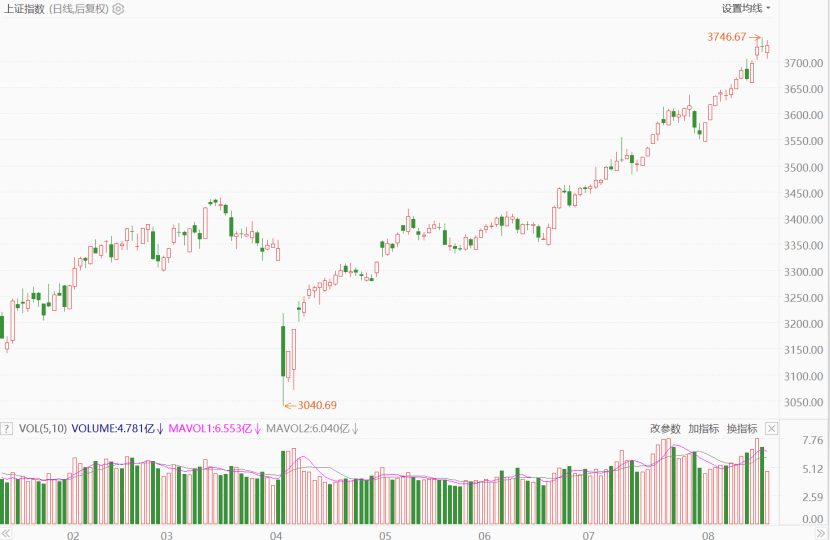
Group 1 - The core argument of the article is that the current stock market rally in China is driven by a shift from traditional land finance to equity finance, particularly influenced by advancements in AI technology [9][24]. - In July, the Shanghai Composite Index reached new highs, with a significant decrease in resident deposits by 1.11 trillion yuan year-on-year, while non-bank deposits related to securities and funds increased by 2.1 trillion yuan [3][4]. - Economic indicators such as CPI, PPI, and PMI have shown declines, yet the stock market continues to rise, indicating a disconnect between economic performance and market sentiment [4][24]. Group 2 - The development of AI requires substantial capital investment, which will indirectly increase money supply and circulation, but this growth is more moderate compared to traditional infrastructure and real estate investments [10][13]. - Companies like Alibaba and Tencent are investing heavily in AI and cloud computing infrastructure, with Alibaba committing over 380 billion yuan and Tencent planning to invest 100 billion yuan [11][15]. - The financing needs of AI-related enterprises differ from those of traditional sectors like real estate and infrastructure, with a greater reliance on equity financing rather than bank loans [14][17]. Group 3 - There are three main strategies for investors to capitalize on the current bull market: investing in large-cap index funds, sector-specific index funds, or individual stocks [20][22]. - Large-cap index funds, such as the CSI 300 ETF, offer average market returns with lower volatility, while sector-specific funds can yield higher returns but come with greater risk [18][20]. - Individual stock investments, particularly in AI companies like Tencent, can provide substantial returns, but require in-depth analysis and a strong understanding of market dynamics [21][23]. Group 4 - The transition from a land finance-driven economy to an equity finance-driven economy signifies a major shift in China's economic landscape, emphasizing the importance of technology and innovation [24][26]. - The article suggests that understanding this shift is crucial for market participants to adapt to new trends and capitalize on emerging opportunities [24][26].

海亮股份20250731
2025-08-05 03:20
Summary of Hailiang Co., Ltd. Conference Call Company Overview - **Company**: Hailiang Co., Ltd. - **Industry**: Copper products manufacturing Key Points and Arguments Impact of U.S. Tariff Policy - The U.S. has imposed a 50% tariff on semi-finished copper products to encourage domestic manufacturing, benefiting companies like Hailiang that have local production capabilities, but increasing import cost pressures [2][3][4] - Hailiang is evaluating the impact of the tariff policy and considering processing raw materials in Mexico before shipping them back to the U.S. or expanding domestic production to reduce costs [2][4] Cost Increases - Hailiang has experienced significant increases in processing costs over the past few months, with industrial pipe processing fees rising by approximately $1,000 per ton, and water pipes increasing to $4,500-$5,500 [2][6] - The company anticipates that processing fees will continue to rise following the implementation of the new tariff policy, which could further enhance revenues [6][21] Expansion Plans - Hailiang plans to expand its Houston factory to leverage local resources, enhance self-sufficiency, and reduce import costs, thereby increasing market competitiveness [2][7] - The Houston facility covers over 1,200 acres, providing ample space for future growth [7][28] Market Demand - The U.S. market demand for copper products is primarily focused on industrial pipes and water pipes, with total demand estimated at 250,000 to 290,000 tons [9][10] - The return of manufacturing to the U.S. and the growth of the AI economy are driving increased demand for copper products [10][18] Price Acceptance - The U.S. market has shown a high tolerance for price increases, historically accepting price hikes of 30%-40% due to various factors, indicating that future high prices may also be accepted [15] Competitive Landscape - Hailiang faces competition from domestic U.S. companies, which have limited competitiveness due to higher costs. The market is expected to see a short-term import gap that local companies may struggle to fill [17] - The tariff policy is expected to enhance Hailiang's competitive advantage in the U.S. market by making local production more favorable [13][14] Production Capabilities - Hailiang currently has a production capacity of 30,000 tons for industrial pipes in Texas and is planning to increase production of copper foil to meet market demand [16][28] - The company has also begun mass production of PCB copper foil, creating new profit growth points through differentiated products [37] Globalization Strategy - Hailiang's global layout has effectively mitigated regional volatility, allowing the company to adapt to market changes and enhance profitability through new product offerings [38] Financial Performance - Hailiang's U.S. operations reported a loss of over 30 million yuan last year, primarily due to underutilized capacity. However, the company expects to achieve profitability as production ramps up [33] Labor and Operational Challenges - Hailiang is addressing labor issues by managing visa challenges and optimizing equipment to reduce labor needs, aiming to increase efficiency and production capacity [22][23] Additional Important Insights - The 232 tariff legislation has significantly impacted the copper industry, with a sudden 50% tariff leading to increased domestic processing levels and strategic importance for military-related materials [11][13] - Hailiang's strategic adjustments in response to tariffs and market conditions position it favorably for future growth in the U.S. market [26][29]

告别土地财政?刘煜辉:数字资产是“飓风口”
Xin Lang Zheng Quan· 2025-07-29 09:59
Core Viewpoint - The transformation of the Chinese economy poses significant challenges to the existing fiscal system based on land premiums, necessitating the exploration of new production factors to reconstruct the fiscal foundation from central to local levels [1] Group 1: Economic Transformation - The Chinese government is urgently seeking new production factors to convert into effective revenue, aiming to restructure the fiscal foundation across various entities [1] - The only viable option currently identified is data, which is seen as a critical asset in the AI economy [1] Group 2: Data Assetization - The assetization of data is crucial, and it is believed that blockchain technology will play a key role in ensuring the security and legality of data, allowing it to be recognized as an asset [1] - The transformation of data into a marketable asset is expected to enhance balance sheets and generate credit [1] Group 3: Future Business Models - The emergence of Real Data Assets (RDA) is anticipated to give rise to new business models and opportunities for large companies [1]
“千亿扶持”赋能商家新质转型,专家解析电商高质量发展之道
Nan Fang Du Shi Bao· 2025-07-17 07:37
Group 1 - The core theme of the forum is the transition from traffic competition to value creation in e-commerce platforms, emphasizing the importance of service e-commerce and the role of AI and big data in driving innovation [1][3] - E-commerce platforms are facing challenges such as declining user growth and high customer acquisition costs, making quality improvement a critical issue for industry development [2] - There is a structural contradiction for small and medium-sized enterprises (SMEs) in e-commerce, including external pressures, insufficient digitalization, and rising customer acquisition costs [2] Group 2 - E-commerce platforms can empower SMEs by reducing operational costs and lowering market entry barriers, as exemplified by Pinduoduo's initiatives [2] - The concept of service e-commerce involves integrating online and offline resources to provide personalized and efficient service delivery, moving beyond traditional O2O models [3][4] - AI and big data are seen as essential tools for enhancing service intelligence and personalization, with platforms like Pinduoduo leveraging these technologies to support SMEs [4] Group 3 - The application of AI in e-commerce is still in its early exploratory stages, with platforms beginning to optimize their processes but lacking a consensus on the economic implications of AI [5] - Policy recommendations include increasing government support for AI research, enhancing talent training in AI and service e-commerce, and developing regulations to promote the growth of service e-commerce [5]
红杉AI峰会闭门6小时,150位创始人共识浮现:AI不再卖工具,而是卖收益
Founder Park· 2025-05-11 04:33
Group 1 - The core message of the article emphasizes that the AI era is just beginning, with a focus on selling outcomes rather than tools, marking a shift towards a trillion-dollar opportunity in the AI sector [2][3][88] - The article highlights a fundamental change in the revenue model from selling tools to selling results, indicating that companies will now be evaluated based on their ability to deliver measurable outcomes [10][54][90] - The concept of "operating system-level AI" is introduced, suggesting that the future of AI will involve systems that actively manage tasks rather than merely responding to commands, thus reshaping the interaction between users and AI [23][25][29] Group 2 - The article discusses the emergence of an "agentic economy," where AI systems are not just tools but autonomous agents capable of decision-making and collaboration, fundamentally altering the economic landscape [31][38][88] - It outlines the transition from traditional software models to a new paradigm where AI applications are evaluated based on their ability to complete tasks and deliver results, rather than just their features [46][54][90] - The article stresses the importance of organizational structure in leveraging AI effectively, indicating that success will depend on how well companies can integrate AI into their workflows and decision-making processes [68][72][87] Group 3 - The article notes that the AI market is shifting from a focus on model capabilities to a focus on the ability to deliver results, with companies needing to adapt their strategies accordingly [17][54][90] - It emphasizes that the future of AI applications will rely on a collaborative network of intelligent agents rather than isolated tools, requiring a rethinking of organizational roles and responsibilities [38][72][86] - The article concludes that AI is evolving from a technical product to a new economic model, where the emphasis is on continuous delivery and self-driven collaboration rather than merely performing tasks [88][90][91]

活动亮点整理:Counterpoint AI 360 深圳研讨会 | AI经济重塑智能生态
Counterpoint Research· 2025-03-27 03:49
Counterpoint AI 360 研讨会圆满落幕! 深圳,2025 年 3月 20 日 2025年3月20日,由 Counterpoint Research 主办的AI 360研讨会在深圳东海朗庭酒店成功举办! 本次研讨会以"智能移动生态中的AI经济"为主题,汇聚了58位全球行业领袖齐聚一堂,包括来自 顶尖企业高管、知名学者及资深分析师,共同探讨AI技术的前沿发展与商业机遇。 外部嘉宾:跨界视角激荡思维 本次研讨会首次特邀 3 位外部行业嘉宾,与 Counterpoint 资深分析师团队联袂呈现多维度深度洞 察。 陈晓春 OPPO AI技术战略规划总监 OPPO AI 手机实践与探索 汪扬 香港科技大学 副校长(大学拓展) Counterpoint Research 副总裁 2025 MWC 最新洞察:AI 从概念到落地 AI 360:从智能到万物智能 AI 时代的机遇与人才培养 周树峰 面壁智能 商业化副总裁 从无所不能到无处不在的大模型 (嘉宾先后顺序按照姓名首字母排序) 内部分析师:Counterpoint 资深分析师,数据驱动洞察 Tarun Pathak Counterpoint Resear ...
活动亮点整理:Counterpoint AI 360 深圳研讨会 | AI经济重塑智能生态
Counterpoint Research· 2025-03-27 03:49
Core Insights - The AI 360 seminar hosted by Counterpoint Research focused on the theme of "AI Economy in the Smart Mobile Ecosystem," bringing together 58 global industry leaders to discuss advancements and business opportunities in AI technology [3][29]. Group 1: External Guests and Insights - The seminar featured three external industry guests who provided multi-dimensional insights alongside Counterpoint's senior analyst team [5]. - Key speakers included: - Chen Xiaochun, OPPO AI Technology Strategy Planning Director, discussing AI mobile practices and explorations [6]. - Wang Yang, Vice President of Hong Kong University of Science and Technology, addressing opportunities and talent cultivation in the AI era [7]. - Zhou Shufeng, Vice President of Mianbi Intelligent, presenting on the transition of large models from omnipotent to ubiquitous [9]. Group 2: Roundtable Discussion - A roundtable discussion, moderated by Counterpoint's senior analyst Archie Zhang, explored four core topics: - Technical bottlenecks and evolution directions of AI Agents - Competitive and cooperative relationships among mobile manufacturers, internet companies, and academic institutions in the Gen AI business ecosystem - Strategies for Chinese AI new forces to break through in global competition - Balancing innovation and ethics in AI sovereignty and regulatory frameworks [14][16]. Group 3: Participating Companies - The seminar attracted participation from 44 leading companies across the AI industry chain, covering a complete ecosystem from core hardware to terminal applications [17][19]. - Participating companies included OEMs, semiconductor component manufacturers, display technology firms, optical component manufacturers, ODMs, and representatives from information and communication technology (ICT) and telecom operators, highlighting the cross-domain penetration of AI technology and the necessity for collaborative innovation within the industry [19]. Group 4: Conclusion and Future Outlook - The AI 360 seminar concluded with a call for continued collaboration in building a global platform for AI technology and business, emphasizing the importance of strategic consensus and cooperative momentum for the future of the AI economy [29].

AI 360 研讨会 | Counterpoint分析师邀你共话AI经济
Counterpoint Research· 2025-02-26 14:31
1.会议介绍 2.参会分析师预告 Peter Richardson Counterpoint Research 副总裁 Peter 在移动通信行业拥有 27 年的丰富经验,尤其在市场分析和企业发展战略方面造诣颇深。前 期,Peter 曾担任诺基亚全球市场与竞争情报主管,带领团队负责行业分析与量化研究。在加入 诺基亚之前,Peter 曾是 SoundView Technology Group 的股票分析师。更早之前,他在 Gartner 担 任副总裁兼移动与无线研究首席分析师。Peter 的职业生涯起步于 NEC 和松下,在这两家公司积 累了宝贵的行业经验。 Tarun Pathak Counterpoint Research 研究总监 在科技变革的浪潮中,AI 已成为产业革新的核心驱动力,深度重塑经济与产业生态,创造无限 机遇。作为科技市场研究机构,Counterpoint Research 将于 2025年3月20日 在深圳举办 AI 360 研 讨会,汇聚全球 AI 领域的优秀分析师、专家学者、行业领袖,共同探讨 AI 从基础到前沿领域 的发展、机遇与经济价值。 Archie Zhang Counterp ...