
Agent时代

Search documents
未知机构:半导体1CPU的短缺英特尔将Intel3和Intel7产-20260120
未知机构· 2026-01-20 02:05
Summary of Conference Call Records Industry: Semiconductor - Intel is reallocating production capacity of Intel 3 and Intel 7 towards server CPUs due to a shortage, with Rubin significantly increasing CPU core counts and hyper-threading capabilities [1] - Micron anticipates an unprecedented shortage of memory chips to persist beyond 2026 [1] Industry: Robotics - UBTECH has secured an order from Airbus [1] - Domestic Tesla robot suppliers are gradually obtaining framework agreements such as PPA [1] - Tesla's Q4 earnings call is scheduled for January 28 [1] - He Xiaopeng announced that the first robot developed using automotive standards, the ET1 version, has successfully launched [1] - A viral guide for New Year's Eve viewing suggests a focus on the central stage for a performance featuring the Yushu G1/H1 backflip and AR digital horse at around 20:25 [1] Industry: Artificial Intelligence - MiniMax founder Yan Junjie participated in a significant roundtable discussion [2] - Reports indicate that Rubin's power supply samples have only passed with Micron, while Delta and Lite-On did not succeed [2] - The "Button" brand has announced a 2.0 upgrade, introducing new features called Agent Skills [2] - Meta's FY2025 Q4 and Microsoft's FY2026 Q2 earnings reports are set to be released on January 28 [2] - Japanese company Lixil has raised prices of CCL by 30% [2] Industry: Satellite - The Long March 12 rocket successfully launched 19 low-orbit satellites for satellite internet [3] Industry: Apple - Counterpoint reports that Apple's iPhone shipments surged by 28%, leading the Chinese market [3] - It is rumored that the iPhone 18 Pro series will be the first 5G satellite communication smartphone [3] - Apple's FY2026 Q1 earnings report is scheduled for release on January 29 [3] Industry: Military - The C919 aircraft has passed compliance flight tests with the European Union Aviation Safety Agency [3] - The Aero Engine Corporation's "Taihang Three Brothers" gas turbine project has completed evaluation and acceptance [3] Industry: Pesticides - The cancellation and reduction of export tax rebates for pesticide raw materials and intermediates may lead to short-term "export rush" boosting market conditions, while optimizing supply in the medium to long term [4] Industry: Fertility - Elon Musk stated that restoring birth rates to replacement levels should be a top priority for all countries [4] Industry: Tourism - The extended 9-day holiday during the Spring Festival in 2026 is expected to sustain positive travel data [5] Industry: Chemicals - The chemical sector remains a stable investment direction, with large funds beginning to focus on fundamental layouts, indicating a slow but certain approach [7] - The sequence of inflation cycles is typically: gold → non-ferrous metals → energy, with chemicals following the energy cycle [7] - There are rumors about prohibiting excessive hype of rising markets and not over-interpreting industry hotspots [7] - Regulatory measures have intensified, with penalties imposed on influencers for excessive speculation [7]

Qwen超强模型+完整生态,阿里要打造中国AI龙头标的
3 6 Ke· 2026-01-15 10:01
当大模型带来的对话新鲜感逐渐褪去,行业逐渐意识到,单纯的"陪聊"并不能构成商业闭环。 1月15日,千问App宣布全面接入淘宝闪购、支付宝、淘宝、飞猪、高德等阿里生态场景,全球范围内先一步实现AI超级应用内点外卖、买东西、订机票、 订酒店等AI购物功能。目前,该功能所有人开放测试。测试发现,在外卖场景,用户已无需跳转,可在千问App端内完成推荐、点餐、支付全过程。 而今天千问给出的答案是"意图即交易"。此次上新的千问App拥有"双核"驱动: 大脑:通义系列大模型的理解与规划能力,负责拆解复杂需求。 手脚:阿里生态的系统级接入,可调用高德规划路线,调用飞猪查宠物友好酒店,调用淘宝/闪购推荐露营装备,调用支付宝支付和获取政务服务等。 这是又一次阿里生态多业务聚合,集中力量办大事。自去年推出淘宝闪购以来,阿里在大消费、AI等多个战场生态聚合的趋势越来越明显,体现其围绕主 业形成合力,坚决打胜仗的决心。 这不仅是阿里"最强大脑"与"最丰富生态"的合体,更是中国科技公司用AI重塑购物的一次抢跑。面向Agent时代,阿里AI与大消费业务之间形成合力所释放 的巨大想象空间。 01. 新增400多个新功能,阿里超级"大脑"与" ...



Qwen超强模型+完整生态,阿里要打造中国AI龙头标的
36氪· 2026-01-15 09:41
超级AI助手迈入Agent时代。 文| 陈曦 当大模型带来的对话新鲜感逐渐褪去,行业逐渐意识到,单纯的"陪聊"并不能构成商业闭环。 1月15日,千问App宣布全面接入淘宝闪购、支付宝、淘宝、飞猪、高德等阿里生态场景,全球范围内先一步实现AI超级应用内点外卖、买东西、订机 票、订酒店等AI购物功能。目前,该功能所有人开放测试。测试发现,在外卖场景,用户已无需跳转,可在千问App端内完成推荐、点餐、支付全过程。 这是又一次阿里生态多业务聚合,集中力量办大事。自去年推出淘宝闪购以来,阿里在大消费、AI等多个战场生态聚合的趋势越来越明显,体现其围绕主 业形成合力,坚决打胜仗的决心。 这不仅是阿里"最强大脑"与"最丰富生态"的合体,更是中国科技公司用AI重塑购物的一次抢跑。面向Agent时代,阿里AI与大消费业务之间形成合力所释 放的巨大想象空间。 新增400多个新功能,阿里超级"大脑"与"手脚"的系统级会师 去年,全球的AI模型公司都在焦虑同一个问题:模型越来越强,但离商业变现的物理世界依然很远。 最近,OpenAI和Perplexity不再满足于做陪聊的空军,他们正在通过Shopping、research等功能试图 ...

Agent时代,为什么多模态数据湖是必选项?
机器之心· 2026-01-15 00:53
Core Viewpoint - The year 2025 is anticipated to be remembered as the dawn of the AI industrial era, with many companies racing to invest in AI applications and agent development, but the true competition lies beyond just application-level advancements [1][4]. Group 1: AI Infrastructure and Data Management - The AI era emphasizes that the foundation for AI applications is robust data infrastructure, which is crucial for building true competitive advantages for companies [3][8]. - Companies need to develop capabilities to handle multimodal data, as the real benefits of the AI era lie not in merely possessing state-of-the-art models but in the ability to continuously manage and nurture them [9][18]. - The industry is entering the "second half" of AI, where the focus shifts to how AI should be utilized and how to measure real progress, necessitating a change in mindset to leverage AI thinking [4][5]. Group 2: Multimodal Data Lakes - The construction of multimodal data lakes is becoming essential for companies to participate in the agent competition, as it allows for the transformation of previously dormant unstructured data into usable competitive assets [14][21]. - IDC predicts that by 2025, over 80% of enterprise data will be unstructured, highlighting the need to awaken this data to build competitive strength in the agent era [16][19]. - The transition from traditional data lakes to multimodal data lakes is critical, as it enables companies to manage and utilize diverse data types effectively, driving business intelligence and operational efficiency [12][22]. Group 3: Data Infrastructure Evolution - The evolution of data infrastructure is outlined in three progressive stages: overcoming computing bottlenecks, integrating models into data pipelines, and implementing comprehensive data governance [30][31][33]. - The first stage focuses on breaking through computing limitations by adopting heterogeneous architectures that support both CPU and GPU, ensuring data can be processed quickly and efficiently [30]. - The second stage emphasizes the integration of pre-trained large models into data workflows, allowing for the automatic conversion of multimodal data into usable formats for AI applications [31][32]. - The final stage aims for unified data governance, enhancing the management and activation of data assets while ensuring compliance and security [33][34]. Group 4: Strategic Recommendations for Companies - Companies should prioritize transforming their data infrastructure from a "storage center" to a "value center," ensuring that data can be quickly accessed and understood by AI models [38][39]. - The focus should be on practical business applications, avoiding the pitfalls of excessive computational power that does not translate into business value [40][41]. - A modular and open data infrastructure is essential for adapting to future uncertainties, allowing companies to upgrade smoothly as technologies evolve [43][44][45]. Group 5: Industry Applications and Impact - The implementation of multimodal data lakes has shown significant improvements across various industries, such as a 20-fold performance increase in a smart driving company's model training and a 90% efficiency boost in content production for a leading media company [51][59]. - These examples illustrate the necessity of adopting multimodal data strategies to unlock the potential for intelligent transformation across diverse sectors [52][56].

豆包大模型日均token用量破50万亿后,火山引擎将主战场押注Agent
Tai Mei Ti A P P· 2025-12-19 10:05
Core Insights - The release of Doubao Model 1.8 and Seedance 1.5 pro marks a significant update in AI capabilities, particularly in multi-modal understanding and Agent functionalities [2][4] - Doubao Model 1.8 has achieved a daily token usage of over 50 trillion, a tenfold increase from the previous year, with over 100 enterprise clients utilizing more than 1 trillion tokens [2][5] - The advancements in Agent capabilities are seen as a pivotal development, allowing for complex applications in enterprise scenarios [4][7] Group 1: Model Updates - Doubao Model 1.8 has significantly improved its tool-calling ability, allowing for the simultaneous use of over 20 tools, reducing planning steps by 37% and increasing execution success rates by 21% [5] - The model has enhanced capabilities in visual understanding, long video comprehension, and document structuring, along with native support for intelligent context management [5][6] - Seedance 1.5 pro is designed to meet the growing demand for video creation, featuring cinematic narrative tension and breakthroughs in audio-visual synchronization technology [2][5] Group 2: Industry Trends - The industry is still in its early stages, with ongoing technical limitations, but there is a strong demand for multi-modal models [3][7] - The Agent era is expected to continue its growth, with predictions of enterprises utilizing 50 to 200 Agents by 2025, necessitating improved management and operational capabilities [10] - Key sectors such as internet, retail, automotive, and education are rapidly adopting Agent technologies, while traditional industries are slower but have high potential [7][10] Group 3: Competitive Landscape - Major players like Anthropic, Google, and OpenAI are refining their models to enhance practical applications, with a focus on economic value and real-world utility [8][10] - The competition among large model vendors is anticipated to intensify as the Agent capabilities become more critical in the market [10]
“AI才女”罗福莉小米首秀
Xin Lang Cai Jing· 2025-12-17 16:16
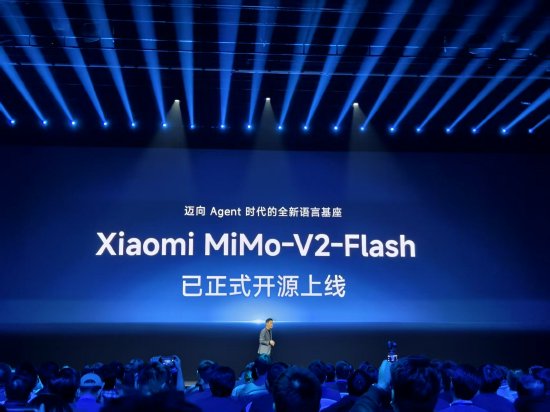
Core Insights - Xiaomi has officially launched its self-developed AI model Xiaomi MiMo-V2-Flash, marking a significant step towards the "Agent era" in AI technology [1] - The company reported a revenue growth of 32.5% year-on-year, exceeding 340 billion yuan, with an adjusted profit increase of 73.5% for the first three quarters of the year [1] - Xiaomi plans to invest over 200 billion yuan in R&D over the next five years, with an estimated 40 billion yuan allocated for 2026 [1] Company Developments - The Xiaomi ecosystem includes personal devices, transportation devices, and home devices, supported by core technologies such as chips, operating systems, and AI [2] - The new head of Xiaomi's MiMo model, Luo Fuli, has publicly confirmed her role at Xiaomi, previously being a key member of DeepSeek [2] - Luo Fuli emphasized the vision of creating a true "intelligent agent" that understands and coexists with the world, rather than just a language simulator [2] Product and Market Strategy - Xiaomi's MiMo series includes various models such as MiMo-7B, MiMo-VL, MiMo-Audio, MiMo-VL-Miloco, and MiMo-Embodied, showcasing a diverse range of AI capabilities [1] - The company has established a global ecosystem with over 1 billion active devices and coverage in more than 100 countries [3] - Xiaomi's internet services have developed a comprehensive ecosystem, with significant advancements in short drama content, including 1,000 S-level short dramas [3]

小米自研大模型MiMo-V2-Flash正式开源上线,卢伟冰:迈向Agent时代的全新语言基座
Xin Lang Cai Jing· 2025-12-17 02:34
Core Insights - Xiaomi has officially launched its self-developed AI large model, Xiaomi MiMo-V2-Flash, which is described as a new language foundation for entering the Agent era [1][3] Summary by Categories AI Development - Xiaomi has introduced a timeline for its MiMo series, which includes the inference large model MiMo-7B, the visual inference large model MiMo-VL, the native end-to-end audio generation model MiMo-Audio, the edge visual language large model MiMo-VL-Miloco, and the embodied large model MiMo-Embodied [1][3]
豆包和OpenAI,都在押注同一个未来
Tai Mei Ti A P P· 2025-12-04 01:00
Core Insights - The article discusses the launch of Doubao Mobile Assistant, which allows users to perform complex tasks through voice commands, potentially transforming the mobile internet landscape [3][4][5] - Doubao's strategy involves collaborating with smartphone manufacturers to gain access to system-level permissions, enabling it to operate across applications and redefine user interaction with mobile devices [4][9][12] Group 1: Product Launch and Features - Doubao Mobile Assistant was released on December 1, with a retail price of 3499 yuan, quickly selling out and reselling for 3999 to 4999 yuan on secondary markets [3] - The assistant can perform tasks such as price comparison, booking restaurants, and even opening a car trunk, showcasing its ability to streamline user interactions [4][5] Group 2: Market Impact and User Behavior - The introduction of Doubao Mobile Assistant may lead to a significant shift in user behavior, as reliance on traditional apps like Taobao and Meituan could diminish, turning them into tools invoked by AI [5][7] - Users have reported issues with the assistant, such as restrictions when logging into WeChat, indicating potential challenges in its integration with existing applications [3][8] Group 3: Competitive Landscape - The article highlights the competitive dynamics in the AI and mobile sectors, with major players like Apple and Google also enhancing their AI capabilities within their operating systems [10][11] - Doubao's approach to penetrate the operating system level poses a threat to existing app ecosystems, as it could disrupt the flow of user traffic and advertising revenue [7][8] Group 4: Future Outlook - The integration of AI into mobile devices is seen as a potential "iPhone moment," with the possibility of redefining mobile interaction and creating new business models [9][12] - The outcome of this competition remains uncertain, as it could lead to either the evolution of existing devices or the emergence of entirely new AI-centric hardware [12]

产品经理的工作可能要反过来做了
3 6 Ke· 2025-11-24 02:23
Core Insights - The role of product managers is being fundamentally transformed due to advancements in AI technology, particularly large language models, which are changing how software interacts with users [1][10][12] Group 1: Historical Context of Software Development - Early computers operated on command-line interfaces, requiring users to input specific commands without understanding [2][4] - The introduction of graphical user interfaces in the 1980s, such as the Macintosh, allowed users to interact with computers through visual elements, making software more user-friendly [3][5] - The evolution of mobile devices, particularly the iPhone, further simplified interactions by breaking down functionalities into individual apps [4][6] Group 2: Limitations of Traditional Software Design - Traditional software design has led to increasingly complex and bloated products due to the need for manual design of interfaces, processes, and functionalities [6][8] - Customization demands from clients have resulted in software that resembles a marketplace rather than a streamlined product, complicating user experience [8][9] Group 3: Impact of AI on Software Paradigms - The emergence of large language models has the potential to eliminate the need for traditional software components like interfaces and processes, as these models can understand user intent and execute tasks autonomously [10][12] - Current software products are evolving along two main paths: foundational reconstruction and chatbot integration, with the latter serving as a transitional tool for users accustomed to traditional interfaces [15][23] Group 4: Future of Software as Intelligent Agents - The future of software is envisioned as "living entities" that continuously engage with users, adapting to their needs and preferences, rather than static tools [30][35] - This shift requires a rethinking of product design, focusing on user scenarios and interaction methods, moving away from traditional button-based interfaces to more intuitive, context-aware systems [36][39] - Product managers will need to design these intelligent agents with capabilities such as intent understanding, emotional sensing, and long-term memory, while the coding aspect can be handled by AI [40][41]
马斯克:5-6 年后手机大变样!科创人工智能ETF华夏(589010) 午后弱势整理,市场情绪趋于谨慎
Mei Ri Jing Ji Xin Wen· 2025-11-04 06:43
Group 1: Market Performance - The Sci-Tech Innovation Artificial Intelligence ETF (589010) is trading at 1.386 yuan, with a decline of 2.39%, maintaining a downward trend throughout the day [1] - Only one constituent stock is up, while 29 are down, indicating significant pressure on the AI sector, with some stocks like Aobi Zhongguang and Xinghuan Technology experiencing declines exceeding 7% [1] - Recent net capital inflow has significantly decreased, with approximately 12.71 million yuan on November 3, down from previous levels around 60 million yuan, reflecting cautious market sentiment [1] Group 2: Technological Insights - From a technical-economic perspective, the Transformer model has created three structural benefits for AIGC: 1. Scale effects on the research side, where a unified architecture allows for the reuse of underlying CUDA kernels and optimizations across various tasks, significantly reducing average training costs [3] 2. Decreasing marginal costs on the deployment side, where the same inference engine can handle requests from any modality, enhancing GPU utilization and increasing output per unit of computing power [3] 3. A "flywheel effect" on the data side, where multi-modal models continuously improve through high-quality data feedback, enhancing model accuracy and coverage [3] - The Transformer model is expected to continue evolving towards a scale of trillions of parameters, integrating various modalities into a unified attention framework, thus supporting the upcoming Agent era with a foundational algorithmic base [3] Group 3: Future Predictions - Elon Musk predicts that within the next 5-6 years, traditional smartphones and apps will disappear, with most content being AI-generated, transforming user devices into AI inference nodes [2] - Musk envisions a future where user devices will primarily serve as interfaces for AI communication, generating real-time content based on user preferences [2] Group 4: Investment Opportunities - The Sci-Tech Innovation Artificial Intelligence ETF closely tracks the Shanghai Stock Exchange's AI index, covering high-quality enterprises across the entire industry chain, benefiting from high R&D investment and policy support [3] - The ETF's 20% price fluctuation limit and small-cap elasticity are positioned to capture significant moments in the AI industry [3]