保护主义

Search documents
外交部:坚决反对以各种名目对华设限 损害中方正当权益
Yang Shi Xin Wen· 2025-09-15 08:27
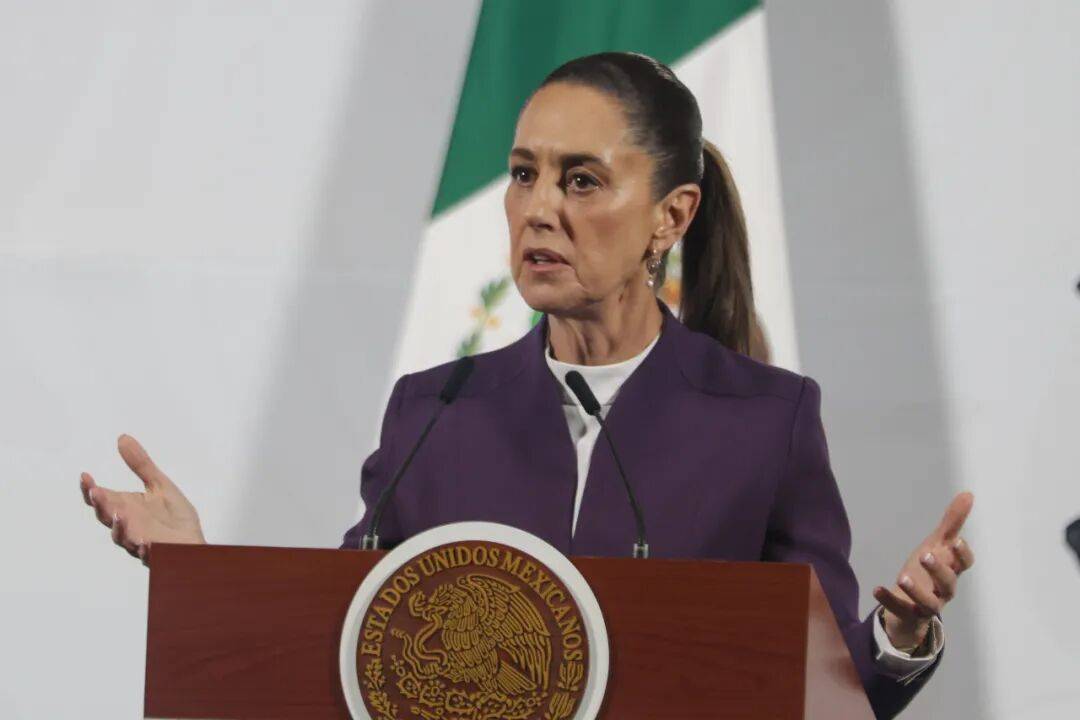
9月15日,外交部发言人林剑主持例行记者会。有记者提问,墨西哥总统克上周表示,本周将与中国进 行会谈,讨论对中国商品征收最高达50%关税的事情,外交部是否有关于会谈的最新信息? 林剑表示,中方始终倡导普惠包容的经济全球化,反对各种形式的单边主义、保护主义以及歧视性、排 他性措施,坚决反对在他人胁迫下,以各种名目对华设限,损害中方的正当权益。中方将根据实际情况 坚决维护自身权益。 中墨两国都是重要的全球南方国家,互利共赢是中墨经贸合作的本质特征。中方高度重视中墨关系发 展,希望墨方相向而行,共同维护良好的国际经贸环境。 (文章来源:央视新闻) ...
美方又炒作“中国产能过剩”,外交部:为保护主义提供借口
Xin Lang Cai Jing· 2025-09-15 07:56
Core Viewpoint - The Chinese government firmly opposes the notion of "overcapacity" in China, stating that it is a misrepresentation of objective facts and economic laws, and is merely a pretext for protectionism aimed at hindering China's high-quality development [1] Group 1 - The U.S. Democratic Party has requested the Trump administration to pressure China to control its overcapacity situation [1] - Any bilateral trade agreement should include binding requirements related to this issue [1] - The Chinese spokesperson emphasized that the claims of overcapacity are unfounded and serve to protect certain interests [1]
道达尔能源:美关税或致石化贸易下降15%
Zhong Guo Hua Gong Bao· 2025-09-15 06:07
Core Viewpoint - The ongoing U.S. tariffs are expected to further decrease the petrochemical trade by an additional 15% on top of the 34% decline experienced over the past five years [1] Industry Impact - The petrochemical industry is already under significant pressure, and the continuation of U.S. tariffs will exacerbate these challenges [1] - Companies without their own assets in the petrochemical trade will face increased difficulties in survival due to the tariffs [1] Market Dynamics - The U.S. tariffs are fostering protectionism, complicating short-term investment planning amid overcapacity and market volatility [1] - Tariffs are leading to an influx of products from certain countries into traditional markets, affecting competitive dynamics [1]

美制裁两家中国芯片设备企业!因涉嫌向中芯国际提供设备
是说芯语· 2025-09-15 00:25
Core Viewpoint - The U.S. Department of Commerce has added two Chinese semiconductor equipment companies to the Entity List, accusing them of providing regulated chip manufacturing equipment to SMIC, which is seen as a move to strengthen export controls on Chinese chips, potentially impacting the global semiconductor supply chain [1][3]. Group 1: Companies Involved - The two companies added to the Entity List are GMC Semiconductor Technology (Wuxi) Co., Ltd. and Jicun Semiconductor Technology (Shanghai) Co., Ltd., which are accused of violating export control regulations by supplying equipment to SMIC [2][4]. - These companies focus on the research and manufacturing of front-end semiconductor equipment, including etching and thin film deposition equipment [3]. Group 2: Impact of U.S. Measures - The U.S. claims that these companies provided equipment that can be used for advanced chip processes, and as a result, U.S. companies are now prohibited from exporting related technologies and products to them [3]. - The Chinese semiconductor industry association has condemned the U.S. actions as unilateralism and protectionism, asserting that they will defend the legitimate rights of Chinese enterprises [4]. - In 2023, the Chinese semiconductor equipment market reached a scale of $30 billion, with domestic equipment market share increasing to 20%, indicating progress in technology fields such as etching, cleaning, and thin film deposition [4].



商务部出手!事关模拟芯片反倾销立案调查、集成电路反歧视立案调查
Zheng Quan Shi Bao· 2025-09-15 00:22
Core Points - The Ministry of Commerce of China has announced an anti-dumping investigation into imported analog chips from the United States, effective from September 13, 2025 [1] - The investigation was initiated following a formal request from the Jiangsu Semiconductor Industry Association, which highlighted the impact of U.S. imports on the domestic analog chip industry [1] - The investigation is expected to conclude by September 13, 2026, with a possible extension of six months under special circumstances [1] Group 1 - The Ministry of Commerce has also launched an anti-discrimination investigation regarding U.S. measures affecting the integrated circuit sector, starting from September 13, 2025 [2] - Preliminary evidence suggests that U.S. measures against China in the integrated circuit field are discriminatory and violate China's foreign trade laws [2] - The spokesperson emphasized that U.S. protectionist measures, including Section 301 investigations and export controls, are detrimental to China's high-tech industries and the global semiconductor supply chain [2] Group 2 - The Ministry of Commerce will conduct the investigations with principles of fairness, justice, and transparency, inviting all stakeholders affected by U.S. measures to participate [2] - China is committed to taking necessary actions to protect the legitimate rights and interests of its enterprises [2]
中国通信企业协会:支持商务部对美相关产品及措施发起调查
Zheng Quan Shi Bao Wang· 2025-09-14 12:14
Core Viewpoint - The China Communications Industry Association supports the Ministry of Commerce's investigation into anti-dumping measures against U.S. imported semiconductor products, emphasizing the need for a fair and open market environment in the information and communication industry [1] Group 1 - The Ministry of Commerce of the People's Republic of China announced an anti-dumping investigation on September 13, 2025, targeting imported related analog chips from the U.S. [1] - The China Communications Industry Association firmly supports the government's necessary actions to protect the legitimate rights and interests of the Chinese information and communication industry and its enterprises [1] - The association calls for global industry collaboration to oppose protectionism and unilateral sanctions, advocating for sustainable and mutually beneficial development through technological innovation and international cooperation [1] Group 2 - The China Communications Industry Association will continue to support its member companies in increasing R&D investment, deepening global cooperation, and enhancing core competitiveness [1] - The goal is to promote the construction of a secure, stable, and efficient global semiconductor and information communication industry chain ecosystem [1]
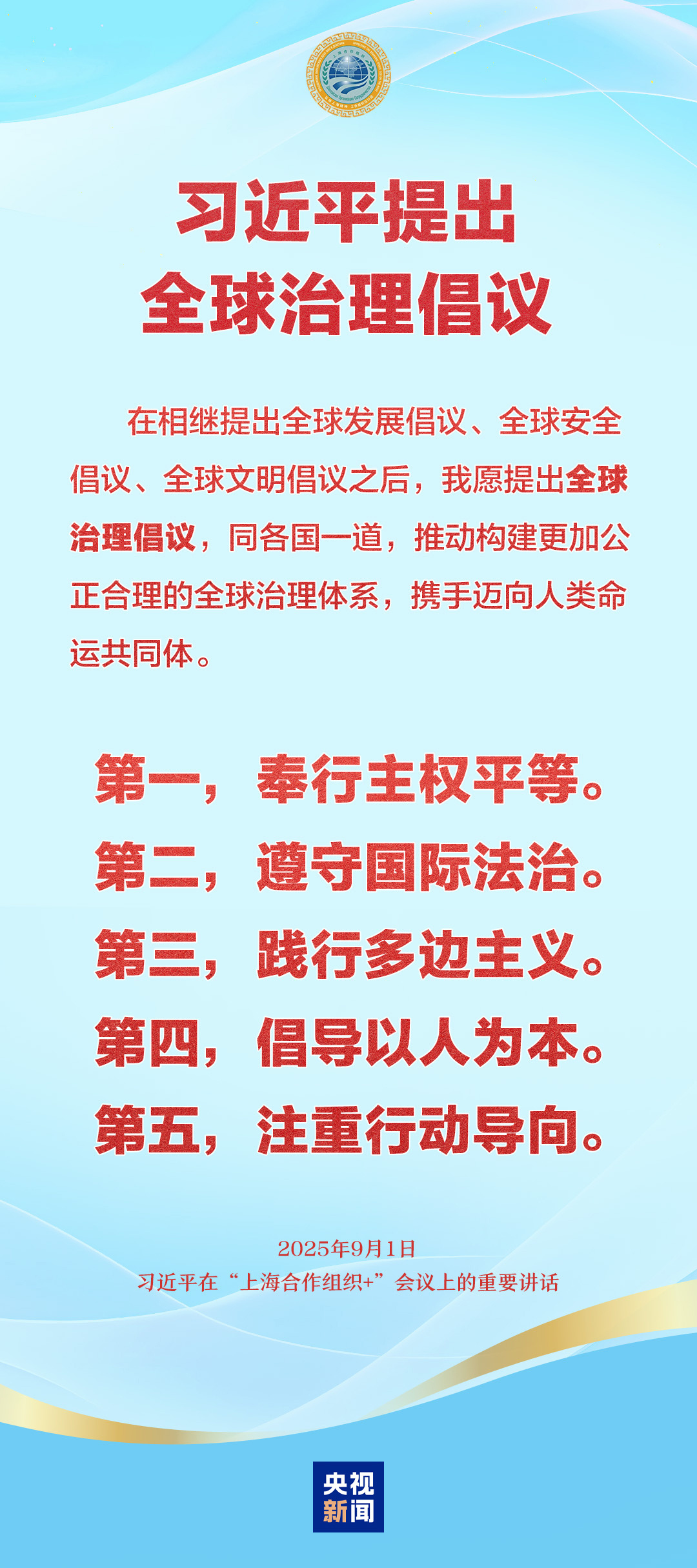
国际锐评丨全球治理倡议因何赢得世界广泛支持?
Yang Shi Xin Wen Ke Hu Duan· 2025-09-14 07:47
Core Viewpoint - The "Global Governance Initiative" proposed by Chinese President Xi Jinping has gained significant global attention since its introduction at the Shanghai Cooperation Organization summit, reflecting a strong demand for reform in the current international governance system [1][6][7] Group 1: Timeliness - The Global Governance Initiative addresses pressing global issues, such as the rise of hegemonism and protectionism, which threaten the post-World War II international order [6] - It emphasizes "sovereign equality" and the need for all countries, regardless of size or wealth, to have equal rights in international affairs, countering hegemonic logic [6][7] - The initiative aims to create effective governance mechanisms to tackle challenges like climate change, digital divides, and artificial intelligence [6][8] Group 2: Alignment with Trends - The initiative reflects a significant shift in the international power balance, with emerging markets and developing countries gaining prominence [8] - It seeks to amplify the voices of the Global South, addressing their underrepresentation in current international mechanisms [8][9] - The principles of the initiative resonate with the desire for a more just global order, making it particularly appealing to developing nations [9] Group 3: Public Support - The initiative promotes a people-centered approach, aiming to transform the aspirations of people worldwide into reality [11] - It provides confidence and stability for citizens of various countries, garnering widespread support [11][13] - The initiative is seen as a milestone in global governance, advocating for equality, mutual respect, and cooperation [11][13] Group 4: Future Directions - China envisions reforming global governance through existing international organizations, focusing on urgent issues like financial architecture, artificial intelligence, and climate change [13] - The initiative aims to enhance the effectiveness of current international systems rather than completely overhaul them [13] - China's commitment to maintaining a UN-centered international order and promoting a community with a shared future for humanity is emphasized [13]
墨西哥跟风美国对华加关税,这事怎么看?
Sou Hu Cai Jing· 2025-09-13 14:28
Core Viewpoint - Mexico has proposed a significant tariff reform, imposing tariffs as high as 50% on imports from non-free trade agreement countries, as part of its industrial policy in response to U.S. tariffs [1][3]. Group 1: Tariff Reform Details - The proposed tariff reform targets 1,371 categories of goods, accounting for 16.8% of Mexico's total tariff codes, with proposed rates of 10%, 20%, 25%, 30%, 35%, and 50% [1]. - The total value of goods affected by the new tariffs is approximately $52 billion, representing 8.6% of Mexico's imports [1]. - The tariffs are expected to be implemented by the end of next year, although there is a possibility of delays [1]. Group 2: Economic Context - Mexico's trade dependency on the U.S. is significant, with both imports and exports to the U.S. around 50% [3]. - In 2024, Mexico's exports to the U.S. are projected to exceed $500 billion, making it a key supplier of automobiles [6]. - The U.S. is also Mexico's largest source of imports, with over $140 billion in goods imported in 2024 [6]. Group 3: Global Trade Implications - The tariff reform is seen as a reaction to U.S. pressure, particularly regarding tariffs on countries like China and India [1]. - The new tariffs will particularly impact industries such as automotive, where tariffs on light vehicles will rise from 20% to 50%, affecting China's market share in Mexico [11]. - The broader implications of the U.S. tariff strategy are leading to a "tariff war," which is disrupting global supply chains and could harm Mexico's economic independence and industrial development [11][12].
事关集成电路,商务部:美国保护主义做法涉嫌对华歧视
Shang Wu Bu Wang Zhan· 2025-09-13 12:24
Core Viewpoint - China has initiated an anti-discrimination investigation against the United States regarding measures taken in the integrated circuit sector, citing these actions as discriminatory and harmful to both China's development and the global semiconductor supply chain stability [1]. Group 1: Investigation Details - The investigation is a response to a series of prohibitive and restrictive measures imposed by the U.S. on China in the integrated circuit field, including Section 301 investigations and export controls [1]. - China asserts that these protectionist practices are aimed at suppressing the development of advanced computing chips and artificial intelligence in China [1]. - The investigation will be conducted based on principles of fairness, justice, and transparency, inviting participation from all stakeholders affected by U.S. measures, including domestic industries and enterprises in China [1]. Group 2: Legal Framework and Future Actions - The decision to launch the investigation is grounded in several provisions of the Foreign Trade Law of the People's Republic of China [1]. - China has indicated that it will take necessary measures to defend the legitimate rights and interests of Chinese enterprises in response to the U.S. actions [1].
德国巴伐利亚州副州长涉华表态:保护主义非解决之道,欢迎中国投资
Huan Qiu Wang· 2025-09-13 12:07
Core Viewpoint - Despite current tensions in EU-China relations, Bavaria welcomes Chinese investments, emphasizing the importance of economic resilience and self-sufficiency without resorting to protectionism [1][3]. Investment Opportunities - Bavaria's Deputy Governor Hubert Aiwanger highlighted that approximately 500 Chinese companies operating in the region have created thousands of jobs, indicating a strong investment presence [3]. - Aiwanger invited Chinese automotive companies to establish production bases in Bavaria, suggesting that this would allow them to directly access the European market and strengthen the region's industrial foundation [3]. Trade Relations - Aiwanger criticized the EU's anti-subsidy tariffs on Chinese electric vehicles, arguing that such measures are not the correct solution and advocating for negotiations within the WTO framework to reach a rule-based trade agreement [3].