红利策略

Search documents
海通红利优选集合计划清盘 成立以来跑输业绩比较基准47.36个百分点
Xi Niu Cai Jing· 2025-08-18 09:44
Group 1 - Haitong Securities Asset Management announced that the Haitong Dividend Preferred Collective Plan will enter the liquidation period starting July 27, 2025 [2] - The asset management contract for the Haitong Dividend Preferred Collective Plan became effective on July 27, 2021, and will terminate on July 26, 2025, without the need for a meeting of plan shareholders [3] - As of July 26, the net asset value of the Haitong Dividend Preferred Collective Plan was approximately 18.3942 million yuan [3] Group 2 - The plan's A-class share unit net value has decreased by 28.46% since inception, underperforming the performance benchmark by 47.36 percentage points [5] - The plan's investment strategy focuses on dividend strategies, selecting companies with clear main businesses, a history of stable dividends, reasonable valuations, and high dividend yields [5] - The top ten holdings of the Haitong Dividend Preferred Collective Plan include companies such as Xinyi Technology, China Unicom, and Tencent Holdings, with a stock allocation of 79.96% and no bond holdings [5]



300增强ETF(561300)涨超1.3%,多重因素支撑宽基指数配置价值
Mei Ri Jing Ji Xin Wen· 2025-08-18 04:44
Group 1 - The core viewpoint is that the CSI 300 index, as a broad-based index, demonstrates stable performance in dividend strategies, with a high weight in the banking sector and significant representation from coal and transportation industries [1] - High dividend-paying companies exhibit a return on equity (ROE) significantly above the industry average, showcasing strong cash flow protection and creating a positive cycle of stable earnings, continuous dividends, and improved ROE [1] - The CSI 300 Enhanced ETF (561300) tracks the CSI 300 index (000300), which consists of 300 large-cap, liquid securities from the Shanghai and Shenzhen markets, covering approximately 48% of the total market capitalization of A-shares [1] Group 2 - The industry distribution of the CSI 300 index is broad, encompassing cyclical sectors such as finance, materials, and industrials, while also increasing the weight of emerging sectors like information technology and healthcare as the economic structure transforms [1] - Investors without stock accounts can consider the Guotai CSI 300 Enhanced Strategy ETF Initiated Link A (021847) and Guotai CSI 300 Enhanced Strategy ETF Initiated Link C (021848) [1]
金鹰基金孙倩倩:价值凸显 自由现金流配置正当时
Shang Hai Zheng Quan Bao· 2025-08-17 13:36
Core Viewpoint - The upcoming launch of the Jin Ying CSI All Share Free Cash Flow Index Fund is gaining attention from institutional and individual investors, focusing on free cash flow as a core screening factor to identify industry leaders and stable profit companies with long-term return potential [1][2]. Group 1: Free Cash Flow Factor Advantages - The fund manager, Sun Qianqian, emphasizes her extensive experience in high dividend and quantitative investment strategies, which have consistently outperformed the CSI Dividend Index and achieved positive quarterly returns [2]. - The combination of traditional dividend strategies with cash flow factors significantly reduces the risk of falling into "high dividend traps" while selecting companies with strong cash generation capabilities and high profit quality [2][5]. Group 2: Market Timing and Index Performance - The launch of this product is timely, as dividend and free cash flow indices are seen as "long slope thick snow" tracks, providing both offensive and defensive characteristics [3]. - Historical performance data shows that the CSI All Share Free Cash Flow Index has had positive returns in most years over the past 11 years, indicating potential for significant rebound in the second half of the year, especially in a liquidity-rich environment [3][4]. Group 3: Focus on Strong "Self-Sustaining" Companies - The index focuses on mature industries with stable profitability, avoiding sectors that require heavy capital investment, and instead targeting companies that can generate stable cash flow without external financing [4]. - Recent trends show an increase in the representation of manufacturing and consumer sectors within the index, with companies in these areas maintaining growth and stable dividends despite macroeconomic challenges [4][5]. Group 4: Long-term Sustainability and Returns - The integration of free cash flow and ROE factors in the quantitative model helps identify truly self-sustaining companies and industry leaders, enhancing the long-term sustainability and authenticity of the investment portfolio [5]. - The combination of low valuations and high-quality components suggests that the free cash flow index has potential for valuation recovery and could achieve dual returns from price appreciation and dividends driven by profit growth [5].
本周聚焦:25Q2银行经营数据、货币政策执行报告:利润降幅收窄,信贷结构持续优化
GOLDEN SUN SECURITIES· 2025-08-17 10:24
Investment Rating - The report maintains an "Overweight" rating for the banking sector, indicating a positive outlook for the industry. Core Insights - The banking sector is experiencing a narrowing decline in profit growth, with a cumulative net profit of 1.24 trillion yuan in the first half of 2025, representing a year-on-year decrease of 1.2%, which is an improvement from the 2.3% decline in the first quarter [1][2] - The asset growth rate of commercial banks accelerated to 8.88% year-on-year in Q2 2025, up 1.7 percentage points from Q1 2025, driven by a low base effect from the previous year [1][2] - The report highlights a continuous optimization of credit structure, with significant increases in loans to technology, green, inclusive, and digital sectors, which now account for approximately 70% of new loans [7] Summary by Sections Banking Sector Performance - Profit growth decline narrowed to 1.2% in H1 2025, with non-interest income rising to 25.8% [1] - Asset growth rate reached 8.88% in Q2 2025, with state-owned banks showing a 10.4% growth [1][2] - Net interest margin slightly decreased to 1.42%, with state-owned banks at 1.31% [2] - Non-performing loan (NPL) ratio improved to 1.49%, with a notable decrease in rural commercial banks' NPL ratio to 2.77% [2] - Capital adequacy ratio increased to 15.58%, with all bank types showing improvements [2] Monetary Policy Execution - New loan interest rates decreased to 3.29% in June 2025, with significant drops in various loan categories [3] - The central bank's outlook on the macro economy has become more positive, indicating solid support for stable growth in the second half of 2025 [3] - The monetary policy remains moderately accommodative, focusing on maintaining stability and flexibility [3][6] Credit Structure Optimization - The report emphasizes the need for continuous optimization of credit structure, with a significant shift in loan distribution over the past decade [7] - Small and micro-enterprise loans have seen an annual growth rate of about 15%, increasing their share in corporate loans from 30.4% in 2014 to 38.2% in 2025 [7] - Technology loans reached a balance of 44.1 trillion yuan, growing by 12.5% year-on-year, with an average interest rate of 2.90% [7] Sector Outlook - The banking sector is expected to benefit from policy catalysts, with a focus on stocks that show positive fundamental changes and continuous improvement in financial statements [8] - Specific banks such as Ningbo Bank are recommended for their positive fundamental changes, while Jiangsu Bank and others are highlighted for their dividend strategies [8]




行业点评报告:信贷社融增长背离,存款活化流向非银
KAIYUAN SECURITIES· 2025-08-15 06:52
Investment Rating - Investment rating: Positive (maintained) [1] Core Viewpoints - Credit and social financing growth are diverging, with financial support for the real economy shifting from indirect financing (loans) to direct financing, primarily through government bonds [4] - The increase in social financing in July was mainly driven by government bonds, with a notable increase of 1.24 trillion yuan, the highest for the month in many years [4] - The report highlights a trend of deposits moving from residents to non-bank financial institutions, indicating a shift in risk appetite among investors [5] Summary by Sections Credit Market Analysis - In July, RMB loans decreased by 50 billion yuan, a year-on-year reduction of 310 billion yuan, with a balance growth rate of 6.9%, down 0.2 percentage points from June [3] - The demand for credit remains weak, with both corporate and household loan demands declining, particularly in medium to long-term loans [3][4] - The increase in corporate loans was primarily supported by bills, which saw a year-on-year increase of 312.5 billion yuan [3] Social Financing Insights - Social financing increased by 1.16 trillion yuan in July, a year-on-year increase of 289.3 billion yuan, with a stock growth rate of 9.0%, up 0.1 percentage points from June [4] - The divergence between social financing and credit growth suggests a transition in how financial support is provided to the real economy [4] Deposit Trends - M2 grew by 8.8% year-on-year in July, while M1 saw a significant increase of 5.6%, indicating signs of deposit activation [5] - The report notes that the increase in non-bank deposits by 1.39 trillion yuan contrasts with a decrease in resident deposits by 780 billion yuan, highlighting a clear trend of funds moving towards non-bank sectors [5] Investment Recommendations - The report suggests that dividend strategies remain solid, with a focus on direct financing as the primary means of financial support for the real economy [5] - It recommends specific banks such as CITIC Bank, Construction Bank, Agricultural Bank, and others as beneficiaries of the current market conditions [5]



交银施罗德魏玉敏:平台赋能下的更优“固收+”解法
点拾投资· 2025-08-14 10:14
Core Viewpoint - The article emphasizes the importance of both defensive and offensive strategies in investment, suggesting that wealth preservation should precede wealth accumulation, especially in a declining interest rate environment for bank wealth management products [1]. Group 1: Investment Strategy - The focus is on low-volatility mixed "fixed income +" products, highlighting that only 30 out of 225 secondary bond funds established before 2019 achieved continuous absolute returns over six years [3]. - The performance of the "Jiaoyin Anxin Yield" fund managed by Wei Yumin is noted, achieving a positive return in a bear market and outperforming the benchmark index in recent months [3][4]. - The maximum drawdown recovery days for the "Jiaoyin Anxin Yield" fund are reported as 34 days in 2024 and 22 days in 2025, indicating strong net value recovery capabilities [3]. Group 2: Fund Performance - The article presents the performance metrics of several funds managed by Wei Yumin, with returns ranging from 4.84% to 5.87% over the past year, and commendable Calmar ratios indicating good risk-adjusted returns [4]. - The "fixed income +" products from Jiaoyin Schroder are recognized for providing a good holding experience, effectively defending against weak markets while capitalizing on structural opportunities [4]. Group 3: Convertible Bonds - Convertible bonds are described as the "soul" of fixed income + investments, providing unique "option value" that enhances the risk-return profile of portfolios [6][7]. - Wei Yumin's extensive experience in convertible bond research is highlighted, noting her strategy of identifying undervalued convertible bonds to enhance returns [8][9]. - The article discusses Wei Yumin's dual strategies for convertible bonds: seeking low-priced bonds with safety margins and identifying high-priced bonds with potential for alpha generation [10]. Group 4: Stock Strategy - Wei Yumin categorizes stocks into four styles: dividend, value, cyclical, and growth, aligning them with different economic cycles to create a balanced portfolio [11][12]. - The focus on dividend stocks during economic downturns and value stocks during stable periods is emphasized, along with the need for sensitivity to industry conditions for cyclical stocks [12][27]. Group 5: Multi-Asset Approach - The article underscores the necessity of a multi-asset investment approach to achieve absolute return goals, with different asset classes contributing to returns in varying market conditions [14][15]. - Wei Yumin's strategies include adjusting durations in bond investments and selectively increasing positions in convertible bonds during market downturns [15][19]. Group 6: Research and Collaboration - Jiaoyin Schroder's emphasis on integrating equity research with fixed income + investments is noted, enhancing the ability to identify suitable stocks for fixed income portfolios [18][20]. - The collaborative approach between equity researchers and fixed income managers is highlighted as a key factor in improving investment outcomes [18][21].

内险股延续近期涨势 时隔六年再有险企举牌险企 中国平安近日举牌中国太保H股
Zhi Tong Cai Jing· 2025-08-14 02:36
消息面上,港交所披露的数据显示,近日,中国平安增持中国太保H股约174万股,每股作价32.07港 元,增持总金额约5583.89万港元。增持完成后,中国平安持有中国太保H股股份占其H股总股本的比例 约5.04%,达到举牌条件。据智通财经报道,中国平安相关负责人表示,相关投资属于财务性投资,是 险资权益投资组合的常规操作。值得注意的是,上一次轰动市场的保险机构举牌保险机构的案例还停留 在2019年。 华创证券指出,从分红总额来看,上市险企2024年分红均实现不同程度上涨。对比AH股内资险企股息 率(TTM),当前股息率最高的是新华H,其次是阳光保险、平安H,股息率均在5%以上。此外3%以 上股息率由高到低依次是平安A、中国再保险、新华A、太保H、中国财险、人保H、国寿H。结合分红 政策稳定性考虑,预计红利策略资金或将青睐平安AH、太保H、中国财险。 内险股延续近期涨势,截至发稿,新华保险(601336)(01336)涨5.12%,报51.7港元;中国太保 (601601)(02601)涨4.65%,报35.98港元;中国人寿(601628)(02628)涨3.42%,报23.58港元;中国平 安(601318) ...


港股异动 | 内险股延续近期涨势 时隔六年再有险企举牌险企 中国平安近日举牌中国太保H股
智通财经网· 2025-08-14 02:33
华创证券指出,从分红总额来看,上市险企2024年分红均实现不同程度上涨。对比AH股内资险企股息 率(TTM),当前股息率最高的是新华H,其次是阳光保险、平安H,股息率均在5%以上。此外3%以 上股息率由高到低依次是平安A、中国再保险、新华A、太保H、中国财险、人保H、国寿H。结合分红 政策稳定性考虑,预计红利策略资金或将青睐平安AH、太保H、中国财险。 消息面上,港交所披露的数据显示,近日,中国平安增持中国太保H股约174万股,每股作价32.07港 元,增持总金额约5583.89万港元。增持完成后,中国平安持有中国太保H股股份占其H股总股本的比例 约5.04%,达到举牌条件。据智通财经报道,中国平安相关负责人表示,相关投资属于财务性投资,是 险资权益投资组合的常规操作。值得注意的是,上一次轰动市场的保险机构举牌保险机构的案例还停留 在2019年。 智通财经APP获悉,内险股延续近期涨势,截至发稿,新华保险(01336)涨5.12%,报51.7港元;中国太 保(02601)涨4.65%,报35.98港元;中国人寿(02628)涨3.42%,报23.58港元;中国平安(02318)涨2.99%, 报58.5港元。 ...
3600点之后:聊聊当下权益投资的锚点、策略与心态
天天基金网· 2025-08-13 10:51
Core Viewpoint - The article discusses the current state of the A-share market, highlighting its resilience and cyclical nature, as well as the psychological and technical significance of the 3600-point level in the context of market trends and investor sentiment [2][5][12]. Market Performance - The equity mixed fund index has gained over 16% this year, marking the first time since 2021 that returns have exceeded this level, although it remains below the historical peak of 20% from February 2021 [4]. - The current position of the Shanghai Composite Index is close to significant historical highs, with only a small distance from the October peak of 3674 points and the ten-year peak of 3731 points [5]. Valuation Insights - The current overall valuation of A-shares is at a historically moderate to high level, with the PE ratios of the Shanghai Composite Index, CSI 300, and Wind All A reaching 92.9%, 72.9%, and 84.3% of their respective five-year percentiles [6]. - As of August 8, the Shanghai Composite Index's PE ratio stands at 15.69 times, significantly lower than that of major US indices, indicating a relative valuation advantage for A-shares [6][8]. Capital Flow and Market Sentiment - The financing balance in the A-share market has increased for three consecutive months, surpassing the 2 trillion yuan mark, a level not seen since the last bull market a decade ago [10]. - The current leverage level in the market is less than half of the peak seen during the 2015 bull market, suggesting that there is still room for capital inflow without overheating [11]. Investment Strategies - Investors are advised to adopt a more nuanced approach to portfolio management, focusing on matching industry exposure with personal risk tolerance and aligning investment styles with market trends [18]. - A "barbell strategy" is recommended, balancing offensive assets for growth with defensive assets to mitigate risks, with an emphasis on dividend strategies and bond funds as stabilizers [19]. Sector Opportunities - The article suggests focusing on structural rotation opportunities, particularly in sectors like banking and small-cap stocks, which have shown leadership in the current market rally [20]. - Upcoming mid-year earnings reports are expected to be pivotal, with sectors like non-ferrous metals and aerospace ETFs likely to perform well based on fundamental support [21]. Long-term Perspective - The article emphasizes the importance of patience and a long-term view in investing, as the market is expected to experience fluctuations rather than a straight upward trajectory [23]. - It highlights the need for investors to focus on understanding market dynamics, their own limitations, and the value of time in investment, rather than being swayed by short-term market noise [26][27].

红利板块股息率已具备较强吸引力,国企红利ETF(159515)蓄势调整
Xin Lang Cai Jing· 2025-08-13 06:49
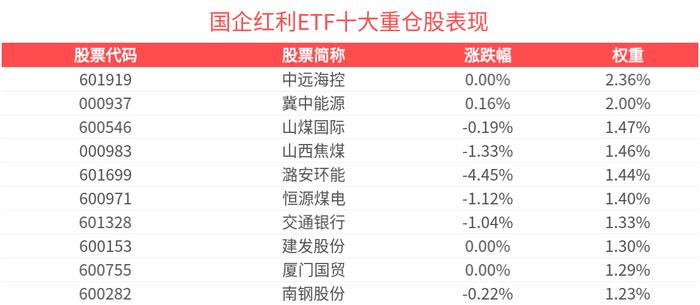
Core Viewpoint - The performance of the China Securities State-Owned Enterprises Dividend Index (000824) has shown a slight decline, with a focus on the stability and predictability of dividends from state-owned enterprises, which aligns with the growing demand for stable investments in a volatile market [1][2]. Group 1: Market Performance - As of August 13, 2025, the China Securities State-Owned Enterprises Dividend Index (000824) decreased by 0.42%, with mixed performance among constituent stocks [1]. - Leading gainers included COFCO Sugar (600737) up by 5.03%, Western Mining (601168) up by 2.87%, and Guangri Co., Ltd. (600894) up by 1.47% [1]. - The National Enterprise Dividend ETF (159515) was adjusted to a latest price of 1.16 yuan, with a turnover rate of 3.67% and a total transaction volume of 1.7497 million yuan [1]. Group 2: Investment Strategy - Analysts suggest that the dividend sector has become attractive due to its high dividend yield following valuation adjustments, emphasizing the need for defensive and cost-effective investment strategies amid declining market risk appetite [2]. - The National Enterprise Dividend ETF closely tracks the China Securities State-Owned Enterprises Dividend Index, which includes 100 listed companies with high and stable cash dividend yields [2]. Group 3: Top Holdings - As of July 31, 2025, the top ten weighted stocks in the China Securities State-Owned Enterprises Dividend Index included COSCO Shipping Holdings (601919), Jizhong Energy (000937), and Lu'an Environmental Energy (601699), collectively accounting for 16.77% of the index [2].