能源安全

Search documents
油气ETF(159697)涨超1.4%,机构称油价中枢仍存在底部支撑
Xin Lang Cai Jing· 2025-11-19 02:45
Group 1 - The core viewpoint of the news highlights a strong performance in the oil and gas sector, with the National Petroleum and Natural Gas Index rising by 1.42% and key stocks such as Furui Special Equipment and China Petroleum showing significant gains [1] - The report from Ruidi Energy Consulting indicates that five critical maritime routes are facing multiple risks, including regional conflicts and environmental hazards, which could impact global shipping and energy supply chains [1] - Huatai Securities projects a global oversupply of crude oil due to steady progress in renewable energy alternatives and increased supply from OPEC+ and low-cost producers in South America, forecasting Brent crude oil prices to average $68 and $62 per barrel for 2025 and 2026 respectively [1] Group 2 - The National Petroleum and Natural Gas Index reflects the price changes of publicly listed companies in the oil and gas industry on the Shanghai and Shenzhen stock exchanges, with the top ten weighted stocks accounting for 65.09% of the index [2] - The oil and gas ETF closely tracks the National Petroleum and Natural Gas Index, providing investors with exposure to the performance of the sector [3]


“在压力之下”达成协议,印度首次采购美国液化石油气
Huan Qiu Shi Bao· 2025-11-18 22:58
【环球时报驻巴基斯坦特约记者 黄晓娜】"在贸易谈判陷入僵局之际,印度石油公司达成第一笔从美国 进口液化石油气的交易。"英国《金融时报》18日报道称,印度石油和天然气部部长哈迪普·辛格·普里17 日在社交媒体上发文表示,印度国有石油公司与美国签署了"历史性首次"采购协议,将从美国墨西哥湾 沿岸每年进口约220万吨液化石油气,协议有效期为2026年整年,但双方可以延长协议。普里说,这是 印度市场首个美国液化石油气结构化采购合同,采购量约占印度年进口量的10%。 数据显示,在截至2025年3月的财年,印度进口了约2100万吨液化石油气,价值145亿美元,其中美国仅 占0.5%左右。该国传统上依赖包括卡塔尔和阿联酋在内的海湾国家的液化石油气和液化天然气。 《印度时报》评论称,印度此举一方面是为了加强能源安全和供应稳定,另一方面也是为了"安抚华盛 顿"。今年8月,美国总统特朗普签署行政令,以印度"以直接或间接方式进口俄罗斯石油"为由,对印度 输美产品征收额外的25%关税。叠加此前公布的加征25%关税,印度输美产品将总体适用50%的关税税 率。 印美双方贸易谈判僵持多时,巴基斯坦《黎明报》评论称,这次采购协议是"在压力之 ...
7月以来融资余额增超三成 科技股最受青睐
Zheng Quan Shi Bao· 2025-11-18 18:14
Group 1: A-Share Market Financing Trends - The financing balance of A-shares has been steadily increasing since July 1, reaching 2.48 trillion yuan as of November 17, marking a historical high and a growth of 644.17 billion yuan (35%) compared to the end of the first half of the year [1] - 14 sectors in the Shenwan first-level industry saw net financing inflows exceeding 10 billion yuan, with the electronics sector leading at 148.06 billion yuan, followed by power equipment at 94.80 billion yuan, and communications and non-ferrous metals each exceeding 40 billion yuan [1] - The increase in financing balance reflects a positive change in investor sentiment and serves as a significant source of incremental capital for the A-share market [1] Group 2: Individual Stock Performance - 108 individual stocks have seen net financing inflows exceeding 1 billion yuan since the second half of the year, with the top 20 stocks in net financing inflows including 10 related to computing power, chips, or semiconductors, and 4 from the new energy sector [1] - Notable stocks with high net financing inflows include CATL, NewEase, Zhongji Xuchuang, Shenghong Technology, and Cambrian, each exceeding 10 billion yuan, while Sunshine Power, SMIC, and Industrial Fulian followed with inflows above 5 billion yuan [1] Group 3: Optical Module Sector Insights - The optical module sector has seen significant stock price increases, attracting substantial capital inflows, with NewEase and Zhongji Xuchuang ranking second and third in net inflows, and Tianfu Communication also showing a net inflow of 3.07 billion yuan [2] - Demand for 800G optical modules is currently maturing, while 1.6T optical modules are in the early stages of ramp-up, with expectations for continued high growth rates through 2025 and 2026 [2] - The global optical module market is projected to grow at a compound annual growth rate of 22% over the next five years, driven by strong demand from AI cluster applications and upgrades in DWDM networks by cloud companies and telecom service providers [2] Group 4: Company-Specific Financial Performance - Sifang Precision's main business includes digital transformation and traditional financial IT services, reporting a revenue of 453 million yuan in the first three quarters, a year-on-year decline of 14.46%, while net profit attributable to shareholders increased by 27.36% to 66.89 million yuan [3] - Several coal stocks, including Electric Power Investment Energy and Lu'an Environmental Energy, have experienced net financing repayments, with forecasts indicating stable coal prices and steady profitability for leading companies in the sector [3]
中国最好做足充分的打算,俄罗斯一旦打赢了,我们得做好三件事
Sou Hu Cai Jing· 2025-11-18 11:13
Core Viewpoint - The ongoing Russia-Ukraine war raises questions about how China should prepare for potential changes in the geopolitical landscape, regardless of whether Russia ultimately wins or loses the conflict [1][3]. Group 1: Energy Diversification - China should accelerate its energy diversification strategy to mitigate risks associated with potential disruptions in energy supply routes with Russia, even if Russia wins the war [3]. - If Russia wins, its energy export dynamics will change significantly, potentially leading to a shift in its energy cooperation with China and Europe, which could affect the favorable conditions currently enjoyed by China [4][5]. Group 2: Geopolitical Implications - A victorious Russia may leverage its increased autonomy in energy exports to threaten China's energy security, as Russia's international influence would rise, complicating its strategic relationship with China [5][7]. - The possibility of Russia adopting a more aggressive stance towards China, similar to its historical behavior during the Soviet era, cannot be ruled out, especially if Russian interests conflict with those of China [7]. Group 3: Military and Diplomatic Preparedness - China must enhance its military deployments and diplomatic efforts to prepare for uncertainties stemming from Russia's potential rise in energy and international influence [9]. - Strengthening international diplomatic mediation is crucial for China to avoid severe international turmoil that could arise from shifts in alliances and increased geopolitical tensions following the end of the Russia-Ukraine war [11].

新能源电力占比攀升,欧盟呼吁“新电改”
Sou Hu Cai Jing· 2025-11-18 03:37
Core Insights - The European Union is significantly increasing the share of electricity in final energy consumption to address climate change and energy security concerns [6][7] - The upcoming European Grids Package aims to accelerate grid construction, streamline approval processes, and improve cost-sharing mechanisms to enhance renewable energy integration and reduce consumer energy prices [3][4] Group 1: European Grids Package - The European Grids Package is expected to be released by December 2025, focusing on modernizing the grid and facilitating the deployment of renewable energy projects [3] - The package aims to reduce system bottlenecks and enhance the capacity for renewable energy integration, ultimately lowering energy prices for consumers [3][4] - The urgency for grid modernization has been highlighted by recent large-scale power outages in Spain and Portugal, which exposed vulnerabilities in the current grid system [3] Group 2: Current State of the Electricity Network - Over 30% of low-voltage distribution networks in Europe are over 40 years old, necessitating urgent investment in upgrades and digitalization [4] - The European electricity sector has made significant progress in energy transition, with renewable energy's share rising from 16% in 2014 to 24.5% in 2024 [4] - By 2024, renewable energy is expected to account for 47% of electricity consumption in the EU, with solar power projected to become the largest source of electricity by June 2025 [4] Group 3: Investment Needs and Future Projections - The EU's REPowerEU plan requires approximately €584 billion for grid construction and upgrades by 2030 to meet energy transition goals [6] - If grid modernization does not accelerate, up to 190 million heat pumps and 120 million electric vehicles may not be integrated into the grid by 2050, undermining climate goals and increasing energy prices [6] Group 4: Energy Transition and Industrial Competitiveness - High energy prices have led to energy poverty for approximately 47 million Europeans, impacting industrial competitiveness [5] - The EU is implementing the Affordable Energy Action Plan to reduce electricity costs and increase investment in infrastructure to enhance renewable energy capacity [5] Group 5: Collaboration and Future Directions - The EU is focusing on establishing a new energy security strategy that prioritizes electricity as the core of the energy system [7] - The European electricity industry emphasizes the need for policy implementation to provide certainty for investors and ensure the stability of the electricity market [8] - There is a call for integrating storage technologies and ensuring that flexibility sources can replace natural gas to stabilize the energy system and reduce price peaks [9][10]

东吴证券:煤炭供需弱均衡导致煤价震荡运行 高股息投资逻辑持续
Zhi Tong Cai Jing· 2025-11-18 02:41
Group 1 - The core viewpoint of the report is that coal prices are expected to bottom out in Q2 2025, leading to improved performance for coal companies starting from Q3 2025, with stable coal prices benefiting leading companies [1] - The report suggests focusing on companies like Guanghui Energy (600256) due to its production growth from the "Xinjiang coal transportation" logic and performance elasticity from rising thermal coal prices [1] - Other companies recommended for attention include Haohua Energy (601101), Yanzhou Coal Mining (600188), and Shaanxi Coal and Chemical Industry (601225) [1] Group 2 - Since mid-2023, the coal supply and demand have entered a weak equilibrium state due to slowing economic growth, with normal coal prices fluctuating between 670-870 RMB/ton, and a reasonable expectation around 770 RMB/ton [1] - Xinjiang coal has become a significant elastic supply region, with large-scale open-pit coal mines providing important supply flexibility [1] - When coal prices fall below 700 RMB/ton, coal mines face losses and may exit production, while prices above 800 RMB/ton lead to significant production releases due to improved profitability [1] Group 3 - The report indicates that Indonesian coal production has significant elasticity, as it consists of open-pit mines, and low-calorific coal is prioritized for elimination during market downturns, making it an important supplementary source for China's coal supply [2] - It is projected that China's coal imports will decrease by 5-6 million tons in 2025, with a similar decline expected in Indonesia's total export volume [2] - The most significant impact on coal prices from 2024 to 2025 will come from temporary railway freight discounts, particularly in Xinjiang, where a 20-30% discount will reduce transportation costs by 100-150 RMB/ton, ultimately affecting coastal coal price fluctuations [2]

手握核电粮仓牌照!中国铀业IPO终落地,核电粮不用看别人脸色!
Sou Hu Cai Jing· 2025-11-17 14:10
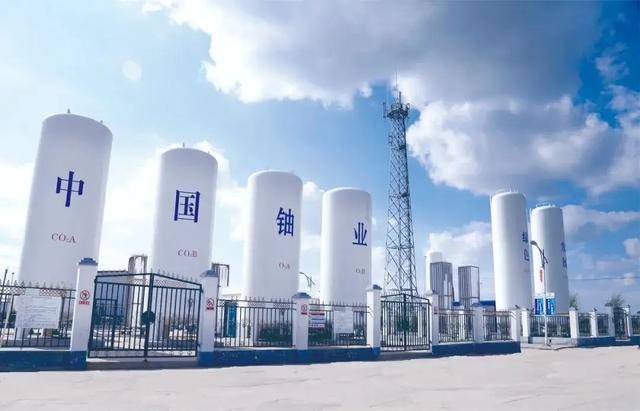
前言 现在咱国家搞"双碳"、推核电,最缺不得的就是"核粮食"——天然铀! 而最近有个重磅消息,直接关乎咱能源安全的"命门"。 懂行的都知道,原地浸出是现在最先进的采铀技术,这项目一投产,每年能多产1200吨天然铀。 国内唯一能搞天然铀采冶的"国家队"中国铀业,不仅IPO终于敲定,旗下大项目还提前试产了。 这波操作直接给咱核电发展上了"双保险"! IPO落地+项目试产 咱们先唠最实在的——中国铀业这波上市操作,可不是走个过场。 早在2024年11月13日,它就亮了招股书,计划在深交所主板发不超过2.48亿股,发行后总股本能超20.68 亿股,当时就说了募资全投主业。 等到2025年5月,这事儿终于有了实锤:证监会正式核准了它的IPO申请,还定了发行价,算下来募资 总额超50亿! 钱花在哪儿?全是硬骨头项目——内蒙古纳岭沟铀矿、巴彦乌拉铀矿二期这些,每一个都关乎产能。 更让人惊喜的是,2025年8月,纳岭沟那个原地浸出采铀工程已经进了试生产阶段! 说句实在话,以前咱国内天然铀不少靠进口,现在自家产能往上冲,以后核电"吃饭"再也不用看别人脸 色了。 全球布局+技术领跑 从另一个角度看,中国铀业能扛起"核电粮仓"的担 ...
俄军无人机狂轰能源命脉,乌克兰紧急切换备用电源
Sou Hu Cai Jing· 2025-11-17 10:08
汇通财经APP讯——周日(11月17日)凌晨,乌克兰南部港口城市敖德萨再度成为俄罗斯军队的重点打 击对象。俄军发动了一轮猛烈的夜间袭击,专门针对能源基础设施展开精准轰炸,导致当地重要生命支 持设施和关键基础设施被迫紧急切换到备用电源。乌克兰官员在周日早间迅速通报了这一事件,强调尽 管防空系统全力拦截,但袭击仍造成严重破坏,整个城市部分区域陷入停电困境,居民的生活瞬间被笼 罩在寒冬前的紧张氛围中。 地区军管局长详述袭击细节:无人机损毁太阳能电站,火灾迅即扑灭无人员伤亡 敖德萨地区军事管理局局长奥列赫·基珀通过Telegram平台发布了详细报告,他指出敌人持续故意瞄准 敖德萨地区南部的民用基础设施。尽管乌克兰防空部队展开积极抵抗,但俄军发射的攻击无人机还是成 功突破防线,再次重创了多个能源设施,其中包括一座太阳能发电厂。 袭击引发了多处火灾,不过国家紧急服务部门反应迅速,火势在短时间内就被完全扑灭。更令人松一口 气的是,这次袭击没有造成任何人员伤亡。基珀还提到,在受影响的区域已经紧急部署了"韧性点",这 些临时支援站为居民提供基本电力和热源,确保关键设施如医院和供水系统能够通过备用电源维持运 转,避免了更大规模的 ...

11月17日上期所沪银期货仓单较上一日下跌7539千克
Jin Tou Wang· 2025-11-17 08:29
周日(11月17日)凌晨,乌克兰南部港口城市敖德萨再度成为俄罗斯军队的重点打击对象。俄军发动了 一轮猛烈的夜间袭击,专门针对能源基础设施展开精准轰炸,导致当地重要生命支持设施和关键基础设 施被迫紧急切换到备用电源。 乌克兰官员在周日早间迅速通报了这一事件,强调尽管防空系统全力拦截,但袭击仍造成严重破坏,整 个城市部分区域陷入停电困境,居民的生活瞬间被笼罩在寒冬前的紧张氛围中。 上海期货交易所指定交割仓库期货11月17日仓单日报显示,白银期货总计569355千克,今日仓单较上一 日下跌7539千克。 沪银主力短线维持震荡格局,今日白银期货开盘报12220元/千克,最高触及12251元/千克,最低触及 11854元/千克,截止收盘报11933元/千克,下跌4.08%。 | 地区 | 仓库 | 期货 | 增减 | | --- | --- | --- | --- | | 上海 | 中储吴淞 | 93868 | 0 | | | 外运华东虹桥 | 100012 | -5216 | | | 中工美供应链 | 285776 | 599 | | | 合计 | 479656 | -4617 | | 广东 | 深圳威豹 | 896 ...
全球油价扛不住了!俄罗斯遭到惨痛打击,乌军导弹掐断俄能源命脉
Sou Hu Cai Jing· 2025-11-17 06:06
深夜时分,黑海的海岸突然被撕裂,橙红色的火球冲天而起,蘑菇状的烟柱在漆黑的夜空中显得格外醒目。这场发生在11月中旬的爆炸事件并非一起意外, 而是乌克兰军队精准打击俄罗斯新罗西斯克石油枢纽的结果,成为了战场上一幕震撼的画面。 随着火光逐渐消退,全球迎来了一个更加棘手的问题——每天200万桶的石油供应突然"消失",国际油价随之迅速反应。 尽管很多人对新罗西斯克这个名字可能不太熟悉,但在全球能源格局中,它是俄罗斯通往黑海的"能源咽喉"。作为由俄罗斯石油运输公司控制的核心枢纽, 这里不仅是俄罗斯石油出口的重要节点,还连接着里海管道系统,是哈萨克斯坦原油转口出口的关键所在。 换句话说,这个港口每天的石油出口量,占据了全球石油供应总量的2%。看似微不足道的2%,在全球能源市场中却如同一根精密的天平,任何波动都可能 引发一系列连锁反应。 此次袭击的方式彰显了乌克兰军队战术的升级。攻击的主力是乌克兰自主研发的"海王星"巡航导弹。这些导弹并非仅仅依靠一两枚单打独斗,而是通过多枚 导弹的协同攻击,突破了俄军防空系统,成功撕开了俄罗斯的防线。 目击者称,爆炸声此起彼伏,响声像鞭炮一样不断,石油储罐被击中后,流淌的原油加剧了火势,火 ...