两山理念

Search documents
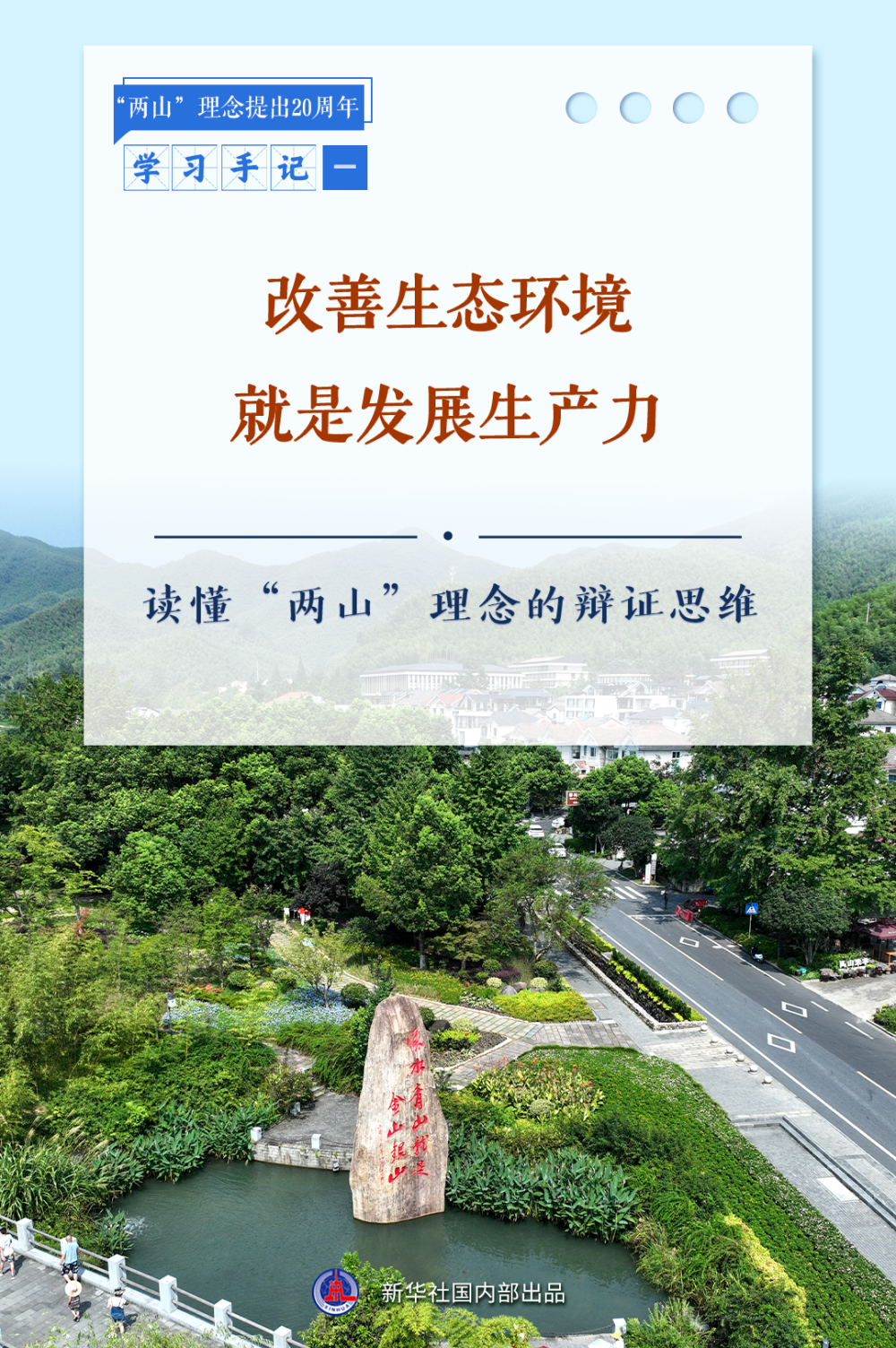
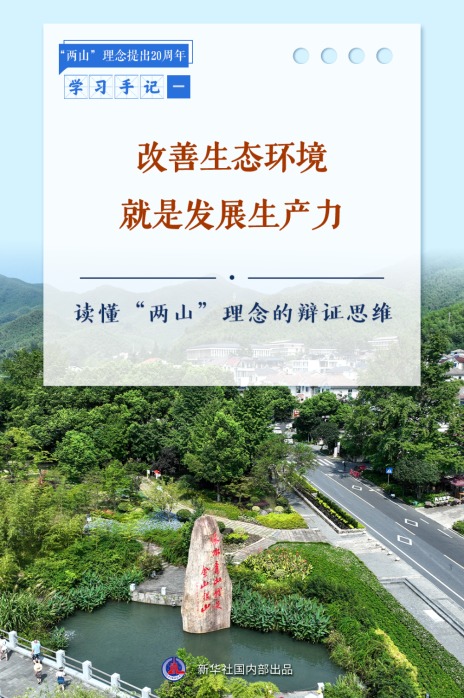
学习手记|改善生态环境就是发展生产力——读懂“两山”理念的辩证思维
Xin Hua She· 2025-08-13 01:03
Core Concept - The "Two Mountains" theory emphasizes the dialectical relationship between ecological wealth ("green mountains and clear waters") and economic wealth ("golden mountains and silver mountains"), advocating for a balanced approach to development and environmental protection [4][5][6]. Group 1: Historical Context - The "Two Mountains" concept was articulated by Xi Jinping during a visit to Yucun village in 2005, highlighting the need to prioritize ecological protection over short-term economic gains [4]. - Yucun village transitioned from a prosperous mining community to a model of ecological tourism, demonstrating the potential for economic recovery through environmental stewardship [4][7]. Group 2: Economic Implications - The theory posits that ecological protection can enhance productivity, with the concept of "green GDP" reflecting the intrinsic value of ecological systems [6]. - Since 2012, China has achieved an average annual economic growth of over 6.1% while maintaining a 3.3% increase in energy consumption, showcasing a successful shift towards a green economy [6]. Group 3: Implementation and Progress - China has initiated pilot projects in 12 regions to establish mechanisms for realizing the value of ecological products, with over 572 ecological civilization demonstration zones created nationwide [7]. - Various innovative methods such as "protecting green for gold" and "gathering green to create gold" are being explored to unlock ecological dividends [7]. Group 4: Future Directions - The focus is on enhancing the value realization mechanisms for ecological products and promoting the integration of ecological and industrial development [6][7]. - Xi Jinping's recent visits to various regions emphasize the importance of transforming natural beauty into sustainable tourism and economic opportunities [6].

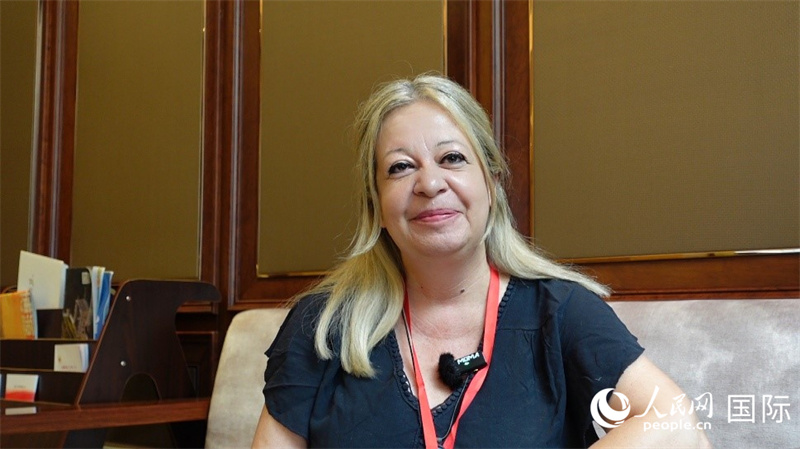
希腊发展部高级顾问:高度赞赏内蒙古绿色发展成就
人民网-国际频道 原创稿· 2025-08-13 01:01
人民网北京8月12日电 (殷韬)8月4日至10日,来自意大利、希腊、匈牙利、法国等欧洲9国的智库学者、社 媒网红以及国内媒体记者40余人共赴内蒙古自治区,参加以"绿色发展,和谐共生"为主题的"人权行动看中国 ·2025"内蒙古行活动。活动期间,希腊发展部副部长中国问题高级顾问乔月·碧丝芭在接受人民网专访时表示,高 度赞赏内蒙古自治区的绿色发展举措,并对内蒙古的少数民族文化表现出了浓厚的兴趣。 碧丝芭是第一次来到内蒙古,在此之前,她对这里一无所知。在活动临近尾声时,她对内蒙古的印象逐渐清 晰:"我刚刚结束了一次令人难忘的旅行,我深刻了解了内蒙古令人惊叹的文化,强烈感受到当地人民在改善生活 水平同时为保护生态环境所付出的艰辛努力。" 谈到内蒙古的绿色发展,碧丝芭表示,她在行程中感受到了当地政府对环境保护的重视。在参观易地扶贫搬 迁安置区和防沙治沙合作造林项目时,她看到了成片的防风固沙树林。生态环境的持续改善让碧丝芭不禁感 慨:"如果不是因为还有些沙子残留的痕迹,无论我们对谁说,他们都不会相信这个现在绿意盎然、树木繁茂、河 流环绕的地区,曾经是一片沙漠。" 在参访乌拉盖草原、99号公路、阿尔山氧心森林浴道等地时,碧 ...
周世锋:统筹做大“蛋糕”与分好“蛋糕”
Jing Ji Ri Bao· 2025-08-13 00:20
Core Insights - Huzhou is implementing the concept of "Green Water and Green Mountains are as Valuable as Mountains of Gold and Silver" through innovative reforms and mechanisms to achieve ecological civilization and common prosperity [1][2] Group 1: Reform Innovations - Huzhou has been exploring reforms to facilitate the transformation of ecological resources, such as initiating pilot reforms for "Two Mountains" cooperatives in 2019, achieving full coverage of cooperatives by June 2023, and generating a cumulative income of 147 million yuan for village collectives [1] - The city is also pioneering property rights reforms for mountain ponds and reservoirs, with the first national ecological product value transformation project set to launch in March 2024 [1] Group 2: Business Model Innovations - Huzhou is transforming ecological resources into vibrant business models, creating new formats like "village coffee + leisure," "village coffee + music," and "camping + cultural tourism," which have attracted youth to rural areas [1] - The "Deep Blue Plan" in Anji set a national record with a single store selling 8,818 cups of coffee in one day, showcasing the potential of the coffee economy and digital nomadism in rural areas [1] Group 3: Benefit Distribution Mechanisms - Huzhou has innovated benefit distribution mechanisms to ensure equitable sharing of ecological wealth, such as the bamboo forest carbon sink trading platform in Anji, which allows villagers to earn stable returns from investments while ensuring collective benefits for the community [2] - The model emphasizes the return of resources and benefits to farmers, promoting a sustainable cycle of investment and profit-sharing that supports both individual and community welfare [2]
“生态美”如何促进“共同富”——来自浙江省湖州市的调查
Jing Ji Ri Bao· 2025-08-12 22:22
Core Viewpoint - Huzhou has successfully implemented the "Two Mountains" theory, transforming its ecological advantages into economic benefits, thereby creating a new path for sustainable development and common prosperity [1][4]. Group 1: Ecological and Economic Transformation - Huzhou has shifted from a traditional industrial model to a sustainable development model, realizing a significant transformation in its economic structure [1][5]. - The city has achieved a remarkable increase in industrial output value, from 239.9 billion yuan in 2005 to 1,336.3 billion yuan in 2024, while reducing energy consumption per unit of GDP by approximately 48% [7]. - Huzhou has developed a modern green industry system, focusing on new energy vehicles and semiconductors, enhancing both ecological and economic value [6][7]. Group 2: Innovative Carbon Trading and Low-Carbon Initiatives - The "Carbon Daren" platform allows residents to convert low-carbon behaviors into carbon credits, with a trading price of around 66 yuan per ton, promoting local carbon reduction efforts [2][3]. - Huzhou has pioneered various ecological product value transformation transactions, including bamboo carbon trading and water conservation projects, establishing itself as a leader in ecological finance [4]. Group 3: Rural Development and Common Prosperity - Huzhou is addressing the "three major gaps" (urban-rural, regional, and income disparities) by leveraging ecological resources to develop rural tourism and new business models, such as the "Tianji Sen Valley" project [9][10]. - The city has cultivated numerous rural tourism projects, with 73 provincial and 8 national key tourism villages, attracting 1.2 billion visitors in 2024 [10][11]. Group 4: Environmental Governance and Legislation - Huzhou has established a comprehensive ecological civilization system, including local regulations and standards to protect and enhance its natural environment [3][4]. - The city has implemented the "Million Project" to improve rural living conditions, resulting in significant advancements in environmental quality and community engagement [12][13].
“两山”理念如何重塑美丽中国
Bei Jing Ri Bao Ke Hu Duan· 2025-08-12 22:18
Core Concept - The "Two Mountains" concept, proposed by Xi Jinping, emphasizes the balance between economic development and environmental protection, highlighting that "green mountains and clear waters are as valuable as mountains of gold and silver" [3][4][8] Group 1: Economic and Environmental Balance - The challenge of balancing economic growth with environmental protection is particularly pressing for a developing country like China, which has a population of over 1.4 billion [3] - Since the introduction of the "Two Mountains" concept in 2005, there has been a significant push towards integrating ecological civilization into national development strategies, with unprecedented efforts in ecological construction [3][4] Group 2: Practical Applications and Innovations - Various innovative practices have emerged across the country, such as eco-tourism in mountainous areas and the establishment of "green banks" that utilize carbon credits and forest tickets, demonstrating the economic value of good ecology [4][5] - Traditional industries are enhancing their competitiveness by reducing energy consumption and improving efficiency, while emerging industries like electric vehicles are investing heavily in research and development to drive green innovation [5] Group 3: Public Sentiment and Environmental Quality - As living standards improve, the public increasingly values ecological quality, leading to a consensus that a good environment is essential for a better life [6] - Initiatives aimed at improving water quality, soil management, and large-scale afforestation are being implemented, resulting in a simultaneous enhancement of ecological aesthetics and public happiness [6] Group 4: Global Implications and Leadership - The "Two Mountains" concept is presented as a gift from China to the world, offering insights into addressing climate change and biodiversity loss, with successful projects in over 100 countries showcasing China's commitment to global ecological civilization [7][8] - The current global economic challenges necessitate a steadfast commitment to green transformation and ecological industries, leveraging legal, market, technological, and policy tools to create a strong synergy for sustainable development [7]
统筹做大“蛋糕”与分好“蛋糕”
Jing Ji Ri Bao· 2025-08-12 22:15
Core Viewpoint - Huzhou is implementing the concept of "Green Water and Green Mountains are as Valuable as Mountains of Gold and Silver" through innovative reforms and mechanisms, aiming to achieve ecological civilization and common prosperity [1][2]. Group 1: Reform and Innovation - Huzhou has been exploring reforms to activate ecological resources, such as initiating the "Two Mountains" cooperative pilot reform in 2019, achieving full coverage of cooperatives by June 2023, and generating a cumulative income of 147 million yuan for village collectives [1]. - The city is also pioneering property rights reform for mountain ponds and reservoirs, with the first national ecological product value transformation project set to launch in March 2024 [1]. Group 2: Business Model Innovation - Huzhou is transforming ecological resources into vibrant business models, such as "village coffee + leisure" and "camping + cultural tourism," which have attracted youth to rural areas and upgraded traditional industries to new formats like coffee economy and live-streaming e-commerce [1]. - The "Deep Blue Plan" in Anji set a national record with a single store selling 8,818 cups of coffee in one day, showcasing the potential of innovative business models [1]. Group 3: Benefit Distribution Mechanism - Huzhou has innovated a benefit distribution mechanism to ensure equitable sharing of ecological wealth, exemplified by Anji's bamboo forest carbon trading platform, which allows villagers to earn stable returns while investing in sustainable projects [2]. - The model ensures that villagers receive 60% of the bamboo forest's value-added income, while village collectives retain 40% for community welfare and development projects, promoting a cycle of resource utilization and benefit return [2]. Group 4: Broader Implications - Huzhou's practices reflect a commitment to balancing high-quality development with environmental protection, creating a replicable model for ecological common prosperity that can be promoted across the province and nation [2].
学习手记 | 改善生态环境就是发展生产力——读懂“两山”理念的辩证思维
Xin Hua She· 2025-08-12 14:36
Core Viewpoint - The articles emphasize the importance of balancing ecological protection with economic development, encapsulated in the concept of "green mountains and clear waters are invaluable assets" [2][3][4]. Group 1: Ecological and Economic Balance - The transformation of Yucun village from a mining economy to an ecologically sustainable model illustrates the successful integration of environmental protection and economic growth [2]. - The "Two Mountains" theory, introduced by Xi Jinping, highlights that ecological wealth can lead to economic wealth, but not vice versa, stressing the need for sustainable development practices [3][4]. - The concept of green GDP is introduced, which aims to shift the focus from traditional GDP growth to a model that values ecological health as a component of economic productivity [4]. Group 2: Implementation and Progress - Since 2012, China has achieved an average annual economic growth of over 6.1% while maintaining a 3.3% increase in energy consumption, showcasing a commitment to green development [4]. - Various regions in China are piloting mechanisms to realize the value of ecological products, with over 572 ecological civilization demonstration zones established [5]. - The success of Yucun village serves as a model for other regions, demonstrating that green development strategies can yield positive results for both the environment and local economies [5].
“两山”理念的生动实践:从“环境之痛”到“人居之福”,小山村绘就“存绿取金”生态画卷
Yang Shi Wang· 2025-08-12 09:00
Core Insights - The transformation of Anji from a "stone economy" to a green economy has led to significant ecological and economic benefits, showcasing the effectiveness of the "Two Mountains" theory [4][5][11] - Anji has become a hub for coffee culture, with a high number of coffee shops and substantial sales, indicating a shift towards tourism and sustainable practices [3][9] Group 1: Environmental Transformation - Anji has eliminated over 70 high-pollution mining and cement factories, replacing them with eco-friendly facilities that attract over 1.2 million tourists annually, generating an ecological value of over 35 million yuan per year [3] - The carbon sequestration capacity of bamboo forests in Anji has increased to 6.6 tons per hectare, providing bamboo farmers with annual income from carbon credits exceeding 28 million yuan [7] - Water quality in local streams has improved significantly, with the overall water quality rating rising from Class IV to Class II, contributing to summer tourism revenues exceeding 200 million yuan [9] Group 2: Economic Impact - The annual total value of ecological products in Anji has reached over 91 billion yuan, reflecting the successful transition to a green economy [11] - The former limestone mining area has been transformed into an ecological resort, with coffee sales reaching over 8,000 cups per day, equivalent to nearly a year's income from mining activities [9]
“一滴水”折射发展华彩 浙江淳安探索生态保护与经济发展的平衡之道
Jin Rong Shi Bao· 2025-08-12 02:41
Core Insights - The development of Xiajiang Village serves as a microcosm of rural development in Zhejiang Province, showcasing successful strategies for ecological restoration and economic growth [1][2][5] Group 1: Village Development and Economic Transformation - Xiajiang Village has transitioned from a poverty-stricken area to a thriving community, with over 90% of its land now circulated and a vegetation coverage rate restored to 97% [2][3] - The village has established a "Four Leaf Economy" focusing on tea, bamboo, silkworm leaves, and medicinal leaves, leading to diversified agricultural practices [2] - In 2024, the per capita disposable income for rural residents reached 54,931 yuan, while the collective economic income of the village totaled 2.5477 million yuan [3] Group 2: Tourism and Hospitality Industry - The rise of rural tourism has led to the establishment of numerous agritourism businesses, with the first boutique homestay opened by Jiang Lijuan in 2016 [3] - A unified management model for the homestay industry was implemented to prevent competition among villagers, ensuring equitable distribution of tourist resources [3] - In 2020, the village received 568,700 tourists, generating tourism revenue of 90.72 million yuan [3] Group 3: Collaborative Economic Models - The establishment of the Xiajiang Industrial Development Company in 2018 allowed villagers to become shareholders, promoting collective economic growth [3][5] - A "共富联盟" (Common Prosperity Alliance) was formed to integrate resources and promote joint development among surrounding villages [5][6] - The alliance has seen a 15.8% increase in collective economic income and a 10.7% rise in operational income in 2024 [6] Group 4: Environmental and Regulatory Framework - The ecological protection regulations in place in Chun'an County emphasize sustainable development, with strict requirements for water beverage projects [7][8] - The county has developed a comprehensive service center for the water beverage industry, facilitating resource integration and supporting local businesses [8] Group 5: Future Prospects - Xiajiang Village aims to balance red (cultural heritage) and green (ecological tourism) development, exploring new opportunities for growth [3][5] - The village is leveraging partnerships with major companies to enhance its market presence and attract more resources [6]
舟山泼墨绘“绿”奔赴“新”程
Zhong Guo Huan Jing Bao· 2025-08-12 01:36
Core Viewpoint - Zhoushan Islands are exemplifying the concept of "Lucid waters and lush mountains are invaluable assets" through various ecological and sustainable development practices, marking the 20th anniversary of this philosophy's introduction [1]. Group 1: Ecological Development - The establishment of the first local standard for ecological product value accounting in a marine area in Zhoushan provides a model for realizing ecological product value [1]. - Zhoushan is committed to high-level construction of a marine garden city, promoting the brand "Green Development Looks at Zhoushan" [1]. - The transformation of the Dihai Bay area from an industrial port to a beautiful ecological park illustrates the successful implementation of the "Two Mountains" concept [2]. Group 2: Environmental Management - Comprehensive water environment governance has turned previously polluted rivers into clean waterways, showcasing effective ecological resource management [4]. - Zhoushan ranks among the top cities in air quality in China, with a centralized sewage collection rate of 86.45% and a waste classification rate of 86.1% as of 2024 [4]. - The city has implemented a "no leaf sweeping" initiative to enhance seasonal aesthetics and established a real-time monitoring platform for environmental data [4]. Group 3: Rural Transformation - The transformation of rural areas, such as the New Village and Milin Village, demonstrates successful rural environmental improvement and the development of new tourism and hospitality industries [7][8]. - The "One Village, One Product" initiative has led to the creation of garden-like villages, enhancing local tourism and community engagement [8]. - Zhoushan has achieved a 50% coverage rate for beautiful rural areas, with significant investments in modernizing small towns and villages [8]. Group 4: Marine and Ecological Protection - Zhoushan has established a comprehensive marine sanitation mechanism to manage marine waste effectively, contributing to the protection of its marine ecosystem [10]. - The city has completed 113 out of 149 ecological infrastructure projects aimed at enhancing biodiversity and environmental quality [10]. - Community involvement in environmental protection is evident, with local volunteer groups actively participating in beach clean-ups and conservation efforts [11].