
直播电商等

Search documents
长三角消费新局:江苏首夺全国第一,杭州竞逐“万亿消费第七城”
2 1 Shi Ji Jing Ji Bao Dao· 2026-02-12 14:54
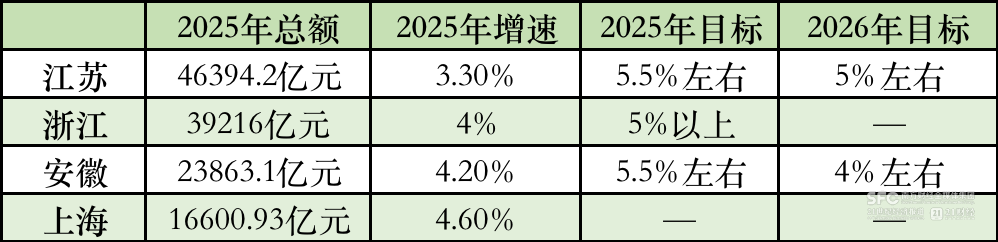
Group 1 - In 2025, the total retail sales of consumer goods in China exceeded 50 trillion yuan for the first time, with a year-on-year growth of 3.7% [1] - The Yangtze River Delta region contributed a quarter of the total retail sales, with Jiangsu province achieving the highest retail sales at 46,394.2 billion yuan, marking its first time at the top nationally [1][2] - Shanghai experienced the fastest growth in retail sales at 4.6%, with an increase of 0.3 percentage points compared to the previous three quarters [1][2] Group 2 - Jiangsu's retail sales contributed approximately 55% to economic growth in 2025, driven by service consumption from cultural tourism and events [2] - The retail sales in Zhejiang reached 39,216 billion yuan, growing by 4.0% year-on-year, while Anhui's retail sales were 23,863.1 billion yuan, with a growth of 4.2% [1][2] - Hangzhou led the Yangtze River Delta with retail sales of 9,499 billion yuan, aiming to become the seventh trillion-yuan consumption city in the country [1][3] Group 3 - The outbound tax refund policy in Shanghai emerged as a new growth point for consumption, with the number of tax refund applications quadrupling compared to the previous year, and sales and refund amounts increasing by 80% [3] - Jiangsu's consumption of green and smart products grew by 15%, while Zhejiang's digital consumption increased by 12% through live e-commerce and instant retail [3] - In the Yangtze River Delta, cities like Suzhou and Hangzhou surpassed significant retail sales thresholds, with Suzhou reaching 9,092.22 billion yuan [3][4] Group 4 - The retail sales growth targets for 2026 have been generally lowered across many regions, with Jiangsu and Anhui setting their targets at around 5% and 4% respectively [7] - The focus on promoting consumption has intensified, with many provinces prioritizing consumption in their government work reports, emphasizing the shift from traditional goods to service consumption [7][8] - New consumption trends such as digital consumption, cultural tourism, and service-oriented consumption are being promoted, with initiatives to enhance the quality and variety of services offered [8]

市场监管总局表示 支持企业通过并购重组摆脱内卷式竞争
Zhong Guo Zheng Quan Bao· 2026-01-27 22:00
1月27日,市场监管总局召开2025年综合整治"内卷式"竞争十大重大案件专题新闻发布会。市场监管总 局反垄断二司副司长谢方在会上表示,投资并购是经营者通过市场化机制实现资源整合、优势互补及市 场出清的重要方式。市场监管总局坚持"快审不降质、严审不增负",加强汽车、光伏、锂电池等"内卷 式"竞争重要领域经营者集中审查,有效支持企业依法通过并购盘活闲置资产、提升经营效率,支持企 业通过并购重组走出"内卷式"竞争。 完善经营者集中审查制度规则 谢方表示,2025年共审结相关领域案件129起,所涉案件包括促进技术协同、实现优势互补,优化产能 布局、整合区域资源,盘活闲置产能、促进转型升级等多种类型。 ● 本报记者 董添 市场监管总局价监竞争局一级巡视员杨洪丰在会上表示,市场监管总局始终高度重视网络不正当竞争行 为监管工作,坚决贯彻党中央、国务院决策部署,切实强化反不正当竞争,持续规范网络市场竞争秩 序,推动平台经济规范健康发展。 在加强执法力度方面,市场监管总局部署开展2025年整治网络不正当竞争行为专项行动。聚焦党中央关 心、人民群众关注、违法行为高发的直播电商、老年人药品、保健品、光伏、汽车平台等重点领域、行 业 ...

信心的种子,不怕任何冬寒
Ren Min Ri Bao· 2026-01-13 03:02
Group 1 - As of June 2025, there will be 161 million internet users aged 60 and above in China, indicating a significant growth potential for the silver economy and digital economy [1] - By November 2025, a total of 611 generative AI services will have completed registration, with 306 related applications or functions also registered, showcasing the rapid development of domestic AI models [1] - The new generation of digital technologies, including big data, cloud computing, AI, blockchain, and IoT, is continuously creating new industries, models, and driving forces, expanding the sources of development confidence [1] Group 2 - China's economy is undergoing a profound transformation in its growth dynamics, shifting from reliance on factor input and scale expansion to new productive forces that drive quality, efficiency, and power changes [2] - The potential of China's economy is being continuously released through regional coordinated development, rural revitalization, and the ongoing improvement of human capital quality [2] - The unique ecosystem formed by China's super-large market allows innovations to quickly achieve scale effects once they gain market recognition, as evidenced by the rapid growth of sectors like new energy vehicles and live-streaming commerce [2] Group 3 - Many Chinese entrepreneurs are building technological "moats" and enhancing value through persistent efforts, demonstrating that success comes from hard work and dedication [3] - The successful test flight of domestically produced high-bypass turbofan engines illustrates China's ability to overcome technological challenges and break through external constraints, reflecting a strong sense of confidence [3] - The 2025 Central Economic Work Conference emphasizes the importance of internal strengthening to address external challenges, advocating for strategic determination and a stable industrial system to navigate uncertainties [3]
全国劳动力人口均龄逼近40岁,这些城市正卖力吸引年轻人
Xin Jing Bao· 2025-12-19 01:29
Core Insights - The average age of the national labor force in China has risen to 39.66 years in 2023, up from 32.25 years in 1985, indicating a significant demographic shift [1] - There is a notable regional disparity in labor force age, with Inner Mongolia, Heilongjiang, Liaoning, Jilin, and Sichuan having the highest average ages, while provinces like Hainan, Tibet, and Guangdong have younger labor structures [1] - The aging labor force poses challenges for regions with high average ages, necessitating new strategies for talent attraction and retention [1] Regional Analysis - The three northeastern provinces of China face dual pressures of institutional transformation and youth outflow, with average labor ages exceeding 40 years [2] - Inner Mongolia's reliance on resource-based industries has limited its ability to attract young talent, particularly in sectors favored by youth such as digital and service industries [2] - Sichuan, despite being a populous province, has an aging labor force due to significant out-migration of young workers to coastal cities and demographic shifts within the province [3] Urban Competition for Talent - A competition among cities to attract younger populations is intensifying, moving beyond previous "talent wars" to more comprehensive strategies [4] - Chengdu has implemented a series of supportive measures for talent development, including financial support and free office space, leading to an increase in its youth population [5] - Cities like Changchun and Harbin are adopting targeted strategies to attract talent, with initiatives ranging from financial incentives to comprehensive support systems for graduates [6][7] Challenges and Considerations - Despite various talent attraction policies, cities face deeper challenges related to sustainable talent retention and regional balance [8] - The phenomenon of talent concentration in major cities like Chengdu and Harbin may exacerbate aging issues in surrounding areas, highlighting the need for a balanced regional development strategy [8] - The long-term effectiveness of talent policies will depend on the cities' ability to provide sustainable economic opportunities and a conducive living environment for young professionals [9][10] Conclusion - The overall increase in labor force age serves as a critical warning regarding demographic structure, particularly for regions like Inner Mongolia, Heilongjiang, Liaoning, Jilin, and Sichuan, which must focus on attracting and retaining young talent [11] - Chengdu currently leads in this competition due to its strategic foresight and comprehensive resource allocation, while northeastern cities are striving for revitalization [11]
统筹做大“蛋糕”与分好“蛋糕”
Jing Ji Ri Bao· 2025-08-12 22:15
Core Viewpoint - Huzhou is implementing the concept of "Green Water and Green Mountains are as Valuable as Mountains of Gold and Silver" through innovative reforms and mechanisms, aiming to achieve ecological civilization and common prosperity [1][2]. Group 1: Reform and Innovation - Huzhou has been exploring reforms to activate ecological resources, such as initiating the "Two Mountains" cooperative pilot reform in 2019, achieving full coverage of cooperatives by June 2023, and generating a cumulative income of 147 million yuan for village collectives [1]. - The city is also pioneering property rights reform for mountain ponds and reservoirs, with the first national ecological product value transformation project set to launch in March 2024 [1]. Group 2: Business Model Innovation - Huzhou is transforming ecological resources into vibrant business models, such as "village coffee + leisure" and "camping + cultural tourism," which have attracted youth to rural areas and upgraded traditional industries to new formats like coffee economy and live-streaming e-commerce [1]. - The "Deep Blue Plan" in Anji set a national record with a single store selling 8,818 cups of coffee in one day, showcasing the potential of innovative business models [1]. Group 3: Benefit Distribution Mechanism - Huzhou has innovated a benefit distribution mechanism to ensure equitable sharing of ecological wealth, exemplified by Anji's bamboo forest carbon trading platform, which allows villagers to earn stable returns while investing in sustainable projects [2]. - The model ensures that villagers receive 60% of the bamboo forest's value-added income, while village collectives retain 40% for community welfare and development projects, promoting a cycle of resource utilization and benefit return [2]. Group 4: Broader Implications - Huzhou's practices reflect a commitment to balancing high-quality development with environmental protection, creating a replicable model for ecological common prosperity that can be promoted across the province and nation [2].