供应链金融

Search documents
山东现有专精特新中小企业1.8万家,“小巨人”企业1163家,省瞪羚企业3028家
Da Zhong Ri Bao· 2025-06-27 01:03
Group 1 - Shandong has 18,000 specialized and innovative small and medium-sized enterprises (SMEs), including 1,163 "little giant" enterprises and 3,028 provincial gazelle enterprises, indicating a robust ecosystem for SMEs in the region [1][3] - The Linyi Steel Hydrogen Energy Industrial Base project, completed in June after two years of development, utilizes by-products from a coal carbonization project to produce hydrogen, showcasing innovative resource utilization [2][3] - Dongde Industrial Co., a national-level "little giant" enterprise, has developed key technologies in hydrogen production, with an annual R&D investment exceeding 20 million yuan, and has filed over 1,000 patents since its establishment [3][4] Group 2 - Shandong promotes innovation among SMEs by providing access to advanced research equipment and facilitating collaboration with research institutions, resulting in over 15,000 pieces of equipment available for use [4][5] - The province has recognized 171 provincial-level characteristic industrial clusters and 23 national-level clusters, enhancing the collective strength of SMEs and encouraging cooperative development [5][6] - In the Yang'an Town seasoning industry cluster, over 280 enterprises account for more than 40% of the national market share in compound spices, demonstrating the effectiveness of supply chain finance in supporting SME growth [5][6]
盛达资源: 关于子公司为公司提供担保的进展公告
Zheng Quan Zhi Xing· 2025-06-26 16:17
Overview of Guarantees - The company has approved guarantees for its subsidiaries, with a total guarantee amount exceeding 100% of the company's latest audited net assets, specifically for subsidiaries with a debt-to-asset ratio over 70% [1] - The company approved a guarantee limit of up to RMB 6 billion for the year 2025, covering various financing activities such as loans and leasing [1] Guarantee Progress - The company applied for a factoring business credit limit of RMB 200 million from Beijing Bank, with subsidiaries providing joint liability guarantees totaling RMB 400 million [2] - A tripartite cooperation agreement was signed with Beijing Bank and Zhongqi Yunlian for supply chain financing, allowing suppliers to transfer receivables to the bank [2] Basic Information of the Company - Company Name: Shengda Metal Resources Co., Ltd. - Legal Representative: Zhao Qing - Registered Capital: RMB 689.97 million - Established: June 22, 1995 - Business Scope: Sales of metal ores, precious metal products, and various other metal and chemical products [3][4] Financial Indicators - As of March 31, 2025, total assets were RMB 6547.08 million, with total liabilities of RMB 2985.17 million, and net assets of RMB 3034.77 million [4] - For the first quarter of 2025, the company reported operating income of RMB 352.58 million and a net profit of RMB 82.84 million [4] Agreement Details - The maximum guarantee amount for the factoring business is RMB 400 million, covering all debts including principal, interest, and related costs [5] - The factoring financing agreement specifies a credit limit of RMB 200 million, with terms for receivables transfer and payment commitments [6][7] Total Guarantees and Overdue Guarantees - The total approved guarantee amount is RMB 6 billion, representing 197.16% of the company's latest audited net assets, with no overdue or litigated guarantees reported [7]

民企供应链金融期待新跨越
Guo Ji Jin Rong Bao· 2025-06-26 10:41
Core Insights - The recent 2025 Lujiazui Forum has announced new high-level policies for opening up, further strengthening Shanghai's role as an international financial center, providing new opportunities for financial innovation and corporate financing [1] - A seminar on "Innovative Models and Frontier Exploration of Supply Chain Finance for China's Private SMEs Based on Banking 'Resource Endowment'" was held at Fudan University, highlighting the unique contributions of China's private SMEs to global finance [1] Group 1: Supply Chain Finance Evolution - Professor Chen Xiangfeng noted that since the 1960s, the development of Chinese enterprises has gone through three stages: "Manufacturing Dominance," "Channel Dominance," and "Cash Dominance," and has now entered the "Data Dominance" era since 2020 [3] - The focus of competition has evolved from material flow to information flow, and now to cash flow, marking the beginning of supply chain finance [3] - The current "Data Dominance" era emphasizes stability, security, high value, and sustainability in supply chain management, aligning with high-quality development concepts [3] Group 2: Digital Transformation and Policy Support - The digital transformation of supply chain finance is not just a technological upgrade but also a mission to return finance to its essence of serving the real economy [4] - The central government has emphasized addressing the financing difficulties faced by private SMEs, promoting high-quality development of inclusive finance [4] - A multinational research team led by Professor Peter Shi has developed an innovative supply chain finance model tailored for China's private SMEs, addressing structural issues in financing [4] Group 3: Technological Innovations and Research Achievements - The research team from Zandong Technology presented groundbreaking findings at the 51st International Conference on Computer and Industrial Engineering, winning the Best Paper Award [5] - This research has established a comprehensive academic framework for a supply chain finance model based on banking resource endowment, specifically designed for China's private SMEs [5] - Professor Chen praised the research and provided optimization suggestions while discussing potential future developments in the field [5] Group 4: Integration of Finance and Supply Chain Management - Supply chain finance encompasses both financial and supply chain management aspects, facilitating value creation and promoting the development of the real economy [7] - The need for deep integration between the real economy and digital economy is emphasized, along with the importance of combining production and finance [7] - The concept of "Air Bank" proposed by Zandong Technology has sparked discussions on the future of supply chain finance [7] Group 5: Future Trends and Strategic Implications - The financial service system is undergoing structural changes, with future supply chain finance services expected to converge on a "super interface" that links supply and demand [8] - Zandong Technology's dual-driven innovation platform aims to achieve breakthroughs in both technological innovation and business models, promoting a new path for "industry × finance" [9] - The systemic reshaping of supply chain finance will enhance regional economic integration and establish China's competitive advantage in digital supply chain finance [12]

闪光的你,赋能徐州高质量发展优秀案例请展示!
Sou Hu Cai Jing· 2025-06-25 23:10
Core Viewpoint - The article discusses the "2025 Xuzhou Financial Services High-Quality Development Case Collection Activity," aimed at showcasing the achievements of Xuzhou's financial industry during the 14th Five-Year Plan and contributing to its goal of becoming a trillion-yuan city by 2025 [1] Group 1: Activity Overview - The activity will last for six months, from May to October 2025, and aims to systematically display the accomplishments of Xuzhou's financial sector during the 14th Five-Year Plan [1] - It seeks to enhance the social responsibility of financial institutions and increase the influence of Xuzhou's financial industry in the Yangtze River Delta and nationwide [1] Group 2: Collection Scope - The collection targets financial institutions in Xuzhou, including banks, insurance, securities, and fund companies, focusing on innovative service cases, digital transformation achievements, and risk prevention practices [2] - Government and industry associations are also included, providing cases on policy innovation and cross-sector collaboration governance models [3] Group 3: Field Directions - The activity emphasizes several key areas: - Serving the real economy through supply chain finance, specialized loans for manufacturing, and technology financial products [4] - Promoting inclusive finance, including financial services for new citizens, rural credit system development, and innovations in microfinance products [5] - Digital transformation initiatives, such as applications of digital currency, intelligent risk control systems, and blockchain technology practices [6] - Green finance projects, including carbon financial products, green credit projects, and ESG investment cases [7] - Innovative governance models, such as diversified financial dispute resolution mechanisms and cross-department data sharing platforms [8] Group 4: Case Requirements - Cases must be inclusive, covering a wide range of beneficiaries [9] - They should demonstrate effectiveness, having been implemented in recent years with quantifiable data and noticeable results [10] - Innovation is key, showcasing policy, technology, or model innovations with potential for broader application [11] - Compliance with laws and regulations is mandatory, aligning with national policy directions [12] Group 5: Evaluation and Display - An expert evaluation committee will be formed, comprising representatives from the central bank, universities, and industry associations, to assess cases based on innovation, effectiveness, and applicability [13] - Selected cases will be showcased through exhibitions and special reports across multiple channels [13] Group 6: Submission and Recommendation Process - Organizations can self-nominate by filling out a case recommendation form and providing a written document of up to 3,000 words detailing the project background, implementation measures, innovative highlights, and social benefits [14] - Experts and media can also recommend cases, requiring a rationale for their nomination [15] Group 7: Activity Timeline - The activity will follow a structured timeline: - Initial selection phase from May to June, involving strict screening of submissions [16] - Publicity and reporting phase from June to July, including on-site evaluations of key cases [16] - Final review phase from August to September, where the expert committee will determine the final selected cases [16] - Promotion and publication phase from September to October, culminating in a ceremony to announce the outstanding cases [16]
垒知集团: 垒知控股集团股份有限公司公开发行可转换公司债券2025年跟踪评级报告
Zheng Quan Zhi Xing· 2025-06-25 17:47
Core Viewpoint - The credit rating agency maintains the long-term credit rating of Leizhi Holdings Group Co., Ltd. at AA- with a stable outlook, despite a decline in revenue and profit due to a slowdown in infrastructure investment and real estate development [1][3]. Company Overview - Leizhi Holdings specializes in construction technology services and new building materials, classified under the chemical industry [10]. - As of March 2025, the company had total assets of 58.26 billion yuan and equity of 36.89 billion yuan [9]. Financial Performance - In 2024, the company reported total revenue of 26.17 billion yuan, a decrease of 14.42% year-on-year, with profit totaling 0.48 billion yuan [9][15]. - The company's new building materials business saw a revenue decline of 12.17%, primarily due to falling prices and volumes of its additive products [15]. - The overall gross margin decreased by 2.68 percentage points in 2024, influenced by lower prices for additives [15]. Debt and Liquidity - The total debt of the company was 5.39 billion yuan as of the end of 2024, with a debt-to-asset ratio of 38.82% [5][9]. - The company has a strong debt repayment capacity, with an EBITDA interest coverage ratio of 5.92 times [5][9]. Market Position - The company holds a market share of 10.50% in the concrete additive sector, ranking first in several provinces including Fujian and Guizhou [10]. - The company has a comprehensive range of qualifications in engineering, traffic, and electrical testing, enhancing its competitive edge [3][10]. Industry Analysis - The chemical industry is experiencing a downturn, with revenue and profit trends showing divergence across segments [9]. - Despite challenges, domestic demand is expected to grow due to supportive policies, which may lead to a recovery in industry conditions [9]. Future Outlook - The company is expected to stabilize its production capacity as ongoing projects come online, with a focus on market absorption of new additive capacities [4]. - Potential factors for rating upgrades include significant capacity expansion and improved profitability [4].

利好汽车、建筑业!供应链金融新规驱动数据信用转型
2 1 Shi Ji Jing Ji Bao Dao· 2025-06-25 12:43
Core Insights - The People's Bank of China and other regulatory bodies have issued a notification to regulate the 40 trillion yuan supply chain finance market, pushing the industry from "core enterprise credit reliance" to "data-driven credit" to address financing difficulties faced by SMEs [1][2][7] - The new regulations emphasize a commitment from core enterprises to maintain payment terms within 60 days, reflecting heightened regulatory scrutiny on the risks in the supply chain finance sector [2][5] - The automotive and construction industries are particularly affected by these changes due to their complex supply chains and long payment cycles, which have historically placed financial strain on SMEs [2][3] Market Growth and Regulatory Changes - The supply chain finance market in China has seen explosive growth, surpassing 40 trillion yuan in 2024, with a compound annual growth rate of 13.5% from 2020 to 2024 [2] - The new regulations aim to standardize practices and reduce risks associated with payment delays and credit reliance on core enterprises, which have been known to exploit their market position [2][6] Role of Core Enterprises - Core enterprises play a dual role in the supply chain finance ecosystem, acting as both fund providers and credit bearers, which significantly influences the financial dynamics of the supply chain [4] - While some core enterprises demonstrate social responsibility by adopting buyer interest payment models, many still extend payment terms to alleviate their own cash flow issues, negatively impacting SMEs [4][5] Challenges and Risks - The practice of extending payment terms by dominant core enterprises can lead to significant liquidity issues for SMEs, with some suppliers reporting effective payment cycles extending to 10 months [5] - The existing supply chain finance model poses credit risks, as reliance on core enterprise credit can lead to a domino effect of financial instability throughout the supply chain if a core enterprise faces difficulties [6][7] Transition to Data-Driven Models - The notification encourages banks to explore "de-core" models, which focus on data-driven credit assessments rather than solely relying on core enterprise credit [7][8] - This transition aims to enhance transparency and traceability in the supply chain, allowing financial institutions to evaluate SME credit based on actual transactions [7][8] Industry Participation and Future Outlook - Smaller banks and regional banks are more actively participating in the "de-core" trend, while larger banks are expected to accelerate their product offerings in response to regulatory changes [8] - Recent collaborations, such as that between WeBank and Zhongqi Yunlian, indicate a growing trend towards integrating supply chain data for improved financing efficiency [8]
民生银行青岛分行:深耕供应链金融 服务高质量发展
Qi Lu Wan Bao· 2025-06-25 12:05
Group 1 - The core viewpoint emphasizes the shift in corporate strategies from mere scale expansion to building smart, green, and responsible supply chain ecosystems, driven by the rapid development of information technology and the restructuring of global supply chains [1] - Minsheng Bank, as the first commercial bank to establish a supply chain finance division, has become an innovator in supply chain financial services, continuously innovating supply chain products and creating a comprehensive product system called "Minsheng E-Chain" [1] - The "Minsheng E-Chain" product line covers various aspects of supply chain management, including core enterprise credit enhancement, de-core supply chains, and small and micro supply chains, providing integrated services such as settlement, financing, and supply chain management [1] Group 2 - Minsheng Bank's Qingdao branch leverages the "Minsheng E-Chain" product system to provide a series of comprehensive services focused on enterprise management, procurement, production, and sales, utilizing financial technology to empower regional economic development [1] - The "Minsheng E-Chain" products are designed to offer personalized service plans for different enterprises, combining standardization with specialization, and integrating online and offline services [2] - By utilizing big data for multi-dimensional customer profiling, the bank optimizes credit approval and loan processes, enhancing risk control and precise fund allocation while simplifying operations for enterprises [2]

供应链“反内卷”:车企缩短账期 美的“负9天”模式受挑战
Xin Hua She· 2025-06-25 06:48
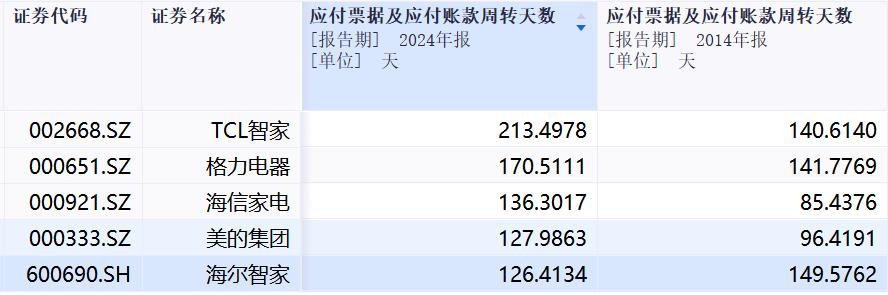
Core Viewpoint - The recent disclosure by Midea Group's chairman about a "negative 9-day cash cycle" has sparked discussions on the fairness of supply chain funding distribution, highlighting the financial strategy of using suppliers' funds for business operations [1][2] Group 1: Midea's Financial Strategy - Midea's operational model allows the company to conduct business without using its own capital, relying instead on funds from over 5,000 suppliers, resulting in a significant cash cycle advantage [2] - In 2024, Midea's accounts payable increased to 118.8 billion RMB, a 26.04% rise from 94.24 billion RMB in 2023, while revenue grew by only 9.47% to 409.1 billion RMB, indicating a shift of cost pressure onto suppliers [2][3] Group 2: Supplier Challenges - The accounts payable turnover days for Midea increased from 96.4 days in 2014 to 128 days in 2024, extending the payment cycle by 31.6 days over ten years, which poses challenges for suppliers [3] - Macro data shows that the average collection period for industrial enterprises increased by 4.0 days year-on-year, reflecting the broader trend of extended payment terms in the industry [9][10] Group 3: Policy Response - In response to the pressures on small and medium-sized enterprises (SMEs), regulatory bodies have begun to implement measures to ensure timely payments from large enterprises, including a new regulation limiting payment terms to 60 days [10][11] - A collective action by major automotive companies to standardize payment terms to 60 days reflects the industry's recognition of the need for reform in supply chain practices [11]

打破供应链挤压困局 实现经济高质量发展
Jing Ji Guan Cha Wang· 2025-06-24 13:18
Group 1 - The core viewpoint of the articles highlights the increasing financial pressure on supply chains in China, particularly affecting small and medium-sized enterprises (SMEs) due to delayed payments and financing difficulties [1][2][3] - The scale of accounts receivable for large industrial enterprises has grown significantly, with a cumulative increase of 168% from 2011 to 2021, while revenue only grew by 51.7% during the same period [2] - The average collection period for accounts receivable has extended from 49.5 days in 2021 to 70.9 days by March 2025, indicating worsening cash flow issues for SMEs [2][3] Group 2 - The newly issued notification by the People's Bank of China and other regulatory bodies aims to address the issues of delayed payments and financial strain on SMEs, mandating core enterprises to pay SMEs promptly and share financing costs fairly [3][4] - Technological innovation is reshaping supply chain management, with digital supply chains enhancing resource allocation and market responsiveness through real-time data sharing and collaboration [4][5] - The trend towards platformization and ecosystem development is shifting competition from individual enterprises to collaborative systems, promoting resilience in the supply chain [5][6] Group 3 - The automotive industry faces challenges with long payment terms from major manufacturers, which impacts the financial stability of many small suppliers [7] - The China Automotive Industry Association and the Ministry of Industry and Information Technology have proposed a 60-day payment term for chain-leading enterprises to alleviate financial pressure on SMEs [7][8] - A stable and efficient supply chain is essential for improving product quality and fostering technological innovation, which is crucial for enhancing international competitiveness in the automotive sector [7][9] Group 4 - Collaborative efforts among government, enterprises, and financial institutions are necessary to improve the financing environment for SMEs and enhance supply chain management [8] - Core enterprises are encouraged to adhere to payment agreements and reduce financial strain on their supply chain partners, while SMEs should enhance their management and digital capabilities [8][9] - The development of supply chain financial infrastructure is vital for achieving a more efficient and equitable supply chain system, which will support high-quality economic growth in the future [9]
执金融之笔 书写润泽民营经济的“浦发答卷”
Zhong Jin Zai Xian· 2025-06-24 03:12
Group 1 - The introduction of policies such as the draft law to promote the private economy and the establishment of a financing coordination mechanism for small and micro enterprises is enhancing the business environment and providing policy support for the high-quality development of private enterprises [1] - In the first quarter of 2025, 1.979 million new private enterprises were established nationwide, representing a year-on-year growth of 7.1%, exceeding the average growth rate of the past three years, indicating strong resilience in the development of private enterprises and individual businesses in China [1] - Shanghai Pudong Development Bank (SPDB) is committed to serving the real economy by increasing credit investment and improving service quality to stimulate the vitality of private enterprises [1] Group 2 - In Zhengzhou, the center of the national frozen food industry, Xinnian Foods is leveraging consumer demand and product innovation to create a technology-enabled path for fresh food [2] - The cold chain food industry is one of the 28 key industrial chains in Henan, with over 30 large-scale enterprises in Zhengzhou by the end of 2024, and the frozen food sector holds over 60% market share nationally [2] - Xinnian Foods has achieved a 90% mechanization level in production, transitioning from traditional manufacturing to intelligent manufacturing, which requires significant investment in supply chain management [4] Group 3 - SPDB has provided over 300 million yuan in funding to Xinnian Foods to support production equipment upgrades and raw material procurement, ensuring efficient and stable operation of production lines [4] - SPDB has customized supply chain financing services for Xinnian Foods, providing over 1 billion yuan in credit to more than 20 upstream suppliers and promoting the construction of local industrial clusters [5] Group 4 - Sichuan Huanlong New Materials Co., Ltd. specializes in the research, production, and sales of bamboo fiber bio-based materials and has received recognition as a "green factory" [6][8] - Huanlong's bamboo fiber products, such as the Banbu brand, aim to provide high-quality, environmentally friendly materials, contributing to rural revitalization and farmer income [8] - SPDB has supported Huanlong with 7 million yuan in funding during its transformation phase and continues to strengthen cooperation to support the company's growth and intelligent transformation [8] Group 5 - Zhejiang Haishide Food Co., Ltd. focuses on the processing of aquatic products and has established a close partnership with SPDB since 2013, receiving 5 million yuan in microloans to support its R&D efforts [12] - Haishide's products, including various seafood items, are exported, generating over 18 million USD in foreign exchange [12] - SPDB plans to expand its services to aquatic enterprises, including cross-border trade and supply chain business, to facilitate the transition from a single fishery economy to a comprehensive industrial chain economy in Zhoushan [12] Group 6 - The resilience and innovative capacity of private enterprises in China are evident, with financial institutions playing a crucial role in supporting their high-quality development [13] - SPDB aims to continue innovating service models to provide more precise and efficient financial support to private enterprises, contributing to the growth of the private economy [13]