
光伏反内卷

Search documents
电力设备及新能源周报20250803:理想i8上市,光伏反内卷持续推进-20250803
Minsheng Securities· 2025-08-03 06:42
Investment Rating - The report maintains a "Buy" rating for key companies in the electric equipment and new energy sector, including CATL, Keda, and others, indicating a positive outlook for their performance [4]. Core Insights - The electric equipment and new energy sector experienced a decline of 2.62% in the past week, underperforming compared to the Shanghai Composite Index [1]. - The launch of Li Auto's first pure electric SUV, the Li i8, is expected to enhance competition in the electric vehicle market, with prices ranging from 321,800 to 369,800 yuan [2]. - The Ministry of Industry and Information Technology is implementing energy-saving inspections for 41 polysilicon companies, reflecting a commitment to "anti-involution" measures in the photovoltaic industry, which may lead to improved profitability in the polysilicon segment [3][30]. Summary by Sections 1. New Energy Vehicles - Li Auto's Li i8 was officially launched on July 29, with three models priced between 321,800 and 369,800 yuan, set for delivery starting August 20 [2][9]. - The vehicle features a yacht-inspired design, low drag coefficient of 0.218, and spacious interior dimensions of 5085/1960/1740mm, with a wheelbase of 3050mm [10]. 2. New Energy Generation - The "anti-involution" measures are being actively pursued, with energy consumption standards becoming a key indicator for industry consolidation, particularly in the polysilicon sector [3][30]. - The price of polysilicon has shown an upward trend, with the average transaction price for n-type polysilicon rising to 47,100 yuan per ton, reflecting a 0.64% increase week-on-week [33]. 3. Electric Equipment and Automation - Global electricity demand is at a historical high, with China's electricity consumption expected to grow by 5% year-on-year in 2025 [4]. - The report highlights key companies to watch, including CATL, Keda, and others, indicating strong growth potential in the sector [4]. 4. Market Performance - The electric equipment and new energy sector's performance was ranked 24th among sectors, with the lithium battery index experiencing the largest decline of 6.26% [1].




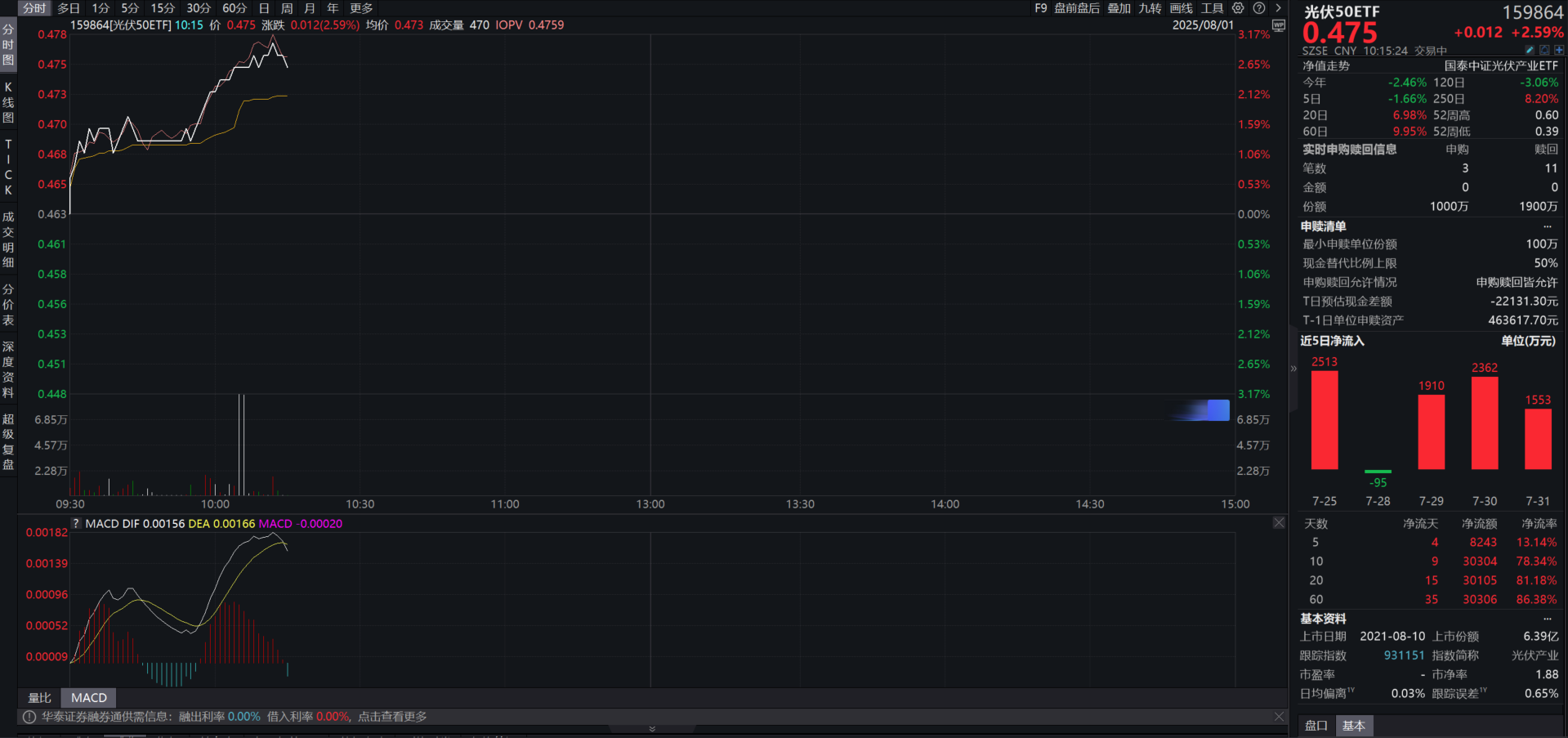
光伏板块“反内卷”积极,光伏50ETF(159864)盘中领涨超3%,近10日净流入超3亿元
Mei Ri Jing Ji Xin Wen· 2025-08-01 21:43
Core Insights - The photovoltaic (PV) sector is experiencing significant inflows, with the PV 50 ETF (159864) leading gains of over 3% and net inflows exceeding 300 million yuan in the past 10 days [1] Industry Summary - The photovoltaic industry is identified as one of the sectors with the most severe supply-demand imbalance and profitability pressure [1] - Recent political developments are expected to benefit the industry, particularly in the context of reversing the trend of excessive competition [1] - The current phase of recovery in the PV sector is marked by progress in two main areas: 1. Price recovery, with a notable increase in silicon material prices, which is anticipated to lead to sustained price recovery downstream [1] 2. Capacity consolidation, with ongoing mergers and acquisitions in silicon material expected to reach preliminary agreements by the end of July [1] - The market outlook remains positive for the continuation of this recovery trend, emphasizing its beta-type recovery characteristics [1] Investment Opportunities - Investors without stock accounts can access investment opportunities in the PV sector through the PV 50 ETF's connected fund (013602) [1]
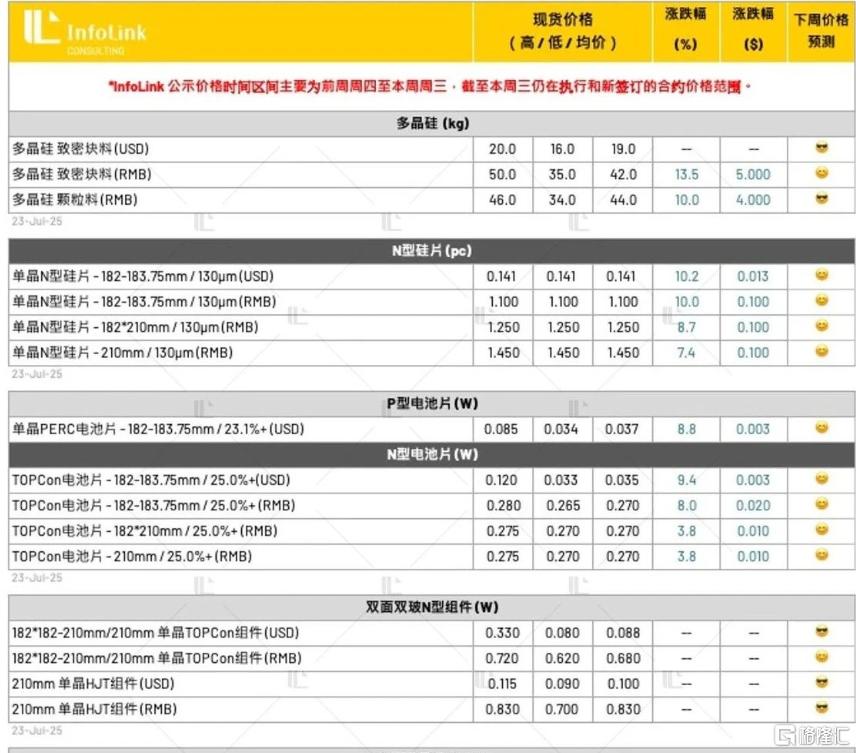
硅料价格直指6万,为什么没有传导到光伏组件?
Ge Long Hui· 2025-08-01 19:09
Core Viewpoint - The photovoltaic industry is experiencing a disconnect between rising silicon material prices and stagnant solar module prices, raising concerns about the industry's ability to realize commercial value [1][13]. Group 1: Silicon Material Price Dynamics - Silicon material prices have rebounded, with N-type recycled material reaching 47,100 RMB per ton and multi-crystalline silicon futures at 55,000 RMB per ton [1]. - The increase in silicon prices has led to a bullish sentiment in the silicon wafer and battery sectors, with companies implementing production cuts and inventory reductions [1][7]. - Despite the rise in upstream prices, solar module prices remain unchanged, leading to questions about the effectiveness of price transmission within the industry [1][13]. Group 2: Industry Challenges and Responses - The photovoltaic industry is facing challenges in price transmission from silicon materials to modules, with potential regulatory and market demand issues hindering price increases [1][19]. - Industry associations are encouraged to provide more transparent pricing information to guide market expectations and reduce speculation [2]. - The ongoing "反内卷" (anti-involution) efforts in the industry may not succeed if module prices do not rise in response to increased silicon costs [1][12]. Group 3: Market Sentiment and Future Outlook - There is a prevailing sentiment that if module prices do not increase, the recent rise in silicon prices may not be sustainable [1][16]. - The market is currently characterized by a significant disparity between the costs of production and the prices at which modules are sold, with many modules priced below 0.5 RMB/W [15][19]. - The industry anticipates that if silicon prices reach 70,000 to 80,000 RMB per ton, it could lead to substantial profits, but this is contingent on successful industry consolidation [10][11]. Group 4: Policy and Regulatory Considerations - The introduction of stricter regulations on pricing and sales practices is seen as essential for stabilizing the market and ensuring fair competition [5][6]. - Suggestions have been made to eliminate export tax rebates and impose export price limits to enhance the competitiveness of Chinese solar products abroad [24][25]. - The recent "136号文" policy is expected to impact the profitability of solar power plants, further complicating the pricing dynamics of solar modules [21][22].

光伏"反内卷"进行时,帝科股份等下游银浆企业将迎来估值修复
Zheng Quan Shi Bao Wang· 2025-08-01 12:55
Industry Overview - The photovoltaic industry is undergoing a "de-involution" movement, with significant policy and market changes aimed at improving industry valuation [1] - Central government meetings have emphasized the need to address low-price competition and promote the orderly exit of outdated production capacity [1] - The recent policies are expected to help the photovoltaic industry transition from price wars to high-quality development [1] Market Dynamics - The prices along the photovoltaic industry chain are stabilizing and recovering, particularly in the upstream silicon material segment, which is crucial for supply-demand balance [1] - The recovery in silicon material prices indicates optimistic market expectations for supply-side improvements and suggests that the industry's profitability bottom may have passed [1] Technological Innovation - Technological innovation is becoming the core driver as the industry shifts from "price competition" to "value competition," with conductive silver paste being a key material affecting solar cell efficiency and reliability [2] - The market demands higher performance from silver paste, including high conductivity and printing precision, while also focusing on cost reduction through innovative processes [2] Company Spotlight - Dike Co., Ltd. (300842) is a leading player in the domestic photovoltaic conductive silver paste industry, demonstrating strong resilience during industry adjustments [3] - The company has aligned its product development with emerging high-efficiency battery technologies, achieving recognition from mainstream battery manufacturers for its low-silver consumption and high-reliability products [3] - Dike Co., Ltd. is also at the forefront of developing alternative materials, successfully industrializing low-silver content products and collaborating with leading customers on technology innovations to reduce costs [3] Future Outlook - The "de-involution" policies are seen as the core driver for medium to long-term profitability recovery in the photovoltaic industry, with a focus on addressing below-cost competition and promoting industry self-discipline [3] - Recent price increases in the market are driven by these policies, and there is optimism regarding the impact of capacity consolidation and industry self-regulation on supply dynamics [3]
A股,午后突发!韩国股市暴跌!
证券时报· 2025-08-01 08:57
Core Viewpoint - The article highlights a decline in major stock indices across the Asia-Pacific region, with specific focus on the performance of the A-share and Hong Kong markets, while also noting significant movements in the photovoltaic and AI application sectors. Market Performance - On August 1, major Asia-Pacific stock indices mostly fell, with the Nikkei 225 down 0.66% to 40,799.6 points, the Korean Composite Index down 3.88% to 3,119.41 points, and the Australian S&P 200 down 0.92% to 8,662 points [1][2]. - The A-share market also saw declines, with the Shanghai Composite Index down 0.37% to 3,559.95 points, the Shenzhen Component down 0.17% to 10,991.32 points, and the ChiNext Index down 0.24% to 2,322.63 points [3]. Photovoltaic Industry - The photovoltaic sector experienced a surge, with notable stocks such as Jiejia Weichuang rising 20% to a limit-up, and Haiyou New Materials increasing approximately 13% [4][5]. - The Ministry of Industry and Information Technology issued a notice regarding energy-saving inspections for the polysilicon industry, which is expected to optimize supply and potentially phase out outdated production capacity [7]. - Analysts suggest that the recent supply-side reforms in the polysilicon sector may lead to a recovery in industry profit margins, benefiting leading companies with cost advantages [8]. AI Application Sector - The AI application sector showed strong performance, with stocks like Qidi Design hitting a limit-up of 20%, and Guomai Culture and Dingjie Zhizhi rising over 16% [9][10]. - The State Council's recent meeting emphasized the importance of advancing AI commercialization and integration across various sectors, which is expected to enhance the growth of related companies [11]. Notable Stock Movements - In the Hong Kong market, InnoScience saw a dramatic increase, rising over 60% at one point and closing up about 30%, following its inclusion as a partner with NVIDIA for 800V DC power architecture [12][13]. - InnoScience's collaboration with NVIDIA is anticipated to significantly enhance power density in AI data centers, marking a pivotal development in the semiconductor industry [14].

8月1日主题复盘 | 医药持续活跃,光伏再度表现,AI应用午后大涨
Xuan Gu Bao· 2025-08-01 08:03
Market Overview - The market experienced a high and then a pullback, with the three major indices slightly down. The pharmaceutical sector continued its strong performance, with stocks like Qizheng Zangyao and Asia-Pacific Pharmaceutical hitting the daily limit. AI application stocks remained active, with companies like Qidi Design and Zhengzhong Design also reaching the limit. The photovoltaic sector saw a collective rebound, with stocks such as Jiejia Weichuang and Shuangliang Energy hitting the limit. Overall, more stocks rose than fell, with over 3,300 stocks in the Shanghai and Shenzhen markets showing gains, and today's trading volume was 1.62 trillion, a decrease of over 340 billion from the previous day [1]. Sector Highlights Pharmaceuticals - The pharmaceutical sector continued to surge, with Qizheng Zangyao achieving three consecutive limits, and Asia-Pacific Pharmaceutical and Fuyuan Pharmaceutical also hitting the limit. Notable stock performances include: - Qizheng Zangyao: Latest price 34.69, up 9.99%, market cap 18.389 billion [5] - Asia-Pacific Pharmaceutical: Latest price 7.40, up 9.96%, market cap 5.518 billion [6] - Fuyuan Pharmaceutical: Latest price 26.54, up 9.99%, market cap 12.739 billion [6] - Analysts believe the innovative drug sector's prosperity is sustainable, driven by policy support and increasing global competitiveness. The recovery of overseas orders and performance in the innovative drug supply chain is also noted, with expectations for a rebound in demand by 2025 [4][6]. Artificial Intelligence - The AI application sector saw significant gains, with stocks like Huanqiu Printing and Zhengzhong Design hitting the limit. Notable performances include: - Huanqiu Printing: Latest price 10.16, up 9.96%, market cap 3.252 billion [10] - Zhengzhong Design: Latest price 11.66, up 10.00%, market cap 3.301 billion [10] - Qidi Design: Latest price 16.08, up 20.00%, market cap 2.695 billion [10] - The recent strong debut of Figma on the NYSE, closing at $115.5 with a 250% increase, highlights the potential for AI-driven design tools to disrupt traditional markets [8][11]. Photovoltaics - The photovoltaic sector showed renewed strength, with stocks like Wenkai Co. and Jiejia Weichuang hitting the limit. Key stock performances include: - Wenkai Co.: Latest price 4.84, up 10.00%, market cap 2.145 billion [13] - Jiejia Weichuang: Latest price 66.19, up 20.00%, market cap 19.006 billion [12] - Jiejia Weichuang's recent earnings forecast indicates a net profit of 1.7 to 1.96 billion, representing a year-on-year growth of 38.65% to 59.85% [12]. - The Ministry of Industry and Information Technology's recent notice on energy conservation in the polysilicon industry is expected to accelerate supply-side reforms in the photovoltaic sector [12][14].



光伏概念股多股涨停,机构称产业链有望迎来价格合理回升和盈利修复
Di Yi Cai Jing· 2025-08-01 03:45
Group 1 - The photovoltaic sector is experiencing significant growth, with companies like Qidi Design, Jiejia Weichuang, and Ruikeda reaching a 20% limit-up, while Haiyou New Materials increased by over 16% [1][2] - As of July 31, the National Energy Administration reported that the newly installed photovoltaic capacity in the first half of the year reached 212 million kilowatts, with a total capacity expected to reach approximately 1.1 billion kilowatts by June 2025, reflecting a year-on-year growth of 54.1% [3] - The cumulative photovoltaic power generation in the first half of the year was 559.1 billion kilowatt-hours, marking a year-on-year increase of 42.9% [3] Group 2 - CITIC Securities' research report highlights that the photovoltaic industry is currently facing issues of homogenization and excess capacity, but it is expected to see a recovery in prices and profitability as the industry returns to normalized competition [4] - The report emphasizes that technological innovation will be crucial for overcoming the challenges of homogenized competition, and companies with differentiated products and strong market positions are likely to experience significant performance improvements [4] - The China Photovoltaic Industry Association has raised its forecast for new installations in 2025, with expectations for global installations adjusted to 570-630 GW and China's installations to 270-300 GW [3]


光伏“反内卷”行动继续,光伏50ETF(159864)盘中领涨超3%,近10日净流入超3亿元
Mei Ri Jing Ji Xin Wen· 2025-08-01 03:17
Group 1 - The Ministry of Industry and Information Technology has issued a special energy-saving inspection task list for the polysilicon industry for 2025, continuing the industry's "anti-involution" actions [1] - The photovoltaic sector is experiencing a positive trend in "anti-involution," with ongoing production cuts leading to a decrease in photovoltaic glass inventory, which has dropped to approximately 32.59 days, a week-on-week decrease of 3.3 days or 9.1% [3] - The current state of the industry shows that most companies are operating at a loss, and there is potential for photovoltaic glass prices to rise to cost levels, which could lead to a recovery in profitability [3] Group 2 - The photovoltaic industry is under significant cash flow and debt pressure, motivating companies to achieve better supply-demand balance through self-regulation [4] - The industry has a high concentration level, allowing firms to optimize capacity and adjust supply-demand relationships through coordination of production and inventory, as well as mergers and acquisitions [4] - As of the end of 2024, the photovoltaic industry has the highest proportion of loss-making companies and industry concentration among all "anti-involution" sectors, indicating a strong potential for capacity clearance and financial improvement [4] Group 3 - Investors are encouraged to consider the photovoltaic 50 ETF (159864) for a comprehensive investment in the entire photovoltaic industry chain, including silicon materials, wafers, components, equipment, and power stations [5]
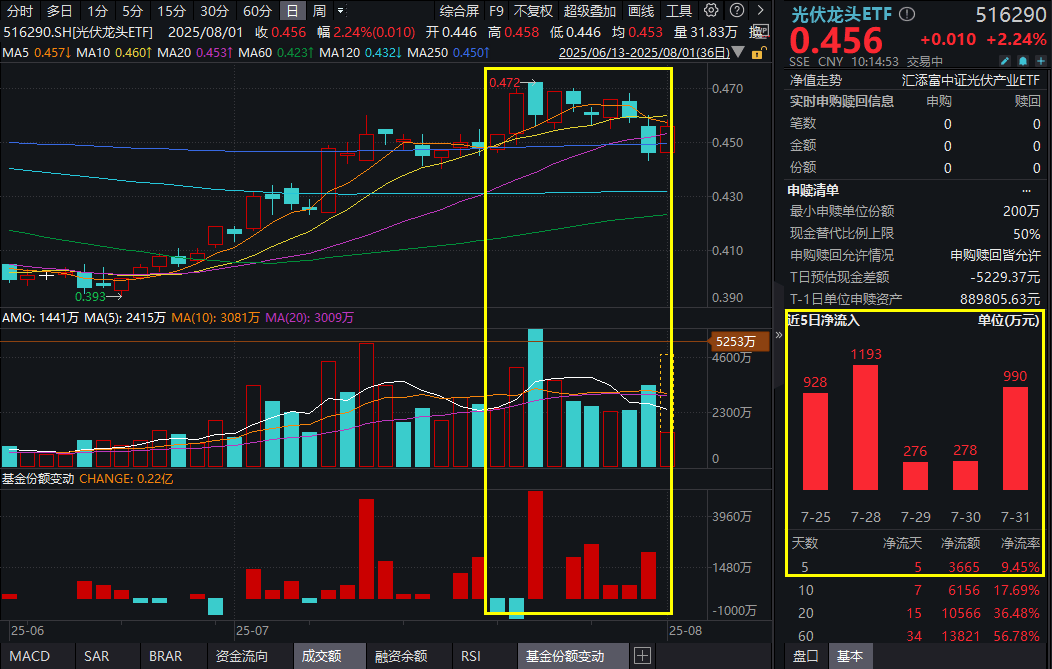
关闭100万吨产能!多晶硅减产方案来了?费率最低档的光伏龙头ETF(516290)涨超2%,连续5日吸金超3600万元!本轮光伏反内卷有何不同?
Sou Hu Cai Jing· 2025-08-01 02:48
Core Viewpoint - The photovoltaic sector in the A-share market is experiencing a strong upward trend, driven by continuous capital inflow and a "anti-involution" logic, with the leading photovoltaic ETF (516290) seeing significant gains and attracting over 36 million yuan in investments over five consecutive days [1][2][5]. Group 1: Market Performance - The leading photovoltaic ETF (516290) surged over 2% as of 10:17 AM, reflecting strong market interest [1]. - Key component stocks of the ETF saw substantial increases, with Jiejia Weichuang hitting the daily limit up (20%), and other major players like Yangguang Electric and Longi Green Energy also posting gains of over 2% [2][3]. Group 2: Industry Developments - A leading polysilicon producer in China is discussing the establishment of a 50 billion yuan fund aimed at acquiring and shutting down about one-third of its production capacity, targeting at least 1 million tons of low-quality polysilicon [5]. - The price of domestic polysilicon has risen significantly, with a cumulative increase of approximately 36.92% in July due to market expectations of supply-side reforms [6]. Group 3: Industry Outlook - The photovoltaic industry is currently in a bottoming process, with signs of overcapacity and declining profit margins, but the urgency for "anti-involution" policies is increasing [7][9]. - The current round of "anti-involution" measures is characterized by a more mature and pragmatic approach compared to previous efforts, with clearer policy goals and stronger consensus among enterprises [9][10]. - The focus of the current measures includes mergers and acquisitions in the silicon material sector, aimed at improving supply and demand dynamics within the industry [9][11]. - Price control measures are being implemented across four key segments: silicon materials, silicon wafers, batteries, and modules, with a higher price floor established compared to previous rounds [10][11].




光伏“反内卷”进行时,帝科股份等下游银浆企业将迎来估值修复
Zheng Quan Shi Bao Wang· 2025-07-31 13:03
Industry Overview - The photovoltaic industry is undergoing a "de-involution" movement, with significant policy and market changes aimed at improving industry valuation [1] - Central government meetings have emphasized the need to address low-price competition and promote the orderly exit of outdated production capacity [1] - The recent policies are expected to help the photovoltaic industry move away from price wars and towards high-quality development [1] Market Dynamics - The prices along the photovoltaic industry chain are stabilizing and recovering, particularly in the upstream silicon material segment, which is crucial for supply-demand balance [1] - The recovery in silicon material prices indicates optimistic market expectations for supply-side improvements and suggests that the industry's profitability bottom may have passed [1] Technological Innovation - The transition from "price competition" to "value competition" in the photovoltaic industry is driven by technological innovation, with conductive silver paste being a key material affecting solar cell efficiency and reliability [2] - There is a growing demand for silver paste that meets high conductivity and printing precision while also achieving cost reductions through innovative processes [2] Company Spotlight: Dike Co., Ltd. - Dike Co., Ltd. is a leading player in the domestic photovoltaic conductive silver paste industry, demonstrating strong resilience during industry adjustments [3] - The company has aligned its product development with emerging high-efficiency battery technologies, such as HJT and BC, and has received widespread recognition from mainstream battery manufacturers for its low-silver consumption and high-reliability products [3] - Dike Co., Ltd. is also at the forefront of developing alternative materials, achieving large-scale industrial application of low-silver content products and collaborating with leading customers on innovative technologies to reduce costs [3] Future Outlook - The market's attention towards the photovoltaic sector is increasing as the effects of the "de-involution" policies become evident [3] - Research indicates that the photovoltaic industry is at a profitability bottom, with "de-involution" policies being the core driver for long-term profitability recovery [3] - Future policy directions are expected to focus on addressing below-cost competition and promoting capacity consolidation and industry self-discipline [3]