扩大内需

Search documents
严查地方违规补贴、整顿政府采购秩序,多部委发布会为2026年“反内卷”划重点
Xin Lang Cai Jing· 2026-01-24 04:11
Core Viewpoint - The Chinese government is enhancing its procurement policies to ensure equal treatment of domestic and foreign products, aiming to eliminate discrimination and promote a unified national market by 2026 [2][3]. Group 1: Government Procurement Policy - Starting January 1, 2026, the government procurement policy will officially implement equal treatment for all types of suppliers, prohibiting discrimination based on ownership, organization form, equity structure, investor nationality, or other unreasonable conditions [3]. - The Ministry of Finance has encouraged foreign entities to report any violations of these procurement regulations, emphasizing transparency and fairness in the procurement process [2]. Group 2: Economic Development and Market Competition - The Chinese government is focusing on building a unified national market and addressing "involution" in competition as key tasks for high-quality economic development [3][4]. - Recent data indicates a positive trend in economic indicators, with the core Consumer Price Index (CPI) rising by 1.2% year-on-year in December 2025, and manufacturing profits increasing by 5.0% from the previous year [4][5]. - The government acknowledges existing issues of weak demand and insufficient supply, emphasizing the need to expand domestic demand and optimize supply to achieve a dynamic balance in the economy [5]. Group 3: Regulatory Measures and Market Order - The government plans to implement targeted measures to enhance the effectiveness of the unified market, including refining market operation rules and addressing barriers in procurement and investment [7][8]. - A comprehensive approach will be taken to regulate local government economic promotion behaviors, particularly concerning illegal subsidies and incentives in attracting investments [8]. - The establishment of a clear framework for encouraging and prohibiting local government actions in investment will be prioritized to ensure compliance and fair competition [8].


北方首个,“10万亿俱乐部”再扩容
Mei Ri Jing Ji Xin Wen· 2026-01-24 00:25
Economic Growth in Shandong - Shandong Province is projected to achieve a GDP of 10,319.7 billion yuan in 2025, marking a 5.5% increase from the previous year, making it the third province in China and the first in Northern China to surpass the 10 trillion yuan GDP milestone [1] - By 2025, the primary industry in Shandong is expected to reach an added value of 677.5 billion yuan (up 4.0%), the secondary industry 40,541 billion yuan (up 5.0%), and the tertiary industry 55,881 billion yuan (up 6.1%) [1] Industrial and Economic Indicators - Shandong's industrial added value is anticipated to grow by 7.6%, retail sales of consumer goods by 5.1%, and total foreign trade by 4.5%, all exceeding the national average [3] - The province has faced challenges due to a high reliance on traditional industries, which constituted 70% of its economy, prompting a necessary transition towards modernization and innovation [3] Transition and Development Strategy - The establishment of the Shandong New and Old Kinetic Energy Conversion Comprehensive Experimental Zone in 2018 initiated a dual approach to upgrade traditional industries while fostering new sectors [3] - During the 14th Five-Year Plan period, Shandong's industrial added value increased from 2.3 trillion yuan to 3.3 trillion yuan, reflecting a growth of over 40% [3] - By 2025, advanced production capacity in key industries like steel and petrochemicals is expected to exceed 40%, with high-tech industries accounting for 55.3% of the total output [3] Future Economic Goals - Shandong aims to become a significant economic growth pole in Northern China, with plans to elevate Qingdao to a 2 trillion yuan economy and support cities like Weifang, Linyi, and Jining in reaching the trillion yuan mark [3][4]
中国经济基础稳潜能大(锐财经)
Sou Hu Cai Jing· 2026-01-23 22:43
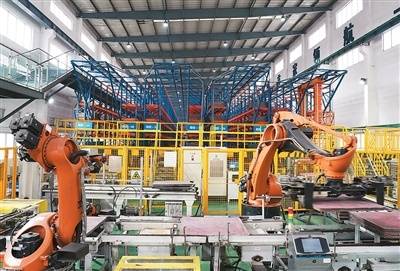
位于江西省的江铜集团贵溪冶炼厂智能化电解车间内,机器臂进行铜板转运作业。 新华社记者 万 象摄 2025年经济社会发展各项数据近日"出炉",如何评价中国经济全年表现?作为"十五五"开局之年,2026 年中国经济核心潜力主要体现在哪些方面?如何充分挖掘中国经济潜能?国家发展改革委有关负责人在 国新办日前举行的新闻发布会上一一进行了解读。 交出了一份高质量答卷 "2025年,经济运行稳中有进,发展韧性进一步彰显,民生政策更有温度,交出了一份高质量答卷。"国 家发展改革委副主任王昌林说。 经济实力跃上新台阶。面对风高浪急的外部环境,全年经济总量迈上140万亿元新台阶,5%的增速在全 球主要经济体中继续保持前列,增量相当于一个中等规模经济体的总量。 新质生产力发展取得新突破。创新成果竞相涌现,人工智能、生物医药、机器人等研发应用走在世界前 列。扎实推进现代化产业体系建设,传统产业焕新升级,新兴产业、未来产业加快塑造新动能,制造业 增加值连续16年位居全球第一。"实践证明,'卡脖子'是卡不住的,中国拥有强大的创新基因和巨大的 创新潜能。"王昌林说。 "展望2026年,我国经济结构将持续向'优'、发展动能持续向'新'、整 ...
居民增收、优质供给、城市更新如何联动发力?
Xin Lang Cai Jing· 2026-01-23 20:58
Core Viewpoint - The article discusses China's economic strategies and policies for the 14th Five-Year Plan, emphasizing the importance of domestic demand and consumption as key drivers for economic growth in the face of global uncertainties [15][16]. Group 1: Economic Growth and Domestic Demand - The 2025 Central Economic Work Conference identified eight key economic tasks, with a focus on "domestic demand as the main driver" [16][17]. - In 2025, China's total retail sales of consumer goods exceeded 50 trillion yuan, growing by 3.7% year-on-year, with domestic demand contributing over 67% to economic growth [17]. - The shift from "stimulating domestic demand" to "domestic demand as the main driver" reflects a strategic upgrade in economic policy, emphasizing coordinated efforts on both supply and demand sides [17][18]. Group 2: Income Growth and Consumer Spending - In 2025, the actual growth of per capita disposable income in China was 5%, aligning with economic growth [18]. - The Central Economic Work Conference introduced a systematic "urban and rural residents' income increase plan," marking a fundamental shift in the logic of expanding domestic demand [18][26]. - Increasing residents' income requires a multi-faceted approach, including employment support, wage growth, and improved social security measures [18][19]. Group 3: Service Consumption and Quality Supply - The 2025 Central Economic Work Conference emphasized expanding the supply of quality goods and services, with service retail sales growing by 5.5% year-on-year [19][20]. - Service consumption has become a core driver of economic recovery, shifting from material capital-driven to human capital-driven growth [19][20]. - Policies are being optimized to enhance service quality and expand access to services, particularly in sectors like healthcare and education [20][21]. Group 4: Urban Renewal and Investment - Urban renewal is positioned as a dual driver of investment and consumption, with a projected market size exceeding 10 trillion yuan by 2030 [23][24]. - The focus on high-quality urban renewal involves a shift from simple renovation to comprehensive system reconstruction, prioritizing public needs and sustainable development [24][29]. - Urban renewal is expected to create significant investment demand across various sectors, including housing, infrastructure, and public services, thereby stimulating economic growth [25][29].
以金融高质量发展助力“十五五”规划实施
Xin Lang Cai Jing· 2026-01-23 20:58
Core Viewpoint - The financial industry in China has made significant progress during the "14th Five-Year Plan" period, enhancing its comprehensive strength and improving the quality and efficiency of services to the real economy, while also strengthening risk prevention capabilities [1][6]. Group 1: Financial Development Principles - The "Six Persistences" principle outlined by the 20th National Congress of the Communist Party of China emphasizes the importance of the Party's leadership in financial reform and development [2]. - Financial services should prioritize the people's interests, focusing on high-quality development and supporting the optimization of economic structures [2]. - A combination of effective markets and proactive government is essential for achieving a well-functioning financial system that supports economic growth while managing risks [2]. Group 2: Financial System and Innovation - The financial system, primarily dominated by banks, must adapt to support technological innovation and the development of new productive forces, providing comprehensive financial services throughout the lifecycle of technology enterprises [3][4]. - Banks are encouraged to innovate their services to support technology and emerging industries, ensuring they provide comprehensive financial services tailored to different stages of enterprise development [4]. Group 3: Domestic Market and Consumption - Strengthening the domestic market is crucial for China's modernization, with a focus on expanding domestic demand and improving living standards [5]. - Financial institutions should enhance their support for small and micro enterprises and low-income groups through inclusive finance, thereby stimulating consumption and economic growth [5]. - Optimizing the consumer credit system is necessary to promote consumption while managing risks associated with excessive debt [5]. Group 4: Strategic Importance of Finance - The "15th Five-Year Plan" period is a critical time for China to advance towards a modern socialist state, with the financial sector playing a vital role in supporting national strategies and the real economy [6]. - The financial industry must maintain a commitment to high-quality development and structural reforms to enhance resource allocation and service efficiency [6].
商务部:提质增效实施消费品以旧换新
Zhong Guo Zheng Quan Bao· 2026-01-23 20:54
Core Viewpoint - The Ministry of Commerce emphasizes the importance of boosting consumption and market operations, aiming for a significant increase in retail sales and consumer spending by 2026, with a focus on the "Buy in China" initiative [1][2] Group 1: Consumption Goals and Strategies - By 2025, the total retail sales of consumer goods are projected to reach 50.1 trillion yuan, marking the first time surpassing 50 trillion yuan [1] - Consumption is expected to contribute 52.0% to GDP growth, reinforcing its role as a primary driver of economic development [1] - The implementation of a consumption upgrade program, including trade-in initiatives for major consumer goods like automobiles and home appliances, is prioritized [2] Group 2: New Consumption Trends - Rapid growth in new consumption patterns is noted, with online retail sales of physical goods increasing by 5.2% [1] - The service retail sector is also expanding, with a growth rate of 5.5% [1] - The concept of "Buy in China" is gaining traction, supported by a significant increase in tax refunds for outbound consumers [1] Group 3: Policy and Activity Initiatives - The meeting outlines a dual approach of "policy + activities" to stimulate consumption, including the organization of special events like "Buy in China" city showcases and the "Happy Shopping Spring Festival" [2] - There is a focus on developing new growth points in service consumption and fostering digital, green, and health-oriented consumption [2] - Monitoring and ensuring the supply of essential goods is emphasized as a critical task for local commerce departments [2]
城市24小时 | 北方首个,“10万亿俱乐部”再扩容
Mei Ri Jing Ji Xin Wen· 2026-01-23 16:27
Economic Growth in Shandong - Shandong Province is projected to achieve a GDP of 10.3197 trillion yuan in 2025, marking a 5.5% increase from the previous year, making it the third province in China and the first in the north to surpass the 10 trillion yuan GDP milestone [1][2] - By 2025, the primary industry in Shandong is expected to contribute 677.5 billion yuan, growing by 4.0%; the secondary industry is projected to reach 4.0541 trillion yuan, with a growth of 5.0%; and the tertiary industry is anticipated to generate 5.5881 trillion yuan, increasing by 6.1% [1] Industrial and Economic Transformation - Shandong's industrial output value is expected to grow by 7.6%, retail sales of consumer goods by 5.1%, and total foreign trade by 4.5%, all exceeding the national average [3] - The province has been undergoing a transformation since 2018, focusing on upgrading traditional industries and fostering emerging sectors, with industrial output value rising from 2.3 trillion yuan to 3.3 trillion yuan during the 14th Five-Year Plan period [3] - By 2025, advanced production capacity in key industries like steel and petrochemicals is expected to exceed 40%, while high-tech industries will account for 55.3% of the total industrial output [3] Future Economic Goals - Shandong aims to become a significant economic growth pole in northern China, with plans to elevate Qingdao to a 2 trillion yuan economy and support cities like Weifang, Linyi, and Jining in reaching the trillion yuan GDP mark [3] - Following Shandong's achievement, Zhejiang Province is close to joining the "10 trillion yuan club," with a projected GDP of 9.4545 trillion yuan in 2025, also growing by 5.5% [4][5]
“三农”账本 这“两个缩小”含金量最高!
Ren Min Ri Bao· 2026-01-23 15:11
1月22日,国务院新闻办举行新闻发布会,农业农村部公布2025年"三农"成绩单。翻开这本沉甸甸的"农 家账",含金量最高的就是"两个缩小"。 "两个缩小",彰显国内大市场的广阔空间和国内大循环的内生动力。 收入是消费的前提和基础。当前,乡镇和村两级消费市场占我国消费市场总体的38%,把战略基点放在 扩大内需上,农村有巨大空间。农产品进城,工业品下乡,城与乡、供与需循环更畅通,就能有力提高 国民经济循环质量和效率。 农业农村工作,说一千、道一万,增加农民收入是关键。农民腰包越来越鼓、生活越来越美好,乡村振 兴,未来可期。 (人民日报经济社会微信公号邓剑洋) (文章来源:人民日报) 一个是城乡居民收入相对差距缩小。农村居民人均可支配收入24456元,比上年实际增长6.0%,实际增 速比城镇居民快1.8个百分点。 一个是脱贫地区与其他地区发展差距持续缩小。脱贫县农村居民人均可支配收入增速快于全国农民平均 水平。 "两个缩小",藏着乡村全面振兴的"密码"。 农村居民收入由工资性收入、经营净收入、转移净收入和财产净收入构成。2025年,各地强龙头、补链 条、兴业态、树品牌,乡村产业提质增效。乡村休闲旅游、农村电商等新产 ...
全国市场运行和消费促进工作会议:坚持扩大内需战略基点
Zheng Quan Shi Bao Wang· 2026-01-23 14:41
Group 1 - The national market operation and consumption promotion meeting emphasized the strategic focus on expanding domestic demand, with a plan to develop a "15th Five-Year" plan for consumption expansion [1] - The meeting highlighted the importance of upgrading and expanding commodity consumption, with specific measures to implement a consumption goods replacement policy, particularly in large items like automobiles and home appliances [1] - The first batch of 625 billion yuan in national subsidies for the consumption goods replacement policy has been fully allocated to local governments, leading to significant increases in the market size of home appliances and mobile phones by 2025 [1] Group 2 - According to the National Bureau of Statistics, there is a shift in resident consumption from primarily goods to a balance between goods and services, with service retail expected to grow faster than goods retail in 2025 [2] - E-commerce platforms are accelerating the connection to service consumption, with online service consumption projected to grow by 22% in 2025, particularly in areas like sports events, tourism, and dining [2] - The meeting called for the cultivation of new growth points in service consumption, promoting digital, green, and health consumption, as well as enhancing international consumption environments and organizing special promotional activities [2]
“宣宣”学习笔记(120)丨韩文秀解读中央经济工作会议精神
Sou Hu Cai Jing· 2026-01-23 14:37
Core Viewpoint - The Central Economic Work Conference outlines the economic work for 2026, emphasizing the need for a stable and progressive economy while leveraging advantages and addressing challenges [2][3]. Summary by Sections Economic Performance and Outlook - The Chinese economy is expected to grow by approximately 5% year-on-year in 2025, maintaining its position as the largest engine of global economic growth [3]. Key Principles for Economic Work - The conference identifies five essential principles for economic work: 1. Fully explore economic potential 2. Combine policy support with reform and innovation 3. Balance flexibility and regulation 4. Integrate investment in physical assets and human resources 5. Strengthen internal capabilities to face external challenges [4][5]. Focus Areas for 2026 - Eight key tasks for 2026 include: 1. Prioritize domestic demand and build a robust domestic market 2. Drive innovation and cultivate new growth drivers 3. Tackle reforms to enhance high-quality development 4. Promote cooperation and openness in multiple fields 5. Foster coordinated development between urban and rural areas 6. Lead with "dual carbon" initiatives for a comprehensive green transition 7. Focus on improving people's livelihoods 8. Safeguard against risks in critical sectors [6]. Economic Characteristics and Strategies - China's economy is characterized by significant flexibility, internal circulation, and self-reliance, with a focus on expanding consumption and investment, developing technology and industries, and promoting urban-rural integration [8][9]. - The relationship between "flexibility" and "regulation" is crucial for enhancing economic governance, ensuring that market order is maintained while stimulating productivity [10][11]. Employment and Social Policies - Employment is highlighted as a fundamental aspect of people's livelihoods, with a need to prioritize policies that stabilize and enhance job quality, particularly for key groups such as recent graduates and migrant workers [12]. Resilience and Innovation - The emphasis is placed on strengthening the real economy and enhancing independent innovation capabilities to navigate international competition and challenges effectively [13].