
指数化投资

Search documents
中证A500一周年成长记: 新宽基“圈粉”无数 投资生态日趋完善
Zhong Guo Zheng Quan Bao· 2025-09-21 20:46
Core Insights - The launch of the CSI A500 index in September 2024 has created a new investment landscape in the A-share market, attracting significant attention and participation from various institutional and individual investors [2][4][11] - The CSI A500 index has quickly become a core broad-based index in the A-share market, second only to the CSI 300, with a total scale of over 180 billion yuan as of September 19, 2024 [2][3] - The index's unique characteristics, including balanced industry weightings and a focus on industry leaders, have contributed to its strong performance compared to traditional broad-based indices [4][7] Investment Products and Strategies - A diverse product matrix has been established around the CSI A500 index, including ETFs, ETF-linked funds, and enhanced strategy ETFs, catering to various investor needs [1][9][10] - As of now, there are 32 CSI A500 ETFs with a total scale exceeding 180 billion yuan, indicating rapid growth and acceptance in the market [2][3] - The investment strategies associated with the CSI A500 index range from passive tracking to active quantitative enhancements, providing flexibility for different investor profiles [9][10] Institutional Participation - Institutional investors play a crucial role in the growth of the CSI A500 ETFs, with over 70% of holdings in several funds attributed to institutional accounts [5][6] - Insurance funds have been particularly significant, with major players like China Life and Ping An heavily investing in CSI A500 ETFs, reflecting the index's alignment with their long-term investment strategies [6][7] - The participation of various entities, including state-owned funds, foreign institutions, and private equity, has diversified the funding sources for the CSI A500 ETFs [7][8] Market Trends and Future Outlook - The CSI A500 index is expected to benefit from the ongoing economic transformation in China, as well as the shift of investor sentiment from traditional fixed-income investments to equity assets [8][11] - The index's design and performance characteristics are likely to attract more long-term capital, especially as policies encourage sustained investment in the stock market [11] - Future developments may include the introduction of derivative products based on the CSI A500 index, which could further enhance its investment ecosystem and strategy applications [10][11]


中证A500一周年成长记:新宽基“圈粉”无数 投资生态日趋完善
Zhong Guo Zheng Quan Bao· 2025-09-21 20:17
Core Insights - The launch of the new core broad-based index, the CSI A500, in September 2024 has created a "new blue ocean" for asset allocation, leading to a diverse product matrix including ETFs, enhanced strategies, and more [1][2] - The total scale of 32 CSI A500 ETFs has surpassed 180 billion yuan, with significant participation from long-term capital such as insurance funds [1][2] - The CSI A500 index has quickly gained recognition and surpassed many other broad-based indices, becoming the second-largest core broad-based index in the A-share market after the CSI 300 [2][3] Product Development - The CSI A500 ETF market has seen rapid expansion, with the first batch of 10 ETFs maintaining a significant lead in scale amid intense competition [2][3] - The largest CSI A500 ETF, managed by Huatai-PB Fund, has seen its scale grow from an initial 2 billion shares to over 22.3 billion shares by September 2025 [2][3] - The product matrix has diversified, offering various strategies from passive tracking to active quantitative enhancements, catering to different investor needs [8][9] Institutional Participation - Institutional investors dominate the holdings of the CSI A500 ETFs, with over 70% of the top ten holders being institutions [4][5] - Insurance funds play a crucial role, with significant investments from major insurance companies, indicating the index's alignment with their long-term investment strategies [5][6] - The participation of various entities, including state-owned funds, foreign institutions, and private equity, reflects a broadening funding base for the CSI A500 ETFs [7][10] Market Trends - The CSI A500 index is characterized by its balanced industry weightings and focus on industry leaders, making it attractive for long-term, stable returns [6][7] - The index's structure allows for effective diversification, which is beneficial during periods of rapid thematic rotation in the market [4][6] - The ongoing economic transformation in China and the shift of wealth from traditional fixed-income investments to equity assets are expected to further boost the appeal of the CSI A500 index [7][10] Future Outlook - The CSI A500 index is anticipated to benefit from the increasing recognition of its investment value among domestic investors, especially as the economic environment evolves [7][10] - The development of derivative products linked to the CSI A500 index could enhance its investment strategies and broaden its market appeal [9][10] - The overall trend towards index-based investment in China is supported by favorable policies encouraging long-term capital inflow into the stock market [10]
发行热度加温!银行理财为何瞄准指数型产品?
Guo Ji Jin Rong Bao· 2025-09-19 15:59
Core Viewpoint - The rise of passive index investment strategies has led banks to actively develop index-based wealth management products, which are characterized by high transparency, low fees, and risk diversification [1][4]. Group 1: Product Overview - There are currently 116 index-related wealth management products available for sale, with issuers including 12 bank wealth management subsidiaries such as China Merchants Bank Wealth Management and Huaxia Wealth Management [1]. - Index-based wealth management products are designed to replicate index components directly or indirectly [2]. Group 2: Performance Analysis - Index-based wealth management products show impressive annualized returns across various risk levels. For instance, the "Huiying Xiang Fixed Income Enhanced" product from Xinyin Wealth Management achieved annualized returns of 15.17% over one month, 8.79% over three months, and 8.92% since inception [3]. - Huaxia Wealth Management's "Digital Infrastructure Index" product, with a risk rating of PR5, reported a year-to-date increase of 14.46% and a total increase of 52.33% since inception [3]. Group 3: Market Trends and Insights - The development of index-based products is supported by regulatory encouragement for long-term capital market participation, especially in a low-interest-rate environment where traditional fixed-income asset yields are declining [4]. - The advantages of index-based products include high transparency, low fees, and risk diversification, which meet investors' needs for clear understanding of product structures and return sources [4]. Group 4: Future Outlook - The future of index-based products is viewed positively, with suggestions for investors to understand the investment strategies and risks associated with these products, and to adopt a long-term investment perspective [5]. - Challenges remain, as the overall risk tolerance of bank wealth management investors is relatively low, which may limit acceptance of higher-risk index-based products [6].
ETF跃升“5万亿”背后:A股生态重塑
Jing Ji Guan Cha Wang· 2025-09-19 13:17
Core Insights - The ETF market in China has rapidly grown, reaching a milestone of 5 trillion yuan in assets within just four months, indicating a shift towards passive index investing [2][3] - The increase in ETF popularity reflects a change in investor behavior, with more individual investors moving from traditional stock picking to index-based investments, and highlights the acceleration of institutional investment [3][4] Market Growth - The total number of ETFs in the market has reached 1,308, with a net asset value of 5.34 trillion yuan, marking a 31.19% increase in the number of funds and a 52.57% increase in net asset value over the past year [2][3] - The growth of the ETF market has been supported by a diversification of ETF products and a stable stock market, which has increased investor demand [3][4] Investment Behavior - Individual investors are increasingly favoring ETFs due to their low costs, transparency, and ease of access, making them a preferred method for entering the market [4][5] - ETFs are becoming a significant tool for long-term funds such as pensions and insurance, facilitating their allocation into the A-share market [3][4] Institutional Involvement - Central Huijin has become a major holder of ETFs, purchasing multiple products to stabilize the market during downturns, with a total ETF market value held by state-owned entities reaching approximately 1.28 trillion yuan [8][6] - The presence of long-term capital through ETFs is expected to enhance market stability and reduce volatility, especially during turbulent market conditions [6][8] Market Dynamics - The rapid growth of ETFs has led to a concentration of funds in large-cap stocks, potentially creating a "siphoning effect" that may disadvantage smaller companies [11][10] - The recent volatility in stocks like Cambricon Technologies highlights the impact of passive investment strategies on stock prices, as significant inflows and outflows from ETFs can lead to sharp price movements [13][14] Future Outlook - The ETF market in China still has significant growth potential, with current ETF assets representing only 11.56% of the total public fund market, compared to 26.64% in the U.S. [16] - Historical data suggests a strong correlation between ETF growth and stock market performance, indicating that further expansion of the ETF market could lead to positive trends in the A-share market [17][16]

当银行理财“爱”上指数工具
Shang Hai Zheng Quan Bao· 2025-09-18 19:04
Core Insights - Multiple banks and wealth management companies are increasingly viewing index products as essential tools for entering the equity market, driven by a lack of research capabilities and talent in equity investment [1][3] Index Investment Trends - The continuous decline in interest rates has led wealth management companies to actively allocate resources to equity and multi-asset index tools to enhance product returns [1] - As of May 2025, nearly 600 index-based wealth management products are in existence, an increase of over 100 from the end of 2024, indicating a rise in both product quantity and issuance activity [1] Asset Allocation Strategies - Index-based wealth management products are categorized into two types: non-structured products that replicate indices and structured products that invest in options linked to specific indices [2] - Wealth management companies are leveraging index products to expand their asset boundaries and enhance return elasticity, transitioning from a focus on fixed income to a multi-asset strategy [3][4] Advantages of Index Products - Index products are characterized by low costs and risks, high transparency, and efficiency, making them attractive for wealth management companies [3] - These products allow for efficient coverage of diverse asset classes while minimizing active management risks, aligning with the industry's shift towards multi-asset strategies [4] Challenges in Investment Education and Research - Despite the push towards index products, a lack of investment education and weak research foundations are hindering the growth of equity product scales [5][6] - Retail investors dominate the client base of wealth management companies, with institutional investors making up only 1%, indicating a challenge in educating retail clients about higher-risk index products [5] Research and Development Shortcomings - Wealth management companies face significant challenges in systematic asset allocation and industry comparison frameworks, leading to delays in portfolio adjustments and timing [6] - There is a shortage of professionals capable of both equity investment and index design, which limits product innovation and efficiency in deployment [6] - Companies are working to upgrade their research systems by enhancing flexibility and building partnerships with fund companies to improve investment capabilities [6]
报告:中国新富人群将现金类资产份额向金融投资转移
Zheng Quan Shi Bao Wang· 2025-09-18 10:50
Group 1 - The report titled "2025 Wealth Health Index of China's New Affluent" was jointly released by Shanghai Jiao Tong University and Charles Schwab, aiming to track the investment behavior and wealth health of a significant economic group in China [1] - The new affluent group is defined as individuals with an annual income between 125,000 and 1,000,000 yuan and investable assets below 7 million yuan [1] - In a low-interest-rate environment, the new affluent are shifting their asset allocation from cash to higher-risk financial investments, with cash and deposits still accounting for over half of their assets, but this proportion has decreased by nearly 5 percentage points to 52.5% [1] Group 2 - The proportion of bank wealth management products has also declined, while investment in funds has seen a significant increase, with 42.6% of respondents holding funds, the highest in five years, and the average allocation to funds rising from 7.8% to 12.4% [1] - There is a slight increase in the allocation to stocks and overseas investments among the new affluent [1] Group 3 - ETF investments are gaining popularity, especially among respondents who have used investment advisory services, with high transparency and risk diversification being the main reasons for choosing ETFs [2] - Despite a desire for high returns, the risk appetite of the new affluent is becoming more conservative, with 63.1% of respondents unwilling to accept losses exceeding 10%, an increase of 13.2 percentage points from the previous year [2] Group 4 - Nearly half (48.6%) of respondents have retirement planning, with significant increases among the 25-44 age group and higher income brackets [3] - The primary method for retirement planning has shifted from regular savings to purchasing retirement insurance, indicating a growing reliance on financial investment returns rather than savings [3] Group 5 - There is a notable trust in AI-generated investment advice among the new affluent, with nearly 70% expressing high or moderate trust, particularly among those with more aggressive investment styles [3] - Individuals with over 15 years of investment experience show a preference for human services over AI [3]
上交所副理事长霍瑞戎,最新发声!
中国基金报· 2025-09-17 02:11
Core Viewpoint - The Shanghai Stock Exchange (SSE) aims to deepen comprehensive reforms in investment and financing, accelerating a new round of capital market reforms to enhance market attractiveness and inclusivity, thereby better serving technological innovation and the development of new productive forces [2][3]. Group 1: Capital Market Development - As of September 11, the number of Science and Technology Innovation Board (STAR Market) ETFs reached 97, with a total scale of 280 billion yuan [3]. - The STAR Market has become the A-share sector with the highest proportion of index investment, playing a significant role in attracting funds towards new productive forces and guiding long-term capital into the market [3][6]. Group 2: Policy Implementation - The SSE has been actively promoting the "STAR Market Eight Articles" and "M&A Six Articles" policies since June, focusing on the "1+6" reform policies to enhance the quality of listed companies [6][8]. - Over 1,000 enterprises and institutions have been covered in policy promotion activities, with training sessions conducted for 200 market entities, including sponsors and law firms [6]. Group 3: Case Studies and Standards - The SSE has restarted the fifth set of listing standards for the STAR Market, receiving 15 new IPO applications, including four from unprofitable companies [7]. - The introduction of a system for seasoned professional institutional investors has been initiated, with companies like Tianomai Bo disclosing relevant information [7]. Group 4: Institutional Development - All supporting institutional rules have been published and implemented, with 320,000 unprofitable companies included in the STAR Growth Layer [8]. - As of now, 4.75 million investors have opened trading permissions for the growth layer, indicating a robust investor engagement [8]. Group 5: Industry Growth and Innovation - Traditional industries are actively exploring new technologies for transformation, with significant profit growth reported in the steel (235% YoY) and machinery (21% YoY) sectors in the first half of 2025 [10]. - The total R&D investment by real enterprises reached 432.6 billion yuan in the first half of the year, with STAR Market companies investing 84.1 billion yuan, which is 2.8 times their net profit, leading the A-share market [10].
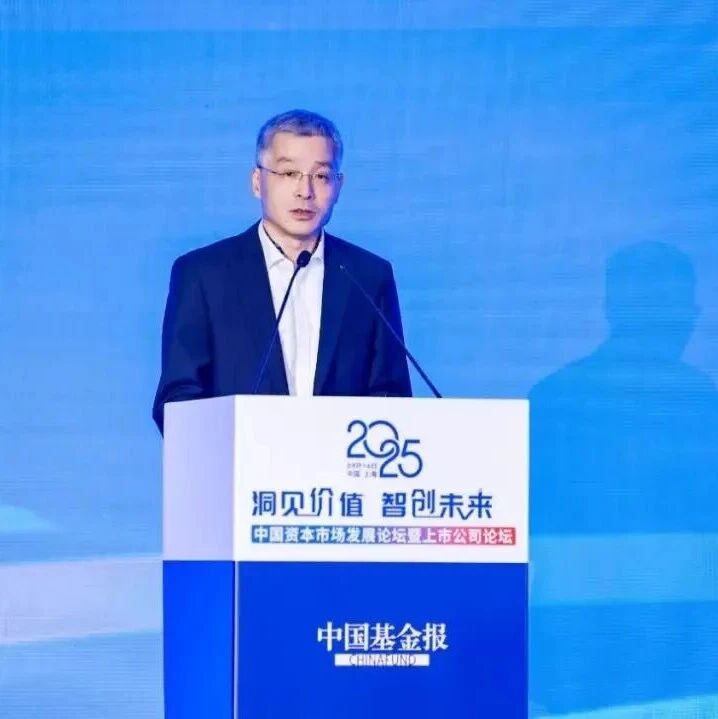
华夏基金李一梅:加快公募基金高质量发展 指数化投资迎来里程碑之年
Xin Lang Ji Jin· 2025-09-17 01:38
Core Insights - The article discusses the high-quality development of public funds in China, emphasizing the importance of index investment, particularly ETFs, in optimizing market resource allocation and meeting wealth management needs [1][3][6]. Group 1: Policy and Market Developments - The State Council issued new guidelines to strengthen regulation and promote high-quality development in the capital market, including a fast-track approval process for ETFs [1]. - By May 2025, the China Securities Regulatory Commission (CSRC) launched an action plan to further promote the rapid registration mechanism for stock ETFs, marking a milestone year for index investment [1][3]. - China's ETF market has surpassed Japan, becoming the largest in Asia with an asset management scale of $681 billion as of July [2]. Group 2: Growth Opportunities for Index Investment - There are four key growth opportunities for index investment in China: 1. Upgraded wealth management needs among residents, with ETFs becoming a primary allocation tool due to their low fees and high liquidity [3]. 2. Increased long-term capital entering the market, supported by regulatory reforms and the implementation of personal pension systems [3]. 3. Global asset revaluation and diversification, with cross-border ETFs gaining traction as tools for international capital to invest in Chinese assets [4]. 4. Technological advancements, particularly AI, are reshaping the ETF landscape, enhancing product creation and management efficiency [4]. Group 3: High-Quality Development Framework - The article outlines a "triangular" framework for high-quality development in index investment, focusing on: 1. Product innovation, moving from passive tracking to active creation, enhancing the value of indices [9]. 2. Service enhancement, transitioning from mere tool provision to comprehensive solutions for investors [11]. 3. Digital empowerment, leveraging technology to build a smart service ecosystem for ETFs [13]. Group 4: Future Directions and Strategies - The future of ETFs will hinge on combining low costs, transparency, and active management flexibility, particularly in areas like technology disruption and ESG investments [10]. - The industry must focus on creating a robust ecosystem that includes collaboration among regulatory bodies, fund companies, and investors to elevate ETFs from mere tools to central components of asset allocation [8].
新时代·新基金·新价值——北京公募基金高质量发展在行动 | 以投资者利益为本 书写指数化投资新篇章
Zhong Guo Zheng Quan Bao· 2025-09-16 23:55
Core Insights - The Chinese government is promoting the development of index investment, particularly through the establishment of a fast approval channel for ETFs, as outlined in the new "National Nine Articles" and the "Action Plan for Promoting the High-Quality Development of Public Funds" [1][2][6] - By 2025, the scale of index investment, led by ETFs, is expected to surpass active investment, with the number of ETFs exceeding 1,000 and the management scale exceeding 5 trillion yuan [1][2] - The ETF market in China has become the largest in Asia, surpassing Japan with an asset management scale of $681 billion [2][3] Group 1: Development Opportunities - The demand for wealth management among residents is increasing, making ETFs a primary investment tool due to their low fees, liquidity, and transparency [2][3] - The entry of long-term capital into the market is being actively promoted, creating a favorable environment for ETFs, especially with the implementation of the comprehensive registration system and personal pension schemes [3][4] - Global asset reallocation is creating new opportunities for cross-border ETFs, which are becoming essential for international capital to invest in Chinese assets [4][5] Group 2: High-Quality Development Principles - The development of index investment should focus on innovation, ensuring that indices guide capital towards innovative sectors and support the real economy [7][9] - Emphasizing investor-centric approaches, the industry should enhance product innovation, service optimization, and cost reduction to align with investor needs [8][11] - Collaboration among various stakeholders, including regulatory bodies, public funds, and financial institutions, is essential for the growth of index investment [8][10] Group 3: Key Components for Success - Product strength should evolve from passive tracking to active creation, enhancing innovation capabilities within ETFs [9][10] - Service capabilities must transition from mere tool provision to comprehensive solutions, offering integrated strategies that meet diverse investor needs [11][12] - Digital intelligence will play a crucial role in the ETF ecosystem, leveraging technology to enhance efficiency and personalization in services [13][14]
以投资者利益为本 书写指数化投资新篇章
Zhong Guo Zheng Quan Bao· 2025-09-16 20:20
Core Insights - The article emphasizes the significant growth and development of index-based investment, particularly ETFs, in China, highlighting the government's supportive policies and the increasing demand from investors [1][2][3] Group 1: Policy and Regulatory Environment - In April 2024, the State Council issued new guidelines to strengthen regulation and promote high-quality development in capital markets, including a fast-track approval process for ETFs [1] - The China Securities Regulatory Commission (CSRC) released an action plan in May 2025 to further enhance the registration mechanism for stock ETFs [1][4] - By 2025, the scale of index-based investment, led by ETFs, is expected to surpass active investment, with over 1,000 ETFs and a management scale exceeding 5 trillion yuan [1] Group 2: Market Dynamics and Opportunities - China's ETF market has surpassed Japan, becoming the largest in Asia with an asset management scale of $681 billion as of July [1][2] - The demand for wealth management among residents is increasing, making ETFs a primary investment tool due to their low fees, liquidity, and transparency [2] - The ongoing implementation of a comprehensive registration system and the establishment of a personal pension system are creating a favorable environment for ETF growth [2][3] Group 3: Future Growth Drivers - The shift from single-market reliance to multi-polar asset allocation globally is creating new opportunities for cross-border ETFs, which are becoming essential for international capital to re-evaluate Chinese assets [3] - The integration of AI technology is expected to revolutionize ETF product creation, management, and competition, enhancing efficiency and personalization [3][8][9] Group 4: Challenges and Strategic Focus - Despite the growth, challenges remain, including product homogeneity and insufficient investor awareness, necessitating a transition from scale expansion to value creation [5][6] - The article outlines a "triangular" framework for high-quality development, focusing on innovation, investor-centric approaches, and collaborative industry efforts [6][7][8] Group 5: Product and Service Development - The focus is shifting from passive tracking to active creation of ETFs, emphasizing the importance of innovative index design and product development [7] - A one-stop service model is being promoted, integrating products, strategies, and services to meet diverse investor needs [8] - The future of ETF ecosystems is expected to be characterized by intelligent, personalized, and efficient services, leveraging advanced technologies [9][10]