
数字人民币

Search documents
美元反击稳定币
3 6 Ke· 2025-12-11 03:46
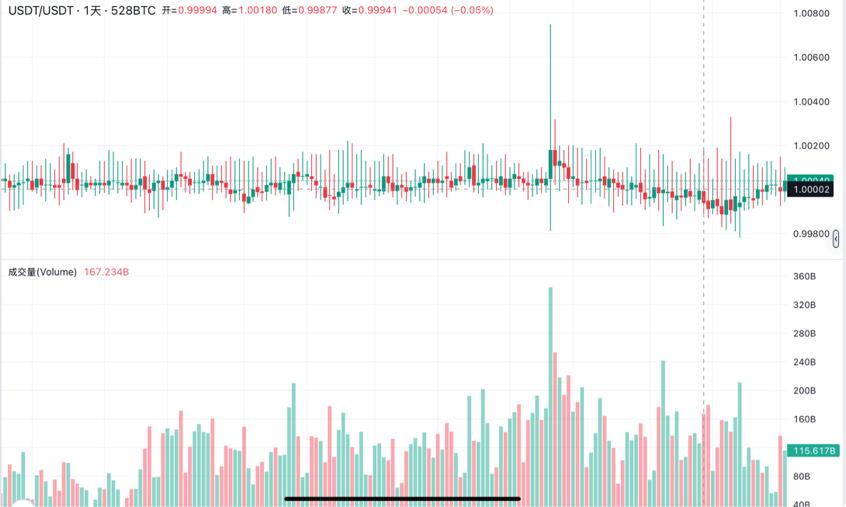
Core Viewpoint - The stability of stablecoins, particularly Tether (USDT), is under scrutiny as S&P downgraded its rating from "4 (restricted)" to "5 (weak)", the lowest level in its rating system, due to increased high-risk asset exposure and ongoing information disclosure gaps [1][2][6]. Group 1: Rating Downgrade and Market Impact - S&P's downgrade of Tether's rating highlights rising high-risk assets in its reserves, including Bitcoin and gold, which could undermine USDT's asset coverage during market volatility [3][4][6]. - Despite the downgrade, USDT maintained a stable price around $1, indicating resilience in market confidence, with a total market capitalization of $185.3 billion and nearly 60% of the stablecoin market share [8][11]. - The stable price of USDT reflects a complex reality in the cryptocurrency market, where its status as a "hard currency" remains intact despite the downgrade [11][12]. Group 2: Regulatory Environment and Risks - The People's Bank of China defined stablecoins as a form of virtual currency, marking related activities as illegal financial operations, which could impact USDT's operations in China [2][18]. - The regulatory stance is influenced by concerns over money laundering and the potential for stablecoins to undermine the status of national currencies [18][19]. - Future developments may see a shift towards digital yuan as the primary focus in the domestic digital currency landscape, potentially sidelining stablecoins [19]. Group 3: Asset Composition and Transparency Issues - Tether's reserves include a significant portion of high-risk assets, with Bitcoin making up 5.6% of its total USDT circulation, raising concerns about liquidity during market stress [3][5][12]. - The lack of transparency in Tether's reserve assets has been a long-standing concern, with limited disclosure on the quality and structure of its holdings compared to competitors like USDC [16][17]. - Tether's asset composition, which includes a substantial amount of commercial paper and other high-risk securities, contrasts sharply with USDC's more secure asset base, leading to increased scrutiny from rating agencies [16][17].

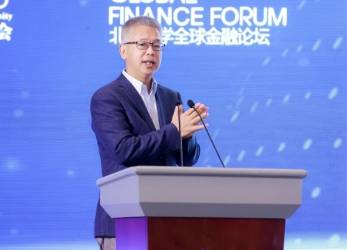
金融学家黄益平:兼具政策影响力与学术权威的数字货币研究者|数字货币专家赋能
Sou Hu Cai Jing· 2025-12-09 08:37
"稳定币和央行数字货币并非零和",黄益平在 2025 夏季达沃斯访谈中提出,两者可在不同场景互补:CBDC 侧重法偿性与监管可控,适合大额、跨境及公 共支付;合规稳定币则依托市场机制,满足零售与链上生态需求。他建议,可在香港先行试点"盯住离岸人民币"的稳定币,既为境外人民币资产提供链上结 算工具,也为内地资本项目未完全开放留出"风险隔离墙"。 【邀请诺贝尔奖、图灵奖得主、两院院士、各行业专家,请联系五洲名家智库】 1957 年生于浙江的黄益平,拥有澳大利亚国立大学经济学博士,是北京大学国家发展研究院教授、院长,两度被任命为中国人民银行货币政策委员会委员 (2015—2018、2024—至今),并兼任中国金融四十人论坛学术委员会主席、北京大学数字金融研究中心主任。丰富的政策咨询与海外投行经历,使他对数 字货币、宏观金融与监管科技始终保持前沿视角。 数字货币:全球货币体系重构的"增量变量" 黄益平指出,数字货币并非短期风口,而是"正在改写支付、清算与储备资产规则"的增量变量。全球九成以上的虚拟资产交易已借助稳定币完成,而 90% 的稳定币与美元挂钩,"这相当于在现有跨境支付系统之外,再建一条由私营机构主导的美元清 ...
王永利 |中国为何坚决叫停稳定币?
Sou Hu Cai Jing· 2025-12-05 15:49
Core Viewpoint - China is accelerating the development of the digital yuan while firmly curbing virtual currencies, including stablecoins, due to its leading position in mobile payments and digital currency, as well as concerns over national currency security and financial system stability [1][4][18] Group 1: Policy Direction - The People's Bank of China (PBOC) has announced plans to optimize the positioning of the digital yuan, moving away from its initial M0 classification, and is establishing operational centers in Shanghai and Beijing to enhance its management and international cooperation [3][4] - A recent meeting emphasized the need to continue enforcing prohibitive policies against virtual currencies, including stablecoins, which are classified as a form of virtual currency subject to the same restrictions [4][5] Group 2: Global Context and Competition - The rise of stablecoins, particularly those pegged to the US dollar, has created a competitive landscape where non-dollar stablecoins face significant challenges in gaining traction internationally [5][6] - The US has been promoting stablecoin legislation, which is seen as a strategy to enhance the dollar's dominance and reduce financing costs, while other countries struggle to compete with the established dollar stablecoin ecosystem [6][7] Group 3: Risks and Challenges - The rapid expansion of dollar stablecoins has raised concerns about their impact on global financial stability and the potential for illicit activities, necessitating a robust regulatory framework [10][16] - The introduction of stringent regulations for stablecoins in the US may inadvertently undermine their value and operational viability, posing challenges for compliance and market stability [9][11] Group 4: Strategic Recommendations for China - China should not follow the US path in promoting stablecoins, as it lacks competitive advantages in this area and risks compromising its currency sovereignty and financial stability [15][16] - The focus should be on accelerating the innovation and application of the digital yuan to establish a leading position in the international digital currency landscape while ensuring robust regulatory measures against virtual currency speculation [17][18]

福建:跨境支付便利化助力企业高效“出海”
Xin Hua Wang· 2025-12-05 09:41
Group 1 - The core viewpoint of the article highlights the significant improvements in cross-border payment efficiency for enterprises in Fujian, facilitated by the multi-central bank digital currency bridge project [1][2] - The multi-central bank digital currency bridge project, initiated by the People's Bank of China and other central banks, aims to address high costs, low efficiency, and lack of transparency in traditional cross-border payments [1][2] - Since its operational launch in June last year, the project has enabled enterprises to transition from daily settlements to real-time transactions, enhancing their financial management capabilities [1][2] Group 2 - The implementation of the currency bridge project has resolved challenges in cross-border trade settlements, improving operational efficiency and stability for businesses [2] - Companies like Fujian Yuyou International Travel Agency have benefited from the streamlined process, allowing for quicker procurement and better negotiation positions in cross-border tourism resources [2] - The project has also provided clarity and predictability in cross-border remittance processes, which is crucial for enterprises like Weichiteng (Fujian) Automotive Co., Ltd., enhancing their resource allocation for innovation and market expansion [2][3] Group 3 - There is a growing demand for cross-border RMB payment services as Fujian enterprises accelerate their internationalization efforts in emerging markets [3] - The People's Bank of China in Fujian plans to continue improving financial infrastructure and expanding digital RMB usage scenarios to benefit more enterprises venturing abroad [3]
金融科技ETF指数(563670)涨超4.2%,金融科技应用场景持续扩大
Xin Lang Cai Jing· 2025-12-05 06:32
Group 1 - The core viewpoint of the news highlights a strong performance in the financial technology sector, with the China Securities Financial Technology Theme Index rising by 4.27% as of December 5, 2025, and notable increases in individual stocks such as Winshang (20.00%) and Star Ring Technology (17.75%) [1] - The Shanghai Financial Technology Development White Paper (2025) indicates that the financial technology industry in Shanghai is expected to reach a scale of approximately 440.5 billion yuan in 2024, driven by advancements in digital currency and artificial intelligence applications [1] - China Galaxy Securities notes that the current environment is seeing an acceleration of medium to long-term capital entering the market, maintaining high market activity, and suggesting a "healthy bull" market trend, with wealth management transformation and international business expansion expected to drive industry ROE improvements [1] Group 2 - The Financial Technology ETF Index closely tracks the China Securities Financial Technology Theme Index, which selects listed companies involved in financial technology to reflect the overall performance of this sector [2] - As of November 28, 2025, the top ten weighted stocks in the China Securities Financial Technology Theme Index account for 53.31% of the index, including companies like Tonghuashun and Dongfang Caifu [2]



13部门重拳出击虚拟币!美国想用数字美元转嫁债务?中国不答应
Sou Hu Cai Jing· 2025-12-03 14:40
Group 1 - The People's Bank of China has convened a meeting with 13 departments, emphasizing that stablecoins cannot circulate within China and related transactions are deemed illegal financial activities [1][22] - In contrast to the U.S. approach, which aims to promote stablecoins as a new form of "digital dollar," China is taking a firm stance to prevent any potential threats to financial security [1][10] - The global market for stablecoins has surpassed $132 billion, with a significant portion being dollar-pegged assets like USDT and USDC, which are seen as a new shell for "digital dollars" [3][5] Group 2 - The U.S. has been increasing its national debt while global central banks are gradually reducing their dollar assets, leading to a decline in the dollar's share of global foreign exchange reserves to approximately 57.8% [5][10] - Stablecoins are viewed as a means for the U.S. to indirectly export dollars, as they are backed by U.S. Treasury securities, thus creating a new pool of dollar holders globally [5][8] - The GENIUS Act mandates that stablecoin issuers must hold safe dollar assets on a 1:1 basis, resulting in significant holdings of U.S. Treasuries by companies like Circle, which now holds over $120 billion in U.S. debt [7][10] Group 3 - Stablecoins present regulatory challenges due to their pseudonymous nature, making it difficult to trace transactions and identify users, which raises concerns about money laundering and compliance [11][13] - There have been instances of stablecoins being used for illegal activities, such as money laundering and circumventing foreign exchange controls, highlighting systemic risks to the financial system [15][18] - The Chinese government aims to close off these potential loopholes to prevent large-scale capital outflows and maintain currency stability [18][20] Group 4 - China's regulatory stance is clear: virtual currencies are not legal tender and cannot be used as payment tools, reinforcing the prohibition established in 2021 [22][23] - Hong Kong is adopting a dual-track strategy, allowing for stablecoin experimentation under strict regulations while maintaining a clear separation from mainland China's financial system [25][27] - China is focusing on developing its own digital currency, the digital yuan, which is being piloted in various cities and aims to enhance payment efficiency while ensuring compliance [27][29]

稳定币监管风暴来袭!中外政策大不同,创新与金融安全如何平衡
Sou Hu Cai Jing· 2025-12-03 11:41
Core Viewpoint - The recent high-level meeting convened by the People's Bank of China (PBOC) involving 14 departments marks a significant escalation in the regulatory oversight of virtual currencies, reflecting the increasing activity in the cryptocurrency market and the emergence of underground trading channels [2][4]. Group 1: Regulatory Coordination - The meeting's backdrop is the recent resurgence of the virtual currency market, with various underground trading methods becoming prevalent [4]. - The collaboration among 14 departments is not merely symbolic; it includes the PBOC for overall coordination, the Ministry of Public Security for crime prevention, the Cyberspace Administration for monitoring online platforms, and the State Administration of Foreign Exchange to prevent capital outflow [5]. - Enhanced efficiency in tackling virtual currency crimes is noted, with the introduction of specialized blockchain tracing systems that can track virtual currency flows with high precision [7]. Group 2: Regulatory Stance on Stablecoins - China has classified stablecoins as illegal financial activities, contrasting sharply with regulatory approaches in other regions like the EU and the US, which are exploring licensing frameworks [11][13]. - The decision to prohibit stablecoins stems from past experiences with financial losses, emphasizing a preventive approach to regulation [13]. - The rise of stablecoins like USDT and USDC, which claim to be pegged to the US dollar, poses significant risks, as highlighted by the collapse of TerraUSD [11]. Group 3: Global Regulatory Landscape - The global regulatory environment for virtual currencies is complex, with varying approaches across countries, leading to challenges in enforcement and compliance [19]. - The Financial Action Task Force (FATF) has struggled to implement its travel rule effectively, indicating a lack of uniformity in global standards [19]. - China's commitment to a risk-based approach in global governance reflects its focus on financial security amidst evolving technological challenges [17]. Group 4: Future Trends and Implications - The trend towards stricter regulation in China is expected to continue, with no signs of loosening oversight [21]. - Institutional investors are becoming more cautious about engaging with virtual currencies, while blockchain technology finds legitimate applications in areas like supply chain finance and cross-border payments [22]. - The emphasis on maintaining regulatory boundaries in financial innovation suggests a balanced approach to technological advancement and oversight [25][26].
北京上市公司协会举办上市公司走进邮储银行活动
Zhong Zheng Wang· 2025-12-03 10:51
邮储银行北京分行副行长徐卫杰等出席会议,热烈欢迎北京地区上市公司代表们来邮储银行进行座谈交 流。徐卫杰表示,邮储银行作为国有大型商业银行,一直与经济社会发展同频共振、同向而行。截至 2025年三季度末,邮储银行实现营收、利润双双正增长,净息差1.68%、不良率0.94%,均保持行业优 秀水平,在稳健经营中不断为实体经济注入金融活水。邮储银行北京分行作为国有大行服务首都经济的 重要落脚点,始终将服务"五篇大文章"作为核心战略抓手,把金融资源精准投向首都经济发展的关键领 域,形成多点开花的发展局面。邮储银行北京分行科技金融事业部、个人金融部分别就邮储银行科技金 融及企业金融服务、财富管理及私人银行业务情况做出了详细的分享。 活动也邀请了邮储银行客户翠微集团到场,翠微集团结合自身区域发展战略及支持科技企业发展的定 位,围绕如何推动银、企、协多方协同、实现高质量发展等方面进行了分享。 与会上市公司代表踊跃发言,分享各自对金融高质量发展的理解和"五篇大文章"的建议,大家各抒己 见,现场气氛热烈。有企业代表提出,科技金融需进一步优化风险评估模型,提升对"专精特新"企业的 融资支持效率;绿色金融应强化信息披露标准,推动碳账 ...

华夏银行牵头簿记发行“区块链+数字人民币”债券
Xin Lang Cai Jing· 2025-12-03 09:25
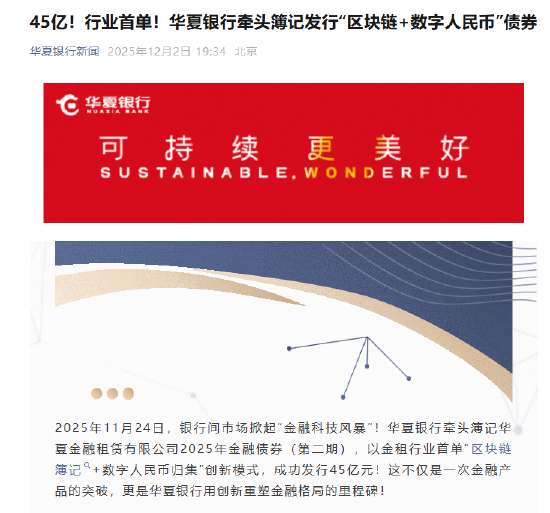
12月3日金融一线消息,据"华夏银行新闻"微信公众号,近日,华夏银行牵头簿记,以行业首创"区块链 簿记+数字人民币归集"创新模式,成功发行45亿元金融债券。发行全流程信息实时上链、不可篡改, 投资者随时能查。募集资金直接通过数字人民币归集,省去中间多重清算环节。本次债券发行人为华夏 银行控股子公司华夏金融租赁有限公司。本期债券初始计划发行30亿元,同步设置15亿元超额发行权, 最终全额触发超额配售,以45亿元满额收官,3年期票面利率锁定1.84%。 责任编辑:秦艺 责任编辑:秦艺 12月3日金融一线消息,据"华夏银行新闻"微信公众号,近日,华夏银行牵头簿记,以行业首创"区块链 簿记+数字人民币归集"创新模式,成功发行45亿元金融债券。发行全流程信息实时上链、不可篡改, 投资者随时能查。募集资金直接通过数字人民币归集,省去中间多重清算环节。本次债券发行人为华夏 银行控股子公司华夏金融租赁有限公司。本期债券初始计划发行30亿元,同步设置15亿元超额发行权, 最终全额触发超额配售,以45亿元满额收官,3年期票面利率锁定1.84%。 ...


广电运通:已打造广州、防城港等地数字人民币区域性平台,中标数字广州数据流通利用基础设施建设试点项目
Sou Hu Cai Jing· 2025-12-03 04:11
Core Insights - The company has made significant progress in the digital economy, particularly in digital currency and AI-driven data elements, positioning itself as a leader in these innovative fields [1] Digital Currency Developments - The company is one of the few in China capable of providing comprehensive digital currency technology services, having established regional platforms in cities like Guangzhou and Fangchenggang [1] - Notable implementations include the first digital currency metro transit scenario in Guangzhou and the first government closed application scenario in the city [1] Data Element Market Engagement - The company was among the first listed firms to enter the data element market, focusing on building operational capabilities in public data processing, development, and trading [1] - It has a stake in the Guangzhou Data Exchange and has successfully entered the secondary market for data elements [1] - In April, the company won a bid for a pilot project in digital data circulation infrastructure in Guangzhou, valued at 35.0187 million yuan, marking a significant milestone in urban data market configuration [1] Future Plans and Integration - The company aims to further integrate digital currency, data elements, and technologies like AI and big data to provide comprehensive digital solutions across various sectors, including finance, government, and transportation [1] - The strategy involves a dual-driven approach of "industry + capital" to empower the digital transformation of numerous industries [1]
