新发展理念

Search documents
央行:强化宏观政策取向一致性 做好逆周期和跨周期调节
Sou Hu Cai Jing· 2025-11-11 09:11
Core Insights - The People's Bank of China (PBOC) released the monetary policy implementation report for Q3 2025, highlighting the challenges posed by external uncertainties and the need for stronger domestic economic recovery [1] Group 1: Economic Environment - The global economic landscape is facing significant challenges, with insufficient growth momentum and a divided performance among major economies [1] - China's economy continues to encounter risks and challenges, necessitating efforts to solidify the foundation for domestic economic recovery [1] Group 2: Policy Direction - The PBOC emphasizes the importance of maintaining strategic determination and confidence in achieving breakthroughs in tasks related to Chinese-style modernization [1] - Future monetary policy will be guided by Xi Jinping's thoughts on socialism with Chinese characteristics for a new era, focusing on the implementation of the 20th National Congress and other key meetings [1] Group 3: Financial Strategy - The PBOC aims to deepen financial reform and promote high-level opening-up, striving to build a strong financial nation and improve the central bank's system [1] - A comprehensive monetary policy framework and macro-prudential management system will be established to enhance the transmission mechanism of monetary policy [1] Group 4: Balancing Objectives - The PBOC will balance short-term and long-term goals, growth support and risk prevention, as well as internal and external equilibrium [1] - Emphasis will be placed on consistent macro policy orientation and effective governance to sustain growth, employment, and expectations [1]
和音:始终做推动全球发展的行动派——读懂中国的确定性⑤
Ren Min Ri Bao· 2025-11-10 07:41
Group 1 - The core message emphasizes China's commitment to sustainable development and global cooperation, advocating for the implementation of the UN 2030 Agenda to bridge development gaps and enhance people's well-being [1] - China positions itself as a key player in global development, actively promoting development cooperation and taking concrete actions to support developing countries [2] - The "14th Five-Year Plan" period showcases China's achievements in modernization, providing new opportunities for global development through initiatives like the Belt and Road Initiative and various cooperation frameworks with developing regions [1][2] Group 2 - China aims to expand institutional openness and maintain a multilateral trade system, countering the rise of protectionism that threatens the development environment for developing countries [3] - The World Bank projects that by 2030, initiatives related to the Belt and Road could lift 7.6 million people out of extreme poverty and 32 million out of moderate poverty in participating countries [3] - China is committed to being a contributor to global development, ensuring that development benefits are shared more equitably among nations, and promoting inclusive economic globalization [3]
扬州市人大常委会部署“十五五”规划纲要编制专题调研工作
Yang Zi Wan Bao Wang· 2025-11-10 06:32
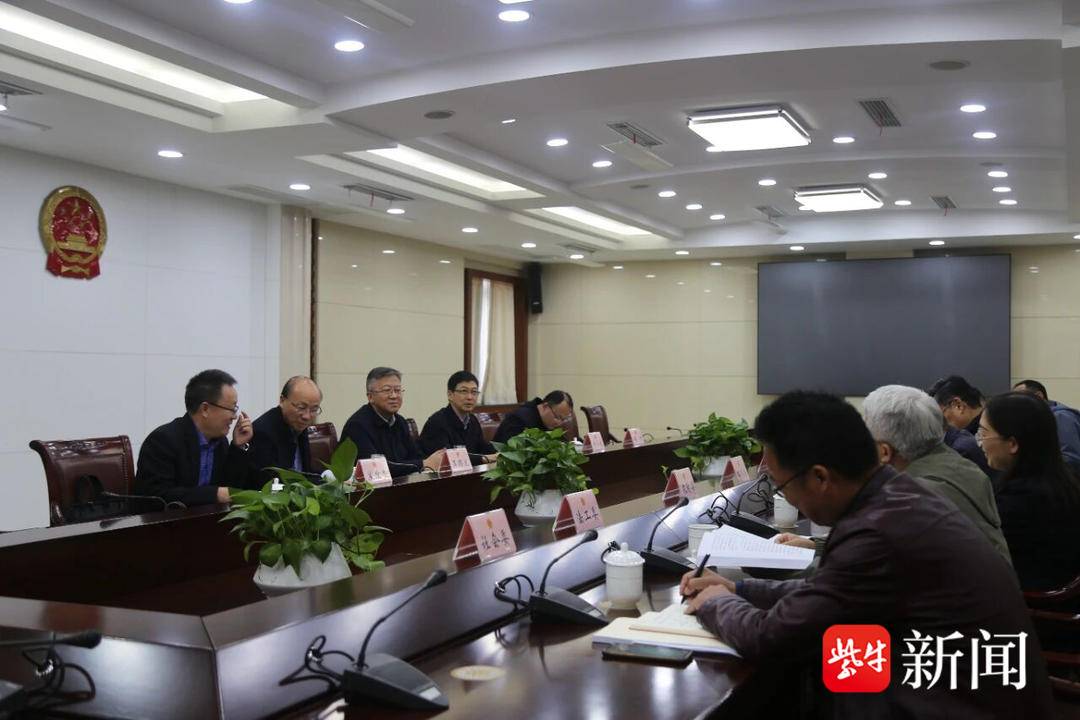
Core Points - The meeting focused on the preparation of the "15th Five-Year Plan" for Yangzhou, emphasizing the importance of high-quality development and the implementation of the spirit of the 20th Central Committee of the Communist Party of China [1][3] Group 1 - The Yangzhou Development and Reform Commission reported on the progress of the "15th Five-Year Plan" preparation, covering planning ideas, basic guidelines, overall framework, and key tasks [3] - The meeting highlighted the necessity of conducting specialized research to align with the city's development goals, particularly the "trillion-yuan city" initiative [3] - Emphasis was placed on ensuring the research is people-centered, adheres to new development concepts, and follows a systematic approach [3] Group 2 - Responsibilities for the research were clearly defined, with a focus on selecting appropriate research methods and scheduling [3] - The goal is to produce high-quality research outcomes that will inform the Yangzhou Municipal Committee's recommendations and assist in the preparation of the "15th Five-Year Plan" [3] - The meeting was attended by key officials from the Yangzhou People's Congress and the Development and Reform Commission, indicating a collaborative approach to the planning process [3]

二论深入学习贯彻习近平总书记在听取海南自由贸易港建设工作汇报时的重要讲话精神
Hai Nan Ri Bao· 2025-11-10 02:15
Core Viewpoint - The primary goal of building the Hainan Free Trade Port is to promote high-quality development in Hainan and support the national new development pattern [2][3]. Group 1: High-Quality Development as a Priority - High-quality development is emphasized as the foremost task in building a modern socialist country and is crucial for Hainan's further opening up and modernization [4]. - Hainan has been focusing on high-level openness to drive deep reforms and high-quality development, optimizing its four leading industries and enhancing consumer sectors like duty-free shopping, healthcare, and education [4][5]. Group 2: Systematic Approach to Development - High-quality development requires coordinated efforts across various fields, necessitating precise policies and sustained efforts in key areas [5]. - A modern industrial system is essential for high-quality development, with a focus on enhancing Hainan's unique advantages and expanding into new sectors such as agriculture, deep-sea exploration, commercial aerospace, green low-carbon initiatives, and biomanufacturing [5]. - Infrastructure development is foundational, with plans to improve supply capabilities and stability, including modernizing power and gas networks [5]. - Regional coordination is vital, with Hainan encouraged to integrate into the new development pattern and strengthen cooperation with major economic regions [5]. - Environmental sustainability is a key factor for Hainan's development, with ongoing efforts to address ecological issues and build a national ecological civilization [5]. - Improving public welfare is essential, focusing on basic, inclusive, and safety-net services to enhance the well-being of the population [5]. Group 3: Commitment to Development Goals - There is a strong call for unity in thought and action towards the central government's decisions, emphasizing a sense of responsibility and urgency in achieving high-quality development [6].
始终做推动全球发展的行动派——读懂中国的确定性⑤(和音)
Ren Min Ri Bao· 2025-11-07 22:43
Group 1 - The core viewpoint emphasizes China's commitment to inclusive development and its role in promoting global modernization, advocating for no country to be left behind in the modernization process [1][2] - China is actively engaging in international cooperation, particularly with developing countries, to implement the "common prosperity" concept and build a community with a shared future for mankind [2][3] - The country is focused on expanding its institutional openness and maintaining a multilateral trade system, which is crucial for the development of developing nations [3] Group 2 - During the "14th Five-Year Plan" period, China is providing new opportunities for global development through its unique modernization achievements and initiatives like the Belt and Road Initiative [2] - The World Bank projects that by 2030, the Belt and Road Initiative could help lift 7.6 million people out of extreme poverty and 32 million out of moderate poverty in participating countries [3] - China aims to enhance its role as a contributor to global development by promoting inclusive economic globalization and ensuring that development benefits are shared more equitably among nations [3]
始终做推动全球发展的行动派(和音)
Ren Min Ri Bao· 2025-11-07 22:00
Group 1 - The core viewpoint emphasizes China's commitment to inclusive development and its role in promoting global modernization, advocating for no country to be left behind in the modernization process [1][2] - China actively engages in international cooperation, particularly with developing countries, to implement the "common prosperity" concept and build a community with a shared future for mankind [2][3] - The country aims to expand its institutional openness and maintain a multilateral trade system, which is crucial for the development of developing nations, especially in the face of rising protectionism [3] Group 2 - During the "14th Five-Year Plan" period, China has provided new opportunities for global development through its unique modernization achievements and initiatives like the Belt and Road Initiative [2] - The World Bank projects that by 2030, the Belt and Road Initiative could help lift 7.6 million people out of extreme poverty and 32 million out of moderate poverty in participating countries [3] - China is committed to ensuring that development benefits are shared more equitably among nations, promoting inclusive and sustainable economic globalization [3]
财政部:积极培育新兴产业和未来产业 持续推动制造业转型升级
智通财经网· 2025-11-07 10:56
Core Viewpoint - The report emphasizes the acceleration of new growth momentum in China's economy through enhanced fiscal policies, support for innovation, and investment in key industries, while ensuring the stability of employment and market expectations [1][3]. Group 1: Fiscal Policy and Economic Growth - The fiscal policy is increasingly proactive, focusing on stabilizing employment, businesses, and market expectations, while promoting economic recovery [3][4]. - A total of 300 billion yuan in special bonds is allocated to support the replacement of consumer goods, which is expected to stimulate significant retail sales [4][15]. - The central government plans to increase its technology funding to 398.12 billion yuan in 2025, a 10% increase from the previous year, focusing on core technology and strategic industries [5][21]. Group 2: Investment and Consumption - The government aims to enhance domestic demand by boosting consumption and effective investment, with a focus on key sectors and weak links [13][16]. - The issuance of special bonds has accelerated, with 5.55 billion yuan issued in the first half of the year, completing 42.7% of the annual target [16]. - The manufacturing sector is expected to see a 10.3% increase in industrial investment, driven by government support for technological upgrades [17]. Group 3: Employment and Social Welfare - The central government allocated 667.4 billion yuan for employment support, with 6.95 million new urban jobs created in the first half of the year [27][28]. - Education spending increased by 5.9% to 2.15 trillion yuan, with a focus on improving quality and access to education [29][30]. - Basic public health service funding reached 804.35 billion yuan, enhancing health management and disease prevention efforts [32][33]. Group 4: Risk Management and Financial Stability - The government is implementing measures to mitigate financial risks, including the management of local government debt and the promotion of real estate market stability [7][9]. - A comprehensive approach to fiscal management is being adopted, including reforms in tax systems and budget execution to ensure effective use of resources [7][12]. Group 5: Innovation and Technology - The report highlights the importance of integrating technological innovation with industrial development, with a focus on enhancing research capabilities and supporting key technology projects [20][21]. - Funding for basic research is set to increase by 12.1%, emphasizing the need for original innovation and support for research institutions [21][22]. Group 6: Environmental and Social Development - The government is committed to ecological protection and sustainable development, with significant funding allocated for pollution control and ecosystem restoration [38][39]. - Social welfare programs are being expanded, with increased support for vulnerable populations and efforts to improve living standards [34][35].
果园港的新变化——长江上游最大枢纽港蹲点记
Xin Hua Wang· 2025-11-07 09:24
Core Insights - The article highlights the transformation of Chongqing's Guoyuan Port into a major logistics hub, significantly enhancing its capacity and connectivity to global markets [1][2][3] Infrastructure Development - Guoyuan Port has expanded to include 18 berths for 5,000-ton vessels and 14 dedicated railway lines, achieving an annual throughput of over 26 million tons and a container handling capacity of 2 million TEUs [1] - The port now connects to over 300 ports in more than 100 countries and regions, establishing itself as a key transit point for the western region of China [1] Technological Advancements - The port has embraced smart and green technologies, with the introduction of remote-controlled, unmanned container trucks that enhance operational efficiency and reduce labor costs [2] - Guoyuan Port has been recognized as a "four-star smart port" and "four-star green port," reflecting its commitment to improving logistics efficiency and reducing costs for businesses [2] Economic Impact - The port's operational efficiency improvements have led to a 15% increase in cargo turnover speed, saving companies over 100 million yuan annually in logistics costs [2] - The integration of various transportation modes has made it easier and more cost-effective for goods from the western region to reach international markets [2][3] Strategic Positioning - Guoyuan Port's location allows it to leverage multiple transport corridors, including the New Western Land-Sea Corridor and the Yangtze River Golden Waterway, enhancing its role in international trade [3] - The port is positioned to support the "dual circulation" strategy, promoting both domestic and international economic activities [4] Future Development - The port aims to establish a "front port and back garden" industrial ecosystem, enhancing its influence on surrounding industries and promoting regional economic integration [4] - The focus is shifting from quantity growth to high-quality development, with plans to incorporate advanced technologies like 5G and big data into port operations [4]
准确把握建设现代化产业体系的理论内涵和实践要求(深入学习贯彻习近平新时代中国特色社会主义思想)
Ren Min Ri Bao· 2025-11-06 22:11
Core Viewpoint - The construction of a modern industrial system is essential for China's economic modernization, emphasizing the importance of technological innovation and the solid foundation of the real economy [1][4][11]. Group 1: Theoretical Framework of Modern Industrial System - The industrial system is a complex organic system involving various sectors and enterprises, which significantly influences economic growth and stability [2][5]. - A modern industrial system enhances a country's comprehensive competitiveness and is crucial for economic modernization [3][5]. Group 2: Progress and Achievements - Since the 18th National Congress, China has made significant progress in building a modern industrial system, achieving a manufacturing value-added share of nearly 30% of the global total by 2024 [11][12]. - The industrial structure has been optimized, with the proportion of high-tech manufacturing increasing from 8.9% to 16.3% from 2010 to 2024 [13]. Group 3: Key Tasks for the 14th Five-Year Plan - The plan emphasizes optimizing traditional industries, nurturing emerging and future industries, promoting high-quality service development, and constructing a modern infrastructure system [16][17][18]. - Specific initiatives include enhancing the competitiveness of traditional sectors and fostering strategic emerging industries like renewable energy and advanced manufacturing [17][18]. Group 4: Security and Resilience - The modern industrial system must ensure security and resilience, particularly in critical sectors like food and energy, with self-sufficiency rates above 95% and 80%, respectively [14]. - The focus is on addressing vulnerabilities in key technologies and enhancing the autonomy of industrial chains [14][15]. Group 5: Financial and Market Dynamics - A supportive financial system is crucial for the development of the modern industrial system, emphasizing the need for an innovation-friendly financial environment [21]. - The construction of a robust domestic market is essential for reducing operational costs and facilitating resource allocation [19][22].
奋进“十五五”|以新发展理念引领高质量发展
Zhong Guo Jing Ji Wang· 2025-11-05 02:27
评新面论 量步展 "," "," "," "," 导服著 坚定不移以新发展理念引领高质量 发展,推进深层次改革,扩大高水平开 放,以新质生产力激发新动能,以改革 创新构建新型生产关系,以用好超大规 模市场优势畅通国民经济循环。 H码进入专栏 创新驱动重塑比较优势,协调联动激活后发优势,绿色转型夯实竞争优势,高水平对外开放拓展发展优 势,发展成果共享彰显制度优势……迈上新的历史起点,坚定不移以新发展理念引领高质量发展,推进 深层次改革,扩大高水平开放,以新质生产力激发新动能,以改革创新构建新型生产关系,以用好超大 规模市场优势畅通国民经济循环,我们完全有信心、有能力战胜前进中的各种困难挑战,在全面推进中 国式现代化的新征程上赢得战略主动。(中国经济网评论员 邓浩) 高质量发展是全面建设社会主义现代化国家的首要任务。近日召开的党的二十届四中全会,对"十五 五"时期高质量发展作出新部署,强调以推动高质量发展为主题,将坚持高质量发展作为必须遵循的原 则,明确高质量发展取得显著成效作为主要目标的第一条。 发展理念是否对头,从根本上决定着发展成效乃至成败。"十四五"前4年,我国经济增速平均达到 5.5%,在世界主要经济体 ...