电动汽车

Search documents
比亚迪取代特斯拉,成为电动车行业“领头羊”
财富FORTUNE· 2025-09-03 13:03
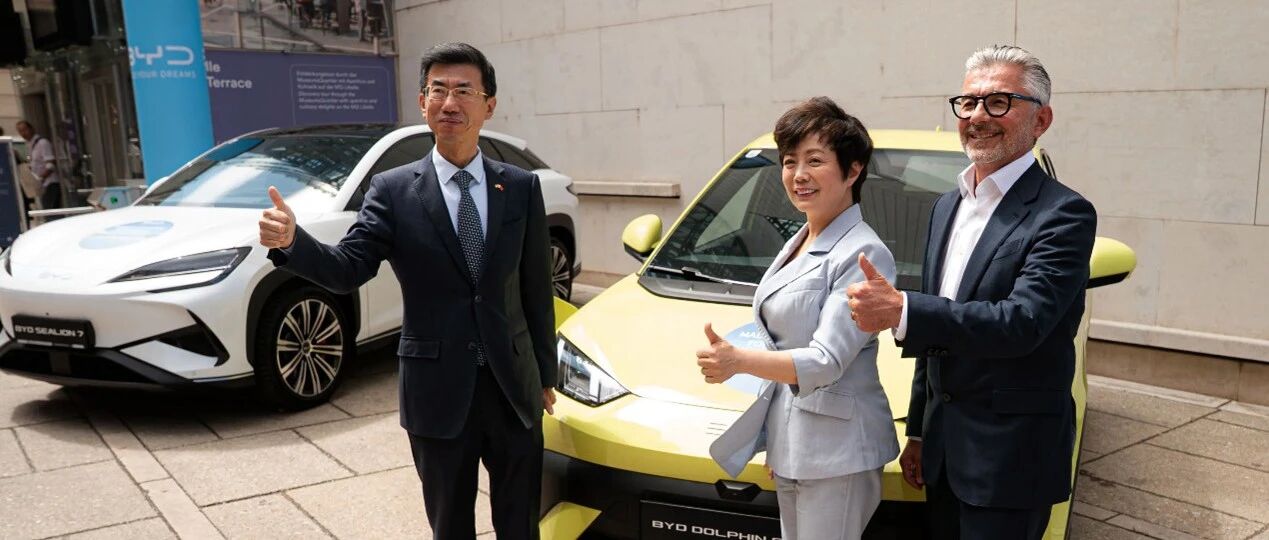
Core Viewpoint - BYD is rapidly expanding its electric vehicle production in Europe, aiming to challenge established competitors like Tesla and traditional automotive giants, leveraging local manufacturing to avoid tariffs and enhance market presence [2][4][6]. Group 1: Expansion Plans - BYD's factory in Hungary is set to produce 150,000 compact electric cars annually starting in 2026, with plans to double that capacity to 300,000 by 2030 [3][6]. - The company aims to establish a significant presence in Europe, with a marketing slogan of "Made in Europe, for Europe" [3][6]. - BYD's sales in Europe have tripled year-over-year, reaching nearly 55,000 vehicles from January to May this year, although this still represents only 1% of the European market [8][9]. Group 2: Competitive Landscape - In the second quarter of this year, BYD sold approximately 607,000 electric vehicles globally, surpassing Tesla's sales of 384,000 units during the same period [8]. - BYD's rapid growth poses a significant threat to established automakers like General Motors, Toyota, Ford, and Volkswagen, which have historically dominated the market [4][6]. - The global electric vehicle market is projected to see over 70% of production coming from China by 2024, with BYD leading this charge [6][12]. Group 3: Strategic Advantages - BYD's vertical integration strategy allows it to control key components of electric vehicles, including batteries, which provides a cost advantage of at least 25% over competitors [13]. - The company has received substantial government subsidies, estimated at around €3.4 billion (approximately $3.76 billion) from 2018 to 2022, aiding its competitive positioning [13]. - BYD's pricing strategy, supported by Chinese government subsidies, enables it to offer vehicles at significantly lower prices than competitors, such as the Dolphin Surf priced under $8,000 [15]. Group 4: Leadership and Vision - BYD's executive vice president, Li Ke, emphasizes the importance of success in Europe as a stepping stone for global expansion [16]. - The company is actively recruiting talent from established European automotive firms to enhance its product offerings and market strategies [18]. - BYD's founder, Wang Chuanfu, transformed the company from a battery manufacturer to a competitive automotive player, attracting significant investment from Warren Buffett [12].


丰田(TM.US)宣布投资7.92亿美元扩建捷克工厂,用于生产全新电动汽车
智通财经网· 2025-09-03 11:36
Group 1 - Toyota plans to invest €680 million (approximately $792 million) in its Kolin plant in the Czech Republic to add a new production line [1] - The new production line will receive up to €64 million (approximately $75 million) in subsidies from the Czech government, primarily for the production of a new all-electric vehicle [1] - Following the expansion, the Kolin plant will become Toyota's first all-electric vehicle production base in Europe [1] Group 2 - Currently, the Kolin plant mainly produces the Aygo X model and the Yaris Hybrid model, with an annual production capacity of approximately 220,000 units [1]

克普勒:亚洲石油产品需求疲软甚至面临零增长局面
Zhong Guo Hua Gong Bao· 2025-09-02 02:34
Group 1: Asia Oil Demand Trends - The demand for oil products in Asia is showing signs of weakness and is expected to continue into next year, with a potential for zero growth in oil product demand [1] - Key factors driving the current fuel demand trend include weakened consumer confidence and the rise of electric vehicles [1] - Analysts predict that oil product demand in the Asia-Pacific region will experience zero growth this year due to oversupply in petrochemical capacity, slowing regional economic growth, aging population, and improved fuel efficiency [1] Group 2: Natural Gas Demand Outlook - The outlook for natural gas demand in Asia is significantly better than that for crude oil, with no predictions indicating that electric vehicles will weaken natural gas demand [1] - A Morgan Stanley forecast suggests that natural gas demand in Asia will grow at an annual rate of 5%, surpassing growth rates in Europe and the U.S. [1] - Natural gas is expected to play a crucial role in meeting the increasing global demand for electrification, becoming a pillar of energy security [1] Group 3: Europe Oil Demand Dynamics - In contrast to Asia, Europe is experiencing unexpected strong growth in oil product demand, with gasoline and aviation fuel demand expected to rise despite the push for electric vehicles [2] - The International Air Transport Association (IATA) has warned of an aviation fuel shortage in Europe due to reduced domestic supply and stable demand growth [2] - The closure of refineries in Europe, driven by stricter environmental regulations, has led to a decline in aviation fuel production and increased reliance on imports [2] Group 4: North America Oil Demand Stability - While U.S. fuel demand is not expected to see significant growth, it is projected to remain stable, driven by winter heating needs and steady air travel demand [2] - However, a decline in gasoline demand is anticipated by 2026, and diesel demand may face pressure due to tariffs impacting freight activities [2]
小米汽车8月交付量超过30000台
Ju Chao Zi Xun· 2025-09-01 07:45
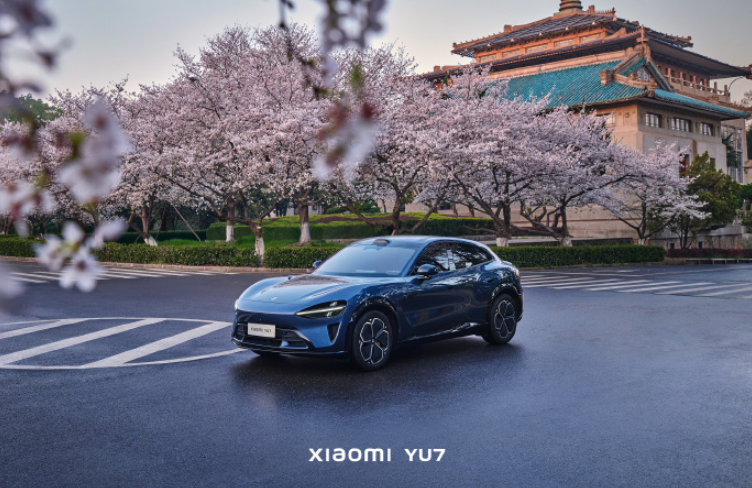
Core Viewpoint - Xiaomi's automotive division has achieved significant delivery milestones, indicating strong market performance and growth potential in the electric vehicle sector [2][3]. Group 1: Delivery Performance - In August, Xiaomi delivered over 30,000 vehicles, marking the second consecutive month of exceeding this delivery figure [2][3]. - The company aims to meet its annual delivery target of 350,000 vehicles for the year [3]. Group 2: Historical Growth - In the second quarter of 2025, Xiaomi's vehicle deliveries reached 81,300 units, a record high, representing a 197.7% increase compared to 27,300 units in the same period last year [3]. Group 3: Product Launch and Market Strategy - Xiaomi's first SUV, the Xiaomi YU7 series, was launched in June, achieving over 240,000 orders within 18 hours of its release [3]. - The company plans to enter the European market with its first electric vehicle by 2027 and aims to compete globally with Tesla and BYD [3].

欧洲车市回暖但特斯拉(TSLA.US)销量大降40%市场份额被比亚迪超越
Xin Lang Cai Jing· 2025-08-28 08:11
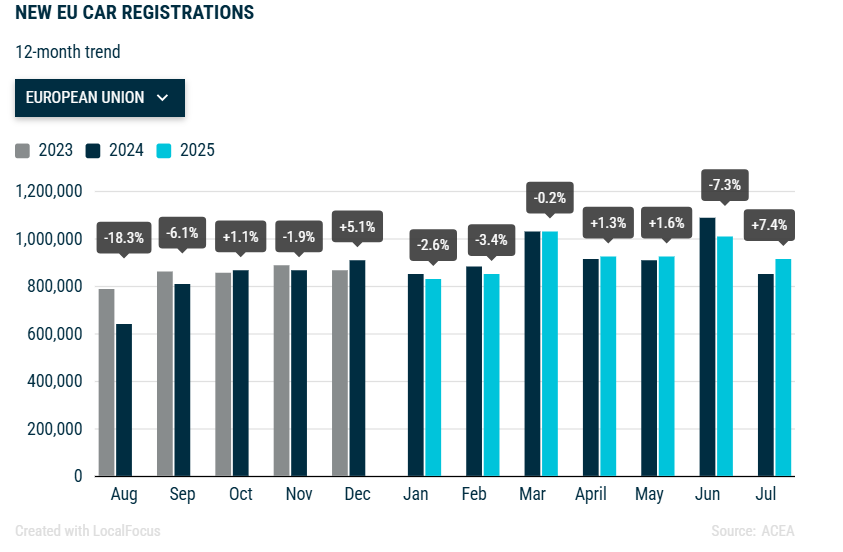
Group 1: Market Overview - In July, new car sales in Europe increased by 5.9% year-on-year, primarily driven by strong demand in Germany, which offset declines in the UK, France, and Italy [1] - Overall new car sales in Europe, including EU, UK, and EFTA, reached 1.09 million units in July [1] - The EU's overall car sales rose by 7.4% year-on-year, with pure electric, hybrid, and plug-in hybrid vehicle registrations increasing by 39.1%, 56.9%, and 14.3% respectively, accounting for approximately 59.8% of total registrations [2] Group 2: Company Performance - Tesla's new car sales in Europe saw a significant decline of 40.2% year-on-year, with its market share dropping from 1.4% to 0.8% [2] - BYD's market share in Europe reached 1.2% in July, surpassing Tesla's share [1] - Volkswagen and Renault reported year-on-year increases in new car registrations of 11.6% and 8.8% respectively, while Stellantis experienced a slight decline of 1.1% [2] Group 3: Competitive Landscape - European automakers, including Volkswagen, are developing new electric vehicle models to compete with Tesla and Chinese electric vehicle manufacturers [1] - Tesla is facing increasing competition from low-cost electric vehicle rivals, particularly from China, as it struggles with an aging product lineup [2] - Tesla's CEO acknowledged the potential for "very tough quarters" ahead, particularly with the expiration of a $7,500 tax credit in the U.S. market [2]

欧洲车市回暖 但特斯拉(TSLA.US)销量大降40% 市场份额被比亚迪超越
智通财经网· 2025-08-28 07:09
Group 1: Market Overview - In July, new car sales in Europe increased by 5.9% year-on-year, primarily driven by strong demand in Germany, which offset declines in the UK, France, and Italy [1][4] - The overall new car sales in Europe, including the EU, UK, and EFTA, reached 1.09 million units in July [3] - The total car sales in Germany grew by 11.1%, while the UK, France, and Italy saw declines of 5%, 7.7%, and 5.1% respectively [6] Group 2: Electric Vehicle Market Dynamics - Despite an overall increase in electric vehicle sales in Europe, Tesla's market share has significantly declined for seven consecutive months, with a 40.2% drop in new car sales in July [1][4][7] - BYD, a Chinese electric vehicle competitor, achieved a remarkable 225.3% increase in sales, capturing a market share of 1.2%, surpassing Tesla's approximately 0.8% [1][4] - The registration of pure electric vehicles, hybrid, and plug-in hybrid models in the EU saw year-on-year growth of 39.1%, 56.9%, and 14.3% respectively, collectively accounting for about 59.8% of total registrations [4] Group 3: Industry Challenges - The CEO of ACEA expressed concerns that the EU's targets for reducing vehicle CO2 emissions, including a 100% reduction for passenger cars by 2035, are no longer feasible [2] - European automakers have reported significant losses, with companies like Renault issuing profit warnings due to the adverse effects of U.S. import tariffs [2] - Tesla faces increasing competition from low-cost electric vehicles, particularly from Chinese manufacturers, and is struggling with regulatory challenges in Europe [7]
Ferroglobe (GSM) FY Conference Transcript
2025-08-27 17:32
Ferroglobe (GSM) FY Conference Summary Company Overview - Ferroglobe plc is a major producer of metallurgical products including silicon metal, ferrosilicon, and manganese alloys, with a market cap of approximately $800 million and 3,300 employees globally [2][4] - The company was formed in 2015 through a merger between Ferro Atlantica in Spain and Globe Specialty Materials in the U.S. [4] Financial Performance - Ferroglobe reported $1.6 billion in sales [4] - The company has significantly reduced its debt from $550 million in 2021 to about $100 million currently, indicating a strong balance sheet [5][24] - The company has a net cash position and began paying dividends in Q1 2024, increasing the dividend by 8% in 2025 [9][28] Revenue Breakdown - Revenue sources: - Silicon metal: ~50% - Ferrosilicon and silicon-based alloys: ~25% each [6][7] - Geographic revenue distribution: - North America: 35% - Europe: 40% - Rest of the world: 25% [7] Market Dynamics - The company faces challenges in the solar market due to a lack of subsidies and trade turmoil, but sees long-term opportunities in electric vehicles (EVs) [8][9] - Ferroglobe is involved in a partnership with CorShell to enhance silicon use in EV battery anodes, which offers significant advantages over graphite [8][15] - The company is the largest producer of silicon metal in Europe and the U.S., and is vertically integrated in quartz mining [10][40] Trade and Regulatory Environment - The company is affected by Chinese dumping of silicon metal into Europe, which has driven prices down by approximately 30% in the last six months [42] - Trade measures are being implemented in the U.S. and EU to protect domestic producers, with preliminary decisions expected in September and November 2025 [19][22] - The EU's internal production market share has decreased from 40% to 15% over the last five years, with a goal to return to 40% [21] Operational Efficiency - Ferroglobe has focused on operational excellence and working capital management, with a significant reduction in working capital planned [12][34] - The company has a hiring freeze in place and is focused on maintaining efficiency without sacrificing sales opportunities [56][59] Future Outlook - The company anticipates growth in the U.S. market for silicon, while Europe is expected to remain stagnant [23] - Ferroglobe is optimistic about the impact of trade measures on market share and economic metrics [38][39] - The company is positioned to benefit from the long-term growth in solar and EV markets despite current challenges [39][40] Additional Insights - Ferroglobe has invested $10 million in CorShell and $60 million in maintenance CapEx annually [29][30] - The company has flexibility in production, allowing it to switch between silicon and ferrosilicon based on market conditions [27] - The company is actively managing energy costs, with contracts covering 75% of energy needs in most countries, except Spain [12][13]

铃木汽车未来5-6年内将在印度投资近80亿美元
Cai Jing Wang· 2025-08-27 07:15
Core Viewpoint - Suzuki Motor Corporation plans to invest 700 billion rupees (approximately 8 billion USD) in India over the next 5-6 years to increase production, launch new models, and strengthen market share [1] Group 1 - Suzuki's President, Toshihiro Suzuki, announced the investment strategy aimed at enhancing production capabilities and expanding the product lineup [1] - The Maruti Suzuki Gujarat plant is projected to have an annual production capacity of 1 million vehicles [1] - Suzuki intends to establish the Gujarat plant as the global production center for its first electric vehicle, the electric Vitara, and plans to export to over 100 countries worldwide [1]
这一车企巨头遭“清仓式”抛售
Di Yi Cai Jing Zi Xun· 2025-08-27 05:03
Core Insights - Mercedes-Benz plans to sell its entire 3.8% stake in Nissan, valued at approximately $346 million, leading to a nearly 3% drop in Nissan's ADR and over 6% decline in its Japanese stock [2] - Nissan's performance has been under pressure, with a 10.1% year-on-year decline in global sales to 707,000 units in the first quarter of the 2025 fiscal year, causing it to fall out of the top ten global automakers [2] - Nissan reported a consolidated net income of 2.7 trillion yen, a 9.7% decrease year-on-year, and an operating loss of 79.1 billion yen, compared to an operating profit of 9.95 billion yen in the same period last year [2] Market Performance - Nissan's largest market remains the United States, with net sales of 1.08 trillion yen, down 10.23% year-on-year [3] - The Asian market (excluding China) saw net sales drop over 25%, accounting for only 5% of the global market share [2] Strategic Response - Nissan is implementing a recovery plan aimed at achieving a cost reduction of approximately 500 billion yen through measures such as closing factories and laying off 20,000 employees [3] - The company plans to reduce its global production facilities from 17 to 10 by the 2027 fiscal year, decreasing capacity to 2.5 million units [3] - Nissan anticipates a potential profit reduction of up to 300 billion yen due to U.S. tariffs, despite previous announcements to lower tariffs to 15% [3]

今年夏天不缺电
2 1 Shi Ji Jing Ji Bao Dao· 2025-08-27 04:03
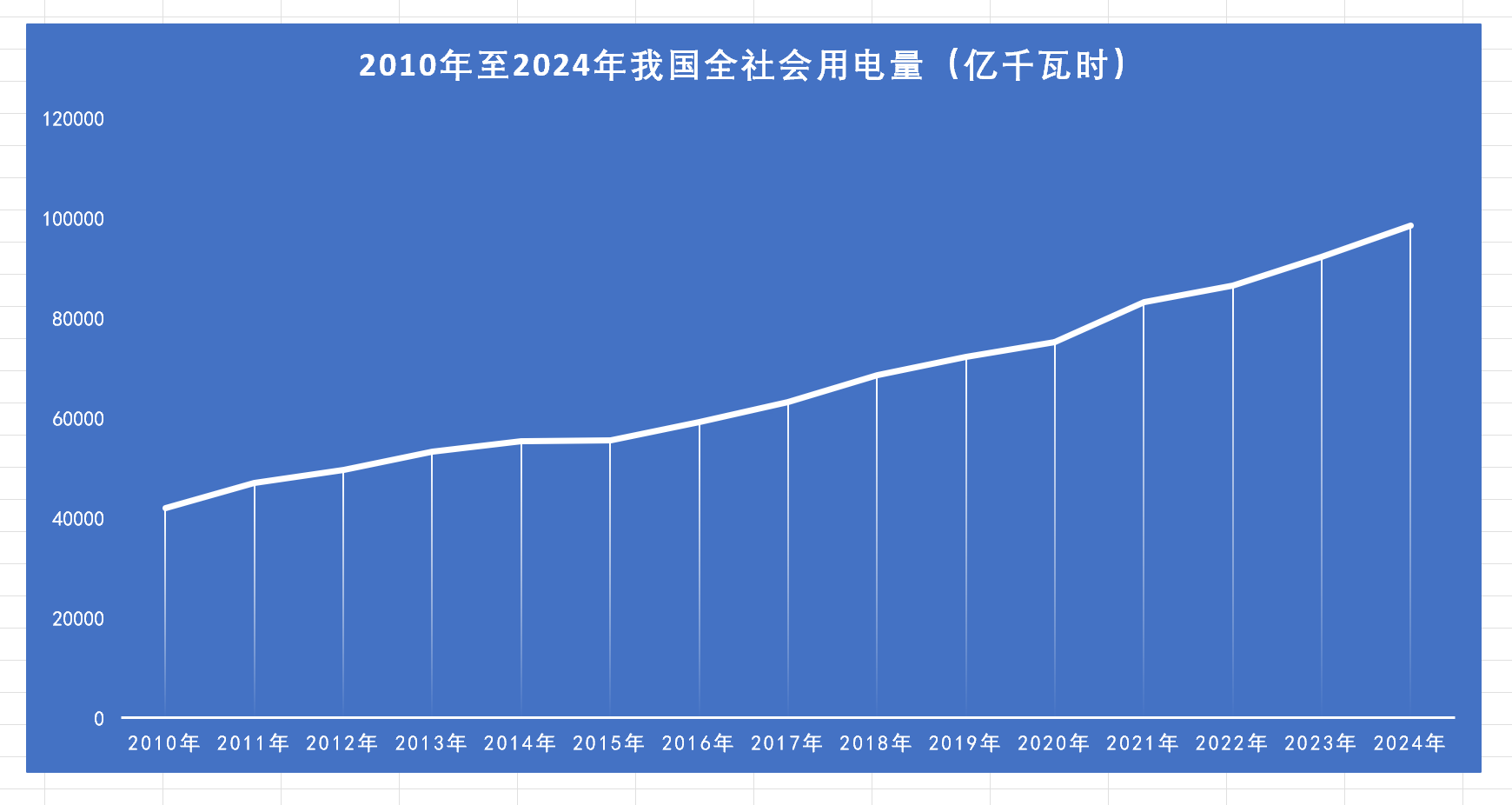
Core Insights - The press conference highlighted China's significant achievement in electricity consumption, with July's total surpassing 1 trillion kilowatt-hours for the first time, reaching 10,226 billion kilowatt-hours [2][3] - China's electricity consumption has been consistently breaking records, with a cumulative total of approximately 58.6 trillion kilowatt-hours in the first seven months of the year, indicating a strong economic recovery and increased demand from various sectors [3][4] Electricity Consumption Trends - The total electricity consumption is a key indicator of economic activity, encompassing various sectors including industry, agriculture, and residential use, and is seen as a "barometer" of economic performance [4] - The electricity consumption growth is attributed to both high temperatures during the summer and a recovering economy, leading to increased demand from both residential and industrial sectors [4][5] Future Projections - Based on current trends, China's total electricity consumption is expected to reach 10 trillion kilowatt-hours by 2025, with an annual growth rate of 5% to 6% projected by the China Electricity Council [10][9] - The rapid increase in renewable energy installations, particularly solar power, has significantly contributed to the growth in electricity generation capacity, with renewable energy accounting for 57.9% of the total installed capacity [12][11] Energy Supply Stability - The summer of 2023 saw no major power outages, contrasting with previous years, due to improved electricity supply and increased generation capacity, which reached 367 million kilowatts by the end of July [18][17] - The electricity supply was stable, with renewable energy sources contributing significantly to the overall generation, demonstrating the effectiveness of the energy supply strategy [19][18] Economic Structure and Energy Demand - The changing structure of electricity consumption reflects China's economic transformation, with significant growth in electricity demand from high-tech industries and the electric vehicle sector [21][22] - The rapid growth in electricity consumption from new industries, such as electric vehicle manufacturing and digital services, indicates a shift towards a more energy-efficient and sustainable economic model [23][24] Future Energy Goals - The focus is shifting from merely ensuring electricity availability to optimizing electricity usage, with plans to enhance grid capacity, improve pricing mechanisms, and maintain grid stability as renewable energy sources increase [24][20] - The goal is to transition from "using electricity" to "using electricity well," aligning energy supply with sustainable economic development and consumer needs [24]