
供应链金融

Search documents
金融赋能新能源:兴业专家在长三角产业对接会深度分享
Jiang Nan Shi Bao· 2025-06-23 23:35
Core Insights - The event held on June 13 in Changzhou focused on the collaboration and development of the new energy vehicle (NEV) industry in the Yangtze River Delta region, gathering over 120 key enterprises and financial institutions [1] - Experts from Industrial Bank shared innovative practices in supply chain finance and ESG, highlighting successful collaborations with Changzhou's supply chain public service platform [1] - The establishment of a digital supply chain public service platform in Changzhou marks a significant advancement in supply chain finance, enabling efficient financing for core enterprises and their suppliers [2] Group 1: Event Overview - The event aimed to promote collaborative development in the NEV industry across the Yangtze River Delta, involving key stakeholders from various sectors [1] - Industrial Bank's experts presented insights on ESG and supply chain finance, emphasizing the importance of sustainable practices in the NEV sector [1] Group 2: Financial Innovations - The successful system integration between Industrial Bank and Changzhou's supply chain platform facilitated over 10 million yuan in financing for two core enterprises on its first day [2] - The platform employs a "supply chain finance+" model, utilizing big data for risk assessment and providing efficient financing solutions [2] - Industrial Bank's supply chain financing balance reached 6.062 billion yuan, supporting over 125 upstream and downstream clients [3] Group 3: Future Plans and Implications - Industrial Bank plans to expand its supply chain finance services, focusing on the NEV and high-end manufacturing sectors [3] - The insights shared during the event are expected to foster deeper collaboration between Industrial Bank and industry enterprises, enhancing the resilience and competitiveness of the NEV ecosystem [3]

湖南“四销四有”模式全国推广 金融闭环激活千亿消费帮扶平台
Sou Hu Cai Jing· 2025-06-23 11:42
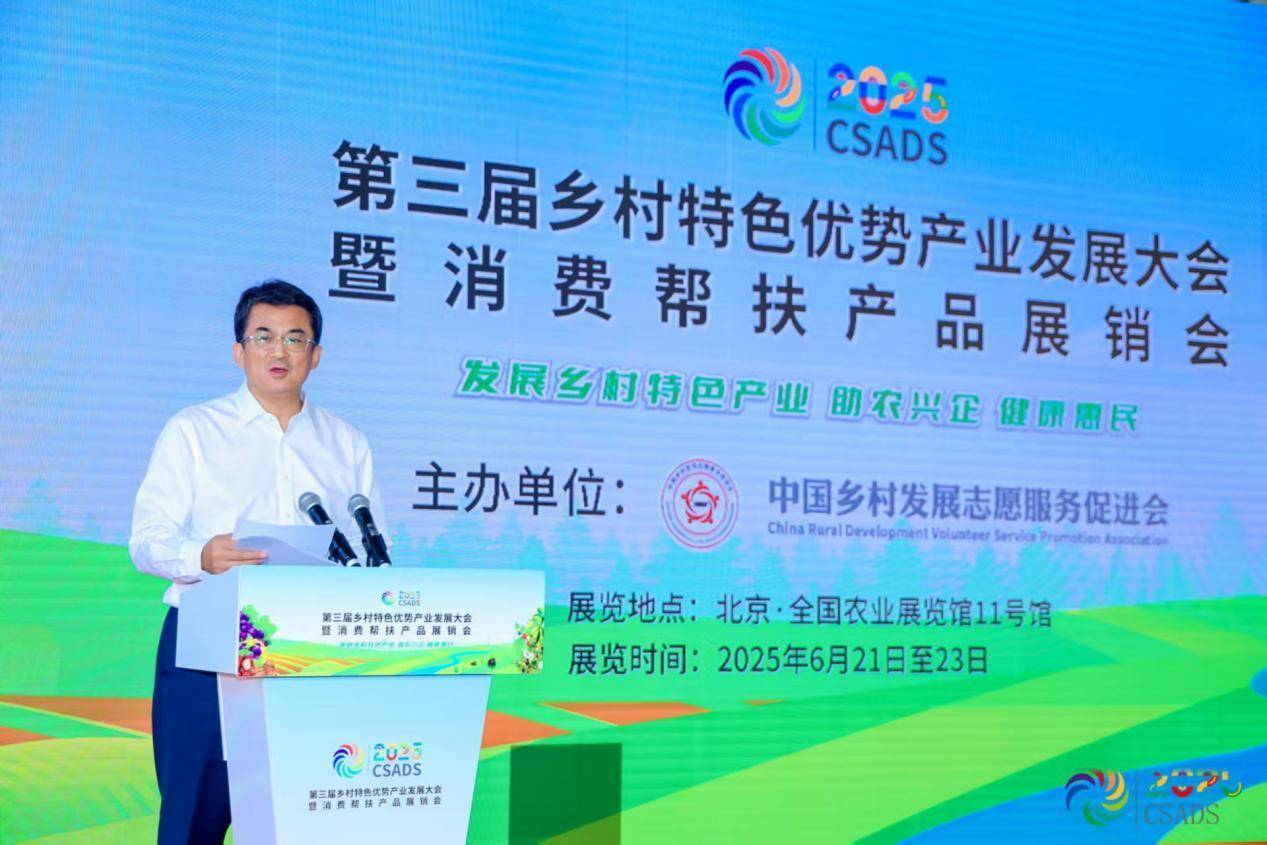
"平台沉淀的产供销全链条数据,是金融协同的导航图。"湖南独创的"组委会机制+数据共享池"实现了工会福利政策与银行信贷协同、平台交易数据直通金 融机构、物流信息纳入保险定价模型三大贯通。 在实践路径方面,湖南形成银企闭环模式,在15个重点县形成"白名单→数据贷→订单质押→冷链建设"闭环体系。"冷链贷"通过财政贴息和银行授信,使冷 库贷款审批效率提升40%。同时,推出供应链金融+特色产业模式,以"农小湘"品牌为链主,在湘西黄金茶产业创新"订单质押+价格指数保险"模式,茶农融 资成本降低2个百分点,融资满足率提高35%。 据悉,湖南经验已入选《金融帮扶特色产业案例集》,多家金融机构表示将赴湘考察。论坛与会各方就构建"产业数据共享-金融产品创新-风险多方共担"生 态闭环达成共识。(谢伟) 6月21日,第三届乡村特色优势产业发展大会暨消费帮扶产品展销会在北京举行。湖南省市场营销协会秘书长、湖南省消费帮扶活动组委会办公室主任刘坚 在第三届乡村特色优势产业发展大会金融帮扶论坛上亮出湖南解法。 活动现场。单位供图 金融赋能消费帮扶,核心在"以链聚需、以数赋信"。湖南省商务厅、省总工会等部门指导湖南省市场营销协会开发建设"湖南 ...

银行助力种业振兴 筑牢农业强国根基
Zheng Quan Ri Bao· 2025-06-22 15:11
Core Viewpoint - The Ministry of Agriculture and Rural Affairs emphasizes the importance of revitalizing the seed industry to ensure national food security and strengthen agricultural development, highlighting the critical role of banks in providing financial support to seed enterprises [1]. Group 1: Financial Support for Seed Industry - Different types of seed enterprises have varying financial needs, with research and development companies requiring long-term loans for activities such as germplasm resource identification and new variety breeding [1]. - Production enterprises need short-term working capital loans to ensure smooth operations in seed production, processing, and sales [1]. - Banks should provide specialized loans for seed base construction to optimize seed source layout and modernize facilities [1]. Group 2: Support for Leading Seed Enterprises - Banks are encouraged to increase support for leading seed enterprises through merger loans to facilitate resource integration and enhance industry concentration [2]. - Establishing seed innovation funds in collaboration with government and enterprises can focus on key technology research and development [2]. - Exploring intellectual property pledge financing can help seed enterprises secure funding by using plant variety rights and patents as collateral [2]. Group 3: Collaborative Development in the Seed Industry - Revitalization of the seed industry requires collaboration among upstream and downstream enterprises, with banks acting as financial links to promote this cooperation [2]. - Supply chain finance can provide financing support to suppliers and distributors within the seed industry, stabilizing the supply chain [2]. - Supporting partnerships between seed enterprises and agricultural producers can facilitate the conversion and application of seed technology [2]. Group 4: Enhancing Financial Services - Banks need to improve their financial service capabilities for the seed industry by conducting thorough research and analysis [3]. - Utilizing financial technology can optimize loan approval processes and enhance financing efficiency for seed enterprises [3]. - Strengthening communication with government departments is essential for timely updates on seed industry policies and effective implementation of revitalization strategies [3].
“60天账期”,四个争议问题与解释
创业邦· 2025-06-21 00:54
Core Viewpoint - The article discusses the implications of the "60-day payment term" initiative in the automotive industry, highlighting the complexities and potential challenges it poses for both car manufacturers and suppliers [3][6][18]. Group 1: Payment Terms and Challenges - The "60-day payment term" is not straightforward, as it can vary based on different interpretations of the timeline from delivery to payment [5][6]. - The actual payment cycle for suppliers can be significantly longer than the reported figures in financial statements due to various internal processes within car manufacturers [8][10]. - The article illustrates a hypothetical scenario where a supplier experiences an 8-month payment cycle despite the manufacturer reporting a 60-day term, emphasizing the disconnect between financial reporting and real cash flow [8][18]. Group 2: Financial Implications for Car Manufacturers - Strict adherence to the 60-day payment term could lead to cash flow issues for many car manufacturers, potentially resulting in bankruptcy if their cash reserves do not exceed their payables [18][19]. - The article notes that companies like Tesla and GAC Group are currently in a safer position regarding cash flow, while others may face significant challenges if the new payment terms are enforced [19][20]. Group 3: Emergence of Supply Chain Finance - The rise of supply chain finance companies is partly a result of government policies encouraging such innovations to enhance liquidity for upstream suppliers [22][23]. - Many leading automotive companies have established their own supply chain finance platforms, which allow them to manage cash flow more effectively while extending payment terms to suppliers [24][26]. Group 4: Industry Dynamics and Competition - The increasing length of payment terms is attributed to heightened competition in the automotive industry, where manufacturers are under pressure to maintain market share amidst a growing number of competitors [40][44]. - The article suggests that the current market dynamics may lead to a consolidation phase, where only the strongest players survive, further impacting supplier relationships and payment practices [44][45]. Group 5: Case Study of BYD - BYD's rapid expansion in production and sales has been facilitated by its ability to extend payment terms to suppliers while simultaneously shortening its inventory and receivables turnover days [28][33]. - The financial strategy employed by BYD highlights the importance of managing cash flow effectively in a competitive environment, where the timing of payments can significantly impact operational efficiency [32][38].


供应链金融,被玩坏的工具
3 6 Ke· 2025-06-20 07:42
Core Points - 17 automotive companies have committed to shortening supplier payment terms to 60 days, leading to inquiries from suppliers regarding whether the payment cycle for supply chain financial products is included in this period [1] - The acceptance of supply chain financial products varies among suppliers, with bank acceptance being the most favored, followed by commercial acceptance, and the automotive companies' proprietary "chains" being the least accepted due to lower liquidity and higher interest rates [1][2] - Supply chain finance, while criticized, serves a purpose in alleviating cash flow pressures for automotive companies and can eliminate weaker suppliers, provided it is used appropriately [6][8] Group 1: Supply Chain Financial Products - Automotive companies' "chains" are electronic payment vouchers issued to suppliers, functioning similarly to commercial and bank acceptances but relying on the company's creditworthiness [2][3] - Bank acceptance is a widely accepted financial instrument due to the backing of a reputable bank, while commercial acceptance is less favored as it is issued by the automotive companies themselves [3] - The liquidity of automotive companies' "chains" is often lower than that of commercial acceptances, making them less attractive to suppliers [3] Group 2: Supplier Challenges - Suppliers face extended payment periods, with some reporting that the actual payment cycle can stretch to 10-12 months due to delays in invoicing and payment processing [7] - The pressure from automotive companies to lower costs during bidding processes often results in minimal profit margins for suppliers, who may then incur high interest rates for early payment [7] - Suppliers have reported that the interest rates for "chains" are generally higher than those for bank and commercial acceptances, with rates typically around 5% and sometimes reaching 10% [4] Group 3: Industry Context and Regulation - The lack of regulation and oversight in the use of supply chain finance by automotive companies has led to widespread criticism from suppliers, contrasting with practices in Europe and the US where supplier unions can negotiate better terms [8] - Recent government initiatives, such as the "Regulations on Ensuring Payment to Small and Medium Enterprises," aim to address the issues of excessive profit squeezing in the industry [8]
“60天账期”,四个争议问题与解释
远川研究所· 2025-06-19 11:10
Core Viewpoint - The initiative of a "60-day payment term" has been met with strong responses from automotive companies, many of which claim they have always adhered to this term, indicating a potential disconnect between reported financial practices and actual cash flow realities [1][2][3]. Group 1: Payment Term Complexity - The definition of "60 days" can vary significantly, leading to confusion about when the payment term actually starts [4]. - The actual payment process involves multiple steps, making it difficult for suppliers to receive payments within the proposed timeframe [6][7]. - The real payment period for suppliers often begins at the point of delivery, not when the invoice is issued, complicating the financial reporting for both suppliers and manufacturers [9][11]. Group 2: Financial Implications for Automotive Companies - If automotive companies strictly implement the 60-day payment term and pay in cash, many may face severe cash flow issues, potentially leading to insolvency [24][25]. - The financial health of companies like Tesla and GAC appears stable under the new payment terms, while others may struggle significantly [26][27]. - The transition to a 60-day payment term may only apply to new transactions, allowing companies to manage existing debts under previous terms [28][29]. Group 3: Supply Chain Finance - The rise of supply chain finance companies is partly a result of government policies encouraging such practices, which can provide liquidity to upstream suppliers [34][35]. - Many leading automotive companies have established their own supply chain finance platforms, indicating a trend towards financial innovation in the industry [40][41]. - The use of supply chain finance allows companies to extend payment terms while maintaining operational efficiency, which can be beneficial in a competitive market [60][61]. Group 4: Market Dynamics and Competition - The automotive market has become increasingly competitive, leading to longer payment terms as companies attempt to manage costs and cash flow [66][69]. - The shift in market dynamics has resulted in a significant increase in the number of automotive companies, leading to price wars and further pressure on suppliers [62][73]. - The financial strategies employed by companies like BYD illustrate the importance of managing payment terms and cash flow in a rapidly evolving market [48][49].

六套房产置换来的千万元城投应收账款债权凭证 现在转不出去了
经济观察报· 2025-06-19 09:18
Core Viewpoint - The article discusses the challenges and complexities surrounding the transferability of accounts receivable debt certificates issued by urban investment platforms, highlighting the difficulties faced by investors in liquidating these assets in the secondary market [2][16][19]. Group 1: Overview of Accounts Receivable Debt Certificates - Accounts receivable debt certificates are typically issued by urban investment platforms and can be transferred or used to offset debts, representing a new model for these platforms to manage their liabilities [1][3]. - The certificates are backed by the credit of urban investment companies, which investors initially believed would facilitate easier trading in the secondary market [2][3]. Group 2: Case Study of Investor Experience - An investor, Guo Pei, exchanged six properties valued at approximately 6.5 million yuan for accounts receivable debt certificates worth over 11.5 million yuan, believing in their high liquidity due to the backing of a city investment company [7][10]. - Despite the initial optimism, Guo faced significant challenges in transferring the certificates, discovering that they were difficult to sell in the market, leading to a situation where they became "hot potatoes" [2][16]. Group 3: Market Dynamics and Challenges - The market for these debt certificates is characterized by a lack of buyers, with Guo's attempts to liquidate his holdings resulting in no viable offers, reflecting a broader trend where many investors are unable to find buyers for similar certificates [16][18]. - The urban investment company involved, Shengxiang Investment, indicated that the certificates would not be redeemable until 2028, further complicating the liquidity issue for investors [19][20]. Group 4: Regulatory and Structural Insights - The article mentions a regulatory framework aimed at standardizing the issuance and management of accounts receivable debt certificates, which is intended to support small and medium-sized enterprises in obtaining financing and to help urban investment platforms manage their assets [21][22]. - The recent guidelines from the central bank and other departments emphasize the need for better management and oversight of these financial instruments to prevent potential risks associated with their misuse [22][23].

六套房产置换来的千万元城投应收账款债权凭证 现在转不出去了!
Jing Ji Guan Cha Wang· 2025-06-19 09:10
Core Viewpoint - The article discusses the challenges faced by individuals and companies in trading accounts receivable debt certificates backed by urban investment platforms, highlighting the difficulties in liquidity and market acceptance of these financial instruments [2][3][10]. Group 1: Accounts Receivable Debt Certificates - Accounts receivable debt certificates are issued by urban investment platforms and are intended for transfer or debt settlement, representing a new model for urban investment platforms to alleviate debt [2][3]. - The initial creditor of the certificates is the New Oriental Urban Investment Company, while the debtor is the Inner Mongolia Shengxiang Investment Company, with a maturity date set for November 29, 2028 [2][3]. Group 2: Investment and Exchange Process - An individual named Guo Pei exchanged six properties valued at approximately 650,000 yuan for accounts receivable debt certificates worth over 1,150,000 yuan, believing in the high liquidity of these certificates due to the backing of urban investment companies [4][7]. - The exchange was facilitated by a company named Hongsha Commerce, which promised high returns and a buyback option, further encouraging the investment [4][5]. Group 3: Market Challenges - Despite the initial optimism, Guo Pei found it difficult to transfer the certificates in the secondary market, leading to a realization that they had become "hot potatoes" with no willing buyers [3][9][10]. - Other individuals in similar situations reported challenges in receiving payments on their certificates, indicating a broader issue with the liquidity and marketability of these financial instruments [9][10]. Group 4: Regulatory and Market Context - The article mentions a regulatory framework emerging around accounts receivable electronic certificates, aimed at standardizing and managing these financial instruments to support small and medium enterprises and urban investment platforms [12][13]. - The Central Bank and other departments issued guidelines to regulate supply chain financial services, indicating a move towards more structured management of accounts receivable debt certificates [13].
中央金融委员会:支持金融机构运用区块链等科技手段发展供应链金融
news flash· 2025-06-18 09:13
中央金融委员会印发《关于支持加快建设上海国际金融中心的意见》,意见提出,加强统一的融资信用 服务平台建设,支持金融机构运用区块链等科技手段发展供应链金融。服务多层次、多支柱养老保险体 系发展。高质量建设全球金融科技中心。推动金融支持长三角更高质量一体化发展。(新华社) ...
浦发银行长沙分行21周年:金融活水润三湘,初心如磐谱华章
Sou Hu Cai Jing· 2025-06-17 23:12
Core Viewpoint - The article highlights the achievements and contributions of SPD Bank's Changsha branch over its 21 years of operation in Hunan, emphasizing its commitment to serving the local economy and community through various financial services and initiatives [1][8]. Group 1: Financial Contributions and Achievements - SPD Bank's Changsha branch has served over 65,000 corporate clients and 5.132 million individual clients, with a total credit investment of 934.6 billion yuan and tax contributions exceeding 5 billion yuan [1]. - The bank has actively participated in major infrastructure projects, providing 35.06 billion yuan in new medium to long-term loans, with a total corporate loan balance of 35.74 billion yuan by the end of 2024 [3]. - The bank has launched innovative financial products, including a comprehensive supply chain finance system, which has seen a significant increase in clients, reaching 456, a rise of 302 clients compared to the previous year [5]. Group 2: Policy and Governance - The bank emphasizes the importance of party leadership and governance, integrating central economic policies into actionable plans to support the real economy [2]. - SPD Bank has developed a strong brand in party building, promoting various activities that enhance the integration of party work with core business operations [2]. Group 3: Social Responsibility and Community Engagement - The bank has engaged in over 100 community service activities, contributing more than 41 million yuan to social causes, including disaster relief and educational initiatives [8]. - SPD Bank has implemented financial literacy programs in schools, reaching nearly 30,000 young people to promote a safe financial environment [7]. Group 4: Innovation and Development - The bank has been proactive in supporting technological innovation, exemplified by a 185 million yuan acquisition loan for a leading cable company, showcasing its agility in responding to new policies [4]. - SPD Bank has established a cross-border financial service system to enhance trade and investment connections, particularly in relation to the Belt and Road Initiative [5].
