关税战

Search documents
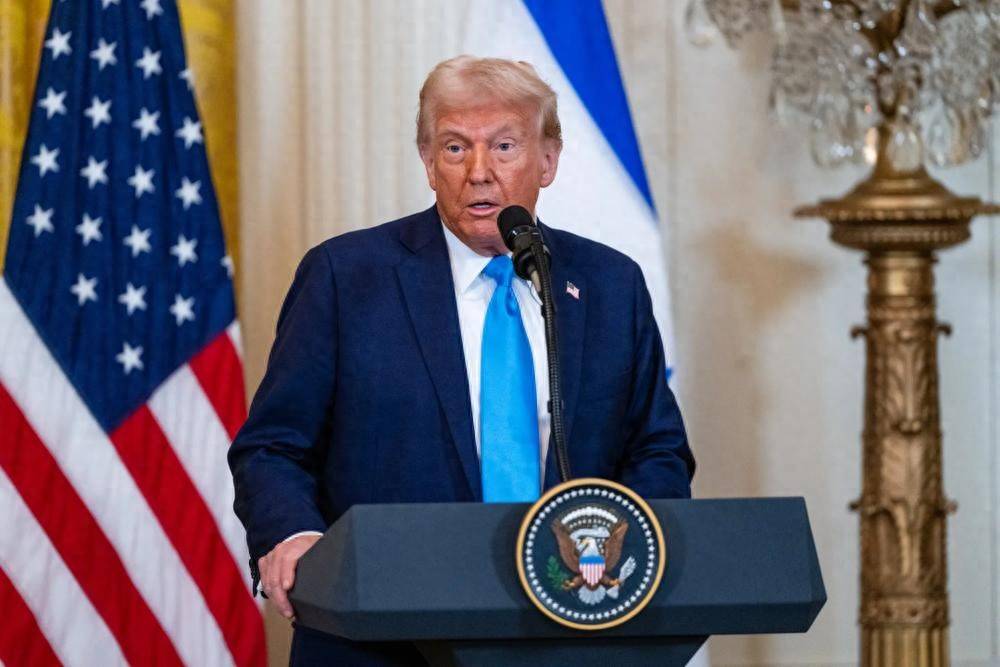
中国拒绝买单,美损失超100亿美元,特朗普急了:想和中国好好谈
Sou Hu Cai Jing· 2025-10-03 05:30
Core Points - The article discusses the impact of China's countermeasures against U.S. tariffs on soybean imports, highlighting the pressure on American farmers and the failure of U.S. negotiations to increase soybean purchases from China [1][3] - It emphasizes the significant financial losses for the U.S. soybean industry, estimating potential losses could reach up to $100 billion, with China being the largest importer of soybeans [1] - The article notes the shift in U.S. political attitudes, with Republican lawmakers acknowledging the long-term nature of the issue and the competitive advantage of Argentine soybeans due to lower tariffs [1][3] Summary by Sections U.S.-China Trade Relations - The U.S. attempted to use tariffs to compel China to purchase more soybeans, but China's precise countermeasures have led to significant pressure on American farmers [1] - Trump's efforts to promote soybean sales to China have been unsuccessful, with no orders from China this year [1][3] Financial Implications - The projected value of U.S. soybean exports to China for 2024 is $12 billion, which constitutes over half of the total U.S. soybean export value [1] - The losses from China's halt in soybean purchases are estimated to be much greater than the reported figures, potentially reaching $100 billion [1] Political Dynamics - Republican lawmakers are beginning to recognize the difficulty in resolving the soybean purchasing issue, indicating it may become a long-term trend [1][3] - The article suggests that Trump's administration is reluctant to acknowledge its missteps, instead blaming China for the current predicament of U.S. soybean farmers [1][3] Future Outlook - If no agreement is reached and current tariffs remain, the U.S. may impose tariffs as high as 145% on Chinese goods, while China could retaliate with 125% tariffs, leading to severe trade disruptions and increased inflation in the U.S. [5]


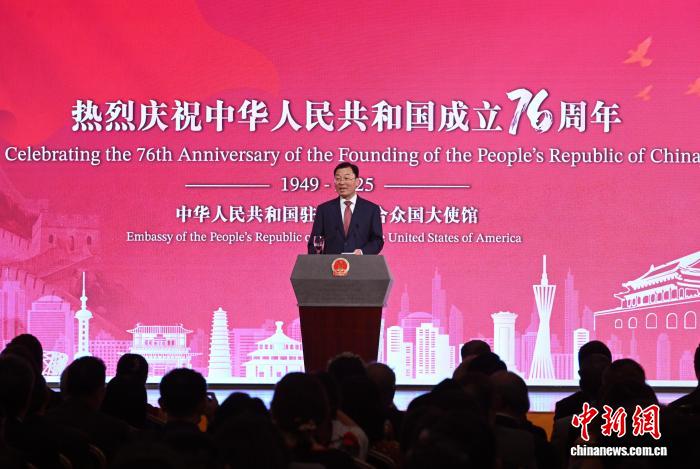
中国驻美大使:中美要恪守不冲突不对抗底线,为世界增添稳定性
Zhong Guo Xin Wen Wang· 2025-10-01 00:36
Core Points - The Chinese Ambassador to the U.S., Xie Feng, emphasized the importance of maintaining a baseline of no conflict and no confrontation between China and the U.S. to enhance global stability [1][3] - Xie highlighted the historical roles of both nations as major contributors to World War II victory and as key architects of the post-war international order, urging for strengthened communication and cooperation for mutual benefit and global peace [3] Group 1 - Xie Feng stated that both countries should deepen their interests integration and act as partners for mutual success [3] - He called for the management of differences and conflicts to maintain peace and stability [3] - The ambassador stressed the need to respect each other's core interests and major concerns, particularly regarding the Taiwan issue, which he described as the political foundation of U.S.-China relations [3] Group 2 - Xie pointed out that trade wars and tariff battles yield no winners and that artificial decoupling disrupts the world, ultimately harming both nations [3] - He noted that recent progress in U.S.-China economic and trade talks indicates that equal negotiation is the correct path to resolving issues [3] - The event was attended by over 700 representatives from various sectors, including U.S. government officials and international diplomats, highlighting the significance of U.S.-China relations [4]
【环球财经】特朗普关税战再升级 进口木材、橱柜等遭冲击
Xin Hua Cai Jing· 2025-09-30 13:41
Core Points - The Trump administration has officially implemented a new round of tariffs on imported wood and related products, with rates ranging from 10% to 25%, and potential increases up to 50% by 2026, aimed at supporting U.S. industries and national security [1][2][3] Tariff Details - Tariffs on softwood will be set at 10%, while certain upholstered furniture will face a 25% tariff, increasing to 30% in 2026. Cabinets and sinks will also incur a 25% tariff, rising to 50% in 2026 [2] - The tariffs are based on findings from a Department of Commerce investigation that indicated imported wood products could harm national security due to over-reliance on foreign supplies [3] Industry Reactions - The American Kitchen Cabinet Alliance supports the tariffs, advocating for even higher rates to counter foreign subsidies and dumping practices, emphasizing the importance of the cabinet industry for U.S. jobs [4] - Conversely, the home retail sector expresses concerns over rising material costs due to the tariffs [4] Pharmaceutical Industry Response - The Pharmaceutical Research and Manufacturers of America (PhRMA) announced plans for $500 billion in new infrastructure investments, projected to generate $1.2 trillion in economic output and create over 100,000 jobs [5] - Concerns exist regarding potential price increases for patients, depending on how many pharmaceutical companies receive tariff exemptions [5] Film Industry Concerns - The film industry faces challenges in defining tariff targets and methods, with experts warning that tariffs will likely increase costs, which will be passed on to consumers [6] - Historical trends suggest that tariffs generally lead to higher consumer prices, impacting overall spending in the economy [6] Broader Economic Implications - The Federal Reserve has expressed caution regarding interest rate cuts due to inflationary pressures from rising goods prices linked to tariffs [6] - There are concerns that excessive protectionist measures could provoke retaliatory actions from trade partners, leading to supply chain disruptions and market volatility [7]
外交部回应美加征关税
Zheng Quan Shi Bao· 2025-09-30 09:48
Group 1 - The spokesperson emphasized that there are no winners in trade wars and protectionism is not a viable solution [2] - The spokesperson highlighted the significance of the upcoming National Day and Mid-Autumn Festival, encouraging foreign tourists to visit China and experience its diverse culture [2] - The spokesperson mentioned that the Chinese government will implement necessary measures to ensure the safety of both domestic and foreign tourists during the holiday [2] Group 2 - The spokesperson referred to the "China Development Report 2025," which outlines the achievements and new challenges of China's modernization efforts, providing insights for other countries [3] - The spokesperson noted that despite a complex international environment, China's economy is operating steadily with progress in high-quality development and strong new productive forces [3] - The spokesperson asserted that China's modernization will contribute to global opportunities and that no country should be left behind in the pursuit of development [3]
“特朗普宣布新高额关税”,中方回应
券商中国· 2025-09-30 09:46
Group 1 - The article discusses the announcement by President Trump to impose high tariffs on imported bathroom products, cabinetry, and other wooden goods, indicating a shift towards protectionist trade policies [1] - The Chinese Foreign Ministry spokesperson, Guo Jia Kun, responded by stating that there are no winners in a trade war and that protectionism is not a viable solution [1] Group 2 - The article mentions a significant reaction in the market, with multiple A-shares announcing suspensions, indicating potential volatility in the stock market due to these tariff announcements [2] - The article highlights the ongoing tension in trade relations, suggesting that the situation may lead to further regulatory scrutiny and actions from the China Securities Regulatory Commission [2]

特朗普宣布对进口木材等征收高额关税 中方回应
Zhong Guo Xin Wen Wang· 2025-09-30 07:48
编辑:万可义 广告等商务合作,请点击这里 中新网北京9月30日电 (记者 李京泽 谢雁冰)中国外交部发言人郭嘉昆9月30日主持例行记者会。 有记者提问:美国总统特朗普日前宣布对进口木材、木制品、橱柜、浴室柜等征收新的高额关税。中方 对此有何评论? 郭嘉昆:关税战、贸易战没有赢家,搞保护主义没有出路。(完) 来源:中国新闻网 特朗普宣布对进口木材等征收高额关税 中方回应 本文为转载内容,授权事宜请联系原著作权人 中新经纬版权所有,未经书面授权,任何单位及个人不得转载、摘编或以其它方式使用。 关注中新经纬微信公众号(微信搜索"中新经纬"或"jwview"),看更多精彩财经资讯。 ...
美对建材、家具等征收新关税,外交部回应
第一财经· 2025-09-30 07:45
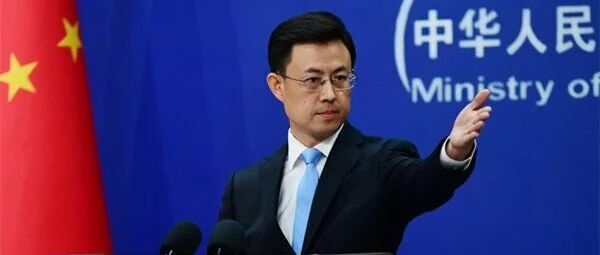
对此,郭嘉昆表示,"关税战、贸易战没有赢家,搞保护主义没有出路。" 据澎湃新闻,9月30日,外交部发言人郭嘉昆主持例行记者会。 路透社记者提问,美国总统特朗普宣布对进口建材、橱柜、浴室用品、梳妆台以及软垫家具征收新的关 税。外交部对此有何评论? ...
美宣布对建材、家具等征收新关税,外交部回应
财联社· 2025-09-30 07:44
据澎湃新闻,外交部发言人郭嘉昆主持例行记者会。路透社记者提问,美国总统特朗普宣布对进口建材、橱柜、浴室用品、梳妆台以及软垫家具征 收新的关税。外交部对此有何评论? 对此,郭嘉昆表示,"关税战、贸易战没有赢家,搞保护主义没有出路。" ...

美国农民丰收季抗议 白宫对华关税战让大豆卖不掉
Sou Hu Cai Jing· 2025-09-30 05:01
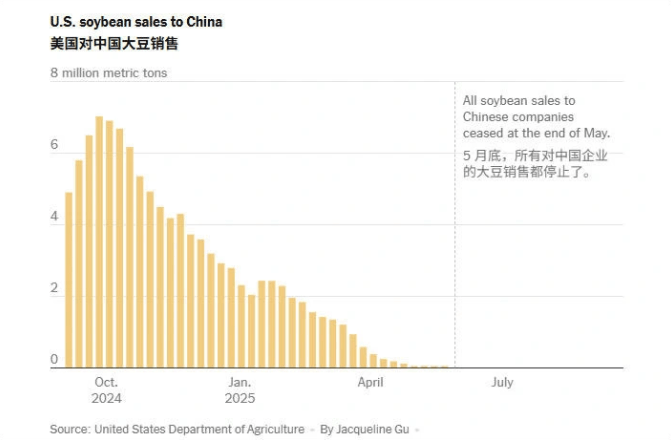
Core Insights - Despite a record agricultural yield in the U.S. this year, farmers are experiencing a significant decline in sentiment due to market access issues and falling prices, primarily attributed to the ongoing trade war [1][2][3] Group 1: Farmer Sentiment and Economic Indicators - The Purdue University and Chicago Mercantile Exchange's agricultural economic index shows a continuous decline in farmer sentiment for July and August [1] - Farmers are facing record-high expenses before the harvest, while the prices they can sell their crops for are lower than previous years [2] - The trade war has led to increased costs for agricultural machinery and fertilizers, further straining farmers' financial situations [1][3] Group 2: Impact of Trade Policies - The U.S. soybean exports to China have ceased since May, marking the first time in nearly 30 years that China has not purchased American soybeans [3] - Other countries, such as Brazil and Argentina, are capitalizing on the U.S. trade war by increasing their market share in China [3] - Farmers are expressing frustration with the government's trade policies, which they believe are detrimental to their market access and profitability [6] Group 3: Government Response and Farmer Needs - The U.S. government has made promises to farmers regarding trade agreements and subsidies, but these commitments have not been fulfilled [6] - Farmers are demanding market access rather than financial compensation, emphasizing the need for a stable market environment [6][5] - The political implications of the agricultural crisis are significant, especially in key Republican states ahead of the upcoming midterm elections [5]
加税!加税!特朗普关税核弹引爆全球:中欧印三国沦陷,美国经济却先血流成河!
Sou Hu Cai Jing· 2025-09-30 04:16
Group 1 - The core point of the article is that Trump's recent tariff increases, effective from October 1, 2025, are expected to have widespread negative impacts on both the U.S. economy and global trade dynamics, with no clear winners in a trade war [1][3][14] - The tariffs cover a wide range of products, including a 50% increase on kitchen cabinets and bathroom sinks, 30% on furniture, 100% on patented drugs, and 25% on heavy trucks, indicating a comprehensive approach to trade protectionism [7][9] - The tariffs are framed under the guise of "national security," but the underlying motive appears to be to protect U.S. manufacturers and appeal to domestic voters, despite the potential for significant economic backlash [7][9][12] Group 2 - The tariffs are projected to lead to a decline in U.S. GDP by 0.5% annually in 2025 and 2026, with a long-term decrease of 0.4%, as the costs are likely to be passed on to consumers [7][9] - The average tariff rate in the U.S. is expected to rise to 17.3%, the highest since 1935, which will result in increased consumer prices and exacerbate inflation [9][11] - The tariffs could lead to a loss of approximately 497,000 jobs by the end of 2025, with specific sectors like construction and agriculture facing declines [9][12] Group 3 - The global trade system is at risk of collapse due to the U.S. violating WTO principles with these tariffs, which could further alienate allies like the EU and Canada [11][12] - Historical parallels are drawn to the Smoot-Hawley Tariff Act of the 1930s, which contributed to the Great Depression, suggesting that Trump's actions may lead to similar economic consequences [12][14] - The article emphasizes that trade wars do not produce winners, and the ultimate victims will be consumers and the broader economy, highlighting the need for dialogue and cooperation among nations [14]