
生成式AI

Search documents
一人公司爆火:最小组织跑出完整商业闭环
Di Yi Cai Jing· 2026-02-03 11:40
Core Insights - The article emphasizes the significance of the One Person Company (OPC) model, highlighting its operational structure, which relies on a single core operator supported by external collaborations rather than internal teams [1][2][3] Group 1: Factors Driving OPC Popularity - The rise of OPC is attributed to four main factors: the transformation brought by digital intelligence, the shift in economic development engines towards specialized services, global uncertainties prompting organizational agility, and the strengthening of ecological trends that necessitate network-based operations [2][3][4] Group 2: Building a Robust Digital Foundation - A solid digital foundation for OPCs involves understanding the limitations of AI, establishing clear operational models, and implementing strategic management practices to ensure focus and efficiency [4][5][6] Group 3: Market and Business Opportunities - Market opportunities are identified through trends and demand gaps, while business opportunities focus on the ability to deliver services at acceptable costs and ensure sustainable revenue [8][9][10] Group 4: Characteristics of OPC Business Models - OPC business models typically emphasize a narrow value proposition, focus on a single business dimension, and leverage limited resources effectively by creating reusable assets and collaborating with trusted partners [10][11][12] Group 5: Ecological Collaboration and Win-Win Strategies - The ecological aspect of OPCs highlights the necessity of collaboration for success, where external capabilities are integrated into the value chain to enhance service delivery and customer satisfaction [11][12][13]
“2026十大意外”,恐颠覆市场!
华尔街见闻· 2026-02-03 10:43
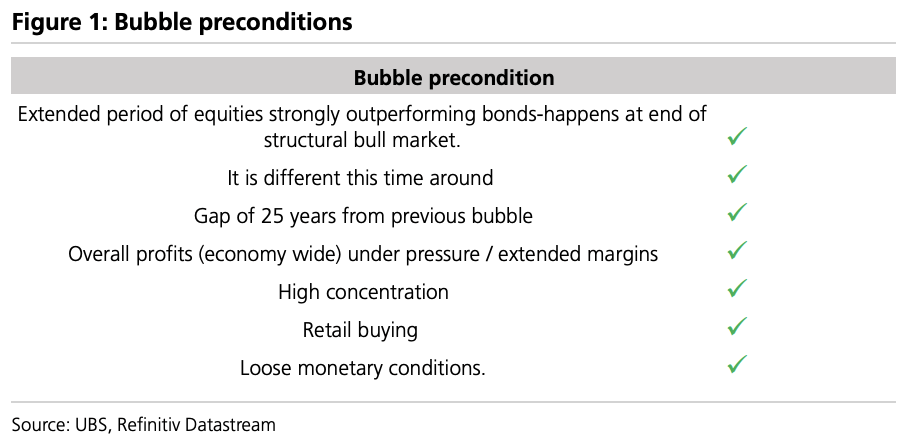
Group 1 - The core view is that the US stock market may experience a surge of over 20% before a significant crash, with the probability of being in a bubble exceeding 80% [2][3] - The UBS report suggests that the MSCI global index has a year-end target of 1130 points, indicating an approximate 8% upside potential [3] - Seven preconditions for the current bubble have been met, including a prolonged period of equities outperforming bonds and a narrative of "this time is different" [4] Group 2 - The US 10-year Treasury yield is projected to potentially exceed its previous high of 5.04%, with a warning that government spending may continue until a crisis occurs [9][10] - The report highlights that the US federal deficit is at 4.2% of GDP, with government debt at 125.1% of GDP, significantly higher than during the TMT bubble [6][10] - UBS emphasizes that the current market is not at the peak of the bubble, as key warning signals have not yet appeared [7] Group 3 - Pharmaceutical stocks are expected to outperform, being one of the lowest leveraged defensive sectors, with positive catalysts including a strong dollar and easing drug pricing pressures [19][21] - The report indicates that technology stocks may significantly underperform due to rising capital expenditures and potential profit margin pressures [22][24] - The semiconductor sector's high profit margins are questioned, with concerns about sustainability and increasing competition from AI technologies [25] Group 4 - The report outlines that the eurozone's GDP growth may exceed expectations, supported by factors such as a decline in energy prices and potential fiscal easing [38] - India's market is highlighted as having strong structural growth potential, with nominal GDP growth significantly outpacing that of China [33] - Copper mining stocks are noted to be overvalued, with high price-to-earnings ratios and a reliance on Chinese demand, which is shifting from investment-led to consumption-led growth [36]


黄仁勋2026大模型座上宾:杨植麟
量子位· 2026-02-03 10:35
Core Insights - Yang Zhiling, founder and CEO of Moon's Dark Side, has been invited as a keynote speaker at NVIDIA's GTC 2026, marking a significant recognition for him and his Kimi models [1][2][27] - The invitation reflects NVIDIA's strategic foresight in identifying emerging trends within the AI industry, as Huang Renxun (NVIDIA's CEO) typically selects speakers who align with future market directions [7][11] Group 1: Yang Zhiling and Kimi's Journey - Yang Zhiling represents a new pain point in AI development, as the industry faces challenges with existing models and the need for innovative solutions [28][30] - Kimi faced significant challenges in 2025 due to the impact of DeepSeek, which threatened its business model and user engagement [33][35] - After a period of silence and strategic retreat, Kimi re-emerged with the launch of Kimi K2, showcasing advanced capabilities and reaffirming its position in the market [38][39] Group 2: Market Position and Financial Developments - Kimi K2.5 was launched in January 2026, demonstrating superior performance in various benchmarks compared to competitors like GPT-5.2 and Claude 4.5 Opus [41][42] - Kimi's successful C-round financing raised $500 million, leading to a post-money valuation of $4.3 billion, indicating strong investor confidence and financial stability [46] - The cash reserves exceeding 10 billion yuan position Kimi well for continued research and development, aiming for leadership in the global SOTA (state-of-the-art) landscape [46]
西南证券:首次覆盖英矽智能建议积极关注 创新能力期待兑现
Zhi Tong Cai Jing· 2026-02-03 08:35
Core Viewpoint - Southwest Securities predicts that the revenue of Insilico Medicine (03696) will reach $0.59 billion, $1.55 billion, and $2.02 billion for the years 2025-2027, with corresponding price-to-sales (PS) ratios of 78x, 30x, and 23x. The company's AI platform innovation capability has been validated, and long-term development is promising as more pipeline assets enter clinical stages and external licensing opportunities arise. The report initiates coverage with a recommendation for active attention [1]. Group 1: Core Competitiveness - The company's core competitiveness lies in its self-developed, globally leading end-to-end generative AI platform, Pharma.AI, which reduces the time from target discovery to clinical candidate confirmation from the industry average of 4.5 years to 12-18 months, validated through over 40 projects and 27 PCCs [2]. - The primary business model focuses on drug discovery and pipeline development, including external licensing, collaborative development, and independent development. Since 2026, the company has achieved three business development (BD) collaborations with upfront payments totaling $0.42 billion, and a total potential value of $10.74 billion. More BD collaborations are expected in 2026, potentially catalyzing stock price growth [1][3]. Group 2: Business Model - The company employs a dual-engine business model: 1) drug discovery and pipeline development through external licensing or collaborative development to obtain upfront payments, milestone payments, and sales shares; 2) software solutions generating subscription revenue from licensing the Pharma.AI platform. This model has been validated in the market, with nine external licensing agreements totaling over $4 billion in potential value and partnerships with 13 of the top 20 global pharmaceutical companies [3]. - The technology licensing generates cash flow and extensive validation data, while the success of internal pipelines further validates and enhances the AI platform's capabilities, creating a strong "data flywheel" effect [3]. Group 3: Pipeline and Product Potential - The company has nearly 20 clinical or IND application-stage assets generated from its platform, with the fastest pipeline, ISM001-055, being the world's first fully AI-discovered and designed candidate drug that has completed Phase IIa clinical trials for treating idiopathic pulmonary fibrosis (IPF). Recent clinical results show that patients receiving treatment exhibited dose-dependent improvements in lung function, with a significant difference of 118.7 milliliters compared to the placebo group [4]. - The IPF market presents substantial opportunities, and if ISM001-055 successfully reaches the market, it could become a disruptive therapy [4].

美股“先疯涨后崩盘”?美债破5%、科技输给医药…2026这“十大意外”恐颠覆市场
Sou Hu Cai Jing· 2026-02-03 07:17
Group 1 - The core viewpoint of UBS is that the US stock market may experience a "bubble" followed by a significant crash, with a potential increase of 20% before a downturn [1][2] - The report indicates that the probability of a bubble is currently estimated at 20%, but this could rise to over 80%, suggesting further upside in the stock market [2][3] - The UBS team highlights that the current conditions for a bubble are more pronounced than in previous instances, with seven prerequisites met since December [2][3] Group 2 - The report warns of a potential rise in US 10-year Treasury yields, which may exceed the previous high of 5.04%, impacting traditional asset allocation strategies [1][14] - The US federal deficit is currently 4.2% of GDP, with government debt at 125.1% of GDP, significantly higher than during the TMT bubble [9][14] - UBS suggests that the government may resort to significant spending measures, which could exacerbate the fiscal situation [14][15] Group 3 - The pharmaceutical sector is expected to outperform, driven by its low leverage and favorable conditions compared to other sectors [20][22] - The report notes that pharmaceutical stocks are currently undervalued and could benefit from a stronger dollar and easing drug pricing pressures [25][20] - The sector's performance is also supported by the application of generative AI in drug discovery, potentially reducing costs and time to market [25][20] Group 4 - Technology stocks are anticipated to underperform, with concerns over rising capital expenditures impacting profit margins [26][27] - The report highlights that the capital expenditure to sales ratio for large cloud computing companies has reached historical highs, raising questions about sustainability [26][27] - There is a risk of disruption in the software industry due to advancements in generative AI, which may lead to reduced demand for traditional software solutions [29][30] Group 5 - The report emphasizes the potential for the Indian market to outperform, supported by strong structural growth and favorable economic indicators [39] - UBS notes that the Indian economy's nominal GDP growth is significantly higher than that of China, providing a positive outlook for investments in the region [39] - The report also highlights the risks associated with copper mining stocks, which are currently overvalued and may face challenges if demand shifts [43]
马斯克“天地合一”野心:万亿帝国如何重塑AI未来
Sou Hu Cai Jing· 2026-02-03 06:05
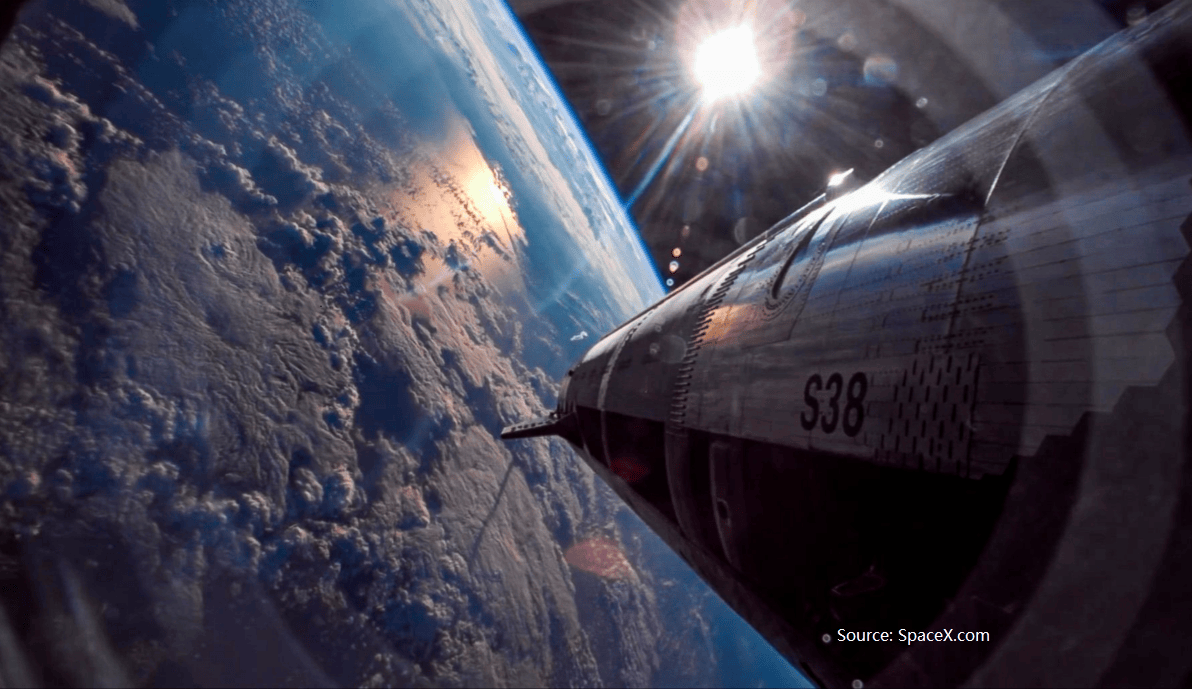
Core Insights - The merger between SpaceX and xAI represents a strategic shift for Elon Musk, aiming to create a vertically integrated innovation engine that spans rocket launches, satellite deployment, space energy, and top-tier AI models [4][10]. Group 1: Merger Overview - SpaceX has evolved from a startup to a dominant player in the aerospace industry, securing numerous contracts with NASA and the Department of Defense, and operating a satellite network with over 9,600 satellites [3]. - xAI was founded by Musk in response to his departure from OpenAI, which has become a major competitor in the AI space following its transformation into a for-profit entity [3][4]. - The merger is set to create a company valued at $1.25 trillion, marking one of the largest IPOs in history [4][12]. Group 2: AI Energy Crisis - The merger addresses the critical issue of unsustainable energy costs associated with AI, as new AI models are projected to consume 100 times more energy than previous models [6]. - High infrastructure investments by tech giants, such as Microsoft and Meta, are driving up costs, with data center electricity prices in affected areas reportedly increasing by over 2.6 times in five years [6][7]. Group 3: Space-Based Solutions - Musk proposes building AI data centers in space to leverage unlimited solar energy, which could significantly reduce operational costs and eliminate the need for ground-based cooling systems [8]. - The plan includes launching a million satellites to create a solar-powered data center network, which could provide substantial AI computing power at lower costs [9]. Group 4: Financial Dynamics - SpaceX is characterized as a "cash cow," with projected revenues of $15-16 billion and profits around $8 billion by 2025, primarily from its Starlink business [11]. - In contrast, xAI is described as a "cash-burning beast," requiring significant capital for infrastructure and model training, having consumed approximately $9.5 billion in cash in the first nine months of 2025 [11]. - The merger is designed to combine SpaceX's strong cash flow with xAI's growth potential, facilitating a sustainable business model that could withstand competition from other AI firms [11]. Group 5: IPO Aspirations - Following the merger, SpaceX plans to proceed with an IPO in June, aiming to raise $50 billion, with a post-merger valuation potentially reaching $1.25 trillion, surpassing major companies like Berkshire Hathaway and Walmart [12]. Group 6: Future Implications - The merger is seen as a transformative move that could redefine the future of AI and space exploration, addressing fundamental challenges related to energy, cost, scale, and sustainability [13]. - If successful, the new SpaceX-xAI entity could dominate the market for space-based computing power, potentially marking the beginning of a new era in human civilization [13].
OpenAI战略大转舵 全速冲刺ChatGPT商业化
Ge Long Hui· 2026-02-03 05:36
Core Insights - OpenAI is prioritizing the development of ChatGPT over long-term research, responding to intense competition from rivals like Google and Anthropic [1] - This strategic shift has led to the departure of several high-level executives, including Vice President of Research Jerry Tworek, Policy Researcher Andrea Vallone, and Economist Tom Cunningham [1] - OpenAI is transitioning from a research lab to one of Silicon Valley's largest companies, under CEO Altman's leadership, and must demonstrate its ability to generate sufficient revenue to support its $500 billion valuation [1] Company Strategy - The company has reallocated resources from experimental projects to enhance its flagship chatbot's large language model [1] - This change signifies a critical turning point for OpenAI, which initially launched ChatGPT as a research preview in 2022, sparking the generative AI trend [1] Executive Changes - The recent departures of key personnel highlight the internal challenges faced by OpenAI as it shifts its focus [1] - The loss of experienced executives may impact the company's research capabilities and long-term innovation potential [1]
2026矿业AI驱动转型基础白皮书-微软
Sou Hu Cai Jing· 2026-02-03 03:56
人工智能正深刻重塑采矿业发展格局,全面渗透从勘探、开采到加工、回收的全价值链,同时为供应链物流等辅助环节带来效率革新,成为推动行业经济效 益与可持续发展融合的核心力量。在全球能源转型背景下,2040 年清洁能源技术相关矿产需求预计增长四倍,人工智能为矿业应对资源短缺、减排压力等 挑战提供了关键解决方案,其在勘探阶段可降低 20%-30% 的时间与成本。 采矿业的 AI 应用实现了多维度突破:资源层面,能有效回收低品位矿产,延长矿山运营寿命;价值回收方面,针对复杂矿石系统优化加工技术,提升多种 贵重矿物的回收率;可追溯性上,通过数字护照、微量元素指纹识别等技术实现全流程监控;安全领域,尾矿库近实时监测技术降低环境风险,爆破测绘技 术提升作业安全与矿石利用率,冶金厂智能药剂混合系统保障产品质量稳定。 生成式 AI 时代下,网络安全挑战日益复杂,国家行为体与网络犯罪组织的攻击手段不断升级。微软推出 "安全未来计划",倡导以威胁情报策略、行业政府 合作等方式强化防御,为 AI 应用筑牢安全基础。 企业 AI 转型成功需依托五大核心驱动因素:组织和文化上,需构建敏捷创新的环境,强化领导层认同与跨领域合作;商业战略要明确 ...


马斯克再下一盘大棋:SpaceX与xAI合并,万亿美元级IPO浮出水面
Jin Shi Shu Ju· 2026-02-03 03:51
Group 1 - Elon Musk is merging his rocket manufacturer SpaceX with AI startup xAI, preparing for an unprecedented IPO with an estimated valuation of approximately $1.25 trillion [1] - The merger represents the largest integration in Musk's extensive business portfolio, combining two companies that have seen soaring valuations in the private market, with SpaceX valued at $800 billion and xAI at $230 billion [1] - The latest round of xAI financing included investors such as Nvidia, Cisco Investments, and several firms that have historically supported Musk's ventures [2] Group 2 - SpaceX currently holds significant government contracts worth billions, far surpassing xAI in terms of defense contracting scale [3] - SpaceX was founded in 2002 and has become a leading provider of orbital launch services, while xAI was launched in 2023 as a potential competitor to OpenAI [4] - SpaceX is projected to achieve revenues of approximately $15 billion to $16 billion by 2025, with estimated profits around $8 billion, while xAI is struggling financially as it builds costly infrastructure to compete in the AI space [4] Group 3 - Musk describes the merger as part of a future strategy to build data centers in space, with plans to launch up to 1 million satellites as part of its "orbital data center" project [5] - The company estimates that within 2 to 3 years, the lowest cost method for acquiring AI computing power will be achieved in space, which could accelerate technological advancements and understanding of physics [6]
港股异动 | MINIMAX-WP(00100)早盘涨近10% 公司近期发布MiniMax Music 2.5音频生成模型
Zhi Tong Cai Jing· 2026-02-03 02:32
Core Viewpoint - MINIMAX-WP (00100) experienced a nearly 10% increase in stock price following the launch of its MiniMax Music 2.5 audio generation model, indicating strong market interest and confidence in the company's technological advancements [1] Company Developments - On January 29, MiniMax officially released the MiniMax Music 2.5 audio model, which has made breakthroughs in "paragraph-level strong control" and "physical-level high fidelity" compared to its predecessor [1] - The new version allows for more precise control over music structure and significantly enhances audio quality, marking an important trend in the industry [1] Industry Context - CITIC Securities previously noted that amidst the global wave of generative AI, MINIMAX is distinguishing itself with a "counter-consensus" strategic focus on model intelligence breakthroughs [1] - As one of the first companies in Shanghai to obtain large model registration, MINIMAX demonstrates strong development potential through its technological depth and commercial foresight [1] Financial Projections - The company is expected to maintain over 90% revenue growth from 2025 to 2027, with Non-GAAP gross margin projected to improve to 55% and net loss rate continuing to narrow [1] - With optimization of inference costs and the rollout of the next-generation multimodal model, MINIMAX is poised to expand its market space in AI-native applications [1]