
粮食安全

Search documents
我国科学家破译水稻耐热密码
Zhong Guo Qing Nian Bao· 2025-12-07 23:08
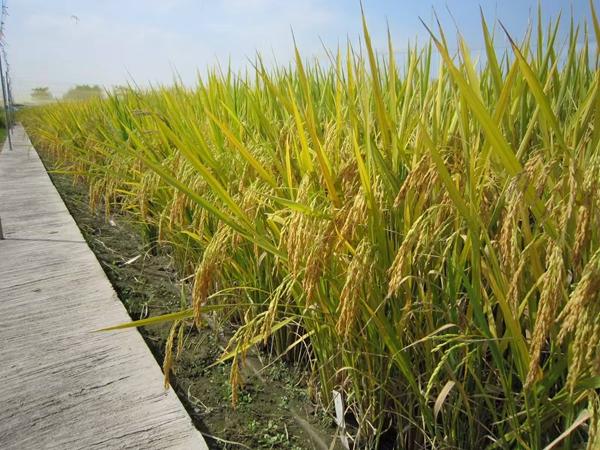
12月3日,中国科学院分子植物科学卓越创新中心林鸿宣院士团队与上海交通大学林尤舜研究员团队等 合作在国际学术期刊《细胞》(Cell)上发表研究论文。其中提到团队破解了水稻感知并响应高温的双 重密码锁,揭示了植物中的一个循序激活、协同串联的热信号感知机制,并通过对该机制的遗传改良, 成功培育出"具有梯度耐热性的水稻新株系"。 基于上述研究,团队开展了遗传设计,在模拟高温的田间试验中取得喜人的结果:单基因改良的水稻株 系比对照株系增产50%至60%;而双基因改良株系比对照株系产量提升约一倍。 研究团队试栽的改良耐高温水稻 受访者供图 这意味着,科学家不仅能增强作物的耐热性,更能像调节音量一样精准设计"梯度耐热"品种,以适应不 同地区的气候需求,维持作物在高温环境下的产量稳定。由于机制的保守性,这项研究为水稻、小麦、 玉米等主粮作物的耐热育种改良提供坚实的理论框架与宝贵的基因资源,为在全球变暖背景下保障粮食 安全开辟了新的路径。 (中青报·中青网记者 王烨捷) 近年来,全球气候变暖,持续高温直接威胁全球粮食安全的根基。高温会损害作物花粉活力、阻碍授粉 与灌浆过程,明显降低产量和品质,直接削弱了主粮产区的生产潜能,已 ...

39页|2025年化肥行业低碳发展系列研究报告-中国化肥减量增效十年之路
Sou Hu Cai Jing· 2025-12-07 02:43
Core Viewpoint - The Chinese fertilizer industry has achieved significant reduction and efficiency improvements over the past decade, becoming a key example of sustainable agricultural transformation globally. Since the launch of the "Zero Growth Action for Fertilizer Use" in 2015, the national fertilizer application has decreased for nine consecutive years, from 60.23 million tons to 49.88 million tons, a reduction of 17.2% [1][13][35]. Group 1: Industry Transformation and Achievements - The fertilizer application rate for the three major grain crops has increased from 35% to 42.6%, indicating more scientific and precise fertilization methods [1][13]. - The total grain production in China has remained stable at over 1.3 trillion jin since 2015, with a projected first-time increase to over 1.4 trillion jin in 2024, further ensuring food security [1][13]. - The actions taken have cumulatively avoided approximately 126 million tons of fertilizer application from 2015 to 2024 [1][35]. Group 2: Policy and Market Mechanisms - The transformation of the fertilizer industry is a result of multiple policies and market mechanisms working in synergy, involving technological innovation, management optimization, and production structure adjustments [1][12]. - The "dual carbon" goals of the state are driving the fertilizer industry towards a green and low-carbon direction, facing complex challenges in balancing food security, environmental protection, and economic benefits [1][12]. Group 3: Global Context and Future Outlook - The process reflects not only domestic agricultural modernization but also provides reference value for global agricultural sustainable development [2]. - The fertilizer industry must explore more efficient and environmentally friendly development paths to support the dual goals of food security and ecological protection [2].
河南小麦年度成绩单出炉 三等以上占比达99% 质量品质双优赋能产业
He Nan Ri Bao· 2025-12-06 23:08
多措并举保丰收 12月2日,2025年全省收购小麦质量品质信息发布会召开,河南小麦年度成绩单正式揭晓:河南夏粮总 产达750.01亿斤,交出了三等以上小麦占比99%、优质率69.5%的高质量答卷。 作为小麦产量占全国超四分之一的"中原粮仓",河南已连续25年开展小麦质量调查与品质测报,今年是 第14年对外发布相关信息。此次调查采样覆盖全省17个省辖市及济源示范区,共采集质量调查样品3571 份、涉及590个品种,品质测报样品545份、涵盖176个品种,为产业发展提供了权威支撑。 省粮食和物资储备局产业处处长郝宝青介绍,质量层面,全省小麦容重均值794g/L,焦作、濮阳、漯河 等12个省辖市达一等标准;水分均值11.3%、不完善粒均值2.5%,均较去年下降,其中不完善粒均值处 于近年低位;千粒重均值45.1g,颗粒饱满度优良。 品质层面同样可圈可点,69.5%的样品符合国家优质小麦标准,近七成优质率与高等级占比形成呼应。 粗蛋白质含量均值14.1%、湿面筋含量均值32.5%,食品评分值较去年提升16分;强筋、中筋、弱筋品 种布局清晰,新麦26、百农1316、矮抗58等优质品种表现突出,13%的样品符合《豫麦》地 ...
粮食安全看山东”之滕州:守牢粮食安全“压舱石”,激活产业发展“新动能
Zhong Guo Fa Zhan Wang· 2025-12-05 06:32
Core Insights - The article emphasizes the commitment of the Tengzhou Grain and Material Reserve Center to ensure food security while promoting industrial upgrades, highlighting its dual role as a guardian of grain safety and a practitioner of industrial development [1] Group 1: Food Security Measures - The center has strengthened daily supervision to maintain storage safety, adhering to the Shandong Provincial Grain Security Guarantee Regulations, and ensuring that reserve grain meets emergency needs [2] - It has implemented a systematic approach to warehouse management, conducting regular inspections and maintaining equipment to ensure the safety and quality of stored grain [2] - The center collaborates with third-party inspection agencies to monitor grain quality during storage and procurement, ensuring that only compliant grain enters the supply chain [2] Group 2: Infrastructure Upgrades - The center is addressing outdated infrastructure by advancing three key projects, including the upgrade of grain storage facilities and the construction of a new 25,200-ton capacity warehouse, expected to be operational by the end of 2025 [3] - A digital grain storage monitoring center is being established to enhance real-time oversight and streamline management processes, aiming to reduce human intervention and improve efficiency [3] Group 3: Brand Development and Industry Growth - The center is leveraging the "Teng Grain Good Products" public brand to integrate food safety awareness into brand promotion, thereby driving high-quality industrial development [4] - It has participated in various national and international events to enhance brand visibility, showcasing local products like "Pomegranate Vinegar" to a broader audience [4] - The center has conducted over 40 community outreach activities to raise public awareness about food safety, distributing educational materials to enhance community engagement [4]
【环球财经】智库预测英国农户因极端天气损失超8亿英镑
Xin Hua She· 2025-12-05 06:28
能源和气候信息小组分析师汤姆·兰卡斯特说,对于英国许多农民来说,今年又是艰难的一年,天气状 况在过于潮湿和过于炎热干燥之间摇摆不定。"人们对农业的信心已跌至谷底,迫切需要确保更好地支 持农民适应这些气候冲击,并增强他们的抵御能力,因为这是粮食安全的基石。" 英国环境、食品和农村事务部10月公布的初步数据显示,2025年将是英格兰有记录以来收成第二糟糕的 年份,预计英国其他地区的收成同样不佳。 (文章来源:新华社) 新华财经伦敦12月4日电(记者郭爽)英国智库能源和气候信息小组4日发布分析报告显示,遭受有记录 以来最热春夏季以及干旱气候的打击,预计今年英国农户损失超过8亿英镑(1英镑约合1.3美元)。 根据小麦、春大麦、冬大麦、燕麦和油菜籽的预估产量和相关价格数据,研究人员指出,英国这五种主 要农作物的产值预计在2025年达到34亿英镑,比过去十年的平均水平下降了20%,即8.28亿英镑。 ...
机构:储能增长对磷矿需求拉动效应提升
Zheng Quan Shi Bao Wang· 2025-12-05 01:13
受益于化工品持续涨价潮,作为关键原材料的磷矿石价格持续高位运行。据百川盈孚数据,12月2日, 国内30%品位磷矿石市场均价为1016元/吨,28%品位磷矿石市场均价为945元/吨,25%品位磷矿石市场 均价为758元/吨。 东方证券认为,1)储能增长对磷矿需求拉动效应提升:在全球能源体系出现重大变革的当下,储能行 业的发展进一步使得磷资源成为能源转型中的重要载体。从粮食安全到能源安全,磷矿价值也正迎来新 的重估。2)磷矿石供给侧议价能力提升增强紧平衡持续性:市场对磷矿景气一直以来的担忧主要在于 磷矿自2021年景气上行至高位后,未来大量新增项目的供给陆续释放会带来磷矿景气高位崩塌的风险。 虽然近两年磷矿景气的依旧坚挺以及磷矿大型项目进展的不确定性一定程度上缓解了市场的担忧,但部 分投资者对磷矿未来景气的判断主要还是高位震荡后下行。3)储能增长下磷产业链景气预期曲线有望 上修:基于对未来储能出货增速的情景测算,即使不考虑磷矿下游大头农业等传统需求的增长潜力,在 设定的未来储能高增情景下,储能对磷矿石需求的拉动效应将超过动力领域,接力成为新的磷产业链需 求核心增长动能。 光大证券认为,1)6月开始进入磷酸一铵及磷 ...
聊城“吨半粮”产能建设引领粮食单产稳步增长
Qi Lu Wan Bao· 2025-12-04 15:24
Core Viewpoint - The city of Liaocheng is enhancing its grain production capacity and ensuring food security through various initiatives and technological advancements during the 14th Five-Year Plan period [1][2][3] Group 1: Grain Production Capacity - Liaocheng, as one of Shandong Province's "three major granaries," is committed to stabilizing grain production responsibilities and enhancing the "ton-and-a-half grain" production capacity [1] - The city has constructed and upgraded 1.892 million acres of high-standard farmland since the beginning of the 14th Five-Year Plan, improving production conditions [1] - The grain yield per mu has increased from 465.72 kg in 2020 to 480.95 kg in 2024, a rise of 15.23 kg per mu, representing a growth of 3.27% [3] Group 2: Technological Support and Innovation - Liaocheng is collaborating with research institutions like China Agricultural University to cultivate and promote high-quality, high-yield wheat varieties [1] - The city has implemented a subsidy increase for high-performance agricultural machinery, including advanced seeders and harvesters, to enhance planting efficiency [1] - A new agricultural technology promotion service platform has been established, engaging over 20,000 agricultural technicians to implement key production techniques [1] Group 3: Disaster Prevention and Management - The city has developed a comprehensive agricultural natural disaster emergency plan to mitigate losses from natural disasters [2] - Coordination with meteorological and water resources departments has been strengthened to monitor weather changes and issue timely warnings [2] - Effective pest and disease control measures have been implemented, resulting in no occurrences of wheat rust disease this year due to timely interventions [2] Group 4: Organizational and Financial Support - The number of farmer cooperatives in the city has reached 15,600, with 5,830 family farms established to enhance agricultural organization [2] - The proportion of grain production management services has reached over 80%, indicating a significant increase in organized agricultural production [2] - A total of 114.4 million acres of "ton-and-a-half grain" production areas have been established, contributing to balanced grain production growth [2]
“粮食安全看山东”之枣庄:聚焦重点环节,强化协同保障
Zhong Guo Fa Zhan Wang· 2025-12-03 14:22
Core Viewpoint - Shandong Province's Zaozhuang City is enhancing its grain security system by focusing on storage, regulation, industry optimization, and emergency preparedness to ensure food security in line with national directives [1] Group 1: Strengthening Grain and Oil Reserves - Zaozhuang City is improving its grain and oil reserve capabilities, exceeding provincial targets, with current reserves sufficient for over four months of consumption for the local population [2] - The city is implementing a government purchase program for grain and oil reserves, ensuring reliable access during critical times [2] - A comprehensive reserve system is being established, integrating government and social responsibility reserves to enhance overall food security [2] Group 2: Market Stability through Acquisition - The city is coordinating market and policy-based acquisitions, securing 1.147 billion yuan in credit support for summer and autumn grain purchases to ensure farmers receive timely payments [3] - Efforts are being made to streamline the selling process for farmers, including appointment-based sales to reduce wait times [3] - The implementation of a minimum purchase price policy for wheat has led to the acquisition of 64,900 tons, stabilizing market prices and ensuring farmer income [3] Group 3: Regulatory Enforcement - Zaozhuang is conducting rigorous inspections and joint enforcement actions to combat illegal activities in the grain sector [4] - A complaint hotline is operational to address public concerns and improve regulatory response rates [4] - The city is enhancing its regulatory framework through an information system for grain transactions, improving oversight efficiency [4] Group 4: Green Initiatives and Infrastructure - The city is investing in new storage facilities and green storage upgrades, with a 20% increase in total storage capacity compared to the 13th Five-Year Plan [5] - Advanced grain storage technologies are being adopted, achieving an 80% application rate across state-owned storage enterprises [6] - Innovative storage methods have resulted in a low grain loss rate of less than 0.5% annually, positioning the city at the forefront of smart grain storage technology in the province [6] Group 5: Industry Foundation and Brand Development - Zaozhuang is fostering a robust grain industry cluster, with 36 large-scale grain and oil processing enterprises and an annual processing capacity of 2.43 million tons [7] - The city is implementing favorable electricity pricing policies for grain processing, benefiting 73 enterprises and enhancing industry growth [7] - Public branding initiatives are being developed to strengthen market presence and expand sales channels for local grain products [7]
科研团队破解水稻感知并响应高温的“双重密码”
Jie Fang Ri Bao· 2025-12-03 03:32
Core Insights - A significant breakthrough in understanding how rice perceives and responds to high temperatures has been published in the journal "Cell," revealing a dual signaling mechanism that can enhance crop heat tolerance [1][2][3] Group 1: Research Findings - The research identifies two key regulatory factors in rice: DGK7 (diacylglycerol kinase) and MdPDE1 (phosphodiesterase), which work together to convert high-temperature physical signals into biological instructions within the cell [1][2] - The first layer of the signaling mechanism involves the activation of DGK7 on the cell membrane, which generates lipid messengers that amplify the heat signal [2] - The second layer involves MdPDE1 in the nucleus, which maintains the expression of heat tolerance genes by degrading cAMP, leading to the synthesis of heat shock proteins and reactive oxygen scavengers [2] Group 2: Agricultural Implications - The discovery provides precise targets for breeding, allowing for the genetic design of rice varieties with gradient heat tolerance, which can adapt to varying climatic conditions [3] - Field trials showed that single-gene modified rice lines increased yield by 50% to 60%, while double-gene modified lines achieved nearly double the yield compared to control lines, with improved grain quality [2] - This research offers theoretical foundations and genetic resources for heat tolerance breeding in staple crops like rice, wheat, and corn, addressing food security challenges posed by global warming [3]
高温天也能稳产 我国科学家破译水稻“热警报”双重密码
Ke Ji Ri Bao· 2025-12-03 02:09
Core Insights - The article discusses the impact of rising global temperatures on food security, particularly how high temperatures threaten crop yields and quality, necessitating the exploration of heat-resistant genes in crops [1] Group 1: Research Findings - A collaborative research team from the Chinese Academy of Sciences and Shanghai Jiao Tong University has identified a dual mechanism in rice that allows it to sense and respond to high temperatures, published in the journal "Cell" [1] - The study reveals two key regulatory factors in rice: diacylglycerol kinase (DGK7) and phosphodiesterase (MdPDE1), which connect membrane lipid remodeling to nuclear signaling [2] - DGK7 acts as a "lipid decoder" on the cell membrane, while MdPDE1 functions as a "cyclic nucleotide decoder" in the nucleus, forming a signaling chain that translates physical heat signals into biological instructions [2] Group 2: Mechanism of Action - Upon high-temperature exposure, DGK7 is activated, generating phosphatidic acid (PA) as a lipid messenger, which amplifies the initial heat signal and initiates a chemical alarm within the cell [2] - PA then activates MdPDE1, which degrades cyclic adenosine monophosphate (cAMP) to maintain the expression of heat-resistant genes, enabling the synthesis of heat shock proteins and reactive oxygen species scavengers [3] - This mechanism allows cells to transition into a "high-temperature emergency state," enhancing their resilience against heat stress [3] Group 3: Implications for Breeding - The research provides precise targets for breeding heat-resistant crops, with findings indicating that a 1°C increase in global average temperature could lead to a 3%-8% reduction in crop yields, totaling a 19.7% decrease for major crops like wheat, corn, rice, and soybeans [3] - Field trials showed that rice lines with single-gene modifications yielded 50%-60% more than control lines, while double-gene modified lines exhibited nearly double the yield and improved grain quality without affecting normal yield conditions [3] - This advancement suggests that scientists can design "gradient heat-resistant" varieties tailored to different climatic needs, ensuring stable yields under high-temperature conditions [3][4]