AI智能体

Search documents
IDC发布报告:蚂蚁数科入选中国智能体开发平台2025年“领导者”象限
Zheng Quan Ri Bao Wang· 2025-12-12 07:49
Core Insights - Ant Group's digital technology subsidiary, Ant Financial Technology, has been recognized as a "Leader" in the IDC MarketScape report for its Agentar intelligent agent development platform, highlighting its core competitiveness in the AI intelligent agent development field in China [1][3] - The report emphasizes that AI agents are becoming essential tools for enterprises to enhance efficiency and optimize processes, marking a critical acceleration in digital transformation for Chinese companies by 2025 [1][2] Company Performance - Ant Financial Technology's Agentar-Fin-R1 reasoning model has achieved top performance in three key financial benchmark tests, surpassing several mainstream open-source models, thus providing a stable and professional technical foundation for financial institutions [2] - The company has established a robust safety and compliance system, further solidifying its leading position in the market, with numerous financial institutions, including Ningbo Bank and Shanghai Bank, utilizing the Agentar-Fin-R1 model to develop their own "AI brains" for business intelligence upgrades [2] Market Recognition - The IDC MarketScape evaluation is recognized globally as a key reference for enterprises selecting technology partners, and Ant Financial Technology's inclusion in the "Leader" quadrant affirms its development model of "technical depth + scenario implementation" [3] - The company has served 100% of state-owned joint-stock banks and over 60% of local commercial banks, demonstrating significant market recognition and support for the efficient digital transformation of the financial industry [2]
中欧国际工商学院推出全球首个AI智能体课程
Jing Ji Guan Cha Wang· 2025-12-12 07:07
Group 1 - The core viewpoint of the news is that China Europe International Business School (CEIBS) has launched the world's first AI-powered course titled "AI Empowering Business Profit Strategies," marking a significant innovation in business education [1][2] - The course is part of CEIBS's AI-enabled business education series and aims to cultivate interdisciplinary talents who can integrate AI theory, technology, products, and applications [1][2] - CEIBS is shifting its educational paradigm from traditional management models to a focus on algorithm literacy and human-machine collaboration, emphasizing the integration of AI technology into business practices [1] Group 2 - The course was developed by CEIBS's research team over six months and holds independent intellectual property rights, distinguishing it from other AI applications in education that primarily enhance efficiency [2] - CEIBS plans to gradually build an "AI course platform ecosystem," promoting interdisciplinary AI teaching innovations across marketing, strategy, management, and finance [2] - The future vision includes creating a "business education App Store" where students can access various AI tool modules to develop customized intelligent decision-making systems for real-world problem-solving [2]
一条视频看懂手机智能体的来龙去脉
2 1 Shi Ji Jing Ji Bao Dao· 2025-12-12 01:13
Core Insights - The emergence of mobile AI assistants has significantly transformed the smartphone landscape, with predictions that 2025 will be the "year of AI assistants" [1] - Major smartphone manufacturers like Xiaomi, Honor, Vivo, OPPO, Huawei, and Samsung have integrated their own AI assistants, while third-party options like Doubao from ByteDance have also gained traction [1] - Initial capabilities of these AI assistants were overhyped, with only a few able to successfully perform tasks like food delivery [1] Technology Routes - The intent framework route focuses on collaboration between apps and mobile AI assistants, offering high efficiency and controllable safety, but faces challenges in convincing each app to cooperate [2] - The GUI Agent route allows AI assistants to interact with the screen like a human user, simplifying processes but requiring higher technical standards and raising privacy concerns [2] - The cloud phone route addresses issues with accessibility permissions but still requires screen reading capabilities [3] Security and Compliance Risks - Mobile AI assistants pose privacy risks due to their ability to read screens, which can expose sensitive information, and the potential for AI-induced errors [3] - The industry faces systemic data security risks and the potential exploitation of accessibility services by malicious entities [3] Commercial Dynamics - A power struggle exists between internet apps and mobile AI assistants, as the latter can replace human operations, leading to efficiency gains for users but a loss of power for apps [5] - Major platforms like WeChat and Alipay have restricted operations of Doubao shortly after its launch, indicating resistance from established players [5] - Ongoing disputes over the authorization of AI assistants highlight the need for clear regulations regarding user and app permissions [6] Future Developments - The industry is expected to continue evolving, with major companies vying for control over rule-making in response to the changes brought by AI assistants [6] - A new round of assessments on mobile AI assistants is planned for the end of the year to provide updated insights and foster discussions [6]
当代理工作流开始颠覆传统经营模式 “AI+云数据平台”软件股乘势崛起
智通财经网· 2025-12-11 09:31
Core Viewpoint - Citi analysts believe that "Agentic workflows" will be the main growth and valuation driver for software companies focused on AI-driven usage-based billing data and cloud core resource consumption until at least the end of 2026 [1] Group 1: AI Workflows and Market Trends - The transition from "AI experimentation" to "initial deployment of AI agents" is expected to drive enterprise software and cloud computing spending to grow by 20-35% on top of a 50% increase in 2025 [2] - Major cloud vendors and AI-driven software companies like Oracle, Snowflake, MongoDB, and Elastic are anticipated to be the biggest beneficiaries of this trend [1][2] - The demand for AI applications, particularly those enhancing B2B operational efficiency, is surging across various industries, as evidenced by strong performance from companies like Google, AppLovin, and Palantir [3] Group 2: AI Application Development - The development of AI applications is increasingly focused on "generative AI applications" and AI agents capable of executing complex tasks autonomously [4] - The launch of Google's Gemini3 has sparked a new wave of AI applications, significantly increasing demand for AI processing power [5][8] - MongoDB is positioned as a key beneficiary in the AI ecosystem, leveraging its integration with Google Cloud and Vertex AI to capitalize on the growing demand for cloud-based AI solutions [9][11] Group 3: Financial Performance and Projections - MongoDB's recent earnings report exceeded Wall Street expectations, highlighting the strong growth trajectory of its core business and its integration with Google Cloud [9][12] - The overall AI investment narrative is shifting from a focus on computational power to one centered on "agentic workflows and data usage" as a source of revenue [10] - The AI ecosystem, particularly companies like MongoDB, is experiencing robust growth driven by increased demand for cloud AI processing capabilities [12][13]




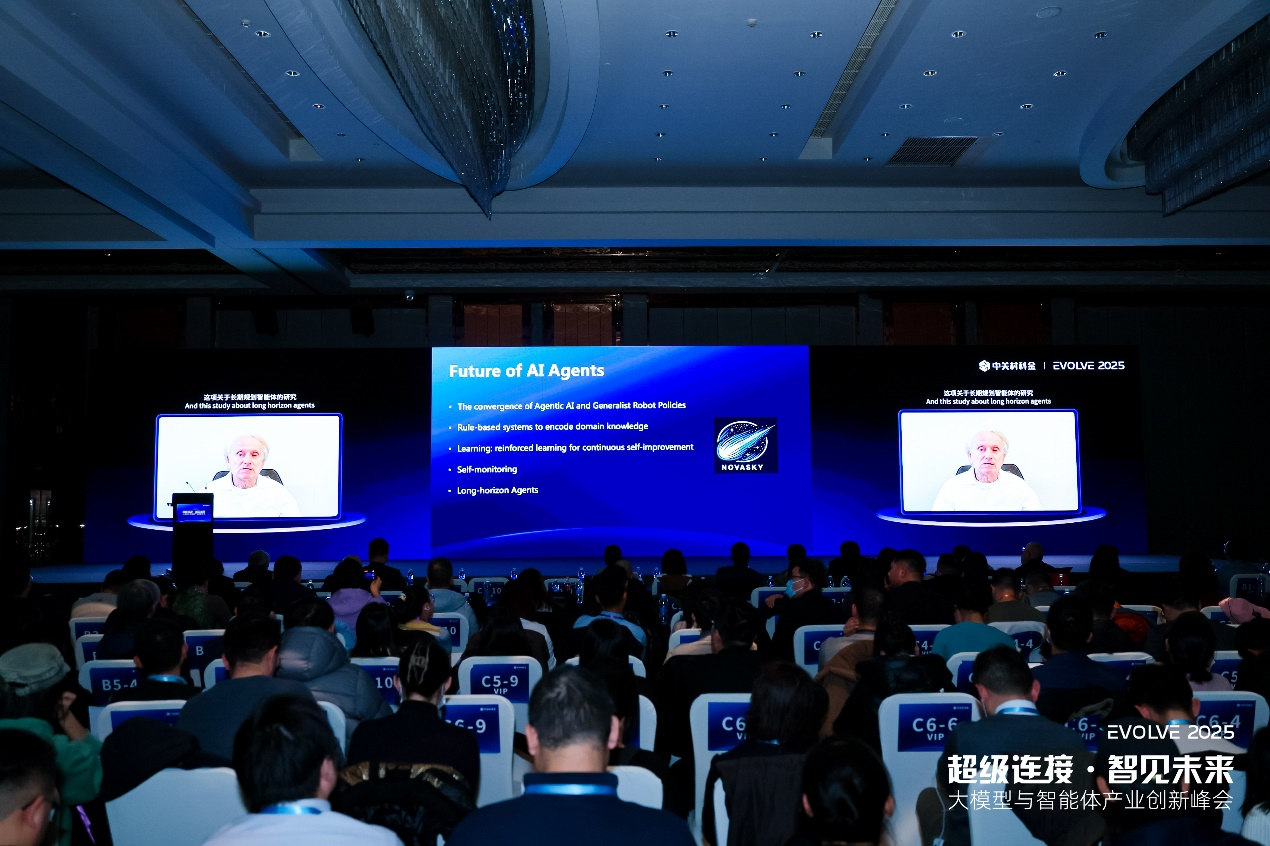
硅谷人工智能研究院院长皮埃罗·斯加鲁菲:2025年AI智能体将重塑数字劳动力
Jin Rong Jie· 2025-12-10 08:41
Core Insights - The "EVOLVE 2025" summit showcased the roadmap for enterprise-level AI agents and introduced a "3+2+2" product matrix to facilitate rapid development of AI agents for businesses [1] - The summit emphasized the collaboration among major cloud service providers to create a sustainable AI ecosystem through the "Super Connection" global partner program [1] Group 1: AI Development Trends - Piero Scaruffi highlighted a clear trend of technological integration in generative AI by 2025, with innovations like diffusion Transformers and multi-modal capabilities becoming standard [3] - The emergence of new technologies such as thinking chains and expert mixtures is reshaping the landscape of AI applications [3] Group 2: Evolution of AI Agents - The distinction between traditional AI products and advanced AI agents was made, with the latter being likened to autonomous driving, capable of executing complex workflows independently [4] - The operational mechanism of these AI agents is summarized as a cycle of perception, decision-making, action, and learning, allowing them to adapt to various environmental changes [4] Group 3: Multi-Agent Systems - The transition from applications to multi-agent systems introduces challenges in orchestration, necessitating a new technology stack that includes hardware, cloud services, and orchestration layers [5] - The concept of "context engineering" is emphasized, requiring AI agents to understand organizational structures and goals beyond executing single tasks [5] Group 4: Industry Applications - Various sectors are witnessing innovative applications of AI, particularly in customer support, where intelligent systems can understand context and emotions, enhancing user experience [6] - Companies like Johnson Controls have developed integrated AI systems that significantly improve efficiency in maintenance and troubleshooting [6] Group 5: Trust in AI - The "Waymo effect" illustrates the growing trust in AI as autonomous vehicles become more prevalent, laying a foundation for broader AI agent applications [7] - Scaruffi envisions a future where multiple AI agents collaborate dynamically, akin to human social interactions, to achieve common goals [7]
颠覆认知! AI席卷全球之际 华尔街反而掀起招聘热潮
Zhi Tong Cai Jing· 2025-12-10 08:33
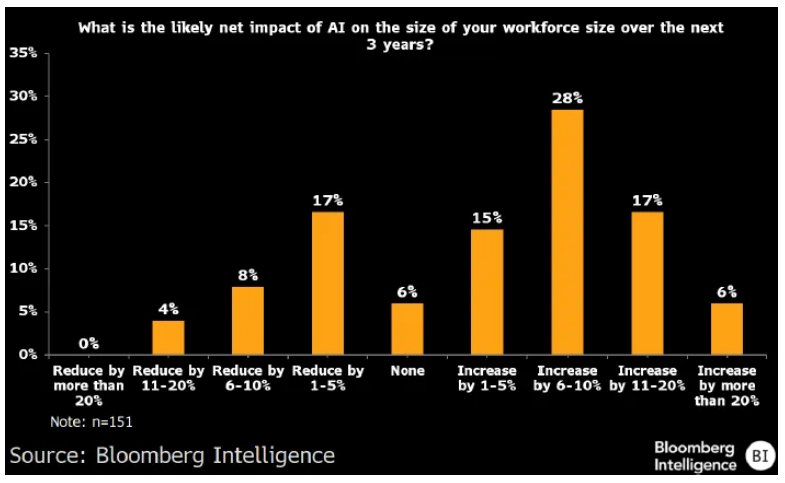
Group 1 - Approximately two-thirds of Wall Street financial services firms expect significant increases in employee numbers after adopting AI applications, raising questions about the technology's potential for large-scale cost savings [1] - Over 70% of Wall Street respondents anticipate that AI-driven applications will lead to higher operating costs in the next three years, although productivity is expected to improve more rapidly [1] - The early stage of AI in financial services is seen as more about capability building rather than significant cost reductions, with cost ratios expected to normalize post-2027-2028, driving profit expansion [1] Group 2 - Major financial institutions like ING, Allianz, and Goldman Sachs are seeking to leverage AI for enhanced customer service and cost reduction, but the adoption rate in the financial sector is slower compared to retail and tech-driven industries due to risk and compliance issues [3] - Long-term impacts of AI on the financial industry are expected to be significant, with UBS analysts predicting that major commercial banks will be among the biggest beneficiaries of rapid technological advancements by 2026 [3] - Executives across various industries view AI as having a "high" or "very high" disruptive potential, with significant cost savings anticipated in drug development and content creation [3] Group 3 - Goldman Sachs has launched an AI-driven internal application called "AI Assistant" to enhance productivity and operational efficiency, assisting employees with complex tasks [4] - The narrative around AI applications is being strengthened by strong performance reports from companies like Google, Applovin, and Palantir, indicating robust demand for AI software applications that enhance business efficiency [5] - The development trajectory of AI applications is focusing on generative AI and autonomous AI agents, with a strong push for efficiency and cost reduction driving widespread adoption [6]
OpenAI、Anthropic、谷歌罕见同框:Agentic Al基金会成立,打响智能体开源标准战
3 6 Ke· 2025-12-10 06:44
Core Viewpoint - The Linux Foundation has launched the Agentic AI Foundation (AAIF) to serve as a neutral hosting platform for open-source projects related to AI agents, with major tech companies as founding members [1][2]. Group 1: Foundation and Members - AAIF aims to establish open standards for AI agents, with founding members including Amazon Web Services, Anthropic, Block, Google, Microsoft, OpenAI, and others [1]. - The foundation's initial focus is on three open-source projects: Anthropic's Model Context Protocol (MCP), Block's Goose project, and OpenAI's AGENTS.md specification [2]. Group 2: Standards and Protocols - The AAIF is designed to prevent proprietary technology stacks and promote interoperability among AI agents, ensuring no single member has control over the standards [2][5]. - MCP is likened to a "USB-C interface" for AI, allowing developers to connect AI agents to various data sources without custom integration [2][3]. - As of now, over 10,000 MCP servers have been deployed, with major products like ChatGPT and Microsoft Copilot supporting the protocol [2]. Group 3: Industry Adoption and Impact - A report by UiPath indicates that by mid-2025, approximately 65% of organizations will have initiated pilot or deployment of AI agent systems, with nearly 90% of executives planning to increase investments in 2026 [6]. - Multi-agent systems can significantly enhance business performance, reducing error rates by up to 60% and improving execution efficiency by 40% compared to traditional processes [6]. Group 4: Future Outlook and Challenges - The AAIF's mission is to avoid fragmentation in the AI ecosystem by managing key protocols and frameworks, promoting compatibility among AI development frameworks and cloud service providers [7]. - There are concerns about whether AAIF can become a true infrastructure or merely a "brand alliance," with the success of the initiative hinging on the adoption of shared standards by global vendors [8]. - The long-term vision includes transitioning from closed platform models to an open, compatible software ecosystem for AI agents [10].


OpenAI、Anthropic、谷歌罕见同框:Agentic Al基金会成立,打响智能体开源标准战!
AI前线· 2025-12-10 05:18
Core Viewpoint - The Linux Foundation has launched the Agentic AI Foundation (AAIF) to serve as a neutral custodian platform for open-source projects related to AI agents, with major tech companies as members, including Anthropic, OpenAI, and Block [2][3]. Group 1: Foundation and Members - AAIF aims to establish open standards for AI agents, with initial contributions from Anthropic, Block, and OpenAI focusing on three key open-source projects [3][4]. - The foundation's member list includes major companies like Amazon Web Services, Google, Microsoft, and IBM, all collaborating to create interoperability standards for AI agents [2][3]. Group 2: Key Projects and Standards - The three main projects are the Model Context Protocol (MCP) by Anthropic, the Goose project by Block, and the AGENTS.md specification by OpenAI, which will standardize interactions between AI agents and external tools [3][4]. - MCP is described as the "USB-C interface" for AI, allowing developers to connect AI agents to various data sources without custom integration [4][5]. Group 3: Industry Adoption and Impact - A report by UiPath indicates that by mid-2025, approximately 65% of organizations will have initiated pilot or deployment of AI agent systems, with nearly 90% of executives planning to increase investments in 2026 [8]. - Multi-agent systems can significantly enhance business performance, reducing error rates by up to 60% and improving execution efficiency by 40% compared to traditional processes [8]. Group 4: Challenges and Future Outlook - The lack of industry consensus on standards could lead to fragmentation, making it difficult for systems to interoperate, similar to the early internet [9][10]. - The AAIF's mission is to prevent this fragmentation by managing key protocols and frameworks, ensuring that AI agents operate on open and interoperable standards [9][10]. Group 5: Governance and Community Involvement - The funding for AAIF comes from a "directed fund," where companies can contribute through membership fees, but control over project direction is maintained by a technical steering committee [6][12]. - The success of AAIF will depend on the adoption of its standards by global vendors and the continuous evolution of these standards based on industry feedback [12].
金融行业加速融入鸿蒙生态 超千款应用已上线
2 1 Shi Ji Jing Ji Bao Dao· 2025-12-10 03:01
Core Insights - The financial sector is increasingly integrating with the HarmonyOS ecosystem, driven by the need for digitalization and security in financial services [1][2][6] - As of now, over 1,000 financial applications have been launched on Huawei's app market, indicating significant adoption of HarmonyOS in the financial industry [1][2] - The collaboration between HarmonyOS and financial institutions has evolved from mobile application adaptation to multi-device collaboration and AI integration [1][2][3] Group 1: Industry Trends - The financial industry's dual demand for digitalization and self-controllability is influenced by the high frequency of mobile financial services and the need for enhanced user experience [2][6] - Regulatory requirements for data and terminal security have made financial institutions more cautious in their technology choices [2][6] - HarmonyOS is seen as a new opportunity for innovation and development in the financial sector through partnerships with various financial applications [2][5] Group 2: Technological Advancements - Financial institutions are leveraging HarmonyOS capabilities to reconstruct user experiences and service processes, such as integrating voice commands for transactions [3][4] - Security features like digital shields and AI fraud prevention have been integrated into HarmonyOS to enhance the safety of financial services [3][5] - The multi-device and AI capabilities of HarmonyOS are enabling financial institutions to create differentiated user experiences across various devices [3][5] Group 3: Institutional Adoption - Major banks, such as the Industrial and Commercial Bank of China, have fully adapted HarmonyOS for their internal systems, indicating its maturity for enterprise-level applications [4][6] - The transition of B-end office systems to HarmonyOS is seen as a critical test of the operating system's robustness and compliance with high security and stability standards [4][6] - The financial sector's complex service chain necessitates a higher level of system stability and risk control compared to other industries [5][6] Group 4: Future Outlook - HarmonyOS is expected to continue focusing on "full scene" and "intelligence" innovations in the financial sector [5][6] - The shift from terminal competition to ecosystem competition is anticipated, with HarmonyOS's "one development, multi-terminal deployment" advantage being a key factor [6] - As more institutions and developers join the ecosystem, HarmonyOS is poised to become a vital part of the next-generation digital infrastructure in the financial industry [6]

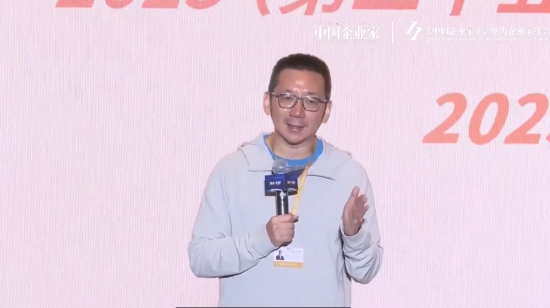
企业是否该用AI智能体?峰瑞李丰:先评估自身数字化水平,不高可以再等等
Xin Lang Cai Jing· 2025-12-10 02:24
专题:2025《中国企业家》影响力企业家年会 12月5日-7日,由《中国企业家》杂志社主办的"2025(第二十三届)《中国企业家》影响力企业家年 会"(原中国企业领袖年会)在北京举行,主题为"涌现·无限——共创智能商业新形态"。峰瑞资本创始 合伙人李丰出席并演讲。 作为企业家,要不要今天开始和大家一样赶紧用智能体?李丰回答称,需要先评价一下企业内部和行业 链条中数字化水平是不是比较高了。"如果不高,也许还要再等一等。如果企业自身数字化水平很高 了,也许内部可以用一些智能体。" 他提到,这一轮AI是从大语言模型开始的,数据来自于过去超过40年互联网公开文本数据的积累,才 喂出了今天的大语言模型。 除了企业外,李丰表示,大语言模型最适用的垂直智能体场景,就是在任何商务过程和价值实现过程 中,作为自然语言作为交互方式,进行多轮对话,且实现了价值兑现,这样的行业最容易使用和利用到 AI智能体的垂直场景。 他举例到,比如金融行业,全链条数字化,主要靠专业技术和专业技能进行对话,告诉客户投资原因, 如何选金融产品,风险和潜在收益是什么。还有医疗行业,医生会用数字化设备检测身体,告诉患者如 何预防疾病等。这些行业都是最容易 ...