智慧交通

Search documents
皖通科技(002331) - 2025年5月16日投资者关系活动记录表
2025-05-16 12:55
Group 1: R&D Investment and Strategy - The company's R&D investment in 2024 has decreased compared to the previous year, primarily due to project cycle characteristics and resource optimization [2] - The company plans to strategically focus on high-potential areas and implement a dynamic adjustment mechanism for future R&D investments [2] Group 2: Strategic Partnerships - The company has established strategic cooperation with Huawei, focusing on mutual benefits and leveraging each other's strengths in commercial markets and joint solutions [3] - Collaborative projects include the "Smart Gate & Smart Cargo Joint Solution" and the "East China Smart Shore Cargo System" [3] Group 3: Financial Performance - The company's net profit attributable to shareholders is expected to see significant growth in 2024, driven by strategic expansion and internal efficiency improvements [3] - Factors contributing to profit growth include the merger with Huadong Lisheng and a reduction in impairment provisions compared to the previous year [3] Group 4: Market Expansion - The company is pursuing a "domestic-first, overseas-oriented" market strategy, with successful bids for international projects such as the Peru Qian Kai Port information construction project [4] - Future plans include exploring high-quality overseas projects in line with national strategies [4] Group 5: Industry Trends and Positioning - The company is committed to the development of smart transportation, smart cities, and digital economy sectors, enhancing its core competitiveness and market influence [4] - The smart transportation industry is evolving with new technologies like autonomous driving and vehicle-road collaboration, which the company aims to capitalize on [4] Group 6: Value Management and Shareholder Returns - The company emphasizes maximizing shareholder value through steady performance growth and exploring new business opportunities [4] - Plans for profit distribution for the 2024 fiscal year will be disclosed after the annual shareholders' meeting [5] Group 7: Future Outlook - The management expresses confidence in the company's future growth and plans to continuously adjust business structures to enhance competitiveness [6]

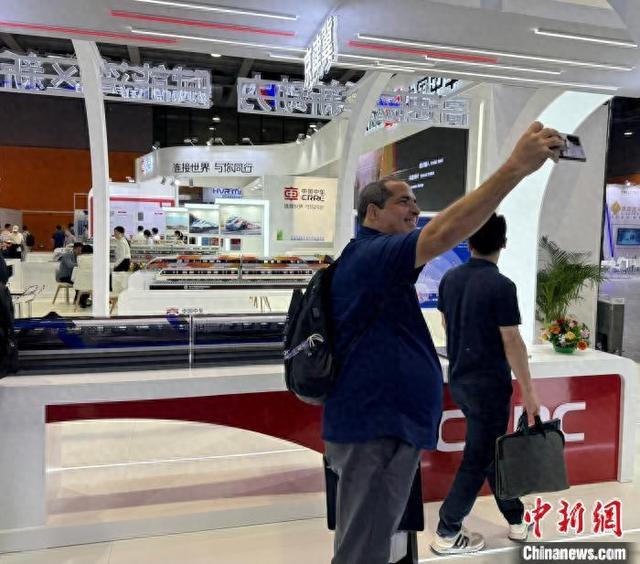
逾400家企业亮相大湾区智慧交通博览会
Zhong Guo Xin Wen Wang· 2025-05-14 14:44
Core Insights - The fifth Guangdong-Hong Kong-Macao Greater Bay Area Smart Transportation Industry Expo opened in Guangzhou, featuring over 400 renowned companies showcasing smart transportation solutions, innovative equipment, and cutting-edge technologies, focusing on smart connectivity and vehicle-road collaboration [1][3] Industry Developments - The Greater Bay Area ports are actively adopting advanced technologies to promote smart upgrades, with major ports like Guangzhou and Shenzhen implementing automated container terminal technologies to enhance operational efficiency [3] - The Guangdong-Hong Kong-Macao Greater Bay Area Distribution Center project has been completed, achieving full capacity upon production, and aims to establish a significant cross-border e-commerce export business center [3] - The efficiency of vessel passage has improved by 60% following the completion of the Beijiang waterway capacity expansion [3] Forum Highlights - The expo includes a core main forum and 19 specialized sub-forums focusing on topics such as digital transformation of road infrastructure, transportation safety, and low-altitude economy [4] - Key presentations include discussions on new productive forces and digital transformation in highways, as well as advanced machine learning methods for predicting highway pavement performance [4] - The exhibition showcases results in smart control, monitoring and early warning systems, and smart service areas, emphasizing the use of digital tools for monitoring natural disasters affecting transportation systems [4]

中威电子(300270) - 300270中威电子投资者关系管理信息20250514
2025-05-14 09:12
Group 1: Core Technology Advantages - The company's core technology advantages are reflected in five key areas: deep accumulation in video technology, intelligent algorithms and big data analysis capabilities, IoT perception and system integration advantages, smart hardware and scenario-based solutions, and integrated services and market expansion capabilities [1]. Group 2: Financial Performance - In 2024, the company has not yet turned a profit, but the operating situation has improved, with a reduction in the loss margin compared to the previous year. Revenue has increased, and the gross profit margin has improved [2]. - The gross profit margin for 2024 is 26.39%, slightly up from 23.67% in 2023, primarily due to accelerated technological iterations in the video surveillance field and competitive pricing strategies [4]. Group 3: Cost Reduction and Efficiency Improvement - The company has implemented cost reduction measures such as procurement negotiations and inventory management, which have effectively lowered procurement costs and inventory backlog [2]. - The deployment of the PMS project management platform has optimized resource allocation and reduced delay risks through real-time monitoring [2]. Group 4: Research and Development Investment - In 2024, the company invested 20.0273 million yuan in R&D, accounting for 10.97% of total revenue. The focus will be on integrating products with digital technologies in smart highways and upgrading solutions for smart parks [4]. - Despite a 31.22% year-on-year decrease in R&D expenses, the company has optimized processes to lower marginal costs and concentrated resources on high-potential areas, ensuring no negative impact on innovation [5]. Group 5: Future Growth and Profit Distribution - Future profit growth points are expected to come from deepening core business, expanding into emerging fields, and innovating business models while improving operational efficiency and cash flow [5]. - The company will not distribute profits for 2024 due to negative retained earnings, but has a three-year shareholder dividend plan in place [4].

金溢科技(002869) - 2025年5月13日金溢科技业绩说明会、路演活动信息
2025-05-13 15:52
Group 1: Industry Outlook - The smart transportation industry is experiencing strong growth driven by national policies, technological advancements, and market demand [2] - The integration of ETC and C-V2X technologies is accelerating the development of smart transportation [2] - The digital transformation of traffic infrastructure supports the construction of a strong transportation nation [2] Group 2: Company Performance - In 2024, the company achieved a revenue of 7,875.48 million yuan, a year-on-year increase of 16.39% [3] - The net profit attributable to shareholders reached 5.96 million yuan, reflecting a year-on-year growth of 59.69% [3] - The company’s first-quarter net profit in 2025 declined due to increased R&D expenses and reduced financial income from changes in monetary policy [4] Group 3: Strategic Initiatives - The company aims to leverage its dual capabilities in "transportation + IT" to enhance its service offerings in various sectors, including vehicle-road-cloud integration and digital energy [5] - The focus will be on deepening domestic market engagement while actively exploring international opportunities for growth [5] - The company plans to build an efficient and flexible market operation system to improve response speed and service quality [5] Group 4: Management and Compensation - The compensation for directors and senior management is structured around a base salary, performance salary, bonuses, and long-term incentives [6] - The company follows a market-oriented principle in its compensation strategy, aiming to enhance talent competitiveness [7]
信息发展(300469) - 2024年度业绩说明会投资者关系活动记录表
2025-05-13 10:44
Group 1: Business Performance and Goals - The company aims to install 1 million Beidou terminals in 2025, with over 140,000 terminals issued by the end of 2024 [1][5] - The average monthly shipment of Beidou terminals reached 220,000 units by the end of the reporting period [4] - The company has signed contracts for 800,000 key operational vehicles to be equipped with Beidou terminals this year [1][3] Group 2: Revenue and Financial Outlook - The revenue from smart transportation is expected to decline by 50% in 2024 compared to 2023, primarily due to a shift in revenue sources [5] - The company plans to raise a total of 1.1 billion RMB through various financing methods, including a 300 million RMB private placement and a 600 million RMB bank credit [1][17] Group 3: Partnerships and Collaborations - The company is in the initial stages of establishing partnerships with automotive manufacturers for pre-installed Beidou devices [3] - Collaboration with Tianjin Mobile has progressed to the trial installation phase, with large-scale installations expected to begin next month [47] Group 4: Risk Management and Infrastructure - Two risk control centers have been established, with plans to increase the number of centers in 2025 [6] - The company is actively participating in bidding processes across various provinces and cities [2][1] Group 5: Shareholder and Equity Matters - The company is in the process of transferring shares, with ongoing discussions regarding the transfer of equity stakes [12][13] - The company has confirmed income from its cooperation with insurance companies, indicating positive progress in this area [10]

充电桩竟成新型印钞机?中欧美上演“三国杀”丨热门赛道
创业邦· 2025-05-11 01:06
以下文章来源于睿兽Pro ,作者Bestla 睿兽Pro . 创业邦旗下横跨一二级市场的科创数据平台。实时投资数据、追踪产业创新。找数据、做分析、链资 源,就上睿兽分析。 行业定义 充电桩(Charging Pile)是为电动汽车提供电能补给的核心基础设施,通过将电网或分布式能源 (如光伏、储能)的电能转换为车辆可用的直流/交流电,实现快速、安全、高效的充电服务。充电 桩按技术路线可分为交流充电桩(慢充) 和直流充电桩(快充),按应用场景分为公共充电桩、专用 充电桩(如公交、物流)、家庭充电桩等。随着全球新能源汽车渗透率提升,充电桩作为配套刚需, 已成为能源转型和智慧交通的关键节点。 近年来,为促进电动汽车充电基础设施的高质量发展,国务院、发改委等部委陆续出台了一系列重要 政策文件。这些政策包括《关于进一步提升电动汽车充电基础设施服务保障能力的实施意见》《"十 四五"新型城镇化实施方案》《关于进一步构建高质量充电基础设施体系的指导意见》等,旨在解决 行业发展中的关键问题和短板。相关政策从充电网络优化、安全监管强化、技术创新突破、标准体系 完善、示范应用推广等多个维度进行了系统规划,推动行业加快技术突破、提升产 ...




交通行业首个鸿蒙操作系统在深发布 推动城市交通智慧互联
Shen Zhen Shang Bao· 2025-05-09 16:28
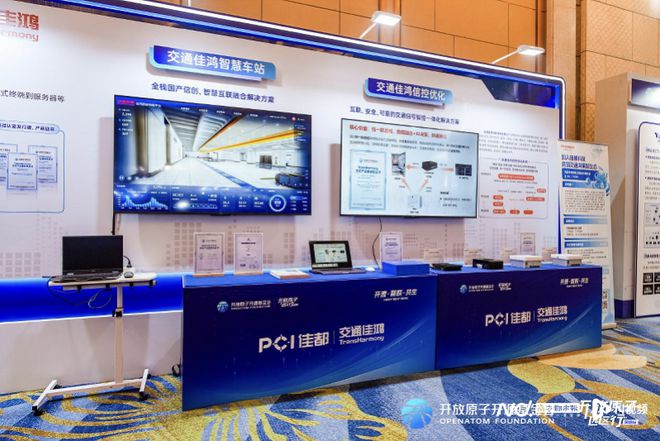
Core Insights - The event "Open Source Park Tour" in Shenzhen highlighted the launch of "Traffic Jiahong," the first operating system for the transportation industry based on open-source HarmonyOS, marking a significant advancement in domestic open-source technology within core transportation infrastructure [1][2] Group 1: Event Overview - The event was attended by over 350 industry representatives, including leaders from the Ministry of Industry and Information Technology, Guangdong Province, and Shenzhen City [1] - The Open Atom Open Source Foundation has incubated 33 representative and forward-looking open-source projects, supporting software industry upgrades and digital transformation [1] Group 2: Technology and Innovation - "Traffic Jiahong" is built on OpenHarmony and openEuler, designed to meet the transportation industry's needs for high reliability, strong real-time performance, and interconnectivity of heterogeneous devices [1][2] - The system aims to unify operating system standards to address issues like fragmented device protocols and data silos, enabling comprehensive interconnectivity in urban transportation [1] Group 3: Smart Station Solutions - The smart station solution transforms traditional stations into intelligent entities capable of perception and collaboration, enhancing equipment management efficiency and safety through standardized device access and edge AI management [2] - The traffic signal control optimization system utilizes HarmonyOS and Star Flash technology to create a business loop of "perception-prediction-decision-service," improving the intelligence, safety, and convenience of traffic signal control [2] Group 4: Passenger Services - The system allows for "seamless passage" for passengers by enabling mutual trust and connectivity between mobile devices, wearable technology, and ticket gates, with a 90% increase in recognition speed through facial recognition technology [2] - Data security is ensured through full encryption during the identification process [2] Group 5: Industry Impact - The open-source HarmonyOS is seen as a critical support for independent innovation in the industry, aiming to create an "open-source community" for smart transportation through collaborative technology, standardization, and scenario expansion [2] - The push for open-source HarmonyOS in the rail transit sector aims to establish a more influential "Chinese solution" and "Chinese standard," injecting innovative momentum into global smart transportation development [2]

国产开源技术向交通基础设施核心领域迈出关键一步!佳都科技发布交通佳鸿操作系统
Guang Zhou Ri Bao· 2025-05-09 07:46
Core Viewpoint - The launch of the "Traffic Jia Hong" operating system by Jiadu Technology marks a significant step for domestic open-source technology in the core area of transportation infrastructure, ushering in a new era of AI technology innovation in urban transportation [2][4]. Group 1: Open Source Ecosystem - The Open Atom Open Source Foundation has successfully incubated 33 representative and forward-looking open-source projects, providing solid support for software industry upgrades and digital transformation [3]. - The "Park Tour" event aims to accelerate the full chain connection of open-source technology from research and development to scene implementation, fostering innovation across various industries [3]. Group 2: Traffic Jia Hong Operating System - The "Traffic Jia Hong" operating system is built on the OpenHarmony and openEuler technology stack, addressing core needs such as high reliability, strong real-time performance, and interconnectivity of heterogeneous devices in the transportation sector [4]. - The system aims to solve issues like fragmented interconnectivity protocols, data silos, and inefficient operations in urban transportation, enabling a fully connected environment for smart transportation [4]. Group 3: Smart Transportation Governance - The open-source Hongmeng system serves as a unified operating system base for various intelligent terminals in the transportation industry, addressing the fragmentation of operating systems [5]. - Distributed technology empowers unified interconnectivity and intelligent collaboration of transportation devices, supporting the smart upgrade of various transportation scenarios [5]. Group 4: Expert Insights - Jiadu Technology's Chief AI Scientist, Dr. Wang Kai, discussed the background and technical architecture of "Traffic Jia Hong," emphasizing its role in creating a unified, open, and efficient data ecosystem for smart transportation applications [6].
国产操作系统再落一子,基于开源鸿蒙的“交通佳鸿”正式发布
Nan Fang Du Shi Bao· 2025-05-09 03:44
Core Viewpoint - The event in Shenzhen marked the launch of the "Traffic Jiahong" operating system based on OpenHarmony technology, indicating a significant breakthrough for domestic operating systems in the core area of transportation infrastructure and accelerating the practical implementation of open-source ecosystems in urban traffic systems [1][3]. Group 1: Technology and System Integration - "Traffic Jiahong" operates on a dual technology base of OpenHarmony and openEuler, focusing on core scenarios such as urban rail and road traffic, providing high reliability, strong real-time capabilities, and interoperability among diverse devices [3]. - The system aims to address challenges in the smart transportation sector, including fragmented device protocols, poor system compatibility, and high operational costs, by achieving unified access, intelligent scheduling, and data integration [3]. Group 2: Industry Implications - The launch of "Traffic Jiahong" signifies a shift away from reliance on imported systems, addressing issues of software fragmentation and data silos through the open-source ecosystem, promoting technological independence and system unification in the transportation industry [3][4]. - The current acceleration in domestic smart transportation construction is moving towards higher demands for interconnectivity, intelligent perception, and collaborative control, particularly in urban rail systems where the number of under-construction and planned lines is increasing [3]. Group 3: Solutions and Applications - "Traffic Jiahong" proposes a "three-in-one" smart station solution for urban rail, integrating operating systems, hardware platforms, and software platforms to enable unified access to station equipment and edge AI computing [4]. - In urban road systems, the solution connects traffic lights, sensors, and monitoring terminals to create a closed-loop control logic of "perception-prediction-decision-service," which is expected to enhance traffic efficiency and road safety [4]. Group 4: Collaborative Ecosystem Development - The launch event involved multiple stakeholders, including the OpenAtom Foundation and various industry associations, marking a transition from single-scene applications to cross-industry ecosystem collaboration [6]. - The China Intelligent Transportation Association emphasized the importance of a stable technical foundation for smart transportation systems, advocating for unified and efficient open-source ecosystems through collaborative efforts in technology, standards, and scene expansion [6][7].
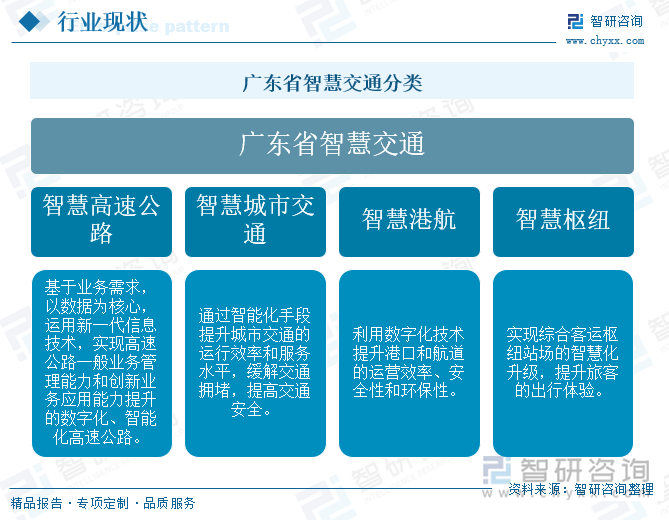
研判2025!中国广东省智慧交通行业产业链、相关政策及市场规模分析:政策扶持与技术创新双轮驱动,区域市场潜力加速释放[图]
Chan Ye Xin Xi Wang· 2025-05-09 01:26
Core Insights - The Guangdong province's smart transportation industry is entering a high-quality development phase driven by policy support, technological innovation, and market application [1][14] - The market size of Guangdong's smart transportation industry is projected to reach 19.284 billion yuan in 2024, representing a year-on-year growth of 6.00% [1][14] - The "Guangdong Province Transportation High-Quality Development Three-Year Action Plan (2025-2027)" aims to establish a modern comprehensive transportation network by 2027, enhancing smart transportation development [1][12] Industry Overview - Guangdong's smart transportation leverages IoT, big data, and AI to create a collaborative and efficient transportation system, transitioning from experience-driven to data-driven governance [1][8] - The industry can be categorized into four main areas: smart highways, smart city transportation, smart ports and shipping, and smart hubs [1][8] Industry Development History - The development of Guangdong's smart transportation has gone through four stages: initial exploration (1980s-2000), large-scale construction (2001-2010), digital transformation (2011-2018), and smart upgrade (2019-present) [4][5][6] - Key milestones include the introduction of the SCATS traffic signal control system in 1992, the establishment of the first ETC lane in 2001, and the launch of the first city-level "Internet + Smart Parking System" in 2014 [4][5][6] Industry Chain - The upstream of the smart transportation industry includes hardware devices, basic software, and communication infrastructure, while the midstream focuses on system integration and solutions [9] - Downstream applications span across highways, railways, waterways, and aviation sectors [9] Market Size - The smart transportation market in Guangdong is expanding annually, covering various subfields such as intelligent transportation systems, vehicle networking, and autonomous driving [1][14] - The Pearl River Delta region is the primary market for smart transportation, with significant potential in other areas like eastern, western, and northern Guangdong [1][14] Key Companies' Performance - Major players in the Guangdong smart transportation industry include government departments, smart transportation equipment suppliers, research institutions, and construction companies [16] - Companies like China Merchants Heavy Industry, Qianfang Technology, and others hold significant market shares, driving market growth through innovation and collaboration [16] Industry Development Trends - The integration of new technologies such as big data, IoT, and AI is expected to enhance the smart transportation ecosystem [21] - Guangdong plans to invest approximately 900 billion yuan in transportation infrastructure over the next three years, focusing on highways, railways, ports, and airports [23] - The government emphasizes sustainable development and the establishment of a modern comprehensive transportation network, with policies aimed at promoting green transportation systems [24]