制造业PMI

Search documents
【笔记20250801— 增值税消息突袭,债市上演“跳楼机”行情】
债券笔记· 2025-08-02 08:12
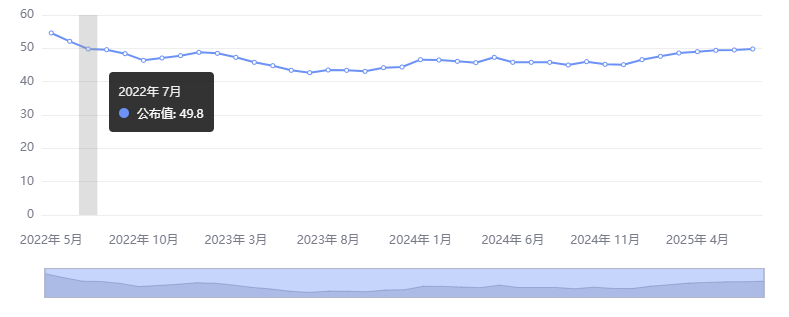
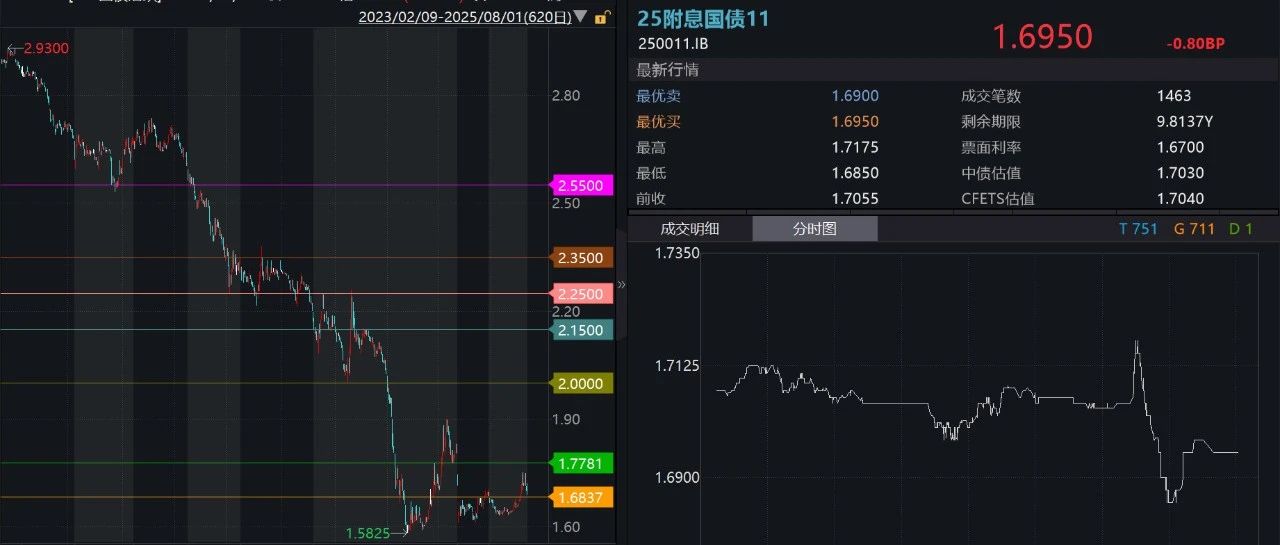
Core Viewpoint - The article discusses the current state of the bond market, highlighting the impact of tax policy changes on bond yields and market sentiment, particularly in response to the recent announcement of reinstating value-added tax on government bond interest income [3][5]. Group 1: Market Conditions - The bond market experienced a "roller coaster" effect due to the sudden announcement of reinstating value-added tax on government bond interest, leading to fluctuations in yields [5]. - The 10-year government bond yield initially rose by 1 basis point before dropping by 2 basis points, reflecting market reactions to the tax news [5]. - The overall sentiment in the bond market was slightly weak, with the 10-year government bond yield closing at 1.6975% after a brief rise [5]. Group 2: Economic Indicators - The S&P Global Manufacturing PMI for July was reported at 49.5, below expectations and the previous value of 50.4, indicating a contraction in manufacturing activity [5]. - The stock market and commodity performance were also weak, contributing to a cautious market environment [5]. Group 3: Monetary Policy and Liquidity - The central bank conducted a 7-day reverse repurchase operation of 126 billion yuan, with a net withdrawal of 66.33 billion yuan due to maturing reverse repos [3]. - The funding rates showed a notable decline, with DR001 around 1.31% and DR007 at approximately 1.42%, indicating a balanced and slightly loose liquidity environment [3].

美国7月制造业再度收缩 五大关键指数表现疲软
智通财经网· 2025-08-01 15:12
Core Insights - The U.S. manufacturing sector continued to contract in July, marking the fifth consecutive month of decline after a brief expansion earlier in the year [1] - The Manufacturing PMI for July was reported at 48%, a decrease of 1 percentage point from June, indicating ongoing challenges in the manufacturing recovery [1][2] - Despite the contraction in manufacturing, the overall U.S. economy has experienced growth for 63 consecutive months since the brief recession in April 2020 [1] Manufacturing Activity - The new orders index recorded at 47.1%, indicating a slight easing in the trend of order reduction, although it remains in contraction territory [2] - The production index improved to 51.4%, entering the expansion zone, suggesting some manufacturers have increased capacity [2] - The employment index fell to 43.4%, reflecting a cautious approach to hiring among businesses [2][3] Price and Supply Chain Dynamics - The prices index was at 64.8%, showing continued cost increases but a significant drop from 69.7% in the previous month, indicating some relief from inflationary pressures [2] - The supply delivery index decreased to 49.3%, suggesting improved supply chain efficiency, partly due to reduced demand [2][3] - The inventory index fell to 48.9%, indicating ongoing adjustments to align inventory levels with actual orders [2] Export and Import Trends - The new export orders index was at 46.1%, slightly down from June, while the import index was at 47.6%, indicating weak internal and external demand [2] Overall Manufacturing Health - Approximately 79% of U.S. manufacturing industries were in contraction in July, a significant increase from 46% in June, highlighting widespread industry weakness [3] - All six major manufacturing sectors, which had previously shown expansion in June, fell into contraction in July, indicating comprehensive pressure across the industry [3][4] - The overall manufacturing performance remains weak, with a broadening contraction suggesting that the sector will face challenges in the near term [4]
美国制造业延续低迷,工厂就业率创五年来最低
news flash· 2025-08-01 14:05
Core Viewpoint - The U.S. manufacturing sector continues to experience a downturn, with factory employment reaching its lowest level in five years due to rising import material costs from tariffs [1] Manufacturing Sector Summary - The ISM manufacturing PMI index fell from 49.0 in June to 48.0 in July, indicating a contraction in the manufacturing sector, which constitutes 10.2% of the U.S. economy [1] - The new orders sub-index increased from 46.4 in June to 47.1 in July, but it has still contracted for six consecutive months [1] - The production index rose from 50.3 to 51.4, suggesting an increase in output, yet factories continue to lay off workers [1] - The employment index dropped from 45.0 in June to 43.4 in July, marking the lowest level since July 2020 [1] - ISM noted that the pace of layoffs is accelerating due to uncertainties in demand in the near to mid-term [1]
美国7月标普全球制造业PMI终值49.8,预期49.7
news flash· 2025-08-01 13:46
Core Insights - The final value of the S&P Global Manufacturing PMI for the U.S. in July is reported at 49.8, which is slightly above the expected value of 49.7 and an increase from the previous value of 49.5 [1] Summary by Category - **Manufacturing Sector Performance** - The U.S. manufacturing sector shows a PMI of 49.8 for July, indicating a marginal improvement compared to the previous month [1] - The PMI value remains below the neutral mark of 50, suggesting that the manufacturing sector is still in a contraction phase despite the slight increase [1]
7月制造业PMI:边际回落,政策或稳中求进,降息添变数
Sou Hu Cai Jing· 2025-08-01 13:44
Group 1 - The manufacturing PMI in July showed a marginal decline, significantly weaker than seasonal trends observed in previous years, with the new orders index particularly affected [1] - Manufacturing momentum is experiencing a marginal downturn, indicating overall downward pressure on the sector [1] - Despite the challenges, the political bureau meeting has set a positive policy tone for the future, suggesting a focus on stability and progress in the second half of the year [1] Group 2 - The government is expected to accelerate bond issuance as part of its policy response, particularly if data continues to show a downward trend [1] - In the overseas market, the Federal Reserve's recent meeting indicated a hawkish stance from Chairman Powell, with a focus on employment and inflation [1] - June inflation slightly exceeded expectations due to rising commodity prices, adding uncertainty to the timing of potential interest rate cuts [1]
PMI数据显示加拿大7月份制造业活动连续第六个月下降
news flash· 2025-08-01 13:38
Core Viewpoint - Canadian manufacturing activity has contracted for the sixth consecutive month in July, primarily due to tariffs impacting trade with the U.S. and leading to inventory reductions and layoffs [1] Group 1: Manufacturing Activity - The PMI for Canadian manufacturing rose slightly from 45.6 in June to 46.1 in July, but remains well below the neutral level of 50 [1] - The manufacturing PMI has been below 50 since February, indicating ongoing contraction in the sector [1] Group 2: Trade Challenges - Canadian manufacturers continue to face significant challenges in trade with the U.S., with noticeable declines in demand and sales from American customers [1] - Output, new orders, and purchasing activities have all seen marked decreases, although the rate of decline has lessened compared to previous months [1]
加拿大7月RBC制造业PMI 46.1,前值 45.6。
news flash· 2025-08-01 13:37
Group 1 - The core point of the article is that Canada's RBC Manufacturing PMI for July is reported at 46.1, an increase from the previous value of 45.6 [1]
8月1日电,标普全球巴西7月制造业PMI为48.2,前值为48.3。
news flash· 2025-08-01 13:06
Core Viewpoint - The manufacturing PMI in Brazil for July is reported at 48.2, slightly down from the previous value of 48.3, indicating a contraction in the manufacturing sector [1] Group 1 - The current PMI value of 48.2 suggests that the manufacturing sector is experiencing a decline, as values below 50 indicate contraction [1] - The previous month's PMI was 48.3, showing a marginal decrease in manufacturing activity [1]
黑色产业数据每日监测-20250801
Jin Shi Qi Huo· 2025-08-01 10:29
Report Industry Investment Rating - Not provided Core View of the Report - The black commodity futures market has declined across the board. The five major steel products have seen an increase in inventory and a decrease in apparent demand. The rapid decline of coking coal has led to a decrease in speculative demand, and the short - term futures market still faces correction pressure. However, due to the unproven "anti - involution" expectation and the "steady growth" expectation, along with the impact of coal mine over - production inspections, the steel demand in the off - season is acceptable, and the downward adjustment space of the futures market may be limited [1] Summary by Related Catalogs Market Overview - On August 1st, black commodity futures all turned down. The closing prices of rebar, hot - rolled coils, and iron ore were 3,203 yuan/ton, 3,401 yuan/ton, and 783 yuan/ton respectively. The coking coal and coke futures continued to decline significantly, with the decline of coking coal main contract exceeding 7%, and the coking coal main contract switched to 2601 [1] Market Analysis - The Politburo meeting did not release signals of incremental fiscal policies, emphasizing the use of previous policy packages and without more support for the real estate market. The Fed kept interest rates unchanged as expected and downplayed the guidance of a September rate cut, leading to adjustments in risk - asset prices. In July, China's official manufacturing PMI was 49.3%, down 0.4 percentage points from the previous month, indicating a decline in manufacturing prosperity [1] - The supply - demand performance of steel is poor. The inventory of the five major steel products increased by 153,900 tons to 13.5189 million tons, ending a four - week decline. The terminal demand in the off - season is weak, mainly due to the decline in real estate investment and construction. The profitability rate of 247 steel mills increased to 65.37%, the blast furnace operating rate remained flat at 83.46%, and the average daily pig iron output decreased by 15,200 tons to 2.4071 million tons. The electric arc furnace steel mills increased production and resumed production, with the operating rate and capacity utilization reaching an eight - week high [1] Investment Suggestions - Iron ore: Pay attention to supply - demand changes and inventory, and avoid chasing high prices [1] - Rebar: Adopt a short - term shock strategy and pay attention to the difference between hot - rolled coils and rebar [1] - Hot - rolled coils: Adopt a short - term high - level consolidation strategy and pay attention to supply - demand changes [1] - Coking coal and coke: Pay attention to the shock market after the decline stabilizes or the strength - weakness relationship between coking coal and coke [1] Summary - Overall, the inventory of the five major steel products has increased, the apparent demand has decreased, and with the rapid decline of coking coal, the short - term futures market faces correction pressure. But due to certain expectations and the actual situation, the downward adjustment space of the futures market may be limited [1]
欧元区制造业逼近荣枯线!7月PMI升至49.8创三年新高
智通财经网· 2025-08-01 09:27
智通财经APP获悉,调查显示,标普全球编制的HCOB欧元区制造业 PMI 从6月的49.5微升至7月的49.8,创2022 年7月以来最高水平。该数据与初值相符,距离荣枯分界线50仅一步之遥。 尽管新订单下滑且产出增速放缓,欧元区7月制造业活动以三年来最慢速度收缩,正逐步接近企稳。 制造业产出连续第五个月增长但增速放缓,产出指数从50.8降至50.6,创四个月低点。 汉堡商业银行首席经济学家赛勒斯·德拉鲁比亚表示,"欧元区制造业正谨慎重拾动能。随着欧盟与美国达成新贸 易框架,不确定性应会降低,种种迹象表明未来数月将延续上行趋势。" 美国周日与欧盟达成框架贸易协议,将对多数欧盟商品征收15%的进口关税。 欧洲最大经济体德国的制造业PMI升至35个月高点49.1,但仍处于收缩区间。法国与奥地利并列表现最差,读数 均为48.2。在欧元区国家中,爱尔兰以53.2的PMI领跑,尽管这是两个月低点。荷兰与西班牙分别录得51.9,创 14个月和七个月新高。希腊维持在51.7的增长区间。 新订单小幅下降,出口销售在6月短暂企稳后再度拖累增长。7月价格压力基本消失,投入成本在连续三个月下 降后持平,而出厂价格几乎未有波动。 欧 ...