创新药

Search documents
1月20日宽基ETF资金流出压力未减:沪深300单日净流出近319亿元,相较前日再增12亿元
Xin Lang Cai Jing· 2026-01-21 02:31
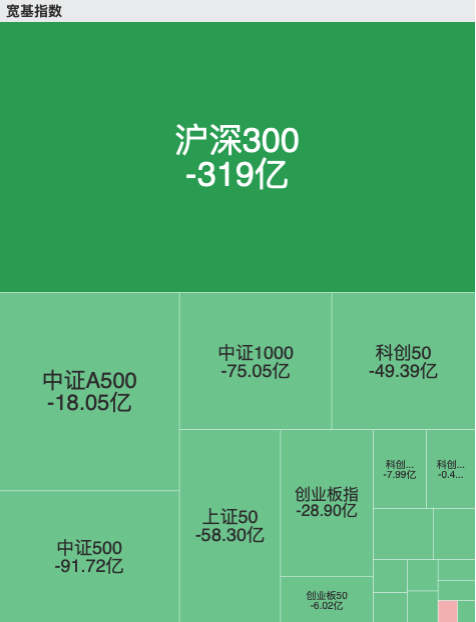
Wind数据显示,1月20日的ETF市场资金流向延续了宽基指数产品面临的赎回压力。整体来看,主要宽 基ETF呈现净流出态势,其中以沪深300为代表的大盘宽基指数依然是资金流出的主要方向。 从指数层面看,沪深300相关ETF净流出规模最为显著,合计达到318.86亿元,相比前日(1月19日)净 流出规模增加近12亿元。中证1000指数ETF同样出现明显流出,净流出额为75.05亿元。此外,上证 50、科创50、中证500等主流宽基指数ETF也均呈现资金净流出,规模分别为58.30亿元、49.39亿元和 91.72亿元。 数据来源:Wind,截止至 20260120 | 数据来源:Wind,截止至 | | --- | 20260120 至20260120 具体到产品层面,华泰柏瑞沪深300ETF(510300.SH)净流出109.84亿元,成为当日资金流出最多的 ETF。其他沪深300相关产品如嘉实沪深300ETF(159919.SZ)、易方达沪深300ETF(510310.SH)和华 夏沪深300ETF(510330.SH)也分别净流出73.42亿元、68.48亿元和64.70亿元。此外,南方中证500ETF ...

招商证券:首予康哲药业(00867)“强烈推荐”评级 创新化+国际化助力商业化龙头迈入新阶段
智通财经网· 2026-01-21 01:48
Core Viewpoint - The report from China Merchants Securities gives a "strong buy" rating for Kangzheng Pharmaceutical (00867), indicating that the impact of centralized procurement on the company's performance is largely resolved, and the company is entering a new growth phase driven by innovative drugs and internationalization starting in 2024 [1] Group 1: Company Transformation and Growth - Kangzheng is characterized as a platform pharmaceutical company focusing on the entire lifecycle of drugs, having initiated a transformation into "New Kangzheng" since 2018, which has allowed it to gradually mitigate the impact of centralized procurement [2] - The company is expected to enter a year of commercializing innovative products in 2024, with several major innovative drugs set to launch, while also expanding its business into emerging markets like Southeast Asia through its subsidiary Kanglinda [2][3] Group 2: Performance and Product Development - The company has experienced short-term performance fluctuations due to the inclusion of three core products in centralized procurement in 2023, but is projected to see a turning point in performance with the commercialization of innovative products and rapid growth of exclusive drugs starting in 2024 [3] - Kangzheng has transitioned from a CSO model focused on importing original drugs to a full-chain innovative drug development company, enriching its product structure through overseas licensing, domestic collaboration, and independent research and development [3] Group 3: Innovation and Product Pipeline - Over 60% of the company's revenue comes from exclusive/brand and innovative products, focusing on First-in-Class (FIC) and Best-in-Class (BIC) drugs, with nearly 40 innovative drug pipelines expected by the first half of 2025, including five drugs already commercialized and six in the NDA stage [4] - The company has around 20 self-developed products in its pipeline, with five entering clinical development and approximately 15 in preclinical stages [4] Group 4: International Expansion - Kangzheng is focusing on international markets, particularly Southeast Asia and the Middle East, which have large populations and unmet medical needs, and has the full chain capabilities for product production, introduction, development, registration, and marketing [5] - By the first half of 2025, the company has submitted nearly 20 drug and medical device applications in these regions, covering fields such as dermatology, ophthalmology, oncology, and immunology [5] Group 5: Spin-off Plans - The company has been independently operating its dermatology and ophthalmology businesses since 2021, with plans to spin off Dermy Pharmaceutical for a separate listing on the Hong Kong Stock Exchange in 2025, marking the first standalone business segment of Kangzheng Group [6]

让新药好药“买得到、用得上、能报销”
Su Zhou Ri Bao· 2026-01-21 00:16
Core Insights - The new national medical insurance negotiation drug directory has been officially implemented since January 1, aiming to enhance the accessibility and affordability of innovative drugs for patients [1][2] Group 1: National Drug Directory Changes - The updated directory includes 114 new drugs, of which 50 are first-class innovative drugs, while 29 drugs have been removed due to lack of supply or better alternatives [1] - The adjustments significantly improve coverage for critical areas such as cancer, chronic diseases, mental health, rare diseases, and pediatric medications [1] Group 2: Implementation and Collaboration - Medical institutions are required to incorporate the national negotiation drugs into their procurement lists within one month of the directory's release, with Suzhou hospitals actively responding to this mandate [2] - The Suzhou Medical Insurance Bureau organized a collaborative meeting to facilitate communication among healthcare, medical insurance, and pharmaceutical sectors, involving over 100 participants from various institutions [2][3] Group 3: Innovative Approaches in Hospitals - Hospitals in Suzhou are adopting innovative measures, such as establishing intelligent medication review systems and a three-dimensional access mechanism for drug evaluation, to streamline the process of incorporating national negotiation drugs [2] - The total settlement amount for national negotiation drugs in Suzhou is projected to increase from 1.44 billion yuan in 2023 to 1.59 billion yuan in 2025 [2] Group 4: Future Developments - By 2025, Suzhou is expected to have 18 innovative drugs included in the new directory, with 14 in the national basic medical insurance directory and 4 in the commercial insurance innovative drug directory [3] - A dual-channel supply guarantee system has been established to provide patients with diverse and convenient purchasing options for innovative drugs [3][4]
齐鲁制药:以“有温度的科技”锻造新质生产力
Feng Huang Wang Cai Jing· 2026-01-21 00:06
Core Viewpoint - Shandong Province has achieved a significant milestone by entering the 10 trillion yuan economy club, attracting national attention for its high-quality economic and social development [1] Group 1: Industry Development - The 20th National Congress of the Communist Party emphasized the implementation of a health-first development strategy, which provides fundamental guidance for the pharmaceutical industry [3] - Domestic pharmaceutical companies are seizing opportunities during a transformative period, focusing on innovation, internationalization, and green intelligence to create new development scenarios [3] - Qilu Pharmaceutical has made significant strides, with 143 new products developed and launched during the 14th Five-Year Plan, including 109 products winning national procurement bids and 38 being the first or only domestic listings [3][5] Group 2: Innovation and Product Development - Qilu Pharmaceutical's innovative drug, Ilruak (启欣可), has been approved for treating advanced non-small cell lung cancer, providing hope for patients [5][8] - The company has also developed a PD-1/CTLA-4 dual-function antibody, expected to offer a more effective and safer treatment for recurrent or metastatic cervical cancer [8] - Qilu's strategy balances innovation and generic drug development, addressing urgent clinical needs and enhancing drug accessibility [9] Group 3: International Expansion - Qilu Pharmaceutical has transitioned from a cost-driven model to a value-creating approach in international markets, becoming a notable player in the global pharmaceutical landscape [12] - The company responded to a clinical drug shortage in the U.S. by quickly facilitating the export of cisplatin injection, showcasing its capability and reliability in international supply [12] - Qilu's generic drug, gefitinib (伊瑞可), significantly reduced the price of a previously monopolized drug, enhancing accessibility for over 100,000 patients [13] Group 4: Manufacturing and Sustainability - Qilu Pharmaceutical has integrated smart manufacturing into its production processes, achieving high-quality and efficient drug production [16][17] - The company has invested nearly 2.1 billion yuan in environmental protection facilities and 2.7 billion yuan in safety and environmental expenditures during the 14th Five-Year Plan [20] - Qilu has received recognition for its green factories, with seven subsidiaries awarded national-level green factory status, reflecting its commitment to sustainable development [20] Group 5: Future Outlook - Qilu Pharmaceutical aims to become a world-class pharmaceutical enterprise, contributing to the "Healthy China" initiative and global health efforts [21]
部分宽基ETF继续放量成交 资金流向传递重要信号!
Shang Hai Zheng Quan Bao· 2026-01-20 23:29
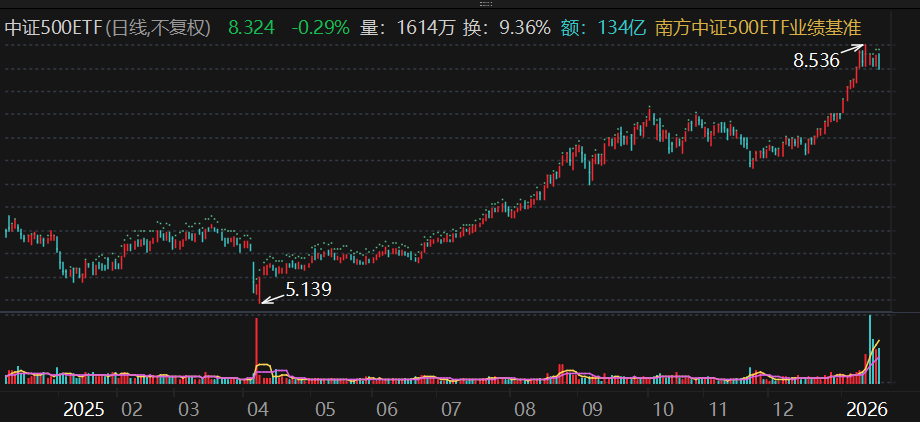
1月20日,部分宽基ETF继续放量成交。从近期ETF的资金流向看,宽基ETF频遭赎回,行业主题ETF强势吸金。从近四个交易日看, 宽基ETF净流出超2500亿元。 宽基ETF净流出超2500亿元 1月20日,部分宽基ETF成交继续放量,成交额处于相对高位。 具体来看,南方中证500ETF成交额为134亿元,高于1月19日的127亿元成交额。华泰柏瑞沪深300ETF成交额为136亿元,1月19日成 交额为138亿元。此外,华夏中证A500ETF、华泰柏瑞中证A500ETF成交额均超过140亿元。 从1月19日ETF的资金流向看,据Choice测算,股票型ETF单日净流出421.93亿元。其中,宽基ETF遭遇较多资金流出。 据统计,华泰柏瑞沪深300ETF、嘉实沪深300ETF、华夏沪深300ETF、易方达沪深300ETF合计净流出306.23亿元。此外,南方中证 1000ETF净流出52.25亿元,华夏上证50ETF净流出48.67亿元。易方达科创50ETF、华夏中证1000ETF、南方中证500ETF等净流出均 超30亿元。 从近四个交易日情况看,资金流向分化明显。1月14日-19日,宽基ETF净流出2563 ...
市场洞察:从工业控湿到家居防潮,除湿机如何适配全场景高湿难题?
Tou Bao Yan Jiu Yuan· 2026-01-20 12:36
Investment Rating - The report does not explicitly state an investment rating for the industry Core Insights - The dehumidifier market has evolved from a single-function device to a diverse product that addresses various air quality needs, with significant growth in applications across multiple sectors [2][7] - The household dehumidifier segment dominates the market, accounting for over 80% of total market share, driven by consumer demand for improved living conditions, especially in high-humidity regions of southern China [7] - The industrial dehumidifier market, while smaller, shows stable demand in specific sectors such as new energy, pharmaceuticals, and data centers, with a smaller decline in sales compared to household units [7] Summary by Sections Dehumidifier Types and Applications - Compression condensation dehumidifiers are the mainstream technology for household and commercial use, suitable for typical indoor environments [2] - Rotary dehumidifiers are used in low-temperature environments, ideal for laboratories and archives, but have higher energy consumption [3] - Household dehumidifiers focus on comfort and convenience, often featuring additional functions like air purification [4] - Commercial dehumidifiers are designed for durability and can service multiple areas, suitable for larger spaces like offices and hotels [5] - Industrial dehumidifiers are essential for maintaining optimal humidity in production environments, characterized by high stability and corrosion resistance [6] Regional Market Demand - In 2024, China's domestic and export markets for household dehumidifiers are projected to reach 1.526 million and 10.953 million units, respectively, with growth rates of 27.7% and 39.7% [11] - The export market is significantly larger than the domestic market, driven by differences in consumer habits and climate conditions [11] - The domestic market shows a clear regional disparity, with southern and eastern China accounting for over 50% of total shipments due to their high humidity climate [12] Impact of Lithium Battery Production - The expansion of lithium battery production is expected to drive demand for high-performance industrial dehumidifiers, as strict humidity control is critical in battery manufacturing processes [19] - The production of lithium batteries, particularly lithium iron phosphate batteries, has seen a significant increase, with a 71% year-on-year growth in installed capacity in the first half of 2025 [20] - The shift towards larger, centralized production lines necessitates more efficient and customized dehumidification solutions [20] Pharmaceutical Industry Trends - The pharmaceutical industry in China is experiencing steady growth, with revenue from large-scale enterprises projected to stabilize in 2024 [26] - Strict temperature and humidity control standards in pharmaceutical production and storage create significant opportunities for dehumidifier applications [27] - Future trends indicate a move towards high-precision, energy-efficient, and multifunctional dehumidifiers in the pharmaceutical sector, driven by technological advancements and increased quality demands [27]
人口对我国一级市场的影响
叫小宋 别叫总· 2026-01-20 09:46
Core Viewpoint - The article discusses the impact of declining population on both primary and secondary markets in China, highlighting the challenges and opportunities that arise from this demographic shift [1][2]. Group 1: Negative Aspects - Fundraising pressure is increasing as the population concentrates in a few large cities, putting financial strain on many smaller cities [4]. - Local governments are facing survival pressures, especially those relying on fundraising from smaller cities, as traditional fundraising methods may no longer be effective [5]. - The number of high-net-worth individuals around the age of 50 is rapidly declining, which poses challenges for wealth management institutions that rely on this demographic for fundraising [6]. - The decline in population will affect growth expectations across various industries, leading to a decrease in market valuations for listed companies. Investors are shifting their focus from growth expectations to cash flow security [7]. - Labor-intensive and traditional businesses will face multiple challenges regarding revenue, profit, cash flow, and valuation, necessitating a long-term adjustment across the industry [7]. - There may be an increase in preventive savings among residents, leading to a significant shift of funds from the secondary market back to banks [8]. - Overall demand growth is slowing, putting pressure on consumer sectors, which will see reduced growth potential and no longer command valuation premiums [9][10]. Group 2: Positive Aspects - Certain sectors are expected to benefit from demographic changes, including the silver economy, health care, single economy, self-care economy, innovative pharmaceuticals, and international expansion [11][12]. - The decline in population may lead the primary market to focus more on hard technology and high-end manufacturing, with products and services that can replace human labor being favored [14]. - The article suggests looking at Japan's aging population for insights into potential business changes and new market opportunities [12]. Group 3: Recommendations for Investment Managers - Investment managers in institutions affected by population decline should consider updating their resumes and exploring new job opportunities [16]. - Those not currently focused on hard technology should consider transitioning to this sector unless their current field has a strong competitive advantage [16]. - Utilizing AI tools can significantly enhance information collection and work efficiency, helping investment managers adapt to the changing landscape [17][18].



2025年中国批准上市创新药,30款已纳入医保
Bei Jing Ri Bao Ke Hu Duan· 2026-01-20 04:47
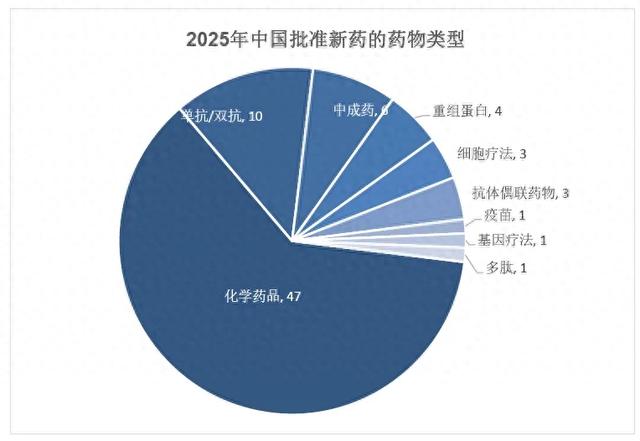
Core Insights - In 2025, the National Medical Products Administration approved 76 innovative drugs, marking a record high and showcasing a trend of diversified innovative therapies accelerating in China, significantly enriching clinical treatment options for domestic patients [1] Group 1: Drug Approval Overview - Among the approved drugs, 47 are chemical drugs, 23 are biological products (including 10 antibody drugs, 4 recombinant proteins, 3 cell gene therapies, 3 antibody-drug conjugates, 1 gene therapy, and 1 peptide), and 6 are traditional Chinese medicines [1] - The oncology sector remains the most concentrated area for new drug approvals, with 34 new drugs, including various types such as small molecules, monoclonal antibodies, and cell therapies [3] Group 2: Disease-Specific Drug Approvals - Breast cancer leads with 9 new drugs, including 3 CDK4/6 inhibitors and 2 CDK2/4/6 inhibitors, along with the first domestic AKT inhibitor and two antibody-drug conjugates targeting Trop2 and HER2 [3] - The field of infectious diseases saw significant approvals, including 4 influenza treatment drugs that target the influenza virus RNA polymerase PA subunit, which can alleviate medication shortages during peak flu seasons [6] - Immunological and metabolic diseases also saw a concentration of new approvals, with 8 and 7 new drugs respectively, including treatments for plaque psoriasis and type 2 diabetes [6] Group 3: Breakthrough Therapies - The quality of innovative drugs in the Chinese market has improved, with 17 of the approved drugs recognized as breakthrough therapies, indicating a significant advancement in both quantity and quality [7][11] - Notably, 12 of the new drugs are ranked first globally in their respective categories, and 31 are in the top three, reflecting China's leading position in drug development [7] Group 4: Insurance Coverage and Accessibility - The National Healthcare Security Administration has accelerated the inclusion of innovative drugs into the national insurance catalog, with 30 out of 43 new drugs approved in the first half of 2025 successfully entering the insurance directory, achieving a coverage rate of 70% [13] - This rapid inclusion is particularly significant for drugs addressing unmet clinical needs, such as the high-selectivity MEK1/2 inhibitor that covers rare tumors lacking standard treatment options [14][15] - The establishment of a commercial health insurance directory for innovative drugs further enhances accessibility, with two drugs from the 2025 approvals included, reducing out-of-pocket expenses for patients [16]
AI领衔,42家公司净利预增超100%
Xin Lang Cai Jing· 2026-01-20 04:33
Group 1 - The core viewpoint of the articles indicates that A-share listed companies are experiencing a significant increase in performance forecasts for 2025, driven primarily by the commercialization of AI technology and the rising prices and volumes of resource products like gold and copper [1][3][4] - As of January 19, 2025, 451 listed companies have disclosed their performance forecasts, with 156 companies expecting positive results. Among these, 42 companies anticipate a net profit growth of over 100% year-on-year [1] - Companies in the AI sector, such as DingTong Technology and Baiwei Storage, are projected to achieve substantial revenue and profit growth due to increased demand for AI-driven products and stabilization in storage prices [1][3] Group 2 - The mining sector is also showing strong performance, with companies like Luoyang Molybdenum and Zijin Mining expecting significant net profit increases due to effective operational management and rising commodity prices [3] - Other innovative sectors, including semiconductors, innovative pharmaceuticals, and commercial aerospace, are gaining market attention, with companies like Haopeng Technology forecasting substantial profit growth through advancements in AI hardware applications [3][4] - Analysts note that the profitability structure of A-share companies is positively changing, with AI technology moving from concept to tangible performance contributions, indicating a reshaping of the industry landscape [4]