
南向资金

Search documents
9月4日恒生指数收盘下跌1.12%,南向资金当日净流入7.06亿港元
Mei Ri Jing Ji Xin Wen· 2025-09-04 08:21
Market Performance - The Hang Seng Index closed at 25,058.51 points, down by 284.92 points, representing a decline of 1.12% [1][2] - The National Enterprises Index closed at 8,937.09 points, down by 112.93 points, with a decrease of 1.25% [1][2] - The Red Chip Index closed at 4,201.16 points, down by 29.58 points, reflecting a drop of 0.7% [1][2] Capital Flow - Southbound capital recorded a net inflow of 706 million HKD on the same day [1]


南向资金净流入规模突破万亿港元说明什么
Zheng Quan Ri Bao· 2025-09-03 16:21
Group 1 - The Hang Seng Index successfully maintained above the 25,000-point mark, with a strong inflow of southbound funds amounting to HKD 5.508 billion on September 3, 2023 [1] - Year-to-date net inflow of southbound funds has surpassed HKD 1 trillion, reaching approximately HKD 1,005.729 billion [1] - Southbound funds have become a key driver for enhancing liquidity in the Hong Kong stock market, with average daily trading volume in the first half of 2025 reaching HKD 111 billion, nearly three times that of the first half of 2024 [2] Group 2 - Southbound funds show a clear investment preference for high dividend, low valuation, and high growth sectors, with 81 stocks having over 20% ownership by southbound funds, primarily in healthcare, finance, industrial, and information technology [2] - The shift in southbound fund holdings from technology in Q1 to new consumption in Q2, and recently to healthcare and finance, indicates an increase in strategic allocation by mainland investors in the Hong Kong stock market [3] - The Hong Kong market features scarce high-quality assets, attracting more long-term investments from southbound funds, with 13 out of 59 newly listed stocks this year already included in the southbound trading scheme, focusing on popular sectors like consumption, technology, and pharmaceuticals [3]
南向资金年内增持前10个股曝光
21世纪经济报道· 2025-09-03 14:41
Core Viewpoint - The article highlights the significant inflow of southbound capital into the Hong Kong stock market, surpassing 1 trillion HKD in net inflows for the year, marking a new high since the launch of the Hong Kong Stock Connect in 2014 [1][4]. Group 1: Southbound Capital Inflows - As of September 2, 2023, the net inflow of southbound capital reached approximately 1 trillion HKD, a record high since the Hong Kong Stock Connect was established [1][4]. - Since the launch of the Stock Connect on November 17, 2014, the total net inflow of southbound capital has reached 4.7 trillion HKD, indicating a consistent demand from mainland investors for Hong Kong stocks [4]. - The daily trading volume of southbound capital has increased from about 5% at the beginning of the Stock Connect to around 36% currently, providing substantial liquidity to the Hong Kong market [5]. Group 2: Reasons for Capital Inflow - The significant valuation advantage and unique investment targets in the Hong Kong market are attracting southbound capital, with notable interest in large tech stocks and new consumer sectors [6]. - High dividend yields in certain sectors and stocks are appealing to institutional investors seeking stable cash flows and returns, supported by policy tools from the central bank [6]. - The revitalization of the Hong Kong IPO market and favorable policy dividends are also contributing to the ongoing influx of southbound capital [6]. Group 3: Investment Trends - The top ten stocks with the highest net purchases by southbound capital this year include Alibaba, Tencent, and Meituan, with Alibaba alone seeing a net buy of 12.67 billion HKD [8]. - Southbound capital is primarily concentrated in sectors such as finance, technology, and biomedicine, driven by the stability of financial stocks, the growth potential of tech stocks, and the innovation capabilities of the biomedicine sector [8]. - The influx of southbound capital is enhancing the influence of mainland funds on the pricing of Hong Kong stocks and shifting the market's focus towards high-growth sectors like technology [8][9]. Group 4: Market Dynamics - The shift in the investment landscape of the Hong Kong market is evident, with southbound capital now being driven by professional institutions rather than retail investors, leading to improved research capabilities and value discovery [9][10]. - The allocation of active equity mixed funds towards Hong Kong stocks has increased, indicating a growing preference for this market among institutional investors [10]. - The potential for a significant performance phase in the Hong Kong market is anticipated if the US dollar enters a depreciation phase, coupled with expectations of interest rate cuts by the Federal Reserve [11].






南向资金今日净买入55.08亿港元,阿里巴巴-W净买入24.89亿港元
Zheng Quan Shi Bao Wang· 2025-09-03 14:22
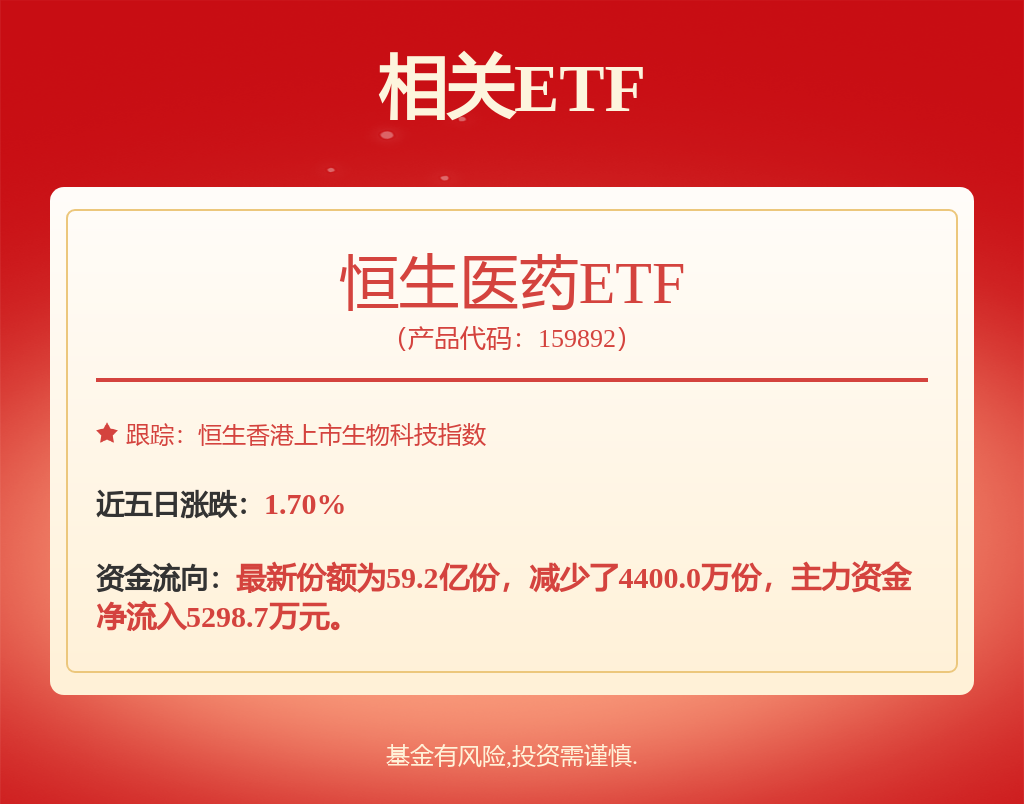
(原标题:南向资金今日净买入55.08亿港元,阿里巴巴-W净买入24.89亿港元) (产品代码:159892) 9月3日南向资金成交活跃股 | 代码 | 简称 | 成交金额 | 成交净买入 | 今日涨跌幅(%) | | --- | --- | --- | --- | --- | | | | (万港元) | (万港元) | | | 09988 阿里巴巴-W | | | 864379.32 248887.52 | -0.45 | | 01810 小米集团-W | | 440126.41 | 69852.59 | -2.06 | | 03690 | 美团-W | 200603.42 | 57030.64 | -0.59 | | 06869 长飞光纤光缆 | | 304526.86 | 36433.08 | 12.61 | | 01093 | 石药集团 | 73144.24 | 35803.57 | 4.47 | | 09880 | 优必选 | 105478.53 | 8925.07 | -1.99 | | 02228 | 晶泰控股 | 112841.21 | 4334.29 | 2.03 | | 02269 | 药 ...
9月3日南向资金ETF成交额11.02亿港元
Zheng Quan Shi Bao Wang· 2025-09-03 14:05
今日(9月3日)南向资金ETF买入及卖出成交额为11.02亿港元,较前一日减少38.55亿港元,占南向资 金今日成交额的0.95%。 注:本文系新闻报道,不构成投资建议,股市有风险,投资需谨慎。 (文章来源:证券时报网) 港股通(沪)(亿港元) 7.21 港股通(深)(亿港元) 3.80 港股通合计(亿港元) 11.02 具体来看,港股通(沪)ETF买入及卖出成交额7.21亿港元,港股通(深)ETF买入及卖出成交额3.80 亿港元。(数据宝) 南向资金ETF买入及卖出成交额 ...
今年南向资金净买入预计超1万亿港元,关注恒生科技ETF易方达(513010)等产品配置价值
Sou Hu Cai Jing· 2025-09-03 13:20
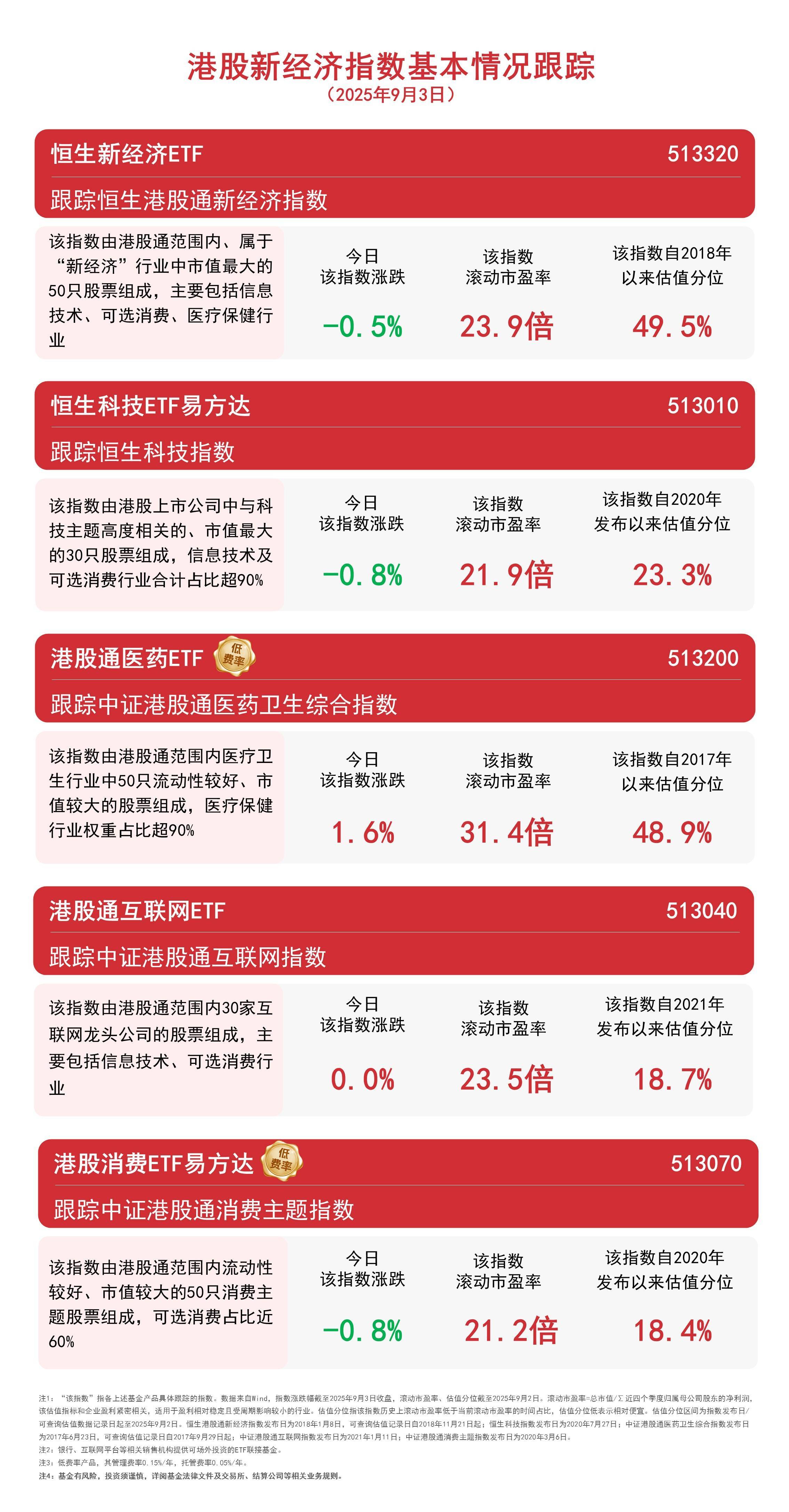
Group 1 - The overall performance of the Hong Kong stock market showed a high opening followed by a decline, with the pharmaceutical sector rising against the trend, as evidenced by the CSI Hong Kong Stock Connect Pharmaceutical and Health Index increasing by 1.6% [1] - The CSI Hong Kong Stock Connect Internet Index saw a slight increase of 0.02%, while the Hang Seng New Economy Index and the Hang Seng Technology Index fell by 0.5% and 0.8% respectively [1] - The total trading volume of the E Fund Hang Seng Technology ETF reached nearly 1.5 billion yuan for the day [1] Group 2 - As of yesterday, the cumulative net inflow of southbound funds has exceeded 1 trillion Hong Kong dollars this year, setting a new annual record [1] - Goldman Sachs has raised its forecast for the total annual southbound fund inflow for 2025 from 110 billion USD to 160 billion USD, approximately 1.25 trillion Hong Kong dollars [1]
南向资金“扫货”港股 年内净流入超万亿港元
2 1 Shi Ji Jing Ji Bao Dao· 2025-09-03 12:41
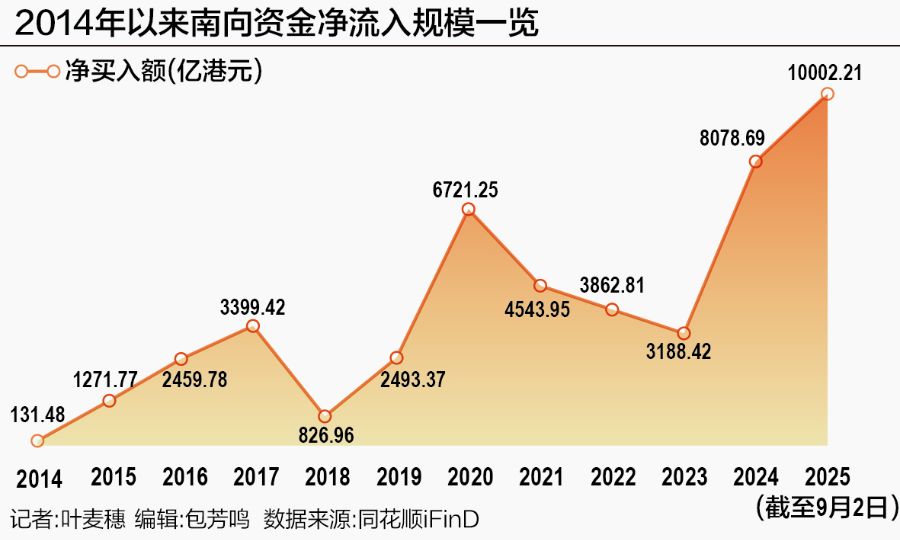
资金正在快速流入港股,今年以来,南向资金净流入额超万亿港元。 同花顺数据显示,截至9月2日收盘,当日南向资金净流入92.81亿港元。至此,年内南向资金净流入规模约10002.21亿港元,超 过万亿港元,创2014年港股通开通以来的新高。 南向资金净流入突破1万亿港元 自2014年11月17日沪港通开通以来,互联互通机制持续平稳运行,南向资金净流入港股市场合计达4.7万亿港元。从2015年至 今,南向资金始终保持净流入状态,表明内地投资者对港股市场有着持续增强的配置需求。 随着资金南下,港股的投资格局也发生了变化。银河证券策略首席分析师杨超表示,南向资金有望持续涌入港股,改变和优化 港股的投资结构和估值逻辑。"2025年,港股市场迎来科技创新驱动与资金流入的共振窗口期,港股市场在估值中枢修复与盈利 预期改善的双轮驱动下,具备较大的收益空间。科技创新集群效应与新质生产力要素的加速融合,推动了我国产业结构向全球 价值链高端跃迁。南向资金的涌入,是对中国经济未来产业方向进行长期战略配置的体现。"他表示。 互联互通机制开通初期,南向资金净流入规模相对较小,呈现波动上升趋势。2015年,南向资金净流入港股市场的规模为 1 ...
南向资金“扫货”港股,年内净流入超万亿港元
2 1 Shi Ji Jing Ji Bao Dao· 2025-09-03 12:35
Core Insights - Southbound capital inflow into Hong Kong stocks has exceeded 1 trillion HKD this year, marking a record high since the launch of the Hong Kong Stock Connect in 2014 [1][3] - The continuous net inflow of southbound funds indicates a growing demand from mainland investors for Hong Kong stocks, with a total inflow of approximately 4.7 trillion HKD since the launch of the Stock Connect [3] Inflow Trends - As of September 2, 2023, the net inflow of southbound funds reached approximately 1,000.22 billion HKD, with a single-day inflow of 9.281 billion HKD [1][3] - The annual net inflow has shown a consistent upward trend, with significant increases noted in 2015 (127.18 billion HKD), 2017 (339.94 billion HKD), and peaks in 2020 (672.13 billion HKD) and 2021 (454.39 billion HKD) [3] Market Dynamics - Goldman Sachs has raised its forecast for southbound capital inflow in 2025 from 110 billion USD to 160 billion USD, approximately 1.25 trillion HKD [4] - The daily trading volume of southbound funds has increased from around 5% at the beginning of the Stock Connect to approximately 36% currently, indicating enhanced liquidity in the Hong Kong market [4] Investment Preferences - Key factors driving the inflow include the valuation advantages of Hong Kong stocks, high dividend yields, and unique investment opportunities in sectors like technology and new consumption [5] - The top ten stocks with the highest net purchases by southbound funds include Alibaba, Tencent, and Meituan, reflecting a preference for companies with global competitiveness and stable cash flows [6] Sector Focus - Southbound funds are primarily concentrated in the financial, technology, and biopharmaceutical sectors, driven by stable dividend yields, low valuations, and strong growth potential [7] - The influx of southbound capital is reshaping the investment landscape in Hong Kong, enhancing the influence of mainland investors on market pricing and expectations [7][8] Future Outlook - Analysts predict that the Hong Kong market will experience a significant growth phase driven by technological innovation and capital inflow, with a potential recovery in valuation and profit expectations [8] - The shift from retail to institutional investors in southbound capital is expected to enhance the professional investment capabilities and value discovery in the market [9]
兴业证券张忆东:南向资金改写定价逻辑 港股中长期上涨趋势确立
Zhong Guo Zheng Quan Bao· 2025-09-03 02:04
Core Viewpoint - The A-share and Hong Kong stock markets are experiencing a rare "alternating leadership" trend in 2024, breaking the traditional correlation model, with a significant influx of southbound capital reshaping the pricing logic of the Hong Kong market [1][2]. Group 1: Market Dynamics - The southbound capital inflow is gradually reconstructing the pricing logic of the Hong Kong stock market, moving from an "offshore market dominated by foreign capital" to a more "onshore" structure led by domestic capital [2][3]. - In the first quarter of 2024, the Hong Kong stock market began a reversal trend, with the Hang Seng Index's quarterly increase outpacing major A-share indices, continuing this lead until the "924" market [2][3]. - By mid-2025, the Hong Kong market is expected to outperform the A-share market, with sectors like the internet, new consumption, and innovative pharmaceuticals showing structural performance [2][3]. Group 2: Capital Structure and Investment Trends - The influx of southbound capital is driven by improved market conditions and the listing of quality companies in Hong Kong, enhancing market vitality [3][4]. - As of December 31, 2024, the circulation market value of the consumer, technology, and healthcare sectors in the Hong Kong market reached HKD 169,052 million, accounting for 49.0% of the total market value, which increased to 52.3% by August 25, 2025 [3]. - The investment style of southbound capital is shifting towards growth, with significant inflows into non-essential consumption and information technology sectors, which together attracted 70% of the southbound capital [4][5]. Group 3: Valuation and Market Sentiment - The current valuation of the Hong Kong stock market presents a significant cost-performance advantage, with the Hang Seng Index's valuation notably lower than that of major global indices like the S&P 500 and Nikkei 225 [7]. - The market is expected to see a recovery in valuations, especially if the Federal Reserve lowers interest rates, which would reduce short-selling pressure on Hong Kong stocks [7]. - The basic expectations for the Hong Kong market are improving, with recent regulatory changes aimed at curbing unhealthy competition in the internet sector, potentially leading to better performance for major internet companies [7][8]. Group 4: Investment Opportunities - The Hong Kong market is currently in a key window of multiple positive factors, suggesting a potential new upward trend in the fourth quarter of 2025 [8]. - Key investment themes include technology, consumption, dividends, and innovative pharmaceuticals, with a focus on companies that can sustain growth and market share [8][9]. - Specific sectors to watch include domestic computing chips, semiconductor equipment, and applications benefiting from digital transformation, as well as high-dividend sectors like finance and utilities [9][10].

南向资金净流入站上万亿港元关口 重仓腾讯控股、阿里巴巴等公司
Shang Hai Zheng Quan Bao· 2025-09-03 01:40
Core Viewpoint - The Hong Kong stock market is experiencing increased trading activity and stability, supported by significant inflows of southbound capital, which have reached a historical high of over 1 trillion Hong Kong dollars this year [1][3]. Group 1: Southbound Capital Inflows - As of September 2, 2023, the cumulative net inflow of southbound capital has surpassed 1 trillion Hong Kong dollars, reaching 10,002.21 million Hong Kong dollars, marking a record high [1]. - Daily trading volume of southbound capital has increased from approximately 5% at the beginning of the Hong Kong-Shanghai Stock Connect to around 35% currently, enhancing market liquidity and altering investment structures [1]. - Since the launch of the Stock Connect mechanism in November 2014, total southbound capital inflows have reached 4.7 trillion Hong Kong dollars, with a consistent net inflow trend observed since 2015 [3][4]. Group 2: Investment Preferences - The top ten stocks with the largest increase in market value held by southbound capital include Tencent Holdings, Alibaba, and others, with significant increases in market value ranging from 391.4 million to 2,169.2 million Hong Kong dollars [2]. - Southbound capital is primarily focused on globally competitive internet companies, stable cash flow value stocks with generous dividends, and innovative biopharmaceutical companies [2]. - The preference for high-dividend assets has led to significant valuation improvements in sectors such as finance, energy, and telecommunications over the past two years [2]. Group 3: Market Dynamics and Future Outlook - The influx of southbound capital has transformed the Hong Kong stock market into a core market for global investors seeking to allocate "Chinese assets," influencing market styles, sector rotations, and individual stock performances [5]. - The trend of increasing southbound capital inflows is expected to continue, driven by the valuation discrepancies between A-shares and H-shares, with investors favoring lower-priced Hong Kong stocks for similar dividend returns [4][6]. - The shift from retail to institutional dominance in southbound capital has enhanced the professional investment capabilities and value discovery functions within the Hong Kong market [6].
