
大数据

Search documents
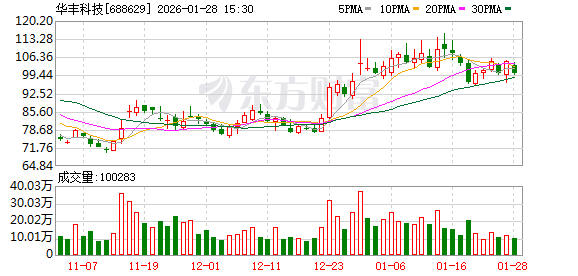
华丰科技:预计2025年净利润3.38亿元至3.88亿元
Ge Long Hui· 2026-01-28 10:37
报告期内,人工智能、云计算与大数据技术的融合,驱动数据中心建设热潮,直接拉动了交换机、AI 服务器及核心路由器等关键设备需求,进而传导至上游,带动公司产品收入快速增长。 格隆汇1月28日丨华丰科技(688629.SH)公布,经财务部门初步测算,预计2025年年度实现归属于母公司 所有者的净利润与上年同期(法定披露数据)相比,将实现扭亏为盈,实现归属于母公司所有者的净利 润33,800万元到38,800万元,将增加35,575.05万元到40,575.05万元。预计归属于母公司所有者扣除非经 常性损益后的净利润30,200万元到35,200万元,与上年同期(法定披露数据)相比,将增加38,026.18万 元到43,026.18万元。 ...
华丰科技:预计2025年净利润3.38亿元-3.88亿元 同比扭亏为盈
Mei Ri Jing Ji Xin Wen· 2026-01-28 10:03
(文章来源:每日经济新闻) 每经AI快讯,1月28日,华丰科技(688629.SH)公告称,预计2025年归属于母公司所有者的净利润为3.38 亿元至3.88亿元,同比扭亏为盈。报告期内,人工智能、云计算与大数据技术的融合,驱动数据中心建 设热潮,直接拉动了交换机、AI服务器及核心路由器等关键设备需求,进而传导至上游,带动公司产 品收入快速增长。 ...

恒华科技:公司研发出了三维建模引擎等核心技术平台
Zheng Quan Ri Bao Wang· 2026-01-28 09:49
Core Viewpoint - Henghua Technology (300365) is positioned as a "BIM platform software and industry digital application service provider," focusing on the digital transformation needs across various industries [1] Group 1: Technology Development - The company has been integrating its core BIM technology with big data, IoT, cloud computing, and artificial intelligence [1] - After years of R&D and experience accumulation in the power industry, the company has developed several core technology platforms, including the 3D modeling engine (DH3D), artificial intelligence engine (AI-Engine), 3D digital earth platform (DHGlobe), GIM engine platform (GIMEngine), IoT platform, and rapid application development platform [1]

华丰科技:预计2025年净利润3.38亿元-3.88亿元
Xin Lang Cai Jing· 2026-01-28 09:43
华丰科技公告,预计2025年年度实现归属于母公司所有者的净利润3.38亿元到3.88亿元,与上年同期相 比,将增加3.56亿元到4.06亿元。预计归属于母公司所有者扣除非经常性损益后的净利润3.02亿元到3.52 亿元,与上年同期相比,将增加3.8亿元到4.3亿元。2024年度公司利润总额为-2697.8万元,归属于母公 司所有者的净利润为-1775.05万元,归属于母公司所有者的扣除非经常性损益的净利润为-7826.18万 元。本期业绩变化的主要原因为报告期内,人工智能、云计算与大数据技术的融合,驱动数据中心建设 热潮,直接拉动了交换机、AI服务器及核心路由器等关键设备需求,进而传导至上游,带动公司产品 收入快速增长。 ...
望京争锋:嘉美中心如何在北京写字楼“租户为王”时代,为企业锚定价值高地?
Sou Hu Cai Jing· 2026-01-28 08:15
Core Insights - The article discusses the transformation of Beijing's office market by 2025, highlighting a shift towards tenant-centric dynamics with declining rents and increased tenant bargaining power [1] Group 1: Macro Perspective - The Beijing Grade A office market is experiencing significant structural differentiation, with average monthly rents dropping to **210 RMB** per square meter, a **16.3%** year-on-year decline [1] - Despite overall market challenges, there are clear optimization opportunities emerging [1] Group 2: Demand Dynamics - The TMT (Technology, Media, Telecommunications) sector remains the leading demand driver, accounting for **31%** of the market, with hard tech fields like AI and big data continuing to thrive [2] - The overall vacancy rate in Beijing has decreased to **19.7%**, but there is a stark contrast in performance across regions, with areas like Wangjing showing strong tenant movement [2] - Corporate decision-making is now driven by cost, quality, and sustainability considerations, moving beyond mere location [2] Group 3: Regional Value - Wangjing has evolved into a "second CBD" alongside Zhongguancun, driven by a shift from traditional manufacturing to a cluster of new productivity sectors like AI and healthcare [3] - The area is becoming a key node in a world-class consumer landscape, supported by a robust commercial network and new consumer experiences [3] - Wangjing's transportation infrastructure, including the intersection of multiple subway lines, enhances its connectivity to key business areas [4] Group 4: Project Analysis - The Jiamei Center, operational since 2018, serves as a "value stabilizer" in the Wangjing business district, offering a mature leasing environment [5] - The project features a **26-story** structure with flexible space options and high-quality amenities, ensuring a superior office experience [6] - Its integration with commercial facilities provides convenience for employees, enhancing overall satisfaction and reducing commuting costs [6] Group 5: Decision-Making Insights - Companies should leverage their negotiating power in the current market, focusing on comprehensive terms rather than just rent [7] - Total Cost of Ownership (TCO) should be considered, emphasizing the long-term value of well-managed properties like Jiamei Center [7] - Investing in assets with scarcity and resilience is crucial, as these properties demonstrate stronger rental stability and asset preservation [8] Conclusion - Wangjing's robust industrial foundation and vibrant consumer activity position it as a critical growth engine for Beijing's economy, with Jiamei Center offering a reliable value anchor for businesses seeking long-term development [9]
以“宣讲+”推进理论与青年深度连接
Xin Lang Cai Jing· 2026-01-28 04:17
Core Viewpoint - The article emphasizes the importance of adapting the dissemination of the Party's innovative theories to engage the youth effectively, addressing their unique characteristics and needs in the modern context [1][2][3]. Group 1: Theoretical Engagement with Youth - The youth are described as "digital natives" and "social forces," requiring a new approach to theoretical dissemination that resonates with their active thinking and diverse needs [1]. - The "宣讲+" approach aims to create a deeply integrated theoretical communication system that responds to youth concerns and embeds theory into their daily lives [1][2]. - The need to transform traditional theoretical discussions, which often feel disconnected from youth realities, into relatable themes that can serve as keys to resolving their confusions is highlighted [1][2]. Group 2: Utilizing Social Hotspots - Social hotspots are identified as critical entry points for youth to understand the world, providing a rich context for theoretical interpretation [2]. - Examples include using trending topics like "internet celebrity phenomena" to discuss mainstream value guidance and "cultural confidence" through the rise of domestic brands [2]. - This dual interaction between current events and theory aims to make theoretical concepts feel relevant and engaging for the youth [2]. Group 3: Addressing Real-World Challenges - The article discusses how real-life challenges faced by youth, such as career choices and existential anxieties, can serve as focal points for theoretical discussions [2]. - Theories that emerge from practical experiences and guide actions can create a closed loop of addressing difficulties, gaining recognition and enthusiasm from the youth [2]. Group 4: Overcoming Cognitive Barriers - The youth's cognitive confusion often stems from misconceptions about traditional values and the relationship between personal and societal interests [3]. - The article suggests that theoretical discussions should aim to clarify these misconceptions and promote consensus among youth [3]. - The use of relatable examples to address common dilemmas faced by youth is proposed as a method to enhance understanding and engagement [3]. Group 5: Creating Engaging Scenarios - The importance of embedding theoretical discussions into everyday scenarios that youth encounter is emphasized [4]. - Examples include integrating theory into classroom settings, research environments, and community discussions to make learning more natural and impactful [4]. - Immersive experiences, such as role-playing and simulations, are suggested to transform youth from passive listeners to active participants in theoretical learning [4]. Group 6: Digital Integration and Innovation - The article highlights the necessity of embracing technological advancements to enhance theoretical dissemination, particularly through digital platforms [5][6]. - Interactive and engaging formats, such as virtual reality and augmented reality, are proposed to make theoretical concepts more accessible and appealing to the youth [5][6]. - The use of AI and big data to personalize content delivery and create a more engaging theoretical experience is also discussed [6].
重塑海上出行:当船舶装上 “电动心脏” 与 “AI 大脑”|OpenTalk直播预告
3 6 Ke· 2026-01-28 03:19
Group 1 - The marine industry is transitioning from "scale expansion" to "quality and efficiency improvement" as it approaches a GDP of over 10 trillion yuan in 2024 and integrates marine technology into national planning in 2025 [2] - Emerging fields such as deep-sea technology, marine renewable energy, and smart oceans are showing strong growth, with innovations like offshore wind power, underwater data centers, and underwater robots expanding the boundaries of the marine economy [2] - The industry is developing a comprehensive ecosystem from "undersea resource exploration to marine energy development and offshore equipment manufacturing," supported by the integration of AI and big data technologies [2] Group 2 - The shipbuilding sector is a key focus within the marine industry, maintaining a leading position in global ship manufacturing since 2010 while advancing towards greener and smarter vessels [2] - Breakthroughs in smart ship systems include autonomous navigation in narrow waterways and remote control from shore, although challenges remain such as sensor accuracy in complex sea conditions and cybersecurity vulnerabilities [2] - Electric vessels face core issues related to power endurance and high-pressure system safety that need to be addressed for broader adoption [2]

奥飞数据涨2.50%,成交额7.82亿元,主力资金净流出156.37万元
Xin Lang Cai Jing· 2026-01-28 02:14
Core Viewpoint - Aofei Data has shown significant stock price growth and financial performance improvements, indicating a positive outlook for the company in the internet data center and comprehensive internet services sector. Group 1: Stock Performance - On January 28, Aofei Data's stock rose by 2.50%, reaching 24.18 CNY per share, with a trading volume of 782 million CNY and a turnover rate of 3.33%, resulting in a total market capitalization of 23.822 billion CNY [1] - Year-to-date, Aofei Data's stock price has increased by 30.77%, with a 14.27% rise over the last five trading days, 30.42% over the last 20 days, and 19.53% over the last 60 days [1] Group 2: Financial Performance - For the period from January to September 2025, Aofei Data achieved a revenue of 1.824 billion CNY, representing a year-on-year growth of 15.33%, and a net profit attributable to shareholders of 145 million CNY, which is a 37.29% increase compared to the previous year [2] - Since its A-share listing, Aofei Data has distributed a total of 113 million CNY in dividends, with 52.934 million CNY distributed over the past three years [3] Group 3: Shareholder Structure - As of September 30, 2025, Aofei Data had 113,600 shareholders, an increase of 9.06% from the previous period, with an average of 8,667 circulating shares per shareholder, down by 8.31% [2] - The top ten circulating shareholders include Hong Kong Central Clearing Limited as the second-largest shareholder with 12.9293 million shares, a decrease of 777,700 shares from the previous period [3]

破解医药研发九死一生困局!省人大代表李小军:建立容错机制
Nan Fang Du Shi Bao· 2026-01-28 01:24
Core Viewpoint - The Guangdong Provincial People's Congress is focusing on "unbinding" the biopharmaceutical industry to effectively stimulate new productive forces in the sector [2] Group 1: Innovation Assessment Mechanism - The company suggests utilizing big data and AI technologies to explore a market-matching valuation mechanism for assessing innovative pharmaceutical research and development projects [2][4] - A comprehensive evaluation guideline for different stages of biopharmaceutical research projects is recommended, along with a dynamic adjustment mechanism for asset valuation based on emerging technologies and market changes [4] Group 2: Talent Recruitment Mechanism - The company proposes establishing offshore talent recruitment stations in global pharmaceutical hubs to attract top-tier talent, including Nobel laureates and leading scientists [5] - A market-oriented evaluation approach is suggested to give companies greater autonomy in talent assessment, linking individual growth with the long-term development of Guangdong's biopharmaceutical industry [5] Group 3: Error Tolerance Mechanism - The establishment of a systematic error tolerance mechanism at the provincial level is recommended to encourage innovation in the biopharmaceutical sector, which is characterized by high investment, long cycles, and high risks [8][9] - Specific measures include defining tolerable and intolerable errors, setting loss tolerance gradients based on company development stages, and enhancing assessment weights for research investment during strategic transitions [8][9] Group 4: Financial Support for Innovation - The company suggests setting up a provincial innovation risk compensation fund to provide subsidies for failed R&D projects and support banks in offering credit to companies with error tolerance records [9] - A commitment of 10-15 billion yuan for R&D during the 14th Five-Year Plan period has been announced, with over 200 ongoing projects in various therapeutic areas [9]
瀚鑫信息科技(南通)有限公司成立,注册资本2000万人民币
Sou Hu Cai Jing· 2026-01-28 01:11
来源:市场资讯 天眼查显示,近日,瀚鑫信息科技(南通)有限公司成立,法定代表人为郭俊,注册资本2000万人民 币,由江苏瀚鑫科技集团有限公司全资持股。 企业名称瀚鑫信息科技(南通)有限公司法定代表人郭俊注册资本2000万人民币国标行业信息传输、软 件和信息技术服务业>软件和信息技术服务业>软件开发地址江苏省南通市开发区小海街道崇州大道60 号紫琅科技城11号楼3层众创空间119(集群登记)企业类型有限责任公司(自然人投资或控股的法人独 资)营业期限2026-1-27至无固定期限登记机关南通市经济技术开发区行政审批局 序号股东名称持股比例1江苏瀚鑫科技集团有限公司100% 经营范围含软件开发;软件销售;信息技术咨询服务;信息系统集成服务;信息系统运行维护服务;信 息咨询服务(不含许可类信息咨询服务);人工智能公共服务平台技术咨询服务;人工智能公共数据平 台;人工智能通用应用系统;人工智能基础资源与技术平台;人工智能行业应用系统集成服务;工业互 联网数据服务;工业控制计算机及系统销售;云计算装备技术服务;计算机系统服务;智能控制系统集 成;大数据服务;互联网数据服务;软件外包服务;信息安全设备销售;网络与信息安全 ...