
中性利率

Search documents
贝森特:鲍威尔本应发出100至150个基点降息的信号
Sou Hu Cai Jing· 2025-09-24 12:34
Core Viewpoint - The U.S. Treasury Secretary suggests that the Federal Reserve's interest rates have been too high for too long and anticipates a shift towards a loosening cycle [1] Group 1: Federal Reserve Insights - The Treasury Secretary expresses surprise that Fed Chair Powell has not indicated a target for interest rates [1] - There is an expectation for a signal of a 100 to 150 basis point rate cut from Powell [1] - The need to lower rates to at least a neutral level is emphasized, with a belief that inflation will significantly decrease [1] Group 2: Economic Developments in Argentina - The U.S. is collaborating with Argentina to end tax incentives for commodity producers exchanging foreign currency [1] - The U.S. is prepared to purchase Argentine dollar bonds and provide substantial standby credit through a foreign exchange stabilization fund [1] - Negotiations are ongoing with Argentine officials regarding a $20 billion swap line with the Argentine central bank [1]
DLSM外汇平台:美联储会否加快降息步伐?古尔斯比强调耐心与渐进
Sou Hu Cai Jing· 2025-09-24 03:34
芝加哥联储主席古尔斯比(Austan Goolsbee)于本周二发表讲话,在经济增长放缓与就业市场疲软的双重挑战下,强调美联储需在降息路径上保持战略耐 心。尽管他上周与FOMC多数委员共同投票支持降息,将联邦基金利率目标区间下调至4%–4.25%,但他也指出,未来的利率决策仍将高度依赖经济数据的 演变。 视 157 i 古尔斯比认为,当前政策的关键在于将利率调整至"中性水平",即既不抑制经济增长也不引发通胀压力的平衡点。 根据FOMC最新发布的点阵图,委员们对中性利率的预估中值约为3.1%,古尔斯比对此表示认同。这意味着当前利率水平仍高于中性区间约1个百分点,为 后续降息提供了政策空间。 他特别指出,尽管近期通胀有小幅回落,但过去四年半以来物价持续高于美联储2%的目标,且近期受关税政策影响仍存在不确定性。在启动降息周期的初 期阶段,步伐不宜过快,而应采取渐进策略,以避免政策过度宽松带来的风险。 除了通胀,劳动力市场表现亦是政策调整的重要参考。尽管当前失业率维持在4.3%的低位,但招聘节奏已呈现放缓迹象。为更精准地评估就业形势,芝加 哥联储于同日推出了新型劳动力市场监测系统,整合11类高频数据,实时追踪失业率预 ...


金价大转向,25年9月20日黄金大涨,终结两日跌势带来投资新机遇
Sou Hu Cai Jing· 2025-09-23 23:41
市场震荡,黄金价"过山车":降息预期与央行措辞的拉锯战 2025年9月20日,黄金市场上演了一场惊心动魄的"过山车"。交易大厅里,买卖双方的心情如同被释放的野猫,既充满期待又焦躁不安。 一边是市场对降息的殷切期盼,另一边则是对美联储措辞的谨慎戒备,这种复杂情绪交织,将整个市场搅得天翻地覆。 当日纽约尾盘,现货黄金价格触及3684.93美元/盎司,劲扬1.12%;期货黄金亦跟随攀升至3719.42美元/盎司,涨幅同样为1.12%。这一波 上涨,让本周黄金累计涨幅逼近1%。表面上看,这似乎是一次漂亮的"失地收复",然而,深入剖析,却能发现其中暗流涌动,支撑并不 稳固。正如一位在场内进行日内交易的操盘手私下透露:"涨幅数据很好看,但筹码并不干净。"他话语中流露出的不安与庆幸,正是市 场真实写照的缩影。 回溯至9月17日,美联储如期宣布降息25个基点,将联邦基金利率下调至4.00%—4.25%区间。本应成为黄金的重大利好,因为降低名义 利率通常会压低持有美元的机会成本,从而提振金价。事实也如预期般,黄金盘中一度飙升至3707美元,创下历史新高。然而,好景不 不长,随后的两个交易日,金价出现连续回吐,短线大幅下挫。这是 ...
风向变了!美联储内部分歧加剧,交易员紧急削减降息押注
智通财经网· 2025-09-23 23:30
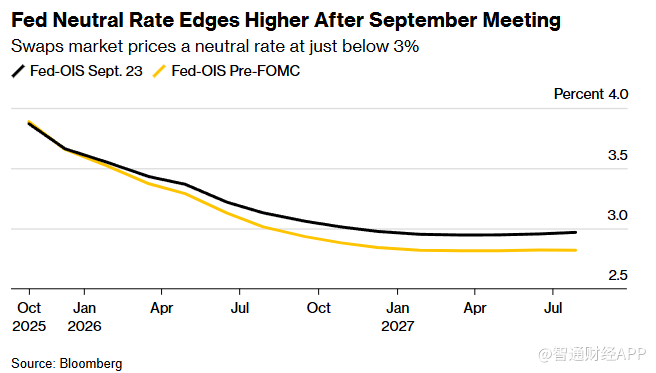
智通财经APP获悉,交易员们正在降低对美联储未来数月降息幅度的预期,这一转变表明,美联储官员 们发出的混乱信息已经影响了人们对货币政策的预期。 与担保隔夜融资利率挂钩的期权显示,市场参与者押注美联储在2025年仅再降息25个基点,且所谓的中 性利率(即既不刺激也不抑制经济增长的利率水平)高于当前市场预期。这与上周形成了鲜明对比,当时 市场对年底前降息50个基点的预期升温。 中性利率预期在美联储9月会议后小幅上升 美联储上周将政策利率下调至4%至4.25%的区间,这是该机构今年的首次降息。 此次会议之后的几天里,大量交易瞄准的利率变动幅度低于目前掉期市场所定价的约两次25个基点的变 动幅度。从更长远的时间来看,期权市场还出现了暗示中性利率接近3%的交易。 利率互换市场目前预计中性利率约为2.95%,并预计今年剩余两次会议总共降息约40个基点。 美联储官员最近几周发表的更广泛的货币政策观点推动了这种转变,交易员纷纷对冲美联储大幅降息和 降息幅度较小的情景。 新任美联储理事斯蒂芬·米兰本周表示,政策目前仍过于紧缩,并主张在2025年剩余的两次联邦公开市 场委员会(FOMC)会议上将利率下调125个基点。而亚特兰大联 ...
Chicago Fed President Goolsbee: We need to be careful with getting overly aggressive on rate cuts
Youtube· 2025-09-23 13:21
The Chicago Fed introducing new labor market indicators this morning that com combine private sector data with official labor statistics for a real time view of hiring layoffs uh and other job information. And join us now Chicago Fed President Austin Goulby. We How you doing, Mr.. President. It's good good to have you on. We got some new data.I'm excited. And you know why I like it. because, you know, say what you will about, you know, the big kurfuffle with the the BLS firing and all that stuff.It did high ...

美联储Goolsbee:中性利率比当前利率低100-125个基点
Hua Er Jie Jian Wen· 2025-09-23 12:41
风险提示及免责条款 市场有风险,投资需谨慎。本文不构成个人投资建议,也未考虑到个别用户特殊的投资目标、财务状况或需要。用户应考虑本文中的任何 意见、观点或结论是否符合其特定状况。据此投资,责任自负。 美国芝加哥联储主席Goolsbee(2025年FOMC票委):美联储的通胀目标仍为2%,必须回归目标。 我 认为美联储的政策具有温和的限制性。 中性利率比当前利率低100-125个基点。 ...
海外宏观周报:降息尘埃落定,后续仍存分歧-20250923
China Post Securities· 2025-09-23 10:49
Group 1: Monetary Policy Insights - The Federal Reserve lowered the federal funds rate by 25 basis points to a target range of 4.00%-4.25%, aligning with market expectations[9] - The dot plot indicates a median rate expectation of 3.5%-3.75% by year-end, suggesting a total of 50 basis points of potential rate cuts remaining this year[24] - There is significant divergence among committee members regarding future monetary policy, with some advocating for higher rates based on perceptions of a higher natural rate[2] Group 2: Labor Market Analysis - Non-farm payroll data shows a decline in labor force participation, which may suppress potential economic growth and push down the natural rate[3] - A notable increase in the percentage of workers finding it difficult to secure jobs was observed in August, indicating potential weakness in the employment market[3] - The labor market's stagnation could mask underlying employment pressures, as many discouraged workers exit the labor force[3] Group 3: Economic Indicators - Initial jobless claims have shown a rapid increase since early August, although recent data indicates some relief[10] - Retail sales in the U.S. have been recovering since early 2024, with positive year-on-year growth maintained for three consecutive months post-May[10] - Japan's CPI and core CPI fell to 2.7% in August, indicating stable inflation excluding food and energy[10] Group 4: Risks and Recommendations - Risks include stronger-than-expected employment data, a rebound in inflation, and fiscal sustainability issues in major economies like the UK and France, which could lead to rising global long-term rates[28] - A strategic recommendation is to focus on long positions in 5-year U.S. Treasuries due to the anticipated downward pressure on natural rates[3]
直击 | 美联储唯一“反对票”理事米兰纽约自辨:为何应更大幅降息
新浪财经· 2025-09-23 09:27
文 | 康路 上周,美联储将联邦基金利率下调25个基点,降至4%–4.25%区间,为自2023年初以来 最低水平。在12位有投票权的理事中,史蒂夫·米兰是唯一主张更大幅度降息的人。他希望 一次性降息50个基点,比委员会的共识更为激进。 美联储当前面临两难:通胀的阴影正在消退,但核心服务价格依然顽固。GDP增速稳健, 却掩盖就业背后的结构性不平衡。降息过早可能重燃通胀,收紧过度又可能让劳动力市场快 速降温。于是,共识成为防护网。而米兰的反对票指向了另一种可能,迫使市场重新预判前 景,定价未来。 "80后"联储理事米兰是9月议息会议上唯一投下反对票的人。而且,他没有延续美联储惯 例,在利率决议之后用书面陈述投反对票的理由。2025年9月22日,他走进纽约经济俱乐 部,面对华尔街投资决策人们,用一整场演讲阐述他投下反对票的理论框架。 在演讲中,米兰认为,联邦基准利率应该在年底降到低于3%。他认为"中性利率"被普遍高 估。尽管也有其他几位理事认为中性利率应低于3%,但米兰是唯一一位认为应该快速降息 的人,"上半年数据表明动能放缓,若继续维持高利率,就业恢复可能停滞,产出缺口会扩 大。" 市场正在重新评估美联储变量。黄 ...
贵金属期货全线飘红 沪金领涨1.98%
Jin Tou Wang· 2025-09-23 07:17
Core Viewpoint - The precious metals market is experiencing a bullish trend, with both domestic and international prices showing significant increases, driven by expectations of future interest rate cuts by the Federal Reserve [1][4]. Group 1: Domestic Precious Metals Market - As of September 23, domestic precious metals futures are all in the green, with the Shanghai gold main contract priced at 855.40 CNY per gram, up 1.99%, and the Shanghai silver main contract at 10,347.00 CNY per kilogram, up 1.76% [1]. - The opening prices for the Shanghai gold and silver main contracts were 847.50 CNY per gram and 10,276.00 CNY per kilogram, respectively, with the highest prices reaching 856.30 CNY and 10,395.00 CNY [2]. Group 2: International Precious Metals Market - Internationally, COMEX gold is priced at 3,788.70 USD per ounce, with a slight increase of 0.21%, while COMEX silver is at 44.14 USD per ounce, showing a decrease of 0.39% [1]. - The COMEX gold price had a significant increase, closing at 3,781.10 USD per ounce on September 22, reflecting a 2.03% rise [4]. Group 3: Economic Influences - Recent comments from Federal Reserve Governor Milan suggest a potential interest rate cut of 1.25 percentage points within the year, which could further influence precious metals prices positively [3]. - The market is closely monitoring upcoming economic data releases, including the U.S. second-quarter GDP final value and August PCE data, which may impact future interest rate expectations and consequently gold prices [4].
特朗普新任命的美联储理事呼吁:年内再降息125个基点!
Sou Hu Cai Jing· 2025-09-23 05:54
米兰的观点与其他美联储官员存在显著差异。9月22日,圣路易斯联储主席穆萨勒姆明确表示,美联储 进一步降息的空间有限,若通胀风险增加,将不再支持任何宽松举措。他在上周虽支持了25个基点的降 息,但强调通胀率仍比美联储2%的目标高出近一个百分点,过度降息可能导致公众对通胀回归目标的 信心动摇,继而引发更严重的经济代价。 这种担忧在克利夫兰联储主席哈玛克的发言中得到呼应。她指出,通胀已连续四年半高于目标,且可能 持续数年,因此,美联储在撤销限制性政策时需"非常谨慎",避免经济重新过热。 哈玛克甚至认为,当前利率仅略高于中性水平,过早放松可能使抗通胀努力前功尽弃。 尽管上周美联储宣布降息25个基点,但美联储内部对于降息存在巨大分歧。 当地时间9月22日,由特朗普新任命的美联储理事斯蒂芬·米兰(Stephen Miran)在纽约经济俱乐部活动 上的书面发言中表示,当前利率过高,未来数月应继续大幅降息保护美国劳动力市场,年内累计降息幅 度需再达125个基点。 这是米兰上周宣誓就任美联储理事后的首次政策演讲。 米兰指出,今年以来的关税政策、移民限制和税收政策,已压低了中性利率(即既不会刺激也不会拖累 经济的政策利率水平)。 ...