大语言模型

Search documents
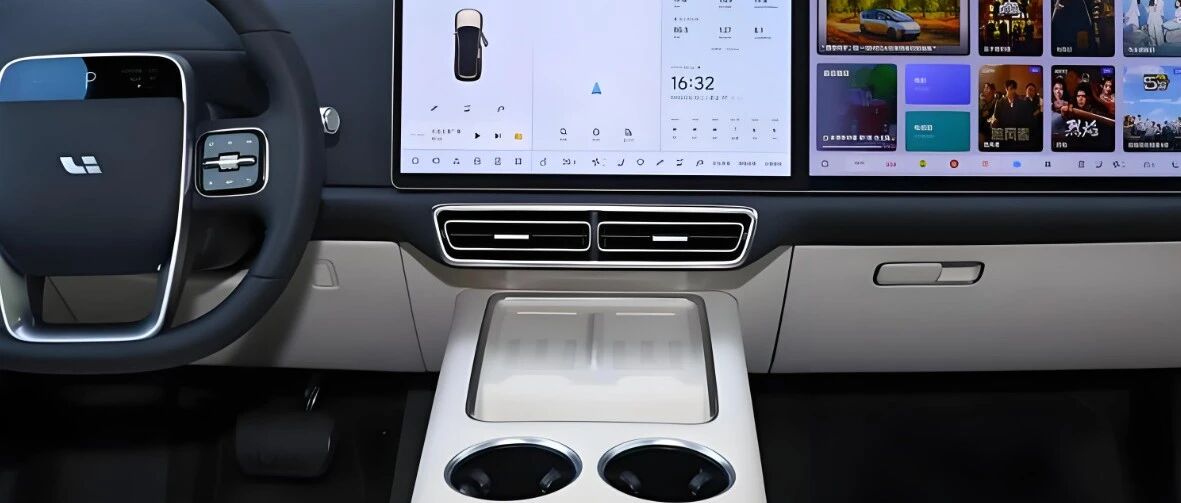
新股消息 | 斑马智行拟港股上市 中国证监会要求补充说明股权变动等事项
智通财经网· 2025-10-19 22:48
Core Viewpoint - The China Securities Regulatory Commission (CSRC) has requested additional information from Zhibo Zhixing regarding its equity changes and business operations as part of its overseas listing application process [1][2]. Group 1: Equity Changes - Zhibo Zhixing is required to clarify the pricing basis for its past capital increases and equity transfers, ensuring fairness and compliance with capital contribution obligations [1]. - The company must provide updates on its capital reduction and increase registration processes as of August 2025, including compliance with procedures and tax payments [1]. - The CSRC has asked for confirmation on whether there are any uncompleted requirements regarding state-owned shareholder identification [1]. Group 2: Business Operations - Zhibo Zhixing needs to detail its business scope, including value-added telecommunications services, market research, and advertising, and confirm whether it has the necessary licenses and qualifications [2]. - The company must report on the progress of its subsidiary Zhi Yun Tu's telecommunications business license and the specific activities it plans to undertake [2]. - A clear explanation of the business model involving large language models is required, including the status of relevant model registrations [2]. Group 3: Compliance and Operations - Zhibo Zhixing is asked to confirm whether it has developed or operates websites, apps, or other digital products, and to outline its data protection measures and user information management [2]. - The company must provide updates on any ongoing litigation or arbitration cases that could pose substantial obstacles to its overseas listing [2]. Group 4: Listing Process - Zhibo Zhixing is required to adhere to the regulations outlined in the "Trial Measures for the Administration of Overseas Issuance of Securities and Listing by Domestic Enterprises" to ensure there are no prohibitive circumstances for its overseas listing [3]. - The company must disclose the expected fundraising amount if the overallotment option is fully exercised and confirm the status of shares held by participating shareholders in the "full circulation" process [3]. Group 5: Company Overview - Zhibo Zhixing is identified as a supplier of intelligent cockpit solutions, focusing on transforming vehicles into interactive smart partners through its self-developed automotive operating system and AI architecture [4]. - The company aims to enhance the in-car experience by enabling natural voice control and personalized cabin experiences for vehicle owners [4].
微博加码扶持中长视频:从注重播放量到以观看时长为分发主导
Nan Fang Du Shi Bao· 2025-10-19 05:05
Core Insights - The 2025 Weibo V Influence Conference highlighted significant changes in Weibo's video consumption strategy, shifting from a focus on playback volume to watch time, aiming to enhance user experience and content quality [1][2] User Engagement Metrics - As of June this year, Weibo reported 588 million monthly active users (MAU) and 261 million daily active users (DAU), with an average of 105 million posts, 63 million comments, and 197 million likes per day [1] - The user demographic is shifting, with 22.9% of MAU aged 31-40 and 70.7% of active users under 30 years old, while 31.5% of users are from tier 4 cities and below [1] Creator Ecosystem - By September, Weibo's "Golden Orange V" creators reached 125,000, with 18,000 "Golden V" authors and a significant 57% year-on-year increase in "Orange V" authors to 107,000 [1] Video Content Strategy - Weibo has revamped its video distribution policy to prioritize watch time over playback volume, focusing on incentivizing mid-to-long videos (over 1 minute) to improve content quality and consumption duration [2] - The production of "high-quality videos" (over 30 seconds with a quality score above 3) increased by 51% year-on-year in Q3, with overall video watch time growing by 12% [2] Recommendation Algorithm - Weibo has integrated large language models into its recommendation algorithms, enhancing content understanding and user experience by balancing user interests and historical preferences [3] - The recommendation system operates on three main engines: interest, social, and trending topics, facilitating user engagement and content discovery [3][4] Social Recommendation Importance - Social recommendations are emphasized, leveraging social relationships to provide more personalized content, including indirect and complex relationships among users [4]

我国生成式人工智能用户规模超5亿;苹果公司CEO库克:Apple Intelligence正在努力进入中国市场丨AIGC日报
创业邦· 2025-10-19 01:05
Group 1 - Suno, an AI music generation company, is negotiating to raise over $100 million at a valuation exceeding $2 billion, which has quadrupled from its previous valuation. The company has an annual recurring revenue exceeding $100 million and is currently resolving legal disputes with major record labels [2] - As of June 2025, the user base for generative artificial intelligence in China is projected to reach 515 million, an increase of 266 million users from December 2024, effectively doubling the user base in six months, with a penetration rate of 36.5% [2] - Apple CEO Tim Cook announced that Apple Intelligence is working to enter the Chinese market, emphasizing the transformative impact of artificial intelligence on people's lives [2] - Zhang Fan, former COO of Zhiyun AI, has launched a startup focused on developing large language models for specific tasks, having completed an angel round of financing with no significant premium in valuation [2]



明日开课!自动驾驶VLA三大体系学习路线图:算法+实践
自动驾驶之心· 2025-10-18 16:03
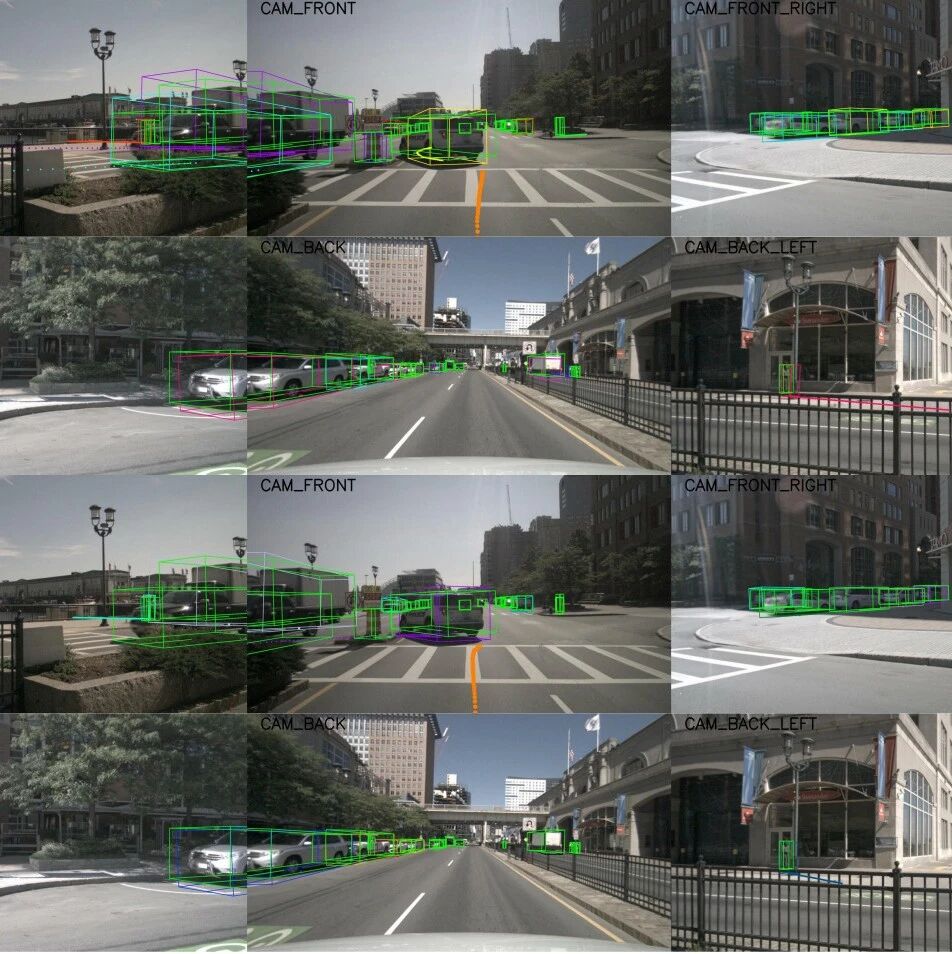
Core Insights - The focus of academia and industry is shifting towards VLA (Vision-Language-Action) for enhancing autonomous driving capabilities, providing human-like reasoning in vehicle decision-making processes [1][4] - Traditional methods in perception and lane detection are becoming mature, leading to a decline in interest, while VLA is seen as a critical area for development by major players in the autonomous driving sector [4] Summary by Sections Introduction to VLA - VLA is categorized into modular VLA, integrated VLA, and reasoning-enhanced VLA, which are essential for improving the reliability and safety of autonomous driving [1][4] Course Overview - A comprehensive learning roadmap for VLA has been designed, covering principles to practical applications, with a focus on core areas such as visual perception, large language models, action modeling, and dataset creation [6] Course Content - The course includes detailed explanations of cutting-edge algorithms like CoT, MoE, RAG, and reinforcement learning, aimed at deepening understanding of autonomous driving perception systems [6] Course Structure - The course is structured into six chapters, each focusing on different aspects of VLA, including algorithm introduction, foundational algorithms, VLM as an interpreter, modular and integrated VLA, reasoning-enhanced VLA, and a final project [12][20] Chapter Highlights - Chapter 1 provides an overview of VLA algorithms and their development history, along with benchmarks and evaluation metrics [13] - Chapter 2 delves into foundational algorithms related to Vision, Language, and Action, and discusses the deployment of large models [14] - Chapter 3 focuses on VLM's role as an interpreter in autonomous driving, covering classic and recent algorithms [15] - Chapter 4 discusses modular and integrated VLA, emphasizing the evolution of language models in planning and control [16] - Chapter 5 explores reasoning-enhanced VLA, introducing new modules for decision-making and action output [17] - Chapter 6 involves a hands-on project where participants will build and fine-tune their own VLA models [20] Learning Outcomes - The course aims to provide a deep understanding of current advancements in VLA, covering three main subfields: VLM as an interpreter, modular & integrated VLA, and reasoning-enhanced VLA [24] - Participants will gain insights into key AI technologies such as visual perception, multimodal large models, and reinforcement learning, enabling them to apply their knowledge in practical projects [24]

为什么说AI智能体最大的价值,是悄悄嵌入工作流里?
3 6 Ke· 2025-10-18 00:06
Core Insights - The article emphasizes that AI agents are not standalone products but rather catalysts for business processes, urging a shift in perspective on their role in technology [1][12]. Group 1: Understanding AI Agents - AI agents are defined as large language model (LLM) agents, which can be simplified to LLM + tools + memory, highlighting their foundational components [1]. - The development of approximately 300 AI agents has provided insights into effective methods and future directions in the field [1][2]. Group 2: Frameworks and Development - The importance of focusing on core application processes rather than being limited by specific frameworks is highlighted, with various frameworks like crewai, dspy, and langgraph being utilized [3]. - A solid software engineering foundation is deemed essential for effectively utilizing AI agents, as the role often involves API calls and prompt engineering rather than advanced AI/ML skills [4]. Group 3: Context and Tools - The quality of an AI agent is significantly influenced by the context provided, including prompts, tools, and memory, rather than solely relying on the capabilities of the language model [5]. - Tools are essential for AI agents to function effectively; without them, agents become ineffective [6][7]. Group 4: Design and Evaluation - Simplicity in design is crucial for effective AI agents, with successful agents often having clear prompts, defined tools, and specific responsibilities [8]. - The importance of establishing testing and feedback loops is emphasized as a means to differentiate between toy projects and reliable production systems [9]. Group 5: Future Directions and Cultural Aspects - DSPy is identified as a promising framework for developing AI agents, with its features being user-friendly and intuitive [10]. - The collaboration with startups has underscored that the human element, including a culture of experimentation and clear vision, is more critical than technology alone [11]. - The development of AI agents is still in its early stages, with potential for integration into various products to enhance workflows and user experiences [12].
理想自动驾驶团队GitHuB仓库与论文合集
理想TOP2· 2025-10-17 13:44
Core Viewpoint - The article emphasizes the advancements in autonomous driving technology by Li Auto, focusing on innovative solutions to enhance safety, efficiency, and sustainability in transportation [1]. Group 1: Autonomous Driving Technologies - The company is developing a large language model (LLM) to interpret complex driving scenarios, enabling smarter and quicker responses from autonomous vehicles [2]. - A world model project aims to simulate real driving environments for testing and improving autonomous driving algorithms under various conditions [3]. - The 3D geometric scene (3DGS) understanding project focuses on creating detailed 3D maps of urban environments to enhance the perception systems of autonomous vehicles for better navigation and decision-making [4]. - The company is pioneering an end-to-end neural network model that simplifies the entire processing flow from perception to execution in autonomous driving systems [5]. Group 2: Research and Development Projects - DriveVLM is a dual-system architecture combining end-to-end and vision-language models for autonomous driving [7]. - TOP3Cap is a dataset that describes autonomous driving street scenes in natural language, containing 850 outdoor scenes, over 64,300 objects, and 2.3 million textual descriptions [7]. - StreetGaussians presents an efficient method for creating realistic, dynamic urban street models for autonomous driving scenarios [8]. - DiVE is a model based on the Diffusion Transformer architecture that generates videos consistent in time and multiple perspectives, matching given bird's-eye view layouts [8]. - GaussianAD utilizes sparse and comprehensive 3D Gaussian functions to represent and convey scene information, addressing the trade-off between information completeness and computational efficiency [8]. - 3DRealCar is a large-scale real-world 3D car dataset containing 2,500 cars scanned in 3D, with an average of 200 dense RGB-D views per car [8]. - DriveDreamer4D employs a video generation model as a data machine to create video data of vehicles executing complex maneuvers, supplementing real data [8]. - DrivingSphere combines 4D world modeling and video generation technologies to create a generative closed-loop simulation framework [8]. - StreetCrafter is a video diffusion model designed for street scene synthesis, utilizing precise laser radar data for pixel-level control [8]. - GeoDrive generates highly realistic, temporally consistent driving scene videos using 3D geometric information [10]. - LightVLA is the first adaptive visual token pruning framework that enhances the success rate and operational efficiency of robot VLA models [10].

新模型组团出道,多项机器人技术开源,近期AI新鲜事还有这些……
红杉汇· 2025-10-17 00:04
Group 1 - The emergence of large language models (LLMs) has significantly advanced the automation of scientific discovery, with AI Scientist systems leading the exploration [5][6] - Current AI Scientist systems often lack clear scientific goals, resulting in research outputs that may seem immature and lack true scientific value [5] - A new AI Scientist system, DeepScientist, has achieved research progress equivalent to three years of human effort in just two weeks, demonstrating its capability in various fields [6] Group 2 - OpenAI recently held a developer conference with around 1,500 attendees and over tens of thousands of online viewers, showcasing its achievements and new tools [8] - OpenAI's platform has attracted 4 million developers, with ChatGPT reaching 800 million weekly active users and processing nearly 6 billion tokens per minute [8] - New tools and models were introduced, including the Apps SDK and AgentKit, enhancing the capabilities of ChatGPT and facilitating rapid prototyping for developers [8] Group 3 - The latest version of the image generation model, Hunyuan Image 3.0, has topped the LMArena leaderboard, outperforming 26 other models [11][12] - Hunyuan Image 3.0 is the largest open-source image generation model with 80 billion parameters and 64 expert networks, showcasing advanced capabilities in knowledge reasoning and aesthetic performance [12] Group 4 - NVIDIA has open-sourced several key technologies at the Conference on Robot Learning, including the Newton physics engine and the GR00T reasoning model, aimed at addressing challenges in robot development [13][15] - These technologies are expected to significantly shorten the robot development cycle and accelerate the implementation of new technologies [15] Group 5 - The newly released GLM-4.6 model has 355 billion total parameters and a context window expanded to 200,000 tokens, enhancing its performance across various tasks [16] - GLM-4.6 has achieved over 30% improvement in token efficiency and a 27% increase in coding capabilities compared to its predecessor, making it one of the strongest coding models available [16] Group 6 - Anthropic has launched Claude Sonnet 4.5, which excels in programming accuracy and maintains stability during complex tasks, outperforming previous models [20][22] - Claude Sonnet 4.5 achieved an 82.0% accuracy rate on the SWE-bench Verified benchmark, surpassing competitors and emphasizing its alignment and safety features [22] Group 7 - DeepMind's new video model, Veo 3, demonstrates zero-shot learning capabilities, allowing it to perform complex visual tasks without prior training [24][28] - Veo 3's understanding of physical laws and abstract relationships indicates its potential to evolve into a foundational visual model similar to LLMs [28]

谷歌开源全栈平台Coral NPU,能让大模型在手表上全天候运行
3 6 Ke· 2025-10-16 07:44
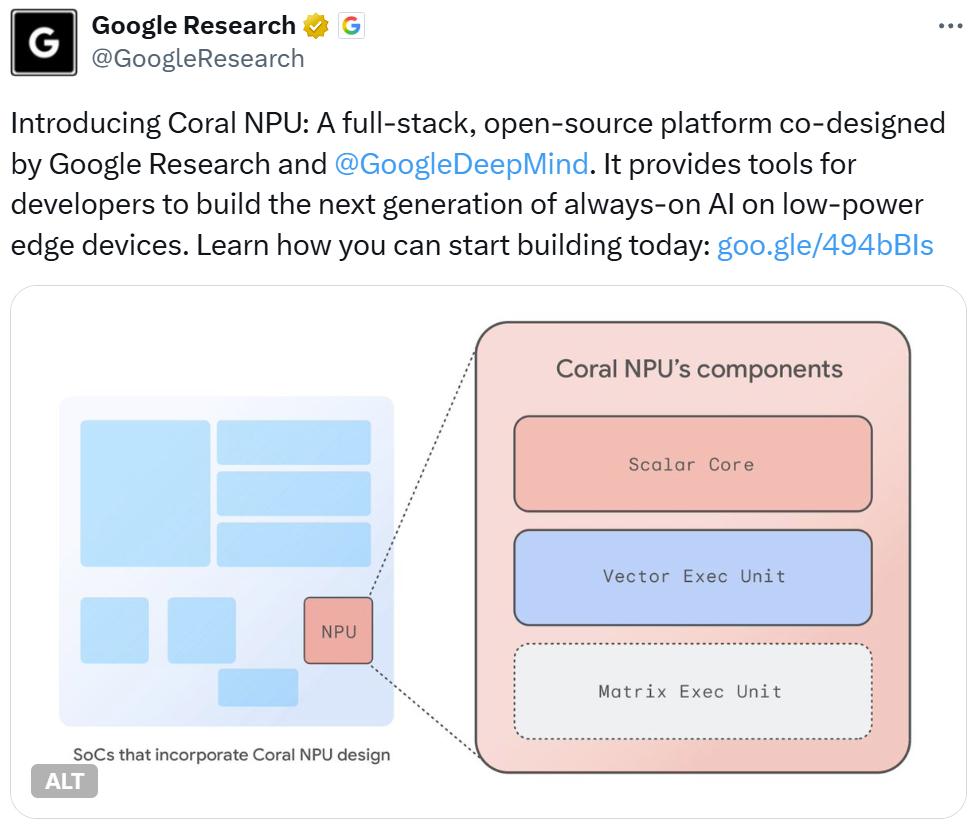
Core Insights - Google is actively engaged in multiple initiatives, including a collaboration with Yale University to predict a new potential cancer therapy using the Cell2Sentence-Scale 27B model, and the launch of Veo 3.1, which significantly enhances video generation capabilities [1] - The introduction of Coral NPU aims to address key challenges in deploying AI on low-power devices, focusing on performance, fragmentation, and user trust [4][22] Group 1: Coral NPU Overview - Coral NPU is positioned as a full-stack, open-source platform designed to tackle performance, fragmentation, and privacy challenges that hinder the application of powerful AI technologies on low-power edge devices [4] - The architecture of Coral NPU is based on a RISC-V instruction set, optimized for low power consumption while providing 512 GOPS performance, making it suitable for edge devices like wearables and AR glasses [8][10] Group 2: Development and Ecosystem - Coral NPU offers a unified developer experience, facilitating the deployment of AI applications with minimal battery consumption while supporting higher performance scenarios [5][15] - Google has partnered with Synaptics, its first strategic chip partner, to enhance the ecosystem around Coral NPU, which includes the launch of the Astra SL2610 series AI-native IoT processors [22][23] Group 3: Target Applications - The primary applications for Coral NPU include context-aware systems, audio processing, image processing, and user interaction, all aimed at providing continuous AI experiences on wearable and IoT devices [22][25] - The architecture is designed to support hardware-enforced privacy, ensuring user trust by isolating sensitive AI models and personal data within a secure environment [22]

国金证券:AI+电商服务进入提效阶段 关注后续业绩兑现
智通财经网· 2025-10-16 02:40
Core Insights - The competition in the AI + cross-border e-commerce industry is shifting from "channel expansion" to "efficiency competition," with a focus on leading platforms that drive foreign trade efficiency through technology [1] - The application of AI is becoming widespread, with significantly reduced integration costs, marking a transition to a phase of large-scale value realization [2] - E-commerce and online services are the most compatible sectors for AI applications, serving as a key link between technological innovation and consumer demand [3] - The industry is transitioning from a focus on cost reduction to efficiency enhancement, leading to a dual upward trend in revenue and a downward trend in costs [4] Group 1 - The AI application landscape is evolving, with major models like GPT-5 and Wenxin Yiyan 4.0 reaching maturity and operational costs decreasing significantly, such as an 80% reduction in the inference cost of the Tongyi Qianwen model compared to the average in 2023 [2] - E-commerce's computational power demand shows intermittent fluctuations, with an increasing number of service providers optimizing costs through a hybrid public-private computational model [3] - The data infrastructure in e-commerce encompasses 12 types of heterogeneous data sources, providing ample "fuel" for AI to enhance model accuracy [3] Group 2 - The current trend shows that most AI-enabled business units are not only reducing costs but also experiencing a dual inflection point of rising revenue and declining costs [4] - E-commerce companies are leveraging AI for process automation, significantly optimizing labor structures, as seen with Liren Lizhuang's virtual live streaming covering 40% of its duration, achieving peak GMV of 5 million yuan [4] - AI is being innovatively applied in demand forecasting and inventory optimization, allowing e-commerce businesses to transition towards a "light asset operation" model [4]

即将开课!自动驾驶VLA全栈学习路线图分享~
自动驾驶之心· 2025-10-15 23:33
Core Insights - The focus of academia and industry has shifted towards VLA (Vision-Language Action) in autonomous driving, which provides human-like reasoning capabilities for vehicle decision-making [1][4] - Traditional methods in perception and lane detection have matured, leading to decreased attention in these areas, while VLA is now a critical area for development among major autonomous driving companies [4][6] Summary by Sections Introduction to VLA - VLA is categorized into modular VLA, integrated VLA, and reasoning-enhanced VLA, which are essential for improving the reliability and safety of autonomous driving [1][4] Course Overview - A comprehensive course on autonomous driving VLA has been designed, covering foundational principles to practical applications, including cutting-edge algorithms like CoT, MoE, RAG, and reinforcement learning [6][12] Course Structure - The course consists of six chapters, starting with an introduction to VLA algorithms, followed by foundational algorithms, VLM as an interpreter, modular and integrated VLA, reasoning-enhanced VLA, and a final project [12][20] Chapter Highlights - Chapter 1 provides an overview of VLA algorithms and their development history, along with benchmarks and evaluation metrics [13] - Chapter 2 focuses on the foundational knowledge of Vision, Language, and Action modules, including the deployment of large models [14] - Chapter 3 discusses VLM's role as an interpreter in autonomous driving, covering classic and recent algorithms [15] - Chapter 4 delves into modular and integrated VLA, emphasizing the evolution of language models in planning and control [16] - Chapter 5 explores reasoning-enhanced VLA, introducing new modules for decision-making and action generation [17][19] Learning Outcomes - The course aims to deepen understanding of VLA's current advancements, core algorithms, and applications in projects, benefiting participants in internships and job placements [24]