
数实融合

Search documents
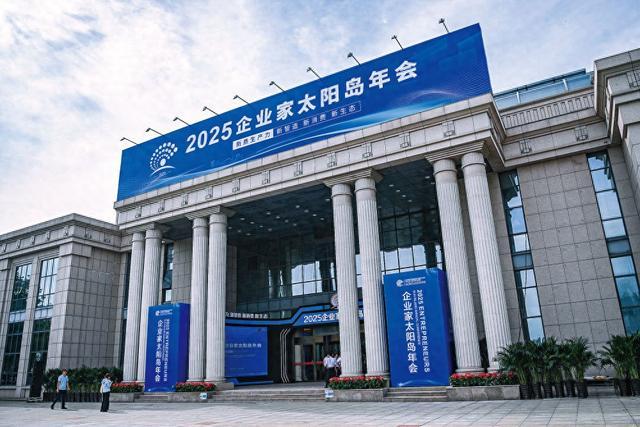
向“新”求变 借“智”跃升——来自2025企业家太阳岛年会的观察
Xin Hua Wang· 2025-08-04 02:29
Group 1: Technological Innovation - Brain-computer interface technology is rapidly developing, with applications in rehabilitation for disabled individuals and treatment for brain diseases like insomnia and Alzheimer's [3][4] - The global humanoid robot market is projected to grow at a compound annual growth rate of 71% from 2021 to 2030, with China's market expected to reach approximately 870 billion yuan by 2030 [5] - The integration of AI and industrial applications is being emphasized, with companies leveraging advancements in machine vision and natural language processing to enhance operational efficiency [4][5] Group 2: Consumption Trends - The rise of instant economy driven by young consumers is reshaping the retail landscape, with a significant increase in the rental economy, projected to exceed 4.2 trillion yuan in transaction volume by 2024, marking a 32% year-on-year growth [7][8] - Consumers are increasingly willing to pay for emotional experiences, prompting businesses in the tourism sector to innovate by creating unique, immersive experiences that resonate with local culture [8][9] - Financial services are evolving to support these consumption trends, with banks like ICBC enhancing digital platforms to facilitate tourism and lifestyle spending [9] Group 3: Ecological Transformation - Technological innovation is identified as the core driver of new productive forces, with companies like Hangzhou Yushu Technology leading in the commercialization of intelligent robotics [11][12] - The development of smart materials capable of self-sensing and transformation is paving the way for advancements in various sectors, including aerospace and healthcare [12] - A collaborative ecosystem involving education, technology, and talent integration is crucial for fostering innovation and driving high-quality economic development [13][14]

海南:打造数字经济创新高地
news flash· 2025-08-04 01:37
Group 1 - The core viewpoint of the article emphasizes the establishment of a modern industrial system in Hainan, focusing on the digital economy as a key area for innovation and growth [1] - The action plan aims to transform the Haikou Revival City and Hainan Ecological Software Park into innovation-driven and application-driven digital economy industry clusters [1] - By 2027, the core revenue of the digital economy in Hainan is projected to reach 220 billion yuan [1] Group 2 - The plan includes accelerating the layout of computing power industries and fostering a data element market to promote secure and orderly data flow [1] - The strategy involves leveraging technologies such as blockchain, AI, and big data to enhance sectors like digital health, digital entertainment, and shared platforms [1] - There is a focus on industries such as gaming export, data processing, semiconductor chips, and integrated circuits [1] Group 3 - The initiative also aims to promote the digital transformation of enterprises in sectors like petrochemical new materials, modern biomedicine, high-end food processing, and equipment manufacturing [1] - The goal is to advance the integration of digital and physical industries through these transformations [1]
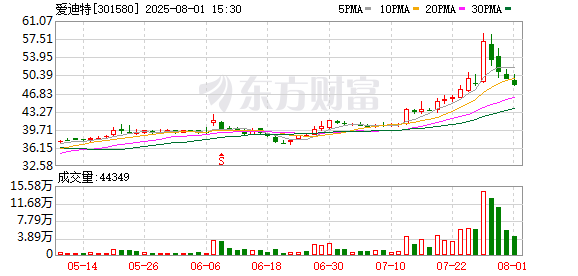
6.68亿元加码数字化口腔赛道 爱迪特打造“研发-中试-量产-循环”闭环生态
Zheng Quan Ri Bao· 2025-08-03 11:41
Core Viewpoint - The global dental medical market is expanding at a compound annual growth rate (CAGR) of 8.6%, driven by aging populations and consumption upgrades, prompting the company to invest 668 million yuan in a dental industry park to enhance production capacity and solidify its market position [2][3]. Industry Overview - The global dental medical device industry is experiencing unprecedented dual opportunities of "incremental growth and upgrades," with a projected market size of approximately 709.7 billion USD by 2030, growing at a CAGR of 5.2% from 2025 to 2030 [3]. - The shift towards digitalization and intelligence is transforming treatment processes, moving from experience-driven to data-driven methodologies, with advancements in imaging equipment, 3D printing, and AI design software [3][4]. Company Strategy - The new dental industry park is not merely an expansion of capacity but a strategic move to adapt to industry changes, aiming to capture market share in a rapidly evolving landscape [4]. - The company plans to establish a complete closed-loop system for "R&D - pilot testing - mass production - recycling," with a focus on creating replicable and scalable innovations [5][6]. - The park will feature a shared pilot testing platform to attract industry partners, enhancing vertical integration and collaboration within the supply chain [5]. Technological Advancements - The company aims to implement systems like MES/WMS/UDI to digitize operations, ensuring traceability and compliance while optimizing production processes through real-time data analytics [6][7]. - The new facility will incorporate distributed photovoltaic power generation, expected to save 1.736 million yuan annually in electricity costs [7]. Infrastructure and Development Timeline - The dental industry park will cover an area of 107.7 acres with a construction area of 82,200 square meters, with the first phase expected to complete by the end of 2025 and production line installations in early 2026 [6][8]. - The strategic location of the park provides logistical advantages, facilitating talent acquisition and reducing transportation costs [4].
各地新亮点|福州新区:精准落子点“数”成金
Jing Ji Ri Bao· 2025-08-02 03:35
Group 1 - Fuzhou New Area (Changle District) is celebrating the 10th anniversary of its approval as a national-level new area in 2025, focusing on high-quality development driven by digital economy [1] - The digital economy in Fuzhou New Area has surpassed 75 billion yuan, showcasing a significant transformation from a small to a robust industry [1] - The region is leveraging its advantages in digital infrastructure, including the Fujian Big Data Exchange and the Fujian Supercomputing Center, to establish itself as a digital industry hub in Southeast China [1][3] Group 2 - Fuzhou's development strategy emphasizes the importance of its geographical advantages, particularly its rivers and seas, as key to its future growth [2] - The Fuzhou New Area is a core area for the "3820" project and the "Digital Fujian" strategy, with policies supporting the digital economy and a 10 billion yuan fund established for digital industry development [3] - The establishment of a regional international communication business outlet marks a significant upgrade for Fujian, enhancing its role as a communication hub in the Asia-Pacific region [3] Group 3 - The textile industry in Fuzhou New Area is a major contributor, with an output value exceeding 160 billion yuan, accounting for 63% of the district's industrial output [4] - Traditional industries are being integrated with industrial internet technologies, facilitating a smooth transition to new growth drivers [4] - Innovations in energy-saving technologies and AI-driven quality control systems are being implemented in textile manufacturing, enhancing efficiency and reducing costs [5][6] Group 4 - Fuzhou New Area is focusing on six key industries: digital economy, new materials and energy, new displays, food storage, pharmaceuticals, and cultural tourism [7] - The region is home to advanced manufacturing facilities, such as the largest ultra-wide polarizer production base, which utilizes cutting-edge technology [7] - The biopharmaceutical sector is emerging as a new economic growth point, with companies adopting advanced production equipment to enhance output capacity [8] Group 5 - The Fuzhou New Area is actively developing smart transportation and healthcare systems, integrating AI technologies into various sectors [8] - A comprehensive digital economy ecosystem is being established, with initiatives like the "Hundred Factories Renewal Plan" aimed at modernizing traditional industries [9] - The region is poised to capitalize on the new technological revolution and industrial transformation, with a complete digital economy industrial chain gradually taking shape [9]
三年行动计划打造六个新标杆 浙江加快平台经济高质量发展强省建设
Zhong Guo Chan Ye Jing Ji Xin Xi Wang· 2025-08-01 22:59
Core Insights - Zhejiang Province is accelerating the high-quality development of its platform economy, aiming to exceed 1,000 platform enterprises by 2027, with over 50 of them reaching a scale of 10 billion yuan, and achieving a total revenue of 2.2 trillion yuan from platform enterprises [1][2] Group 1: Development Goals - The goal is to have 10 million active online business entities and maintain an annual growth rate of 5% in online retail sales [1] - The province emphasizes a shift from scale-driven to innovation-driven growth in the platform economy [1] Group 2: Key Initiatives - Establishing a new benchmark for technology leadership by encouraging leading platforms to transition into high-tech enterprises and increasing R&D investment [2] - Implementing a "platform + industry" dual empowerment action to create over 25 billion-level consumer goods industry clusters [2] - Promoting international competition and cooperation by enhancing the quality of online trading platforms and supporting enterprises in expanding into global markets [2] Group 3: Consumer Engagement and Labor Relations - Launching the "Zhejiang Boutique" cultivation plan to improve product service quality and create innovative consumption scenarios [2] - Developing a new model for managing delivery services to provide better support for gig economy workers [2][3] Group 4: Governance and Market Integrity - Adopting a modern governance approach that integrates regulation with service, focusing on fair competition and addressing issues like counterfeit goods and fraudulent practices [3] - Currently, Zhejiang has over 850 platform enterprises, with a significant contribution to the national market in terms of transaction volume [3]

福州新区 精准落子点“数”成金
Jing Ji Ri Bao· 2025-08-01 21:58
Core Viewpoint - Fuzhou New Area (Changle District) is leveraging its advantages in digital infrastructure to drive high-quality development, aiming to become a "digital industry highland" in Southeast China, with a digital economy scale exceeding 75 billion yuan [1]. Group 1: Digital Economy Development - Fuzhou New Area is focusing on building a robust digital infrastructure, including the Fujian Big Data Exchange and the Fujian Supercomputing Center, which supports the growth of the digital economy [1]. - The digital economy in the region has transformed significantly, with a scale surpassing 75 billion yuan, indicating a shift from a small and weak industry to a strong and expansive one [1]. - The establishment of a 10 billion yuan digital economy industry fund and the implementation of the "Digital Fuzhou" three-year action plan are key policies supporting this growth [3]. Group 2: Traditional Industries and Innovation - The textile industry remains a cornerstone of Fuzhou New Area's economy, contributing over 160 billion yuan to the industrial output, accounting for 63% of the total [4]. - Traditional textile enterprises are being encouraged to integrate into the industrial internet, facilitating a seamless transition between old and new growth drivers [4]. - Innovations such as energy-efficient cooling technology and AI-based quality inspection systems are being developed to enhance productivity and reduce costs in the textile sector [5][6]. Group 3: Emerging Industries and Applications - Fuzhou New Area is actively developing six leading industries, including digital economy, new materials, and biomedicine, to diversify its economic base [7]. - The region is home to advanced manufacturing facilities, such as the largest ultra-wide polarizer production base, which utilizes cutting-edge technology to enhance product quality [7]. - The biopharmaceutical sector is emerging as a new economic growth driver, with advanced production lines capable of producing 2 billion oral solid dosage units annually [8]. Group 4: Infrastructure and Connectivity - Fuzhou New Area is enhancing its digital infrastructure with significant investments in cloud computing and data centers, positioning itself as a regional hub for international communication [3]. - The establishment of a comprehensive digital ecosystem, including government and business clouds, is crucial for supporting various industries and applications [3]. - The region is also focusing on smart city initiatives, including intelligent transportation systems and AI applications in healthcare and education [8][9].
从一粒小麦感受中国经济新脉动
Ren Min Ri Bao· 2025-07-31 07:42
Group 1 - Digital technology is transforming the real economy comprehensively, enhancing productivity and creating new productive forces [1][3] - The summer grain production reached 299.48 billion jin, marking the second highest yield in history, with an increase in yield per mu compared to the previous year [1] - The effective governance and macroeconomic management have improved significantly, allowing for proactive risk management and enhanced resilience against uncertainties [2] Group 2 - The integration of digital technology in agriculture has led to a significant reduction in grain storage loss rates from 5% to below 1%, showcasing a data-driven efficiency revolution [3] - The shift from single staple food to high-value industrial elements indicates a developing value chain from production to consumption, enhancing domestic demand [4] - The stable agricultural sector supports industrial and service sectors, providing cost predictability and boosting consumer confidence, which is crucial for economic stability [4]
从一粒小麦感受中国经济新脉动——半年报里看信心③
Ren Min Ri Bao· 2025-07-31 03:22
Group 1 - The core achievement of summer grain production in 2025 is 299.48 billion jin, marking the second highest yield in history, with an increase of 0.1 kg per mu compared to the previous year, reinforcing food security in China [1] - The successful harvest demonstrates the effectiveness of macroeconomic governance and technological innovation, showcasing a dual empowerment of precision irrigation and governance upgrades [1] - Advanced technologies such as satellite monitoring, drones, and soil sensors have enabled a data-driven approach to agriculture, allowing for precise irrigation and improved efficiency in crop management [1] Group 2 - The integration of digital technology into agriculture has led to a significant reduction in grain storage loss rates from 5% to below 1%, indicating a data-driven efficiency revolution [2] - The application of digital technologies in various agricultural processes, including breeding, irrigation, harvesting, and transportation, illustrates the deep penetration of digital solutions into the real economy [2] - The transformation of a single grain of wheat reflects the broader trend of "digital-physical integration," enhancing overall productivity in the agricultural sector [2] Group 3 - The impact of summer grain harvest extends beyond agriculture, with a shift towards high-value industrial elements, such as high-gluten wheat for premium baking and biomass energy from agricultural waste [3] - The establishment of a "whole-chain economy" model, centered on domestic circulation, is becoming a vital source of economic vitality, linking agriculture with industrial and service sectors [3] - This interconnected value chain supports downstream food processing and retail, stabilizing cost expectations and consumer confidence, thereby mitigating inflation risks [3]
从一粒小麦感受中国经济新脉动(人民时评)
Ren Min Ri Bao· 2025-07-30 22:12
Core Insights - Digital technology is transforming the real economy comprehensively, enhancing productivity and creating new productive forces [1][3] - The successful summer grain harvest demonstrates the resilience of the Chinese economy amidst external challenges, with a production of 299.48 billion jin, marking the second-highest yield in history [1][4] Group 1: Economic Resilience and Governance - The governance upgrade through "precise drip irrigation" has enabled dual empowerment of macro-control and technological innovation, effectively managing risks associated with high temperatures and drought [2] - The integration of satellite monitoring, drone inspections, and soil sensors has allowed for data-driven management of agricultural resources, enhancing efficiency and risk prediction [2][3] Group 2: Efficiency and Technological Integration - The concept of "storing grain in technology" has evolved, with digital solutions reducing grain loss rates from 5% to below 1%, showcasing a data-driven efficiency revolution in agriculture [3] - The application of digital technologies in agriculture, from smart breeding to automated irrigation and intelligent logistics, illustrates the deep integration of digital and traditional sectors [3] Group 3: Value Chain and Domestic Demand - The summer grain harvest is shifting from basic food commodities to high-value industrial elements, indicating a developing value chain from production to consumption [4] - The establishment of a "whole chain economy" model, centered on domestic circulation, is a significant source of vitality for the Chinese economy, providing stability for downstream industries and consumer confidence [4]
从一粒小麦感受中国经济新脉动(人民时评) ——半年报里看信心③
Ren Min Ri Bao· 2025-07-30 22:03
Group 1 - Digital technology is transforming the real economy comprehensively, enhancing productivity and creating new productive forces [1][3] - The summer grain production reached 299.48 billion jin in 2025, marking the second-highest yield in history, with an increase of 0.1 kg per mu compared to the previous year [1] - The effective governance and macroeconomic management have improved significantly, allowing for proactive risk management and enhanced resilience against uncertainties [2][4] Group 2 - The integration of digital technology and traditional agriculture is driving an efficiency revolution, reducing grain storage loss rates from 5% to below 1% [3] - The shift from single staple food to high-value industrial elements is evident, with strong gluten wheat from Shandong entering the high-end baking market and straw from Anhui being utilized in biomass energy and feed processing [4] - The establishment of a "whole chain economy" model, centered on domestic circulation, is a vital source of economic vitality, supporting downstream food processing and retail sectors [4]