智能体

Search documents
中美人工智能赋能产业发展的现状、趋势及政策建议
Zhong Guo Yin Hang· 2025-10-14 05:41
Group 1: AI Development Trends - AI technology is a strategic driver of the new technological revolution and industrial transformation, emphasized by Chinese leadership as essential for high-quality economic development[5] - The competition in AI, particularly in large models, has expanded from technology to infrastructure, industry ecology, standards, and governance rules between China and the US[6] - By 2024, the performance gap in major benchmarks between top AI models in China and the US has narrowed from 17.5% in 2023 to just 0.3%[7] Group 2: Market Penetration and Application - In the US, approximately 49% of enterprises report that AI has reduced costs, with the financial sector showing the highest penetration rate at 78%[17] - ChatGPT's monthly active users are projected to reach nearly 1 billion by the end of 2025, driven by its innovative features[17] - In China, the daily token call volume for the Doubao model reached 16.4 trillion in May 2025, marking a 310% increase year-on-year[21] Group 3: Commercialization Strategies - The US AI market relies on high-priced APIs and subscription models, with OpenAI's GPT-4.5 API costing $75 per million tokens, significantly higher than China's pricing[55] - China's AI models focus on low-cost APIs, with prices as low as 2.4 yuan per million tokens, promoting widespread adoption across industries[55] - The integration of AI into traditional applications has led to significant increases in user engagement, with Douyin's user base growing by 13.5% year-on-year[60]





周鸿祎清华分享:AI迈入智能体时代,将催生“超级个体”与“超级组织”
Huan Qiu Wang· 2025-10-13 11:18
【环球网科技综合报道】10月12日,在 "清华大学工程管理创新人才教育与发展论坛暨清华MEM课程 开放日" 活动上,360 集团创始人周鸿祎发表主题演讲。作为清华大学计算机系在读创新领军工程博 士,他结合技术背景与企业实践指出,人工智能正从大模型阶段迈入智能体新阶段,他强调智能体更像 实习生、助理乃至虚拟员工,需用对待人的态度看待,预判其将让个人成为 "超级个体"、企业成为 "超 级组织",发展前景比软件大十倍,并提出企业 AI 转型框架,为智能体落地提供方法论。 更重要的是,智能体具备自主规划、持续记忆、使用工具、分工协作四大类人特征,使其跳出问答交互 局限,可主动调用专业工具、保存工作记忆,面对复杂任务时与其他智能体协同,交付完整成果。"让 一个员工既做设计又写代码还管财务,肯定干不好。"周鸿祎比喻,"同理,一个智能体最好专注一个角 色",构建高效智能体系统的关键在于"角色扮演"与"组织管理"。 周鸿祎预言,智能体将重塑竞争力格局。未来每个人可拥有数十个智能体组成的 "赛博助理团",7×24 小时处理信息、撰写报告、制作视频、管理社交,个人由此升级为"超级员工""超级个体"。企业也将转 型 "超级组织", ...
a16z最新报告:初创公司真金白银投AI,但钱花哪儿了?
3 6 Ke· 2025-10-13 01:34
Core Insights - The report by a16z reveals that most funding in AI startups is directed towards API calls and high salaries for AI engineers rather than expensive model training [1][2] - AI is reshaping skills, tasks, and team structures, with large companies experiencing incremental improvements while startups are emerging as true AI-native companies [1][2] - The report identifies 50 AI-native application companies based on real spending data from 200,000 enterprise clients, highlighting a diverse range of applications [1][2] Group 1: Key Trends in AI Applications - Horizontal applications dominate the market, accounting for 60% of the list, with vertical applications making up 40% [2] - Notable horizontal applications include general-purpose large language model assistants like OpenAI and Anthropic, as well as intelligent work platforms such as Notion [2][3] - Creative tools have become the largest single category on the list, with ten companies, including Freepik and ElevenLabs, showcasing a shift from vertical to horizontal usage [3] Group 2: Vertical Applications and Workforce Transformation - Vertical AI applications are evolving along two paths: enhancing human capabilities and fundamentally reshaping job roles [4] - Among the 17 vertical application companies, 12 focus on human enhancement tools, while 5 provide end-to-end "AI employee" solutions [4] - Key vertical sectors include customer service, sales and marketing, and human resources, with companies like Lorikeet and Micro1 leading the way [4] Group 3: Emergence of Ambient Coding - The emerging field of "ambient coding" has successfully transitioned from consumer markets to enterprise workflows, with companies like Replit leading the charge [5] - Replit generates significantly higher revenue from enterprise clients compared to its competitors, indicating its strong market position [5] - The future of ambient coding may see fragmentation with the rise of various application development platforms [5] Group 4: Product Evolution from Personal to Enterprise Solutions - Nearly 70% of the companies on the list support individual users and promote team collaboration without requiring enterprise licenses [6] - Many companies started by serving individual users and gradually expanded to team and enterprise functionalities, reflecting a shift in AI product development [6] - The trend indicates that consumer-grade AI products are increasingly meeting enterprise needs, leading to rapid adoption in workplace settings [6][7]
AI是一场知识的通量革命
Sou Hu Cai Jing· 2025-10-13 00:41
Group 1 - The core viewpoint is that technology embedded in systems, rather than the technology itself, drives economic progress, reshaping the flow of resources, energy, information, and knowledge [2][3][4] - A new paradigm for assessing technology value focuses on how it reorganizes economic dimensions—scale, space, and time, emphasizing the importance of flow rather than the capabilities of the technology itself [4][5] Group 2 - Cold chain technology significantly improved the flow of meat by concentrating slaughtering and utilizing refrigeration for transportation, leading to economies of scale, density, and time [5][6] - Container shipping revolutionized cargo flow by enhancing loading efficiency and reducing transportation costs, facilitated by a connected system of mechanized ports and standardized practices [5][6] - The internet transformed information flow into a new economic growth engine, reducing the cost of information exchange to nearly zero and redefining commercial boundaries and social collaboration [6][7] Group 3 - The emergence of intelligent agents represents a breakthrough in overcoming knowledge flow bottlenecks, enabling autonomous actions and enhancing knowledge generation and collaboration [6][7] - The evolution of knowledge flow requires institutional and infrastructural innovations, including redefining intellectual property and establishing reliable computing environments [7][8] - The core of competition in the intelligent era will hinge on the speed and depth of knowledge transformation into action, rather than mere information possession [8]


“人工智能+”行动深入实施 业界加速推进智能体落地
Yang Shi Xin Wen· 2025-10-12 17:23
Group 1 - The core viewpoint of the articles highlights the Chinese government's initiative to integrate artificial intelligence (AI) into various sectors, aiming for over 90% application penetration of new intelligent terminals and agents by 2030 [1] - China Mobile announced an upgraded "AI+" action plan, intending to double its investment in AI over the next three years and expand its intelligent agent user base to over 200 million [2] - Various telecom operators, including China Unicom and China Telecom, are launching their own intelligent agent platforms, indicating a growing trend in the AI sector [2] Group 2 - The implementation of intelligent agents in hospitality is showcased, where AI assistants can handle customer inquiries and manage smart devices, enhancing the guest experience and operational efficiency for small hotels [1] - A multi-modal intelligent agent has been developed that can assist users in creating content, such as images and videos, significantly reducing the complexity and time required for creative tasks [3] - The collaborative nature of intelligent agents is emphasized, where multiple "sub-agents" work together to execute specific tasks, showcasing the advanced capabilities of AI in practical applications [2][3]



不依赖云端!vivo把“AI大脑”直接装进你的手机
2 1 Shi Ji Jing Ji Bao Dao· 2025-10-11 10:44
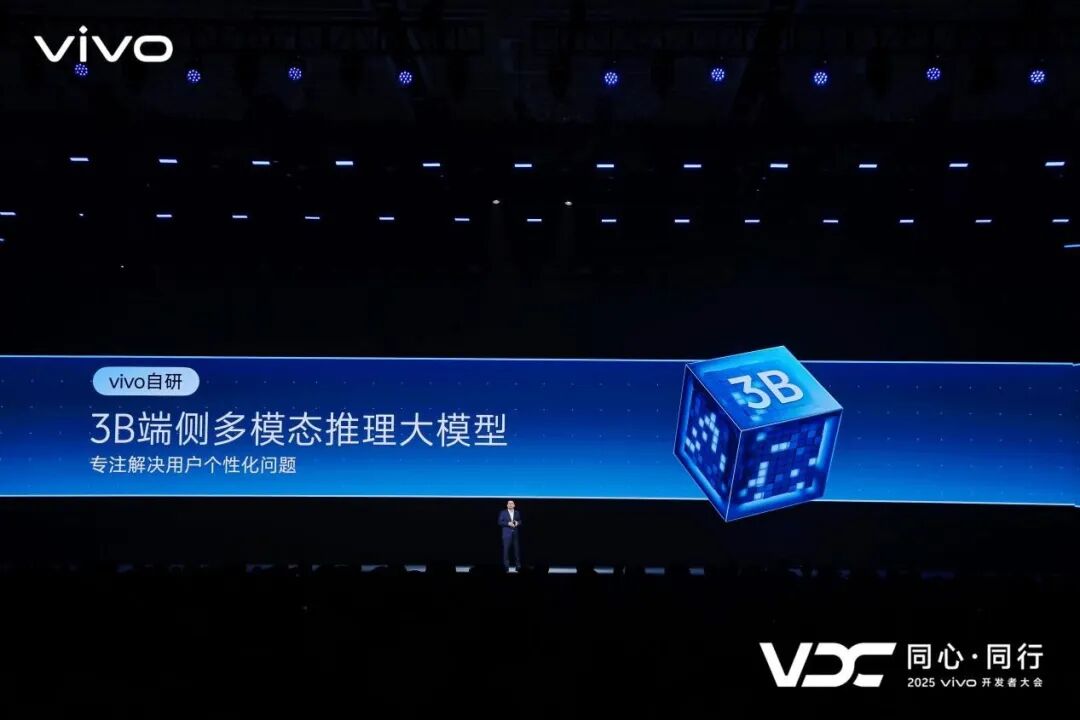
Core Insights - The article highlights the significant advancements in AI large models, particularly in the context of mobile devices, indicating a shift from technical competition to a focus on deep user understanding [1][2][4] - Vivo has developed the world's first 3B (3 billion parameters) model specifically for mobile agents, which showcases capabilities in multimodal processing, reasoning, and long-context understanding [1][2][4] Model Breakthrough - The new 3B model allows for independent operation on mobile devices without relying on cloud resources, enhancing user experience and enabling personalized AI interactions [2][4] - This model excels in language processing, multimodal understanding, and logical reasoning, marking a transition from a "public service" AI model to a "personalized" AI model [4][5] User Experience Enhancements - The model enables instant responses and offline functionality, allowing users to perform tasks without internet connectivity, thus providing reliable assistance anytime and anywhere [5][6] - It can understand and execute commands related to both text and images, evolving from a conversational AI to an actionable assistant capable of performing tasks across applications [6][8] Ecosystem Development - Vivo emphasizes the importance of an open ecosystem to enhance AI capabilities, aiming to connect various intelligent agents with users to create a more personalized experience [8][10] - The company has established the "Blue Heart Personal Intelligence Framework," focusing on perception, memory, planning, and execution to improve user interaction with AI [8][10] Collaborative Opportunities - Vivo's strategy includes opening its AI capabilities to developers, allowing for a broader range of personalized services and applications, thus fostering a collaborative ecosystem [10][12] - Over 50 ecosystem partners have already integrated with Vivo's open platform, indicating a growing network of services that enhance user experience through personalized AI interactions [10][12]
专访汤道生:元宝重兵投入这半年
Sou Hu Cai Jing· 2025-10-10 10:42
Core Insights - The AI market in China has become more concentrated, with open-source models becoming a key strategy for major players, including Tencent's integration of DeepSeek into its products [3][4][18] - Tencent's approach has shifted from a focus on proprietary models to an open integration of multiple large models, enhancing its AI product offerings [3][4][5] - The company aims for its AI chatbot, Yuanbao, to become a new entry point for consumer information searches, leveraging existing tools and platforms like WeChat [9][10][25] Group 1: AI Market Dynamics - The domestic large model market is increasingly centralized, with open-source models playing a crucial role [3] - Tencent has recognized the growing competition in AI products and is enhancing its investments in both B2B and B2C segments [6][84] - The integration of DeepSeek into Yuanbao was driven by user demand and the need for rapid adaptation to market changes [18][20] Group 2: Product Development and Strategy - Yuanbao was initially a technical exploration but has evolved into a consumer product due to increasing user reliance on AI chatbots [4][9] - The decision to integrate DeepSeek was made quickly, reflecting a strong alignment with user interests and market trends [18][20] - The company is focusing on building a robust team for Yuanbao, emphasizing the recruitment of talent with expertise in large models and product management [28][71] Group 3: User Experience and Interaction - Yuanbao is designed to adapt its interaction style based on the context, aiming for a more human-like engagement in different scenarios [48][53] - The integration of Yuanbao into WeChat has been supported by various teams, enhancing its functionality and user experience [25][26] - The company is exploring personalized interactions and different engagement styles to meet diverse user expectations [61][62] Group 4: Future Outlook and Competitive Landscape - The AI chatbot market is expected to remain fragmented, with multiple players offering varied products to cater to different user preferences [63][64] - Tencent views the AI chatbot battle as a critical strategic initiative, comparable to its previous efforts in mobile internet [80] - The company is committed to leveraging its extensive content ecosystem to enhance Yuanbao's capabilities and user engagement [48][84]

智能体的崛起:其对网络安全领域的优势与风险
Sou Hu Wang· 2025-10-10 05:05
Group 1 - The rise of AI agents is significantly impacting business operations, human-machine collaboration, and national security, necessitating a focus on their safety, interpretability, and reliability [1][2] - 2023 is recognized as the year of generative AI, with 2024 moving towards practical applications of AI, and 2025 being termed the year of AI agents, which are autonomous systems designed to perform specific tasks with minimal human intervention [2] - AI agents are expected to have substantial economic and geopolitical implications, especially when integrated into critical workflows in sensitive sectors like finance, healthcare, and defense [2] Group 2 - AI agent systems typically operate on top of large language models (LLMs) and consist of four foundational components: perception, reasoning, action, and memory [3] - The architecture of AI agents includes a supporting infrastructure stack for model access, memory storage, task coordination, and external tool integration, with multi-agent systems allowing for collaboration among agents [3][6] - The emergence of general-purpose AI systems that can flexibly apply across different environments and industries is accelerating, with ongoing efforts to establish cybersecurity, interoperability, and governance standards [6] Group 3 - AI agents enhance cybersecurity by autonomously assisting network personnel in critical tasks such as continuous monitoring, vulnerability management, threat detection, incident response, and decision-making [7] - Continuous monitoring and vulnerability management are improved through AI agents that automatically identify vulnerabilities and prioritize fixes based on business impact, significantly enhancing efficiency [8] - Real-time threat detection and intelligent response capabilities are achieved through multi-agent collaboration, reducing average response times by over 60% [9] - AI agents help address the global cybersecurity talent shortage by automating over 70% of alert false positives, saving security analysts significant time and improving overall operational efficiency [10] Group 4 - The architecture of AI agents is divided into four main layers: perception, reasoning, action, and memory, each with distinct security considerations and risks [11] - The perception module faces risks such as adversarial data injection, which can compromise data integrity and confidentiality [13] - The reasoning module is vulnerable to exploitation of underlying model flaws, which can lead to incorrect decision-making and erode trust in AI agents [14] - The action module is sensitive to attacks that exploit the agent's ability to interact with external systems, necessitating strict output validation and access control [15] - The memory module is crucial for maintaining context and can be targeted for memory tampering, which may distort the agent's understanding and future actions [16] Group 5 - The rise of AI agents signifies a transformative shift in how emerging technologies interact with and influence the digital world, marking a breakthrough from passive human-supervised models to autonomous systems capable of reasoning and learning from experience [18]
智能体崛起
Hu Xiu· 2025-10-10 01:01
Core Insights - OpenAI is transitioning from a model company to an "agent" platform that drives productivity through natural language, introducing four new products that could reshape society and business [2][3][6] Group 1: New Product Offerings - The four new products introduced by OpenAI include Apps SDK, AgentKit, Codex, and Sora 2, which enable users to create applications, manage multi-agent systems, understand and write code, and generate videos from text, respectively [2][3][19] - These innovations signify a shift towards individual empowerment in software development, allowing users to independently create complex systems that previously required teams and significant time investment [3][4] Group 2: Impact on Business and Society - The emergence of AI tools is expected to enable individuals to become self-sufficient in various industries, effectively creating their own companies and teams, thus amplifying productivity by orders of magnitude [4][6][10] - The traditional corporate structure may be disrupted as AI agents take over roles traditionally held by middle management, leading to a new model of business where a single individual can manage multiple agents to execute tasks [12][16] Group 3: Investment Landscape - Investment strategies are likely to evolve from funding traditional companies to investing in clusters of agents, with the focus shifting to individuals who can orchestrate these agent networks [14][18] - The capital market may see a rise in opportunities related to domestic technology, such as local chips and robots, which could create significant investment prospects [28] Group 4: Future of Content and Platforms - The release of Sora 2 could revolutionize content creation, similar to how platforms like TikTok transformed social media, by allowing users to generate high-quality videos quickly and efficiently [19][20] - The future landscape of content, business, social, and capital platforms is anticipated to be heavily influenced by AI, potentially leading to a consolidation of power among a few dominant players [21][22][23] Group 5: Challenges and Considerations - While technology democratizes access to tools, the competition will remain fierce, with a small percentage of individuals likely to dominate the landscape, raising concerns about the sustainability of this model for the majority [24][25][29] - The rapid pace of technological change necessitates a balance between innovation and societal needs, ensuring that the development of AI does not lead to job displacement without adequate measures in place [29][30]
智能体崛起!
Sou Hu Cai Jing· 2025-10-09 17:53
Core Insights - OpenAI is transitioning from a model company to an "agent" platform that enhances productivity through natural language-driven tools [2][5][17] - The introduction of four new products—Apps SDK, AgentKit, Codex, and Sora 2—could revolutionize how individuals create and manage software and content [2][5][14] Group 1: Impact of AI on Individual Empowerment - AI has the potential to enable individuals to become "self-developers," allowing them to write code, produce software, and complete production cycles independently [5][9] - The shift towards "self-products" could lead to a significant reduction in reliance on large companies for software, similar to the decline of traditional media [5][10] Group 2: Transformation of Business Structures - The role of middle management may be replaced by "middle robots," as AI agents take over routine tasks, allowing individuals to focus on creative and strategic aspects [9][11] - Future entrepreneurship may require smaller teams, with various AI agents handling research, development, marketing, and finance [10][12] Group 3: Evolution of Content Creation and Distribution - Sora 2's ability to generate videos from simple text inputs may redefine content creation, positioning it as a potential successor to platforms like TikTok [14][16] - The content generated by Sora 2 is expected to have higher semantic density and clarity, improving the efficiency of content distribution [16] Group 4: Market Dynamics and Investment Trends - Investment focus may shift from traditional companies to clusters of AI agents, with capital directed towards individuals who can manage these agent teams [10][20] - The competitive landscape may narrow, with a few dominant players emerging in the AI space, potentially reducing the number of leading tech companies [17][18] Group 5: Societal Implications and Future Considerations - The rise of AI could lead to a restructuring of social and economic frameworks, with a need for new organizational capabilities to manage AI agents effectively [13][19] - The speed of technological change is expected to accelerate, emphasizing the importance of creativity and ideas as the primary competitive advantage in the future [20][22]